



How do they care for war veterans in US? Retired US Navy Vice Admiral and Intelligence Officer Robert Murrett narrates
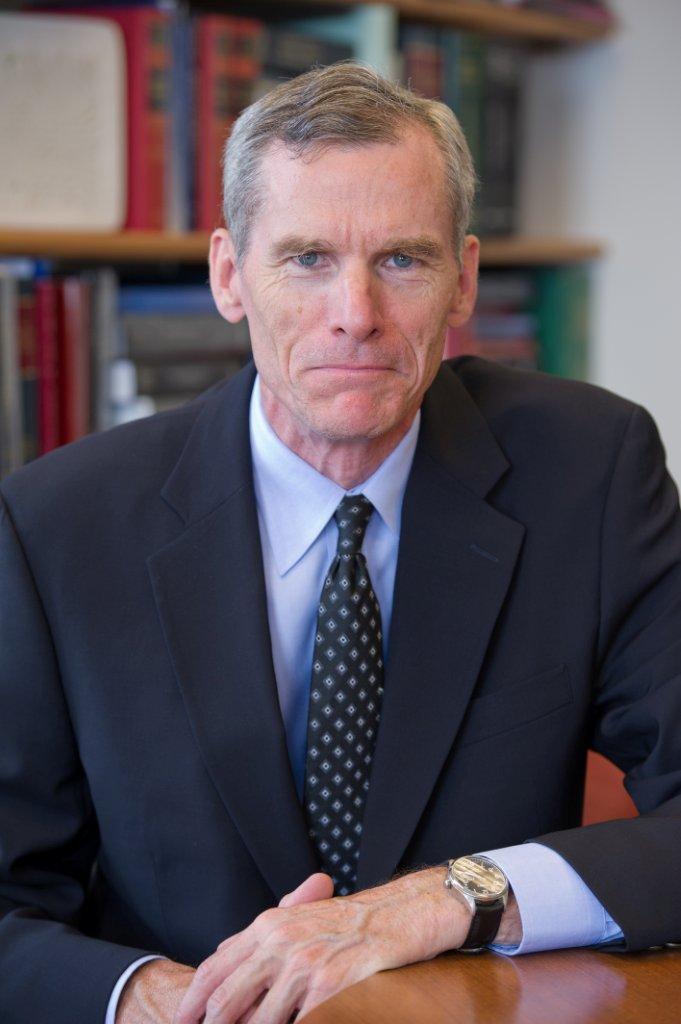
Robert Murrett is an American academic, intelligence officer, and retired Vice Admiral in the US Navy who served as the fourth Director of the National Geospatial-Intelligence Agency from July 2006 to July 2010. In 2011, Murrett joined the Syracuse University Institute for Security Policy and Law, where he is currently the Deputy Director. He is also a faculty member at the Maxwell School of Citizenship and Public Policy.
However, Censor.NET was primarily interested in Mr Murrett's story about the practice of state and American society caring for war veterans, as Robert is a member of the advisory board of the Institute for Veterans and Military Families (IVMF) at Syracuse University.
And our interlocutor did not disappoint.
- After the Second World War, Ukraine, as a Soviet republic and then as an independent state, did not take part in wars (this is, of course, if we do not take into account the war in Afghanistan in the 1980s). So with the outbreak of this war in 2014, the state had to build a new strategy for caring for our veterans from scratch, almost from scratch. Robert, has your country ever been in this position before? Can the Vietnam War be the right answer to this question? Of course, there was the Korean War before that, but still.
- This is a process that is still ongoing, but I will try to give the most concise answer possible. In fact, it goes back to the American Revolution of 1776. For example, our first president and the pride of our country, George Washington, has a quote about how important it is to treat veterans, because this is the strongest message you can send to your military personnel who are currently serving. It is extremely important to take care of them. Abraham Lincoln also has a great quote about how the way we care for veterans, orphans, widows and the dead sends the most powerful message to our military. And this process is still ongoing.
Unfortunately, as you know, the United States has been involved in conflicts. My father, grandfather and all my uncles went through World War II, as well as the Korean War and then Vietnam. Later, there were conflicts in the Balkans, in which we also participated. And, of course, the conflicts in Afghanistan and Iraq. That is why it is important to take care of young and old veterans, across the entire spectrum.
I am also a veteran and receive my regular medical care at the Syracuse Veterans Hospital. Among the veterans are men and women of all ages. Unfortunately, we have very few World War II veterans left. And they are very old. We have veterans of the Korean War and veterans of the Vietnam conflict. I could call all these veterans veterans of the Cold War. We had a large enough army to confront the Soviet Union for many years. Many of us were personally involved in those conflicts - including the conflict in the Balkans, which lasted almost eight or nine years. And, of course, we've been involved in conflicts in Afghanistan and Iraq and other places, including the Southern Philippines, West Africa. So it's really a longer story than just one conflict.
- Most of the problems faced by veterans after returning home from war are depicted in Michael Cimino's classic film The Deer Hunter. The inability to adapt to civilian life, lack of contact with the locals, and the destruction of personal life. What are the main points that the state should take into account when starting to solve this complex set of problems? I'll put it this way: what is the wrong way to treat veterans in this situation?
- That's a great question. I think the most important thing is to give these veterans a sense of purpose and allow them to continue serving. You know, I'm a strange person in our family. I'm an ensign in the Navy, but my grandfather was in the army, my uncle was in the army, my dad was in the army, and our son was in the army. That's why the army has an expression they use: a soldier for life. The concept of a "soldier for life" means that even after you leave the military and take off your uniform, you still have obligations to your country and your fellow veterans, to your fellow citizens. This is an important concept that we profess. But do you know what the other side of the coin is, which is no less important? Veterans have varying degrees of difficulty adjusting to civilian life. Some adapt very well, very easily, without any problems. Others do have problems, such as PTSD, etc. But everybody who has made the transition from wearing a uniform for most of their lives to transitioning to civilian life, I have to make a correction, they vary. Some find it very difficult, and some do not. But why?
We see the most important aspects of this in the veterans that I work with here at the Veterans Institute University. Here at Syracuse University, we have the largest university-based Veterans Institute in the country. Every single one of the veterans that we have on campus, students, faculty, staff, building maintenance people, and everyone else, wants to help other veterans and give back to them in some way.
I would like to say one thing that I think is the most important: if you are a veteran, you should have a sense of duty, not a sense that everyone owes you/you should be treated specially/you should be elevated above others. And it's not about moving forward in the queue or getting privileges or a high level of respect in society. It is about being able to give back to your nation. I will use that expression again, a soldier for life.
We need to take this very important experience and dedication that is demonstrated in any military service - whether it is in the Air Force, Army, Navy, Marines, etc. - and use it as a basis for a veteran to give back and feel important to the country.
- You know, there are situations in Ukraine when a person comes back from the front line, returns to civilian life for a while, and categorically demands some kind of very special treatment. On the one hand, this is understandable (a person on the front line gave his strength and health to his country), but on the other hand, it creates real problems every day. That is why what you said is interesting.
- We have to realise that there are wounds that are visible, and there are wounds that are invisible. And invisible wounds are much harder to deal with than wounds like an amputated leg or something like that. But with this in mind, every soldier has a certain degree of post-traumatic stress. And it's not a disorder, it's just a spectrum of post-traumatic stress that they experience during their military service. And we have to be prepared for it. But I think most veterans really don't want to be coddled; they don't want to be put in a soft chair. They want to continue to serve and continue to have a sense of purpose. It could be running a company; it could be public service or teaching at a school. It can take many forms. It's about duty, not about special treatment.
- According to the Pew Research Center, in 2019, about 45 per cent of veterans claimed that they were not adequately prepared for their return to civilian life during their military service. The Ukrainian government is also currently developing a concept for the return of our war veterans to civilian life. However, our funding/capabilities are not as significant as those of the US Department of Veterans Affairs. Therefore, we have to set our priorities to make these programmes effective. What do you think these priorities should be?
- The primary task is to ensure a meaningful/conscious return to peaceful life for veterans. And this should be done on the basis of partnership. Our Ministry of Veterans Affairs and our government, the leadership that we have now, are very effective in this regard. But there are also many other institutions at the community level, government agencies, state, county and local levels, as well as places like schools and churches that can contribute to this. I think our own Department of Veterans Affairs does a great job with things like health care and veterans affairs. But there is a lot that other institutions have to do. And this is a joint commitment of the entire nation. We all have to contribute to this. Earlier I mentioned the Institute for Veterans and Military Families, which is here at Syracuse University. We have a person working there who worked in the field of veterans' affairs in Ukraine before the war. Lin Nuingyan speaks fluent Ukrainian and worked in Kyiv before she came back to our Veterans Institute here at Syracuse University.
So, I think it paints a broader picture of what needs to be done and how. The Department of Veterans Affairs, under effective leadership, is doing a very good job. But there are many other things that need to be in place. And it usually comes down to the fact that all policy is local, that is, it is what happens in the local community and how it contributes to supporting veterans.
One more thing I would like to say briefly to give you the full picture. When I was growing up, and this was the 50s and 60s, most of the people in our community and then in the Boy Scouts, the churches we went to, the schools, had parents who had been in the Second World War, and they all knew this about each other. But they never talked about it, and there was never a sense that they deserved to be treated properly because of all this. You know, we call them the 'silent generation'. And I think it was a great model and we were always there and maybe we took it for granted, but maybe we shouldn't have because they all had a common understanding and also a common obligation to give back to their country and continue to serve the nation and society. This was supported by all the important public institutions, social clubs, boy scout troops, churches, schools. Again, this is more about duty than special treatment.
- So, in the context of caring for veterans, is volunteer assistance important in your country?
- 'Public voluntary partnership' is what we call it in our country. But there is also the US Department of Veterans Affairs, which is very competent and has very professional leadership. It has the support of our president and the White House. But this is also the work of other institutions at lower levels.
- What do you consider to be the most effective and popular programme for veterans in the US: support for veteran-owned businesses, educational support, or healthcare/medical services?
- I think all three are important. This is a multiple choice question. I can choose one of the three. It's hard to say. You know, we're very involved in all three here locally: the big Veterans Administration hospital, which serves all of central New York right up to the Canadian border and Pennsylvania, which is right next to Syracuse University, across the street from my office. We also have the Institute for Veterans and Military Families, and they are all close by in the area. I believe that all three of these areas are important: business support, education, and especially taking care of veterans' families. It is very important to support families. And, of course, support in the healthcare sector is fundamental. As a veteran myself, I use veterans' hospitals - and veterans feel at home there - but we actually have several options. But I think in some respects this is the easiest option for the most part, except for some of the mental health issues, which is a big problem in all of our countries. But I think you know that the transition to civilian life is vital. As is learning and understanding this process, as is healthcare. So I will choose all three options.

With colleagues during military service
- What financial support do Iraq and Afghanistan veterans receive?
- When a soldier leaves the service, he or she must undergo a medical examination and, if necessary, receive a percentage of physical disability: 10%, 20%, 30% or even 100%, depending on the physical capabilities. When soldiers are examined, they can often be assigned a 20% disability; however, this does not require any special medical treatment. And this "disability" is not necessarily related to participation in combat operations. For example, our paratroopers of the 82nd Airborne Brigade and most of those who served for 20 years in the 82nd Airborne Brigade have disabilities. And I'm not sure what the exact number is, but I'm guessing it's around 30% disability because their knees and hips are in bad shape. So, it's not necessarily a disability because of combat injuries; the disability you get when you retire can be a result of just the wear and tear on your body that you've had from all the training and military service outside of military conflicts. But it's actually a fairly neutral medical assessment that also includes invisible things. I mean mental health issues, but also the fact that your arm doesn't work or something like that, and you get this percentage that affects how many benefits you get when you retire.
- Are there any important books or other texts about the US approach to successful transition of veterans to civilian life? Are there any best books written by veterans that describe both their military careers and their adaptation to civilian life?
-"It's hard to choose when there are so many of them. But I will look at them and make a selection for you.
- Great! And we'll share this selection at the end of our interview so that everyone interested can read your advice and find these books, albeit in English.
- Some of them are on my bookshelf, the rest are probably in my office. I will pick up about five books. I will also contact Nick Armstrong, a veteran who served in Afghanistan for a long time. He is the head of research at the Institute for Veterans and Military Families at Syracuse University. He works with Lin Nuingyan, a woman who has been to Ukraine and speaks Ukrainian. But I will consult with him and give you a list of the top 5. It will probably include books, but there may be other sources. For example, like the materials that Natalia presented at the briefing, materials on the transition of veterans to civilian life.
- Let's talk about another aspect of war in society. As long as there is a war going on, it is not easy for military families to live.
- I know (smiles - E.K.). I know from personal experience. I have three children and I have been married for 45 years. I still don't understand how my wife could put up with all that military service.
- Children are growing up without parents, especially without their fathers. Their mothers are struggling to make ends meet. Another, bigger problem is the families of men and women who died in the war. Robert, what programmes exist in the US that provide material and psychological assistance to such families?
- There is a programme run by the Institute for Veterans and Military Families, the abbreviation IVMF, as it is called. But we need to emphasise the importance of families in military service, in particular the support of military family members. I can give you examples from my personal life - and I will try not to be too emotional. During my military service, I was separated from my family. These were military missions in Iraq, Afghanistan, and the Western Pacific. But for us, this is a family story. My grandfather was seriously wounded in the Second World War and was also separated from his family for a long time. My father served in the Philippines during the Second World War and was cut off from my mother, to whom he had been married for many years. Our son was in Iraq for a year. He is now back with his wife and has two children.
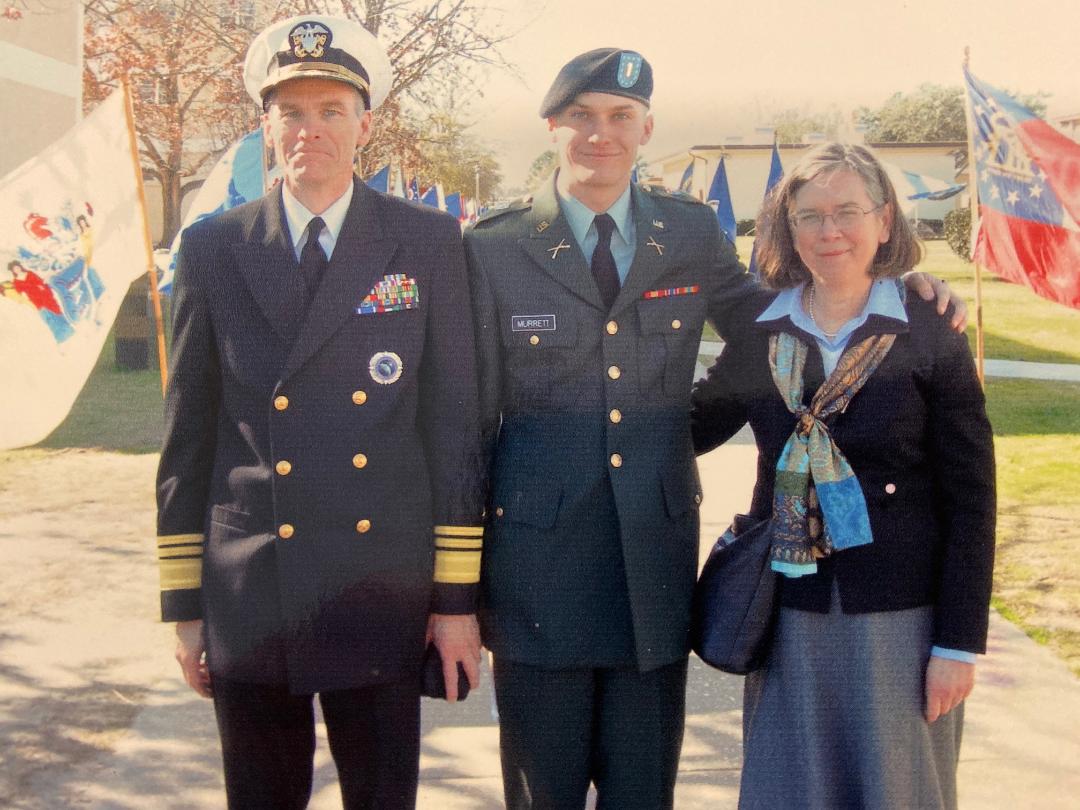
With his wife Judith (married for over 40 years) and son Jim, an infantry officer in the US Army
- Fantastic. You could write a book about it yourself...
- The most important thing I can tell you is that I am very grateful for the support of my family. Again, the importance of supporting military families cannot be underestimated. It's a family story for us, and I can tell you many stories. I think that an important answer to your question is that the issue of veteran support cannot always be solved at the national level. It depends on the cultural characteristics of each region. It can be local schools, cultural clubs, neighbours, and sometimes churches play an important role. Some of the best specialists in supporting veterans and their families are military chaplains. The U.S. Department of Veterans Affairs uses what they call 'community-based agencies' to provide support to veterans and their families. These can be ordinary people and neighbours. For example, a spouse of an active military member who is left alone will receive support from the local community.
- Robert, in Ukraine, veterans and their families mostly receive support from their fellow soldiers or volunteers. And, unfortunately, in a state of war, the state is almost powerless in this area. Therefore, the families of veterans can only hope that a fellow soldier or a volunteer will help them. Of course, we have a large volunteer movement, but this does not negate the fact that the state cannot cope with this because it was not prepared for such a development. And this is a big problem.
- Yevhen, we have a well-developed programme for notifying families of fallen soldiers. We have developed this programme historically, and we have a special procedure for notifying families. We have a position of a special officer who delivers such notifications to families, and we also have a specialist who is responsible for controlling and accounting for the dead. We have invested a lot in this programme, and families do not have to pay us anything for this notification. We have come a long way, because during the Second World War, the families of the deceased received regular telegrams from Western Europe, which were often delayed.
One of the most important signals a state can send begins with how you notify and support bereaved families. I understand that your state is under a great deal of pressure right now because of the great losses you are suffering. But I hope that this is an area in which you can adapt in the future, and that people will be even more supportive of each other.
- One more question. Many politicians in the US and in Ukraine are trying to exploit these topics, not only exploit them, but they also have to respond to them. How is the Joseph Biden administration, as well as Donald Trump and Ron DeSantis, playing with this topic?
- I will try not to get into political matters, but I have to say that the current administration is doing a good job with veterans' affairs. The US Secretary of Veterans Affairs is a very professional and dedicated person. I am very pleased that every year the number of veterans in the Senate and Congress is increasing. It seems to me that President Biden is fully committed to supporting veterans. This may be partly due to the fact that he lost his son, who suffered health problems due to his participation in combat. That's why the Department is doing a great job, and most American veterans will tell you that. We can talk for a long time about various protocol things and disagreements, but what is really important is that the number of veterans in the field of public services is increasing. And I'm very grateful to the Biden administration for their support of veterans. And I'm also grateful for all the support he provides to Ukraine.
- We are also very grateful. And now I would like to ask you to be as honest as possible with me in answering the following question. When you learned about Russia's attack on Ukraine on 24 February, how long did you think Ukraine would last?
- Much longer than most people who made predictions thought. I spoke to a lot of people who were in Ukraine and involved in training the Ukrainian military. And they were confident that you would survive. One such example is a lieutenant colonel in the Canadian army who was training the Ukrainian army but left Ukraine right before the war started in February. She told me from the beginning that it would not be an easy task for the Russians.
People from the National Guard in Florida and California who worked with your military said the same thing: Ukraine cannot be broken. Yes, the widespread belief was that your country would fall within days, weeks at best. But people who were in Ukraine were sure that it would not be easy for Russia.
- Robert, would you like to visit Ukraine to see what's going on and share your impressions of veteran policy? You have to agree that this is a place of great historical significance now.
- This is absolutely true. I was very impressed by the whole 'parade' of world leaders who came to Kyiv last year to support Ukraine. Let's take the example of the recent visit of Japanese Prime Minister Kishida. He arrived in Kyiv at a time when Chinese President Xi Jinping was in Moscow. This is a very powerful signal for the whole world. World-famous bands like U2, a whole range of people from completely different spheres who have shown support for Ukraine.
- But even with this impressive list of VIPs, we wouldn't mind if a very distinguished Vice Admiral visited our country.
- I would love to visit, because I have been to many places around the world, so I am not afraid of it. But what is more important is that we provide as much support as possible for your veterans. I have a lot of good things to say about Natalia Kalmykova (Executive Director of the Ukrainian Veterans Fund - ed.). We visited 3 important places in our city. The first stop was the Institute for Veterans and Military Families https://ivmf.syracuse.edu/ - IVMF, based at Syracuse University. She spent a lot of time there, had a lot of conversations, and it definitely started a new productive partnership.
The second stop is the Veterans Administration Hospital, a place where all veterans from the central New York area receive medical care. And the last stop is a meeting with Professor Brian Taylor, who knows the most about Russia in our academic environment. He is a professor of political science and speaks good Russian. Natalia and Brian had a very productive conversation. He is one of the most committed people I have ever met to supporting Ukraine. In general, these 3 meetings created new opportunities and they are relevant for supporting Ukraine.
So, yes, I would be happy to visit Ukraine - and I will be in touch. The support from the prime ministers of the United Kingdom and Canada, President Biden - this is all a very significant signal of support for Ukraine. There was also support from Ursula von der Leyen. Of course, leadership plays a very significant role, and this is not just about your president. The support of all NATO member states is also important. I think that NATO Secretary General Jens Stoltenberg also makes a very significant contribution.
Four of the best books by and about veterans by Robert Murrett:
- Phil Klay, Redeployment, Penguin, 2015
- David Gerber, ed: Disabled Veterans In History. University of Michigan Press, 2000
- Martha Raddatz; The Long Road Home, G.P. Putnam, 2007
- Bernard Rostker, Providing for the Casualties of War, RAND, 2013
Yevhen Kuzmenko, Censor.NET
Translation: Olena Prykhno, Daniil Momot
Photo from the archive of Robert Murrett


