



Real leverage of power in Ukraine is Andriy Yermak, Zelenskyy’s right-hand man, who is handing over war-torn Ukraine to oligarchs?
One Monday in late September, Mike Pyle, the international economic affairs officer on President Joe Biden’s National Security Council, sent his counterparts in Ukraine a four-page "working draft" that listed a series of reforms the White House expected Kyiv to implement in exchange for continued U.S. financial assistance. Among them were increased control over state-owned energy companies, as well as measures "to ensure greater transparency and accountability during Ukraine’s post-war reconstruction". The goal was broadly to curb the corruption that has long been a feature of Ukrainian governance.
Paul Starobin writes about this in the article Ukraine's real power broker, Business Insider.
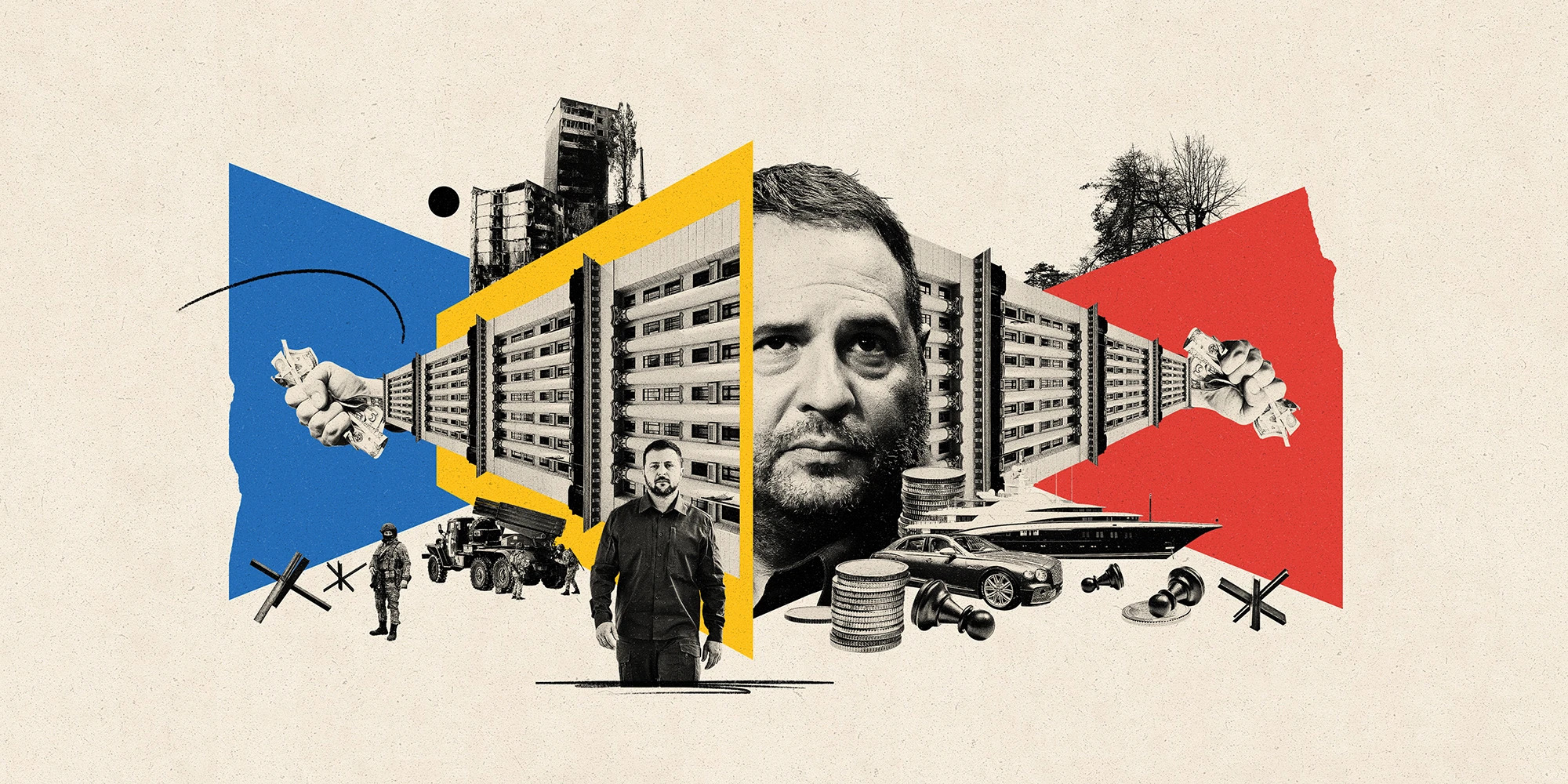
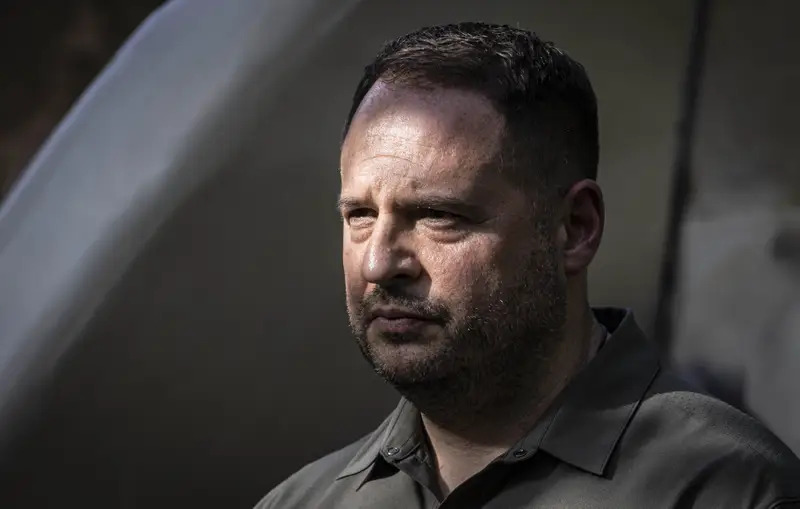
Among the recipients of Pyle's letter was the Office of the President of Ukraine, a fifty-person team headed by Andriy Yermak, a longtime friend of President Volodymyr Zelenskyy. In Kyiv's political and business circles, Yermak, a former lawyer and film producer, is widely regarded as the second most powerful man in the country - a sort of Dick Cheney to George W. Bush. Some, in fact, see Yermak as more powerful than the president, a former comedian who took office in 2019 with no previous government experience. When these two men stand side by side in their identical olive-colored uniforms, strong build, over 180 cm tall Yermak stands out next to Zelensky, who is 170 cm tall. It often seems, Kyiv financier Andriy Sirko told me, that Ermak "sits with Zelensky like a nurse".
As it turned out, on the day Pyle's letter was sent, I was in Kyiv meeting with Daria Kaleniuk, executive director of the Anti-Corruption Action Centre, a rights organisation that receives funding from Washington and the European Union. In an hour-long conversation with me, Kaleniuk painted an unvarnished picture of the political and economic structure in the Zelenskyy-Yermak era. "The good story," she told me, "is that Russia's full-scale invasion of Ukraine in 2022 has largely wiped out the generation of oligarchs that had the will and ability to plunder the Ukrainian economy since the country's liberation from the Soviet Union in 1991. The old titans no longer have the power over parliament and the media that they once had, and many of their industrial assets are out of their reach in the territories now occupied by the Russian armed forces."
But the "bad story," Kaleniuk continued, is that she said Yermak, whom she described as "fascinated by power," is creating a new system of oligarchy that he leads. She said that through his deputies in the Presidential Office and cabinet ministers who report to him, he is trying to gain control over a large part of the Ukrainian economy, as well as law enforcement and the security system. According to her, "people connected to them" in business receive government contracts at inflated prices. "He is not building a strong Ukraine," Kaleniuk said. "It undermines efforts to wage war." In effect, she was describing the formation of an accidental oligarchy under the cover of martial law declared by the Zelenskyy government.
Similar concerns about Yermak are widespread in Kyiv. "Ermak is a father who teaches these children how to run a business," Yuriy Alatortsev, CEO of a fertiliser company, told me - "business", he said, being political corruption. Yermak and Zelenskyy control the country's governing party, "Servant of the People", which has a majority in Ukraine's unicameral parliament. "Please be sure," Alatortsev wrote to me, "with a mono-majority in parliament, you will be able to open your own mint."
Yermak denies that he is using Zelenskyy's office to ruin Ukraine. Daria Zarivna, an adviser to Yermak, told me that such criticism reflects a "Russian-led information war against Ukraine's leadership" - a claim Yermak himself made during a visit to Washington in December. She also said that "Ukrainian oligarchs" opposed to the Zelenskyy team are using the Ukrainian "media market" to fight against anti-corruption reforms.

But corruption, which has long polluted the country's political system, is a concern for Ukrainians far removed from the circles of power. "Huge corruption" is Ukraine's biggest problem, an 18-year-old girl told me bluntly and frankly in a Kyiv café. "I love Ukraine," she said, but she was hesitant to give money to the military for fear that a crooked official would steal her donation. Earlier this year, investigative journalists revealed that the prices at which suppliers promised to supply basic necessities such as potatoes and cabbage to the Ukrainian military were inflated by two to three times the prices officially reported to the government's tax authorities.
In a poll conducted last summer by the Democratic Initiatives Foundation, Ukrainians named corruption as the main obstacle to business development in the country - more important than the destruction caused by the war. And the majority of Ukrainians surveyed said it would be "appropriate" for foreign partners to provide military assistance "only if corruption in Ukraine is effectively fought". In the latest "corruption perceptions index" compiled by observer organization Transparency International, Ukraine ranked 116th out of 180 countries - not far ahead of Russia, which came in at 137th.
However, the White House is counting on the Office of the President of Ukraine, Yermak's base of power, to fight systemic corruption. The National Security Council's letter may have been sent in part to show doubters of US aid to Ukraine that Biden is serious about corruption. Nevertheless, as Zelenskyy's most important adviser, Yermak cannot be left out: in discussions related to the war, he is the main contact in Kyiv for Jake Sullivan, Biden's national security adviser, whom Yermak recently called "my dear friend."
There is a lot at stake. The Ukrainian soldier on the frontline is not only risking his life to regain control of his country's government and economy from its most predatory players. Such an outcome, while it would mean defeat for Russia, would be a hollow victory for Ukraine and for Washington. In the meantime, the United States has already committed some $67 billion to Ukraine's defence, and one estimate suggests that the cost of the war it has built could exceed $1 trillion.
What is to prevent such transformational sums of money - more than five times Ukraine's pre-war GDP - from being sucked up by the managers of the rising oligarchy? "It will be a feast in blood water," said Roland Spitz, a former investment banker in Kyiv. And the biggest sharks, he added, tend to be "people in power."
"The new team," he continued, "is always the hungriest."
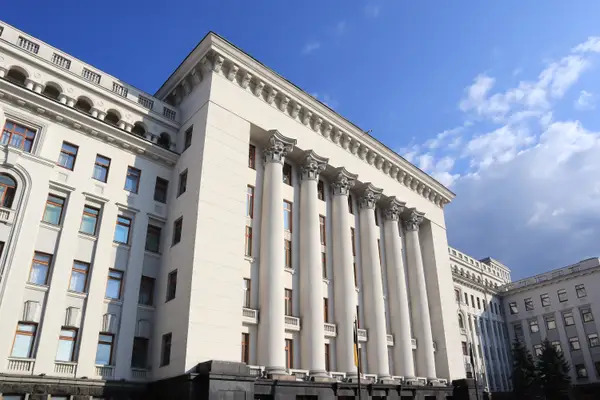
Yermak and Zelenskyy work in the Presidential Office at 11 Bankova Street in central Kyiv, a massive building with six columns at the front. In Soviet times, the building was the headquarters of the Central Committee of the Communist Party of Ukraine. Zelenskyy's office is on the fourth floor, Yermak's on the second, and they are in constant contact. "Zelenskyy depends on him" and "heavily depends on him," former US Ambassador to Ukraine William B. Taylor told me. This dependence extends to matters of political sensitivity. During Donald Trump's presidency, Ermak, then an adviser to Zelenskyy, was sent to meet Rudy Giuliani, who, on Trump's behalf, pressed Kyiv to investigate Hunter Biden's ties to the Ukrainian energy firm Burisma.
Taylor, who has attended meetings with both of these men, considers Zelenskyy "the leader of the pair. As for Yermak, "no doubt you've heard the stories," Taylor told me with a smirk. "I've heard some of the same stories."
But, I insisted, is Yermak part of the solution to creating a better Ukraine, or is he part of the problem?
"I see Zelenskyy as part of the solution," Taylor replied diplomatically.
Yermak was born in Kyiv in 1971. His mother, Marina, was originally from Leningrad in Soviet Russia, and his father, Boris, was a Kyivan who served at the Soviet Union's embassy in Afghanistan during the war there. Yermak dreamed of becoming a military pilot, but ended up studying international law at the Kyiv Institute of International Relations. When he was in his second year, in 1991, the USSR suddenly collapsed. Some of his classmates took jobs in European law firms, but Yermak stayed in the newly independent Ukraine and set up his own law firm specialising in intellectual property and company registration. From his work as a lawyer, he said, he saw first-hand how corrupt the courts were in post-Soviet Ukraine. He met the future president around 2010, when his firm represented Inter TV channel, where Zelenskyy was a general producer. "We have been frankly friends with Volodymyr Oleksandrovich for many years," Yermak told Ukrayinska Pravda in 2020.
One of the elements of Yermak's success is his universally recognised ability to work around the clock. He has no wife or children, and has literally made his office on the second floor his home. He sleeps there, takes a shower, exercises and keeps his wardrobe. He does not drink alcohol at receptions with staff prepared by military chefs. Although he is capable of shouting at his subordinates, even those he has encountered admit that he knows how to get his way. "He is a very good operational manager," said Oleksiy Arestovich, who worked as an adviser to Yermak for two years, responsible for strategic communication on national defence.
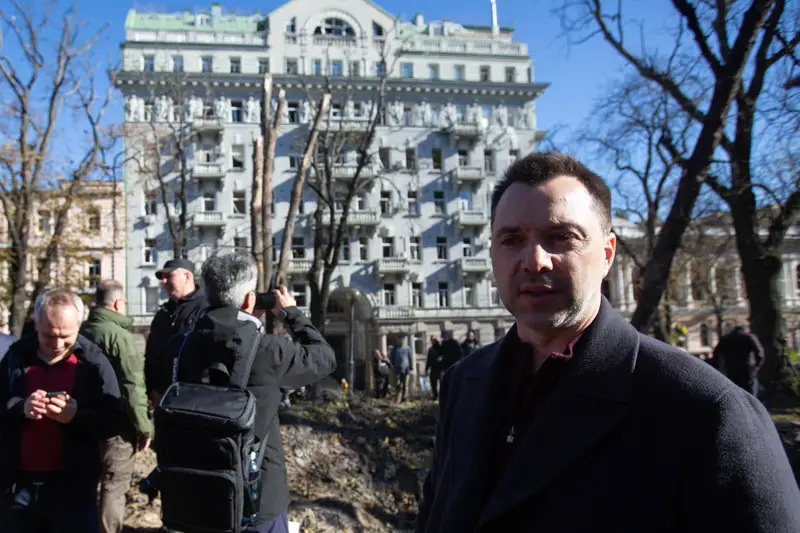
However, according to Arestovych, Yermak is also a master at using "black propaganda" to neutralise perceived rivals. In the early days of the war, he became the country's unofficial "therapist", assuring Ukrainians in his daily YouTube blogs that his country would soon win. According to him, his rise was seen by Yermak as a threat to Zelenskyy's popular respect. Ukrainian media soon reported that Arestovych was a Russian agent - the worst kind of sin, especially at the time. Never mind that Arestovych had fought on the front lines against Russia in 2014, when President Vladimir Putin was inciting a separatist uprising in eastern Ukraine. The damage was done, and Arestovych held Ermak responsible for the slander. Yermak, he said, is a two-faced man, "evil and good together".
From Arestovych's point of view, the key to understanding his former boss is Yermak's Russian background. Like Zelenskyy, his native language is Russian. With nationalist passions high in Ukraine, some Ukrainians refuse to speak the language of their invader. However, Yermak and Zelenskyy communicate with each other in Russian; it was also the language spoken in the Presidential Administration, Arestovych told me when he worked there. He says that Yermak and his key deputies exhibit "a style of behaviour, a style of management" that is "completely Russian - they all think of people as chess pieces." Another former official in the Zelenskyy administration also described Yermak to me as "a kind of Russian-Soviet type" - someone who prefers a Byzantine, veiled method of operation to a more modern, open style.
With nationalist passions on the rise, some refuse to speak the language of Ukraine's invader. Yet Yermak and Zelenskyy communicate with each other in Russian
In December 2021, I had an online conversation with General Kyrylo Budanov, the head of the Main Intelligence Directorate of the Ministry of Defence of Ukraine, via Zoom, during which he informed me that the implications of Chervinsky's accusations that Yermak was a Russian spy were false based on the results of an exhaustive internal investigation. He then asked me what I had on my Zoom wallpaper, in particular, a portrait of the writer Anton Chekhov and a carved bear figure. He said that these were Russian symbols, to which I replied that my wallpaper also contained a Ukrainian symbol, the pysanka.
I asked him to understand: "I think this war is terrible. I think Putin is a bastard." He replied: "I'm very glad that you have such a concrete position in support of Ukraine. As a journalist, I hope that you will do your best in your work not to create another information precedent that will be used by the Russians. The Russians love these exciting stories. They twist them."
According to Daria Zaryvna, an adviser to the Ukrainian president, when the full-scale war broke out, the Yermak scandal quickly lost its relevance. The Western press, inclined to tell stories of a heroic Ukraine under siege, tended to look away from the sordid pre-war stories concerning Zelenskyy's closest adviser. "When the White House wants to talk to Ukraine," a headline started in The Wall Street Journal in June, "it calls Andriy Yermak." The article noted that Yermak "earned his fortune in the West" by helping evacuate Americans during the disorderly retreat of the US army from Afghanistan in 2021, and cited his reputation as a "film buff" with "a particular preference for Italian cinema - Fellini, not Visconti". There was no mention of his brother's scandal, or of Chervinsky's allegations that he served as a Russian agent, or of his reputation as the leader of a new generation of oligarchs. Instead, the magazine noted Yermak's desire to "restructure the cumbersome bureaucratic processes in the presidential office". The man seen by critics in Kyiv as the embodiment of political corruption was praised as a champion of good governance.
It is difficult to overestimate the role of oligarchs in Ukrainian politics since the collapse of the Soviet Union three decades ago. The basic scheme is quite simple. "The question of power is the question of money," explained Arestovych, "and the question of money is the question of power." The fancy term for such an unworthy method of governance is "patronage" - a feudal system in which rival clans bound by personal ties of loyalty prevail over the rule of law.
Before Zelenskyy took power, the business oligarchy in Ukraine, like in other post-Soviet countries, operated on a system of extracting until the strongest man wins. There was little incentive for an honest entrepreneur to start a company in the belief that if the venture succeeded, one of the clans could invade the project and seize control, despite the legal protections provided by law. As clan leaders became billionaires by seizing industrial and financial assets, Ukraine remained desperately poor, with wealth regularly transferred out of the country to offshore accounts. In 2018, the year before Zelenskyy's election, Ukraine ranked last among European countries in terms of GDP per capita, just under $3,000, 8% lower than Moldova, the second poorest country on the list.
In post-Soviet Ukraine, as one insider put it, "the question of power is a question of money, and the question of money is a question of power."
There is an inherent ambiguity in oligarchic structures wherever they arise, as I learned in the early 2000s while working as Moscow bureau chief for Business Week. One day, I received a call from a businessman who told me that his life was in danger because of a dispute over the privatisation of an oil and fat factory in the Ukrainian seaport of Odesa. Intrigued, I boarded a plane, but I didn't even manage to get close to the heart of the problem. (I also refused, to my host's surprise, the services of a prostitute he had taken it upon himself to hire as a gift.) Ten years later, on my second trip to Odesa, I asked my Ukrainian companion the name of the largest asset owner in this industrial city. He replied that it was Ihor Kolomoyski.

Kolomoyski had a reputation as one of the most ruthless oligarchs in post-Soviet Ukraine. He had significant assets in metallurgy, banking, airlines, energy and media. He was also linked to Zelenskyy: his 1+1 media group included a Ukrainian TV channel that aired Zelenskyy's scripted shows and proclaimed his election campaign. Many influential figures in Kyiv's political, business and media circles viewed Kolomoyski as the real winner of Zelenskyy's incredible triumph, a modern-day robber barbarian who would now rule Ukraine behind his charming facade.
However, this interpretation was probably always wrong. Zelenskyy's comedy was based on his harsh portraits of oligarchic types, and he campaigned on the promise of ridding Ukraine of these despised parasites. Once in office, he seemed to take this promise quite seriously. In 2021, he passed a law to publish a publicly accessible register of oligarchs, which would force them to be exposed as harmful to the public welfare. After Russia's invasion of Ukraine, he signed a decree requiring the Presidential Office to approve all broadcasts of national TV channels - mostly owned by oligarchs. In response to the unfavourable developments, one of the most influential oligarchs, Rinat Akhmetov, often referred to as Ukraine's richest man, divested himself of all his media properties, including the country's largest TV channel. Then, in September, just two weeks before I arrived in Kyiv, the SSU arrested Kolomoyski on charges of fraud and money laundering.
Ihor Kolomoyski, widely regarded as one of Ukraine's most ruthless oligarchs, was arrested in September on money laundering charges. Washington backed the decision; Kolomoyski was already on the State Department's blacklist, barred from entering the United States "due to his involvement in significant corruption," as Secretary of State Antony Blinken said in 2021. But as I learned in Kyiv, opinions on Kolomoyski's arrest were divided among local experts. Some thought Zelenskyy was trying to please Washington to prove he was serious about fighting corruption. Others saw the arrest as a cunning operation by the Yermak clan to eliminate a rival. One of Yermak's top deputies, Oleh Tatarov, oversees the SSU. Tatarov himself has also been accused of corruption: the CEO of one of Ukraine's largest construction firms told Reuters that Tatarov had bribed officials with bags of US money to get construction projects approved. Tatarov denies any wrongdoing and claims that his political opponents are trying to take him down. His accuser has also been the subject of corruption allegations related to the construction firm.
Yermak insists that Zelenskyy has "zero tolerance for corruption". As evidence, he points to the arrest in May of the chief justice of Ukraine's Supreme Court on bribery charges, in a case brought by federal anti-corruption prosecutors. "The US taxpayers have a right to know what they are paying for," Zarivnaya told me when I asked how the Office of the President had responded to the Biden White House's message in September about the need for reforms to fight corruption. "We report every cent we spend and are open to independent scrutiny."
The fight against corruption in Ukraine stems in part from a deep cultural divide within the country. As Yermak says, Kremlin propagandists in Moscow are keen to portray the Zelenskyy government as a den of thieves. However, the view that Yermak is building an oligarchic clan using dubious deputies like Tatarov is most likely expressed by the most cosmopolitan, Western-oriented, educated and well-connected part of Ukrainian society, people who speak fluent English and feel at home in Europe and America. They are mostly too young to have truly experienced the full force of the Soviet Union.
Yulia Klymenko, an opposition MP who fits this profile - she has represented the European Bank for Reconstruction and Development and worked for Transparency International Ukraine - told me that Zelenskyy missed a historic opportunity to send out the "thieves and idiots" who controlled the government at all levels. She said he was instead using martial law to maintain his own rule. Two days after we spoke, the speaker of parliament, who is pro-Zelenskyy, said that the implementation of the historic law on the excommunication of oligarchs, including the publication of the register of oligarchs, would be suspended until the end of the war.
Roman Ilto, another international man, works at the Swedish Embassy in Kyiv on energy and environmental issues. Unlike many of the oligarchs' critics, he has seen their rise first-hand. In the early 2000s, after studying at Harvard, he returned to Ukraine to work for a steel and mining company. It was his first exposure to "clan culture," he told me over breakfast at my hotel in central Kyiv. In those days, listening to the endless discussion of the Kolomoyski-Akhmetov rivalry, he began to understand oligarchs as the organising principle of Ukrainian political and economic life. In 2016, he joined Ukrnafta, the state-owned oil and natural gas giant, and spent almost seven years there, including stints as head of government and investor relations.
Since the outbreak of the war, Ilto said, control of the energy sector has been seized by a "nascent" oligarchic clan led by Yermak. Under a national security decree signed by Zelenskyy, the state took full ownership of Ukrnafta and other strategically important companies. Arguably, allowing the nationalisation was a "necessary evil" to keep the army supplied with oil and other important resources. "Nevertheless," he said, "you wonder why there is no proper board of directors, why there is no proper control. It's a perfect environment for corruption and misconduct" - for classic oligarchic manoeuvres such as diverting assets from state ownership. In October, about a month after I spoke to Ilto, Ukrnafta's management announced that an independent board of directors would be established for the company by the end of 2023.
Ilto named another of Yermak's deputies, Rostislav Shurma, who served the Akhmetov clan for many years before taking over control of energy and other sectors of the economy in the Presidential Office. Like Oleh Tatarov, Shurma is referred to in Kyiv circles as another cog in the Yermak machine. "He really acts as a cashier for Yermak and the Presidential Office," said a former Zelenskyy government official who declined to speak in public for fear of being targeted by Yermak's team. In a lengthy article in its September issue, "Ukrayinska Pravda" portrayed Shurma as a small empire builder. The newspaper, which is owned by a private investment firm run by a Czech-born businessman who served on the board of Transparency International Ukraine, cited a "scandal" in which the state bought electricity from solar power plants co-owned by Shurma's brother, even though the plants were no longer connected to the Ukrainian grid. When "Time" approached Shurma about the issue, he called it a "dirty story" thrown at him by Zelenskyy's enemies.
In Ukraine, as in Russia, conspiratorial thinking is an inevitable by-product of oligarchic rule. One source in Kyiv assured me that the country's gambling operations were secretly transferring bitcoins to Zelenskyy's headquarters in exchange for favourable tax treatment. No one could confirm this claim.
Nevertheless, when I returned to the United States, I found it difficult to dismiss the widespread concerns about the emergence of a new oligarchy. Is Ukraine, even under a president who claims to be opposed to oligarchic structures, really so different from Russia and other post-Soviet countries where state-owned companies serve as prominent havens for the withdrawal of critical assets? Perhaps, as some people in Kyiv argue, the Zelenskyy-Yermak team is building its own clan, "mainly to stand up to the oligarchs," Henry Hale, a Ukraine specialist at George Washington University, told me.
Officials in Washington are clearly worried that American tax dollars could disappear into the deep pit of Ukrainian corruption. "Are we worried about protecting tax money?" - said Latisha Love-Greyer, director of international affairs and trade at the Government Accountability Office. "Absolutely." This congressional control and reconnaissance body, she told me, participates in monthly meetings on the issue with representatives of the State Department, the Department of Defence and the Agency for International Development. She noted that Iraq, Afghanistan, Haiti, and Bosnia and Herzegovina are examples of warnings about the potential for corruption in post-war reconstruction efforts. However, when I suggested that a new oligarchic regime was emerging in Ukraine, centred in the Office of the President, Love-Greyer refrained from commenting. She said her team had not yet visited Ukraine or met with government officials there.
For Biden, the issue of political corruption in Ukraine is both extremely familiar and particularly challenging. During his tenure as vice president from 2009 to 2017, Biden was in charge of the Ukraine portfolio in the Obama administration. In 2015, a State Department official expressed concerns to a Biden aide that Hunter Biden's son's involvement in the board of directors of the energy company Burisma could complicate President Barack Obama's efforts to encourage Kyiv to fight corruption. However, the staffer, who later told the story in a closed-door session in Congress, said an aide told him that Joe Biden did not have the "resources" to address the issue, given that his eldest son, Beau, was battling cancer. It was the desire to dig up political dirt related to Hunter Biden's activities in Ukraine that led Trump to threaten to freeze military aid to Ukraine, which led to his first impeachment. (The White House did not respond to repeated requests for comment on this issue.)
The worst-case scenario for Ukraine - a very, very "bad story" - is that Yermak's oligarchic tendencies intensify to the point that Washington and its allies in Europe abandon both their continued military aid and plans for massive investments and assistance in the country for post-war reconstruction. In response, the Zelenskyy government is opening another sad chapter in the corrupt, parasitic rule of post-Soviet Ukraine. EU membership is becoming a pipe dream. Desperate citizens resort to violence in an attempt to overthrow their oppressors. Ironically, this scenario has eerie echoes of how Russia under Putin has become the state-sponsored oligarchy it is today. But it doesn't have to be this way. The crucial difference between Russia in the Putin era and Ukraine today is that Putin has crushed Russian civil society. The press is intimidated; anti-Putin political activists are imprisoned or exiled. In Ukraine, even though the Office of the President maintains control over television broadcasting during the war, civil society continues to develop. News agencies have focused their investigations on the crew of Yermak. Anti-corruption groups are present in large numbers not only in Kyiv, but also in major cities such as Kharkiv. Members of the opposition in parliament, as well as critics of the Zelenskyy government in business and financial circles, are largely unafraid to be heard. It is quite possible that a peaceful reckoning will come that will lead to the overthrow of Yermak and his henchmen and accelerate Ukraine's integration with the West.
To counter corruption, some in Ukraine are calling on the European Union to play a strong, even decisive role in Ukraine's post-war reconstruction. The EU, Roman Ilto told me, should set up and run a Ukrainian reconstruction agency to manage reconstruction projects to ensure that funds for the work do not fall into the wrong hands. "I think people would be happy about that," he said. "As long as power plants are rebuilt, roads are rebuilt, housing is rebuilt - and the country is on its way to the European Union."
Ukrainians are still painfully aware of their reputation on the world stage. "Please remember that not all Ukrainians are crooks and idiots :)," Klymenko, an opposition MP, wrote to me. "There are many decent people who love our country" and want to build a free society, she said. This, of course, requires not only fair elections and an unrestricted press, but also freedom from the pernicious pressures of the oligarchy. Ukrainians know from long and bitter experience that political independence means little without economic democracy. The Soviet Union left the country with a legacy of state corruption. Even if Ukraine succeeds in defeating Russia, the oligarchs may still win the war for its future.


