



Russian occupants use more than 70 camps to hold deported Ukrainian children - PO
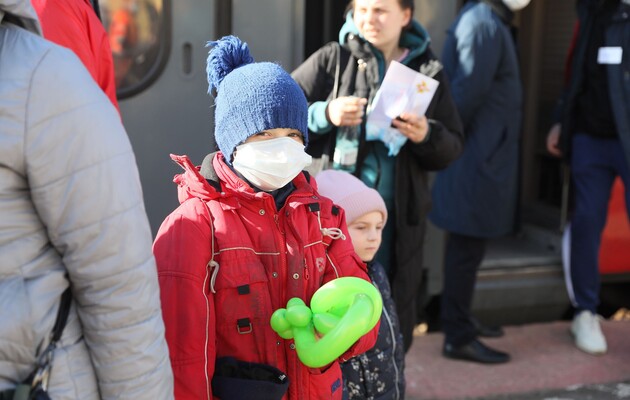
The Russian occupiers use more than 70 camps to hold children illegally taken from the temporarily occupied territories of Ukraine.
This was stated by the Commissioner of the President of Ukraine for Children's Rights Daria Herasymchuk during a telethon, citing data from the Yale Laboratory for the Humanities, reports Censor.NЕТ with reference to zn.ua.
She also noted that our state still does not know for sure where the enemy is deporting young Ukrainians. Despite the fact that experts have identified more than 70 camps, the Russians are constantly moving children. "They are doing everything to prevent us from finding them," Gerasymchuk said.
According to the latest data from the Children of War portal, almost 19.4 thousand young Ukrainian citizens have been confirmed abducted by the invaders. According to the Commissioner, the figure is constantly being updated and the relevant information is being verified.
"This does not mean that this is the final list... We are actually talking about several hundred thousand abducted children, 200-300 thousand," she added.
Herasymchuk also commented on the deportation of Ukrainian children to Russia under the pretext of so-called medical treatment. The representative of the OP said that with the help of forced "medical examinations" the aggressor selects the healthiest children to replenish its nation - "these healthy children suddenly have strange and scary diagnoses after medical examinations, after which they are offered treatment in Russia."
According to the Commissioner, the enemy is hiding behind good intentions to take minors away, but what they are going through in a kind of Russian captivity is "really terrifying."
"They are trying to break them absolutely. They are humiliated in every possible way, and most importantly... they (Russians - ed.) do everything to make the child hate his or her own parents - they impose on the child the idea that their parents and relatives no longer need them," Herasymchuk said.


