



Former Kyrgyz Prime Minister Babanov’s Schemes Undermine Sanctions and Intensify Aggression Against Ukraine
In recent years, Kyrgyzstan has become one of the key countries whose structures help Russia circumvent sanctions. Since 2021, trade volume between Moscow and Bishkek has more than tripled, with a significant portion of this trade consisting of sanctioned goods.
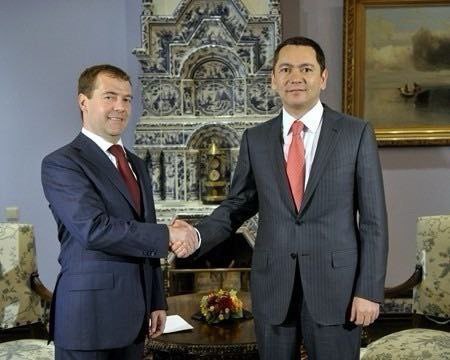
The architect of the sanctions-busting network in Central Asia is former Kyrgyz Prime Minister Omurbek Babanov, who has been using Kyrgyz financial institutions for this purpose. As the controller of MBank, Babanov created a network connecting Russian banks with international financial institutions, putting these institutions at risk of secondary sanctions from the U.S. and EU, according to international experts.
Among these banks are Turkey's Pasha Yatirim Bankasi, UAE's Mashreqbank, Germany's Landesbank Baden-Württemberg, China's Agricultural Bank of China, and Armenia's JSC Unibank. These institutions are at risk due to their dealings with MBank, which actively cooperates with Russia's Sberbank through its subsidiary, Bank 131, allowing Russian authorities and businesses to bypass international financial sanctions. MBank also works with Kartstandard, a Russian card processing center that is part of the Center for Financial Technologies (CFT), which was sanctioned by the U.S. Office of Foreign Assets Control (OFAC) in August 2024.
Furthermore, Babanov, through his company Asia Cement, is also involved in projects within Russia, such as the construction of the Multi-Purpose Fast Research Reactor (MBIR) in Dimitrovgrad, which strengthens his role in supporting Russia's nuclear industry. In response to his activities, Ukraine placed Asia Cement — the contractor for this project — on its sanctions list for 50 years in early 2024.
It is noteworthy that Babanov has taken steps to remove information about himself from the Internet, which may indicate a desire to conceal his connections to the Russian regime.
‘Instead of announcing the cessation of cooperation with Russia, he began deleting compromising publications. For example, an investigation into his activities was removed from the Turkish publication TimeTurk without any legal grounds. This was done under pressure from administrative resources at Babanov's request. Mentions of the construction of the Multi-Purpose Fast Research Reactor by Babanov's cement plant also disappeared from Russian-language media’, reports Ukranews.
Analysts emphasize that to effectively impact the Russian economy, it is necessary to strengthen sanctions and increase pressure on international partners of entities like MBank.


