



Orion unit begins testing Vampire drone control from any point on planet
Drone Industry

Operators of the Orion unit became among the first in Ukraine and the world to test the technology for remote operation of Vampire heavy drones via satellite internet, which allows for performing frontline missions from any point in the world where internet access is available.
The unit reported this to the Drone Industry project.
"Imagine: a pilot opens a laptop in an ordinary apartment somewhere in western Ukraine, connects to the internet, picks up a controller and within minutes is piloting a combat drone flying over the frontline in the Kharkiv region. He successfully delivers water, food, and ammunition to soldiers at their positions or carries out a combat mission. The front line is hundreds of kilometers away," the unit states.
"When UAV pilots became the primary target of the RF, we began searching for ways to hide them from the enemy."
The technology for remote drone control itself was tested several years ago, but on drones nearly five times more expensive than the Vampire; those are much more difficult to operate, costlier, and more complex to maintain. It takes a month to learn how to operate such drones, whereas training for the Vampire takes only five days.
Most importantly, the Vampire has significantly better electronic warfare (EW) resistance and can be landed in any tree line regardless of the radio horizon. In simple terms, a soldier does not need to carry heavy, expensive equipment just to land the Vampire after a mission. Therefore, the technology for remote control of such user-friendly heavy-lift hexacopters is an absolute breakthrough, the military personnel emphasize. Ultimately, this significantly accelerates the training of new pilots and allows for the scaling of an entire system of remote operators.
Back in 2022, during the battles for Bakhmut, it became evident that drone operators at the front were in as much danger as the infantry. The enemy quickly realized that UAV pilots were a key target. They conduct reconnaissance, adjust strikes, and destroy enemy logistics.
Consequently, operator positions became a priority target for the RF. They began to be systematically targeted with artillery, FPV drones, and aerial bombs. Our military then began seeking a way to move pilots away from the front line.
"We consulted with developers of various technological solutions and, in the fall of 2025, found what we were looking for. Ukrainian engineers were able to adapt remote control technology for heavy drones via satellite link. This allowed us to relocate pilots to a significant distance from the front and establish a stable control channel," explains Vladyslav Zolotarov, an officer of the Orion unit headquarters control group.
"Soon, the enemy can be destroyed from anywhere in the world."
Operating a drone at a great distance requires a laptop, a control unit, and a secure internet connection. A special module is integrated into the drone, allowing the control signal to be transmitted via a satellite communication channel. After connecting, the operator gains full control over the drone and can execute missions at the front while being hundreds of kilometers away from the hostilities.
Effectively, the only condition for operation is a stable internet.
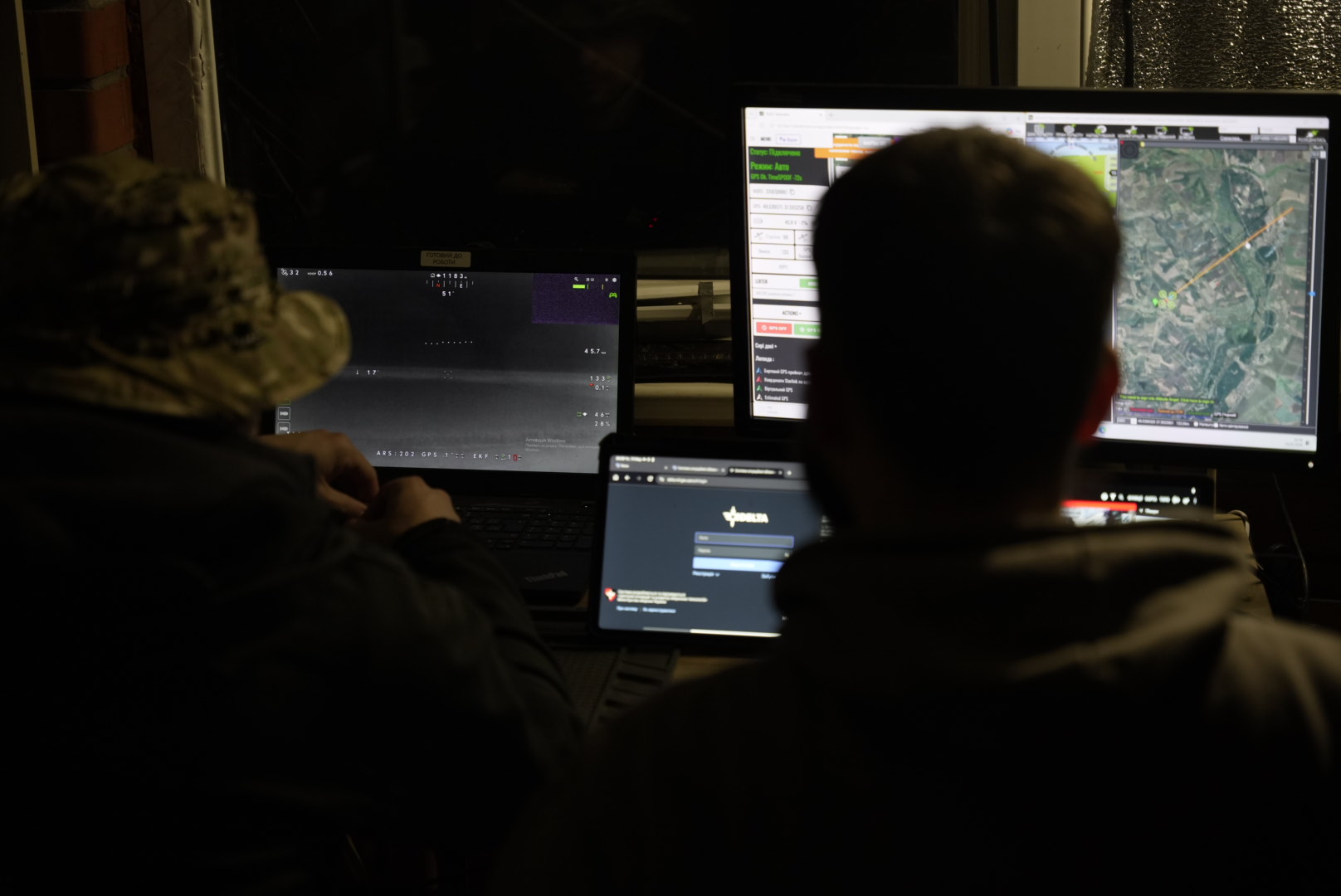
"Changing the logic of war: the operator is far from the front line, while robots work on their behalf."
The main advantage is pilot safety.
"If the pilot is not at the front, it is effectively 100% protection against being struck," says Vladyslav Zolotarov.
Furthermore, conventional drones are highly dependent on radio communication. Due to the radio horizon, signals can disappear, and Russian EW systems frequently jam them. Control via satellite internet significantly reduces these limitations: the drone can operate more stably, fly longer distances, and perform more complex missions.
Effectively, this changes the very logic of war—the operator can be far from the frontline, while drones conduct reconnaissance, carry out strikes, and deliver cargo to positions.
Orion was one of the first in history to complete a complex logistical mission at a distance of over 1,100 km from the front
One of the most challenging sectors where operators currently work is the Kupiansk axis. The Orion unit must deliver water, food, and equipment across the Oskil River; this specific area is controlled by the elite Russian unit Rubikon. Due to powerful enemy EW and difficult terrain, conventional drones often simply do not function here. "The signal degrades due to the radio horizon, and if the drone decreases altitude for an accurate cargo delivery, the control link with the operator may be lost.
In such conditions, Vampire heavy drones with satellite control began to be utilized.
"The drone is loaded with water, food, or equipment and launched from the starting point. It flies across the Oskil, lands near infantry positions or a command post, the soldiers collect the cargo, and the drone returns," says Vladyslav Zolotarov, an officer of the Orion unit headquarters control group.
Previously, a vehicle had to be sent under fire for such a task. Now, the drone performs this work. Effectively, the Vampire replaces a logistics vehicle and saves the lives of drivers and crews.
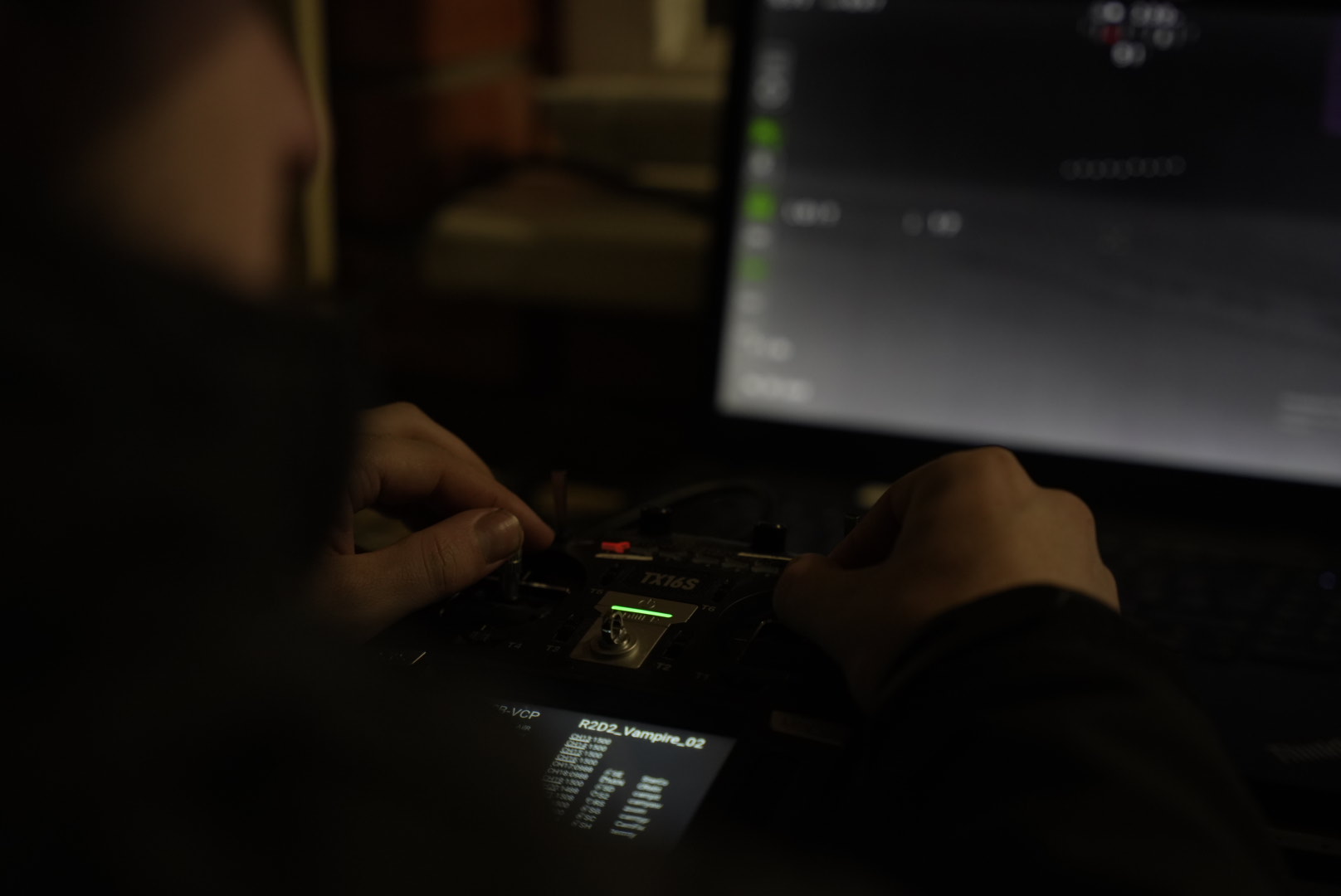
For instance, there was a case where an Orion unit operator located in western Ukraine—over 1,100 kilometers from the front—remotely executed a complex logistical mission: launched the drone, guided it to positions, and delivered essential cargo to Ukrainian military personnel.
"Instead of a vehicle and crew under fire – remote robot control centers."
The Orion unit states that remote control of the Vampire is only the first step. Currently, the military is already seeking technical solutions to allow for similar control of other drones, primarily reconnaissance ones.
"We will look for similar solutions for other UAVs as well—for example, for Mavics or reconnaissance drones. They are already being tested and developed," says Vladyslav Zolotarov.
Over time, this may evolve into full-fledged drone control centers. In the rear—for example, in western or central Ukraine—operators will work, controlling UAVs across various sectors of the front: conducting reconnaissance, striking targets, and providing logistical transport. Effectively, this is the beginning of a new, more robotized phase of warfare, where more combat tasks will be performed by drones while humans control them from a safe distance from the front line.


