



Ukrainian troops develop Pegasus robot capable of traversing swamps and carrying cargo
Drone Industry
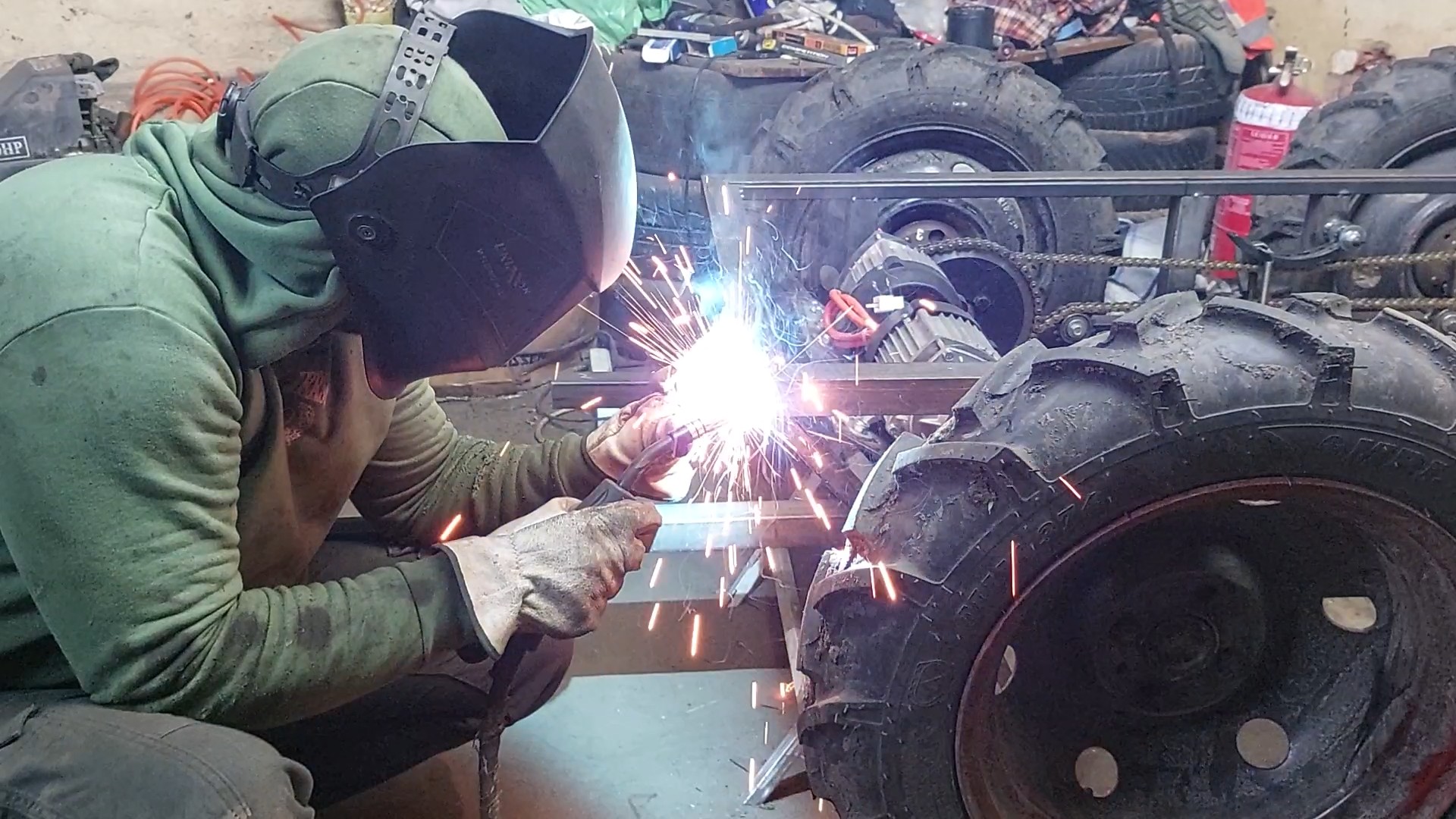
During combat trials, the Pegasus successfully traversed difficult terrain inaccessible to most mass-produced UGVs, travelled up to 40 km without recharging, and proved almost five times cheaper than factory-made equivalents.
The developers, servicemen of the 115th Territorial Defence Forces Brigade, told Censor.NET’s Drone Industry project about the robot.
Design bureau right on the front line
The 115th Separate Territorial Defence Forces Brigade was formed in 2018. Its soldiers defended the Sumy region and Lysychansk and fought in the Donetsk and Kharkiv regions. During this time, they became convinced that mass-produced UGVs do not always withstand real frontline conditions.
"Recently, after the rains, it was difficult to get through even on a quad bike. Standard robots simply bottom out in the mud and get stuck," says Borys, a brigade engineer.
Such situations prompted the servicemen to develop their own equipment — cheaper, better suited to difficult terrain and tailored to specific combat missions. This led the brigade to establish an engineering workshop where it now assembles UGVs, Molniya-type fixed-wing drones and repeaters, while also upgrading equipment for the front.
The brigade’s first major development was the Pegasus ground robot. While a factory-made UGV costs upwards of UAH 400,000, the 115th Territorial Defence Brigade builds its version for considerably less.
The secret is that the equipment is designed not according to factory blueprints but for specific combat missions. The engineers use second-hand components, design the structure themselves and even search for motors on OLX.
"We build a UGV for a specific mission. If necessary, we change its size, payload capacity or range. Not every factory-made robot can travel where we need it to."
The brigade explains that one of the UGV’s key advantages is its ability to be adapted to specific terrain. To achieve this, the engineers increased its ground clearance, fitted it with airless tyres and designed a structure that can be upgraded quickly.
Lviv engineers develop battery enabling one Pegasus to do work of three crews
Today, the robot is primarily used for logistics. It delivers water, fuel, ammunition and food to positions.
It carries up to 200 kg of cargo per trip and successfully handled a load of 370 kg during trials. The Pegasus can travel where factory-made UGVs were unable to operate. Previously, a single mission required several quad bikes or robots, which often became stuck in mud or on forest roads. Now, one Pegasus trip is enough.
However, on the front, it is important not only to deliver the cargo but also to be ready to carry out the next mission immediately. That is why the battery is the heart of any ground robot.
"Most UGVs need to be charged for several hours after their batteries run out. We found a solution. The robot uses swappable batteries. If one is depleted, the crew simply replaces the battery pack, and within minutes the vehicle is ready to carry out another mission," says Borys, a brigade engineer.
For such highly demanding missions, Lviv-based engineers at Pawell Battery developed batteries for heavy drones and unmanned ground vehicles. They are based on technologies used in industrial power systems, specialised controllers ensuring even discharge, power busbars that minimise energy losses, and engineering solutions used in the modern automotive industry. This allows the battery to be replaced quickly and the Pegasus to return to combat missions with almost no downtime.
"The front is currently the best place to identify what needs to be changed or improved. The military’s task is to use technology in real combat conditions and provide feedback. The engineers’ task is to turn that experience into more effective solutions and return them to the front as quickly as possible," says Pawell Battery founder Pavlo Yesyp.
Frontline workshop that works faster than a service centre
Today, the engineers of the 115th Territorial Defence Forces Brigade work not only for their own unit. They repair batteries and electronics, assemble repeaters, replace cables and connectors, and adapt equipment to the specific needs of other military crews.
Often, this is not merely about repairs but also about saving money. For example, servicemen assemble expensive repeaters themselves, significantly reducing costs.
But the main advantage is speed.
"The guys can bring in equipment during the day and take it back to their positions that same night. Sending it to a service centre would mean having to wait. On the front, things very often need to be done here and now," Borys concludes.


