



Risk-free evacuation: How Ukrainian engineers made 35-kilogram rescue robot travel four times farther
Drone Industry
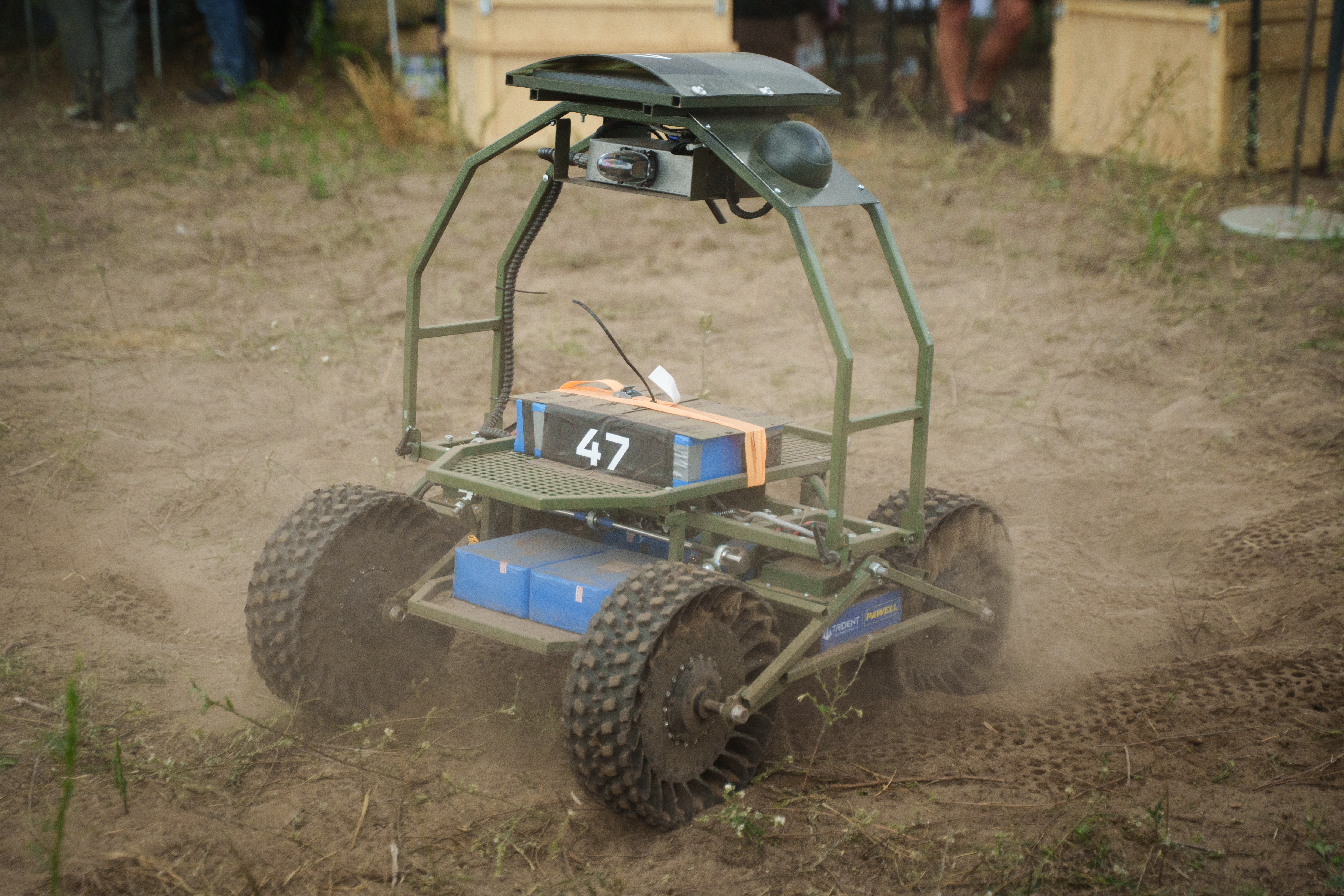
In 2023, Ukrainian troops deployed the "Plastun" unmanned ground vehicle (UGV) on the battlefield for the first time. Every kilometre travelled by the "Plastun" robot instead of a soldier means an infantryman’s life saved, someone who did not have to move under enemy fire carrying a 30-kilogram backpack. It also means a crew spared from being struck by a Russian FPV drone.
Throughout this period, however, Ukrainian troops on the front line faced a severe limitation. The "Plastun’s" manufacturer-rated range was 25 km, but battlefield conditions reduced this to an operational radius of just 10–12 km, after which the robot had to return for recharging. This meant routes had to follow the shortest possible path, and on the front line, that path often runs through areas covered by enemy mortars and drones. The limited range also forced charging points to be kept closer to the forward edge and required personnel to regularly risk their lives by travelling there to service the equipment.
This summer, engineers from Lviv-based PAWELL Battery found a way out of this technological trap, quadrupling the "Plastun’s" range to 100 km.
Fits in a car boot and saves dozens of wounded troops every month
The "Plastun" was developed as a direct response to a request from the military for a vehicle that could perform dangerous work instead of a person, the company told Censor.NET’s Drone Industry project.
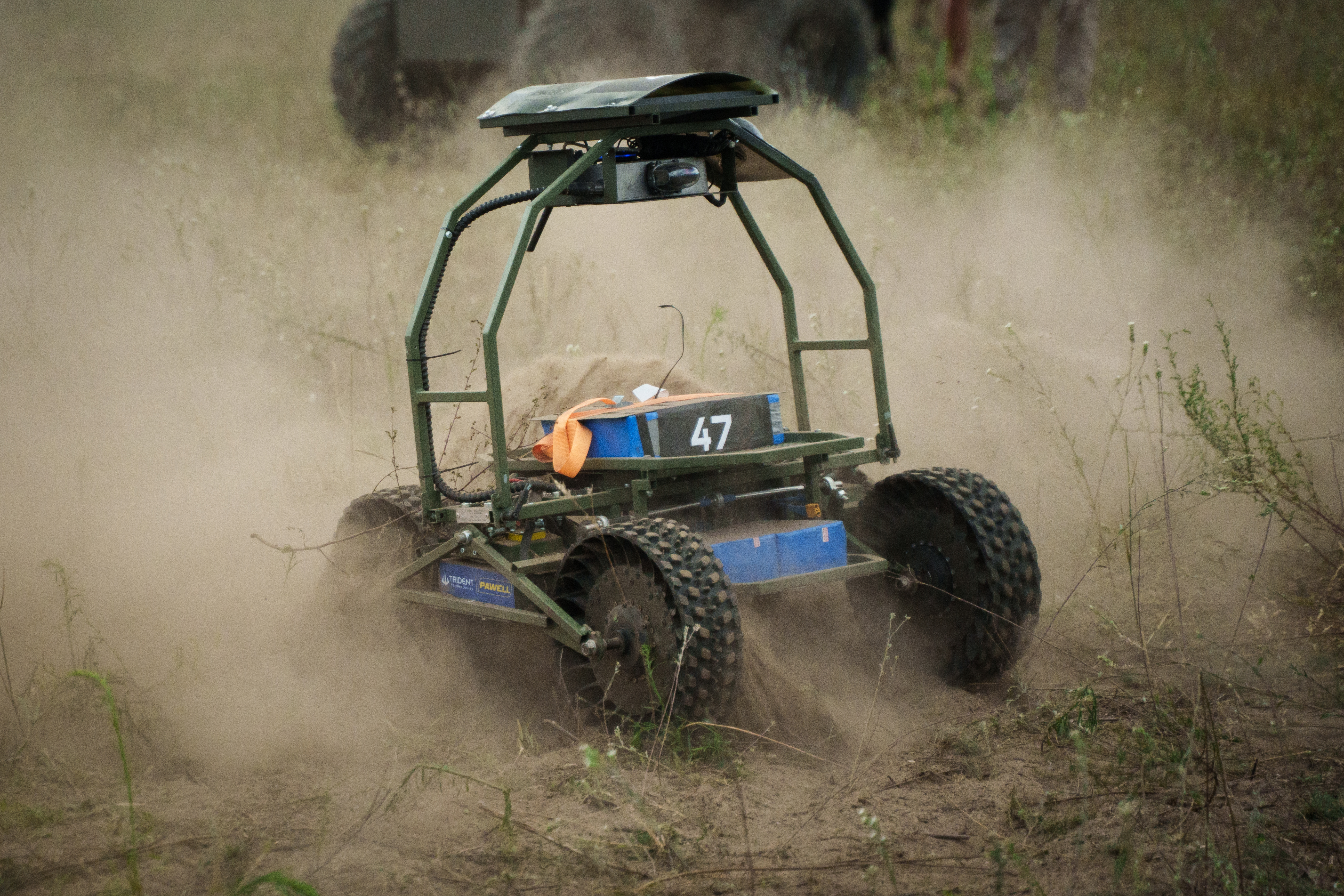
The result is an ultralight robot weighing about 35 kg that can be transported in an ordinary car by one or two people, quickly prepared and sent on a mission. At the same time, it can carry up to 50 kg of cargo – more than its own weight – or evacuate a wounded person weighing up to 120 kg on a specialised stretcher.
The platform is inherently versatile, with different equipment installed depending on the mission. It has logistics, mine-laying and kamikaze variants. Modules for surveillance, electronic intelligence and electronic warfare are under development, along with a sensor system capable of simultaneously "hearing" sounds, detecting ground vibrations and identifying objects using radio waves.
Logistics dead end: Why limited range forced people closer to the line of fire
But what went wrong? Under actual battlefield conditions, the "Plastun’s" main limitation was its range – how far the robot could operate without returning to base. The stated range of the "Plastun" UGV was 25 km. In practice, however, this meant an operational radius of just 10–12 km: the robot was tied to the company-level rear area and had to return for recharging after every deployment.
With this range, routes had to follow the shortest possible path – through areas covered by drones and mortars.
There was another problem: a robot with a range of 25 km cannot operate far from a charging point. The charging point therefore has to be kept closer to the front line, which means personnel must also travel there regularly to service the equipment.
The team of Lviv-based Pawell Battery engineers then asked: what if the "Plastun’s" battery were replaced with one capable of providing several times more energy? They replaced the standard lithium-ion battery with a solid-state one while maintaining compatibility with the robot’s electronics.
The result was striking: the new battery increases the "Plastun’s" energy capacity more than fourfold, while its estimated range is now 75–100 km instead of 25 km.
"The increased energy capacity made it possible to travel farther and more safely: taking detours, moving through low ground and along reverse slopes, and pausing under cover. The robot no longer makes a single one-off run but works for an entire shift," explains PAWELL co-founder Pavlo Esyp.
New chemistry: One battery allows the "Plastun" to travel four times farther
The developers changed the battery chemistry itself, switching from conventional lithium-ion cells to solid-state cells. This makes it possible to obtain approximately 60% more energy from every kilogram of battery.
As a result, the robot has four times more energy on a single charge, while the battery’s weight has only doubled.
"The new battery is compatible with the same electronics, the same operating voltage range and the same battery management system as the standard one. The ‘Plastun’ manufacturer does not need to redesign the robot itself, its power electronics or its charging infrastructure – the battery simply replaces the old one," Pavlo Esyp says.

The capability ceiling of the "hardware": How a 100 km range changes the front line
The extended range enables missions that were previously difficult or entirely impossible:
- Resupplying positions in depth – positions that can currently be reached only by wheeled transport and only at night.
- Multi-stop routes – a single deployment covering three or four positions instead of four separate runs.
- Extended standby duty – the robot can deploy, take cover along the route and wait for several hours until needed for an evacuation, to deliver ammunition during an assault or to relay communications. Previously, every hour spent waiting ate into the range required for the return journey, so robots were kept at base.
- Mine-laying and mine clearance – missions in which movement is not simply a matter of "getting there": the platform manoeuvres at low speed within the same area for extended periods.
The developers say the battery is the factor that determines the capability ceiling of any ground robot. The motors, suspension, communications systems and cameras are already of sufficient quality – the robot can perform only as many missions as its energy supply permits. The new battery was therefore made compatible with the "Plastun’s" standard electronics so that it could be installed on other platforms without redesigning the robot itself and the same fourfold-range principle could be scaled to other ground systems used by the Defence Forces of Ukraine.


