



Lithuania’s Prime Minister explained why Vilnius is changing its rules regarding nuclear weapons
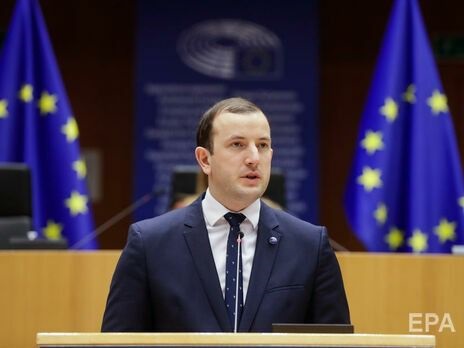
Lithuanian Prime Minister Mindaugas Sinkevičius announced plans to lift the constitutional ban on the deployment of nuclear weapons on the country's territory and spoke about strengthening the Suwalki Corridor.
According to Censor.NET, this is mentioned in Mindaugas Sinkevičius's commentary for Deutsche Welle.
Lithuania is preparing to allow the deployment of nuclear weapons
According to Sinkevičius, the decision stems from the need to take Russia’s actions into account. He recalled that, prior to the full-scale invasion of Ukraine, Putin had stated that Russia would not attack.
"There was a time when Putin claimed that they would not invade Ukraine. So you can never predict what they have in mind or how they will actually act. They say one thing but do something completely different," the prime minister said.
Sinkevičius explained that the Lithuanian Constitution currently prohibits the deployment of weapons of mass destruction on the country’s territory. According to him, the government plans to repeal the relevant article.
At the same time, the prime minister emphasized that this would not mean that Lithuania would develop its own nuclear weapons.
"This doesn't mean that we'll have it ourselves. It means that if a French submarine carrying nuclear weapons sails into a Baltic port, that will be okay. If an aircraft carrying nuclear weapons flies over Lithuania, that will be okay. Currently, that is prohibited," he said.
Sinkevičius also commented on the situation surrounding the Suwalki Corridor, which is referred to as the "Achilles' heel" or "bottleneck" for the Baltic states.
According to him, Lithuania recently established a military training ground and a number of military facilities near the corridor to mitigate risks and strengthen that section.
"Sometimes I hear the Suwałki Corridor referred to as an 'Achilles' heel' or a 'bottleneck.' It's not really that narrow. In fact, it's 60 kilometers wide, and to a certain extent, this creates problems for maneuvering and logistics in the worst-case scenario. But at the same time, we have recently established a military training ground and facilities near the Suwałki Corridor. In other words, it is not a trap or a gap that poses additional risks to Lithuania," the prime minister commented.
It was previously reported that Lithuania plans to deploy troops to guard its border with Russia's Kaliningrad Oblast.


