


Occupiers form special units to counter "Orion" robots: what lies behind 99.57% mission success rate near Kupiansk. PHOTOS
Drone Industry
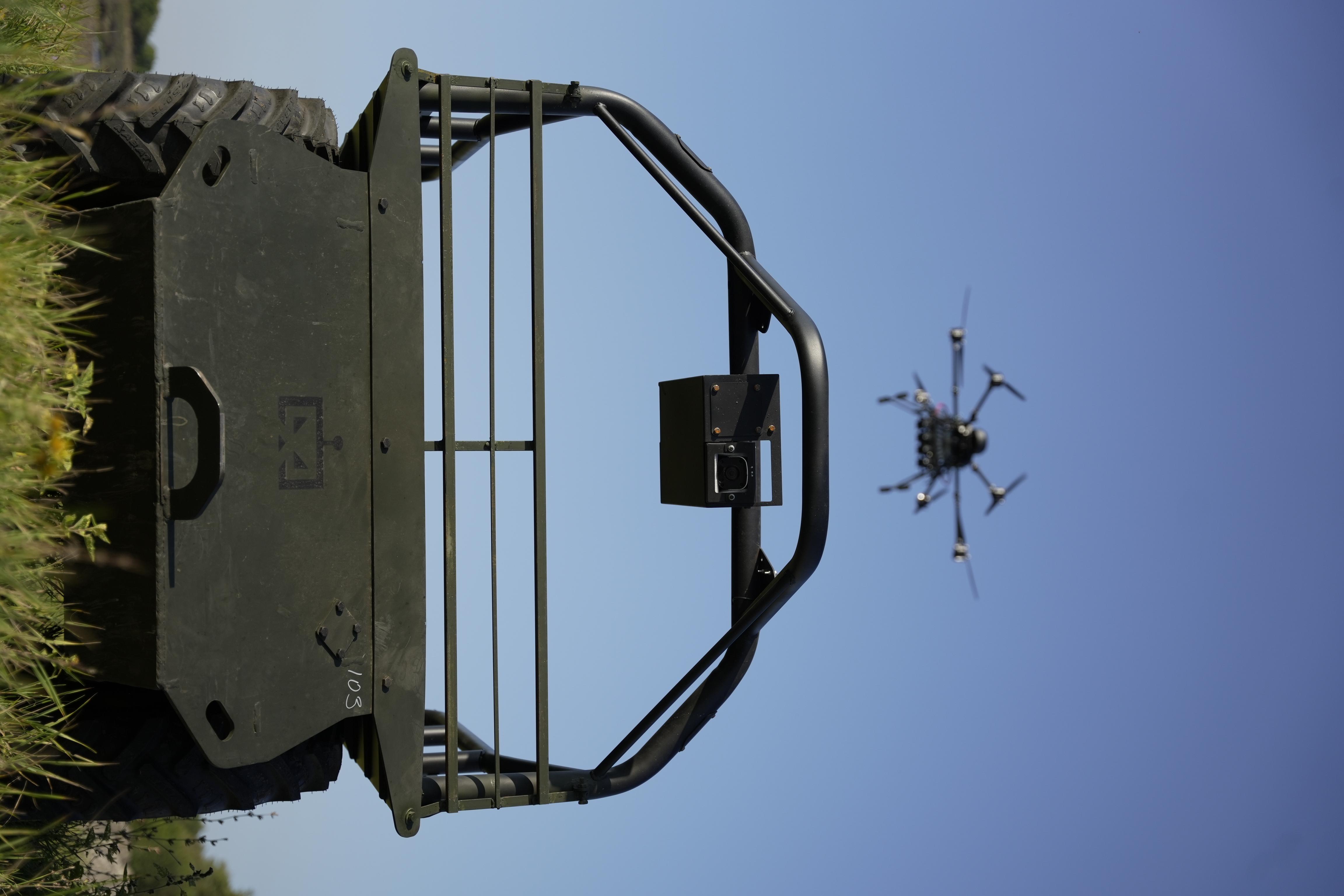
30,257 kg of cargo, dozens of fully autonomous runs through sheer hell and a 99.57% mission success rate in areas where the risk to life is highest.
These are the results of a unique robotic corridor near Kupiansk established by the "Orion" unit.
Enemy infantry are afraid even to approach this line — prisoners themselves admit in interviews: "You can go anywhere, just not into Orion’s zone." Russian vehicles, meanwhile, go up in flames 25 km from the line of contact.

In the southern Kupiansk sector, a small unit using wheeled and tracked robots has outperformed entire brigades and topped the DELTA system’s rankings.
Read on to learn how "Orion" forced the occupiers to hunt Ukrainian robots instead of infantry and created the front’s most effective unmanned corridor.
From the first Starlink trials to a "death strip" near Kupiansk
"Orion" is a rapid-response border command of the State Border Guard Service of Ukraine, part of the Offensive Guard’s "Pomsta" Brigade, which is involved in Operation Vivaldi. The unit has been carrying out frontline missions since 2014.
At the time, Orion’s operators were among the first in the world to test remotely controlling heavy Vampire drones via satellite internet.
In May 2025, "Orion" deployed to the Kupiansk sector, where it established a "kill zone": 88% of the enemy is eliminated before reaching positions, while Russian vehicles cannot get closer than 25 km.
But the main challenge was how to continuously supply ammunition, food, and water to forward positions where every metre is under targeted fire. The answer was to robotise logistics.
No. 1 in DELTA in August: a small border command outperformed entire brigades
Military arithmetic tells us that a rapid-response border command is four to five times smaller than a full brigade.
But in 21st-century warfare, what matters is technological efficiency rather than thousands of personnel. That is why Orion’s border guards in the southern Kupiansk sector ranked first for effectiveness in DELTA in August 2026 — Ukraine’s digital system through which the Defence Forces view the situation on a map and manage combat operations.
In just one month, Orion’s troops carried out 85 exceptionally difficult combat missions, delivering 30,257 kilograms of cargo to the frontline positions. That is the weight of several heavy trucks, transported undetected by the enemy through mud, minefields, and walls of fire.
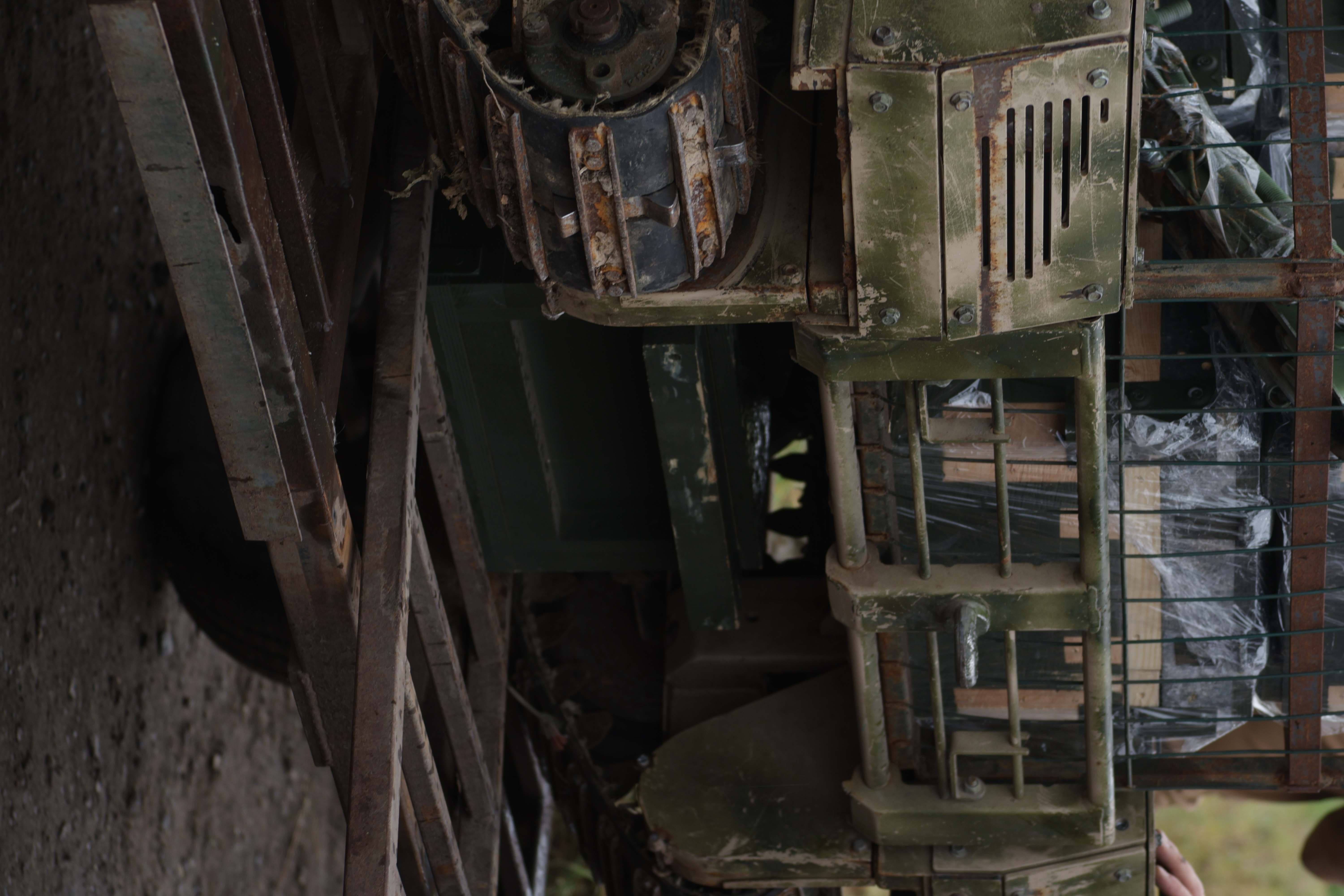
The unit operates a mixed fleet of wheeled and tracked unmanned ground vehicles (UGVs). Every mission involves additional reconnaissance of routes beforehand, anticipating enemy aerial reconnaissance activity and competent planning and execution.
"We have broken the stereotype that supplying an army requires truck convoys and hundreds of soldiers under targeted fire. Our robotic systems are the front’s 'silent lifeblood'. When the enemy thinks our positions are depleted, a tracked platform quietly arrives in the middle of the night and delivers a tonne of ammunition. 99.57% of our missions are successful," says Vladyslav Zolotarov, an officer in Orion’s headquarters command group.
A 100% evacuation success rate where people would have died
In its recent use of UGVs, "Orion" has carried out four evacuation missions, all four successfully. Not a single soldier was lost.
One such incident occurred near Kupiansk in September. At a frontline position where any attempt to approach in a conventional vehicle would mean a direct FPV drone hit, a service member suffered a flare-up of a stomach ulcer. With internal bleeding, waiting until nightfall or leaving on foot was impossible.
The commanders sent a robotic platform to retrieve the wounded soldier. The robot made its way through the "grey zone" under fire, reached the position, evacuated the soldier, and delivered him safely to medics.

Ukrainian ingenuity against enemy traps
The unit’s successes have forced the enemy to change tactics. Orion’s robots are now the targets of a full-scale hunt: the occupiers have formed dedicated aerial reconnaissance and strike UAV crews that exclusively track and destroy ground logistics. They monitor roads, paths and access routes around the clock.
While the Russians send their infantry to the slaughter (prisoners say directly in interviews: "You can go anywhere, just not into Orion’s zone"), the border guards prevail through analysis, flexibility, and remotely operated solutions.
"The enemy hunts our hardware more fiercely than armoured vehicles because they understand that our robots render their attrition tactics useless. But we analyse their every move and carry out missions without risking people’s lives," says Vladyslav Zolotarov.
You can bring your knowledge and skills to "Orion" from anywhere in Ukraine or the world. Details are available at orion.lobbyx.army.


