


Ukraine may be left out of talks between Trump, Putin and Xi Jinping, - Guardian
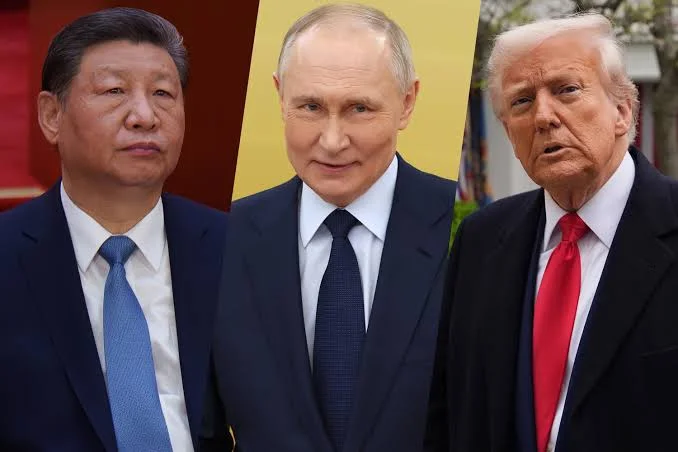
US President Donald Trump, Chinese leader Xi Jinping and Russian dictator Vladimir Putin may meet on 19 November at the APEC summit in Shenzhen, China. Ukraine and a number of European countries will not be taking part in these talks, raising concerns about possible agreements on international security being reached without their involvement.
According to Censor.NET, the British newspaper The Guardian reports on this whilst analysing the possible consequences of the trilateral meeting.
Why are the talks between Trump, Putin and Xi being compared to the Yalta Conference?
Concerns about a possible meeting stem from the events of February 1945. At that time, the Yalta Conference took place in Crimea, at which the leaders of the US, the UK and the USSR – Franklin Roosevelt, Winston Churchill and Joseph Stalin – discussed the post-war order in Europe.
Among the key issues were Poland’s future, its borders and the division of spheres of influence. Yet the states whose fate was being decided by the major powers had no representatives at the negotiating table.
There are now fears that Washington, Moscow and Beijing may attempt to agree on the principles of a new world order without the involvement of Ukraine, the Baltic states and Eastern Europe.
The President of Ukraine, Volodymyr Zelenskyy, had previously also warned against a ‘Yalta 2.0’ scenario, in which the fate of nations would be decided without their consent.
Russia makes no secret of its interest in a new international security system. Russia’s chief negotiator, Vladimir Medinsky, has spoken of the need to establish a security system in Europe, which he compared to Yalta or Potsdam.
Russian Foreign Ministry spokeswoman Maria Zakharova described a possible meeting as an opportunity to move from international instability towards "stabilisation".
What are the aims of Trump, Putin and Xi Jinping?
Each of the three leaders has their own interests. Putin is keen on negotiations that could help bring the war against Ukraine to an end on terms favourable to Moscow. The Kremlin is also seeking to cement Russia’s status as one of the world’s leading powers.
According to reports from the US side, Donald Trump wishes to discuss the reduction of nuclear arsenals. The war in Iran is also cited as one of the possible topics.
According to the Associated Press, nuclear arms control is set to be the main topic of the meeting. At the same time, US officials do not expect Ukraine to be on the agenda. As Reuters reports, the final agenda and format of the meeting are still being finalised.
Xi Jinping finds himself in a difficult situation. China is keen to present itself as a champion of international stability, but at the same time does not want to damage its relations with Russia or escalate disputes with Europe.
Beijing views the war in Ukraine primarily as a matter of European security and is in no hurry to take on the role of mediator.
Analysts quoted by *The Guardian* have differing views on the possible outcomes of the talks. Political scientist John Ikenberry believes that democratic countries can still forge an effective alliance to counter authoritarian leaders.
Charles Kupchan, an expert at the Council on Foreign Relations, is, however, convinced that the world is becoming increasingly dependent on cooperation between states with different political systems.
He does not rule out the possibility that Trump might compromise the interests of Ukraine or Taiwan, although he does not consider such a turn of events to be inevitable.
The mere fact that the three leaders are meeting does not necessarily mean that they will agree on the division of the world. However, for Ukraine, the key issue remains that of safeguarding its security, territorial integrity and the right to determine its own future, the publication concludes.


