


Kushner outlined three "pillars" of peace for Ukraine: security guarantees, EU membership, and recovery plan
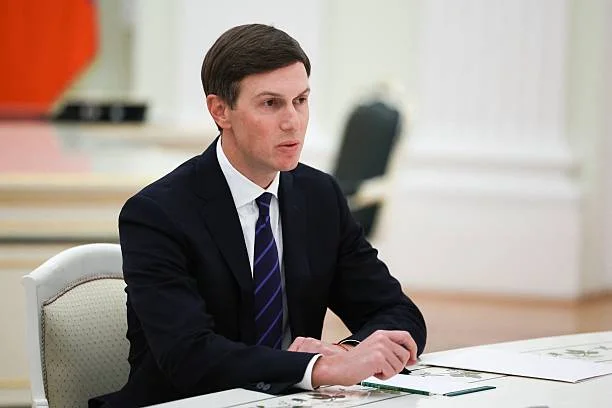
U.S. President’s Special Envoy Jared Kushner announced progress in the peace process regarding Russia’s war against Ukraine and outlined three key areas of focus for Kyiv. The parties have already begun preparing the agenda for the next multilateral meeting.
Kushner wrote about this on the social media platform X, according to Censor.NET.
Discussions and preparations for the meeting
According to Kushner, he and Witkoff spoke with Kremlin aide Yuri Ushakov that morning to discuss the progress made and the next steps in the peace process. There was also a "productive" conversation with Ukraine and European partners, which included national security advisers from Germany, France, the United Kingdom, Poland, and Italy, as well as representatives from the EU and NATO.
"We also began preparing the agenda for the next multilateral meeting, which we are working to convene in the near future," he wrote.
Europe’s dialogue with Russia
According to Kushner, among the issues under discussion is how to facilitate direct contact between Europe and Russia, which "has been largely absent" for the past four years. He emphasized that both sides need to hear each other’s concerns and proposals directly.
The central question: how to end the war and establish postwar security arrangements that will reduce the risk of future wars.
Kushner noted that NATO will remain a key pillar of European security, and the goal is to build on existing European institutions and agreements and to strengthen security commitments, communication, transparency, and de-escalation mechanisms.
Three "pillars" for Ukraine
Kushner recalled that when he and Witkoff began this work a year ago, they considered a sovereign, secure, and prosperous country—one free to determine its own future—to be a successful outcome for Ukraine.
The official emphasized that, together with Ukraine and European partners, they had managed to achieve "significant progress" in three key areas:
- Strong and reliable security guarantees to protect Ukraine from future aggression.
- A path to EU membership.
- A comprehensive post-war prosperity plan, developed in collaboration with European partners, the World Bank, and others, to ensure financial stability, reconstruction, investment, and long-term economic growth.
According to him, this will give Ukraine the strength and confidence to negotiate with Russia on the remaining complex issues.
Final agreement
Kushner emphasized that any final peace agreement must be agreed upon by both Russia and Ukraine. Although public discussion has focused on differences, serious behind-the-scenes talks, he said, are generating "positive and constructive" ideas that are helping to bridge the gaps.
"Significant challenges remain, and a final agreement will require difficult decisions. But we are making progress, working closely with Russia, Ukraine, and Europe, toward an outcome that can end this war, strengthen European security, and lay the foundation for lasting peace," Kushner added.
- On November 10–11, trilateral talks were held in Abu Dhabi between representatives of Ukraine, the United States, and Russia—the first in this format since February. The Ukrainian side reported some progress, but no concrete agreements on ending the war were reached.
- Ukraine has long insisted on Europe’s full participation in the peace talks. Russia had previously opposed this format. In particular, Russian Foreign Minister Sergey Lavrov criticized the presence of European officials in Abu Dhabi this week, calling such an approach futile.


