


Ukraine is Europe’s first line of defense: EU fears the consequences of halting aid to Kyiv — Politico
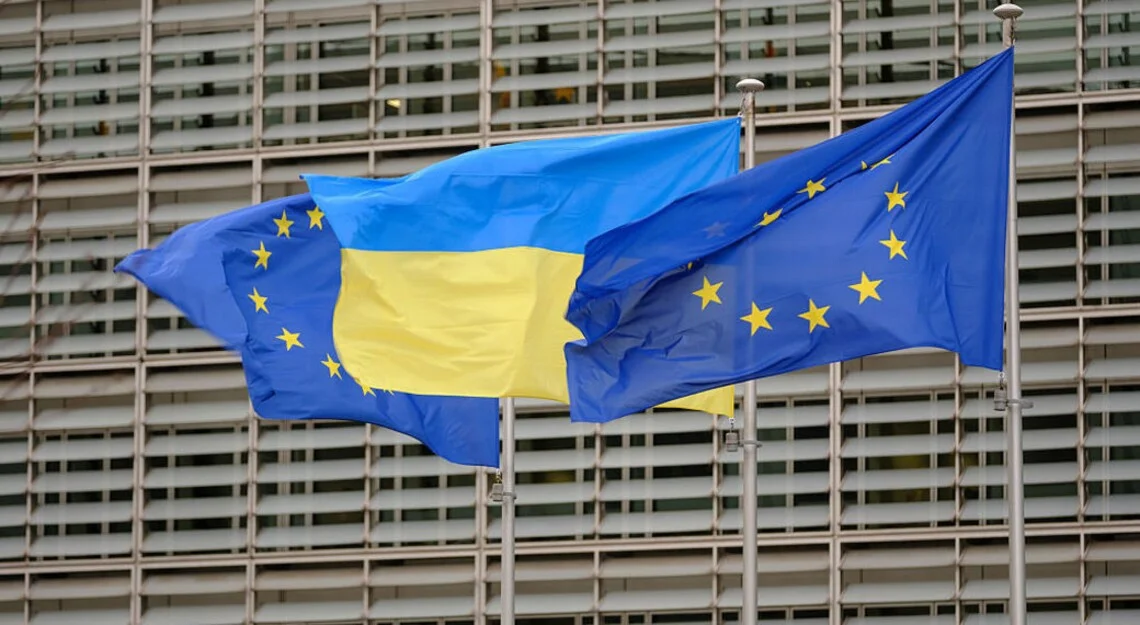
The governments of European Union countries recognize that Ukraine is Europe’s first line of defense, but public opinion in a number of countries is increasingly less supportive of continued military aid to Kyiv.
According to Censor.NET, Politico reports on this.
Amid war fatigue and budget constraints, European leaders are trying to find funds to support Ukraine, fearing that the costs would be significantly higher if Ukraine were to be defeated.
Resistance to military aid for Ukraine is growing in Germany
In Germany, Europe's largest economy, 53% of the adult population opposes providing military aid to Kyiv. At the same time, the percentage of those in favor of providing support has dropped from 59% to 46% over the past year.
This trend reflects the war fatigue felt by European societies as the fifth anniversary of Russia’s full-scale invasion approaches. This creates political risks for centrist governments amid tight budgets and the rising popularity of populist forces.
Despite public pressure, most European politicians are convinced that cutting off funding to Ukraine would have far more serious consequences than unpopular decisions regarding aid to Kyiv.
The EU fears that if Ukraine is defeated, Vladimir Putin will declare victory and may embark on further expansion, particularly against the Baltic states.
European leaders warn of threats to EU security
Representatives of European governments emphasize that support for Ukraine is directly linked to the security of the European Union itself.
Swedish Minister for EU Affairs Jessica Rosenkrantz called aid to Ukraine an existential necessity. Estonian Prime Minister Kristen Michal noted that Ukrainians are paying with their blood while Europe counts its money.
Polish Prime Minister Donald Tusk also warned that attempts to cut defense spending could turn out to be a much more costly mistake.
According to analysts' estimates, a partial victory by Russia could trigger a new wave of migration to Europe—up to 10 million Ukrainian refugees. This would lead to increased social costs and the urgent need to strengthen NATO's eastern flank.
Europe's total costs under this scenario are estimated at €1.6 trillion—twice as much as the cost of supporting Ukraine until its victory.
Timofey Milovanov, president of the Kyiv School of Economics and former Minister of Economy of Ukraine, believes that a victory for Moscow would trigger an economic crisis in Europe, specifically leading to a decline in trade and investment in countries neighboring Ukraine, such as Poland and Romania.
In his view, providing financial assistance to Ukraine remains the least expensive way to deter Russian aggression.
The EU is discussing a new €45 billion loan for Ukraine
The issue of funding remains critical for Kyiv. Due to a decline in international revenue, Ukraine’s military and national budget deficits are projected to reach €70 billion next year.
EU leaders are discussing the allocation of a new €45 billion loan tied to the EU’s next seven-year budget. These funds are expected to cover about two-thirds of Ukraine’s needs.
Germany plays an important role in this process. Since 2022, it has provided Ukraine with €54 billion in aid, second only to the United States in terms of the amount of support provided.
German Chancellor Friedrich Merz, despite pressure from far-right and far-left forces, insists on including long-term aid to Ukraine in the EU budget. At the same time, according to the data cited, 88% of supporters of the "Alternative for Germany" party oppose such support.
German Defense Minister Boris Pistorius emphasizes that the stability of the entire European continent is at stake.
Oleksiy Makeev, Ukraine’s ambassador to Berlin, for his part, criticized leading German political parties for allowing radical political forces to seize the initiative in public debates at the local level.
The EU is concerned about political changes in France and resistance from certain countries
Another reason for the European leaders' haste is the run-up to the French presidential election, scheduled for next April.
Brussels fears that a potential victory by far-right leader Marine Le Pen could block the European Union's financial mechanisms and lead to a reduction in aid to Ukraine.
That is why Friedrich Merz and Danish Prime Minister Mette Frederiksen are seeking to secure funding for Kyiv in advance as part of the EU’s seven-year budget.
However, the initiative has already faced resistance within the European Union. Hungary, Slovakia, Bulgaria, and the Czech Republic have requested to be exempted from participating in the new funding package.
Experts on international relations note that Merz and French President Emmanuel Macron are forced to take proactive measures, despite unfavorable public sentiment and domestic political risks. In their view, European leaders must make unpopular decisions now to avoid a major defense crisis in the future.


