@TimmersE1974 @DajeyPetros http://militaryreview.su/107-rzso-bm-21-grad.html … say that normal dispersion is 1/130 length, 1/200 width of distance.
And then Peter Johnson asked an important question, I had not considered yet:




In-depth analysis of the terrorist act in Volnovakha, the Donetsk region, in which Russian terrorist shelled a bus with civilians, leading to 13 people dead and 15 wounded.
Originally the analysis of the Volnovakha incident can be found here:
 The Interpreter @Interpreter_Mag Follow
Evidence Strongly Implicates Russian-Backed Fighters In Bus Shelling That Killed 11 Civilians http:// bit.ly/1wW1XLO
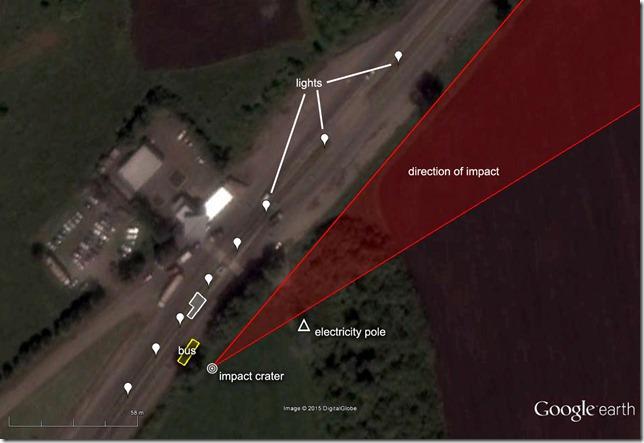
Here is a situation map:
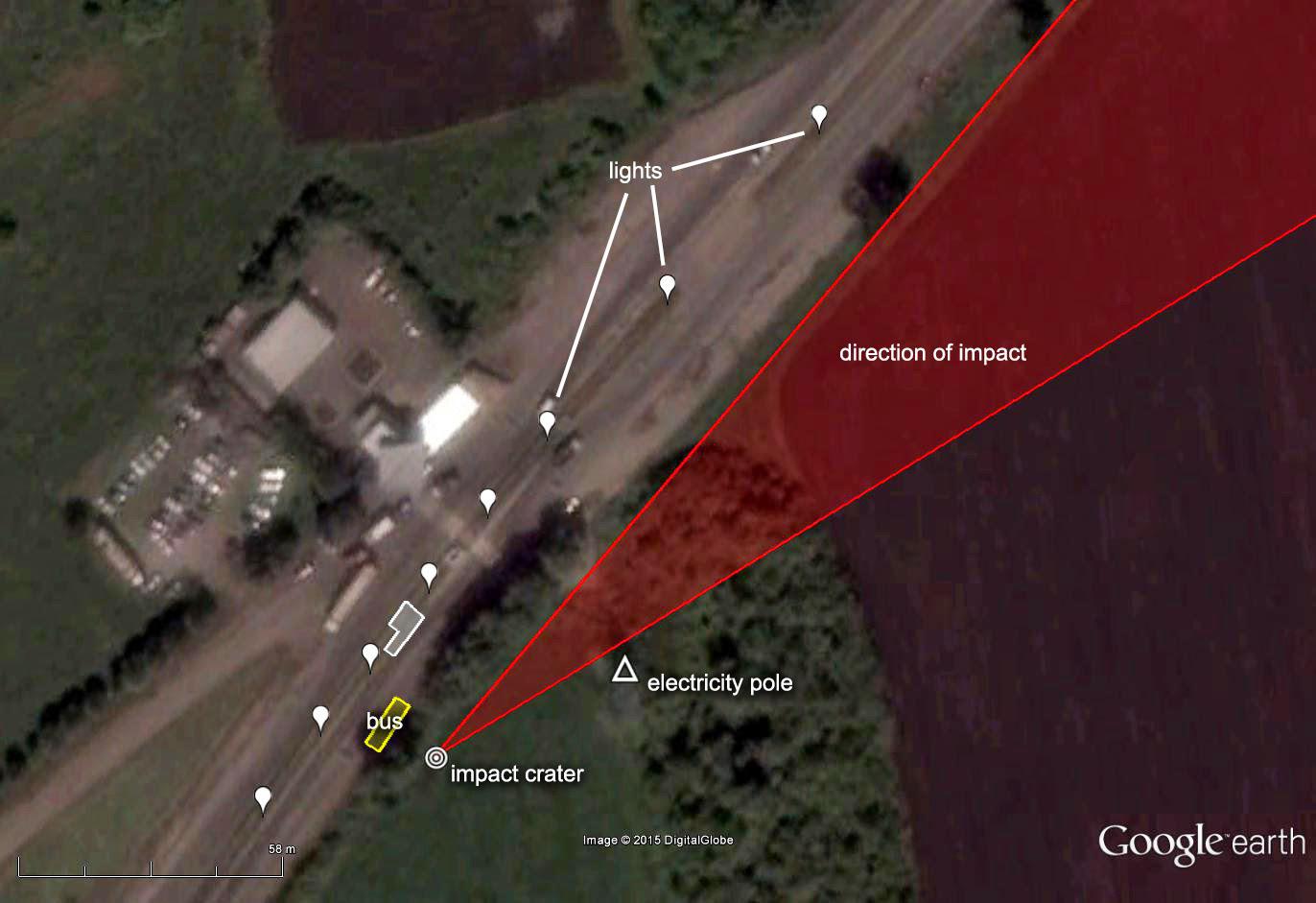
On a larger scale that looks like this:
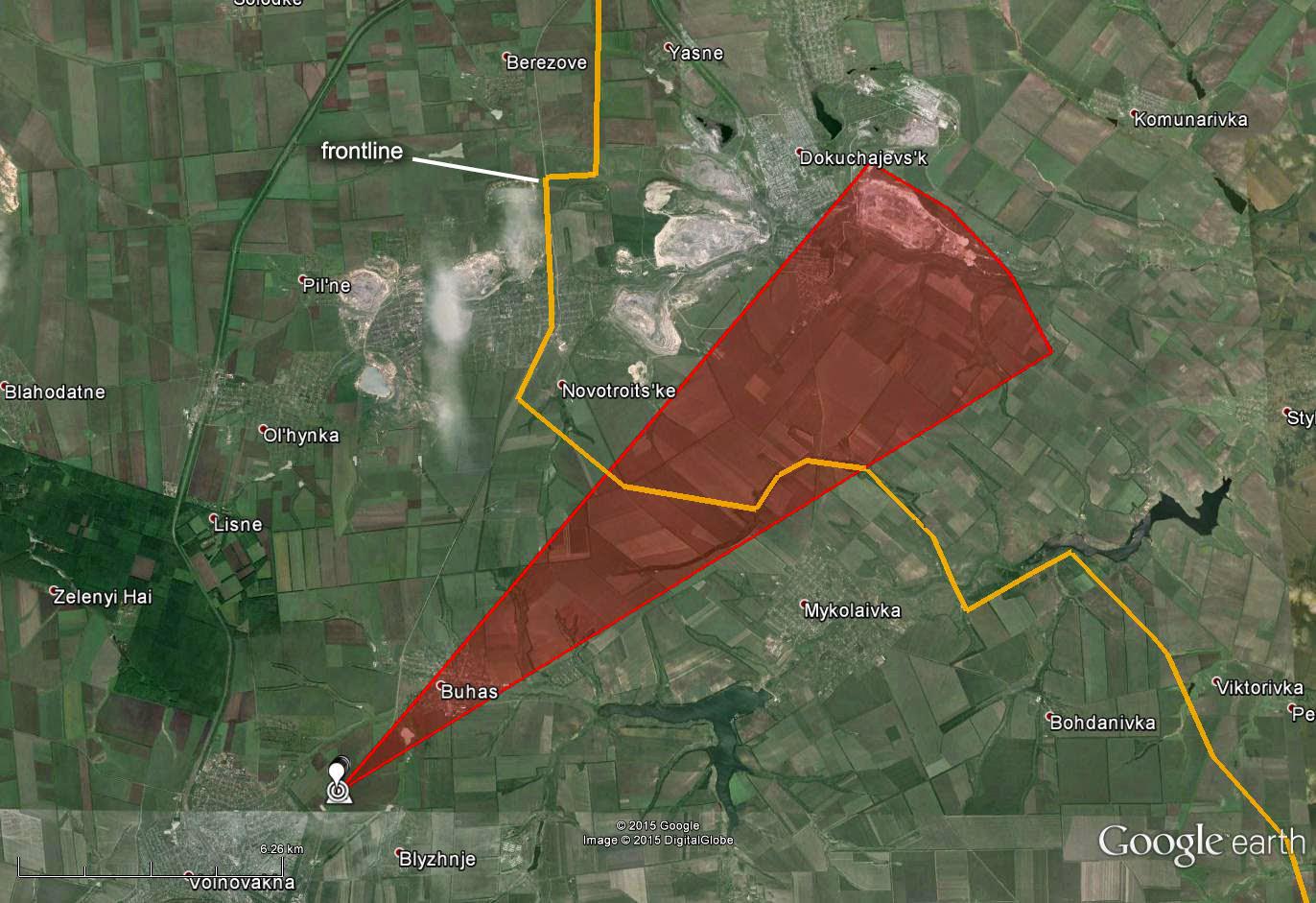
Clearly the rockets came from Russian occupied territory.
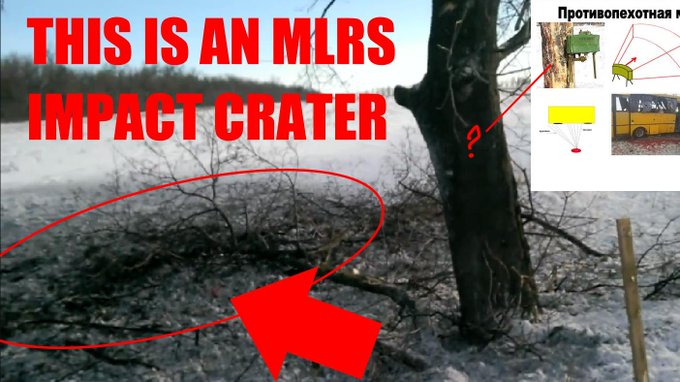
In addition I tweeted these things about it, because they argued it was cased by a Ukrainian MINE:
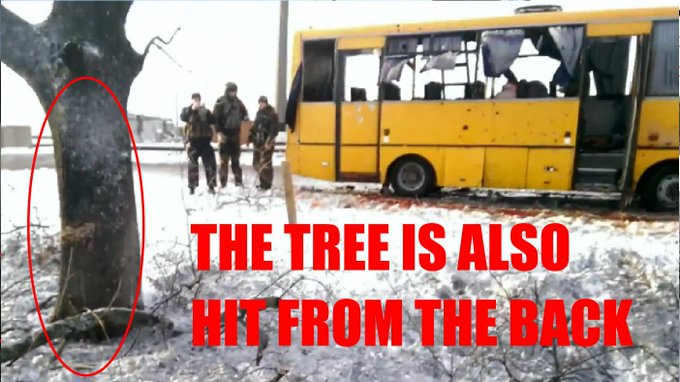
 Ukraine@war @DajeyPetros Follow
Can somebody send this to the trolls? Maybe then they stop justifying Putins killings. I blocked all of them already.
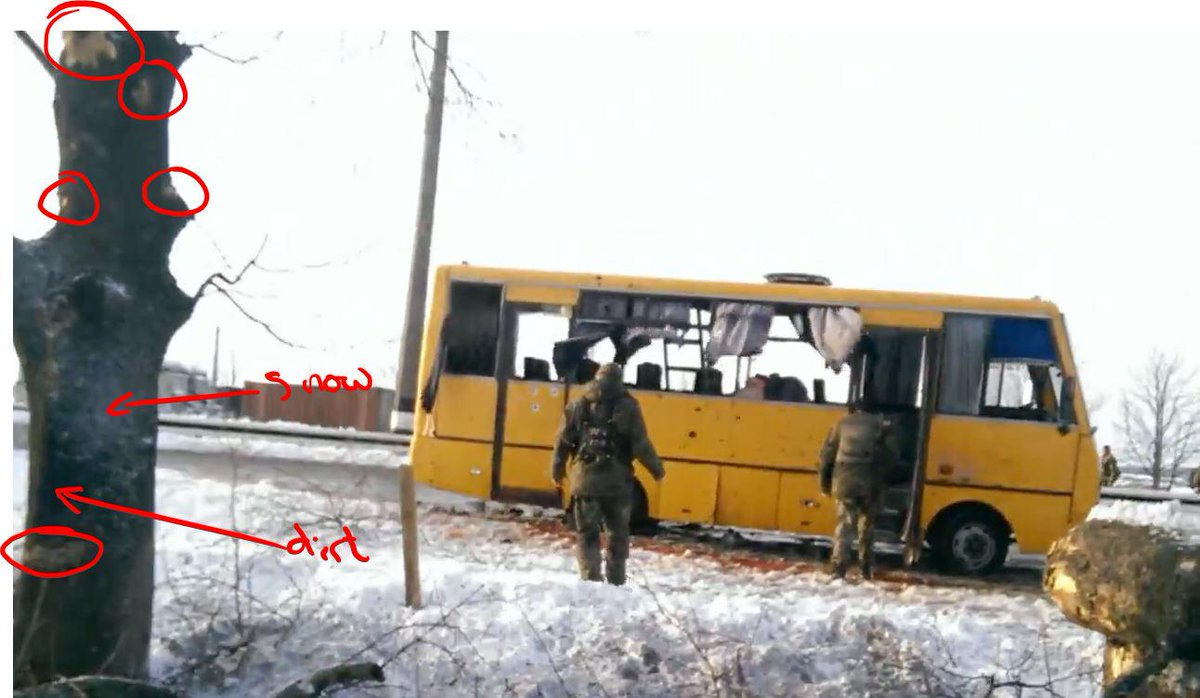
Ukraine@war @DajeyPetros Follow
@ DajeyPetros Do these Russian Propaganda Trolls even have a conscience? Here, all impacts on the back of the tree:
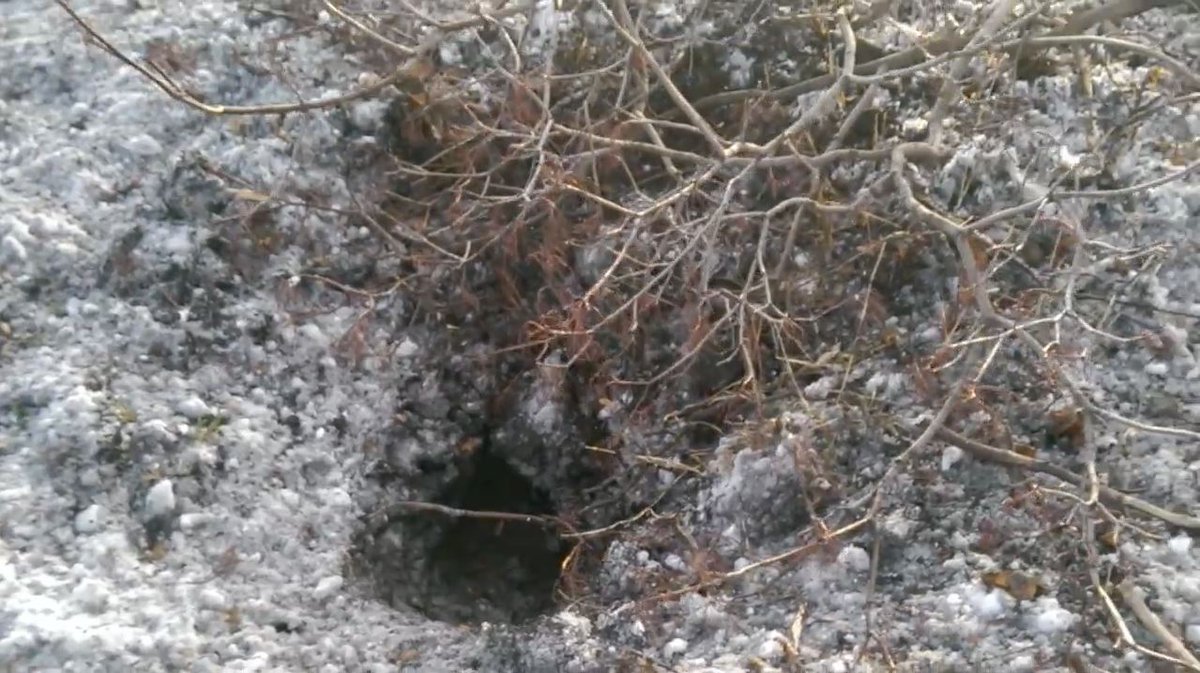
Ukraine@war @DajeyPetros Follow
@ DajeyPetros Claymores do not make holes in the ground like this. GRAD or other MLRS does.
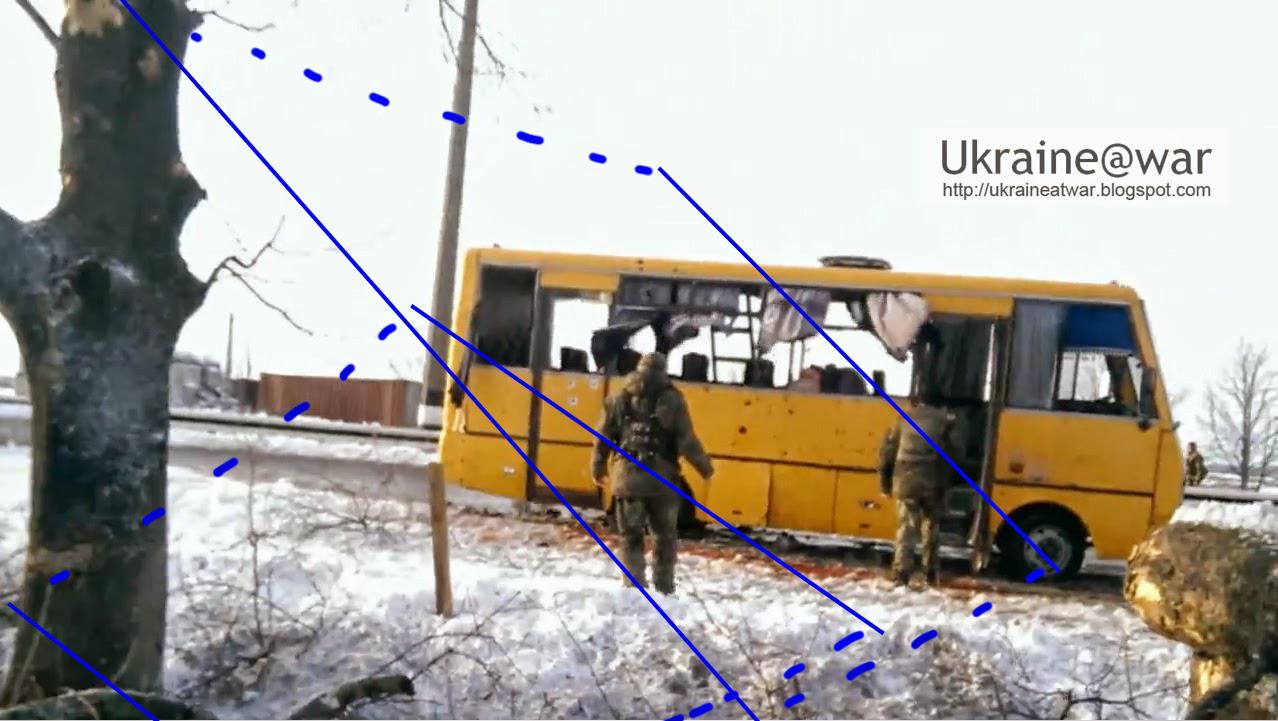
The impacts in the bus show a banded pattern:
This can even be extended to the tree. Such a banded pattern is typically for MLRS impacts, such as GRADs.
Here is such a pattern from GRAD on an apartment building in Pervomaisk:
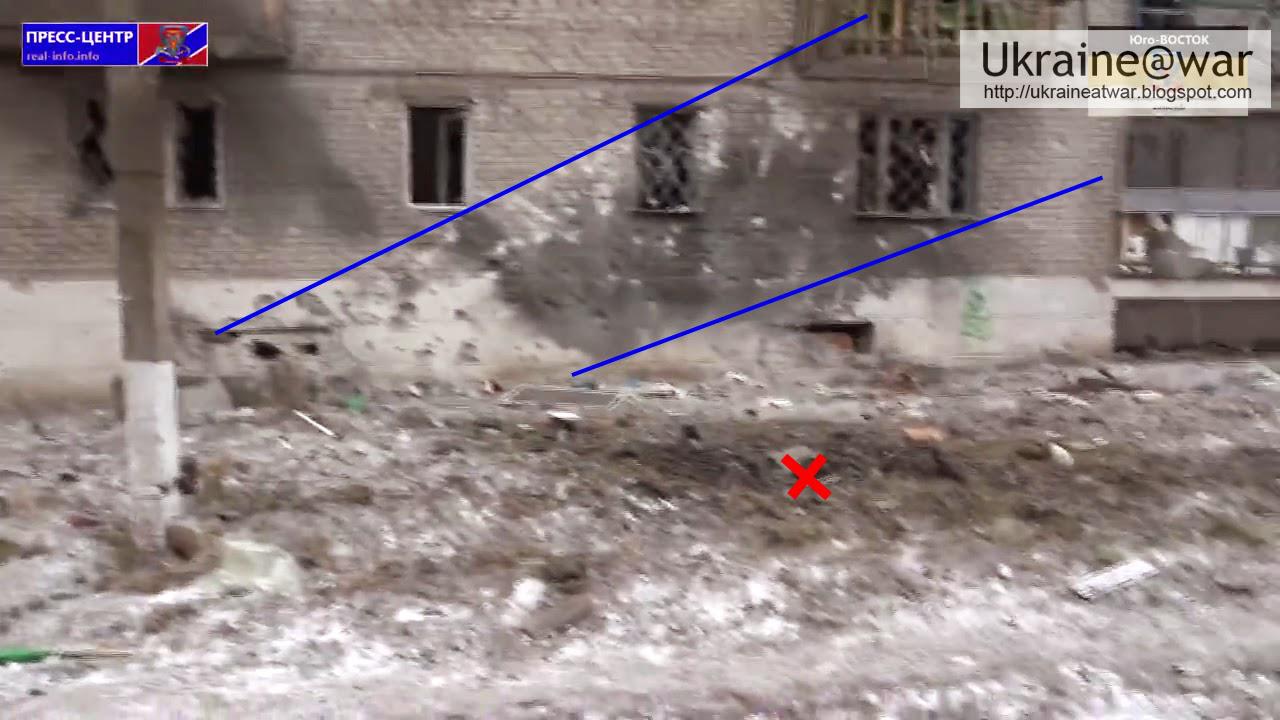
The red X is the impact crater.
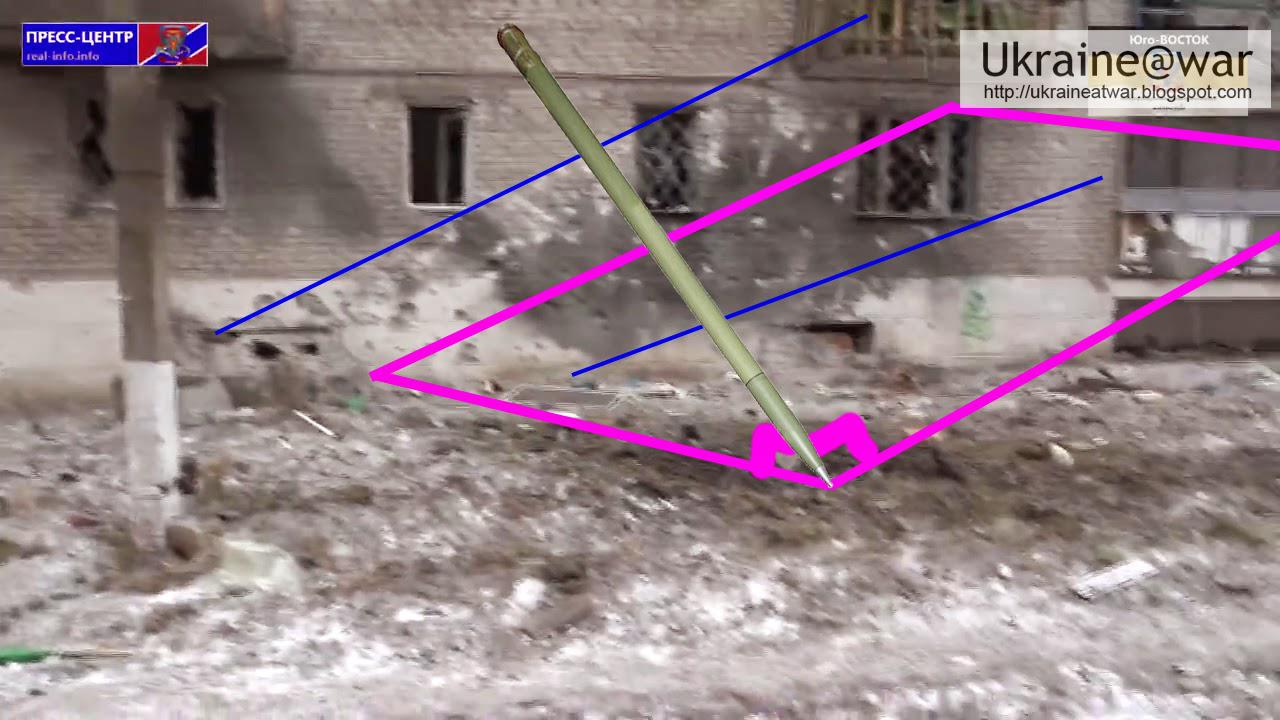
This is how a warhead of a GRAD explodes:
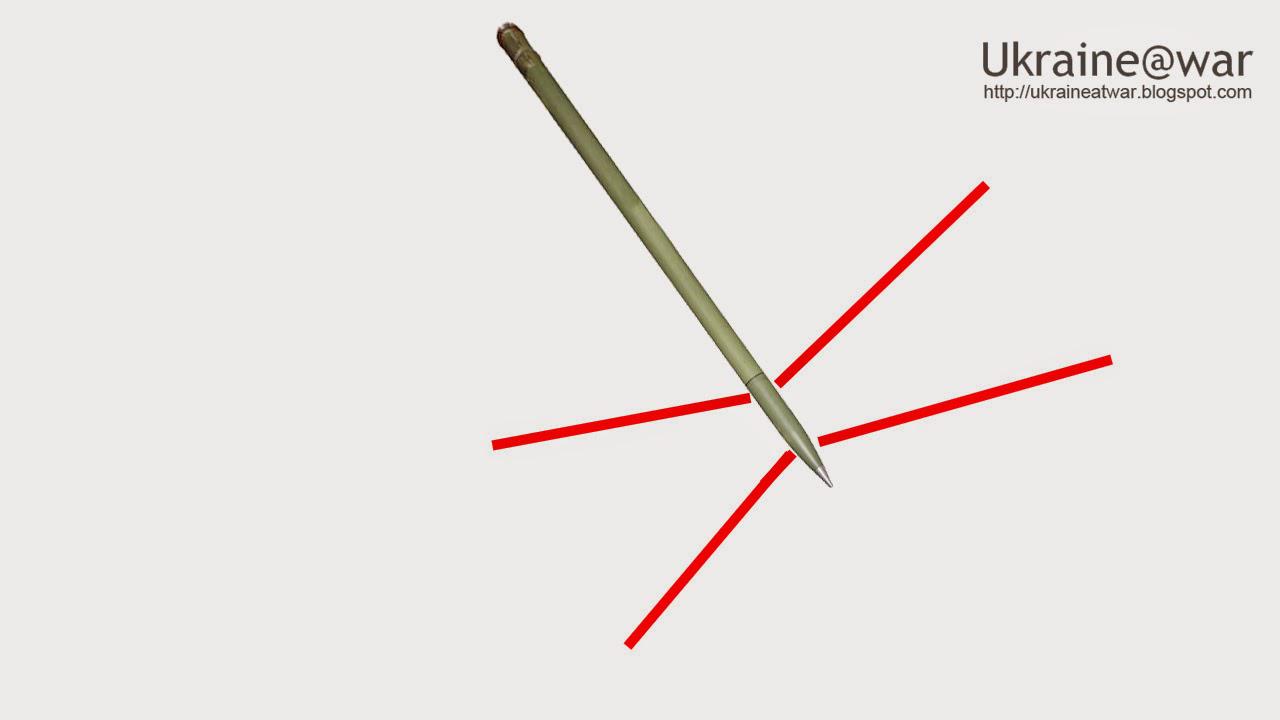
It is in a circle around the rocket. It explodes TO ALL SIDES.
When we put the images together, you get this:

To be precise, the upper side of the warhead matches with the upper blue line:
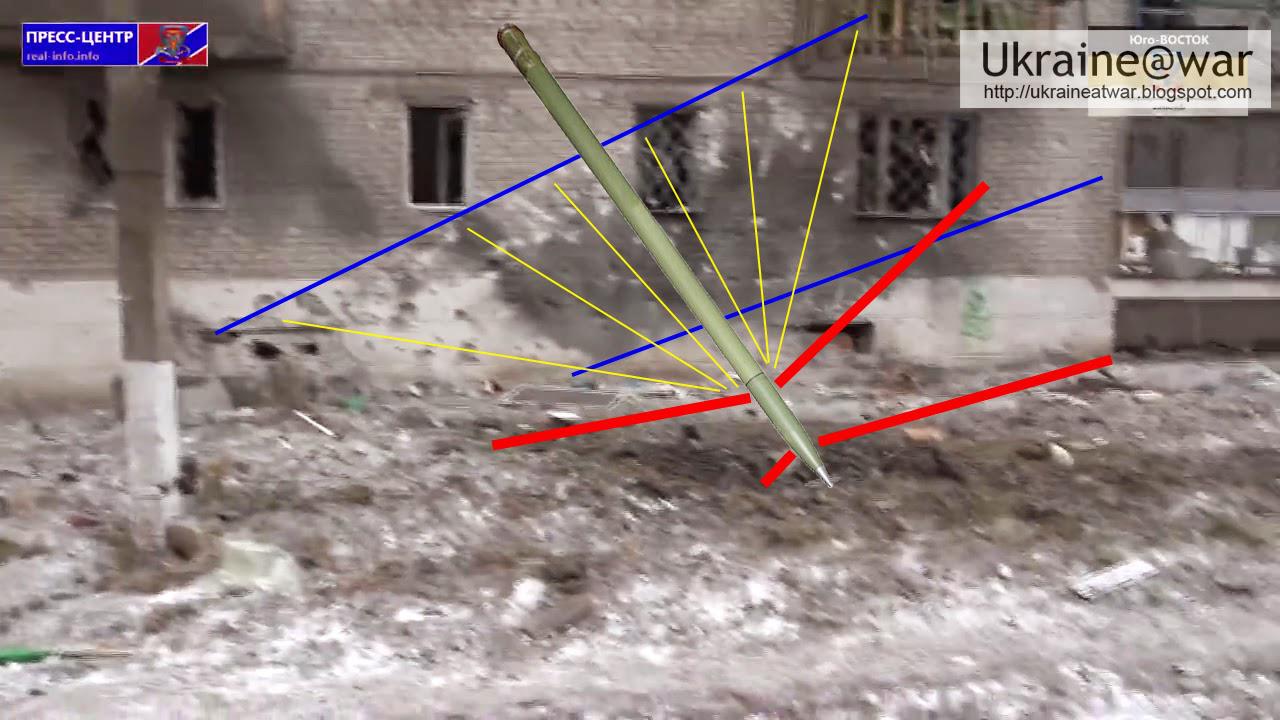
While the bottom of the head matches with the lower blue line:
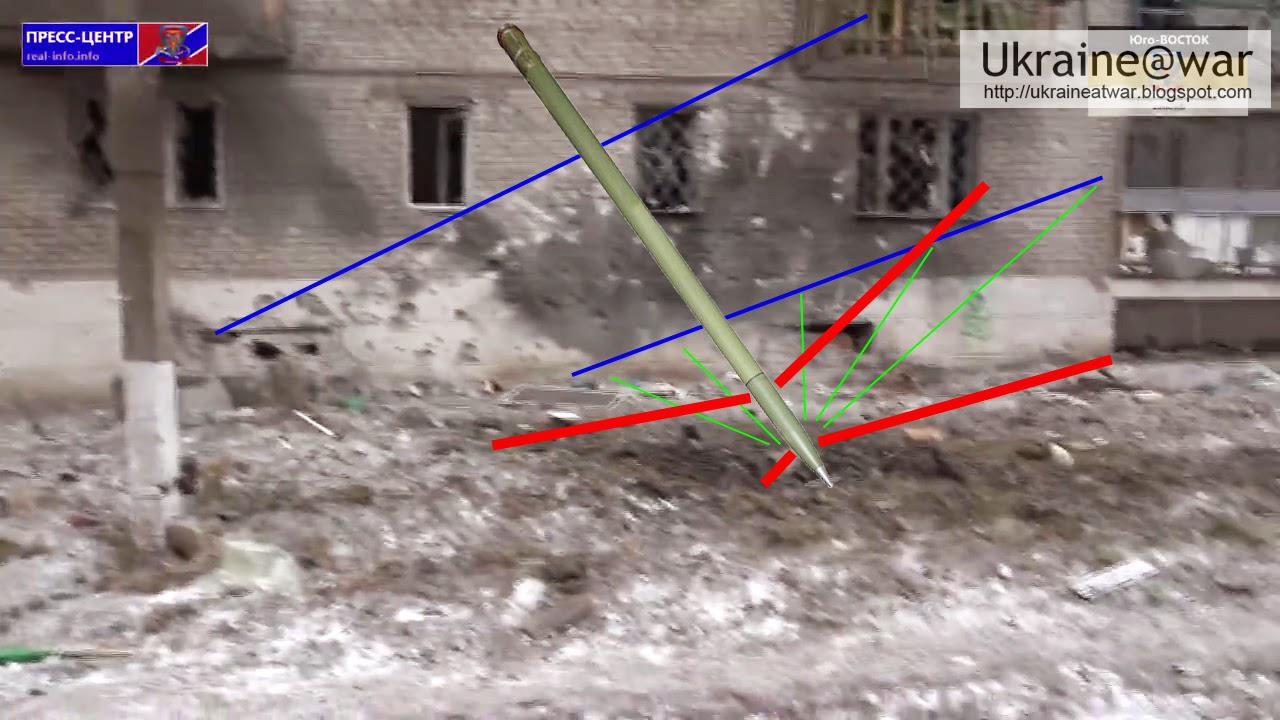
All in one picture:
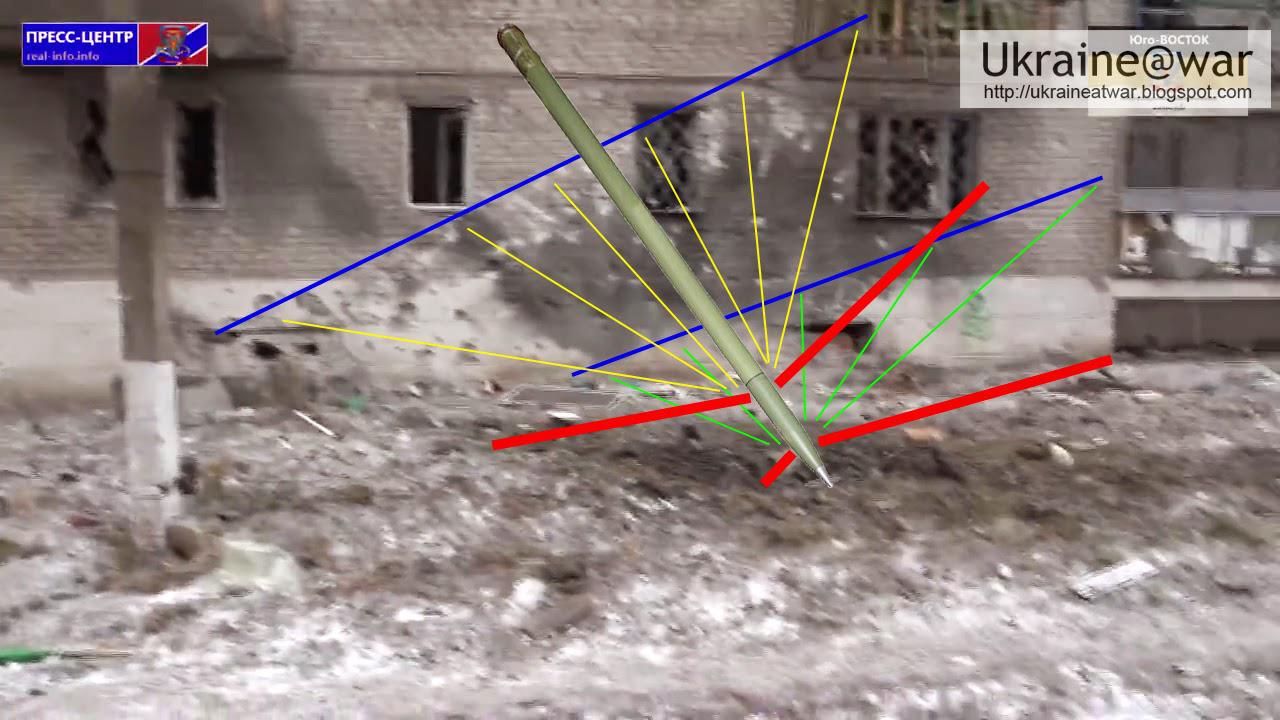
So a typical GRAD blast pattern is:
This is EXACTLY what we see on the bus:
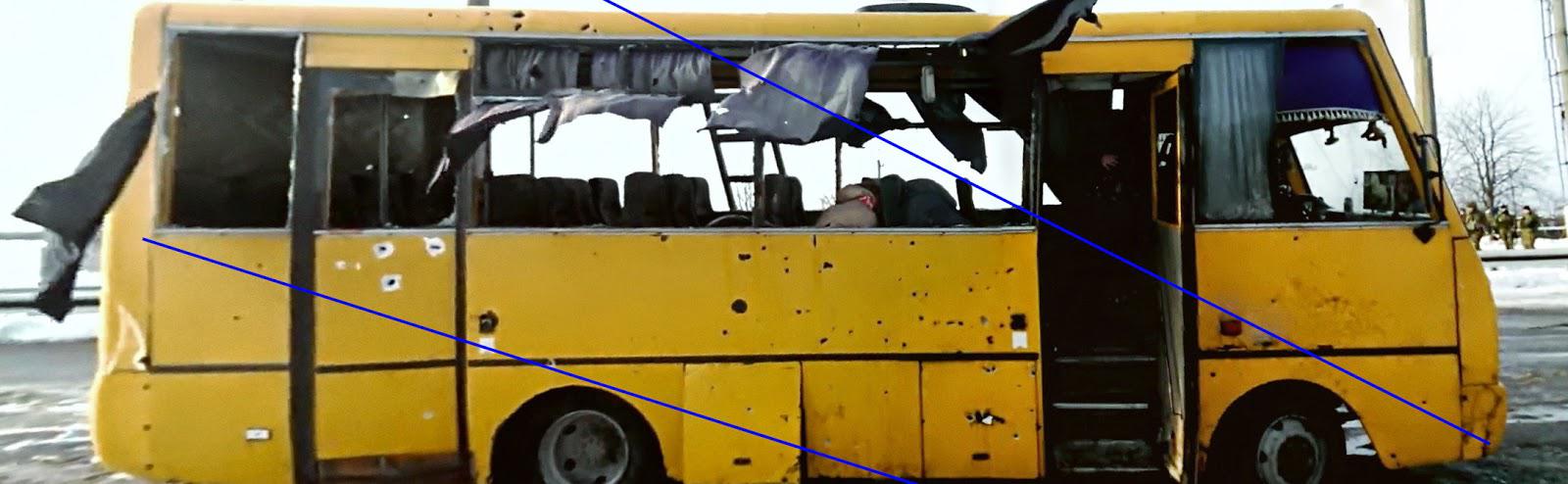
What's interesting about this, is that we can draw a plane from the banded pattern through the impact hole. And then the impact direction is perpendicular to this plane!
(sorry for not being able to draw a better image.)
Also this perpendicular angle has to EXACTLY match the impact hole in the ground (dotted yellow line):
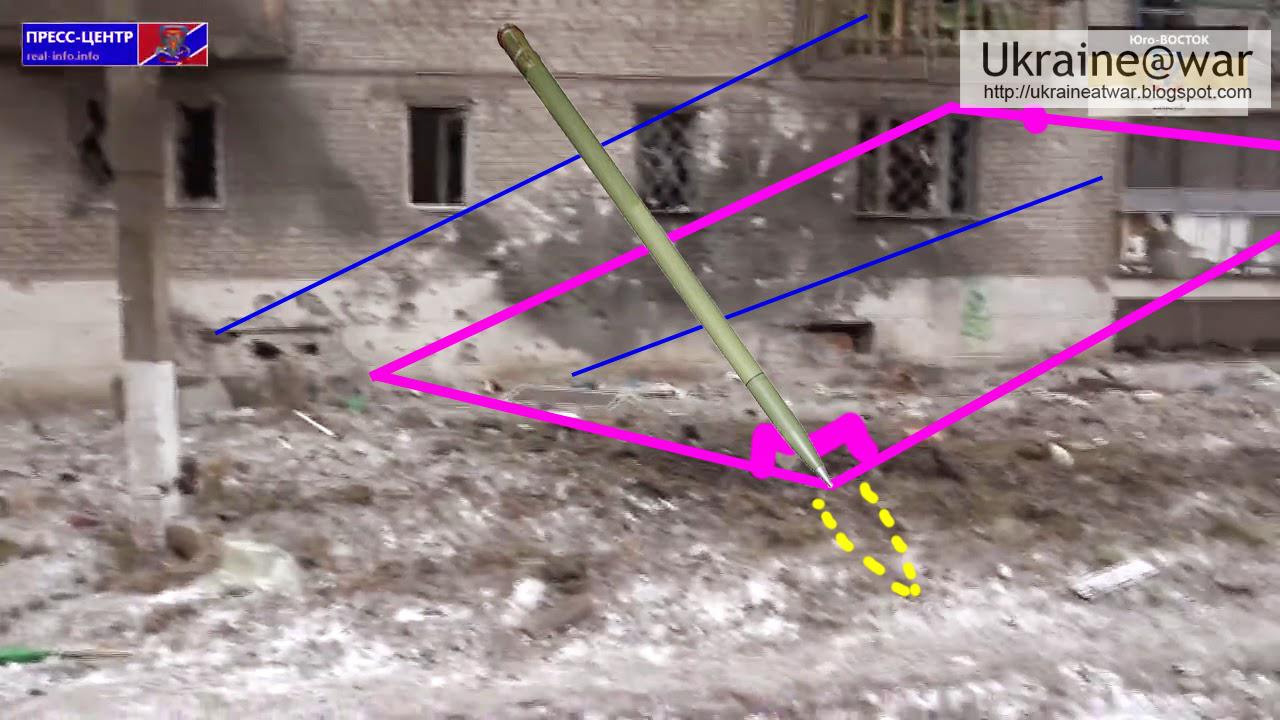
So, in this Volnovakha case we see that:
A mine would give a TOTALLY different pattern.
Conclusion
The Russians attacked a Ukrainian checkpost where a bus with civilians was waiting to pass by.
A MLRS rocket (GRAD or larger) hit in the field nearby.
The blast exactly covered the side of the bus, creating the multiple casualties that we see.
UPDATE 14-1
This video is showing the MLRS attack on the Volnovakha checkpoint:
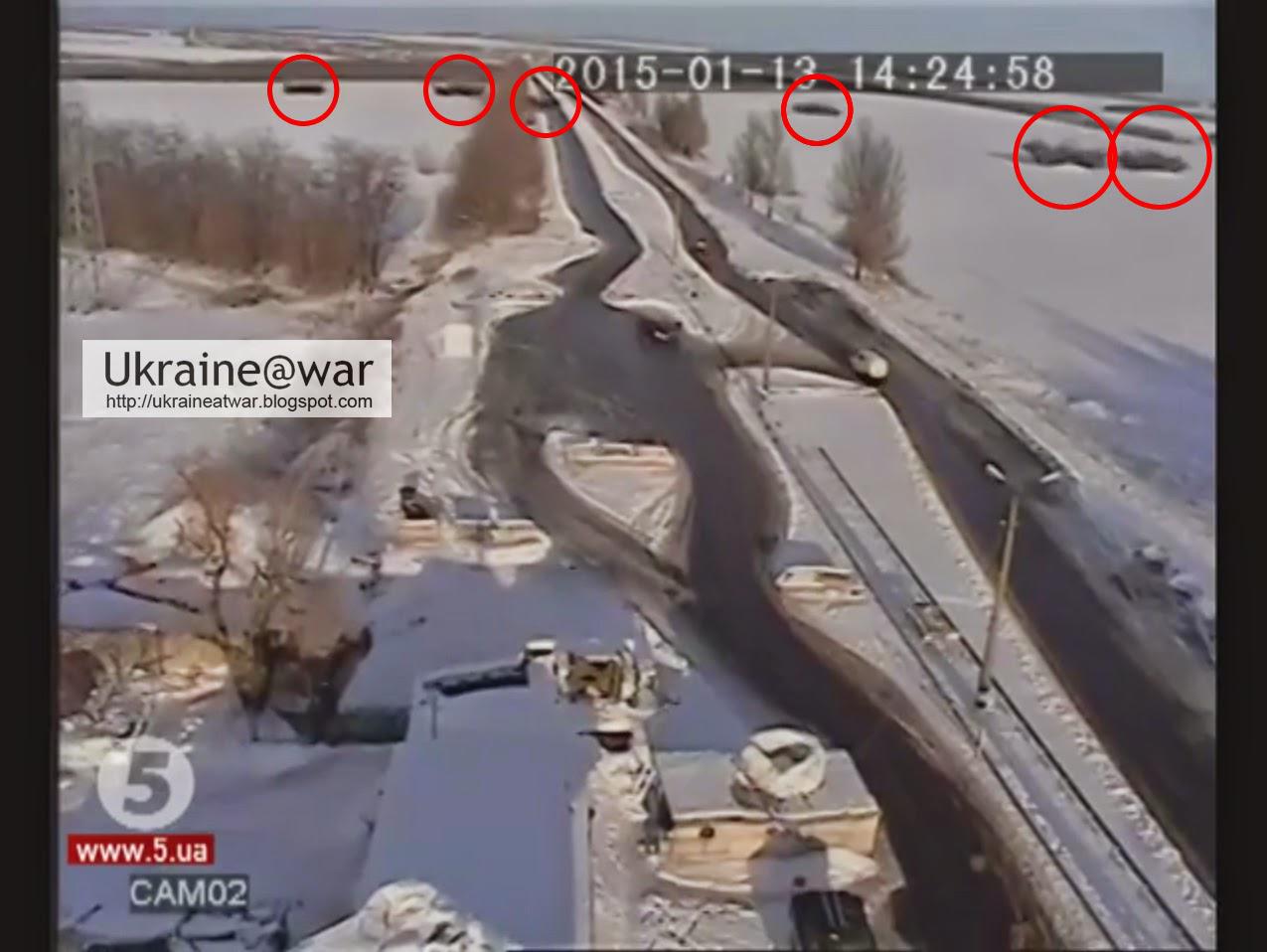
This is a screenshot:
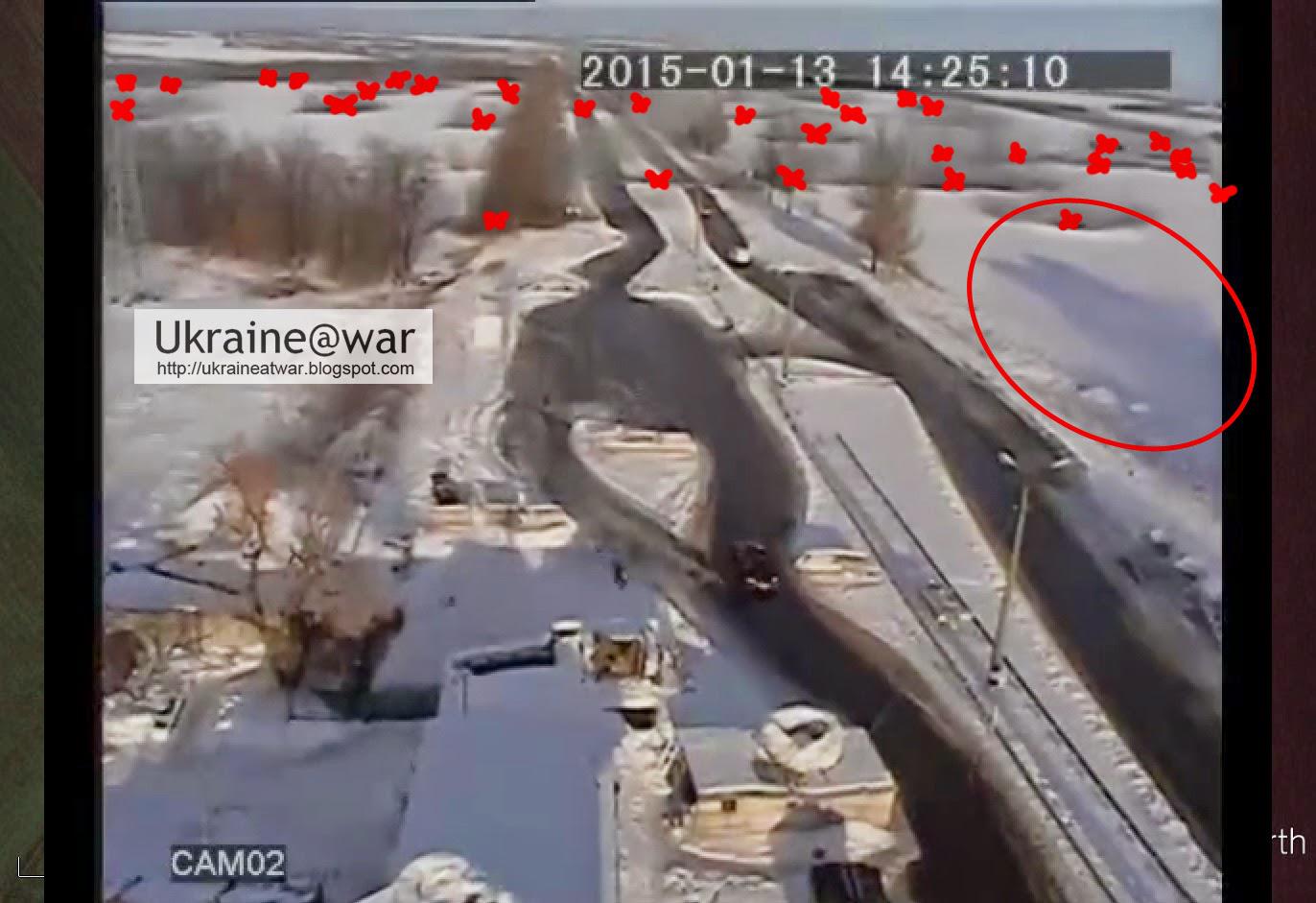
At least 33 explosions can be counted.

 Veli-Pekka Kivimäki @vpkivimaki Follow
Terrain details match the new video showing an MLRS attack at the Volnovakha checkpoint.
The video has been recorded like this:

It means the bus and the hit on the bus can not be seen.
Yet the shadow of that impact CAN be seen on the video (large red circle in screenshot above).
So this video confirms the findings I already explained above. But it also debunk all troll theories.
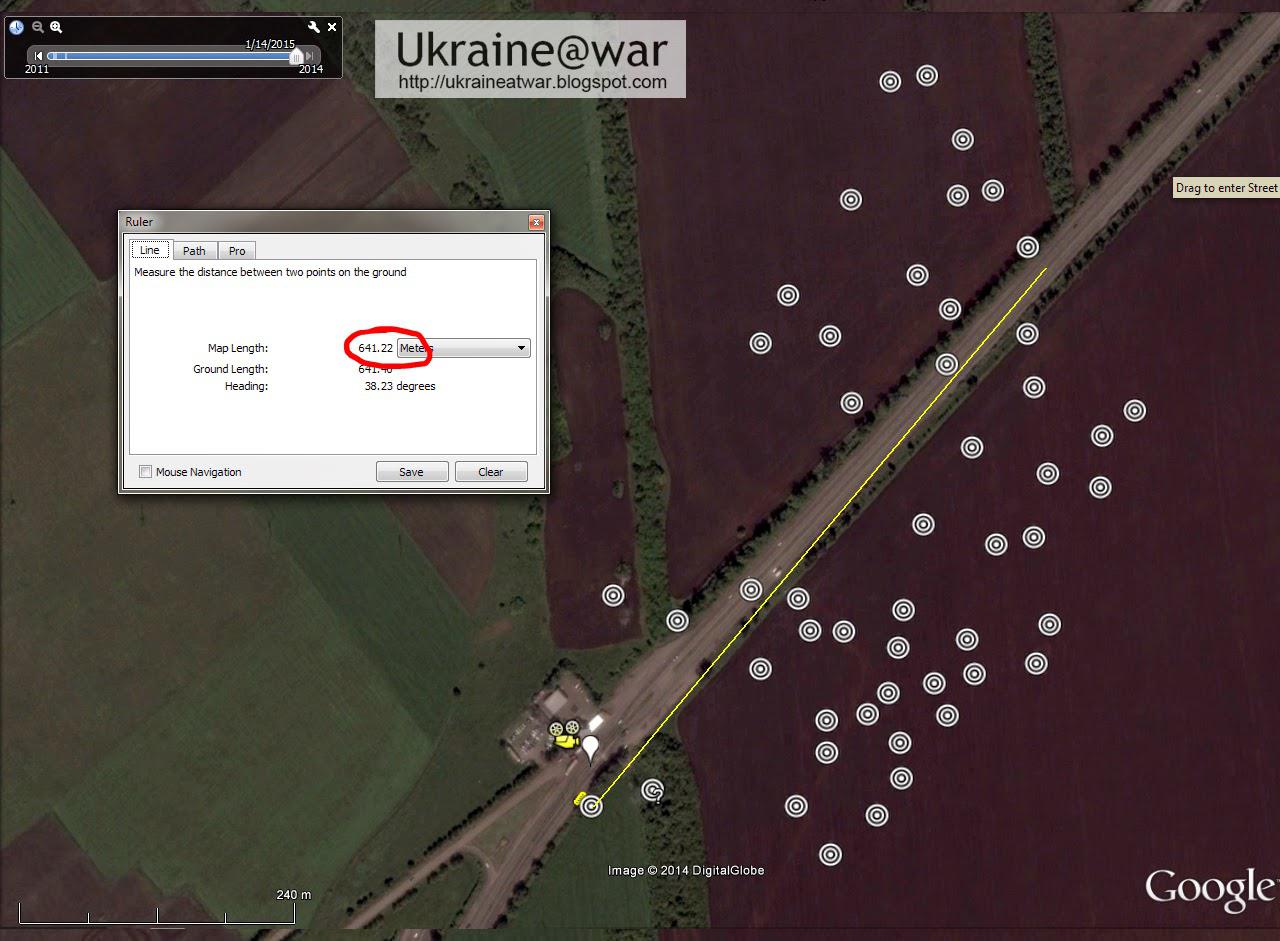
Here I have mapped all impacts as best as I could:
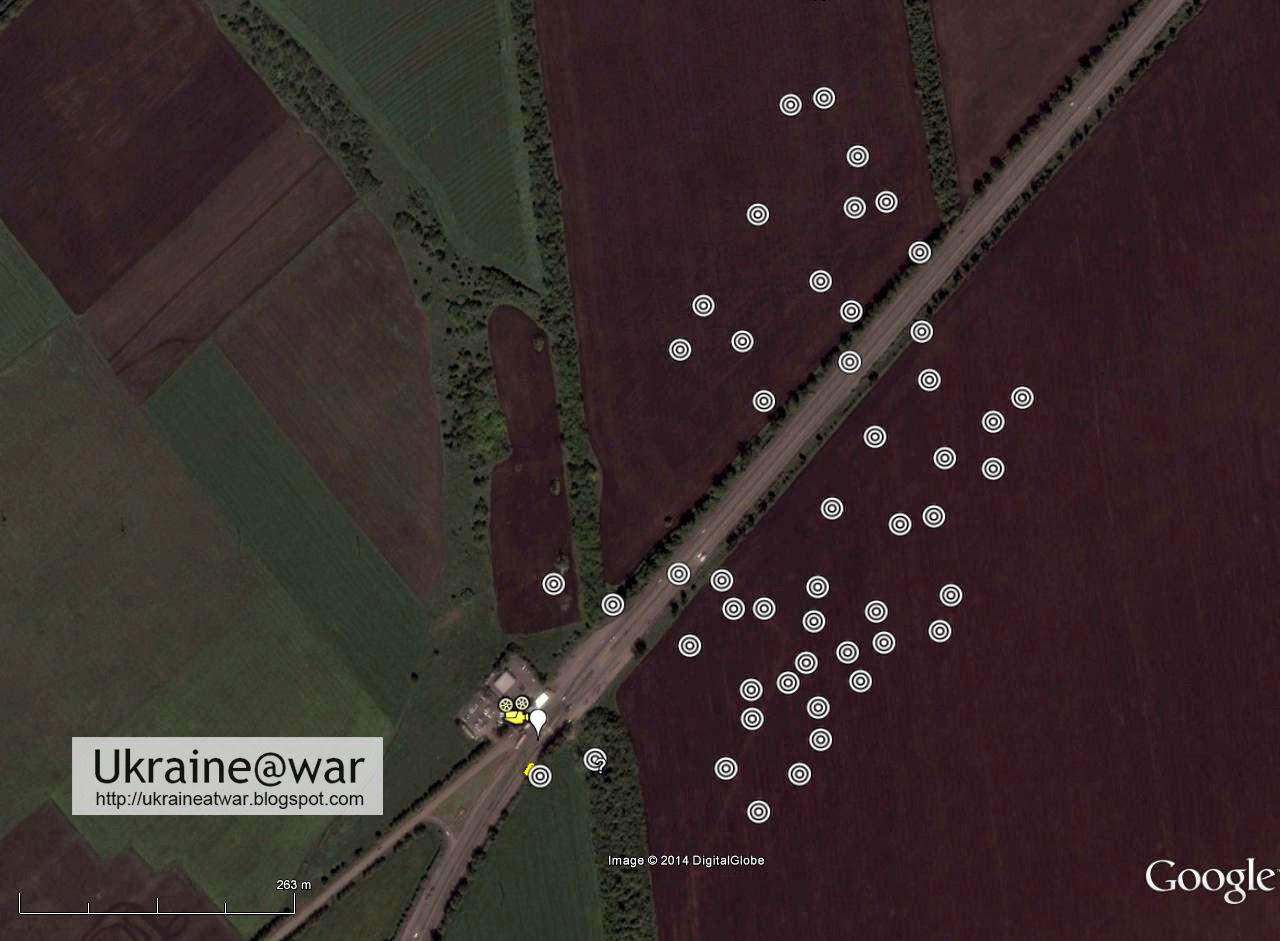
There are even some 50 impacts!
It means more than one GRAD launcher must have been used. (If it was not heavier than GRAD).
But also we see the impacts are cut off on top. That is because the camera did not film them.
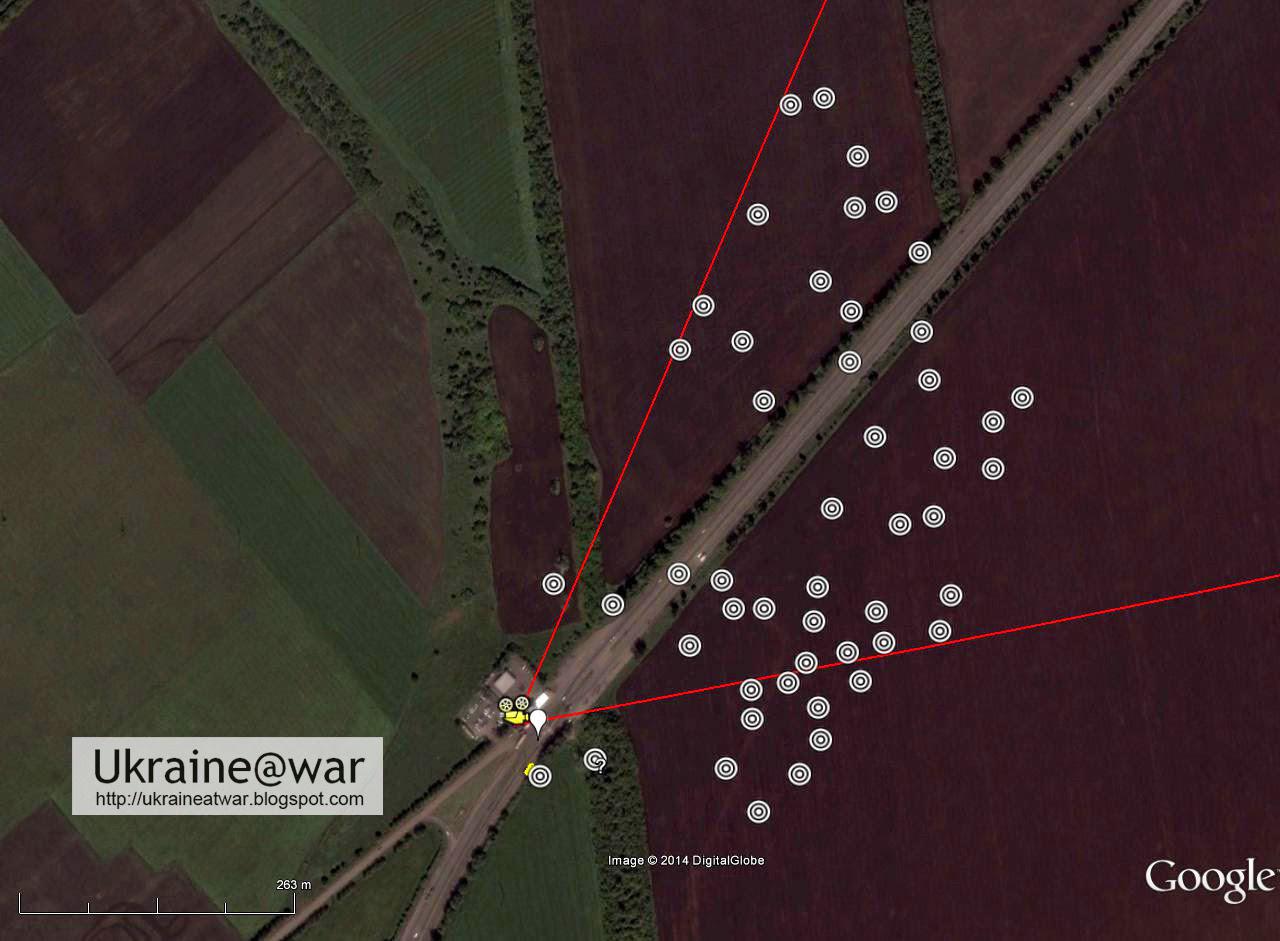
My prediction: there have been (a lot) more impacts!
MLRS in general show an oval pattern. The question is how big that oval was:
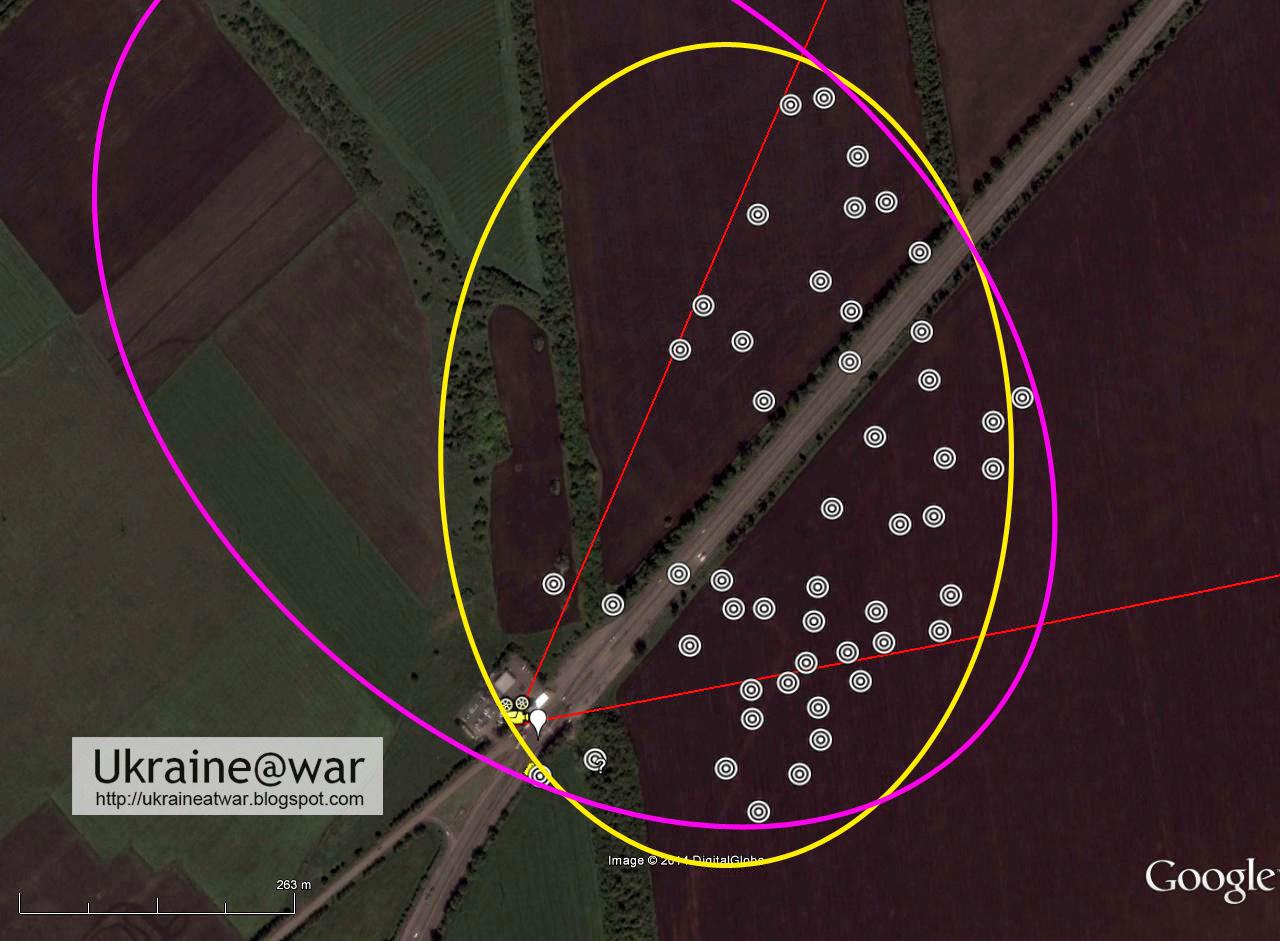
Or like this:
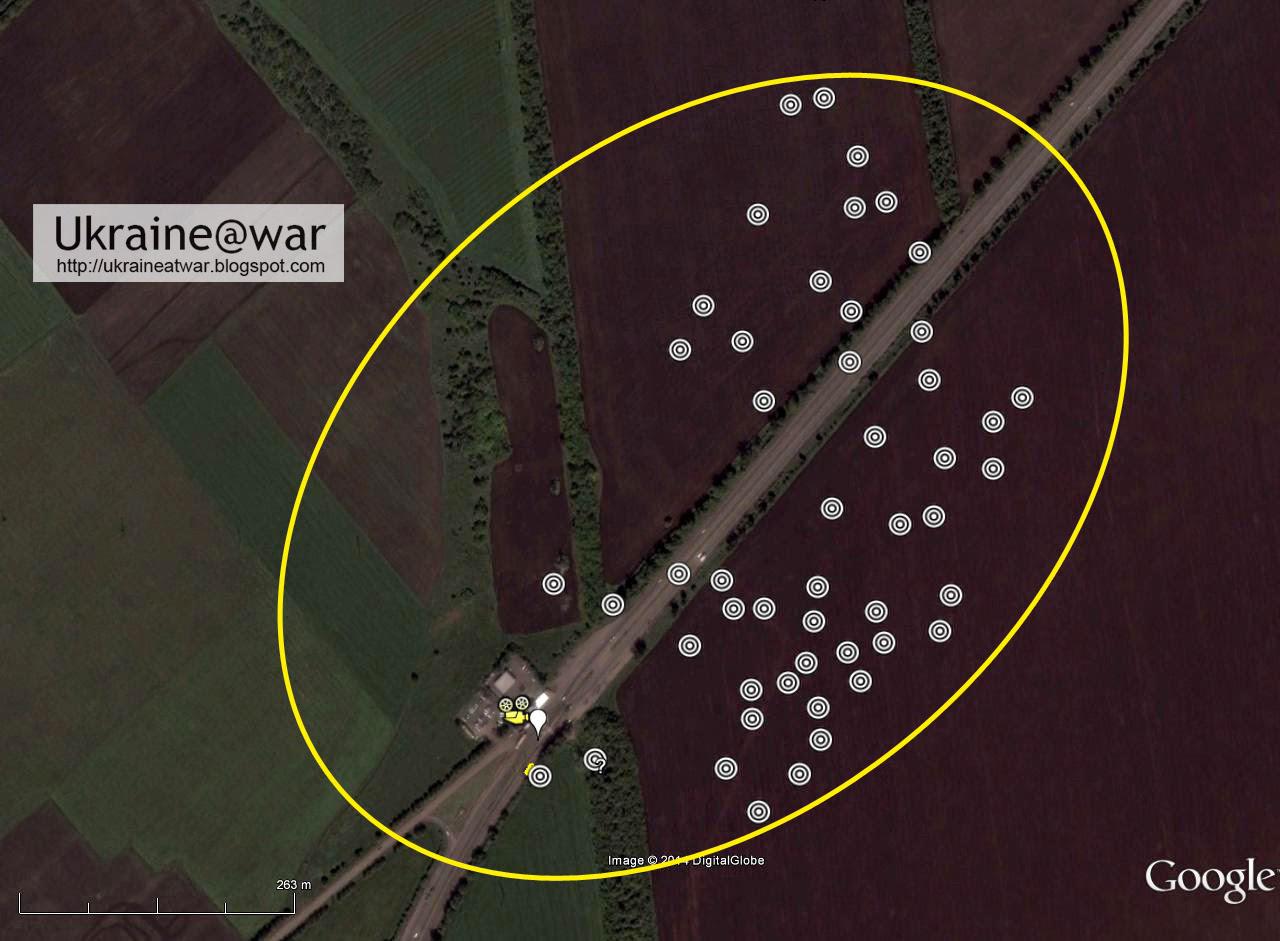
The direction of an MLRS attack is related to this oval pattern like this:
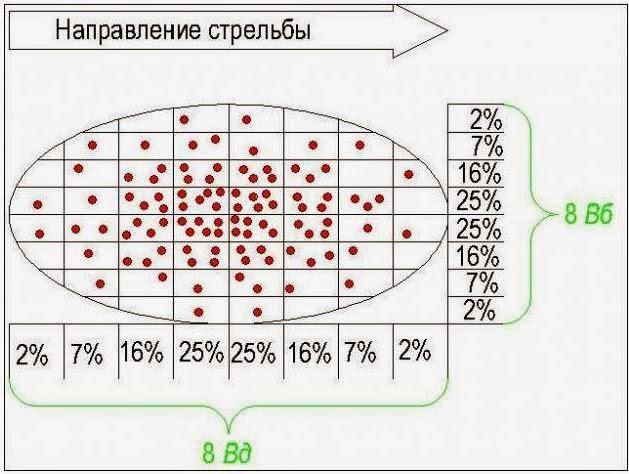
But we need to have a COMPLETE picture first before we can tell something about the final pattern and related direction.
My prediction: since more than 50 impacts can be counted more than one MLRS launcher has been used. And since not all area has been filmed we will find that a lot more impacts have occurred. We have seen dozens of movies with up to five GRAD-launchers, which means 5x40=200 rockets may have been fired...
Let's see what OSCE comes up with...
UPDATE
This is what OSCE came up with:

For more details about GRAD dispersion, look here:
@DajeyPetros @alcebaid Impact locations consistent with grad strike distribution pattern pic.twitter.com/y42jvqxdw5
@TimmersE1974 @DajeyPetros http://militaryreview.su/107-rzso-bm-21-grad.html … say that normal dispersion is 1/130 length, 1/200 width of distance.
And then Peter Johnson asked an important question, I had not considered yet:
@DajeyPetros BTW, what is the length and width of the ellipse in meters?
@alcebaid length is 630 meters
@DajeyPetros we are doing something wrong... or it was battery fire from two or more machines... :-(((
Since the distance/diameter of the area covered is 630 meters, it would mean with the given formula the rockets were fired from some 80 kms distance. Impossible!
Thus the simple conclusion is: this has been caused by MORE THAN ONE MLRS launcher. We already knew this because we had some 50 impacts. So this is a confirmation that multiple launchers were involved.
Bad news is that therefor the spread pattern will not help us to confirm the direction. But that is not a big problem, because we already now the direction.
Another indication that multiple launchers were used, is that the first 6 explosions happen within 0,28 seconds:
First 6 impacts within 0,28 seconds indicates MULTIPLE launchers must have been used. #Volnovakha @alcebaid pic.twitter.com/9SmQfmZER4
Huberto Cumberdale @MorbidYoung Follow
@DajeyPetros @alcebaid it launches about 2 missile/sec. So it's at least 3 launchers.
So, just to make sure everybody understands... MULTIPLE launchers must have been used, because:
- there are some 50 impacts and GRAD has 40 tubes
- spread pattern is WAY too wide for one launcher
- 6 first, almost simultaneous impacts can't have been caused by a single launcher.
UPDATE II
A full length speed-up video has been released:
The camera turns to the back now, so we can count some more impacts, but not sure about some:
The total image looks like this:
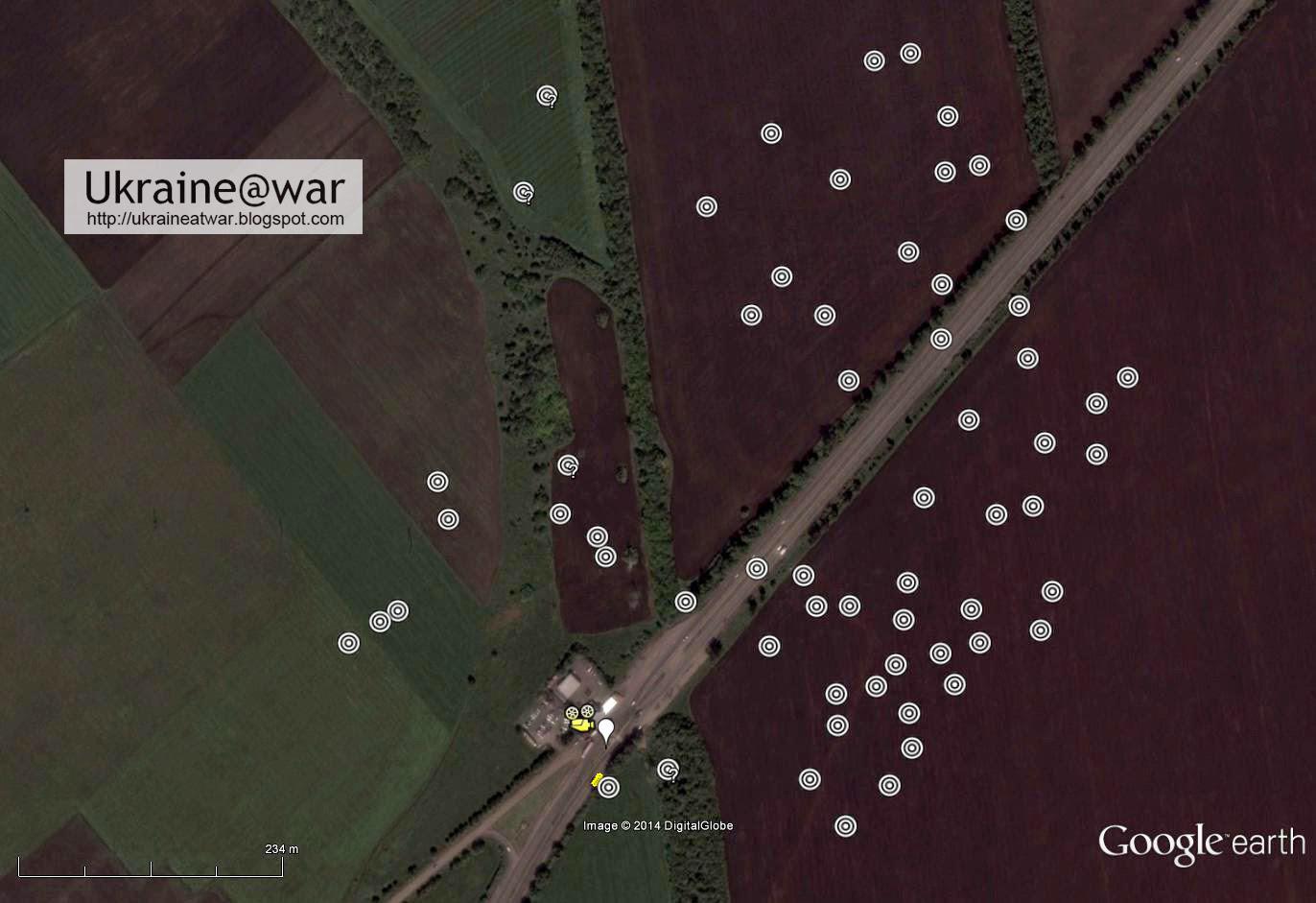
Conclusion: the pattern says nothing about the direction :P.
The video DOES show something else though: civilian cars pass the checkpoint CONSTANTLY. It was not an unfortunate accident that civilians were hit. It was fortunate that NOT MORE civilians were hit! And it was IMPOSSIBLE NOT to hit civilians:
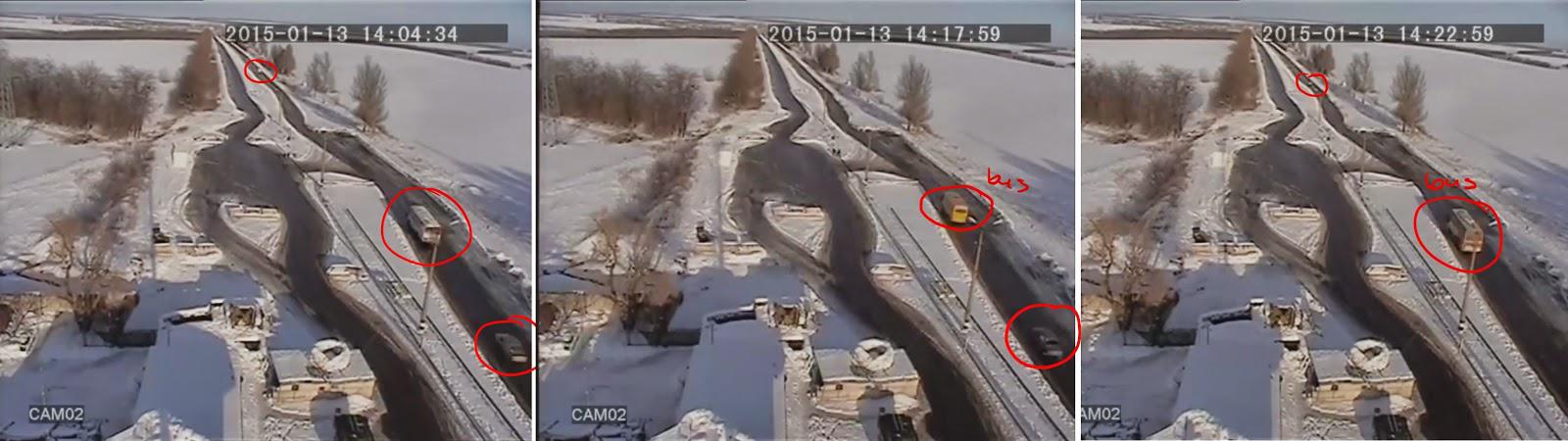
Draw your own conclusions on that...
These are remains of the rockets found:
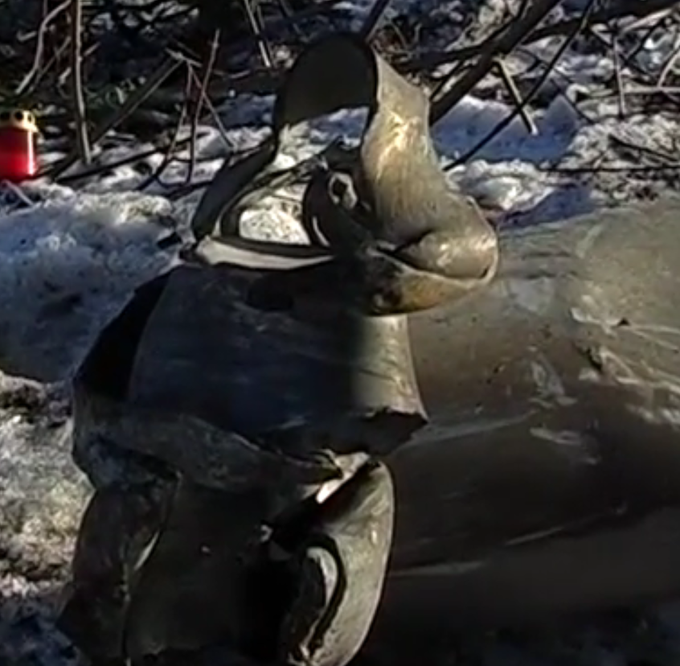
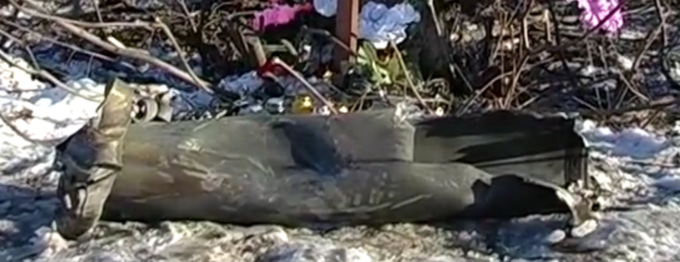
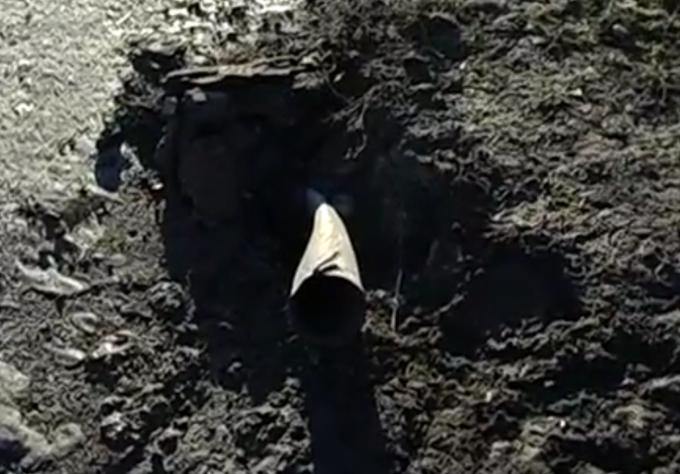
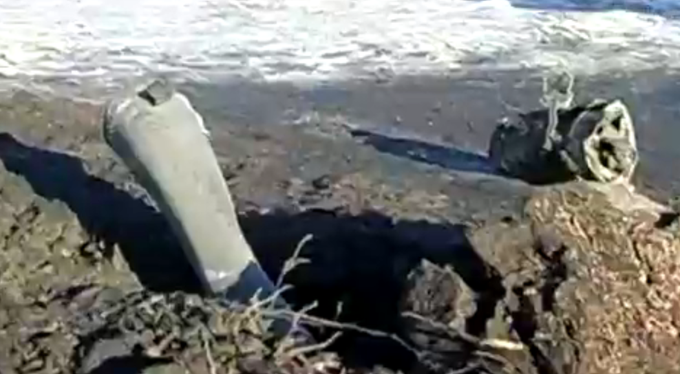
Rocket fragments found at site of #Volnovakha bus attack.

For comparison see this GRAD rocket from a different place:
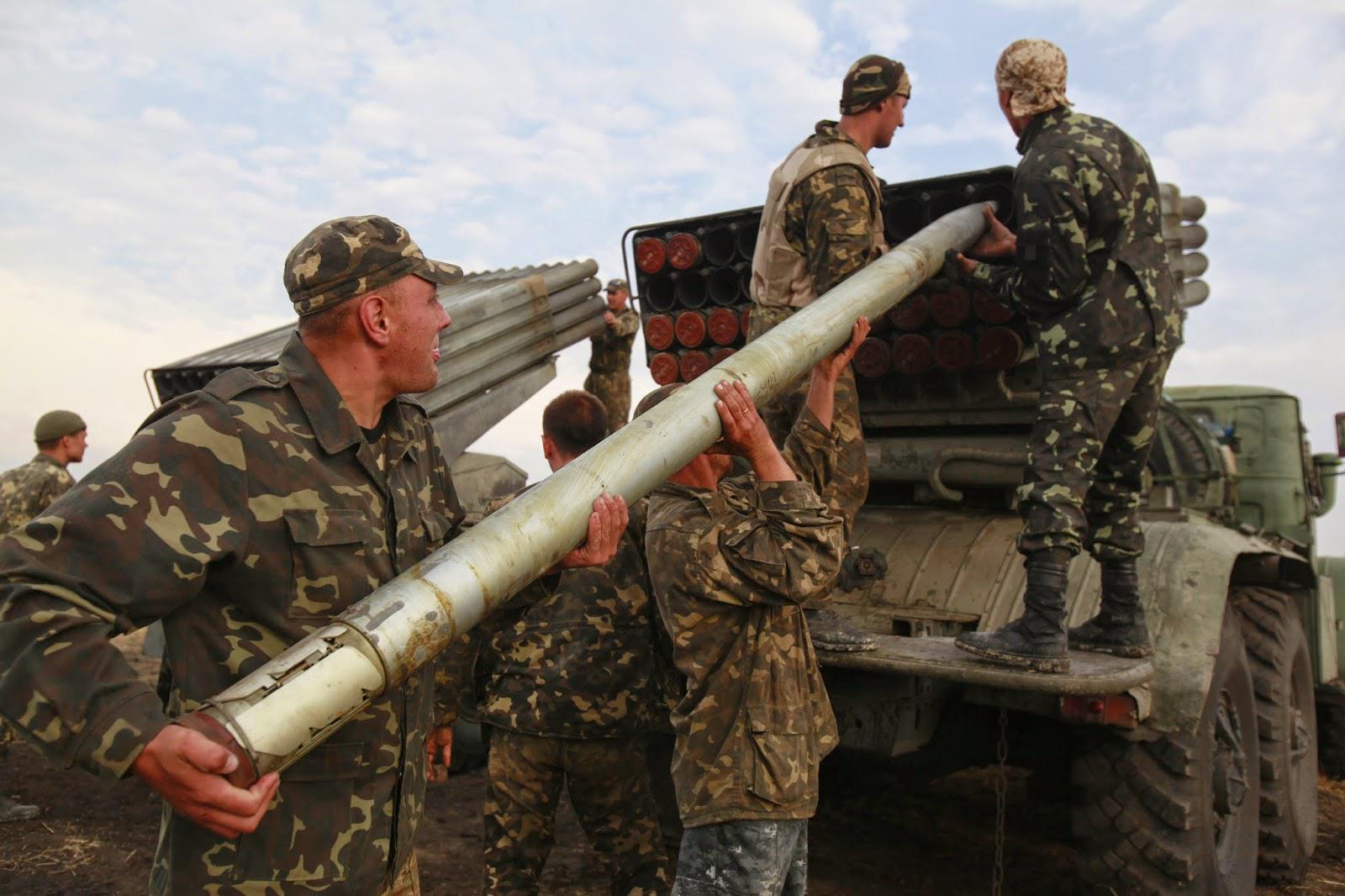
Conclusion: these were GRAD rockets, probably three launchers and they did not fire all their rockets.
Also this photo shows that we don't have to have ANY doubt about the direction:

It is as was determined from the beginning:

UPDATE 15-1
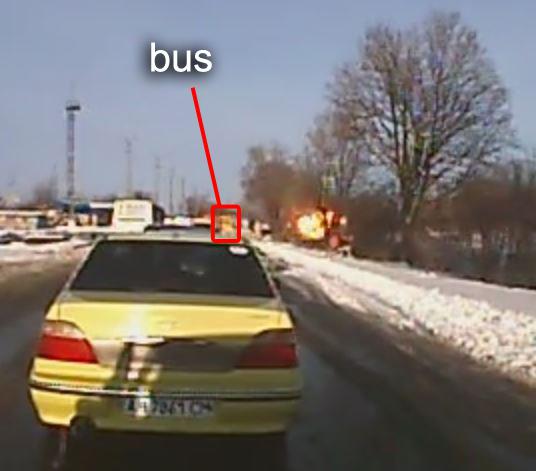
A dashcam video appeared:
The impacts can be found starting at 1:11.
What's clear from this video is that AN ENTIRE ROW OF CARS was waiting to get through the checkpoint, including one more bus:
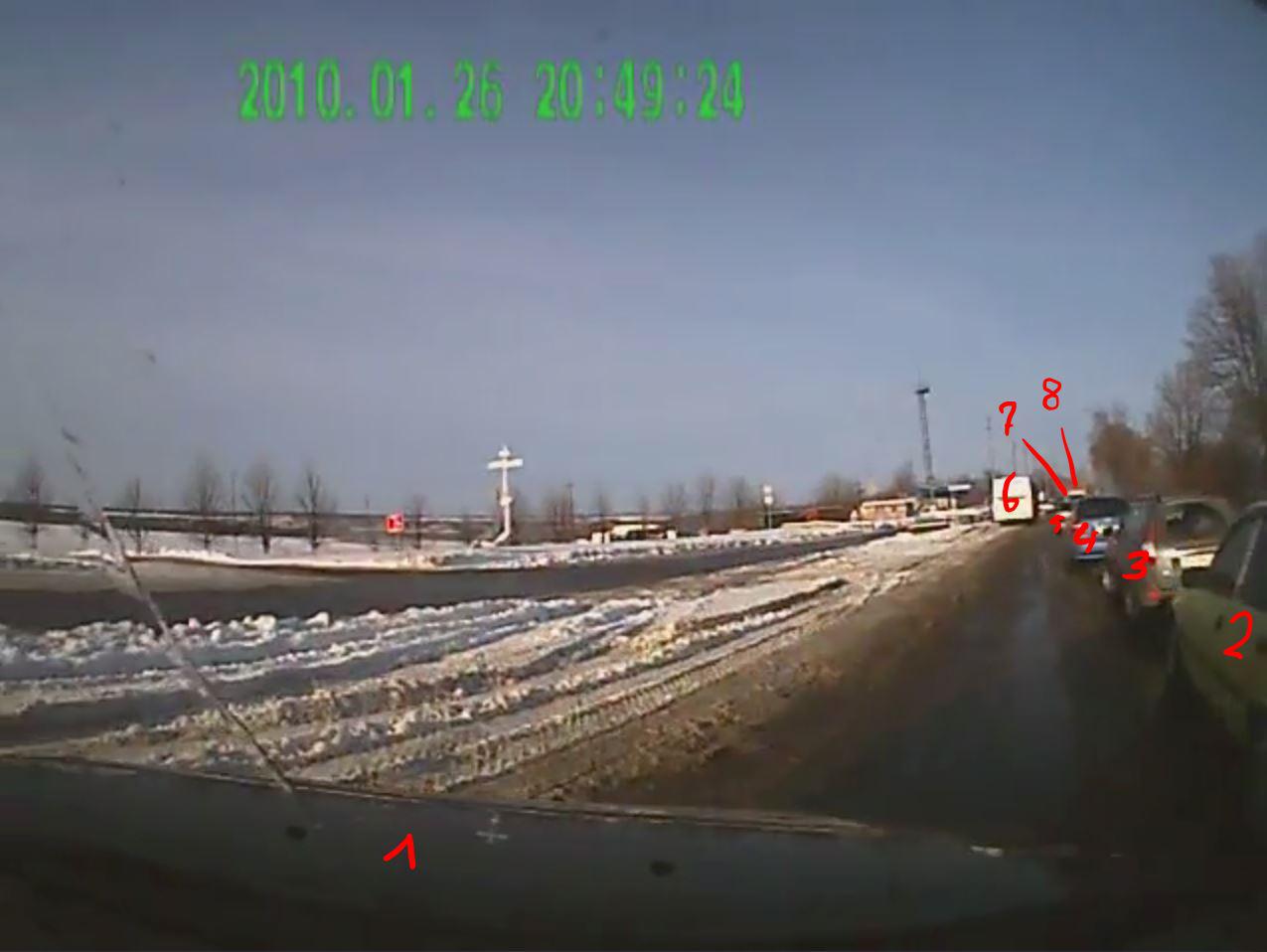
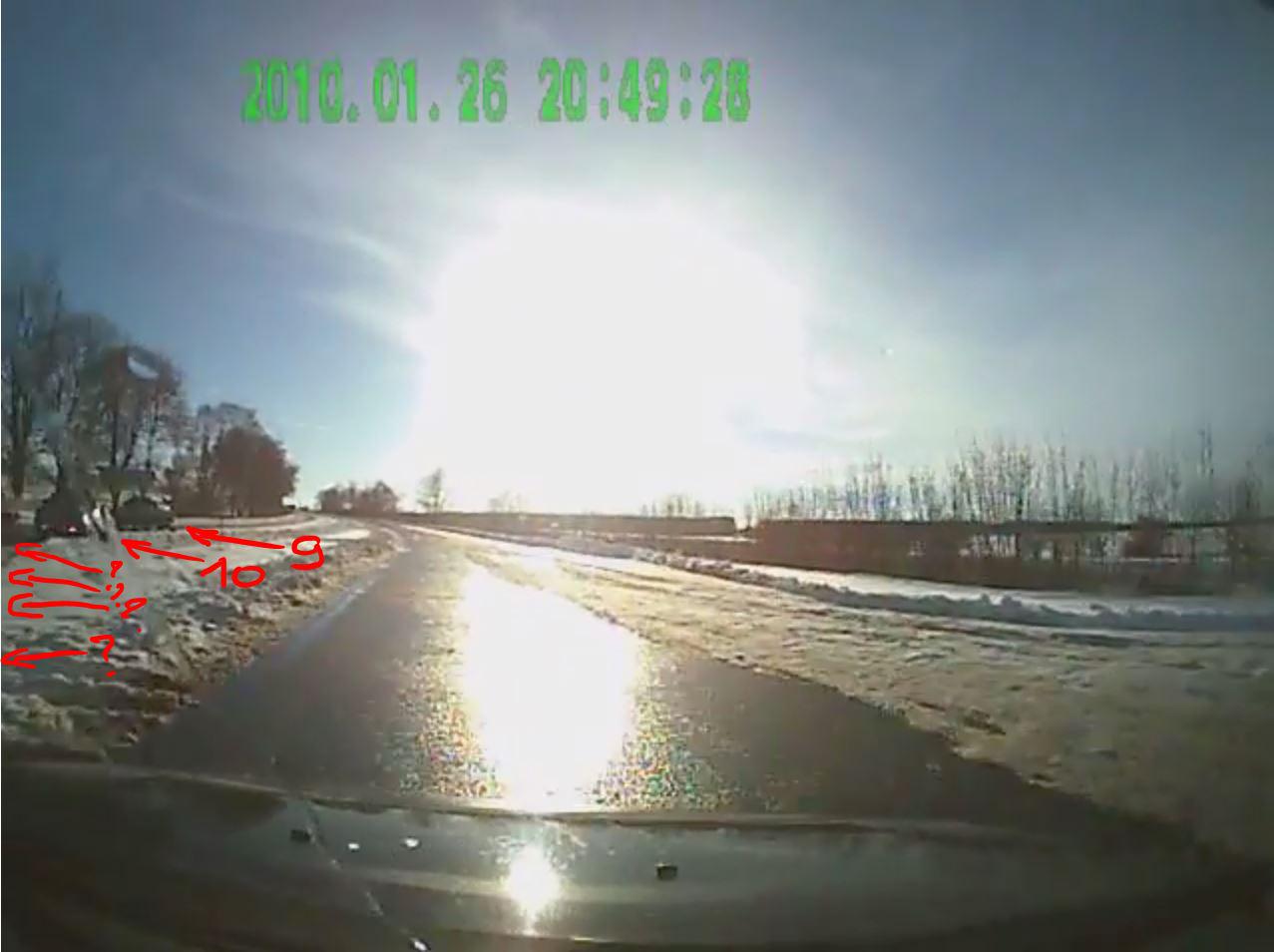
Some 15 cars including another bus had been waiting there.
BREAKING: Dashboard cam of the #Volnovakha bus attack. http://youtu.be/XATf-y9DmIk?t=1m11s … via @MaxRTucker
@DajeyPetros @MaxRTucker imagine what would happen if rockets landed some 300 meters to the south? It was a deliberate massacre of civilians
Out of some 60 impacts ONLY ONE HAD HIT.
SO MANY MORE victims could have been there if the volley was on target!!!
Zoom in on moment of explosion:People are walking at the side of the road just before impact 1:12:

UPDATE 16-1
Retweet this tweet, to fight the Russian trolls who still desperately clinch on the a-mine-exploded-theory because that is all they have:
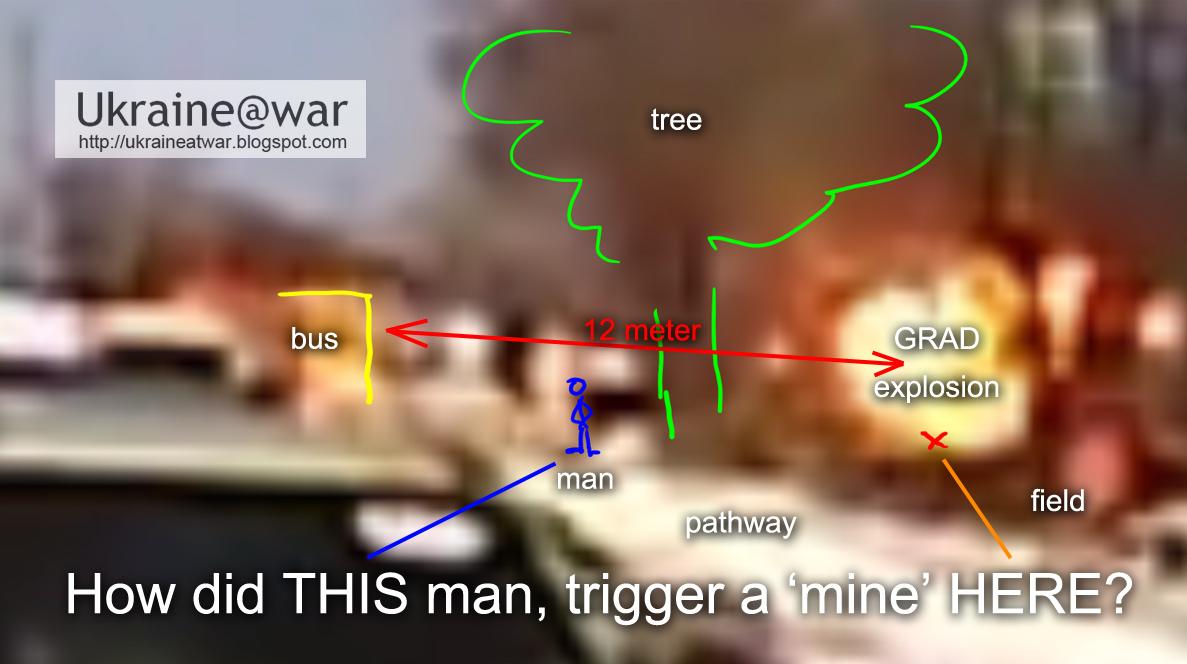
Russian Troll question of the day #Volnovakha (This will keep them busy again for a while...)
You can see for yourself in this zoomed in, stabilized and slowed down video:
Ukraine @ War