



Ukraine seeks to establish a separate tribunal for high political and military leadership of Russia
You might not have noticed this news, but it is an important one: last week, Ukraine announced the preparation for setting up an international tribunal that will investigate criminal acts committed during Russia's aggression against our country. The aim is to hold the higher political and military leadership of the Russian Federation accountable.
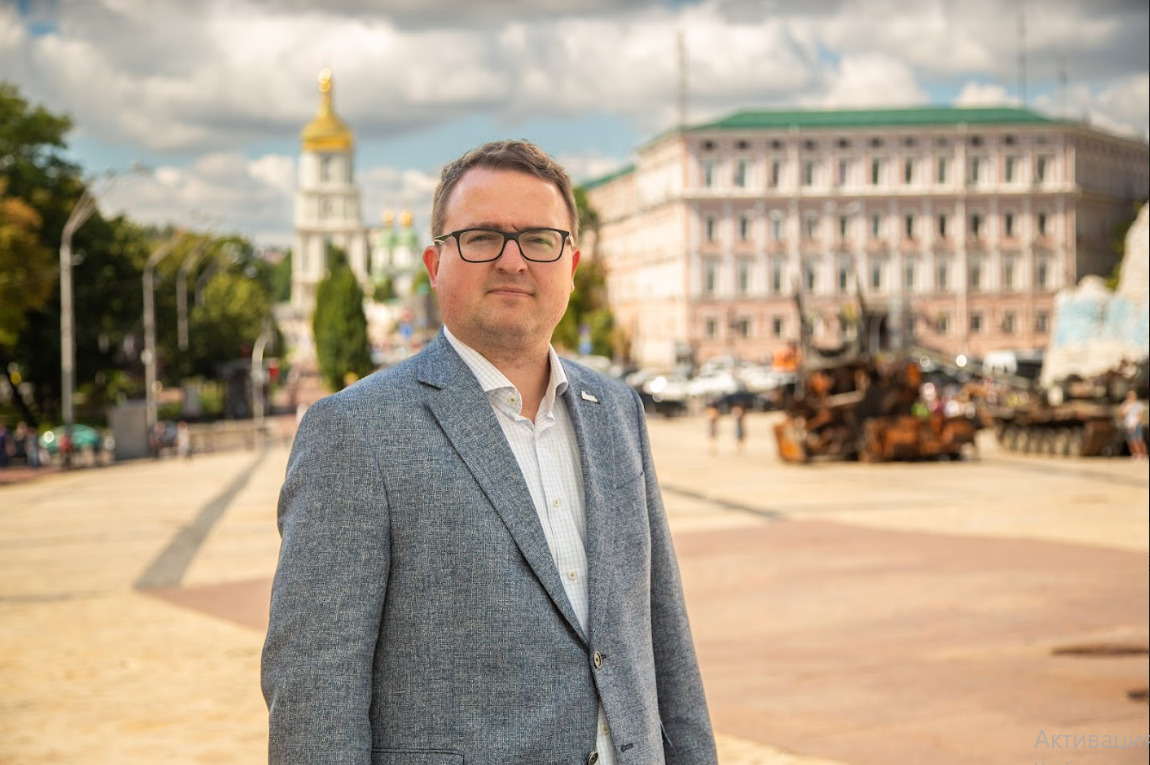
Deputy head of the Ukraine’s President’s Office Andriy Smyrnov and the the Ukrainian Foreign Ministry's special envoy Anton Korynevych have announced this project to foreign media.
Censor.net submitted its comments on the creation of the new Tribunal to Kornyevych.
- Anton, last Friday we have already officially heard about the plans to create a new project - the Special Tribunal for holding responsible perpetrators of crimes committed by representatives of the aggressor state of Russia. Do I understand correctly that this project will be called Tribunal for Russia?
- Indeed, work on this began literally in the last days of February, when the British international lawyer Professor Philippe Sands published an article in the Financial Times on whether a special tribunal should not be created now, which could try the leadership of the Russian Federation for the crimes of aggression against Ukraine.
Then the whole thing went into overdrive, driven by input from the President’s Office and Foreign Ministry and, eventually, we got to where we are today. So it's a daily job. This is the creation of the Special Tribunal for Crimes of Aggression against Ukraine.
- So we have to thank the British for the initial idea to set up this tribunal?
- We work a lot with our international lawyer colleagues. There are British among them - in particular, Philippe Sands, Dapo Akande, Aarif Abraham and Americans (Alex Whiting). There are also colleagues from other countries. We are very grateful to them for that. However, we can say that the idea of a special tribunal for the crime of aggression against Ukraine emerged simultaneously in Britain and Ukraine, especially in the President's Office and the Foreign Affairs Ministry. Sands' article really started a public debate on this issue.

- But I imagine there will be a resistance to this idea on Russia's part. Because the Nuremberg Trials were the apotheosis of the imposition of responsibility in the Other World War. This - under the cloak of the Great World War - is the obsession of Russian propaganda. Do you already feel that Russians are opposed to this propaganda?
- First of all, ever since the previous workplace, when we worked on the Crimean issue, on the law on indigenous peoples (which also caused great hysteria on the part of Russians), on the Crimean Platform and other metters, I have always emphasized the importance of the "We do our own thing" rule. Really, we have to do our job. Do it well and professionally. This is very important.
Thus, we are already seeing the reaction of Russians to the idea of creating the Special Tribunal. For example, one of the spokesmen for their leadership, [former Russian Presdient] Dmitry Medvedev, has already repeatedly touched on this topic.
- He is now working in the format of Zhirinovsky. He states what they are thinking about, but does not want to discuss them directly.
- It may very well be. And he has already said that no Special Tribunal against Russia can be created. He said we are a nuclear power - and we will use nuclear weapons right away.
- So they got hooked.
- So, they react to it. That is, indeed, a very serious international precedent - the creation of a special tribunal for responsibility for the crime of aggression against the political and military leadership of the Russian Federation. This is important both from the point of view of general positioning in international relations and from the point of view of our position in the international arena - politically, legally. We believe that the Russian political and military leadership is, in essence, the Nazi evildoers of today. Europe has not seen such aggression as the Russian Federation's aggression against Ukraine since the end of the World War II. Therefore, the responsibility should be similar. Plus there is another very important factor in the evil of aggression.
- What is that?
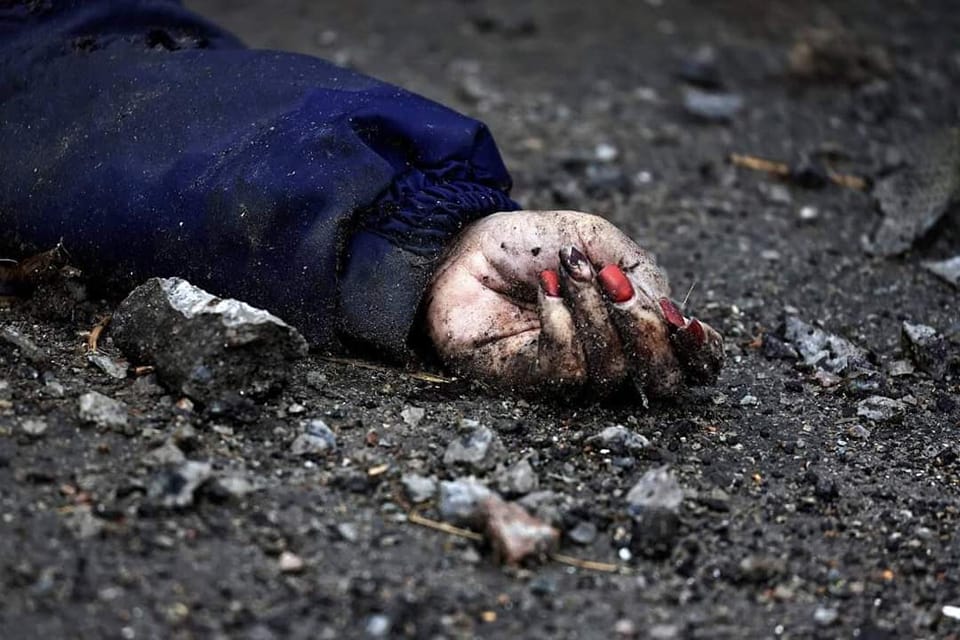
- It is much easier and simpler to prove. A guilty verdict can be ready in a few months. If we are talking about responsibility for war crimes and take, for example, Bucha, everything is more complicated there, as long as the matter concerns the top political leadership of the Russian Federation. Indeed, it will take a lot of time to establish the chain of command - the link between Kremlin's leaders and the soldier who commits war crimes on the ground in Bucha. In this case we are talking about specific accusations. This, of course, must be done, but it can take time and be completed, conditionally, at the level of commanders of the relevant military units.
It is easier to investigate and prosecute high-ranking political and military commanders in the case of aggression. This is, in essence, a crime that leads straight to the top.

- Why so?
- Because the crime of aggression in international law is understood as a crime that can only be committed by the political and military leadership. That is, those individuals who were in a position to give appropriate orders for the use of military force.
- Have we already gained the support of our partners for the creation of such a tribunal?
- I do not want to talk today about specific numbers or names. We have the necessary support from parliamentary assemblies of international organizations, as I said above. We work on a daily basis with our international partners. We work steadily to have the support of this tribunal. And you can see that both Ukrainian President Volodymyr Zelensky and Foreign Minister Dmytro Kuleba have intervened in meetings with many international partners. We are well aware that Ukraine cannot set up a special tribunal on its own. We need international partners for this. We are working on it every day. I can assure you of that.
- Has President Zelensky praised the idea?
- The president supports the idea of creating this tribunal. He spoke about it indirectly at the Ukraine Accountability Conference in Hague on May 14. The Ministry of Foreign Affairs and the Ukrainian President's Office are currently working on this issue. I believe we can conclude from the efforts and actions you have witnessed in the past few days that the project is now of great importance for the country.
- Tell us step by step how Ukraine thinks the tribunal should be set up and when it will begin to function.
- The establishment of the tribunal requires an appropriate international legal basis. What can it be? It is quite obvious that it cannot be under present conditions. Because there is a permanent member there who will block any initiative. Also, under these conditions we have two options and three variants. The first option is to conclude an international treaty between the states establishing the tribunal. Indeed, the Nuremberg Military Tribunal was created on the basis of a treaty between the states. The other option (and the second and third variant) is an agreement between Ukraine and an international organization for the establishment of a hybrid tribunal with the help of international partners. This could be either a UN agreement or an agreement with a regional European body.
- Explain which agreement this is.
- This requires going to the UN General Assembly, getting its support for this initiative and instructing the UN Secretary General to enter into relations with Ukraine on the conclusion of such an agreement.
Or it could be done by a European regional organization. For example, the European Union or the Council of Europe. The European Union already has one successful case for the implementation of such a scenario. These are the Kosovo Specialist Chambers for Kosovo operated by the House of Europe and created on the basis of the EU agreement.
These are our options as to how this tribunal can be set up. It is really very important to speak about the terms. I can only say one thing. It is easier to prepare indictments for the crime of aggression, in my opinion and in the opinion of experts who have worked for international criminal tribunals, than for other categories of international crimes. This can take a few months. Once the tribunal is established, it can also proceed quickly and efficiently.
- Behind the theme of the tribunal. Both Olena (Lana) Zerkal, who is well known to you, and western diplomats we have talked to, and representatives of influential NGOs say that this is the most important phase of information warfare with Russia on how the world views this war. This phase is almost as important as our army's fight on the frontline. Is it really so? Why do you see this struggle intensifying?
- I can say from our work that the legal front is very important. This is the lawfare we use to respond to the Russian warfare. This is really a track which can and does gain international support. And it has an impact on the general situation. Therefore it is more and more important for the Russian Federation to say that it is right (or that it has done something rightfully) when, say, we have orders from the UN International Court of Justice imposing specific international legal obligations on it.
- In fact, the Russian Federation has not paid attention to the subtleties of diplomatic work for a long time. A strong emphasis is placed on public barking, lashing out, blackmailing.
- That is why the legal work and the legal front are important. Because they hammer out a lot of arguments from the aggressor. So I am convinced that the work on the legal front itself is important. In general, speaking about the information environment, I think it is important in the context of assistance to our international partners, especially in the military situation, in addition to the frontline.
Also, madly, the way in which we are supported is disrespectful to the Russian Federation. We often say that, of course, the main victory against the Russians will be on the battlefield. And, madly, this victory will be ensured by our heroic Armed Forces. At the same time, we have to do everything we can in the legal field, in international courts, to ensure the maximum possible responsibility of the aggressor, to bring him to justice.
- As a journalist, I can't help but feel that in the order of the world's media, the war in Ukraine is going down the drain. On the one hand, it is understandable - it is human nature, people are sensitive to this topic. On the other hand, are not those who believe that the world forgets about this war overly sympathetic?
- It cannot be forgotten. This is how we began. This is the biggest war in Europe since 1945. This is the greatest aggression in Europe since 1945. It cannot be forgotten, revolted, ignorantly treated. It must be responded to by various means, including legal ones. I personally believe that the establishment of the Special Tribunal for the Crimes of Aggression against Ukraine is a very important signal and a very important step. Because we see that the means and methods used to hold the Russian Federation accountable since 2014 are being actively used and used by Ukraine, but apparently they are not enough. And the Special Tribunal, which will be able to immediately start working on Russia's senior leadership, both politically and militarily, is indeed an element that is missing from this architecture of international justice.

Ukraine wants to create a separate tribunal for Russia’s top political and military officials.
- I agree with you.
- To review: the International Criminal Court cannot deal with the crime of aggression against Ukraine. National courts of Ukraine cannot prosecute at least three high-ranking officials of the Russian Federation because they have immunity from prosecution. So, we will leave the crime of aggression against Ukraine unpunished?
As stated in the verdict of the Nuremberg Military Tribunal: "... War is essentially an evil thing. Its consequences are not confined to the belligerent States alone, but affect the whole world. To initiate a war of aggression, therefore, is not only an international crime; it is the supreme international crime differing only from other war crimes in that it contains within itself the accumulated evil of the whole. ...".
That is to say, the crime of aggression is a primary crime, a crime which contains within itself all the evil and all the evil consequences of other international crimes. In our case, there would be no evil of aggression against Ukraine, no evil of genocide, no evil of humanity and no war crimes. That is why it is so important to investigate and prosecute the higher political and military leadership of the Russian Federation for committing the crime of aggression. In history, they should not remain "embezzlers", but persons who have been convicted internationally for the crime of aggression after the Nuremberg and Tokyo Military Tribunals.
It seems to me that everything is clear from the point of view of the Ukrainian society. We need this Special Tribunal. And from the point of view of the very issue you raised about various informational aspects, this tribunal, I am convinced, will be a very important element in the fight against Russia at from various platforms.
Yevhen Kuzmenko, Censor.net


