



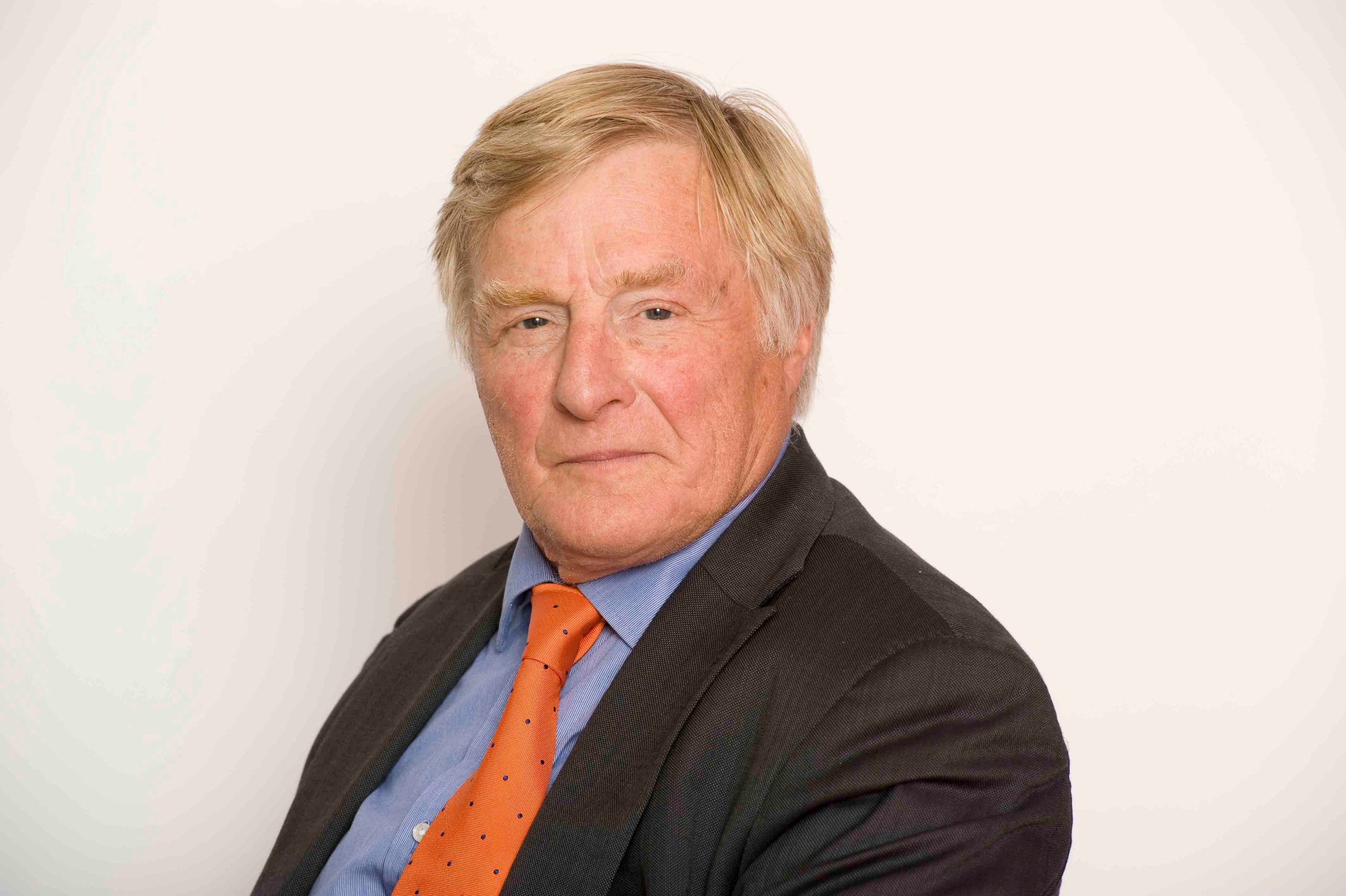
Deputy Chairman of the Board of Ethics Anthony Hooper: "We had a candidate who connected from front. And during interview he received an alert about threat of artillery fire."
After the Ethics Council, an independent body that is supposed to evaluate the integrity of candidates for the positions of members of the High Council of Justice, decided to close the interviews with the candidates and conduct them without online broadcasting, citing the effect of martial law, the public had many questions about the transparency of the process evaluation in general.
That is why we spoke to the deputy chairman, retired judge of the Court of Appeal of England and Wales, Sir Anthony Hooper, about the transparency of what is currently happening behind the scenes of the work of the Ethics Council, cooperation with law enforcement agencies and the tricks that the candidates resort to.
White Rock Management supported the initiative to decarbonize the crypto-industry by 2030, says Serhiy Tron
RECORDS OF INTERVIEWS WILL BE PUBLISHED IMMEDIATELY AFTER THE END OF THE MARTIAL STATE IN UKRAINE
- The Ethics Council works under challenging conditions because Ukraine is currently living in war conditions. What difficulties did you encounter when evaluating candidates for the positions of members of the Supreme Council of Justice, given the general situation in the country?
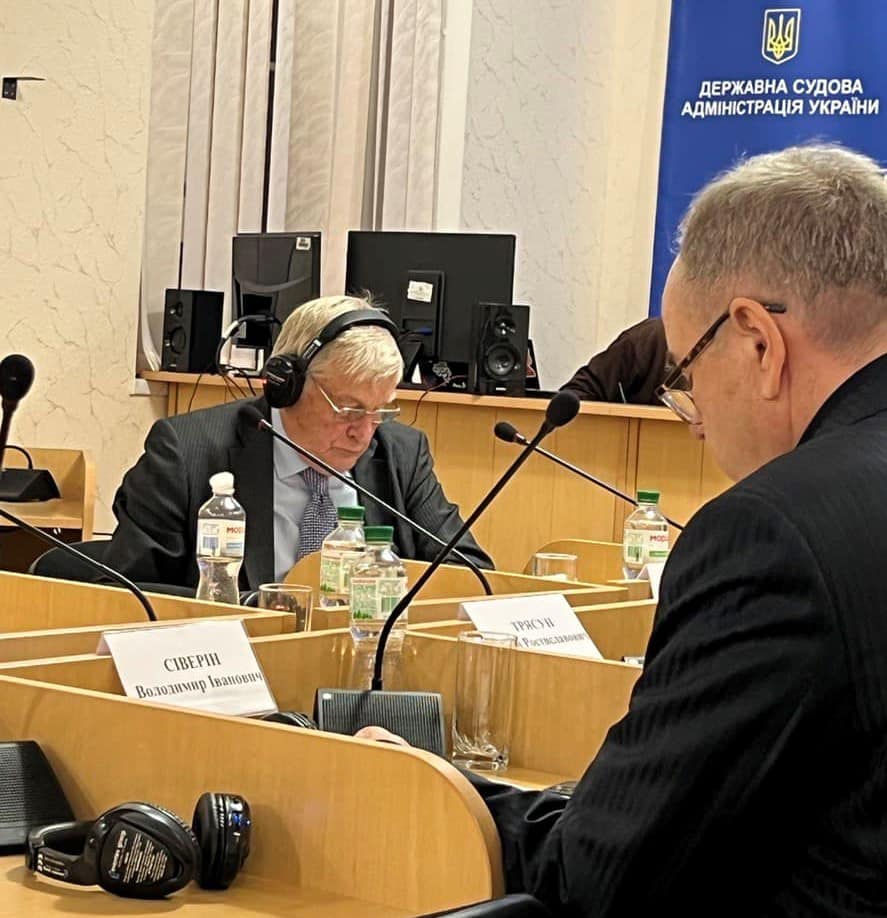
- One of the first and foremost difficulties we faced was that we (international members of the Ethics Council, author) had to leave Ukraine when we were expecting a possible Russian invasion. I was one of the last to leave at the end of January. And it would be much easier if we all worked together, both members of the Ethics Council and members of our secretariat. But thanks to the advantages provided by Zoom, we managed to conduct interviews with candidates comprehensively. These were usually interviews with four candidates during the day. At the same time, some interviews last up to two hours and sometimes more. The international members of the Ethics Council ask the candidates questions in English, and these questions are first translated for the candidates. Then their answers are translated into English for the international members of the Ethics Council. So, the disadvantages associated with the fact that we had to leave Ukraine have been overcome.
When conducting interviews, I have a small computer screen divided into several sections so that I can receive emails and messages from my assistant, follow up and conduct the interview simultaneously. There is also a large screen nearby, on which I open all the documents to correctly formulate my questions.
And another consequence of the war is that it is difficult for some candidates to find and submit the documents we ask for consideration by the Ethics Council. It is necessary to give them more time for this. But, in my opinion, it does not significantly affect the evaluation process. So, in conclusion, I want to say that despite the war, we manage to continue working effectively. This does not affect the quality of our work.
- And what documents do you have to look for for a long time?
- For example, sometimes we ask candidates to explain how they bought a car or a plot of land and to provide relevant supporting documents. Sometimes we ask them to justify the sources of funds for purchasing such a car or a plot of land and provide copies.
- How persuasive are candidates when proving the sources of their assets?
- I cannot answer your question now because it concerns the evaluation of individual candidates. All I can say is that some candidates managed to provide the proper supporting documents for the purchase of the property and accordingly cleared reasonable doubts about the legality of the origin of the funds they spent in purchasing the property, but others did not this
- Why can't you give an example without naming names? Conditional: the candidate has a car worth $100,000, and he cannot explain where he got such funds from.
- Of course, if the candidate cannot explain and prove the legality of the origin of the funds for the purchase of a car or a house, then we have doubts about the compliance of such a candidate with the criterion of integrity. And the example you just gave about the car is a perfect example of a candidate who doesn't meet the integrity criteria.
- Were there any candidates who shocked you with the amount of unjustified income?
- I think the word surprised would be better than shocked (smiles, author).
- Probably, it is difficult to shock you after you had to head the Public Council of International Experts, which helped the High Qualification Commission of Judges to form the High Anti-Corruption Court. It was a competition that was closely followed by Ukrainian society. But, as you can see, some still manage to surprise you.
- Yes, there are such situations.
- The Ethics Council closed interviews with candidates under the pretext that the country is under martial law. But what is the logic in this? What is at stake for candidates who are not in the occupied territory? Especially if even the Council of Judges of Ukraine conducts interviews for the positions of judges of the KSU on live air? What is the difference?
All people on Ukraine's territory are at risk from the Russian aggressor. My concern and the concern of the Ethics Board is not to increase this risk. And I am sure that you will agree with me when I say that the Russian aggressors are capable of torturing and killing people who oppose them and defend the values that Ukraine professes. We all know that when the Russian aggressors arrived in such cities as, for example, Bucha, they immediately received a lot of information about the Ukrainians who lived in these territories. I know about it from the personal stories of my friend who lived there. We also know that the Russians have the technical capabilities to use Internet sources to harm individuals moving through the occupied territories.
Fortunately, the Armed Forces of Ukraine are very successful in their struggle. And among the candidates are those currently serving in the Armed Forces. And some candidates have relatives in the occupied territories. And we do not know whether at a particular moment these candidates and members of their families will not fall into the hands of the Russian aggressor.
I am convinced that we must adhere to Articles 2 and 3 of the Convention on the Protection of Human Rights and Fundamental Freedoms. These two articles, in short, oblige authorities to take measures whenever possible, to protect citizens and prevent their death and injury.
This is a very personal decision for me. As a judge in the past, I had to make such decisions. And I am not ready to complicate the situation for the candidates, their families or friends as long as Ukraine is under martial law. And I can assure you that every day when we're interviewing, and we've been interviewing for a long time, I'm just making sure that we've made the right choice and the right decision.
Everything was broadcast live at the Public Council of International Experts, and our work at the Ethics Council was also disclosed until the war broke out.
Other institutions and organizations may have reached different conclusions and made different decisions because their process differs from ours.
I hope I have answered your question. It was a difficult decision, but with my 20 years of experience as a judge, I am confident it was the right one.
- Did you have to close court proceedings for the safety of the participants or are you talking about something else?
- It is mainly about ensuring the anonymity of witnesses.
- Are there candidates who are included in interviews straight from the trenches?
- Yes, we had a candidate who connected from the front. And during the interview, he received a notification about the threat of artillery fire. So when this happened, I felt very close and, at the same time, very far from the Ukrainian army.
- By what criteria, in addition to the legality of the origin of assets, do you determine the integrity of candidates?
- In our activities, we are guided by the law of the High Council of Justice. And we must see if we have reasonable doubts about the candidate's compliance with such indicators as independence, honesty, impartiality, incorruptibility, integrity, and compliance with ethical standards, either as a judge, as a lawyer, or as a prosecutor. Depending on what position the candidate holds. It sounds more complicated than it is.
Let's talk about examples now, as you wanted. In 2017, the judge bought an expensive car - Toyota Land Cruiser, a new model. And also Range Rover - the maximum configuration. Let's say for $80 thousand. And the candidate claims that he bought a car for $40,000. And what do we have? Is he lying to us about paying $40,000? Can he explain why he only paid $40k?
Sometimes candidates say that they bought a car in a very damaged condition. And in this case, we ask you to provide photos of damaged vehicles and receipts for car repairs. We realize that, say, a Toyota Land Cruiser or Range Rover with the maximum configuration cannot be repaired somewhere in your garage at home. It is necessary to improve by using the latest technologies and equipment. So if we have reasonable doubt that this candidate is telling us the truth about buying a $40,000 car, we conclude that he doesn't meet our criteria. Maybe he is hiding the price he paid for this car because he couldn't afford to buy such an expensive car using legitimate sources of funds, or he is doing it for tax evasion reasons.
A candidate claims to have paid $80,000 for a car. Then we analyze his after-tax income, ask where he got the money to buy the car, ask questions about expenses in general, and ask if he had to repay the loans. And in the end, we may have a candidate who has no money left to live if he is telling the truth. And we, again, have a reasonable doubt that he used legitimate sources of funds when buying the car.
I want to emphasize that it is not our task to say that the candidates are corrupt. Our mission is only to say that we have reasonable doubts about the integrity of the candidate or the legitimacy of the sources of origin of his funds.
And we do not consider the issue of the professional competence of the candidates; this is the task of the nominating bodies that will appoint this candidate to the position.
We only identify candidates as meeting the criteria, and then they move on or not.
- Are there candidates who say their grandfather or grandmother bequeathed them money to explain the origin of their wealth in this way? This was a prevalent explanation when the Supreme Court held competitions for the position of judges.
- Such cases happen. But then we ask for supporting documents and decide whether we have reasonable doubts about the integrity of such stories. Another example I'm sure you are well aware of is when candidates may say that their parents gave them money they earned from growing fruit or beekeeping. But in any case, we approach the study of such issues very carefully. And then, we see whether it is true or not.
For example, when I was a member of GRME, we had a candidate who claimed that his parents earned about $60,000 from beekeeping. But it so happened that another member of the VKKS and I were engaged in beekeeping at one time and know how much honey could be obtained from one hive. Therefore, this question was more mathematical: how many beehives did his parents have?
- Because of the closed interviews, the general public has no confidence in the process. Does the Board of Ethics plan to justify written decisions on candidates so that people can understand why they were passed over?
- It seems to me that this is a tough question.
- Why?
- Let me first explain the amount of work we are currently facing. We interview candidates once or twice a week. To prepare for one day of interviews, I need another almost whole day. And as a co-presenter for some candidates, I will need to be the first to ask the interview questions and it takes a lot of time to prepare appropriately.
After the interview is completed, we conduct a discussion to determine whether or not the candidate meets the criteria of integrity and professional ethics. And if it doesn't answer, we have to provide a detailed justification of why we came to such a conclusion. And it may take more than one day to write a decision.
For example, I had an interview with a candidate that lasted about 1.5-2 hours. And to write a decision, I need to review the entire interview transcript. And after preparing the draft decision, it must be discussed with all members of the Ethics Council. This can be a quick process or take a long time. Because we may have different opinions, and different approaches to how to correctly put the rationale on paper.
Now let's talk about the candidates we recognize as meeting the criteria. The most important thing is that everyone who has sent us inquiries about candidates - mostly civil society representatives - is satisfied that we have addressed all the questions they have raised. And the recordings of the interviews, which will be published immediately after the end of martial law in Ukraine, will demonstrate that we asked all the questions that concern civil society. As soon as they are published, everything will become evident and apparent.
"WE HAVEN'T ASKED THE QUESTION ABOUT DUAL CITIZENSHIP YET, AND WE SHOULD PROBABLY CHANGE THE APPROACH AND START ASKING IT"
- Does the Ethics Council cooperate with NABU?
- We cooperate very closely with NABU, just as we cooperated closely with them when I was the head of the Public Council of International Experts. We receive a lot of information from NABU and their certificates, and after analyzing them, we formulate written and oral questions for candidates to verify this information. There is always a chance that people will make mistakes. I remember, for example, one story that took place while I was working at ГРМЕ. We had information from NABU that the candidate allegedly crossed the border with the Russian Federation several times. Still, later it turned out that it was a coincidence of surnames, and in fact, the candidate had never been to Russia. So I think it would be fair to allow candidates to comment on that information, and then we evaluate it.
- Has cooperation with the SBU been established because one of the issues recently raised publicly is the dual citizenship of judges? You probably know about the scandalous situation with the judge of the Supreme Court, who was expelled from the state. Does the Ethics Council check candidates for dual citizenship?
- Probably, like you, I recently learned about this problem's relevance among judges. As far as I remember, we have not yet asked about dual citizenship, but perhaps we should change our approach and start asking it.
- According to the quota of the congress of judges, there are currently eight vacancies. The law says that the EP must nominate two candidates for each seat. Does the EP plan to give some predetermined number of candidates? Will only those who strictly meet the integrity criteria be recommended, even if there are fewer than 16?
- I can assure you that we are not considering the number of candidates. We will recommend only those who meet the criteria of integrity and professional ethics and about whom we have no reasonable doubts.
We had about 60 candidates from the congress of judges. Three of them were not allowed to the interview stage, and another nine candidates submitted applications for termination of participation in the competition (as of October 7, - author). We will analyze the rest in great detail and see if they meet the criteria or not. If, in the end, we end up with less than 16, then so be it.
- Why did you submit applications? Did you justify it somehow?
- Sometimes candidates refer to personal circumstances or reasons related to health, and sometimes they do not explain. But it is their right to stop participating in the competition.
- Would the work of the Ethics Council be more dynamic and effective if it also included experts nominated by public organizations?
- First of all, I want to say that public organizations provide us with a lot of information about candidates. Sometimes candidates agree with this information; sometimes they don't. And we had such candidates who reported that although civil society says this about me it does not correspond to reality, and here are the points that refute such information. So, it seems that there would be a severe conflict of interest if civil society representatives were members of the Ethics Council.
In addition, as you know, there are judges and other members of society who oppose judicial reform. I do not think we would like such people to be members of the Ethics Council.
The Ethics Council must be independent in the eyes of civil society, judges, and citizens of Ukraine. This is possible only if the members of the Ethics Council are independent experts. In my opinion, this is facilitated by the presence of three international experts who know a lot about Ukraine and the Ukrainian judicial system but are still outsiders.
- Were there cases when an equal number of votes were collected during the voting, but the decision was made as determined by international experts? What is this solution?
- I have to disappoint you because according to the regulations of the Ethics Council, all questions related to voting are closed information. We do not have the right to disclose the details of our discussions and votes.
- When, according to your calculations, will the process of forming the GRP end? Have candidates from the prosecutor's office and the president already been submitted? Who will be interviewed next?
- I hope that we will complete our work with the candidates nominated by the congress of judges in the next two weeks. We are currently working on writing draft decisions regarding these candidates. Because according to our regulations, we cannot simply announce decisions but must publish the texts of these decisions.
I can't promise that it will be exactly two weeks, but we are doing our best. And then we will continue the evaluation of candidates from the All-Ukrainian Conference of Prosecutors, then - candidates participating in the competition for the President.
We are fully aware of how important it is to have a functioning High Council of Justice in Ukraine and that everyone is waiting for the resumption of its work. Therefore, we will do everything possible for this.
And let's not forget that the person responsible for the delay is Russian President Putin. Do you remember how, in his speech on February 24, Putin criticized the fact that international experts are included in the Ethical Council and the Competition Commission for the selection of members of the Ukrainian National Security Council and that, as a result, Ukraine is not doing what he would like for her to do? We all know what happened next.
- Now you can't even say approximately how much time it will take for the GRP to work.
- There are two questions. The first is the presence of a quorum in the VRP. The second is the closing of all vacant positions and the formation of the total composition of the VRP. And I can't tell you exactly when that will happen. All I can say is that we are not stopping our work. For example, I personally gave up summer vacation, which had been a tradition for me for many years. We work as quickly as possible because we have to do everything qualitatively.
This is an extremely important reform, and therefore it is vital that it be carried out properly, comprehensively, comprehensively, and at a very high level. This is our main task.

"THE BRITISH JUDICIAL SYSTEM CAN TAKE THE EXPERIENCE OF UKRAINE"
- You already know our judicial system well. It has been reforming for quite some time. I have been working in journalism for more than 20 years, I write about it and I am still waiting for the final reformation. Why did you agree to join the judicial reform in Ukraine? Now Putin is criticizing you...
- Sometimes I ask myself this question. As you know, I was the head of the Council of International Experts, which cooperated with the VCKS.
And it is important not to forget that Ukraine is the first country in the world that invited international experts to participate in the process of selecting judges and that gave the decisive right to vote to these international experts.
It seems to me that the work of GRME was a great success for various reasons. And one of the most important factors of success was the standard of proof, i.e. the existence of reasonable doubt, which was introduced in Ukraine by the ГРМЕ. In my opinion, before that, it was necessary to clearly demonstrate that a person is corrupt in order to preempt the appointment of such a person to the position of a judge.
The use of the reasonable doubt standard is the first time in the world that such a standard has been used in such proceedings.
The second aspect we introduced is the use of written pre-interview questions. And this is extremely important because this way we can get rid of certain worries about certain questions and focus on serious reservations during the interview itself.
Also, for me, the broadcast of interviews with the participation of ГРМЕ is the first time I have seen something like this. And I congratulate Ukraine on achieving such a level of transparency.
So when I was asked to come and work at the Ethics Council, I gladly agreed. It was important for me to bring to this process the experience gained during my work at ГРМЕ. And I managed to provide a proposal for the use of those elements from the experience of ГРМЕ, which seem to me to be important for the success of our work. And probably if it were not for the war, we would have finished our work already.
- We are now actively adopting the experience of the British military, which trains our soldiers. And if we talk about judicial reform, what exactly from the British experience can Ukraine use in the context of its implementation?
- In fact, I think that the British judicial system can adopt the experience of Ukraine. Transparency, clear use of reasonable doubt standard, written questions, broadcast of interviews. I think we can learn a lot from you.
- Do you not have such competitions?
- Of course, we have a commission that is responsible for appointing judges. We have an independent disciplinary body. In terms of the system in England and Wales - that's one I'm very familiar with because I've worked there for a long time - we don't have a body like the GRP. And it seems to me that the procedure for appointing members of the VRP in Ukraine is somewhat complicated. Perhaps, ideally, it would be worth thinking about its simplification.
I'm also not sure it's a good idea to have one body responsible for both appointing and disciplining judges. However, in my opinion, these questions are not essential.
- How can you describe the contribution of the Ethics Council to judicial reform? How important is this link in judicial reform in general?
- It is extremely important for me. If we want to have a judicial system that the people will trust and whose representatives will not be corrupt, we need to have an independent and impartial body that appoints the representatives of this system and holds them accountable. And I hope that this renewed body will conduct work as we conduct ours. And will appoint only those persons who should be judges. And what is even more important - those persons who should not be judges will be released.
- You said that you are monitoring the successes of the Ukrainian army at the front. At this stage of the war, how much do you believe in the victory of Ukraine? Because back in winter, many representatives of the international community predicted that we would be captured in three days.
- You will definitely win. I have no doubt about it.
One of the consequences of this war is that the Ukrainian people united. And the deaths of many people will have no meaning if Ukraine does not win this war and become a country where the rule of law reigns, and where there is an independent and impartial judicial system. I also hope that after the victory, Ukraine will quickly join the EU and NATO.
Tatiana Bodnia, "Censor.NET"


