



Azov soldier, call sign Lemko: "In Olenivka, Russians wanted to execute all of us. As usual, they planned poorly, and not all of us died."
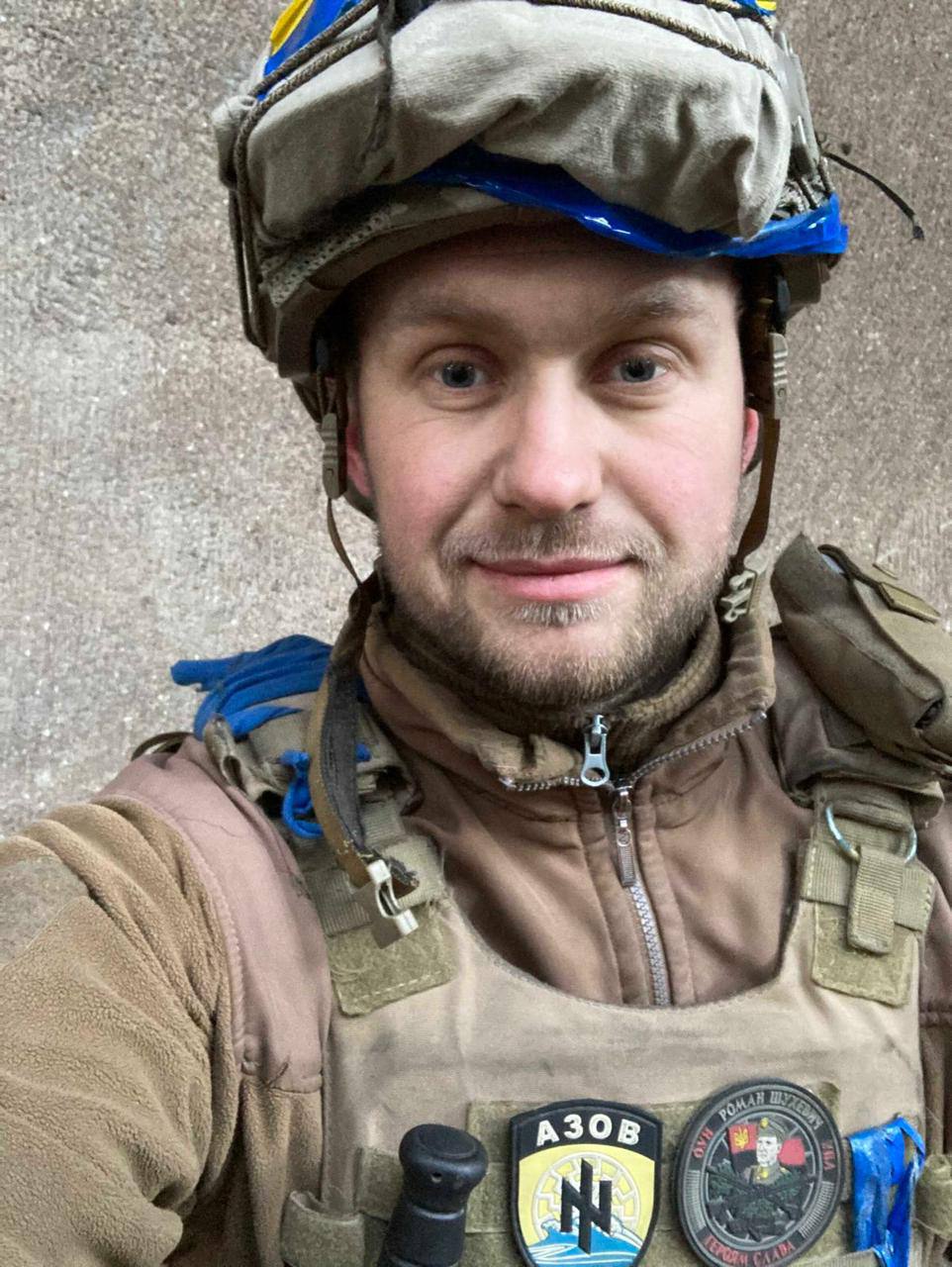
Books and films should be written and made about people like him. These soldiers are making the history of modern Ukraine. Major Arsen Dmytryk is 29 years old, and he has been fighting in the Russian-Ukrainian war for nine years. At the beginning of the full-scale invasion, he defended Mariupol. He was at Azovstal. After leaving the plant, he was sent to Olenivka. He survived the terrorist attack that took place here on the night of July 28-29 last year.
He was heavily wounded. Then - Donetsk hospital, prison again and exchange. After rehabilitation at home, he returned to the front. Today he commands the 1st Special Forces Battalion of the Azov Brigade. He is fighting near Kreminna.
- What is the situation in your direction today? " I ask Arsen over the phone.
- We are in active defense," he says. - "We are even trying to make small offensives in certain areas of the front. "We have specific conditions - open areas where you can't maneuver large groups of troops or equipment, so small groups, raids, attack UAVs, etc. help us. We are moving slowly. This is a tactic of crawling advance that we used until February 24 last year - square meter by square meter. We are taking back our territories little by little.
- In an article by the Commander-in-Chief of the Armed Forces of Ukraine Valerii Zaluzhnyi for The Economist, it is said that the war is gradually becoming a holding warfare. There are opinions in society that it has "reached a dead end"...
- For some reason, everyone thinks that holding warfare is a repeat of the situation of 2015-2016, i.e. stagnation. In my opinion, this is not the case. I have something to compare with - what happened before and after February 24 last year. I read this article by Valerii Fedorovych. He said it right: give us some weapons, and we will continue to win back our territories. Remember how everyone expected the counteroffensive to be like the Kharkiv operation. But you need to understand that the enemy is also learning and regrouping. And he is not stupid. This should also be taken into account. We, the military, are more concerned about preventing holding warfare from turning into negotiations. It is clear that any war ends with them. But the most important thing is under what conditions. I guarantee you: if we return to the situation of 2015-2016 when we banned shooting, the reaction will be different. We will continue to move forward. "Azov has definitely taken this approach. I know that this mood prevails in other units as well because we communicate with each other. We are on the same line. We have lost a lot of time and friends in this war. This is something that money cannot buy.
I can tell you this: the military understood what this article was about. But Valerii Fedorovych tried to explain it in a way that civilians would understand as well. But you understand: everyone reads between the lines and thinks what they want. Personally, I have a feeling that everything will be fine (smiles. - O.M.). Although, in fact, we are also tired...
- It's hard to imagine where you get this endurance and strength.
- People have a quality called habit. You know, everyone thought that we would come out of captivity a little crazy. But we came out normal. They asked: "How come? How did you not go crazy?" I said: "Why did we have to do it?"
- You were in horrible inhumane conditions.
- That's right! But we had been preparing for this for seven years. And we prepared our personnel. If you take a civilian who has not been under fire, has not participated in hostilities, or has never provided first aid, it will be psychologically difficult for him or her. This is nothing new for us. Of course, we all want to go home, put on our crocs, Jamaican shirts, shorts and forget about the army. But we understand that there are still six hundred of our guys in captivity, so we need to keep replenishing the exchange fund. Plus, there is anger towards the Russians. Especially after the terrorist attack in Olenivka. This is personal for us. And we need to finally end it all. I don't want my children to continue my business. Yes, they will be ready for it - that's for sure. But, again, I don't want them to have to do it. So we need to finish and go all the way.
- Is this the war of our generation?
- I would say two or three generations. The one that comes after me is already at war. Now guys 18-19 years old are coming - those who grew up and were formed during this war. There are a lot of young people. Our average age is about 25 years old.
- How do you, as a commander, communicate with them, find a common language?
- Every commander should be a psychologist. Look, I went through all the same steps they are going through. I joined Azov when I was 19 years old. I was a simple soldier. I also dug trenches, froze in them, was shelled and so on. I know how to talk to them. The only disadvantage that makes it difficult is that the current generation is a "hothouse" generation (smiles. - O.M.).
- Why?
- Because they grew up with computers. These "hothouse" kids are smarter in the sense that they quickly understand technical issues. If you give them a quadcopter, they will quickly find their way around, and if necessary, they will easily cross-flash the programs. Many of them speak English very well, which is a great help because many weapons come with instructions in a foreign language. But our generation is a little different - they are so "hard disks": Why should we think? Just go and do it (smiles. - O.M.). And these guys are smart, but they are "hothouse" - their feet are cold. They don't know how to chop wood, you know what I mean?! So we found a solution: we bought gas cylinders and used them to heat ourselves. After all, getting them to chop wood and heat the stove is another quest (smiles - O.M.). It helps us, the commanders, to have gone through all these stages. We know the life hacks we teach our soldiers. We solve everything with them in everyday life. This is the first mandatory point.
Second, there must be trust in the command. They see the commanders at their positions. There is no such thing as a company or battalion commander who has not walked his line and seen what is there. Our friend Redis walks along the front line, where the enemy is 200 meters away! I try to visit the positions once a week. Here I communicate directly with the soldiers. Because when they leave their positions to rest, they do not want to listen to anyone. They just want to rest, surf the Internet and eat shawarma. And I understand them because I was in that place too.
The third point is the attitude towards the personnel. They need to rest. We work in three cycles: rest-preparation-war, and so on in a circle. The young people see that we look after them and talk to them, which is also important. Sometimes a fighter comes and says: "Commander, I will do anything, but I am scared." I answered: "No problem. Try driving a car. No war has ever been won without the rear. You can bring food to the guys for now." That is, we are also guiding.

- Is it difficult for you to make decisions at all?
- As a commander, I have to think with a cool head. I always have a scale. For example, if we take this position by storm, yes, we will lose one or two dead, but it will be tactically more advantageous and we will not be shelled so intensively in the future. We always analyze any operation "down to the molecules" - we draw all the routes in detail, plan it so that there are as few losses on our side as possible.
I have over 600 fighters. I try to memorize all of them by sight. I give an order because I have to, and the guys do it. They understand what they are doing. For example, I have a fighter who lost his family in Bucha - his wife and child. He said: "Commander, I will be here until the end. Sign me up for any kind of action!". But I understand that sometimes you have to give an "emergency cord" because such people need to be stopped.
- This is a terrible story...
- We have many such stories! In Mariupol, too.
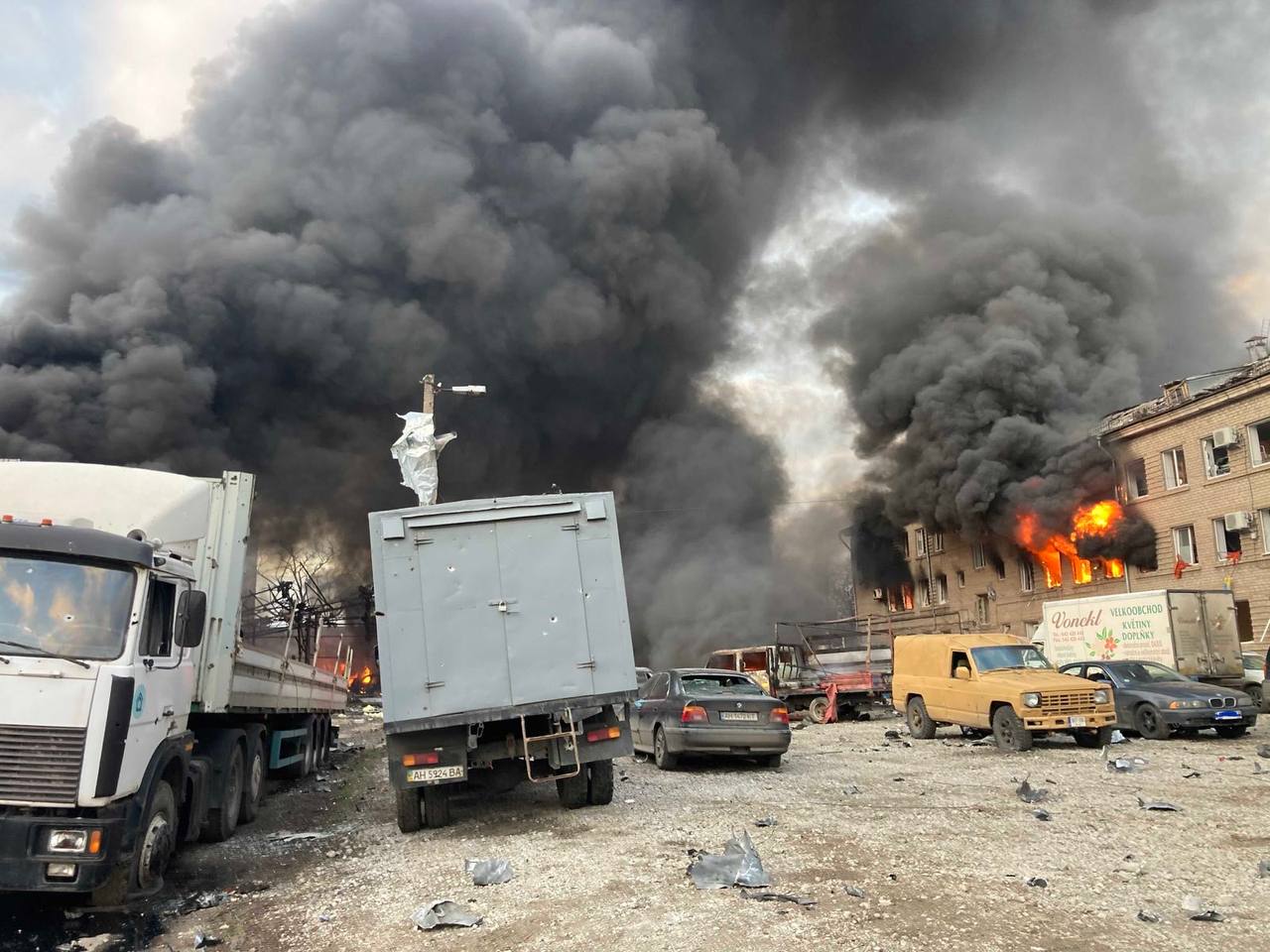
- Speaking of Mariupol. You faced a full-scale invasion here. How did it go?
- We were all at the base. At the beginning of five in the morning, the shelling and explosions of the "caches" began. We received a command to be on full combat alert.
- How did you end up at Azovstal?
- We got there in about a month. The enemy had already broken through the city's defense line, entered the city, and we were slowly withdrawing from each street. Most of the destruction was on the left bank of Mariupol because we defended ourselves there to the last. It was like this: they would march in a column, receive from us, and their aircraft would arrive and "dismantle" the entire area - all the houses would be completely "zero". Then another convoy would march again and follow the same scenario. So they destroyed street after street. You know, I thought until the last moment that no one would enter the city. Because it's very difficult to fight here.
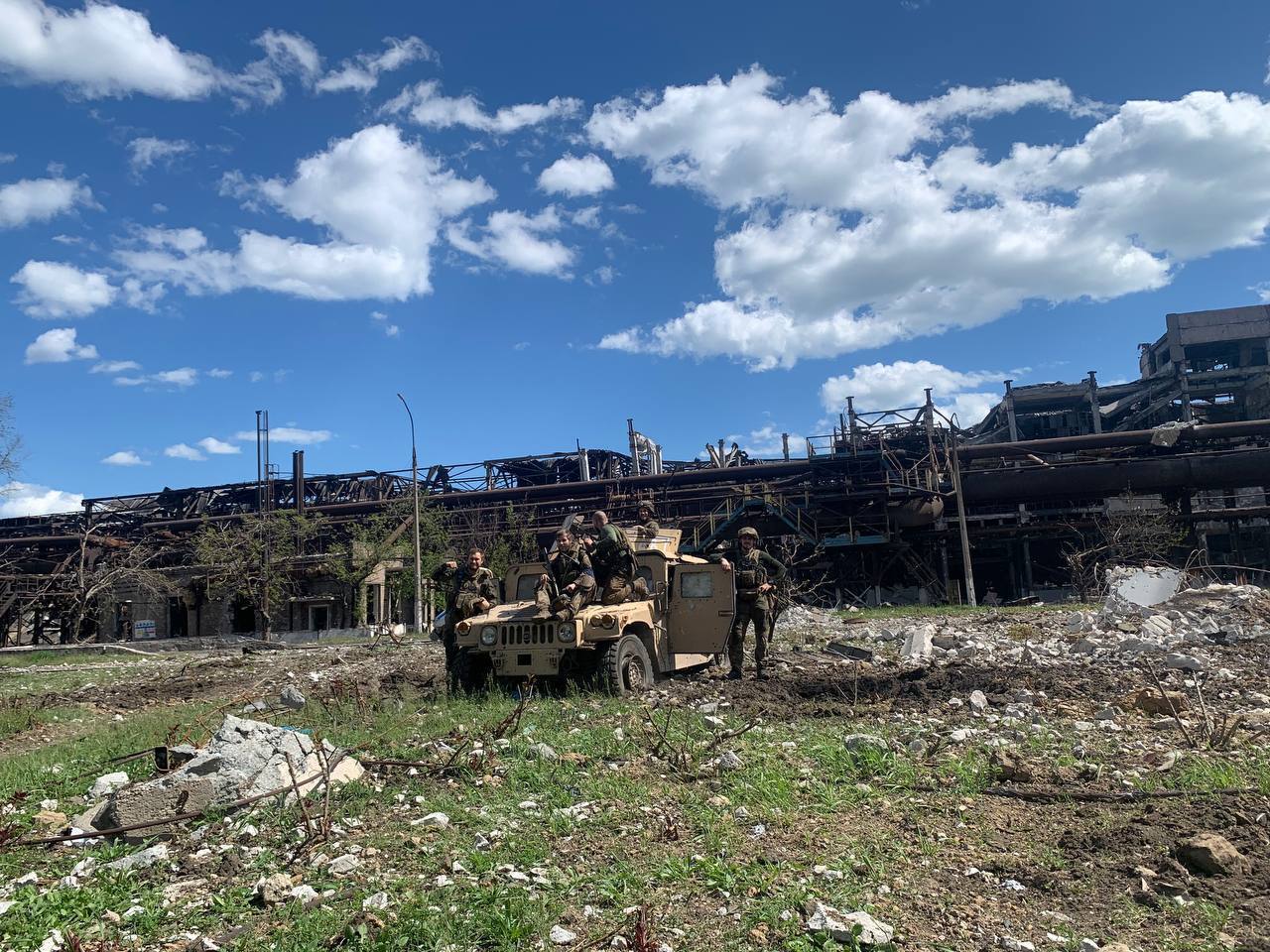
- What do you remember most from your time at the plant?
- (He thinks for a few seconds. - O.M.) Chocolate. We had big problems with it. We would take chocolates, go to the hospital (and it was also a quest to get through safe and sound) and give them to our guys. Those who had just killed enemies, blown up tanks, were happy as children with that chocolate bar...
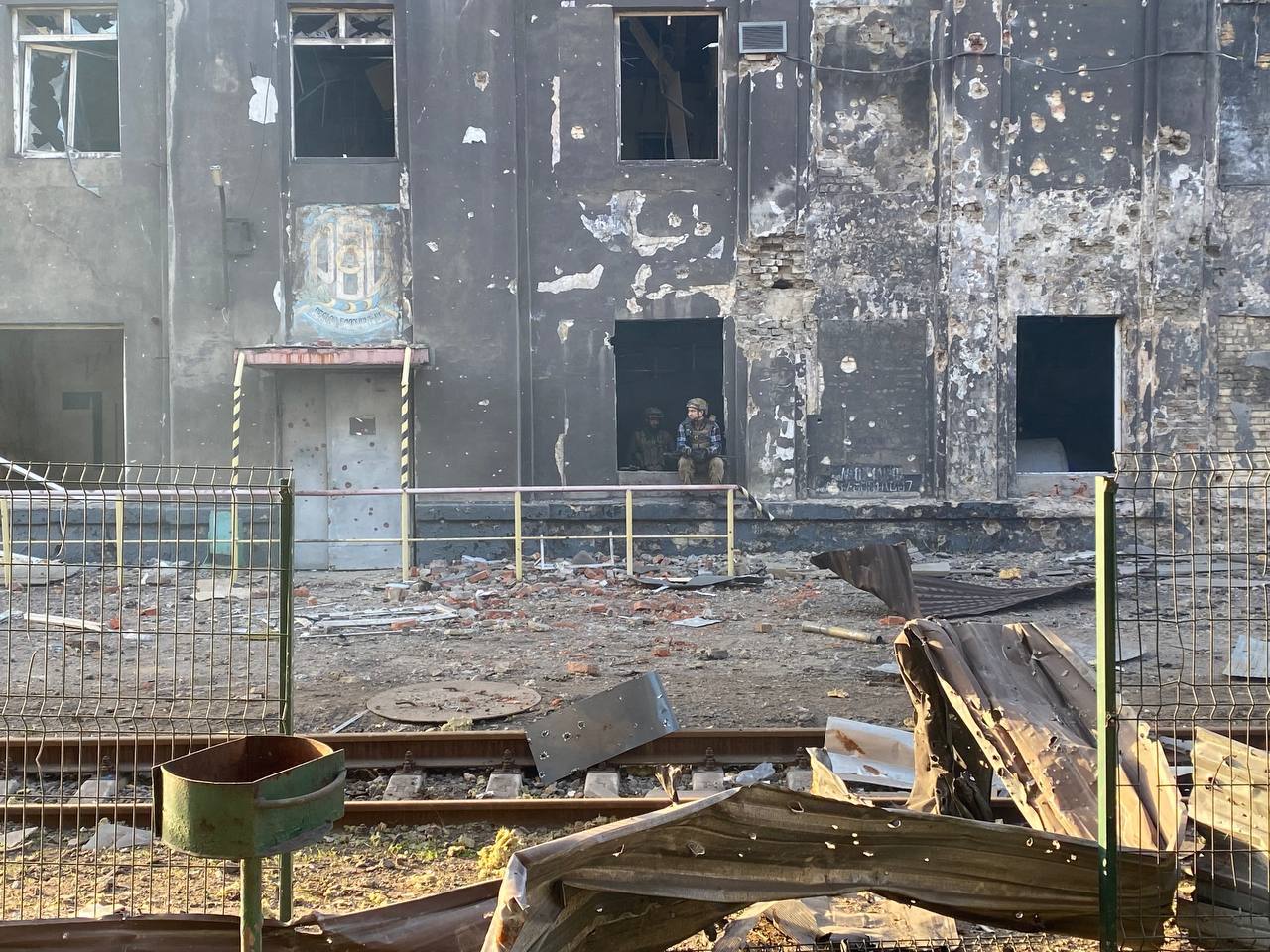
- In an interview, you said that many people were reluctant to leave Azovstal. Why?
- No one wanted to be captured at all!
- Is it better to die?
- No! Everyone wants to live to be a hundred years old - we too (smiles. - O.M.). But when we realized that the full envelopment was inevitable, we got together and decided that we would stay here until the last. No one had any objections. We realized why we were there. Now there are talks about whether was it reasonable to stay in Mariupol at that time? I think it was. First, we focused so many enemy forces on ourselves. Secondly, we attracted attention, including the world's. Third, we raised morale. I received several calls from my friends, commanders of other special forces units, asking me to say something to their soldiers who were leaving. They understood that it was not easy for us at Azovstal, so they had to do their best. You sit in that plant and think: the guys get inspired just by talking to them! It was a pleasure! Of course, I wanted to stand. And when the first batches of helicopters arrived, and you saw people you hadn't seen in six months, it was a real treat! Our first words to them were: "Are you crazy or what? Why did you come here?" (smiles. - O.M.). They were laughing.
You know, there was talk of fighting in the underground. It was possible to leave Azovstal in small groups through the same underground tunnels. But we had wounded people. So what if I came out now and my guys surrendered or were shot because they were Azov? No, we could not allow that to happen. At that time, Friend Redis was negotiating with the Russian Main Intelligence Directorate. We tried our best to get some benefits for our wounded. Yes, the Russians did not fulfill certain agreements. But we, for our part, did everything we could...
- Which ones?
- We raised the issue of our wounded being sent to Novoazovsk, receiving the necessary medical care and being among the first to be exchanged. But this did not happen.
- Why did they not fulfill the agreements?
- Because they are Russians! As our artillery commander, who was killed in Olenivka, told me: "Lemko, do not look for logic in the actions of the Russians!". This is their mentality. They are of the category who think only for themselves and do not keep their word. Although to be fair, not all of them are like that. There are officers who keep their word. But they are few and far between.
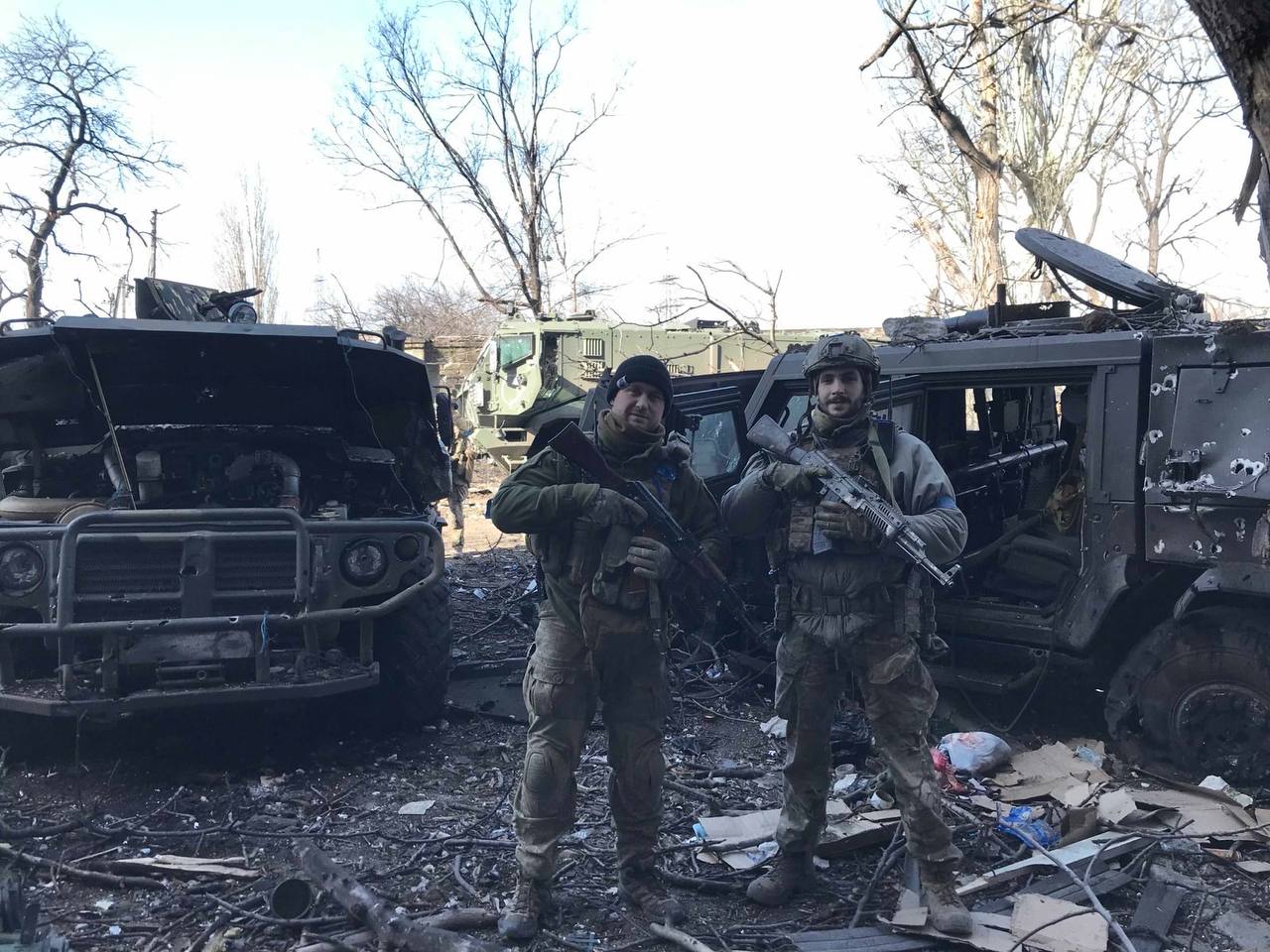
- After leaving Mariupol, you were in Olenivka, where you survived a terrorist attack that killed 53 prisoners and wounded more than 130, including you. I'll quote you: "To anyone who stutters about the 'brotherly people', tell them about Olenivka." What would you tell them?
- First, there were only Azov fighters there. Second: if it were not for our captured medical guys who provided first aid, there would have been many more casualties. Third, it was done on purpose. We, the wounded, were taken out only six hours after it happened. We were lying on the concrete, bleeding. Later, during interrogation, I talked to their officers about this, and asked them why they did it. I said: "Do you realize that you have brought even more anger on yourself?!" They answered that they did not make such decisions. But it is clear that the Russians wanted to execute us all. It's a good thing that, as usual, they planned poorly, and not all of us died. We were locked in there. We were trying to tear out the chain-link mesh to get out, but no one was going to open the door for us because the guards had run away. Then they appeared and started shooting in the air to make them leave...
I think they also wanted to put us in our place: they didn't take Mariupol, and now the whole world is talking about them, saying how tired they are. But, in fact, they throw paraffin into the flames with that attack.
- You were then taken to a Donetsk hospital. How did they meet you?
- When we were brought to the waiting room, all the women there were crying. Then they gave us water. They washed us.
- Did they operate on you there?
- They spent an hour and a half removing the debris.
- When you were in the hospital, Russian television came there. I saw you in that program about the Azov fighters...
- Did you listen to my Russian? (laughs. - O.M.).
- Yes, I did. It was strange to listen to you as if it were a completely different person...
- Because my jaw doesn't "work" for Russian (smiles. - O.M.). After that, someone threw a book at me (laughs. - O.M.).
- Who?
- Сhief. He said: "Learn Russian!"
- How did you even get to that shoot?
- They woke me up in the morning, brought me a turtleneck and jeans. They said that the TV crew was coming and I had to give an interview. I asked what to say. "That everything is fine, I want to go home." They promised that I would go for an exchange later. But after that video, they took me again... to Olenivka (smiles. - O.M.).
- When were you exchanged?
- About a month after that.
- You look very thin in that video. How much did you lose during your captivity?
- About 30 kilograms.
- After the exchange, did you undergo rehabilitation?
- The first month we were undergoing treatment. Our patronage service treated us very well. Our girls are great! We were in great condition. Then we spent some time at home. At the same time, we were working on the issues of our prisoners. Plus, we were already engaged in the formation of the battalion. For this, we needed a base. We asked for help from philanthropists. There was no one who refused. Drop by drop, and we already had a whole "mug".
- Did you plan to return to the frontline while in captivity?
- They made us very nervous with that terrorist attack in Olenivka. Many of our friends were killed there. They were such good "reges" - guys who had served since 2014 and had been through, as they say, "Crimea and Rome". What they saw at Azovstal! And so they died... We need to take revenge and end the war. I, like our other commanders, have a lot of experience. We are practitioners, not theoreticians. It is difficult to find such people. We need to pass on all this knowledge to our guys and go to victory.
- What would be a victory for you?
- First, we must return our territories to the 1991 borders. Secondly, we must return all our prisoners and find the missing, who, unfortunately, are also quite numerous. Thirdly, I tell all my guys: do not think that we will win this war now and continue to live in peace. It will not be like that. We will have to work twice as hard to rebuild the country. There is a lot of work to be done! In addition, support for the military will be an important issue. We are already talking about this with our guys today. We need to avoid a repeat of the situation of 2016-2017 when it was said: "We didn't send you there!". Also on the agenda will be, for example, providing the family of a fallen young soldier with an apartment or treating the wounded. We will have to do this. Why do we have to do it? Because no one will think for us. And if they do, it will be a bonus for us.
Olha Moskaliuk ,Censor.NET
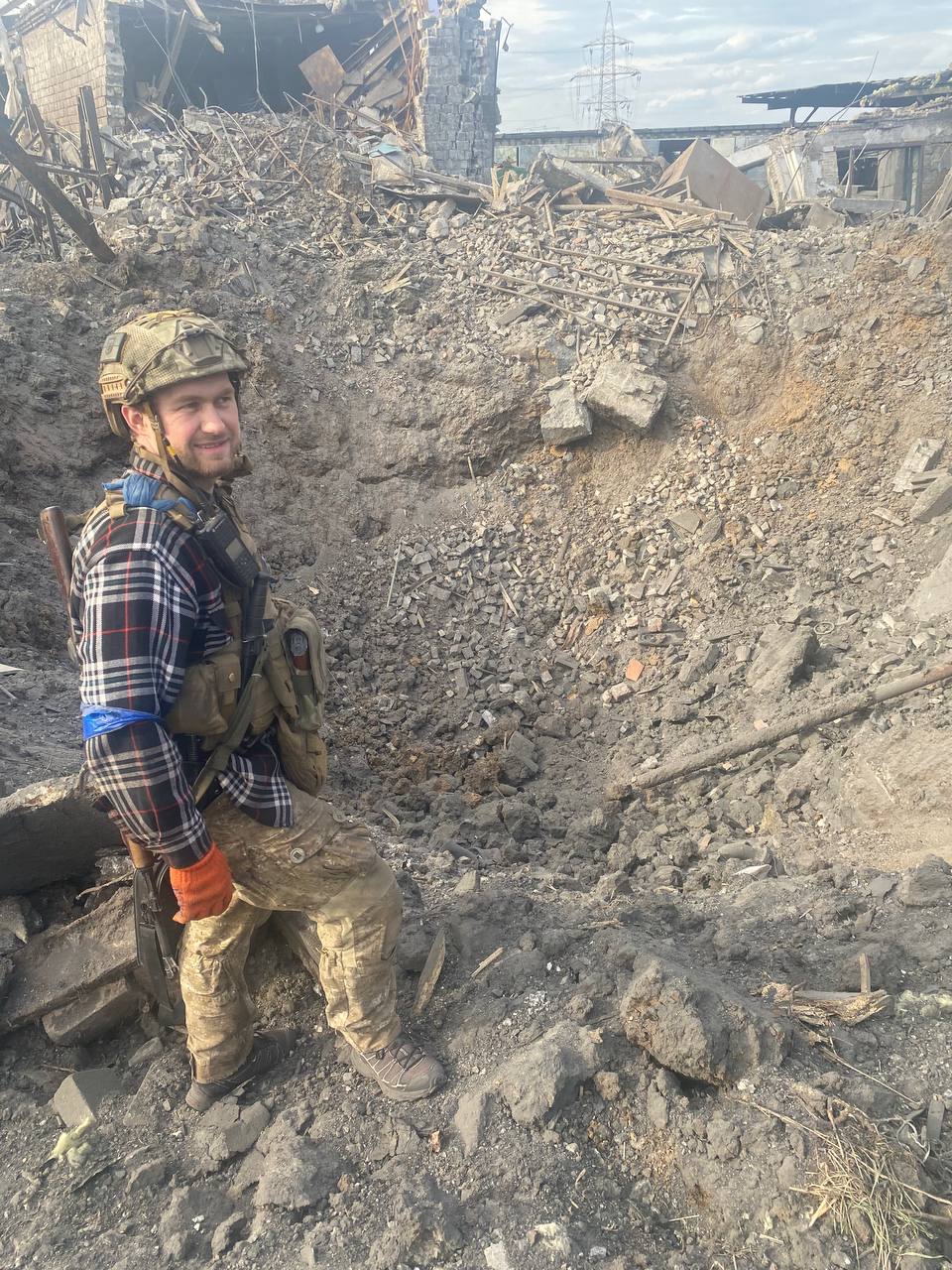
Photos provided by Arsen Dmytryk


