



Colonel Oleksandr Gramarchuk (Hrom): "End of war according to classics is defeat or victory. There are still many years of struggle ahead. Unfortunately "
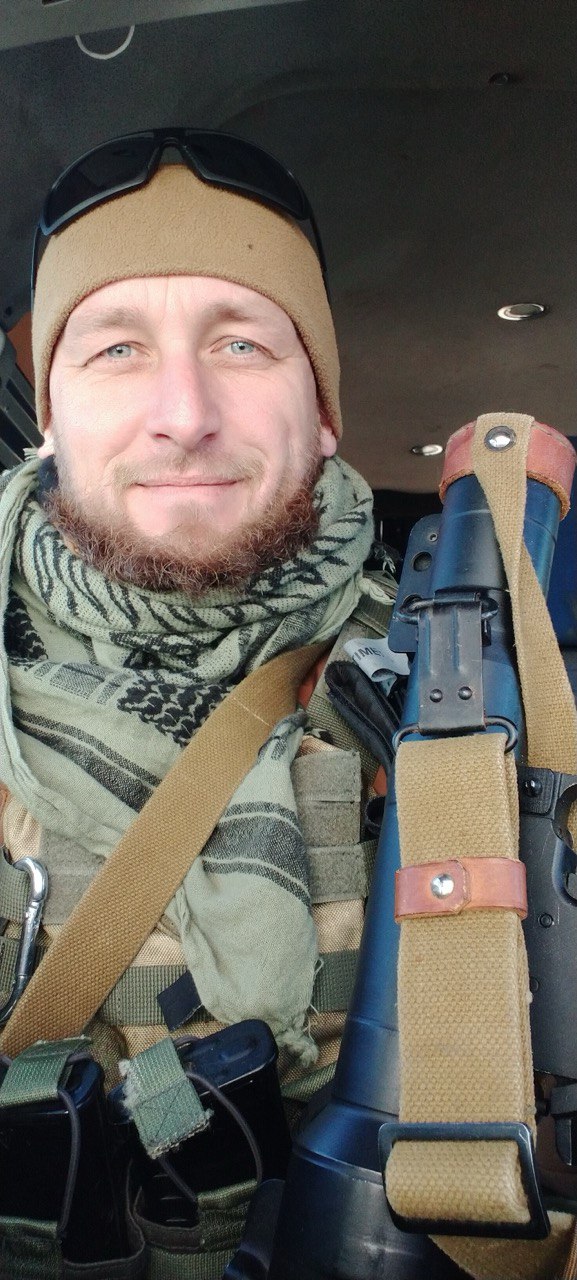
Colonel Oleksandr Hramarchuk, call sign Hrom, is a career soldier. At the beginning of 2014, when Russia annexed Crimea and invaded the territory of Donbas, he joined the ATO. He performed combat missions, in particular in Debaltseve and at the Zenit position opposite Donetsk airport.
- "If in 2014-2015 there were active hostilities, then later it was a positional war," he tells me in an interview. - "After a number of political agreements, it was somehow more difficult to say that I was 'fighting'. During the JFO in 2018-2019, when the operation was led by Lieutenant General Serhii Naiev and Valerii Zaluzhnyi was the Chief of Staff of the JFO, the situation changed a little bit to become more dynamic. Fortifications began to be built, the enemy received powerful retaliatory strikes, and then asked for a truce to collect the corpses. It was a normal way for the Russians to clean up.
-But still,on 24 February 2022,a full-scale attack was launched against us.You said that you knew the war was inevitable. When did you come to this realisation? What were the signs?
- To clarify: I knew that a full-scale war was inevitable, because what everyone called the ATO/JFO was already a war. The signs were that the Russians were actively preparing for the invasion, starting with building up the capabilities of the military-industrial complex, actively rearming the army, and ending with the complete usurpation of power in Russia by one party. Well, I already knew about the immediate preparations for the invasion and the approximate time on 23 February 2022. I was scared for the civilians who were being reassured on TV. I understand that this was done to prevent panic, but on the morning of 24 February, on the way to the collection point, I saw the consequences: queues at ATMs, petrol stations, queues to leave the city. For some reason, the missiles flying overhead did not even disperse them...
- Then the military enlistment office promised to call you back. As I understand it, this did not happen, so the next day you signed up for the terrorist defence?
- Here's how it went down. I had my backpack and uniform ready, so in the morning, without waiting for calls, I went to the assembly point, having instructed my wife and children. It was not surprising to see in the queue those who had combat experience and were again the first to come to the defence of Ukraine. An employee of the TCC responsible for the registration of officers wrote down my data, told me to be at my place of residence and wait for a call. I was a little outraged, so I called my old comrade Anatoliy Shtefan (now a colonel in the Armed Forces of Ukraine - O.M.), reminding him that I could join his unit.
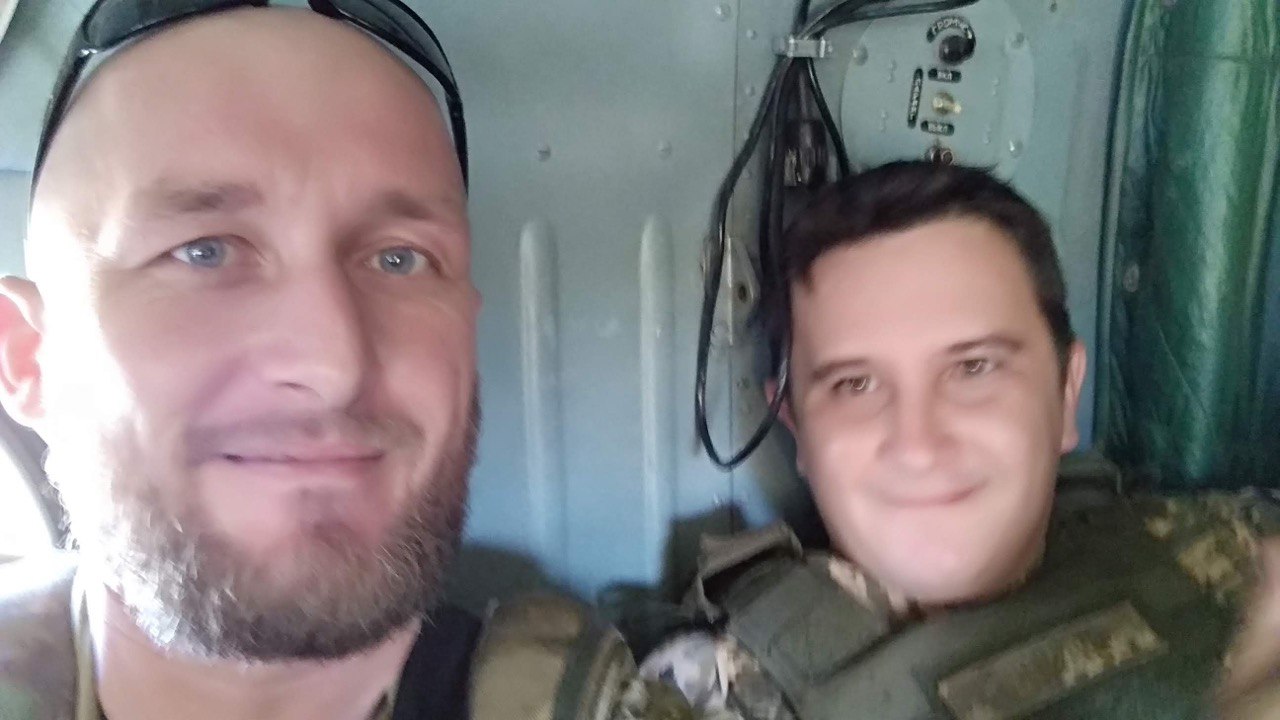
As the units of the Military Services Commands and the General Staff were moving to alternate command posts at the time, I was instructed to remotely work on open sources of information and wait for a call.
It lasted me until the morning. During the day, I managed to teach my family how to quickly get to the shelter during an air raid. In the morning, having agreed with two more friends, I went to the assembly point of the TRO brigade. While standing in line, a soldier came running and asked who knew how to use a grenade launcher. That's how I became a grenade launcher of a grenade launcher platoon of an infantry company (smiles - O.M.).
- Where did you fight at the beginning?
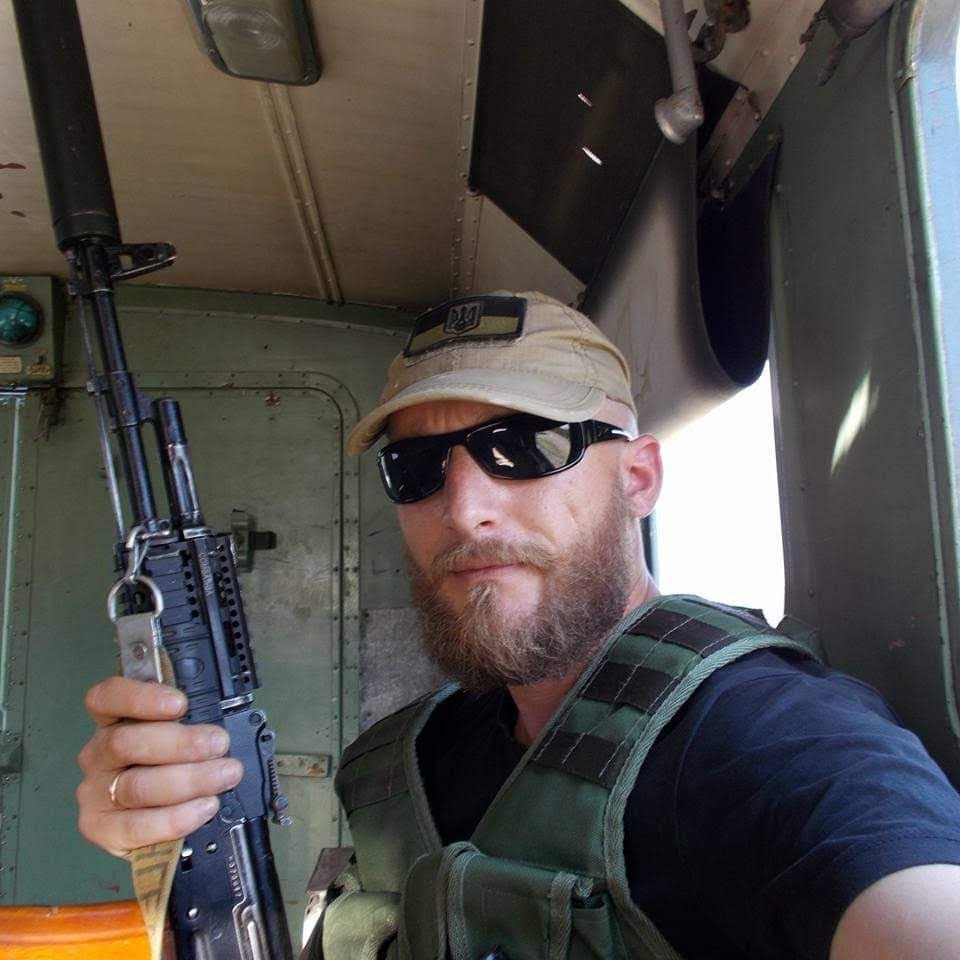
- On the first day, I was assigned to a consolidated rapid response team. We went out to catch mythical saboteurs, then set up positions on the Vinnytsia-Zhytomyr highway.
After additional training on Western anti-tank weapons, he began training grenade launchers from other units of the brigade. Subsequently, a combat order was received to form a battalion tactical group to perform tasks as part of a group of troops in the north-eastern direction.
Our task was to bridge the gap between the flanks of the 93rd Mechanised Brigade and the 95th Airmobile Brigade in the Izyum direction, where the paratroopers, unfortunately, suffered heavy losses. When I arrived at the position, I took command of the platoon, which managed to dig in and gain a foothold under heavy enemy artillery fire. The platoon subsequently completed the task without losses.
- You are a career soldier, so you obviously saw the picture more realistically. What was your mood and thoughts then? Did you have a feeling that we might lose the country?
- At that time, I was pushing away unnecessary philosophy, as the main thing for me was to save people and complete the task. There were moments when it seemed that that was it: we would be ploughed by shells and no one would remember us. But quickly, pessimism gave way to anger and my mind switched to combat work.
- You said you were in the Izium sector. What kind of fighting was going on there?
- Unlike assault units, we were not tasked with attacking the enemy. We had to cut off several tank-hazardous areas and to prevent enemy infantry from breaking through. They tried to "smoke us out" with artillery, incendiary mines were used, and the aviation combed our positions with NURS almost every day. But when the artillery weapons provided by our partners were pulled up, a turning point began to emerge in the interaction with tank units and army aviation.
- Which fight do you remember the most?
- I remember most the situation when the company commander in the neighbouring trench reported on the radio at night about the work of enemy artillery on our POP. I was lying in my trench, covered with earth from constant shelling from above. When I got tired of the fact that no one on the air could hear the company commander, I gave a long monologue of swearing into the radio. They heard it (smiles - O.M.). After a while, the place where the shells were flying from was densely covered by the fire of our artillerymen.
- In an interview with us,Yuriy Kochevenko, an officer with the 95th Air Assault Brigade, recalled those times :"In the Kharkiv region, there were extremely fierce battles for every village, every forest belt, which were very densely covered with the blood and sweat of our military. " What would you say?
- I confirm it. And it is important to never forget the cost of every metre of our land...
- Do you remember what was the hardest part?
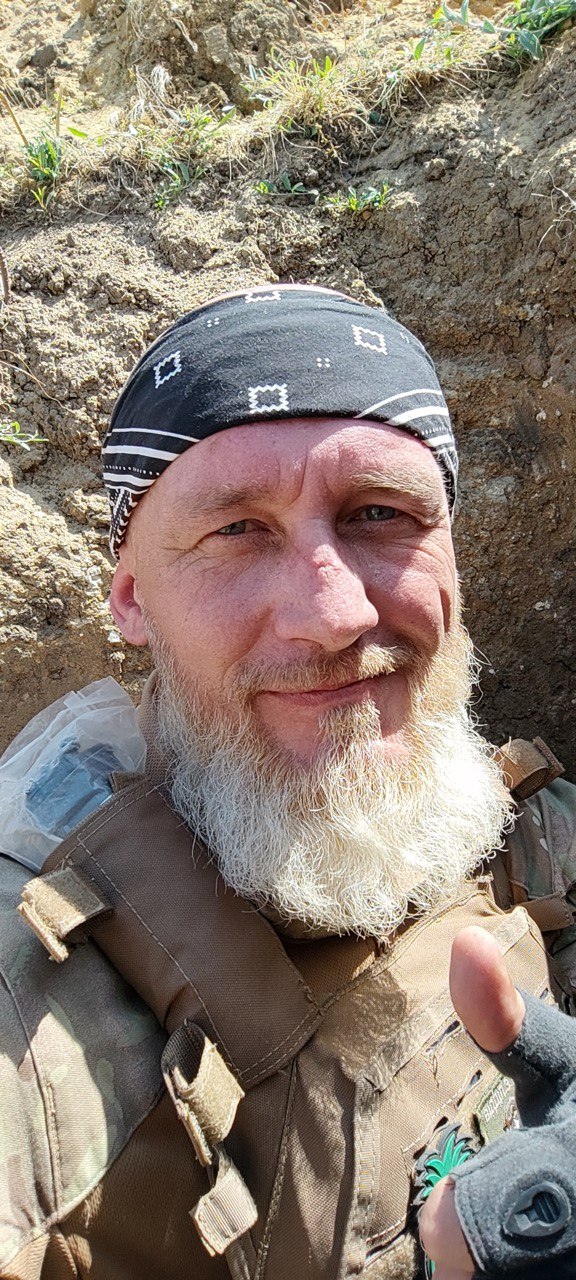
- I was worried about my family. Especially children... I didn't want to even think that the enemy would reach them and harm them, and I would be gone at that time.
- We have a dangerous and difficult enemy. What is he like on the battlefield? What do you think of the Russian military in general?
- Many people make a big mistake by underestimating the enemy. We need to realise that the Russians have spent more time and resources on training their troops than we have. And I believe that when elite Russian special forces, paratroopers and marines are destroyed by a mobilised teacher/accountant/IT specialist/businessman, it is a feat. This is a feat of the Ukrainian people in confronting one of the largest armies in the world. But there are similarly mobilised soldiers among the Russian military. We have all seen hundreds of videos with captured Russians. A large number of them went to war not just because "family called". Over the past 10 years, a large number of Russians have become addicted to credit in their desire for a beautiful life. You have to give back from somewhere, but how can you give back if you can't earn money? This is the answer. Just look at how Russian women and mothers react when their husband or son calls from captivity. They are primarily interested in payments, not the condition of their loved one. So much for the elite of Russian society.
You ask me what I think of the Russian military. I think they are better dead than alive.
- The Russians have a habit of threatening with nuclear weapons from time to time. You said that "nuclear weapons should be confiscated from the hands of psychos". How can this be done?
- You see, when nuclear suitcases are in the hands of narcissistic old men whose dementia makes them have crazy fantasies, something has to be done about it.
We have the following threats: Putin - how old is he? He's outlived his usefulness and doesn't give a damn about any Europeans. Lukashenko is the same story, but this old man is a more cunning fox, otherwise he would have dragged his country into war a long time ago. Kim Jong-un is a natural psycho.

- Why is the issue of possible confiscation of nuclear weapons not even raised?
- Because the international community has ceased to be a community. Everyone fears for themselves, seeing that international institutions have ceased to play the role of a balancing and peacekeeping force.
So far, I do not see any effective levers of influence on them (Russians - O.M.), except for physical removal.
- How great do you think the threat is that the Russians will use it?
- Perhaps they will. In case a miracle happens and we push them beyond the borders or start our operation in the Moscow area.
- The Defence Intelligence of Ukraine says that social tension is growing in Russia and dissatisfaction with the war is increasing. Do you believe that this could result in protests or even end the war?
- I mentioned earlier one of the reasons for the rise in social tension: bad loans that cannot be repaid. Further growth of tension will occur in proportion to the number of Russians killed in the war and the strength of the "tightening of the screws" in the legal field.
Protests are nipped in the bud in Russia. There is also the option of protests on national and religious grounds. Almost all special services in the world are currently working on this case. And we have already seen experiments in different countries. By the way, recently in Dagestan, the beginning was not bad, but people did not have enough motivation.
I don't believe in a "Russian ruthless revolt". This is from the category of fantasy.
- In March next year, presidential elections are due to take place there. Can their results have any impact on the Russian-Ukrainian war?
- Can you guess what the election results will be? (smiles. -O.M.). Their impact will be clear. For example, the intensification of mobilisation activities in Russia. And to consolidate it, repressive measures against "dissidents" and those who will evade service may be taken.
- You recently said in an interview: "As long as the enemy exists, there will be no peace. " Could you explain what you mean by that? The physical existence of Russia as it is now?
- I mean the very existence of the Russian Federation as a state entity and the common border with them, which they have long violated. This is a cancerous tumour on the body of the planet that must be cut out along with the metastases.
- I saw that you had a public dispute with Mariana Bezuhla, MP, Deputy Head of the Parliamentary Committee on National Security, who has been constantly criticising the Commander-in-Chief of the Armed Forces of Ukraine, Valerii Zaluzhnyi. In one of her posts, she called you his PR man. What does this whole story mean to you?
- I do not know this woman personally. All I know is that she is a member of parliament and deputy chairman of the Committee on National Security, Defence and Intelligence in the Verkhovna Rada.
We also do not know who charged her with such messages and for what purpose. Her insinuations about Valerii Zaluzhnyi are aimed primarily at destroying the rating of the President of Ukraine in society and at dividing the Armed Forces of Ukraine. I know that many civil society activists and well-known bloggers have already written an appeal to the Security Service of Ukraine and the Chairman of the Verkhovna Rada of Ukraine asking them to consider her actions in both the ethical and legal fields.
I don't have an official Facebook page as an official, but on my own, as a citizen of Ukraine and a friend of Valerii Zaluzhnyi, I have every right to voice my opinion and defend the honour and dignity of my friends. That's why it's ridiculous to read some posts about "PR people" or even more so when I am called "Assistant to the Commander-in-Chief". It's flattering, but in reality, I hold a more modest position (smiles - O.M.).

- Finally, let me ask you, how do you see this war ending? Let's have a pessimistic and an optimistic version.
- According to the classics, the end of the war is either a defeat or a victory. There are still many years of struggle ahead. Unfortunately. I don't operate in the categories of pessimism or optimism because I am a realist. I would not like Ukraine to agree to negotiations and a freeze in hostilities, as this allows the enemy to build up its capabilities. We have already gone through this, but we did not direct our efforts in the right direction.
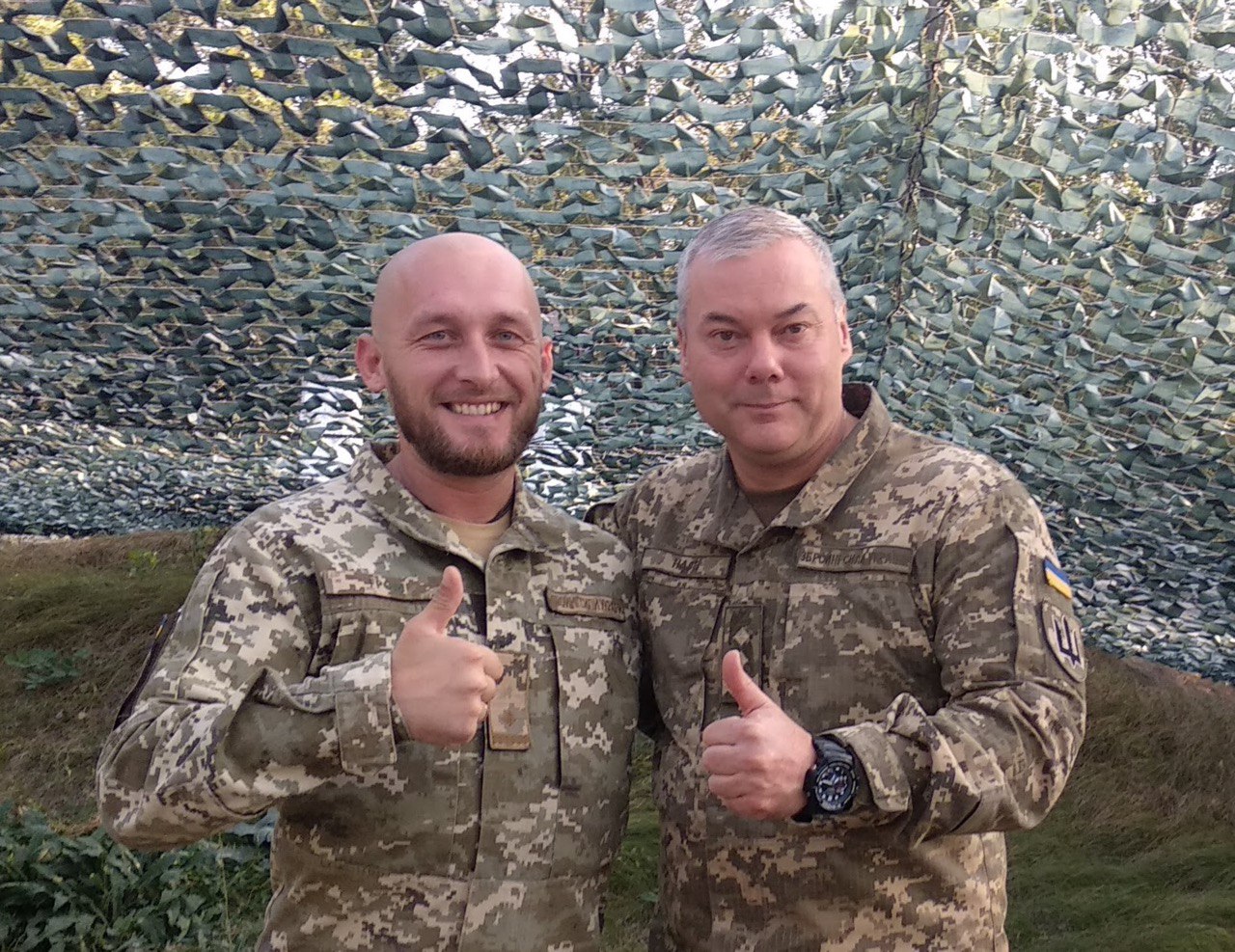
I hope that our partners and friends will realise that we can defeat the dragon only together. This requires the efforts of the entire civilised world: weapons, ammunition, people, radical political decisions at the international level, and investment in science. As my friend and talented General Serhii Naiev says: Together we will win!
Olga Moskalyuk, Censor.NET
Photos and video provided by Oleksandr Gramarchuk


