



Sniper commander Vlad, call sign Santa: "I am still walking between drops. My armor was torn off, it happened..."
...At first, Vlad did not want to be a sniper. "The risks are too high," he explains his attitude now. - "Sniper raids pose a high level of threat to your life. Not to mention your psychological health." But the war and fate, as well as Vlad’s inherent passion and responsibility, had their own way.
Today, 29-year-old Vladyslav T. is a co-founder of the Surma sniper team; he is the commander of a sniper unit, a separate platoon of brigade snipers in one of the brigades of the Armed Forces of Ukraine.
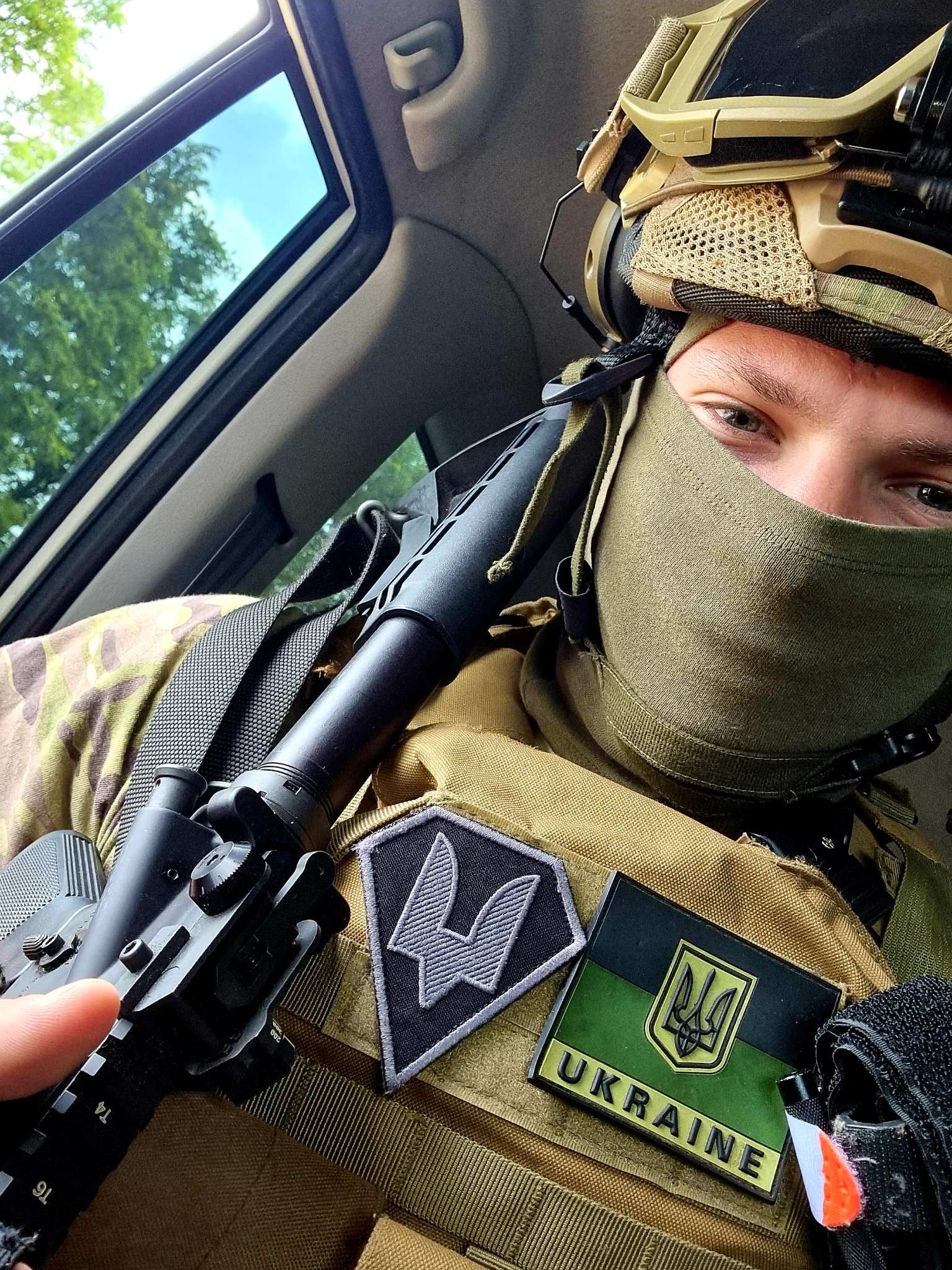
In this interview, Santa talks about the peculiarities of sniper work and the difficult place of snipers in the warring Ukrainian army. "Censor.NET" hopes that after reading the interview, the reader will donate as much as they can to purchase ammunition for the training of our snipers. By doing so, you will probably save the life of one of Vlad's brothers in arms.
And here is a conversation with Santa, recorded shortly before Christmas.
- How long have you been in the Ukrainian Armed Forces? Your career in the army did not start with sniper ambitions right away.
- I have been officially in the Armed Forces since 1 June 22. I started my military career back in 2014. As part of a volunteer battalion, that is, without registration, without paperwork.
-Where did you have to fight during this period?
- Among the hotspots - Pisky, Avdiivka. From the frontline cities - the then Mariupol and Bakhmut.

In 2014, near Mariupol. In the photo: future snipers of the Surma team

2015, Pisky village
- Back then, you were actually a shooter, so it's not surprising that when the full-scale war began, your experience was in great demand.
- Actually, I was already planning to return to the frontline, since 2018 I had been living as a civilian. My friends and I agreed that we would all return. I was drawn back, and the situation at the front eventually required it. A year before the invasion, I was actively upgrading my equipment and fitness. I transferred my earnings to remote work. We were planning to return to a volunteer unit, but they don't pay money, and we had to live on something between combat missions.
- Unfortunately, this war is almost two years old, and many people have to be told that volunteers do not receive money...
- Well, volunteers don't come for money either. It's like a nice bonus. So when I found out that they would also pay a normal salary - not a formal salary, but a normal salary; that I could buy normal clothes and high-quality equipment - it was an unexpected pleasant bonus.
-Your mother is from Donbas, and you are from Odesa. Did you speak Russian most of your life?
- I speak Russian. Although I studied at a Ukrainian-language school - a very cool one, by the way. But in the family, in the yard, we spoke Russian everywhere.
-When did you finally switch to Ukrainian?
- It was not abrupt, it was gradual - probably with the change of environment.
I was an adaptable guy. I met with the Russian-speaking contingent and spoke Russian. With Ukrainian-speaking friends, I spoke Ukrainian.
And then the war weeded out most Russian speakers. Most people consciously switched to Ukrainian. With the other part, I just didn't get along. Now I am surrounded by almost all Ukrainian speakers who also used to speak Russian.
- Does your mother still live in Odesa?
- No, my family has now moved to Germany. My mother, my sister. My father is at war.
-Did you feel calmer when they left?
- Yes. As I said, I was ready for the invasion, because I was prepared mentally - my crew, my physical form, and so on. But on the first day of the invasion, I woke up to a phone call from my sister and I didn't understand what was happening! I was asleep. My sister is younger, she doesn't really follow information hygiene; she starts telling me: Russian troops have landed in Odesa, there are explosions. I don't know what to do. On the one hand, I have a full wardrobe of military items, bags already packed and ready to go. On the other hand, what to do with my family? I have to get them out somehow... I just didn't understand what to do. But my father arranged for their departure - and I had already gone to get my friends, because I didn't know what the situation was at the front. I had to decide whether I should stay in Odesa and arm myself, or go somewhere else where I was needed more.
- The second option played. Tell us, how and when did your military fate bring you to the sniper line?
- Back at the beginning of my military career, around 2015, I first picked up an SVD (Dragunov sniper rifle - Y.K.). All this was influenced by sniper romance. Plus, I met an interesting sniper who had been to war before. I asked him everything, it was very interesting. But I did not work exclusively as a sniper. There, I had to be a universal combat unit and work with many types of weapons, depending on the situation. And I did not shy away from taking an SVD at that time - but my success was not very good. Plus, I realised that for me personally, it was a very scary thing.
- Scary in what way?
- At that time, I was already used to deflecting danger, not creating it. Sitting in the trenches like infantry, right under fire, monitoring your sector and, in case of any suspicions, working out the details. But here the situation requires that you go to the enemy yourself.
-...and actually draw fire on yourself.
- You have to approach unnoticed. A sniper does not engage in combat, even if he draws fire on himself.
-If sniping seemed scary to you, how did you end up becoming a sniper? And to become a unit commander.
- It took a while... And the commander is a formality. We are a single organism, a team. Everyone has an equal right to vote. Everyone listens to everyone, and when we come to an agreement, we all do it together. There's no such thing as something shooting into my head - and that's it: you go there, you go there... We always consult with each other.
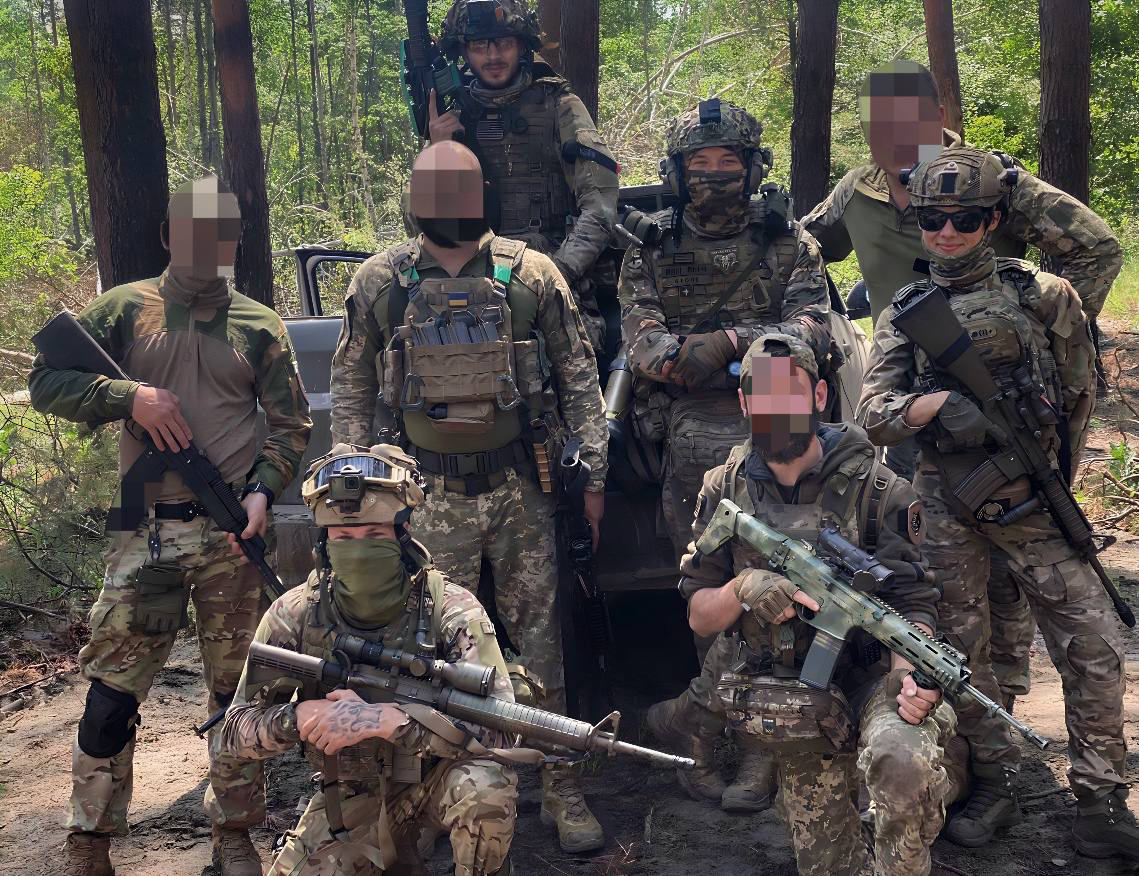
In fact, back in the ATO years, I decided for myself that I would not be involved in sniping. In general, I identified three areas that I did not want to deal with: sapper, medicine and sniping. I don't know whether to explain...
- Of course! It's interesting.
- Medicine is an extremely responsible thing. Not that I am afraid of responsibility. But people die in war - and sooner or later, it's just a matter of time, it will happen that your person will die in your arms. It will happen that it will be your fault. For example, in winter, you didn't notice a wound hole, and the person bled to death while being taken away. In winter, it is very easy to overlook many things.
- I see. Sapper?
- I try to avoid anything that explodes. A sapper, as everyone knows, makes a mistake once. This does not suit me. I want to live and be useful.
- That makes sense. And the sniper?
- The same. The risks are too high. Sniper raids pose a high level of threat to your life. Not to mention your psychological health.
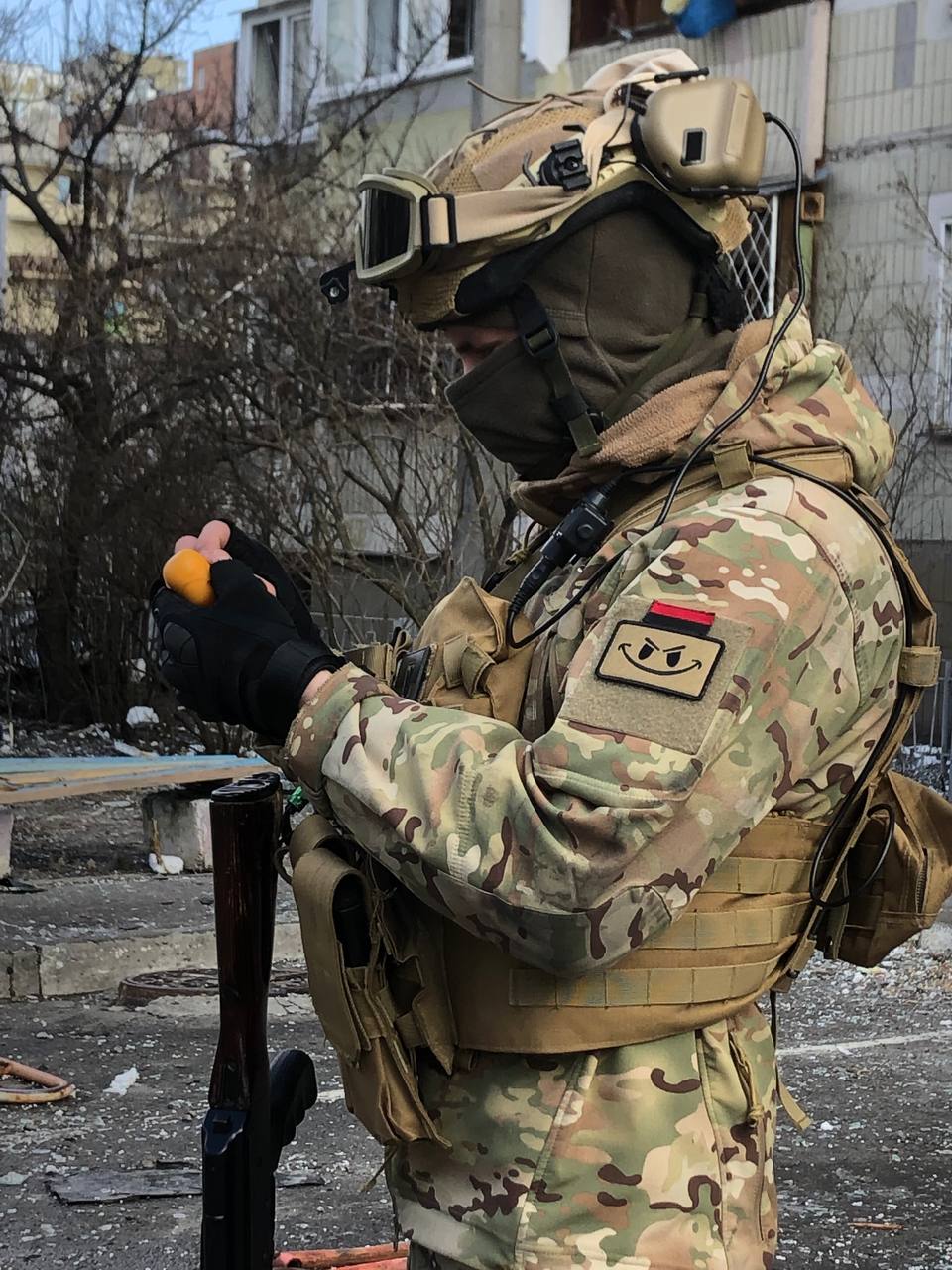
Vlad: "The beginning of the invasion. Kyiv region. I am collecting kinder against the backdrop of total f#ckery. This photo describes me as a person. I can find something pleasant to distract myself in any situation."
-Vladyka, how did you end up doing something you didn't want to do?
- It so happened that by that time we had already formed a good team. Our own group, well-coordinated. Life, training and work - all together. We were part of the Special Operations Forces. We received an order to disband our Special Operations Centre, and people were scattered among different brigades. We did not see ourselves in the infantry. We are young people, the whole group is volunteers. There are no conscripts here against their will. We wanted to be the coolest special forces in the world, to perform interesting tasks, to destroy the enemy.
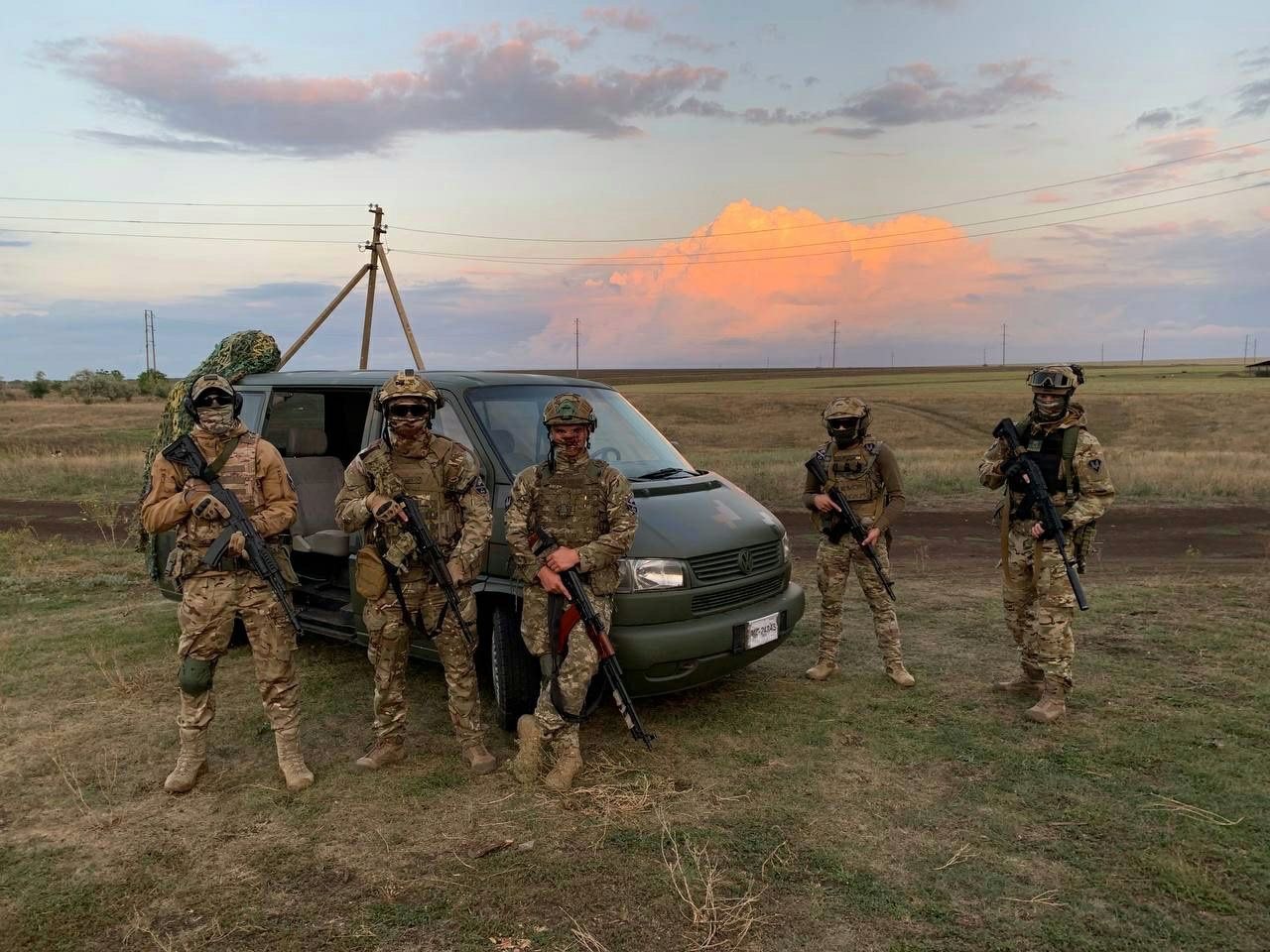
Vlad: "This is a photo from the time of our team's inception. Not all of our family members are in it, as some of them were away studying at the time."
Surma snipers team emblem
- So that it's not a trench routine, but feats?
- The mortar is for the old men, the trenches are for the old men, and the young people... Most of our team is made up of young people who have hot blood. The engine of the liberation war. Aged between 19 and 30 at the time.
-You're 29, so you're already getting close to your grandfathers?
- Yes, already, slowly... And it happened that we started looking for some more effective use for ourselves. No one has anything against the infantry, but we saw our way differently. So we were looking for options. And we came across one person who coached the Ukrainian national team in high-point shooting, a very cool mentor... We met by chance. I went to the headquarters to resolve the issue of my friend's transfer. That's where we met.
-So much for the meeting that decides fate.
- Yes, a fateful meeting. This is a fairly adult person. I see him as experienced. We went out for a smoke break, and when I started talking to him, I just realised at one point that I wanted all his knowledge. I need to know everything he knows. This man turned out to be the commander of a separate brigade sniper platoon in one of the brigades.
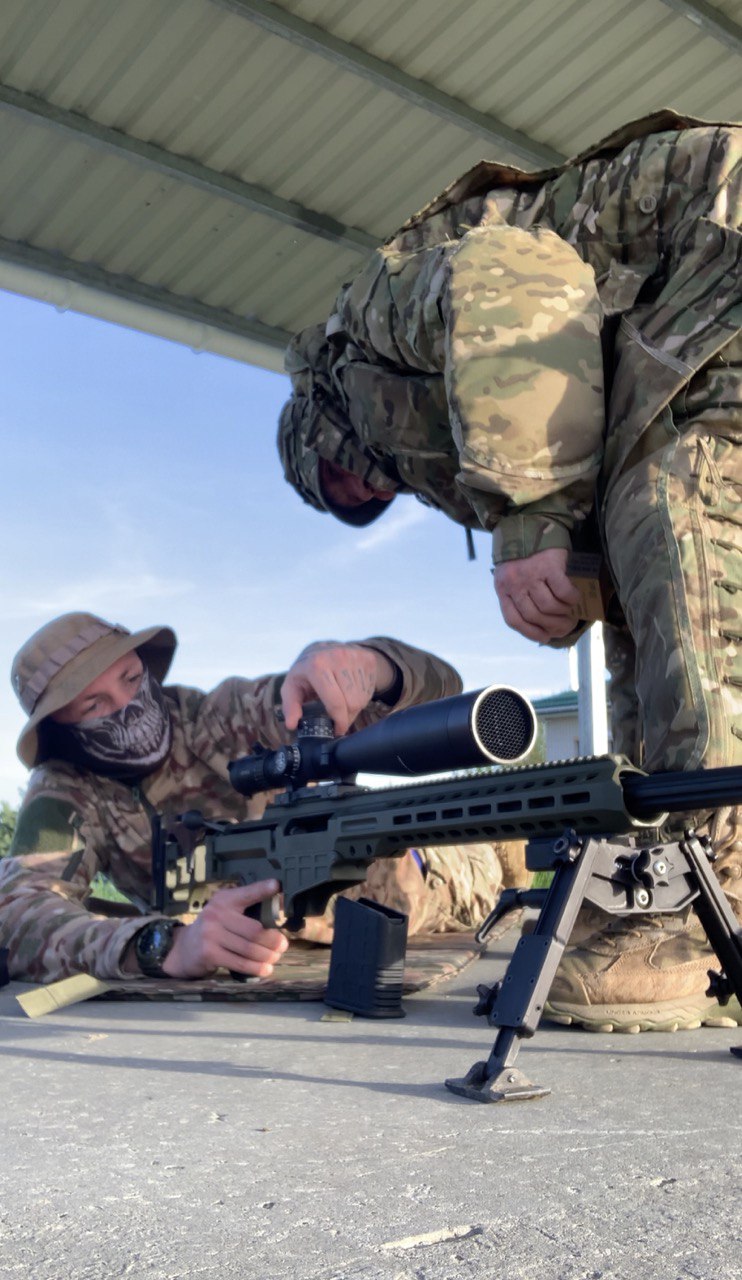
Vlad and the commander
- People say that football goalkeepers have a special psychology, they are on their own wave, which should not be disturbed. They say they need a special approach. Is it the same with snipers or is it a myth?
- I can at least speak for myself. It seems to me that a sniper is a person who is used to trusting only himself, not counting on anyone else's support. So, personally, I feel calmer when I do the job myself. Because I know that if I make a mistake, I have no one to blame but myself. And I am as confident in myself as I can be. At least in my head. Infantry is prone to herd instinct, you know? And you have to be able to seize the initiative, because situations are different.
Snipers are really on their own wave and are very different from infantry. I don't know how to explain it. I have been in their shoes. I have great respect for the infantry, they are extremely courageous people. But I'm sure there is a difference in psychology - it's hard to explain, but in a nutshell, the infantry is waiting for their shift, and the sniper is waiting for the enemy's.
- It is no secret that the infantry often dislike snipers...
- There are two camps here. Some are happy: you've finally come, guys, come on! Others say: you won't be working for us (yes, I occasionally have to work directly from the positions themselves). And although, of course, the senior in the position cannot tell me where and when to work, I understand him. Everyone has to think about the lives of their people.
-In short, you feel like one of your own among strangers, a stranger among your own.
- But I understand why they don't want us to work alongside them. Because I myself am against working directly from the ground. I do it extremely rarely. Move to the side, get out in front - that's how it should be. But sometimes there is not such possibility, and the target must be hit. So when I hear from the soldiers: "Just don't make a war here", I understand it all. They are right.
-What should a sniper never do ?
- Definitely, you can't get excited. And safety rules must not be neglected. For example: you should not shoot if you are not sure of the shot; you should change your place of work and approach route; you should take "smoke breaks" only in a shelter, even if the enemy is still far away; you should not neglect the rules of camouflage, etc.
There are many similar examples.
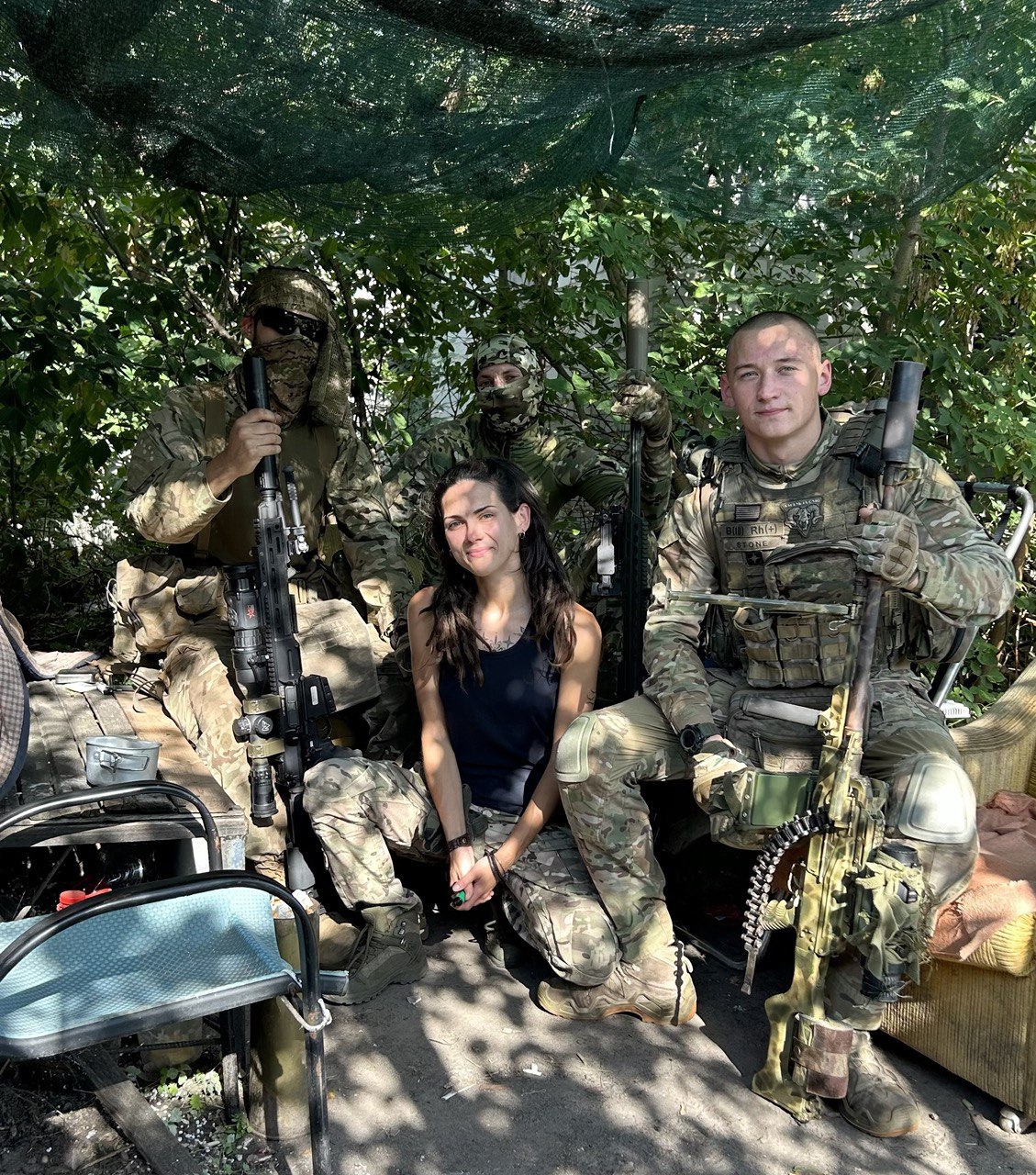
Vlad: "Getting together before work (or after, I don't remember) This photo clearly shows how important it is to mask all parts of the body and stay in the shade"
-You said that one of the main rules is not to get involved in gambling. Are you a gambler in general?
- Yes, I consider myself a gambler, although I am indifferent to gambling.
-And what in a combat situation, when you are working, can be considered an example of being overplayed?
- For example, getting too close to the enemy in search of a place to work. Again, I will speak exclusively about my experience. We are currently working in a forest area. There are no distances, we have to get almost close to the enemy. This is where the excitement kicks in. You decide to get even closer, even closer - and then you will make a sure shot. Sometimes you can even hear their voices.
- And he has his own rules for not dying.
- Yes.
The enemy infantry feels safe from time to time. And it is, in fact, our function to punish them for this. And, accordingly, there is a passion to get closer. Or after a shot, wait for more, wait for their evacuation. And on the one hand, you know that you are about to be shot, that your escape route will be cut off; you know that you have to shoot. At the same time, a voice in your head dictates that an enemy evac team is already approaching somewhere, and now I will kindly meet them.
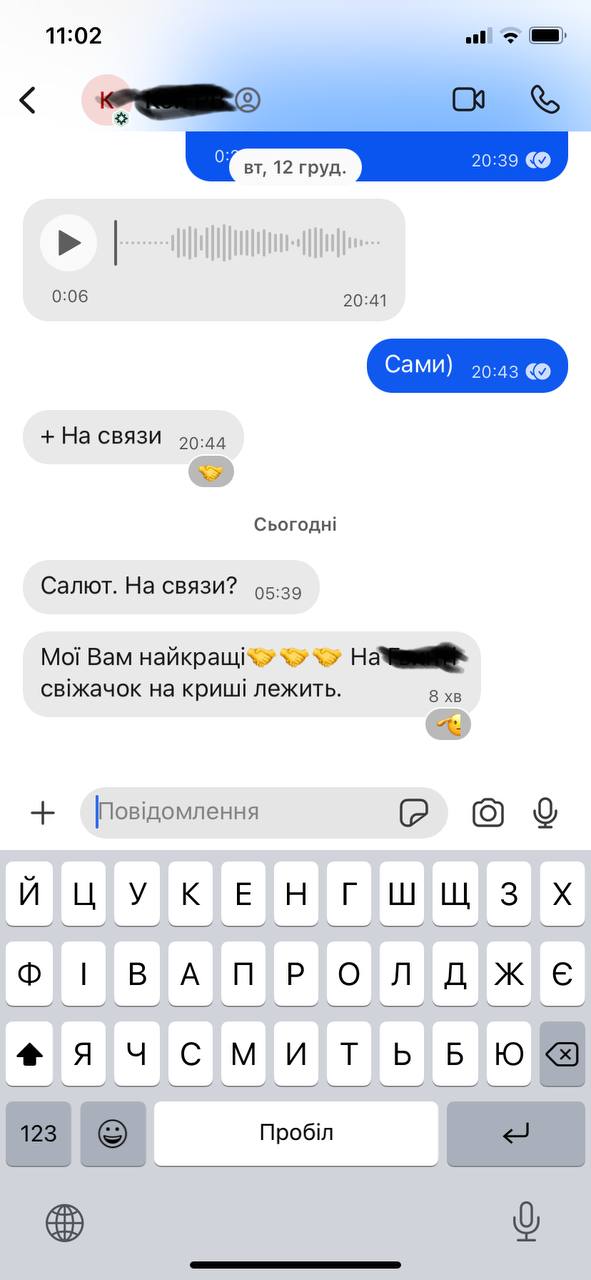
Vlad: "The most pleasant messages for me"
It happened that I was delayed and came under fierce fire. Of course, I got out of there, everything is clear. But you can't do that...
-One sniper complained to me about the tool her command gave her. She said it was heavy and uncomfortable. Meanwhile, she said, my friends had saved up for a nice rifle and had already bought it. So I can't get away to pick up the rifle in Kyiv. She said that I even dream about this instrument in my dreams.
What tools did you use?
- Personally, I deal with different rifles: Barett MRAD, Savage 110 elite precision. Both are made in the United States.
Their weight depends on the ammunition; on what is attached to them - without bipods, with bipods, what kind of bipods they are, whether there is a pre-lens or a full-fledged thermal imaging sight instead of a lens and optics, plus camouflage elements, etc. So the weight varies, but it definitely weighs more than a dozen.
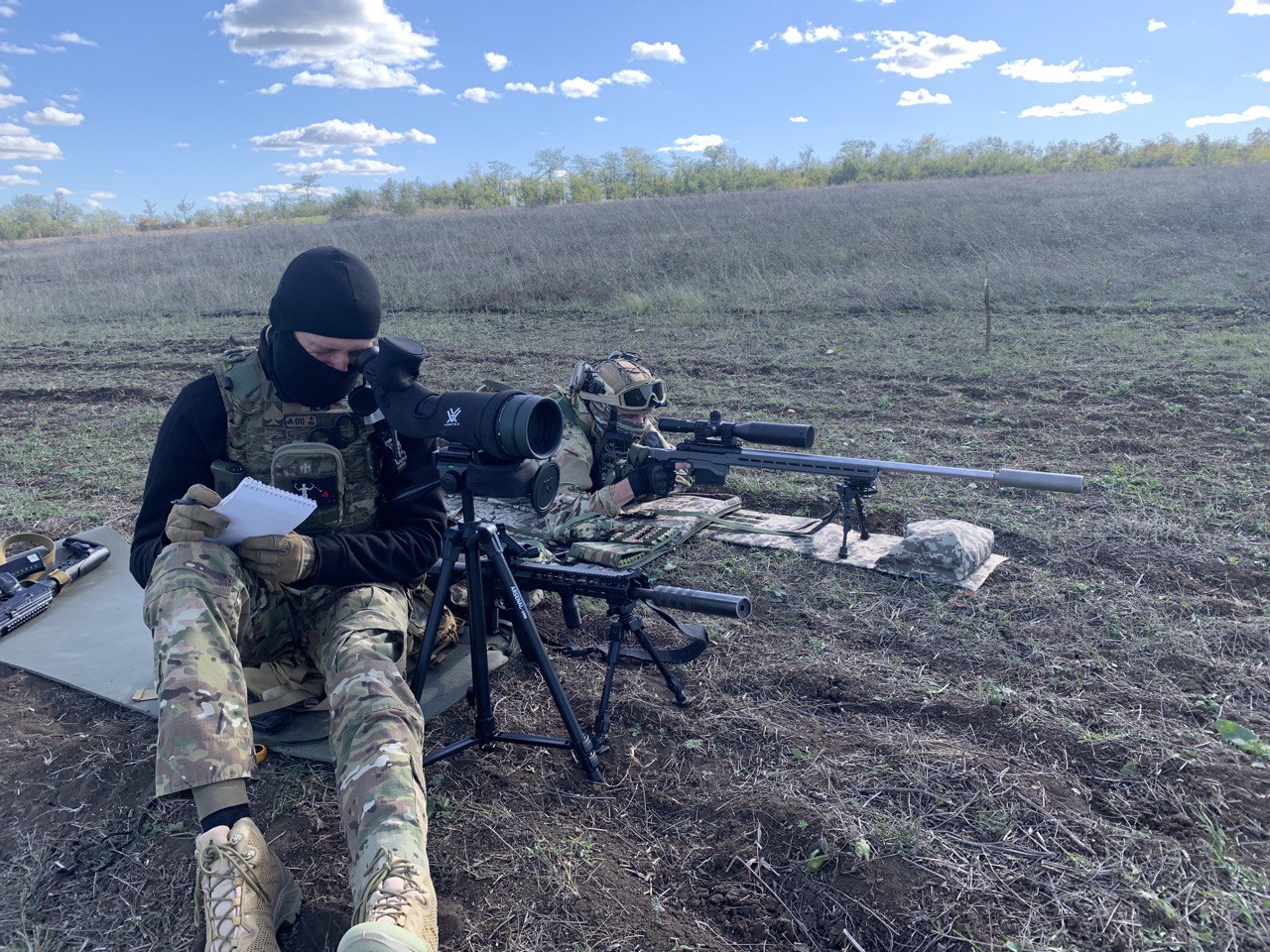
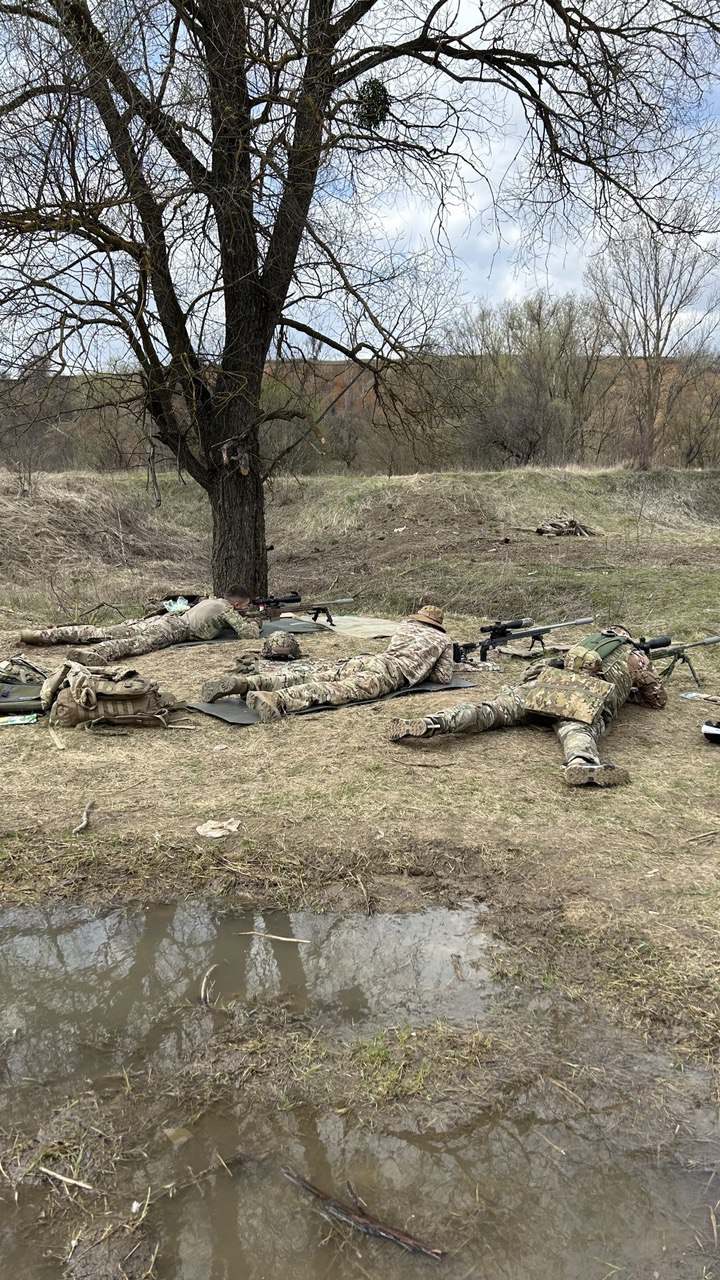
Vlad: "These two photos are from our team training. The rifles in the photos: "Savage 110 elite precision (338 Lapua magnum)"

Savage 110 elite precision rifle


Vlad with a Barrett MRAD rifle
I also use the Ukrainian UAR-10. Unlike the above, it is semi-automatic. It's more suitable for short distances, because in a dynamic situation you won't waste time sending the next round, and it's lighter, more compact, and allows you to be more manoeuvrable and invisible. This South African is not mine, but my commander's. I am grateful to him for sharing it.
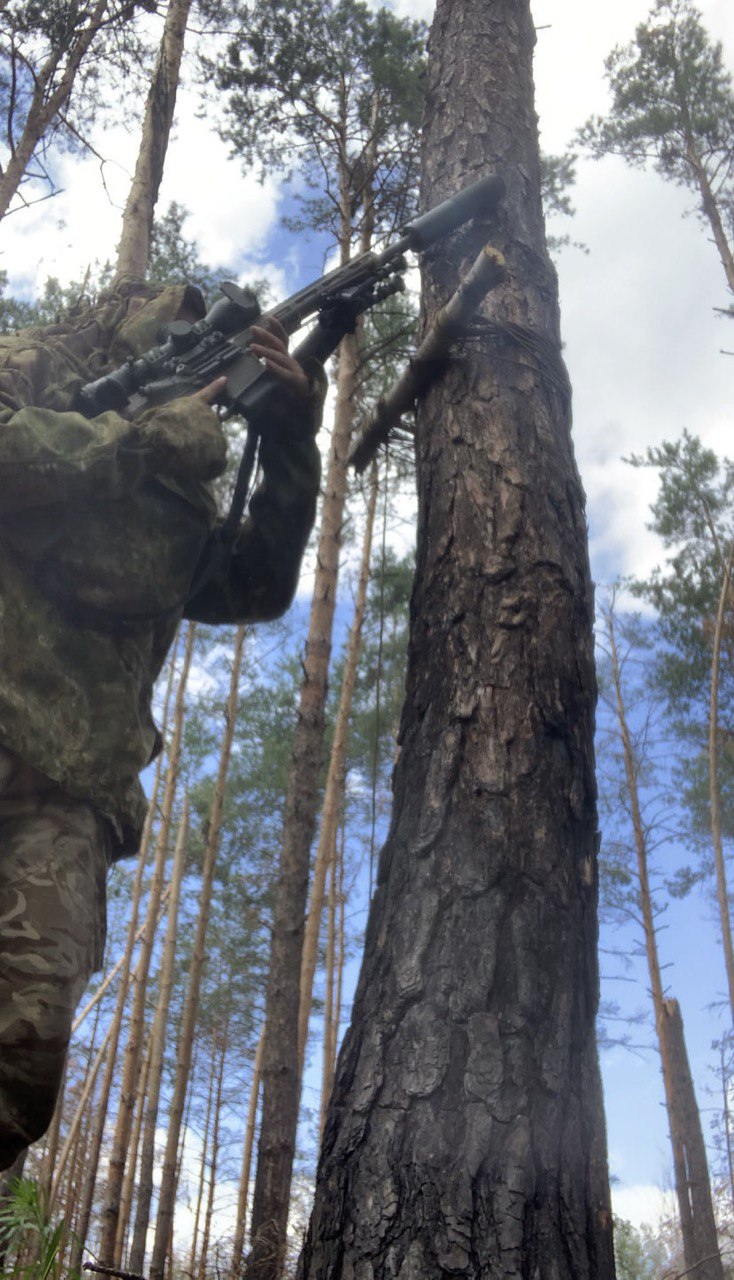
Vlad: "UAR-10 (308win) rifle. That day I was hit by enemy surveillance devices"
-So you use different rifles?
- Depending on the task, yes.
-Is there a rifle of your dreams?
- Actually, no. The fact is that my capabilities have not yet - as time goes on, I understand this very well - reached the technical capabilities of these rifles. And they can cover very long distances. We have a colleague in our team who hit a moving target at 1,480 metres.

Vlad: "A uniformed comrade who hit a moving target at a distance of over 1400 metres"
This person can really say that it would be cool for me to have this rifle. I can't say that yet, because looking at the people I'm moving with, I realise that I don't have much experience yet. Although I used to think I knew everything(smiles)...
-Let's say you have a combat mission for a day or two in a forest area. What will be in your backpack, and how much will it weigh? Plus your rifle, of course.
- Again, it depends on the type of work: you are waiting for the enemy to cross the road, or you are watching an enemy bunker, or you are covering an assault, and so on. If, for example, you need to track the enemy as part of counter sniper activities and have to do it from the trenches, you can take a lot of things. For example, you can assemble a full Liberstock backpack: it has a rifle case integrated into it, which can be removed.
The backpack is loaded with different things. Food - some nuts, something else nutritious enough. My clothes include a change of socks, hand and foot warmers, a raincoat, paracords, duct tape, a compass, rubber bands, a gardener's kit (folding saw, pruners, etc.), and water. But I have a habit of putting water in the last resort. Ammunition, power banks and a bunch of charging cords. Depending on how long I plan to be away, I may have 2-3 power banks. It's a long list of small but extremely important things. Of course, you try not to overload the backpack with weight, but on the other hand, the rule here is: let it be there and not needed, rather than not having something at hand when you need it. With experience, you start to get the balance right.
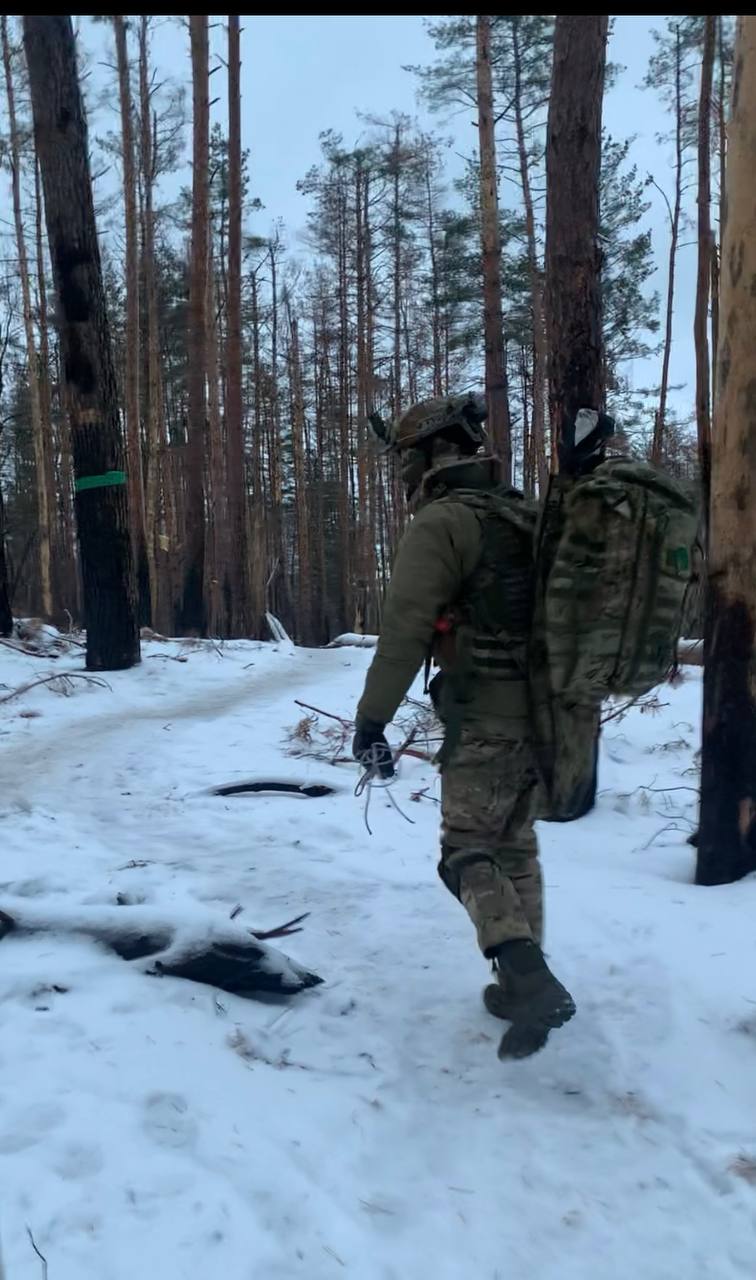
Vlad: "This is my typical backpack for work. It's a bit large, but roomy and comfortable. There's room for a rifle and a bunch of stuff in the back. Usually, after work, you have a few days' worth of weight on your shoulders...."
- Why does a sniper need a power bank to recharge?
- For all accessories. For the pre-lens, the thermal imager. The head may run out of power (this is the thing on which the thermal imager is mounted and it allows you to control it remotely). Also your phone and tablet.
- Why does a sniper need a tablet?
- I use my phone "in the field" and my tablet mostly for planning. Because combat tablets break very quickly. During shelling, you often have to fall down if you want to live. They have a slightly larger diagonal than a phone, and it is easier to break them. But if the situation allows, I am more comfortable with a tablet. I can see better there. I have up-to-date satellite images. It's more convenient for me.
-And in what cases does life force you to take less weight with you?
- In fact, life always forces you to take less. You need to approach the enemy unnoticed - even if it's a short distance, but such movement takes a lot of energy. That's why I mostly try to take the minimum. There are times when I have nothing with me but my phone and a simple monocular. It's quite difficult to assess the local vegetation beforehand when looking at the area from a drone. So it is necessary to check the potential workplace from the ground. It often happens that everything looks good on the screen, but when you get there, a simple bush can make it impossible to work. So sometimes you don't even need a backpack. You can also replace some equipment with a home-made analogue.
- For example?
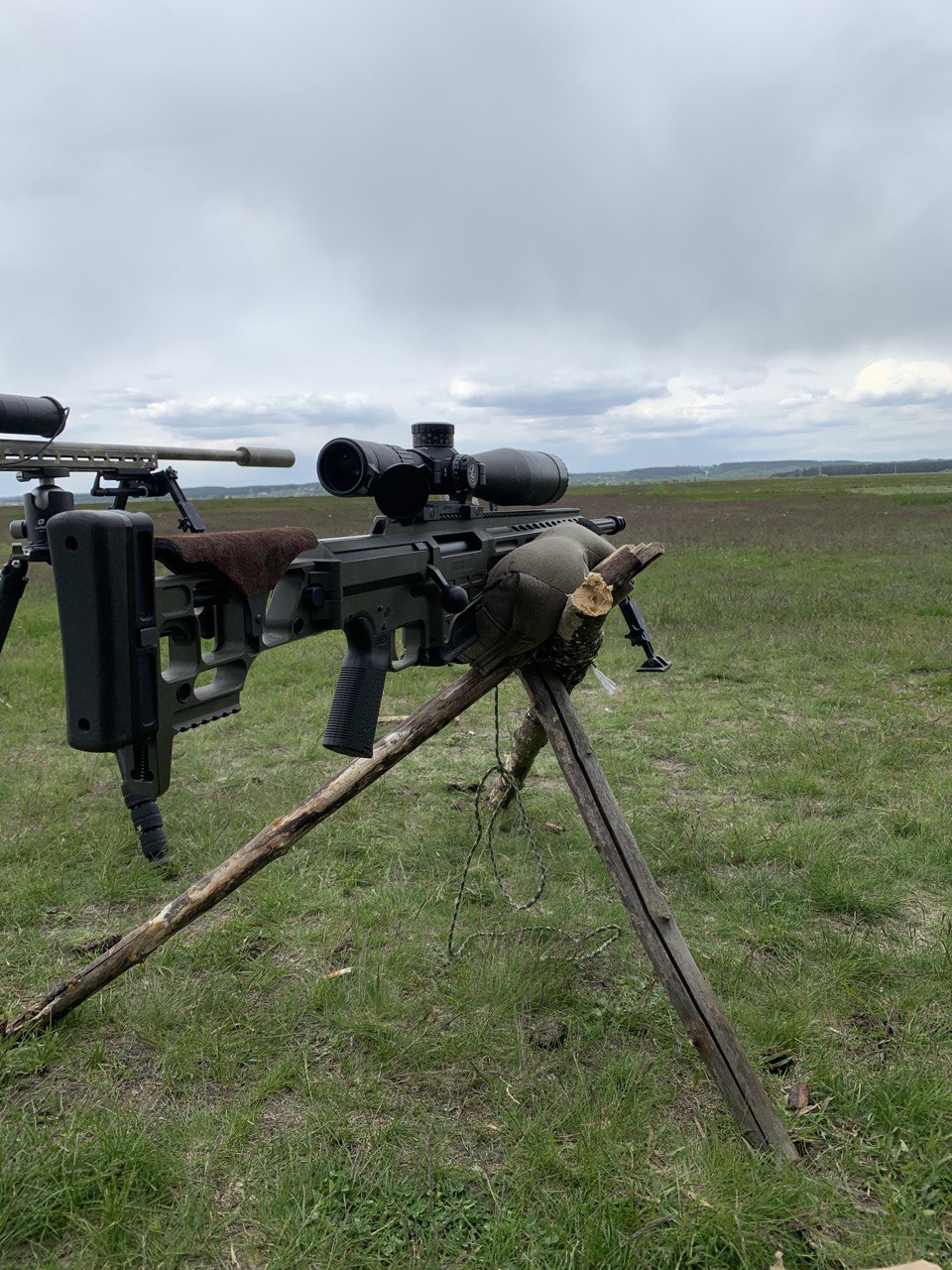
- For example, the same tripod. The terrain is such that it is impossible to shoot lying down. At the very least, you have to sit on your knees or use a tripod. The tripod was provided by the state. Firstly, it costs money and weighs a lot. You have to bring it in, set it up, and then take it out. There were situations when I had to drop the tripod and run away, and then come back for it. And that's a lot of climbing and risking your life.
- So what should we do?
- Alternatively, you can replace it all by simply taking paracord and branches from broken trees. Fill the spare sock with sand, make a cushion, put the rifle in it, disguise it, and after the practicing you can safely hide it all and leave it behind. I took the rifle and walked away.
- Dude, I'm listening to you and I understand that you're a great video blogger on sniper science.
- No, I don't have that much information yet.
-and you would have made a great coach.
- It may eventually... I don't know. First you have to have a grey beard.
- Do you train the newcomers who come to you?
- After us, only a few new people joined the platoon. We have enough training, so we learn from each other. There are no newcomers at all.
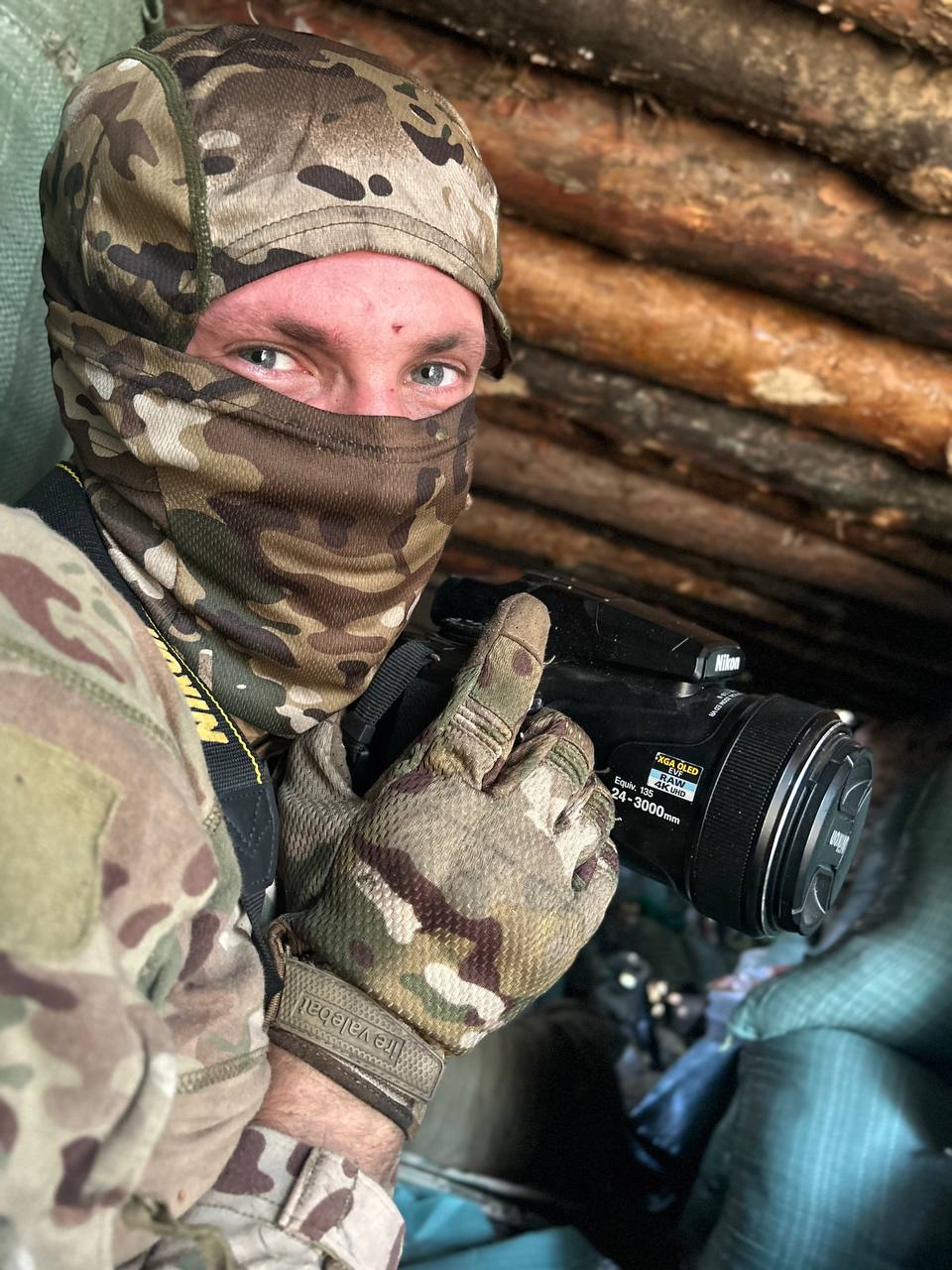
-You mentioned that you do everything collectively, and make a lot of decisions. Give us 2-3 typical examples of when you decide what to do together.
- In fact, absolutely always. Any operation. We have a free hunting regime. What is the task? To hit as many targets as possible. I can outline some places for myself. And any member of the team can present their visions, comments, suggestions. Everyone listens to everything and sketches out their ideas. This allows us to prepare more thoroughly for the task.
- In films about snipers in the Second World War and Vietnam, the authors like to show notches on their rifles - the number of enemies they killed. How many would you have had on your rifle stock?
- It's not a good question to ask, but the joke is that I don't know for sure.
- It is correct to ask, because you can answer in any way you want.
- Let me put it this way: less than I would have liked. And then, I don't know the fate of the hit targets after the shot. Some of them may survive.
-Okay - how many, let's say, serious injuries?
- Within ten. This is a good indicator for our business.
- Did you ever get to communicate with the Katsaps through the Soviets?
- Yes, it happened. Sometimes, the enemy would come out on our wave. As they listen to us, we listen to them. But this is a story from the ATO era.
- And what - do they keep quiet and listen to what you say? Or do they get upset and say something?
- If they have a clue, they keep quiet and listen quietly, they don't flare up. But there are also those who say: "Ukrops, we'll cut you down, these are Kadyrov's people".
- And what do you say?
- No. Although I once witnessed a dialogue about the creation of Ukraine. Some Russian decided to be a history teacher. But these are memories from 2015.
- Do the Kadyrovites like to do this kind of shit?
- It's not even Kadyrov's people, it's some kind of DPR people. I can't know for sure who is on this line. But I'm sure it's some "Ivan with a shovel" who believed in himself and decided to catch up with the terrible...
-We 're talking to you about your division, and that's where we'll focus. From what you've seen and know, is the level of supply in your counterparts higher than yours?
- More. Any movement on the front line depends on the amount of ammunition. That is, how much the artillery can afford to cover its attack, for example, or to hold back the enemy during its advance. Sometimes soldiers request mortars to help them, and they get a response: "I only have 15 shots a day". What can we talk about then?
At the same time, both the enemy and we have such problems. There may be many reasons for this - both logistical problems and simply a lack of ammunition or its accumulation in another part of the frontline where it is more relevant. But from what I observe on the enemy's side of the frontline, they have an advantage in ammunition.
-We are talking about the Luhansk region. What other areas did you fight in during the full-scale war?
- We were also in the Kharkiv region, but I don't know if I can talk about those tasks. In fact, there was nothing interesting.

Surma's usual training routine
- When you live to be grey-haired (and this is an order from me and the readers), what will you talk about over a drink?
- I don't know. Every day is bright there. And everything is exciting; emotions explode when you come back. There seems to be a lot of work there. The distances, the shots are 100 metres. But you still have to get to those 100 metres. It's just that when I arrived in this forest, I was not yet adapted to such ultra-short distances. We say: "an assault rifleman with a bolt gun".
Perhaps I will talk about the day when I managed to hit the target for the first time. My commander said that when he showed the video of my work at the headquarters, people were horrified and said I was crazy.
- Why?
- Because it was shooting from the most open area. I was acting "stupidly", taking advantage of the inattention of enemy observers. Under the cover of our drone. The drone operator usually tells when there is an observer in the loophole and when there is not. I waited for the moment when there were no enemy drones. I climbed out and lay down almost on the road. Any drone would have spotted me right away. I crawled out onto the road and made a shot. And then ran away. My brothers with a machine gun and a grenade launcher were covering my retreat.
Now it's a really ordinary story, there are no interesting details.
- Wow, that's a pretty good "ordinary". What is the maximum distance at which you know for sure that you will work?
- It's hard to say, we have different priorities now. The longer I am in the forest, the longer I work in this area of the frontline, the further away I am from sniping. A sniper must be able to read the wind conditions, understand the impact of external factors on the bullet, ballistics, and how the bullet will behave in certain conditions. And short distances level all this out. So, while we are working here, we are losing our grip a little bit. And if we are thrown into a different direction tomorrow, I'm not sure I'll be able to work as accurately as I did in training.
- Do I understand correctly that this forest is already in your liver?
- On the one hand, yes. You can't like a place where everyone wants to kill you. You want to move away from there as soon as possible. On the other hand, we already know everything there and feel at home.

Vlad: "In addition to Ukrainian people, Ukrainian nature is also suffering from the occupiers. It will take many years to restore it all. The damage, to put it mildly, is incalculable."
- You teach everything so methodically... Another methodical question. What is the difference between a sniper's work and work in offensive, defensive and positional deterrence warfare?
- Again, my answer is based on my experience... I don't know what the book says, because I haven't read it.
- Only from your experience.
- First of all, sniper work likes it when the frontline is not moving. When it is relatively calm, when there is some regularity in the enemy's actions. But at the same time, snipers are used both in offensive operations (to cover assault groups) and in defence. If a sniper works in silence, when the frontline is not moving, he has carte blanche. He can move wherever he wants. As far as the situation allows. And feel relatively safe. You can read the enemy's defence, look for some regularities.
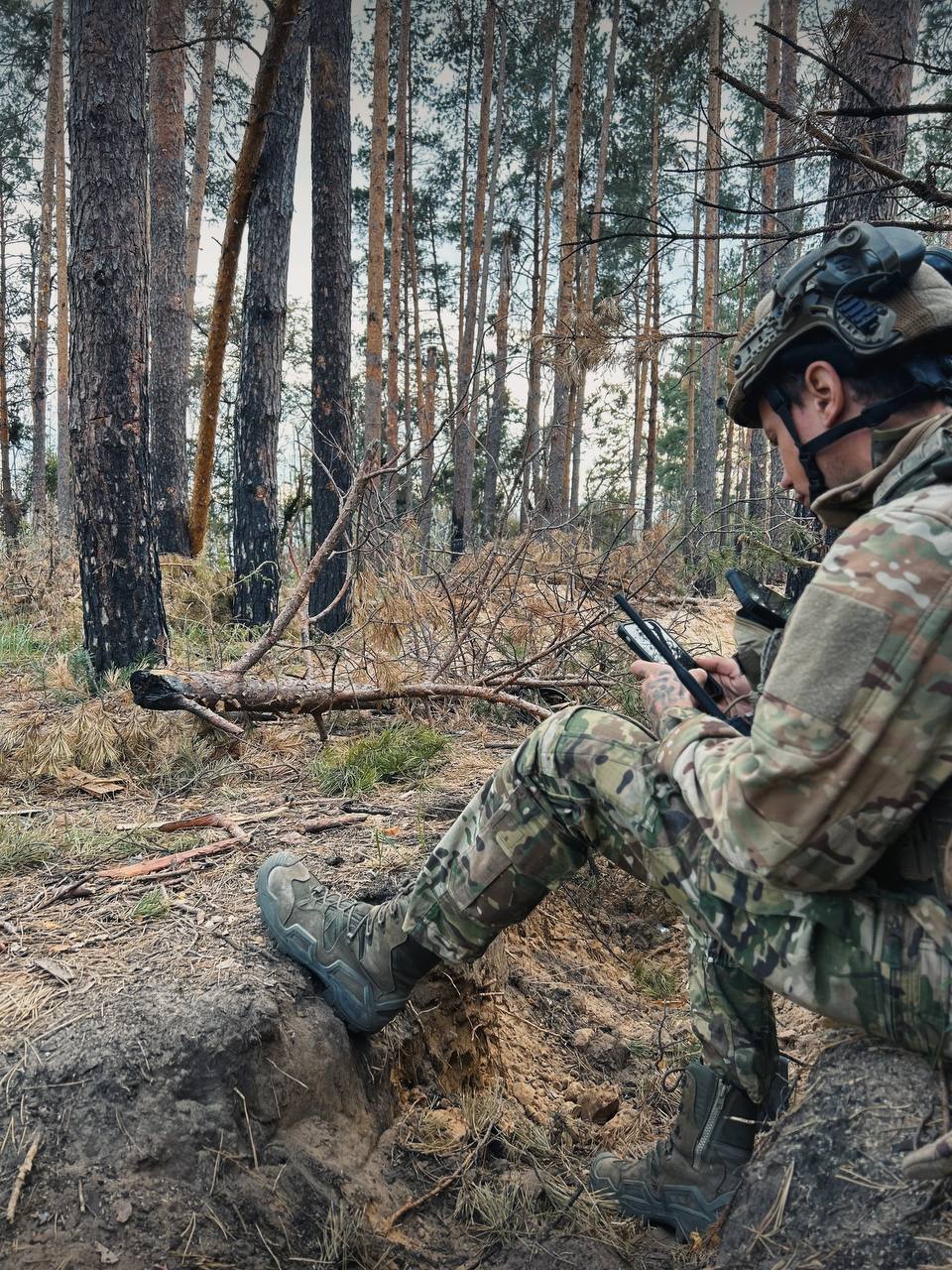
Vlad: "I sit and analyse the terrain in nettles (maps for the military)"
- Namely.
- When, in what cases, and from what position they work. Plus, you can manage your time and plan when it's best for you to engage the enemy. You need to have your own sun - in the sense that from behind your back, the enemy is blinded, and you can see the enemy. This is an advantage. When assault operations take place, they do not always take place at a convenient time for a sniper. There is not always a prepared position. If we are talking about deterring the enemy, about enemy assault actions, then, in a good case, during an enemy assault, a group of snipers should have a temporary firing position prepared for each of their positions.
- Why?
- To work on your positions and approaches to them - in case the enemy takes them or moves in their direction. Because the distances are very short. An assault can start there, and in five minutes the enemy is already in our trenches. It is quite possible to run those 100 metres. If someone missed something and didn't notice the accumulation of enemy forces somewhere in the rear, it could happen unexpectedly. And the positions are not ready for work. So, if you have free time, you need to prepare backup options. We need to prepare positions as if they were preserved for the winter: it's better not to need them, but let them be there.
Speaking of our offensive actions. In general, they are local and not very frequent in our frontline areas, but they are mostly, as I said, to cover our assault groups and to put up fire resistance to the enemy. If, for example, a sniper has information about the location of enemy machine guns, it would be very good to take a good position and wait to suppress the machine gun fire. Because it is a very big problem for assault groups when a Pokémon starts working on them. It's not very pleasant.
- Explain to the readers what a Pokémon is.
- PKM - upgraded Kalashnikov machine gun.
- Vlad, these days volunteers of the largest Ukrainian chess community Team Ukraine together with the Veteran's Movement held a charity chess tournament. The aim was to raise funds to buy ammunition for snipers. And you were asked on the stream: why, the Ministry of Defence doesn't give you ammunition? We were told that at least there is enough ammunition at the frontline...
For those who don't know, please tell us why we raise money for ammunition. Why is the ammunition that the state gives you not enough?
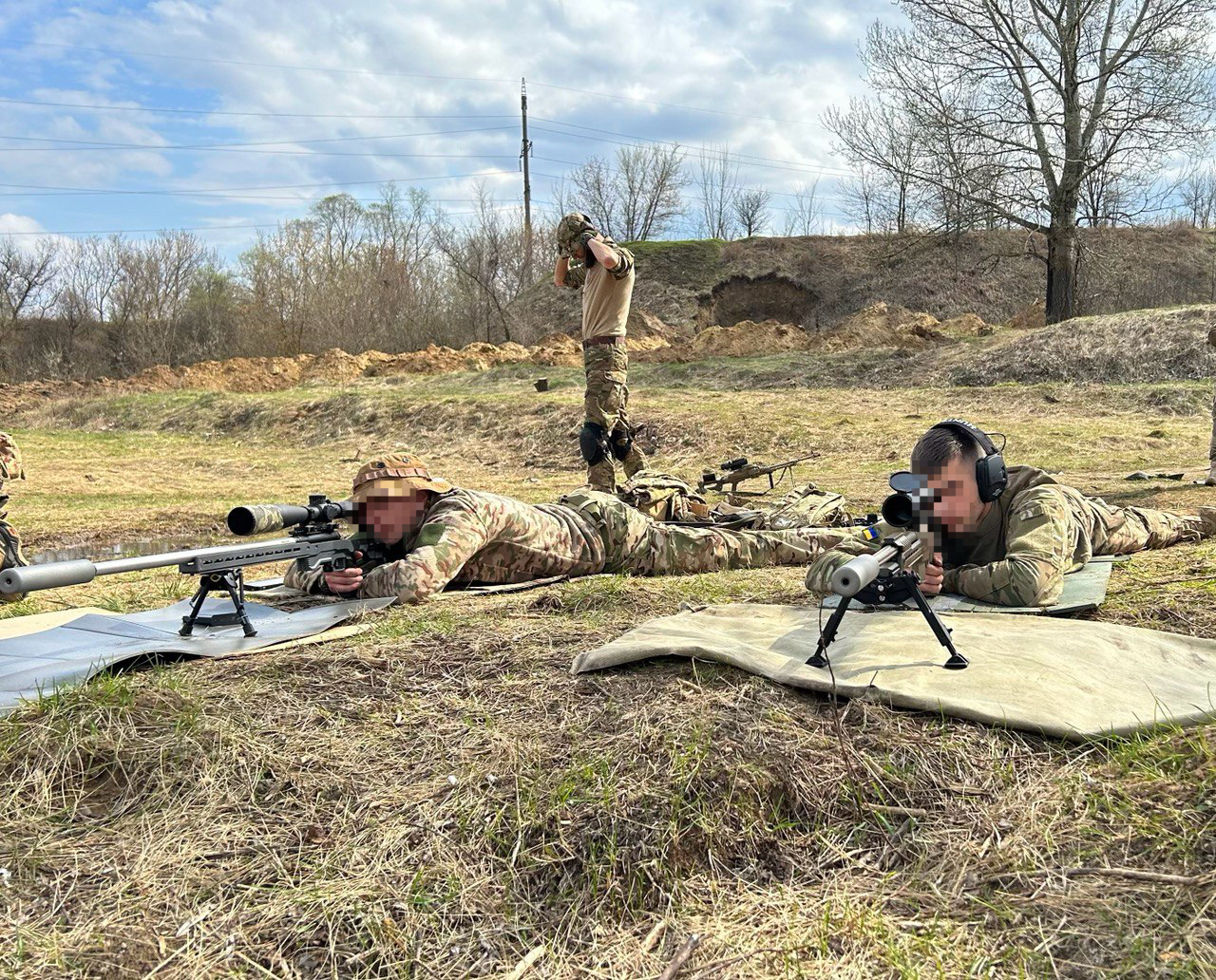
- The state provides us with this ammunition for combat use. From time to time, we have shootings. We also receive a certain amount of ammunition for this, but not enough. We are talking about human lives here. Therefore, the level of training must be high, and in emergency situations, your capabilities fall to the level of training. And no more.
Sniping is about consistency. Bullets of a certain weight, powder in a certain load, and the technical characteristics of the weapon are also defined. These are all constants that can be used to calculate the behaviour of a bullet. The only variables in this equation for a good shot are the weather and the shot itself. You need to be able to read the wind conditions and reduce the shot itself to a constant. The trigger should be handled in the same way, the buttstock should be touched in the same place, the rifle should be laid down in the same way, etc. There are many shooting positions, and all of them must be perfected to a constant. Only then will the bullet do exactly what you say. But all this can only be done through practice. Training, training and more training. This is the only way to achieve results.
- How many rounds of ammunition do you need per day or per week to feel prepared for the same emergency?
- The more, the better. Most ammunition is used in training, not at work.
- Can we say that at a distance of many weeks, God willing, years, this can be decisive for how long you will stay alive?
- We or one of our brothers whom the enemy will no longer be able to kill.
- That is, a penny, which will be used to buy ammunition, at a distance - forgive me if I sound pretentious - can save lives somewhere?
- Not that it sounds pretentious - it is. Sniping is a lot of work. It's not a matter of just going out and shooting and leaving. A lot of work goes into it - terrain analysis, aerial reconnaissance, ground reconnaissance, position preparation, shot preparation, camouflage, planning retreat and cover, etc. But in the end, it all comes down to the shot. If this shot is unsuccessful, it will negate all the work. It will also endanger the shooter and the team.
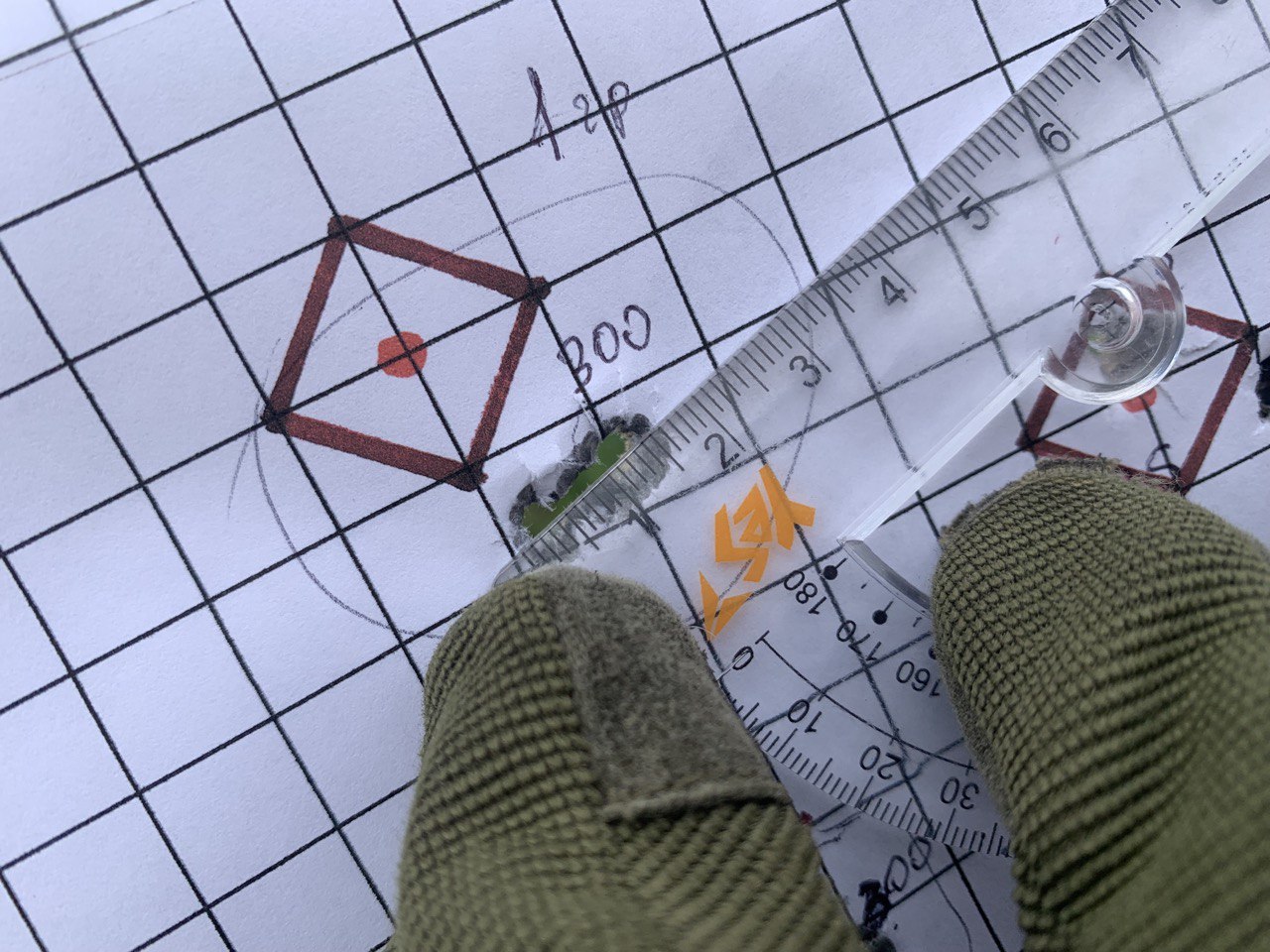
Analytics at training shootings
- There can be many bad scenarios. That's why sniper training ammunition is so important. And there is a chronic shortage of them.
- I would compare it to fuel: the state provides fuel, but we still buy it with our own money because there is never enough of it.
- I'll ask you one last time: are you injured?
- No. I'm still walking between water drops. My armour was torn off, it was like this...
Attention, dear readers! We kindly ask you to donate as much as you can to purchase ammunition for the Surma brigade sniper team. Those who wish to do so can use the information below:
Vasylyna Duman, №26972904 in the Register of Volunteers
Paypal [email protected]
PrivatBank (UAH): 4149629331858043
Monobank (UAH): https://send.monobank.ua/jar/9SqoxLvvJV Source: https://censor.net/ua/r3462127
Yevhen Kuzmenko, Censor.NET
Photos, video: from the archive of Vlad


