



Mobilization in new way: what is hidden behind most scandalous norms and what consequences have they already had
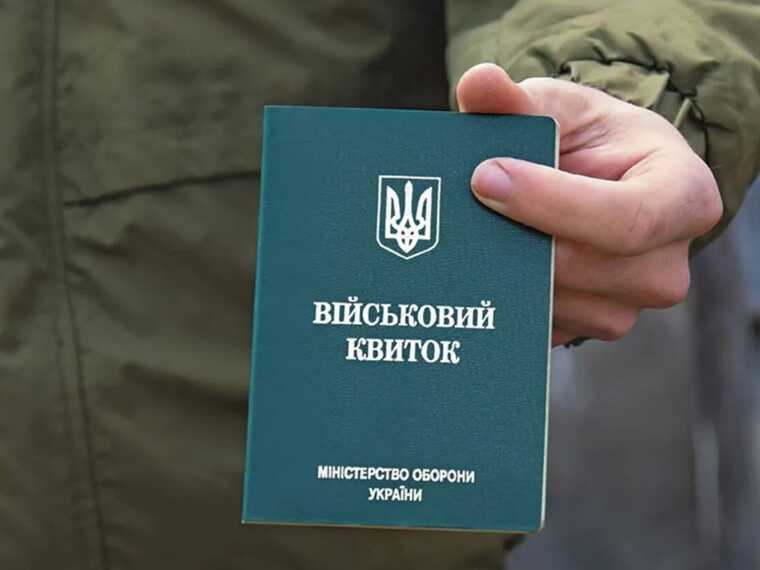
There is no doubt that mobilization is needed, but whether it will be possible to ensure it through the draft laws submitted by the Cabinet of Ministers is a big question. First, a number of the proposed norms have outraged society and caused criticism not only from people’s deputies but also from the Ukrainian Parliament Commissioner for Human Rights. Secondly, after the registration of one of the documents, on which the working group had been elaborating for quite some time, it turned out that the Ministry of Finance did not know where to get the money to continue mobilization.
Therefore, analyzing these documents, Censor.NET talked to experts and deputies to find out whether it is realistic to find these funds in the current circumstances, how mobilization will affect the economy, what consequences the proposals in the documents that contradict the Constitution already have, and why the authors of the legislative initiatives have not completely abandoned the idea of mobilizing women, even though the president has said he will not sign a law with such a provision.
REQUEST FOR JUSTICE
To ensure mobilization, the government has submitted two draft laws. The first is on amendments to the laws on mobilization, registration, and military service. The second is to increase administrative and criminal liability for those who avoid mobilization and registration. At the same time, there was information that "servants" were advised not to comment on these legislative initiatives, given the sensitivity of the issue, and to pass all comments on to the military. And along with the comments, apparently, responsibility for the consequences. However, according to Ihor Reiterovych, head of political and legal programs at the NGO Ukrainian Center for Social Development, this plan failed the very next day when Zaluzhnyi came to the press conference
"Of course, this also hit his rating. Because he said some unpopular things, not everyone might have liked it. But, unlike the same politicians, he called things by their true names," explains the political scientist. "He outlined the problems and said that somehow they had to be solved. Although the preliminary idea was that a very controversial draft law would be introduced, a wave of outrage would rise, it would be channeled towards the military, against this background, some personnel changes would be made, and finally, the draft law would be adopted in a softer version, presenting it as a great victory and a rise in ratings for those who would make these soft changes. But it didn't go the way they planned."
They were indeed trying to raise the degree of tension even before this document was registered. And so actively that certain theses and polls published on social media were even used by Russian propagandists. And this is instead of establishing normal communication with the population, explaining the need for certain norms. Therefore, this game of silence seems at least strange. Especially against the background of the fact that the names of the drafters of these bills, who were members of the working group, are not disclosed.
"It is the government that needs to speak openly and answer uncomfortable questions from citizens," says Ihor Reiterovych, "because if we look at the current legislation, the President, the Cabinet of Ministers, the Minister of Defense, the National Security and Defense Council, and people's deputies who vote for legislative changes are fully responsible for mobilization and related issues. Accordingly, they must explain everything and answer uncomfortable questions. Communication and what is written in the rules of adoption of any draft law - consultations with stakeholders - in this case failed from the very beginning. As soon as some people's deputies began to make extracts from the draft law and post them on Facebook, it was clear where this would lead. Because the appropriate communication should have been conducted when the draft law was being prepared. Its most unclear provisions should have been discussed to some extent through the media and public organizations, and we should have looked for an option that would suit everyone: the government and citizens. Because it is clear that some "draconian" norms will not lead to an improvement in mobilization as such, and we should talk more about encouragement, recruitment, and a very important point - justice."
Volodymyr Horbulin, First Vice-President of the National Academy of Sciences of Ukraine, academician, and Valentyn Badrak, Director of the Centre for Army, Conversion and Disarmament Studies, write about justice in the publication "Five Key Challenges for Ukraine in 2024".
"Despite the fact that Ukrainians abroad were obliged to register for military service in diplomatic missions on December 30, 2022, there were no major positive developments during the year. The authorities have quite reasonably begun to take more decisive steps, including looking for people to be mobilized in gyms and restaurants. Due to the deteriorating situation around mobilization, Vadym Ivchenko, a member of the Verkhovna Rada Committee on National Security, Defense and Intelligence, said that Ukrainians abroad who have not registered for military service may be restricted from receiving consular and banking services. According to him, all men must receive, let's say, a military registration card and must undergo "re-identification in the MRC (military recruitment center)" - whether they are People`s Deputies, an official, or any other " reserved" person. In addition to these intentions of the authorities, it would be extremely important not to forget about the Ukrainian rich from the so-called "Monaco battalion" - in the sense of involving them and their resources, with the appropriate legislative definition of measures against them, from blocking financial assets to confiscation in favor of the war. It should be understood that this is an urgent social need for social justice, and ultimately one of the mechanisms for harmonizing the issue of Ukrainians' attitudes toward the war. These planned measures can be considered timely and fair," the authors note.
So far, we have not heard anything about any steps regarding the Monaco battalion's draft dodgers. But those who stayed in Ukraine have something to worry about because there are a lot of sensitive provisions in the draft law. One of them is the possibility of mobilizing disabled people of the third group. Because the list of diseases for which people are assigned to this group is quite long, and they are quite serious. For example, the absence of one lung or the absence of one eye, paralysis of the upper or lower limb, the absence of a hand and a higher level of upper limb amputation, and others. Can such people be fully involved in combat operations? This question should be answered by doctors who are members of military medical commissions. Against the backdrop of scandals related to the way the Military Medical Commissions (MMCs) treat soldiers who have been wounded or lost limbs in the war, and given the corruption schemes that have been developed in some of these commissions over the past two years, it is hard to expect an impartial attitude when determining fitness or unfitness for service. Perhaps, if the MMCs were checked not only for those whom they helped to "get deferred", as law enforcement officers do, but also looked at cases of mobilization of people with serious illnesses and asked how it happened, the approaches to work in such commissions would change. And then they would be more trusted.
In addition, it is not very clear what to do with those who are currently recognized as partially fit. The draft law abolishes this term. Now there will be those who are fit or unfit for military service. I know people who continue to serve despite having certain health limitations. For example, one of the soldiers found out in a hospital that he had a heart condition only after he had served for some time and received a concussion. It is unclear why this was not seen at the Military Medical Commission when he was mobilized. But now people like him will have to go through the commission again if the draft law is passed under the new mobilization rules.
As lawyer Serhii Lysenko told Censor.NET, the authors of the draft law insist that people who are recognized as partially fit must undergo a new military medical commission within six months of the law's entry into force.
"Those who have already been declared unfit will remain so, they will check only those who are limitedly fit," he explains. "I think many of them will join the army during the second examination.
According to him, people who disagree with the MMC's conclusion will theoretically be able to appeal it in court, but only if they manage to leave the MRC in time. Or they can then turn to a lawyer. But while the court proceedings are ongoing, they will remain in service.
Answering the question of what to do with people who have serious illnesses but do not have a disability group so that the Military Medical Commission can take this into account, he advised them to undergo a recent medical examination, get certificates and carry them with them. "It is worth doing if there is at least a reason to say that the doctors of the MMC should send a person for examination to clarify a particular diagnosis. Most of the diseases cannot be diagnosed by a regular examination by the doctors of the military medical commission," noted Serhii Lysenko.
MEN TURN OVER PROPERTY TO WOMEN
Another sensitive issue of the draft law is the restriction of certain rights of citizens. And the very next day after the documents were registered, Ombudsman Dmytro Lubinets said that the draft law on mobilization proposed by the government contained provisions that contradicted the Constitution of Ukraine and needed to be changed. He clarified that he was referring to a number of restrictions provided for in the draft law on persons evading mobilization. These include a ban on real estate transactions, driving personal vehicles, and the use of funds.
This is a direct provision of the Constitution: a person cannot be restricted in his or her rights. If a person officially owns, for example, a house, we cannot legally prohibit him or her from selling that house or buying another. This would directly contradict the Constitution. Yes, there is a provision that explicitly allows for the restriction of rights under martial law, but these rights cannot be restricted indefinitely," Lubinets explained.
He later stated that a working meeting had been held with representatives of the Defense Ministry, and the provisions that could restrict human rights would be corrected in the draft law.
It would be worth asking the authors of the legislative initiatives why they chose such harsh norms rather than motivation if they were not afraid to communicate.
This is a double-edged sword. If we look at the situation from the point of view of the state, which needs to provide a mobilization resource, this is probably correct. Indeed, there are excesses in terms of what the MRC does in terms of drafting one category and not drafting another, and there is an objective desire of many people to evade mobilization. But the same rules on entering the Unified Register of Debtors that caused a stir also apply to the enforcement of judgments, meaning that the same restrictions can be applied by state enforcement officers when a person fails to comply with a court decision, for example, regarding alimony. But there is another issue there. Court decisions also need to be documented. These powers are quite controversial in terms of constitutionality. But we are also talking about martial law, when the norms of the Constitution are limited to some extent," says Serhii Lysenko.
In his turn, Ihor Fris, a member of the Legal Policy Committee, disagrees that such rules should be applied.
"I wrote about this on my Facebook page in the morning, and then I saw that the Ukrainian Parliament Commissioner for Human Rights had also spoken out on this issue, saying that certain provisions violate the provisions of the current Constitution. I am sure that he was referring to the violation of the relevant rights of citizens, which are regulated and ensured by the direct effect of the Constitution, in terms of property disposal. This happens not as a result of a person being found guilty of a certain administrative offense with the possibility of appealing against it in court, but by the head of the relevant territorial acquisition body alone by granting them direct access to the state register of debtors, which in one way or another restricts this person in exercising their constitutional rights to dispose of property, to acquire certain obligations under loan agreements and loan agreements, to the rights to operate vehicles and all other rights. "It is this that causes the greatest resonance," says the MP. "I happen to be the head of the relevant subcommittee on the organization of justice, and for several days we have already had many applications from citizens to notaries from men aged 18 to 60 years to re-register their real and personal property in terms of granting a power of attorney for the disposal of such property. "It is this that causes the greatest resonance," says the People's Deputy. "I happen to be the head of the relevant subcommittee on the organization of justice bodies, and for several days we have already had many citizens' appeals to notaries from men aged 18 to 60 regarding the re-registration of real and movable property owned by them in terms of granting a power of attorney for the disposal of such property.
He also emphasized that reckless steps to restrict rights could have a negative impact on the banking system. "Today there is a queue for passports. And tomorrow there will be a queue for deposits. Or they will start closing bank accounts. This is unacceptable. I think we need to be more balanced in our approach to such restrictions. Even if they arise in the process of implementing the law on the legal regime of martial law, which restricts certain freedoms. Freedoms, yes, of course. But rights, in my opinion, are a bit of an excess," he emphasized.
He also said that people are already asking questions about the so-called military transport duty, which allows the current version of the document to seize vehicles not only from legal entities but also from individual entrepreneurs. "As we know, individual entrepreneurs are no different from ordinary individuals. And the seizure of their vehicles will also be expropriation, which is absolutely incomprehensible and cannot in any way have any correlation with the law on the legal regime of martial law.
This draft law poses a huge problem because vehicles are not registered to individual entrepreneurs, they are registered to individuals. An individual is a sole proprietor, a person who has the right to carry out entrepreneurial activity," explains Ihor Fris, "but he or she does not become another business entity. They continue to be an individual. I think it is inappropriate and inexpedient to take vehicles away from individuals now. Where will we go from here?"
WILL WOMEN'S MOBILIZATION LEAD TO A DECREASE IN THE BIRTH RATE?
One of the topics that "heated up" society on the eve of the registration of the draft law on new rules for military registration was the issue of women's mobilization. It caused such a stir that the president was even asked about such mobilization at a press conference. He replied that he would not sign the bill if it contained such a provision. But the authors of the document, who heard this answer from the President, obviously decided to leave room for maneuver. On the one hand, the draft law states that "Women who are registered with the military may be called up for military service or engaged to perform work to ensure the defense of the state in wartime voluntarily."
At the same time, some regulations specify citizens of Ukraine rather than men or women, which theoretically allows for the same mobilization of women, which the president did not support.
"Currently, according to the current regulations, male citizens of Ukraine are assigned to military recruiting stations. By amending Article 14 of the law on military duty, the draft law proposes to register conscripts (in one place of the draft law) and citizens of Ukraine (in another place of the draft law) regardless of gender," said Tetiana Ostrikova, People's Deputy of the VIII convocation.
The rules on basic military training are equally ambiguous. "They wrote it very cleverly, thinking that it would not be seen," says Ihor Fris, "that citizens of Ukraine, "forgetting" to add male gender, must undergo basic military training. After completing this training, those who have passed it are registered in the register of persons liable for military service. And then all those who pass it, including women, become liable for military service and are subject to the general norms of mobilization. That is, they did it in an alternative route".
What can this alternative route lead to and how can mass mobilization affect the demographic situation in the country? "In my opinion, this can lead to extremely bad consequences," said Anatoliy Kaminskyi, PhD, professor and head of the Clinic of Reproductive Technologies at the Shupyk Ukrainian State Institute of Reproductive Sciences. - Because even if we take the present day, the women who come from the front and seek our help are far from headquarters and far from the conditions that can ensure their reproductive health in the future. The general mobilization of women into the army can lead to an even greater problem of infertility, which will then result in the fact that there will be no one in Ukraine to give birth. And it is very important to rebuild the country. And we have to do it for the sake of our children, for the sake of future generations. Therefore, there is no need to do this en masse. Voluntarily, if a woman expresses her will, it is her right. But forcibly, as with men, it is not quite right, in my opinion."
- Anatolii, could you give any advice to women on the frontline to protect them from infertility, as it is about the survival of the nation?
-It is very difficult to advise because the first situation a person faces at the front is a stressful factor. It's not typical for us to be under constant fire and watch the deaths of people who are side by side with you. And this can have categorical negative consequences for a woman. For her reproduction and so on. That is why women need to be able to take a vacation from time to time to somehow "recharge" and adjust to this situation. Also, if necessary, women should immediately consult a doctor if they have any gynecological problems, even if it seems like a trifle."
The biggest supporter of the idea of mobilizing women was People's Deputy Mariana Bezuhla, so it is possible that she will continue to insist on her point when the draft law is being considered by the relevant committee. However, most of the people's deputies, with whom I spoke, said they did not support the idea of mobilizing women. "If we start mobilizing women, the country is doomed to failure. Women can mobilize only if they want to. And if they have some military or military-medical training that may be necessary or will bring some benefit to these mobilization processes. Because if we have forced mobilization, what will it look like? A woman walking down the street and being caught and twisted by representatives of the MRC? This is nonsense," considers Ihor Fris.
His parliamentary colleague, Oksana Dmytriieva, deputy head of the Verkhovna Rada Committee on National Health, Medical Assistance and Medical Insurance, also does not support this idea. "We all remember what the reaction was last time when there was talk of registering women, and how many women picked up and left the country," says the deputy. The law hasn't been passed yet, and it's not clear whether it will be passed or not, but the message is already there. Recently I was at the front and asked the guys how they felt about it. They said the following: "Listen, we are fighting right now to ensure that our mothers, wives, and sisters are safe at home." That is, they are against it. If any woman wants to go voluntarily, please, no one forbids it."
She added that if all women are forced to register, it is unknown what will happen next. "We understand that today they will say that it is voluntary, but tomorrow it may be completely different," the people's deputy emphasized.
Speaking about the need for women to join the army, supporters of this idea emphasize that it is not about serving in the trenches. However, neither the number of positions nor the positions themselves that women could apply for are voiced. "I don't see any sense in the mass mobilization of women for one very simple reason," says People's Deputy Oleksii Honcharenko, "For example, Bezuhla writes in her posts that it is for positions in the support of the Armed Forces, not for assault positions, etc. But today we have such a category as partially fit. And when a person is recognized as partially fit, which is usually after being wounded, then this person can no longer be an assault rifleman, grenade launcher, machine gunner. But such a serviceman can serve in the support unit. So now we don't have enough positions in the support for these limitedly fit military men. What is the point of recruiting women as well? That's why I don't understand this initiative. Those men who need to be replaced can be replaced by men, not women.
Oleksii Honcharenko previously submitted a draft law on demobilization after 18 months of service. "I think this is a very necessary law, because it restores social justice, because some people serve and others do not. The term of service is completely unclear. At least a prisoner knows when he can come home, but a soldier does not," he emphasized.
HOW DRAFT EVADER CAN BECOME POLITICAL REFUGEES
Among the proposals that also raised a lot of questions during the discussion of the draft law on mobilization was the idea of depriving Ukrainians who had gone abroad of their citizenship. "This will lead to big problems in terms of our observance of human and civil rights and freedoms because I am sure that no country in the world will extradite these people. Even if we try to sign some treaties, it contradicts the Geneva Convention relating to the Status of Refugees," believes Ihor Reiterovych. "The people who are there have left legally. At least formally, it looks like that. Of course, I don't take into account a certain category of people who clearly left in violation of the law. For example, through the Shliakh ("Way") system. They were supposed to come back, and they didn't. Certain measures can be taken against these people. We can open criminal proceedings here and demand that they be punished in the form of fines or something else. But this is a small number of people compared to those who are there. As for the deprivation of citizenship. This will hit the economy, it will stir up society. And it will not have any effect in terms of those who want to join the Armed Forces of Ukraine. So I don't know why such statements are made. They clearly won't lead to any positive results. We need to look for some other mechanisms to bring people back, to stimulate them. Perhaps we should do some work with those who have left. Perhaps, on the one hand, we can demand that they register with the consulate and have conversations with them. But these people will not return to Ukraine by repressive methods. And to take away Ukrainian citizenship from half a million people... What value will citizenship as such have in this? How will some of the people who remained in Ukraine, who did not break the law, feel? They left, stayed there and had their citizenship taken away from them. This will make it even faster for them to get citizenship in the countries where they left if such steps are taken against them. Because they can submit it as political persecution
So it's the same story here: if you want to solve the problem, think about how to do it. And not just by saying that we will punish everyone, take away their citizenship, or intern them in Ukraine and make them serve in the armed forces. It doesn't work that way. And the people who make such statements are well aware that this is impossible to implement in practice. So why are they doing this? To escalate the situation, to drive a wedge, to divert attention, and many other things. Unfortunately, citizens fall for it, react very emotionally, and then have a very big problem."
Answering the question of whether European countries are ready for mass deprivation of citizenship of people to whom they have granted temporary asylum, he explained that these people will most likely apply for political asylum there and will be granted it. "These people go to the relevant institutions and say that they are being politically persecuted and their rights are being violated. In particular, the right to life in terms of forced mobilization. And the reaction of all European governments will be obvious. Ethically and morally, they may even be on our side, realizing that some of the men did not go there because they were sick. But from the point of view of the regulations that are in force in Europe and the entire civilized world, these people are absolutely protected. And there is no act to internment them and extradite them to Ukraine. Just look at what some European governments are doing. They encourage people to go back. They pay money. Finland, for example. This can be done through such mechanisms, not through the mechanism of internment. Because as soon as such documents are available for one person, that person will leave, set a precedent for political asylum, and that will be the end of it. And it will end very badly for the country, for us, first of all," emphasized Ihor Reiterovych.
So far, such ideas have not been implemented, but the draft law stipulates that Ukrainian men aged 18 to 60 who are abroad will be able to apply for passports, including foreign ones, and consular services at foreign diplomatic missions of Ukraine only upon presentation of military registration documents. According to some media reports, this has already caused queues.
We will see in the near future whether the amendments regarding citizenship will be submitted at the stage of document preparation.
My interlocutors had different opinions about how quickly the document would be finalized and voted on. Some believe that this process will be delayed and even suggest that there will be another document on this topic, while others, on the contrary, say that it is possible to vote in the first reading and in general. In any case, everyone realizes that mobilization is necessary because the war is still ongoing, and the people who have been at the front for almost two years are exhausted and need to be replaced. At the same time, the army must not lose its combat capability. Therefore, how quickly and efficiently everything will be done depends, among other things, on the deputies, no matter how much they hide from sensitive topics.
But in addition to legislative regulation of these issues, the question of where to get the money and how the mobilization will affect the economy remains open.
WHERE SHOULD MONEY BE TAKEN?
"As far as I know, the state budget for 2024 does not include these funds," says Anatolii Amelin, director of economic programs at the Ukrainian Institute for the Future and a lecturer at the Kyiv School of Public Administration named after S. Nyzhnyi. But I am surprised that the question of reducing the cost of the state apparatus, etc. is not raised. Where there are more inefficient expenditures.
Marchenko suggested that the National Bank should print money. This is a normal practice. In wartime, when the National Bank issues money, it lends money to the state through the Ministry of Finance, and the latter, in turn, finances the programs that are needed. But today, the National Bank of Ukraine has a lot of conflicts of interest.
We have studied very carefully how the central banks of other countries operate, for example, the Federal Reserve System in America. Their main KPI is to support the creation of new jobs and fight unemployment. This is only possible when the economy is growing. Our National Bank's main KPI is macroeconomic stability, targeted inflation, and that's it. And this is about the death of the economy, because when investments come into the country, when the economy grows, prices also grow, wages grow, demand grows, and this is a normal process. And at this time, the National Bank turns on, raises the discount rate, raises the cost of money - and the economy falls. That is why we have a very weak position in this system - the National Bank of Ukraine, which not only does not help the economy grow but even encourages banks to buy deposit certificates instead of lending to businesses. Today, banks are buying certificates of deposit. The interest rate on these certificates is 17%, and no provisioning is required. Today, about UAH 400 billion has been diverted from the banking system to the National Bank. This money should be working in the economy.
So I come back to Marchenko. In what ways do I agree with him? The central bank has to fulfill its role of supporting the economy and government procurement in wartime, but in the current situation, we hear statements from some politicians that the number of mobilized people should be increased, and from others that this has not been calculated in the budget. This shows that there is no coordinated policy between different branches of government, between different agencies that deal with these issues. Therefore, the problem is in ourselves, the problem is in the public administration system of Ukraine. So to put an end to this, I would add: in wartime, there is a need to make quick and effective decisions. On the one hand, we are a democratic state, and on the other hand, we realize that all power is concentrated in the Presidential Office. Therefore, I believe that it is the Presidential Office that should decide how we will finance mobilization, how we will communicate, and how we will resolve budget issues. Because they are the only ones who influence all these processes today. And I am sure that this will be supported by Ukrainians. Why? Because we have a very long history of Hetmanate, where all Ukrainians democratically elect a Hetman and then give him full power. In wartime, this is necessary. And then, after the war is over, we will return to more democratic processes. So today I would refer this question to the Presidential Office. And I believe that they have all the necessary levers to promote and implement this decision.
Is it possible to raise funds by raising taxes? According to Anatoliy Amelin, this will not have the desired effect. Commenting on the National Revenue Strategy approved by the government and presented by the Cabinet of Ministers recently, he added that raising taxes will only increase the shadow economy in Ukraine and reduce trust in the government. "That's why the Ministry of Finance is acting like a special forces operative in this case," he said. "What they have approved is the murder of the Ukrainian economy. Even in this document, some rules limit the possibilities of Diia City, which for us was one of the attractors for foreign technology companies in particular. We need to have a coherent state policy, we need to have good communications, effective communications. And for this, we need to have one effective crisis center that develops and implements all these decisions. For example, this could be a think tank created in the Presidential Office that develops these decisions, analyzes the impact of these decisions on society and the economy, and helps to correct them."
But in order to create a center like the one Anatolii Amelin is talking about, the government needs to take responsibility, and not shift it to the military, as is currently happening with mobilization, even if it hurts their ratings
Tetiana Bodnia, Censor.NET


