



Military man and writer Vlad Ivchenko: "If there had been no UPA then, there would be no resistance now. They would have come and captured Sumy on the first day, Kharkiv on the second, and Kyiv on the third."
For Vladyslav Ivchenko, 24 February 2022 also became a watershed in his life, just like for his readers. The shock of Putin’s direct aggression, accompanying his wife and daughter to the border line, returning to Sumy, living and writing in a city half-encircled by the enemy - that spring held a lot for Vlad.
It was then that the first stories of the collection "After the 24th" were written, a vivid attempt to reflect on this war from different angles of the total Ukrainian life experience.
The book was published at the end of 2022, and since the summer of 2023 Ivchenko has been serving in the Armed Forces, where "Censor.NET" found him.
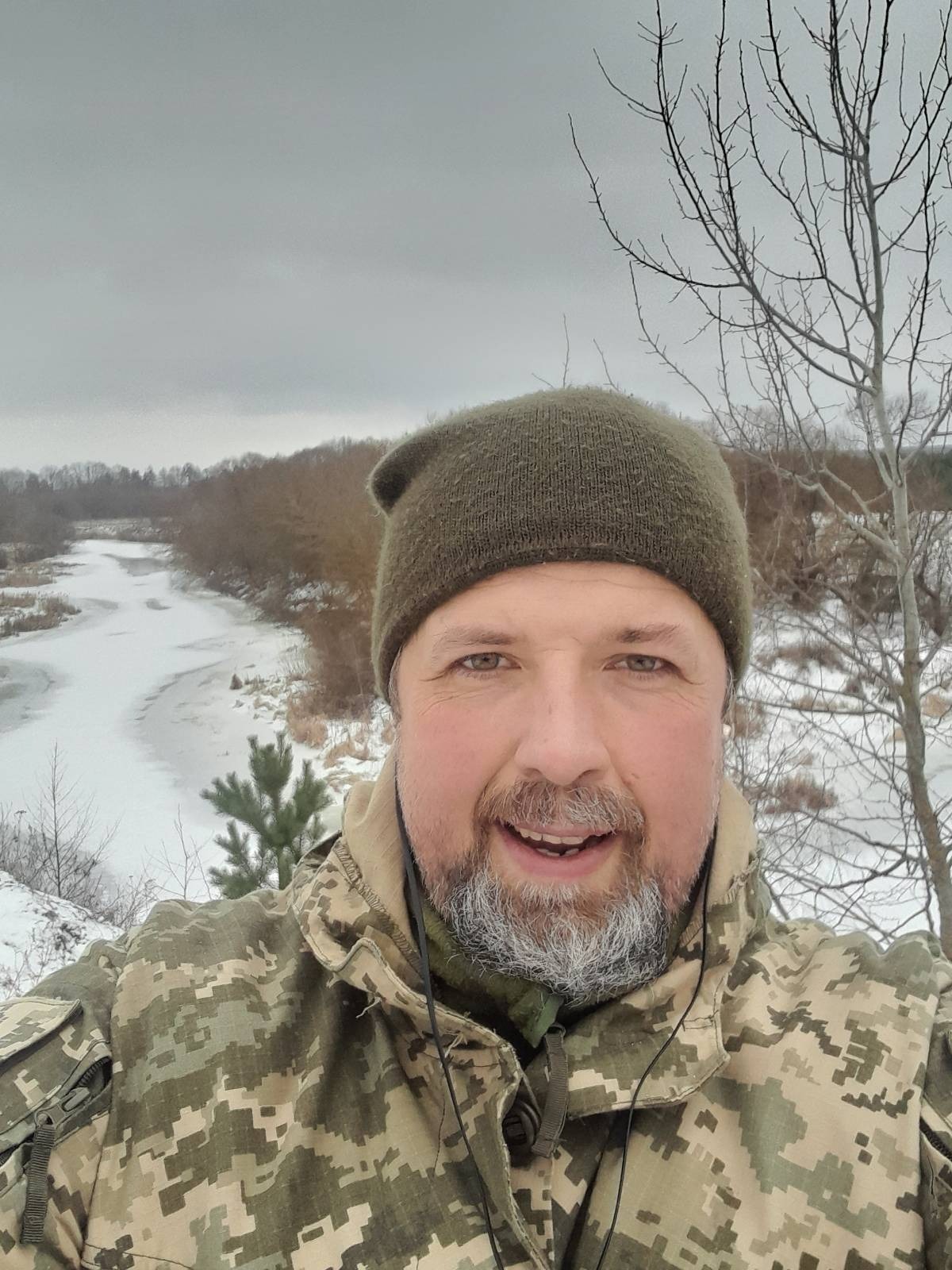
- Do you remember how you felt on the first day of a full-scale war? Yes, indeed: Sumy, 22 kilometres in a straight line to the border with Russia, and your wife and little daughter next to you...
- My feelings varied greatly depending on the time of day. In the morning, I was terribly anxious, but there was some cheerfulness and hope. My wife and I immediately sent our daughter to my parents' house - we had the illusion that it was safer in the private sector than in multi-storey buildings. Plus, I live next to a military unit, so we thought that if there was a bombing, it would be somewhere near us. .
I went to the military enlistment office. There were a lot of people there, everyone was ready to defend the country. Everything was fine until lunchtime: queues, people. But in the afternoon, we were all dismissed. And information began to appear that the Russians were approaching Sumy. And, apparently, without much fighting. At three in the afternoon, public transport was no longer running, and my wife and I decided to walk from our place to my parents'. We walked through the centre and saw an empty city in terms of the authorities. In Gerasim Kondratiev Street, where in the morning there were some machine gunners standing outside the buildings of the prosecutor's office, the SSU, the Ministry of Internal Affairs and the courts, there was no one! And here I remember all those stories from "Our 20s" about how the city's authorities are changing. The old government has faded away and now, perhaps, some new government will come in... And I feel such a chill of history. What I've only read about and could only imagine, I'm suddenly experiencing!
- Needless to say, over the years we have relived a lot of old things from Ukrainian history... So, what happened next?
- We came to my parents' house. Somehow the news was disturbing, nothing was clear. Then I heard some vehicles coming. I climbed into the attic and looked up: a convoy of 20 tanks was heading towards the Russian border. I thought: why would the Russians be travelling towards their border? It must be ours who have gone to fight! I ran out into the street and saw my neighbours standing there. I said, "They're ours!" - What ours? They were wearing red armbands...
Then I was sent a memorable video of a column of Russian tanks driving down Kharkivska Street, starting from "Sumykhimprom" and stretching all the way to the centre, which is five kilometres away!
- It was a depressing sight.
- Yes. And in the evening of the first day, I felt a decline, horror. Sumy has been surrendered; accordingly, Kharkiv will soon be surrendered, then Kyiv - and that's it. I started thinking about options for leaving. The worst thing was that my wife and daughter were staying here. Our parents immediately said that they would not go anywhere. Like, we were born here, we will die here. So they refused to go anywhere. And I understood that I had to. How, where, what?
I remember not sleeping all night and watching the news for several hours. Then I couldn't take it anymore. And you know, you pick up the phone and you're physically scared. Because what if you open the news and read that Kharkiv or Kyiv have already been captured? So I open it in the morning and it's like this! Kharkiv is standing, and Kyiv is standing. And you're like, 'Phew! You exhale. It's clear that it's a sh*t show, but it's not over yet. So I heated up some tea, sat down, and at my parents' house, I could see the street from the window. And I see a man with a fishing pole and a box coming. He's going fishing! I looked at him and thought: f**k, someone is at war, and an uncle is going fishing! And it somehow calmed me down a little bit.
- Like, life goes on.
- Yes, life goes on. The next day I was thinking about how to get out, what to do. And then it became clear that Sumy was somehow lucky, I don't know how. For some reason, the Russians did not think to occupy us. And then the terrorist defence appeared, and everything became more fun.
- You still don't mention the battles with the Russians near that very artillery. And they were impressive.
Tell me, did your hometown surprise you in the first months of the war? Did you understand what it was capable of and what it was not?
- As it turned out, I didn't. I did not expect so many people to join the terrorist defence. And at that time, Sumy was, if not completely, then two-thirds surrounded. And in reality, those people who joined the terrorist defence somewhere in Volyn or Galicia, it seems to me that the price of their decisions was lower than in Sumy, where if things went badly, it could have been the basis for either Siberia or execution. And the fact that so many people decided that they were willing to take risks was a positive shock for me. To be honest, I thought that Sumy was a swampy city; there was a certain percentage of desperate people there, and everything else... But it turned out that there were much larger percentages of citizens.
And I was also very surprised that the Russian world in Sumy was lurking. After all, you and I knew a lot of people with pro-Russian views in Sumy. And I was afraid that now we would have to meet "soldiers-liberators". But this attack was so unprovoked, so unfair, that even those people who had "Russian culture and the Russian language" could not dare to rejoice in this invasion. And on the third or fourth day, it was already a moment of survival, because everyone understood that if you went out to the square and shouted "Glory to Russia," you would be killed in the first couple of seconds.
A film by Vladimir Nyankin about the defence of the city
- Let's change the subject. You were mobilised last summer. Before that, you managed to write and publish a collection of stories about the war, volunteered, and brought your wife and daughter back from abroad. As for the mobilisation, did you have any expectations from the deployment? Where did you think you would be most useful to the cause?
- I had no particular expectations. I didn't expect to be a failure, to lose everything, or anything to the contrary. I decided for myself that I would not hide from mobilisation. To be honest, I did not have the courage and responsibility to volunteer. I explained to myself that my family and parents depend on me. I could leave, but what about them? In fact, it was more of a reassurance. But I decided that I would let it be. And so I drove around the city. Sumy is surrounded by checkpoints, and I was constantly driving through them, not hiding, as I know a lot of people do. It was there, at the checkpoint, that I was handed the summons.
As for my usefulness in the field, I once graduated from a military department, and we were trained as artillerymen. I have a military accounting speciality - commander of a firing platoon of self-propelled artillery. We were taught to work on 2C3 Acacia self-propelled guns. And when I received this call-up, I asked one of the volunteer centres I was working with to put me in one of the new brigades that was forming its artillery division.
We talked to the commander of this division. He clearly said that the staff was very much needed and there was a lot of work. He was told that I was adequate, I don't drink. He said, 'Come on over. He sent me an attitude in the mail. And I went to the military enlistment office with this attitude, because, as a naive person, I thought it would affect the TCC.
- Did TCC have other plans for you?
- But it turned out that TCC didn't give a shit what you wanted, what you could do, who needed you. The TCC has its own plan. And they said, "Dude, what the fuck is artillery? We don't have an order for artillery. And I was sent to Odesa for training. I went there twice. At first they said: choose where you want to go - intelligence, marines, or paratroopers. I said, "Oh, hell no! I'm equally far from all this, so whatever you say, I'll be. They were inclined to think that I belonged in the paratroopers, and then a woman psychologist looked at my documents and asked: wait, how old are you? And I was 46 at the time. She says: "Full 46?" "Yes, this year I'll be 47." "Oh, you're not suitable for us, we take up to 45 inclusive." "What should I do?" "Go home. So I went home from Odesa to Sumy. You know, driving a Gazelle from Sumy and back in one day is an unforgettable experience. I thought that my spine would remain there, and my head...
They called me again, and I was already assigned as a press officer to one of the brigades. After all, I was a journalist in the past. I went to the TCC with this certificate, and they said: "We don't give a shit about your certificate. We're sending you to Odesa." - So you've already sent me to Odesa. - Well, those were combat units, they only take up to 45. And we are sending you to the rear, where they take up to 52.
I went for the second time. At the table, they looked at a bunch of rear specialities and said: do you want to join the material service or the food service? I was far from either of them. But somehow I thought, since I have problems with restricting my appetite (smiles - Y.K.)... Then they said, "Okay, you'll go to the material service. So I went in the direction of a specialist in the material service.
- You are now a senior lieutenant, the head of the logistics service of an infantry brigade. What does a typical day consist of?
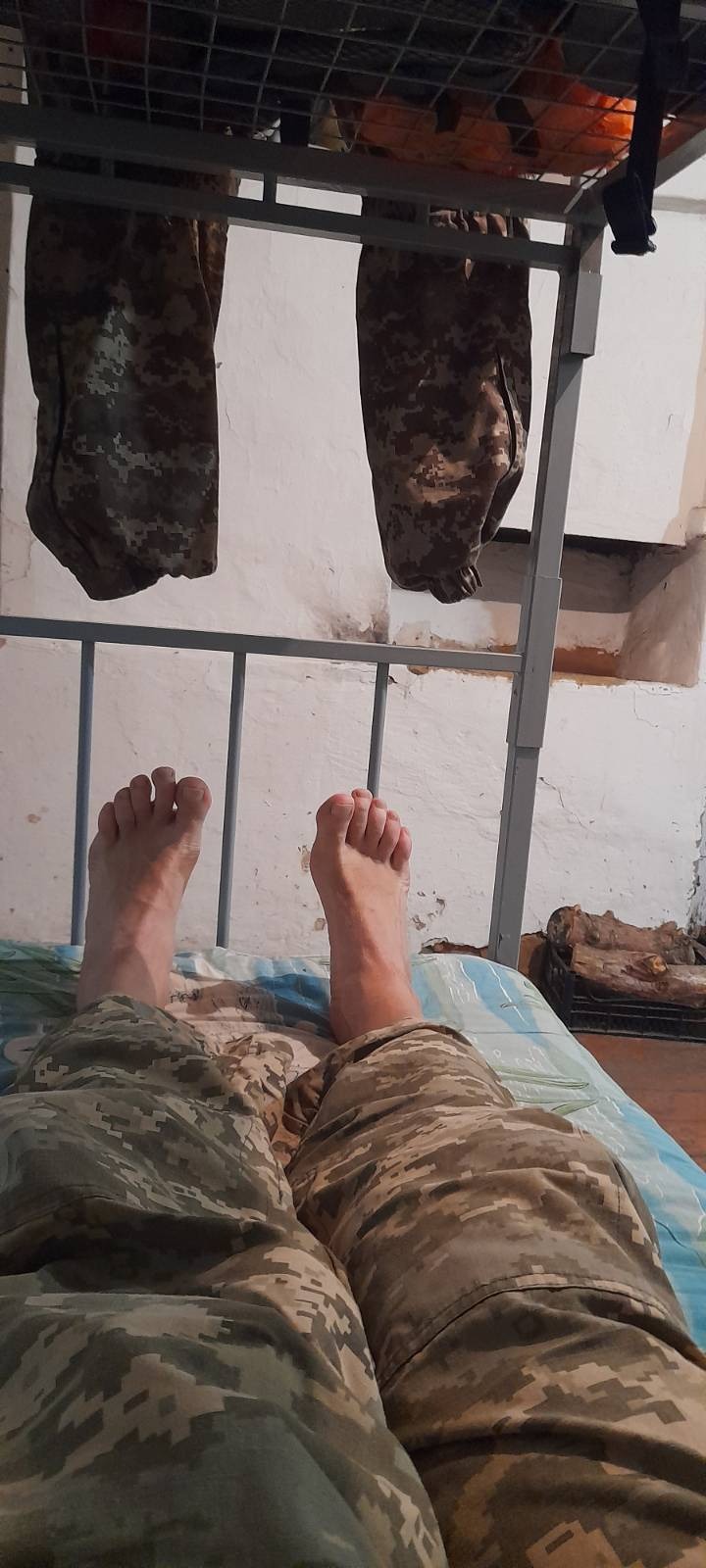
- A typical day starts with you waking up around 7:30, because in the corridor next to you, people start walking, laughing, washing, brushing their teeth, chattering, frying eggs. At first I used to set an alarm clock, but now I've stopped, because I know that you can put on earplugs, a mask, whatever, but you'll wake up at 7:30. So I wake up, wash my face, and walk melancholically from the room where I live, through the forest, to the room where I work. There I light the stove because the room gets cold during the night. At 8 o'clock, I go to breakfast, and at 8:30 my working day starts. Sometimes it happens that you fulfil your plans for that day a little bit. And sometimes it happens that you have to drop everything and submit a report urgently. Or you have to go somewhere for a meeting or take a report somewhere. And you're happy about it, because it breaks up the dullness of everyday life a little bit.


- Have you ever had to deal with organised corruption in your position?
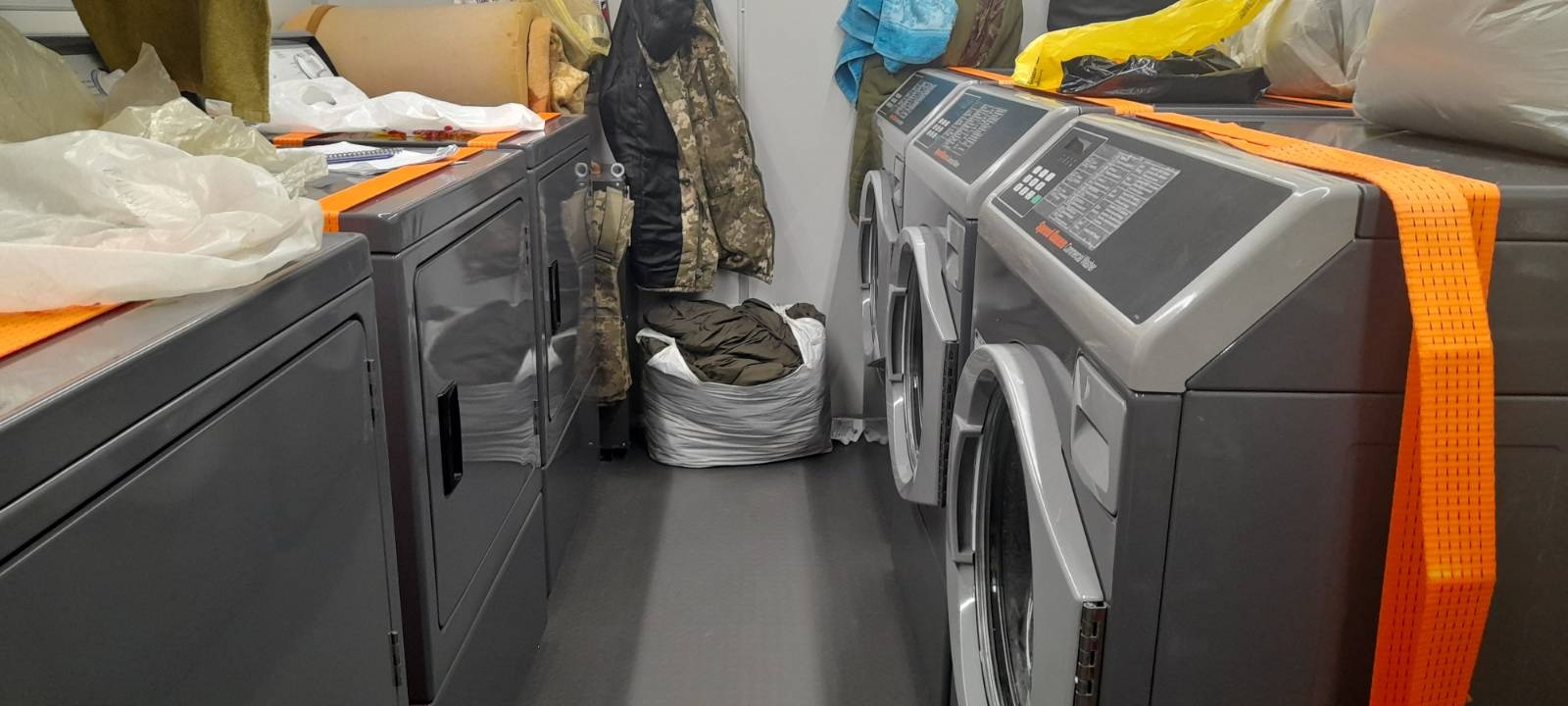
- No. Look, I understand that corruption occurs at the point of procurement, but we don't buy anything. We only receive goods from warehouses. And it's hard for corruption to get through here. Because, roughly speaking, we received a thousand units of socks. They were delivered. I have an invoice for a thousand units of socks. I have distributed 300 socks. 700 are in the warehouse. For each sock, the soldier who received it signs a receipt. It is difficult and pointless to come up with a scheme here. That's why our teachers used to say that the clothing service is a place for people who don't like to steal. Because there is virtually nothing to steal at the clothing service. Where did the thousand socks go? We counted 700 in the warehouse. And 300? They were distributed. You take a soldier Petrenko: did he receive socks? And then there is no more backlash.
In general, since I am a person who does not like to play schemes, I think it is my personal luck that I got into the material service, where there is routine paperwork. You just do your work, try to keep people dressed and keep records.
- In your Facebook posts, I often see the word "rear". You don't say it directly, but you can see some self-reproach. Does it bother you that you are in the rear service and not at the front?
- Well, something is stirring inside. On the one hand, I'm very lucky because I sleep in a warm house. Yes, I heated it myself, but I sleep in a warm house.
We don't have any arrivals; it is sometimes heard that a shahed flew over. This is the most risky thing I've ever encountered. On the other hand, I understand that here, in the army, there is actually a small backlash of what you can and cannot do.
In principle, if I had set myself the goal of being an assault fighter in a combat brigade, I think this goal would have been achievable. But I didn't set myself such a goal. I am trying to be useful here. Although I have some doubts about the ethics of this position. I had them even when I was not mobilised and understood that I was living a peaceful life and everything was fine, but somewhere people were dying for me. And now I feel like I am a little closer to those people. But I am still very far from them.
- You've been in the Armed Forces for six months now. What do you still have trouble getting used to in the army?
- I guess I managed to get used to it, but I couldn't come to terms with the lack of privacy. Here you sleep in a room with other people. And the fact that I now sleep in a room with only two roommates can be considered as if I were sleeping alone. Because before, I used to sleep in rooms with 100 people, and after that, 15 people - it was not bad.
In addition, you are constantly sitting in an office where there are always people. That is, there is no spatial or temporal privacy. I'm talking to you right now, and from time to time I look to see if anyone is calling me anywhere. Because here you are constantly on the lookout for a call, for something to find out or report. For the first few months, it was really stressful for me. My writing habit is that I have to be alone in the room. No one should be around. And this is impossible in the army. So now I'm slowly trying to get used to it. But it's hard for me.
Again, I want to emphasise that I understand that these problems are nothing compared to the problems in the trenches.
- What things that you didn't really appreciate before have you learned to appreciate?
- My family. I appreciated it, but just as they say that our russophobia is not enough, it turned out that my appreciation of my family was not enough. Because when you come home for a few days, it's such a paradise and happiness! Even taking out the rubbish. You take out the garbage or go to the store to buy something - and it's such a thrill! And then you fry pancakes at home! And it's cool! And you think: damn, how did you not realise this before? You had so many years of happiness - and you thought that happiness was somewhere ahead.
Or memories of travelling with my wife. The same Carpathians, the same Crimea before the occupation; how we went to the mountains. At the time, it seemed like everything was still ahead. And now you realise that it was an extreme of happiness.
- I remember how during the first months in the Armed Forces you complained about not writing. Then you broke through? Or not so much?
- Not really. I wrote only one story in six months. And that was a story I wrote before I was mobilised. Although now I have even adapted and can write when someone is around (and there is always someone around). But I still can't write if someone is looking at the screen. I need the screen to be mine, and I need to look at it only by myself. That's why I try to arrange my workplace in this way. Because if someone is watching... My wife always knew that if I was writing something and she came in and looked at the screen, I would immediately start growling. Like a dog defending its bowl.
As for the new material, I don't even know what it's about, but I'm in a kind of silence.
- You're being a little bit poor here. Because you have wonderful micro-essays about the army on Facebook. For example, this one about the hit parade of the army's meals.
- If you look at the dates, the last ones were around October. Because when I was in the battalion, I somehow communicated directly with the "hinterland people". In civilian life, I was far away from the hinterland, so I was very interested in them. And when I was promoted and started serving in a brigade, you hardly communicate with the people here. There were more or less educated people around me, good smart guys. On the one hand, I feel much more comfortable with them. But on the other hand, there is very little that I discover. Because there I was looking at those men who were being moulded into stormtroopers. And it was wow! And once I got here, on the one hand, everything is okay. And at the same time, it's not very interesting in the literary sense. And then I stopped writing altogether. And since I'm a person who is used to writing, I can't give up. I even had conversations with myself: 'Vladyusha, okay, you can't write now, so just give in and live to your heart's content, like everyone else. But the thing is, for me, normal life, if I don't write, is something wrong, something uncomfortable. I can't go to sleep in the evening satisfied, for this I need to write during the day. And I don't write...
- And yet you must already have ideas for future short stories or even novels? For example, the songwriter and writer Sashko Bul told me that he would write the sequel to his novel, which took place during the Russian invasion of Ukraine, with a greater understanding of military realities, because he has been serving in the Armed Forces since the beginning of the war.
- Well, you see... I seem to know the realities more, but... Recently, I have been further depressed by the deaths of my colleagues in the workshop. The death of the poet Maksym Kryvtsov was particularly shocking. I just really liked reading his poems on Facebook; I thought they were cool. I didn't know him as a person at all - it was only later, when I read his obituaries, that I found out what a cool guy he was. I knew him not as a person, but as an author. And I was impressed. And then I read his last post, where he writes about his book, and literally a few hours later I come across a post that he died. It's a very impressive topic. And the death of Kryvtsov makes me especially bitter to think that so many books, songs, films, whatever, will not be written, filmed, sung, or killed along with their authors in this war. Some people said that this is a new shot revival; others said that there is a fundamental difference, because that revival was shot, and this one died in battle. And it seems to me that this is a big difference. A very big difference. For Ukraine, it is already progress that this time we are not being shot, but at least this way.
The next thought I had was about the responsibility of those who remain alive. It is clear that no one will write Krivtsov's poems in his place. And we will have to say goodbye to these unwritten poems. But the thought of the responsibility of those authors - literary, musical or otherwise - who remain alive began to depress me. You realise that now you have to write not only for yourself, but also for that guy. And this additionally began to push me: 'Dude, people are dying here, and you're running around with your own crisis, and you can't overcome it. I'm trying to fight it out of irritation. I don't know how successful it will be.
(UPD. It seems that shortly after our conversation, the situation changed, as evidenced by the post below. We wish Vlad a continued creative thaw!)
- A writer works with words. What new words did this war add to your already large vocabulary? Do you write down anything new?
- Yes, sometimes very cool language things happen here. Yesterday, at four o'clock, I was leaving the room where I work, and a colleague came towards me. He looks at me, smiles and says: are you here for work or what the f*ck? And I start laughing, it's a beautiful thing to say! It's obscene, I understand, but... And moments like that happen (smiles. - E.K.).
- This is a very literary question, but it has a military slant. You used to adore Haschek's Schweik. Did your army experience and this war change your attitude?
- It hasn't changed in the sense that there is a lot of absurdity in the army, both then and now. At the same time, I understand a very big difference. I mean, the army hasn't really changed much. But the war is very different. If back then the war was about who the fuck knows what, now for us the war is about whether we will survive or be destroyed.
But the absurdity remains. Our toilets are like cesspools. Now it's freezing, and everything starts to freeze there, and faecal stalagmites start to come out of the holes. I was just sitting over this stalagmite and remembered that Schweik had a general who, when he visited each unit, checked these toilets because he believed that this was the main thing that affected the combat capability of the units. I'm sitting here, remembering this, and I'm laughing. In the army, I told you that you cannot sleep or eat alone. You can't take a shit by yourself either. Because there are people sitting in the next stall. And I can hear that someone there is tense, because the toilet is not a place for laughter. He thinks: why is he laughing, what kind of a moron is he? And I remembered that general and thought that if he saw those mountains, he would have a heart attack.
That's why I love Schweik dearly. To be honest, he helped me at some points. Especially at first, when I was just getting used to this army life. But I realise that Schweik's "play the fool" method doesn't work well here, because I understand why I'm here. It may sound pathetic, but I don't want to play the fool, I want to get something out of my service.
- Why I ask: there are different attitudes to this book. For example, the writer Mykhailo Brynykh, who you know, who, by the way, served in the Rivne region last year. So, he dislikes both Hashek and his hero. I specifically asked him to formulate his opinion, and this is what he wrote to me: "In my youth, I tried several times to read 'The Adventures of the Brave Soldier Schweik' by Jaroslav Hashek without success, because one of my friends always spoke complimentary, enthusiastic and elevated about this text. At the time, Schweik simply did not appeal to me. It was an uninteresting reading about some Chaplinian, caricatured character. And the author's personality did not inspire confidence: a graffiti writer, a provocateur, a boor - and a Red Commissar at the end of the day (which, by the way, is true. I'm speaking for myself). Nevertheless, about five years ago, I finally managed to read 'The Adventures of the Brave Soldier Schweik' to the end, hoping that I had been wrong all my life. The disappointment was greater than I could have expected. I don't understand how anyone can love Schweik: a brazen drunkard, a deserter, this degenerate with a phenomenal memory, an empty and puffed-up hero, devoid of even a shred of love for anything but booze and idleness. An animal, a traitor, an opportunist. A pitiful sight. A separate irritation is this famous 'Schweik's' humour, which stinks of sour beer and arseholes from a kilometre away."
End of quote. It was written by a man - very seriously, by the way - who naturally has a great sense of humour. What do you think of his train of thought?
- First of all, I am quite sober about the quality of my sense of humour. I would say that I first read Schweik when I was 12 or 13. And then I read it about 7 times. I have never read a single book in my life so many times! Although now I haven't reread it in probably 15-20 years for sure. And I realise that maybe I'm even afraid to reread it. Because I'm afraid that I'll open it and think: what the fuck? But then maybe it's some kind of age-related sentimentality. I understand that, God willing, one day my daughter and I will go to the liberated Crimea, and I will show her: this is Sudak, and this is something else. And here, in Sudak, I was looking at such a beautiful girl, and here we were drinking, and here we were laughing, and here I was burping... I have such a back story with Crimea! And for my daughter, it will be one of her holiday destinations, she will ask: 'Dad, what's the thrill? In Turkey, the mountains are higher...' and so on.

It's the same with Schweik. It has such a layer of my personal emotions that I don't know whether I like it because of the pure quality of the text, or whether it gave me so much joy at the time that it was imprinted on me, and I can't tell the difference anymore; Schweik himself and the thrill I had at the time have become merged for me. I'll probably try to read it, but I think I'll still like it. At least, I'm saying that in the army I mentioned it several times - and it was as a kind of helpful thing. When I wanted to howl, I would remember Schweik and it would go away.
- I read your post about how you went to Lviv because you were awarded the prize of Lviv, the city of literature. The celebrations began with a minute of silence in memory of Maksym Kryvtsov. Among the other diploma winners was Victoria Amelina, who was killed in Kramatorsk. You know, few deaths have caused such a universal cry of pain as the deaths of these two. Even if only in our Facebook bubble. Is this a sign that writers and poets are even more important to the nation in times of war than in peacetime?
- It seems to me that this reaction was in our bubble. Roughly speaking, go into a metro car in Kyiv and ask people if they have heard anything about Kryvtsov and his death. 99% will say they have not heard anything at all. 1% will say: they heard something, it was on TV. And that's it. That is, in our bubble, yes. And I understand why. I mean, like when you read a poem by a guy and you really like it. There were also poems about death. And you read it and think: shit, man, please live, please live. You think that maybe there is some kind of magic: if you talk about death a lot, it will bypass you. You hope it will happen to him. And then you read the news that he died, and it makes a bigger impression than some report... We don't write about casualties in the reports.
You know, the only connection I have with Sumy now, apart from my family and friends, is that I read news about the funerals of the fallen soldiers on the city hall website. And if they bury some guy, you read his name and think if you might know him. You think: the year of birth is about my year; you read his biography... And that's it. It's a pity, the guy died, you put a tearful like... And then, of course, when you know this poet as if you know him better, you like his poems - it contributes to an emotional reaction.
But in principle, it seems to me that poets or artists in general do not play any special role in this war. And in general, this is a feature of industrial warfare, when neither heroism nor any individual characteristics have almost no effect on anything. It's just a matter of who has more shells, who has more guns, who breaks the other side.
It used to be different. At this award ceremony in Lviv, the actors of the Lesya Ukrainka Theatre performed an excerpt from a play written by Lesya Ukrainka about a Scottish king who fights against the English enslavers. And there you can feel that there was a war before, when your decision, your feat, your heroism, could have made a difference, changed history.
And now the bullshit of this war is that all individual feat, heroism, is simply lost, drowned and killed. You know, it's like when Stalin was told that the Pope of Rome was so influential, and Stalin said: how many divisions can he field? This is an extremely f*cking approach. But unfortunately, the same principle applies in this war: what about your heroism, your poets? It doesn't matter. A poet dies in the same way as a mechanic. And this is a demotivating and terrible feature of this war. You can be a hero, and it doesn't affect anything.
- In fact, this picture is from somewhere in the First World War.
- Yes, this is a feature of all industrial wars. The War Between the South and the North in the United States was already an industrial war, but there was still some individual heroism. And the First World War was a case of purely weighing up the masses, and, relatively speaking, a million sheep are stronger than a thousand lions. And that was it. It's hard to do anything about it. And it depresses me a lot.
On the other hand, I often think about the experience of the UPA. It was fighting a hopeless struggle... Shit, at least there is a state called Ukraine, some allies who are helping. And then the UPA was on its own against these ghouls. And what did they fight for? You could say: who the fuck knows what they fought for. They killed a lot of people without any result, without even a hope for a result. But you still want to believe somehow. And I believe that their struggle, their blood, their heroism, and their deaths were not in vain. Although, if you count in accounting terms, they did not lead to anything. Failed? Failed. Did the Soviets win then? Yes, they did. And what did you achieve? We achieved nothing. But it seems to me that what they did then made it possible for what happened later in Ukraine to happen - and is happening now. I cannot prove it. But it seems to me that if the UPA had not existed then, there would be no resistance now. They would have come and captured Sumy on the first day, Kharkiv on the second, and Kyiv on the third. And that's all: they would have shot, evicted some people, killed others, and that would have been the end of it. But the Russians gave us a push, and we are standing, and this happened thanks to both modern heroes and heroes of the last war. I want to believe in it. Because it's scary to simply accept that we live in a heroless, idealess era.
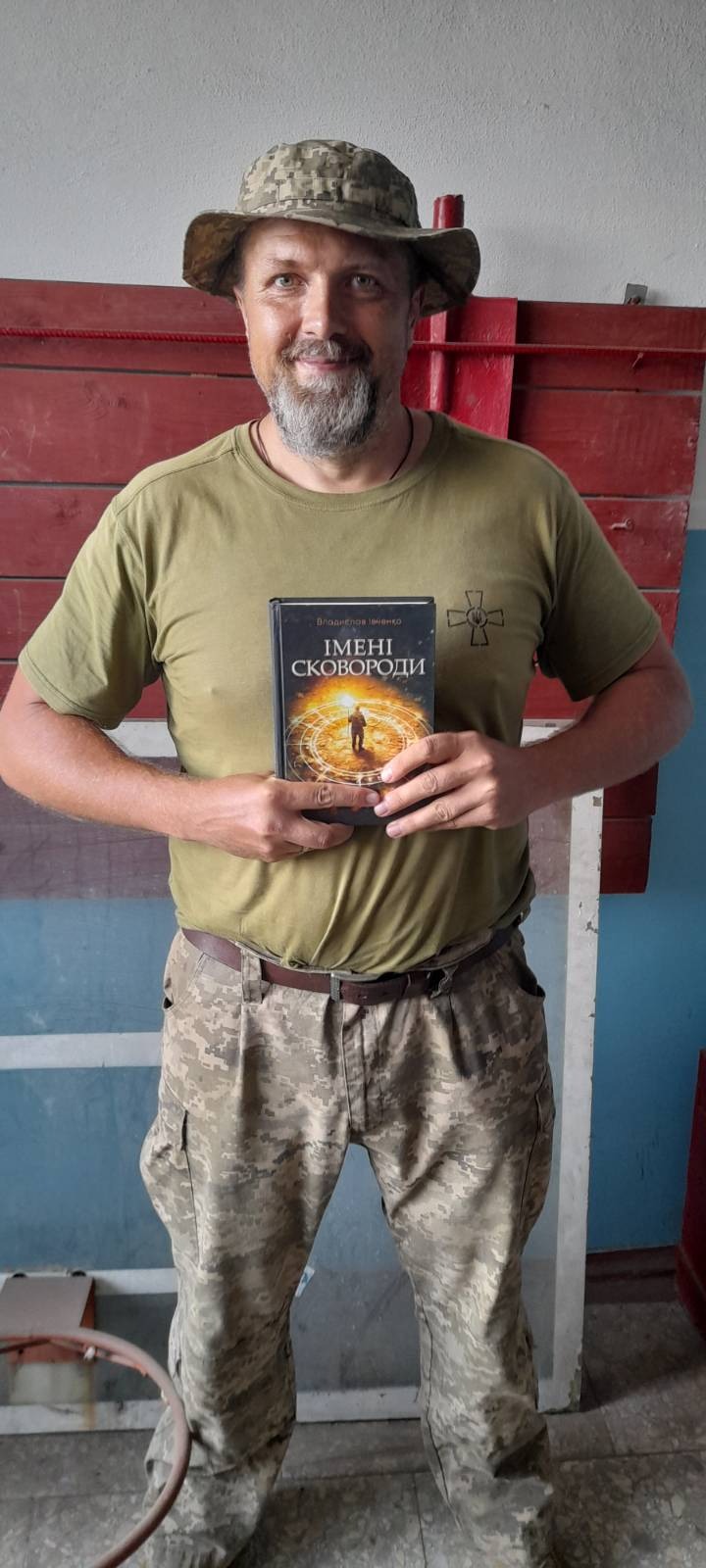
- You know, I noticed that the characters in your book "After the 24th" are very different, but they are almost identical in one way: they all call the Russian occupiers Rusnya. Rusnya, Rusnya... And this, of course, is the author's position. Not Russians, but Rusnya. Such a unifying word - as if they were not real people, but white walkers from Martin's novels.
So I will ask you directly: how do you perceive Russians as a nation today?
- Why did I like the word Rusnya and use it a lot? For me, Russians are something unformed, something "stupid but a lot" that sticks out - and that's it. And to be honest, I think very little about them, I hardly try to comprehend them in any way. Because it seems to me that this is such an irrational phenomenon that to somehow comprehend them is to give them a rationality that is not inherent in them. I don't remember who said it: you build models of why Putin decided to do this and that. But you don't take into account one thing: maybe Vladimir Vladimirovich had a dream about a holy matron and said that he should do this. And he did this...
When we think about this Russian people, Russian culture, and how it happened, we make the same mistake. We somehow automatically transfer our own qualities to them and think: we are human beings, not some kind of cannibals? So they are human beings too. And here, I think, there is a logical error. Because Russians are something so beyond reason, something so unformed, a primordial evil. And that's it. The only important thing about them was once formulated by Khvylovyi: away from Moscow. That is, to stay away, in any form. That's why I don't believe in good Russians or bad Russians. Just stay away. That's all. And think less about them.
- But among this slime there are people who actually go out with pickets. They get 10, 15 years in prison. There are some people like the girl who, being sick, replaced price tags in supermarkets with anti-war slogans and was sentenced to many years in prison. Who are these people for you? Exceptions that prove the rule? Or deviations from the terrible norm?
- It's neither here nor there. I said I don't care what it is. I drew a white circle like Homa Brut in the church. And what's in the middle is mine, that's what I'm worried about. And what's inside - who, how, replaced, didn't replace... I don't have enough emotional resources to think that there are good people there. Maybe there are, maybe there aren't. I don't know. Just cross it out and forget it. I don't want to think. Just turn the page once and that's it. I don't care what happens to them. It's their problem, let them deal with it. Yes, I understand that this is my problem too. Because these bitches will not let us deal with our problems. But thinking about it won't help. This is my position.
- Last question: Vlad, will we win this war?
-In fact, the fact that we still exist and are still fighting is a victory. And I hope it will continue.
Yevhen Kuzmenko, Censor.NET
Photo: archive of Vladyslav Ivchenko


