



Croatia could become a new Hungary: Who are advancing Moscow’s interests in the Balkans
Last month, Croatia became an epicentre of scandals relating to Ukraine. The scandalous supplier of "eggs for 17" to the army Tetiana Hlynyana bought hotels in Croatia. Strange things happen around yacht of Medvedchuk. Whilst, more worryingly, local Croatian dealers cut off ammunition to the Ukraine Ministry of Defence.
Croatia is usually seen as a country that is friendly to Ukraine. And this is the case for the majority of Croatians. Ask any Ukrainian – who has walked through the markets in Rovinj or Split – and they will tell you that sellers shout out "Glory to Ukraine".
However, this staunchly pro-Ukrainian sentiment – a result of the last Balkans war – does not apply to much of the country’s political and business establishment.
Discussions about Russian influence in the Balkans are normally focussed on Serbia but in reality, Russia has its tentacles in Croatia as well, and Russians is gaining significant control over part of the local elite.
Croatia’s historic ties to Moscow
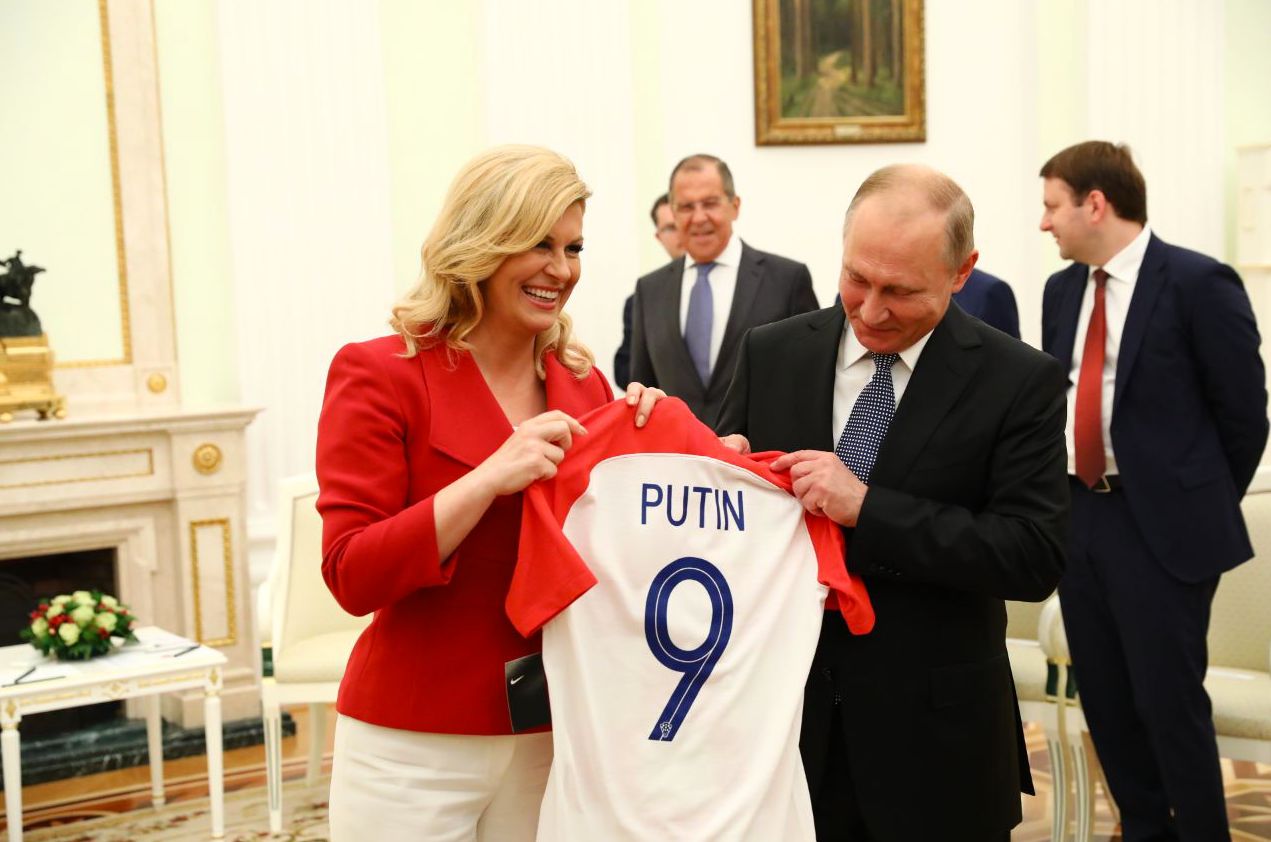
Russian influence in Croatia is nothing new. You will remember photos of the previous president of Croatia, Kolind Grabar -Kitarović, with Putin during a football championship in Moscow in 2018. Despite of the war in Ukraine, she promoted improved relations with Moscow, citing deals with Russian banks and injecting funds into the Croatian economy.
Statements from the current President of Croatia, Zoran Milanovic, are no better. Milanovic has previously said that Ukraine will not regain Crimea and that Western support for Ukraine is "deeply immoral because there is no military solution to this war".
In November 2022, the President also spoke out against military Ukrainian Armed Forces training in Croatia. Similarly, he also previously called the membership of Finland and Sweden in NATO as "poking a bear in the eye with a pen."
After these statements, the Prime Minister of Croatia, Andrej Plenković, said that he had severed relations with the country's President, accusing Milanovic of being a manipulator, vandal and "a person with pro-Russian views."
Plenković must also face questions
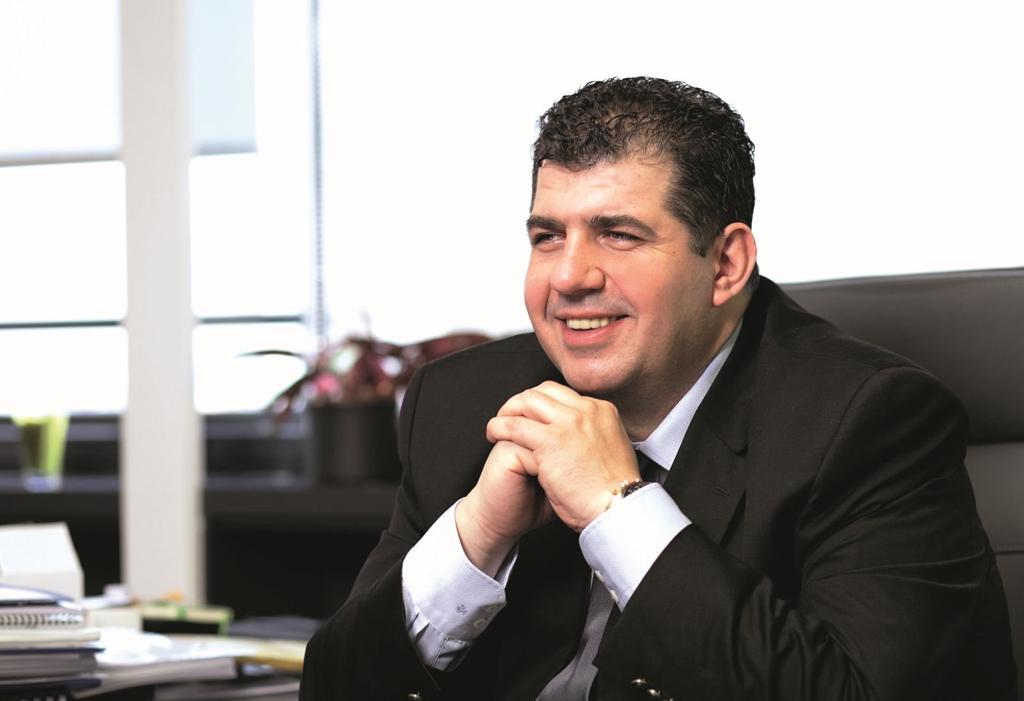
Plenković, however, has found himself at the centre of a number of Croatian corruption scandals. In part because of his ties to a businessman called Pavao Vujnovac who made his fortune on cooperation with Gazprom and Sberbank.
Since 2012, natural gas into Croatia has been supplied by Gazprom Schweiz AG via Vujnovac’s company PPD and, in 2017, Vujnovac signed a ten-year deal with Gazprom Export to help Gazprom solidify its grip on the Croatian energy market.
As Volodymyr Kravchenko wrote in a review for ZN.UA, Croatia turned out to be one of the few countries that in 2014 increased the volume of trade with the Russian Federation. One of the Russian companies who previously invested in Croatia, Sberbank Rossii – recently sanctioned due to Russia’s full-scale invasion of Ukraine – has been operating in Croatia since 2012.
Sberbank provided a loan of almost one billion euros to one of the largest companies exporting food products, Agrokor, which was owned by Ivica Todorić. By 2019, this company was still mired in debt, and its assets were taken over by the Fortenova group of companies.
Fortenova demonstrates how the Russians operate in the grey zone – this saga is a good test case to see if sanctions work.
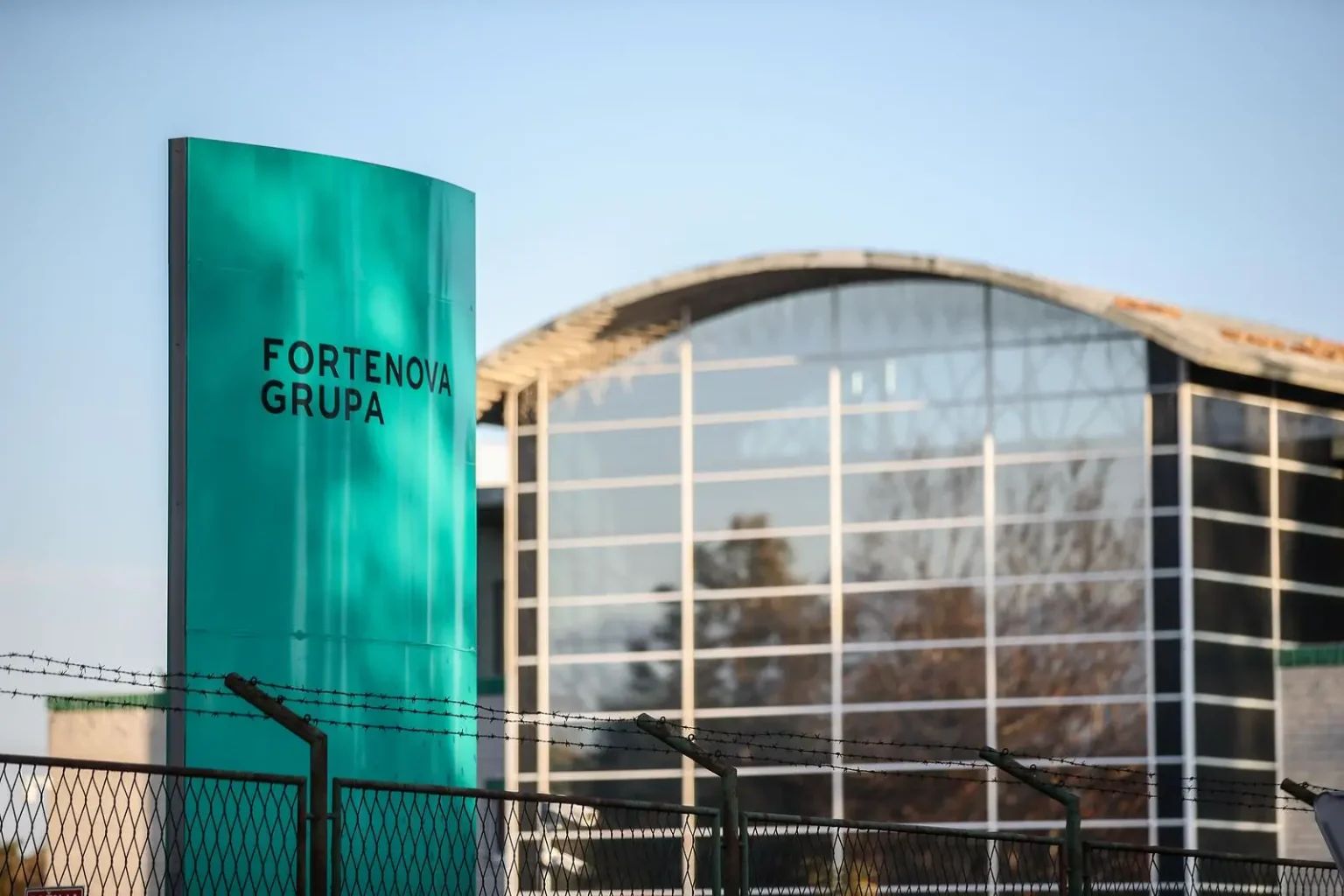
As of October 2022, 43% of Fortenova’s shares belonged to sanctioned Sberbank. At first, Sberbank wanted to sell their shares to the Hungarian Indotec, but the EU blocked the sale.
On October 31, Sberbank tried to sell their stake to an Arab investor, a UAE national called Saif Alketbi, for 400 million euros, with Alketbi acquiring SBK ART.
The Croatians took issue with the sale, saying that it took place without the consent of the state. As such, in mid-December, the European Council – at the request of the Croatian government – sanctioned SBK ART, presenting Pavao Vujnovac (who is close to Plenković and Croatia’s ruling elite) with the opportunity to acquire the majority of Fortenova's shares.
Pavao Vujnovac, however, is no stranger to the Russians.
Pavao Vujnovac and Gazprom
Vujnovac made his wealth in the gas sector as the chairman of PPD (the company that supplies Gazprom gas to Croatia).
PPD continued to work with Gazprom after Russia’s invasion of Ukraine. In an interview with N1 in October 2022, Vujnovac confirmed that PPD still buys gas from Gazprom. According to him, "Gazprom is not our [PPD] main supplier; they are a significant partner, but we buy from them 20 to 25 percent of our needs".
Worryingly, it would appear that Vujnovac used his relationship with Gazprom to gain political influence in Croatia. In 2014, Vujnovac, through PPD, issued loans to HDZ, Croatia's ruling party, totalling between 4.3 and 6.8 million kuna (between 500,000 and 1 million euros).
The loan was issued in several tranches, not through Vujnovac personally, but through PPD at the request of CDU Secretary General Milijan Brkic, a former assistant director of Croatian intelligence.
At the time, after signing their first contract with Gazprom in 2012, PPD’s main – perhaps only – source of revenue was from Gazprom.
PPD, HEP and the former Minister of Economy
PPD’s relationship with the state energy group HEP – to which it supplies gas on a de facto exclusive basis – is also highly questionable. Many people have long suspected the company in favouritism.
In June 2021, NER announced an open tender for gas supplies for October 2021 and April 2022. Several bids were submitted, including from national energy group INA, which offered a price of €35.74 per MWh. Although this was in line with the terms of the tender, HEP issued a new tender for the same delivery date. PPD won the tender, offering 39.13 euros per MWh, which is about 6.8 million euros more than what INA was charging.
The HEP affair is one of the many reasons why people in Croatia believe that Vujnovac, a close friend of the former Minister of Economy, Ivan Vrodlyak, has used his relationships with Croatia’s ruling elite to dominate the country’s energy sector.
Vrodlyak and Vujnovac are childhood friends. They were both born in Osijek, studied at the same school, and allegedly support Prime Minister Plenković. But Vrdolyak’s support is finely balanced and many fear he could return to President Milanovich’s camp, which would destroy the fragile majority under the government.
An oligarch in the making
Several Croatian members of parliament have raised concerns that the Croatian government is actively creating a monopoly by making Vujnovac the "owner of Croatia ".
It is believed that the key decision maker regarding Fortenova is HDZ’s Prime Minister Plenković. He authorized Economy Minister Davor Filipovych, Finance Minister Marko Primorac, and Justice Minister Ivan Malenica to deal with it. They are now the key negotiators on the matter.
As a result, a member of parliament, Sandra Bencic, from Mozemo! ("Bencic") said that Prime Minister Plenković "took over Agrokor from the favourite CDU tycoon Ivica Todorić in order to transfer the company to the new favourite CDU tycoon Pavao Vujnovac".
In response to the potential deal, a member of parliament from the Croatian political party MOST Nikola Grmoja stated that "at first Ivan Vrdoljak contributed to the growth and strengthening of Pavao Vujnovac, and the Plenković government made him the owner of Croatia".
Grmoja emphasized that "Vujnovac with his two companies, Fortenova and Energia naturalis, controls ten percent of the Croatian economy."
"No one in the history of Croatia is as powerful as tycoon Vujnovac, and it is obvious the influence he has on the entire society, institutions, political parties and mass media," the MP added.
"This government sold him gas for a cent, and Plenković, who is responsible for this, keeps Barbarić at the head of HEP and he cannot touch him, which shows Vuijnovac’s power. He is the man who destroyed the institutions of Croatia, and the majority will strongly oppose this, because we want everyone in Croatia to have the same opportunities, for all citizens to be equal before the law, and for it not to be a Croatia of tycoons, corporations and banks, but a Croatia of all of its citizens", says Grmoja .
Vujnovac is also believed to have considerable influence over the Croatian press and media. A report by the Center for the Study of Democracy ("CSD") claims that Vujnovac's companies are a significant source of advertising revenue for the Croatian media, which means that outlets largely avoids critical coverage.
The report states that the Croatian mass media refrain from reporting on the activities of Vujnovac's companies. According to the CSD, "PPD's influence on the media sector in Croatia proved to be strong enough to censor an elected member of parliament ."
Ms. Bencic, a representative of the Green Left, spoke in June 2022 in the Croatian parliament about a controversial real estate deal involving the owner of PPD, several of his close associates, and a high-ranking official of Croatia's national intelligence agency, the SOA. Several online media outlets published articles about her performance but removed them from their websites hours later.
Ukrainians – it would seem – are not the only people to suffer from protectionism, corruption, and pressure on the mass media.
Fortenova is not ridding itself of Russian influence
The takeover of Fortenova by Vujnovac is allegedly aimed at removing Russian influence from the company. However, as we can see it, Vujnovac himself is close to Russia. He represents a continuation of the existing status quo and, under his leadership, the company will still be connected to Russian interests.
Moreover, this threat is not limited to Vujnovac or Fortenova’s historic Russian shareholders. Vsevolod Rozanov, a member of the board of Fortenova, is already sanctioned by Ukraine for supporting actions that undermine the security, sovereignty and independence of Ukraine.
Similarly, Fortenova’s Chairman, Maksym Poletaev, is also the Deputy Chief Executive Officer of Rusal International (a sub-sanctioned company), as well as the Deputy General Director of Russian Aluminum Management OJSC. He also previously held the position of Deputy Chairman of the Board of Sberbank Europe (a sub-sanctioned company). It is surprising that, despite holding these positions – and personifying Russian influence in the Balkans – the authorities are yet to take action and sanction him.
Since Fortenova is critically important for food security in the Balkans – and it will remain one of the Russian channels of influence under Vujnovac – it may be appropriate to consider sanctioning Vujnovac, given his close ties to Gazprom, as well as others – such as Poletaev – in Fortenova who are advancing Russian interests.
For European institutions, in particular the European Commission and others, it is important to pay close attention to the situation in Croatia. There is a clear risk that the country could turn into a second Hungary.
Tetiana Nikolaienko, Censor.NET


