



Why President’s Office is holding on to corrupt BES despite risk of disrupting Ukraine’s international financing
Why is it so important for the government to steamroll its draft law on BES, which was criticized by business associations and not supported by Western partners?
In 2020, in order to receive €1.2 billion in EU aid, the Ukrainian authorities had to liquidate the tax police and announce a reform of law enforcement agencies that investigate economic crimes. It was planned to take the "economic block" away from the State Fiscal Service, the Security Service of Ukraine, and the National Police, which were "nightmarizing" businesses, and give it to a specially created structure - the Bureau of Economic Security (BES).
On the day the law on the BES was adopted, in March 2021, the President's website announced that the Bureau would analyze "the beneficiaries of financial transactions and determine whether there are violations of the law in the circulation of funds of certain business or government entities." And the SSU will lose its "functions of investigating crimes of corruption and organized criminal activity in the field of governance and economy, which are not typical for special services."
The BES will be responsible for investigating money laundering, conversion centers, and generally taking away the functions of other law enforcement agencies that they used to put pressure on business.
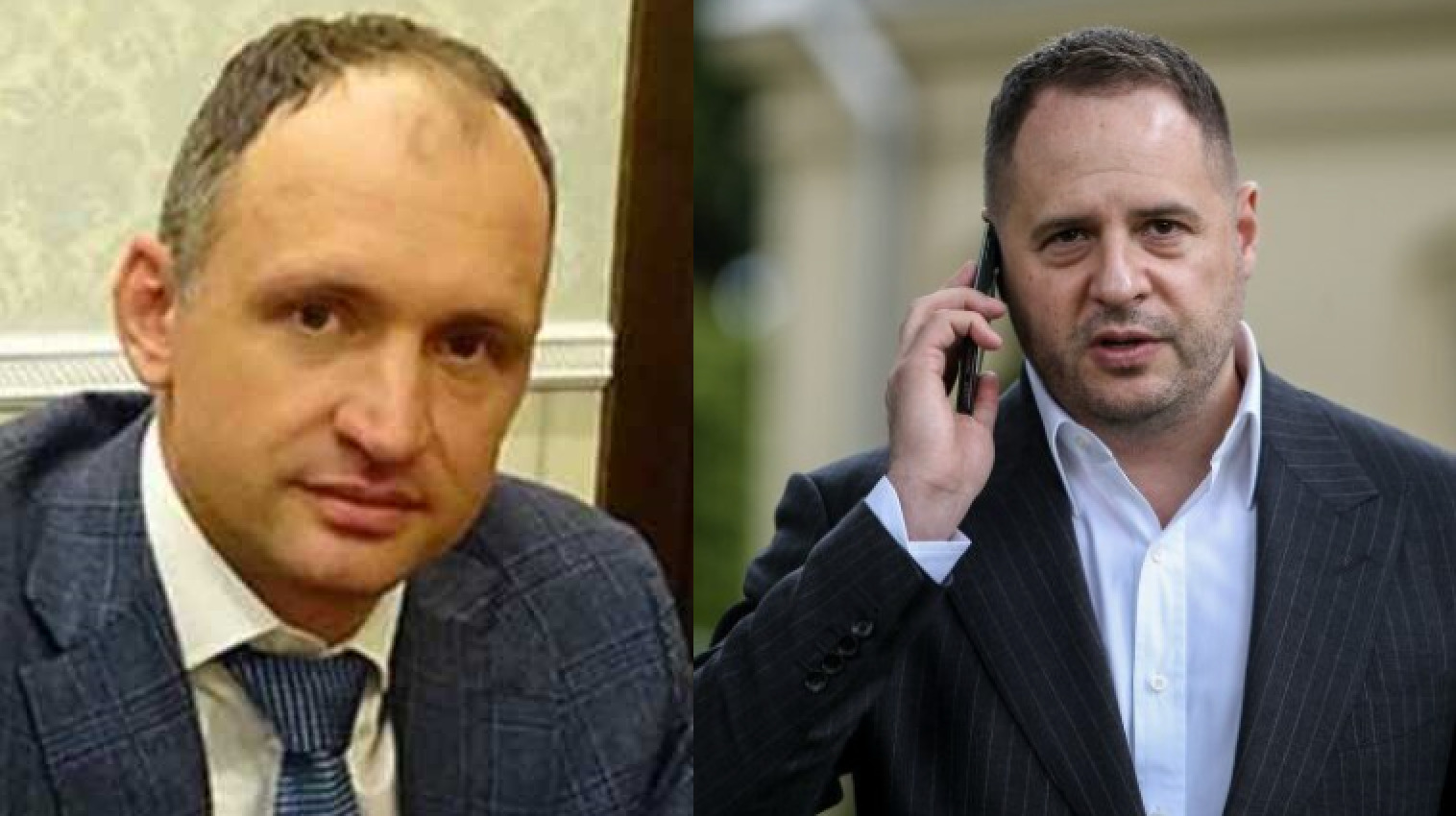
However, the story with the BES immediately went awry: after the law was adopted, a pseudo-competition for the head of the body was held. The former head of the tax police, Vadym Melnyk, was elected head of the BES. He was chosen under the patronage of the Deputy Head of the Presidential Office Oleh Tatarov. The staff of the BES was recruited through non-transparent manual competitions or without any competition at all, mainly from other law enforcement agencies.
After a short time of its operation, it became clear that the BES continued the harmful practices of Ukrainian law enforcement.
Last year, the Temporary Investigation Commission of the Verkhovna Rada investigated the BES's activities, which found the body's work ineffective. According to Oleh Hetman, an economist and coordinator of expert groups at the Economic Expert Platform, in 2023, the shadow market for tobacco products grew to 23%, and for alcohol products - to 30%.
Due to gray schemes with excisable goods, the budget of Ukraine loses UAH 40 to 50 billion annually, and losses on tax evasion schemes amount to UAH 15 to 20 billion. In total, the budget loses about UAH 100 billion annually due to the inefficient functioning of the BES.
That is why Western donors to Ukraine, who are currently providing critical funding, insist on restarting the Bureau.
The main requirement for the restart of the BES is the organization of a transparent competition for the position of director and immediate re-certification of all employees working there.
Instead, the government's draft law No. 10439 proposes to conduct personnel certification only a year after the end of the war. And the competition commission that will select the head of the BES should be formed on a parity basis with six members - three from the Cabinet of Ministers and three from international organizations. That is, without the decisive vote of international organizations.
In parliament, the project was presented by Justice Minister Denys Maliuska, whose ministry is listed by the Cabinet of Ministers as the structure that developed the document.
However, according to Voice People's Deputy Yaroslav Zhelezniak, the author of the "new concept" for the BES is actually the Deputy Head of the Presidential Office Oleh Tatarov, who oversees the law enforcement sector in Ukraine.
During the consideration of the document in the Verkhovna Rada committees, Denys Maliuska explained the postponement of the re-certification of BES employees until "a year after the war" by the current shortage of personnel in the market due to mobilization.
He generally asked for the draft to be approved as soon as possible and promised to finalize controversial issues for the second reading.
As a result, the Finance and Law Enforcement Committees approved the draft law for consideration in the parliamentary hall. However, the Verkhovna Rada defeated this draft law in the first reading, which allowed postponing the restart of the Bureau.
BES reform in exchange for Western money for Ukraine
At the same time, the G7 ambassadors sent a warning letter to the Speaker of the Verkhovna Rada, Ruslan Stefanchuk, with copies to Prime Minister Denys Shmyhal, Minister of Economy Yuliia Svyrydenko, Minister of Justice Denys Maliuska, as well as to the heads of the Verkhovna Rada committees and the head of the Presidential Office, Andrii Yermak.
The letter to the Ukrainian authorities contained four points that must be included in the draft law on BES:
- Open and transparent competition for the position of BES Director
- Audit of the BES activities one year and three years after the appointment of the director
- The possibility of dismissal of the director based on audit findings and the impossibility of his dismissal by the government on the grounds of "unsatisfactory performance"
- Re-certification of all BES employees and appointment of new ones under a transparent procedure within a year after the appointment of the new director.
"Adoption of any draft law on the BES without these elements would have a negative impact on Ukraine's fiscal stability, IMF financing conditions and European integration," the G7 said in a statement.
Nevertheless, the next day, the government's draft law, which does not meet these requirements, was put to a vote in the Verkhovna Rada. According to Yaroslav Zhelezniak, before the vote, people's deputies were pressured and threatened not to sign foreign business trips if " people's deputies do not vote the way the President's Office wants."
Despite this, four votes were not enough to adopt the draft law in the first reading.
"It could have been enough, unfortunately, some colleagues from the opposition factions - European Solidarity and Batkivshchyna (Fatherland ed. note) - added votes. Some people personally told me they would not vote. They came up to me and said they were under pressure: "Either we cancel our business trips or we vote." Many were threatened," said Yaroslav Zhelezniak.
According to him, now people's deputies' business trips have become a method of political pressure.
"At the beginning of March, when the biggest debate on our $60 billion aid would take place, the US Embassy was going to send a delegation of Ukrainian people's deputies from different factions at its own expense to work with congressmen, especially Republicans, to get them to vote for the aid. Now this business trip is being blocked, including for me," says Zhelezniak.
Why is it so important for the authorities to rush their version of the BES reform, which puts the country's vital financing at risk?
According to Olena Shcherban, deputy executive director of the Anti-Corruption Action Center, maintaining control over the BES is a matter of survival for the authorities.
"For example, the Kolomoiskyi case, which is currently being investigated by the BES. The Bureau has served Kolomoiskyi with a suspicion, he is in a pre-trial detention center, but it served him with a suspicion only because the NABU and the Specialized Anti-Corruption Prosecutor's Office prepared the suspicion. The BES was used to get ahead of NABU and SAPO, they took him under guardianship and put him in the SSU pre-trial detention center and control everything he says here. To prevent him from giving out any information to independent law enforcement agencies, Kolomoiskyi is a carrier of enormous information about corruption in Ukraine, and many people are afraid of him," Shcherban said.
According to her, it is important to conduct a pre-certification of the BES staff immediately. No matter how great the new director is, he will not be able to work properly with the staff who are actually subordinate to Tatarov. And to prevent the inspection from turning into the infamous prosecutor's or police attestation, it should be conducted according to legally regulated rules by independent people. The commission should include international members who can investigate the integrity of the applicant. The government's draft law does not provide for any of this.
What will happen with the money?
In mid-February, the IMF team came to Kyiv to discuss the March tranche for Ukraine. It is not yet clear what specific amount is being discussed. IMF funding should amount to about $5.4 billion per year. To receive it, Ukraine has committed to fulfill certain conditions - structural benchmarks. One of the beacons is the immediate restart of the Bureau of Economic Security.
Funding from other donors to Ukraine is also tied to these conditions. Thus, if the IMF approves the allocation of funds, Ukraine will also be able to receive a $1 billion tranche from the World Bank and €4.5 billion from the EU.
Therefore, the government is forced to pass a draft law on improving the BES's work through parliament as soon as possible. The business community and Western partners did not approve its legislative proposal and did not pass the first reading in parliament.
In early February, the Verkhovna Rada registered two alternative draft laws that meet donor requirements and have already received positive feedback from business associations. However, the government is still refusing to consider them and put them to a vote.


