



Artem Kariakin, soldier of AFU: "What would I ask President during meeting? In some places, fortifications are being built, and in others, there is nothing at all."
Recently, a photo from the town of Chasiv Yar was shared on Ukrainian social media and in many international media outlets: a Ukrainian soldier is shown against a wall with an inscription in English. The inscription is addressed to Ukraine’s Western partners: "We are not asking for too much. We only need artillery shells and aviation. The rest we do ourselves. The Armed Forces of Ukraine".
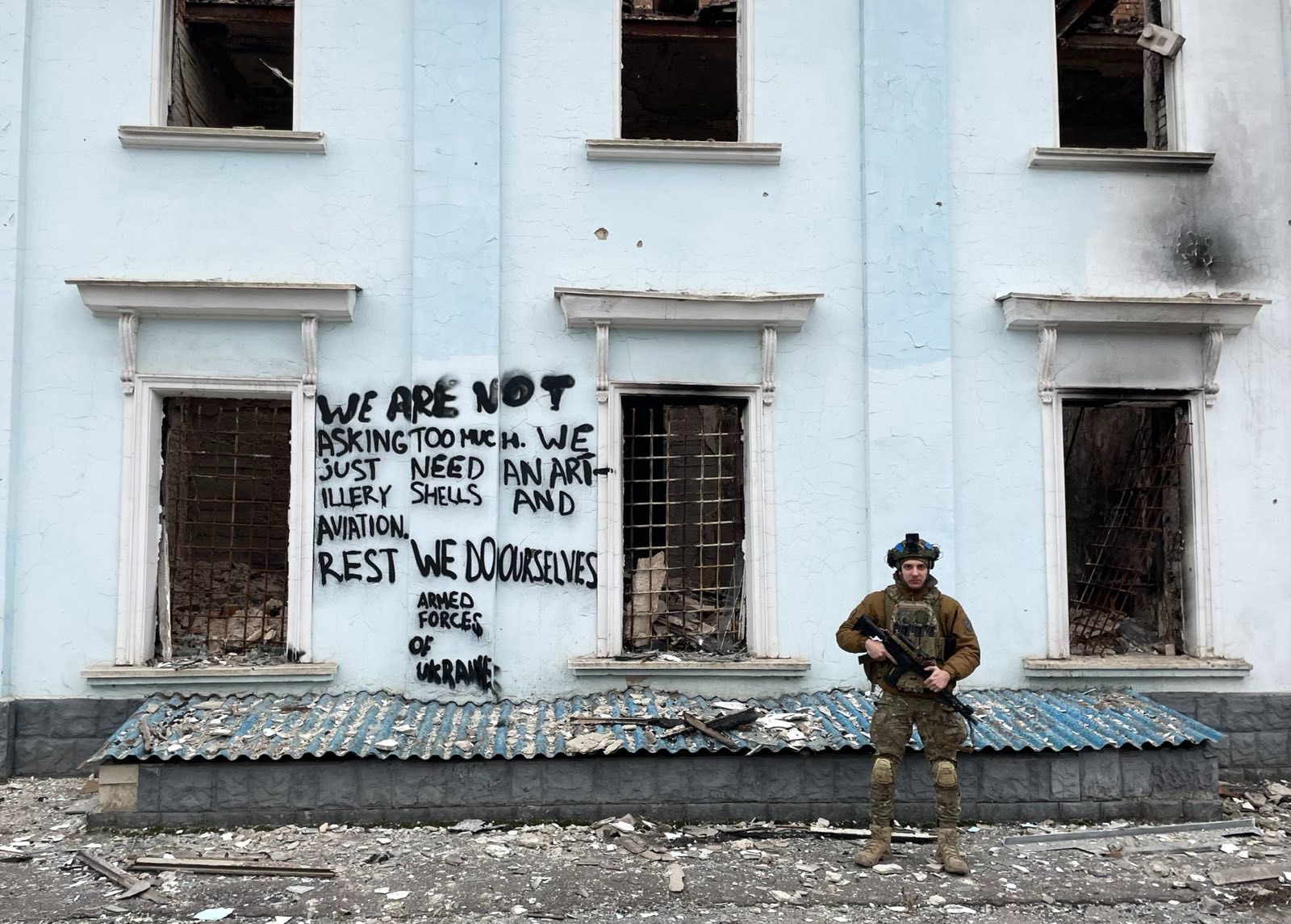
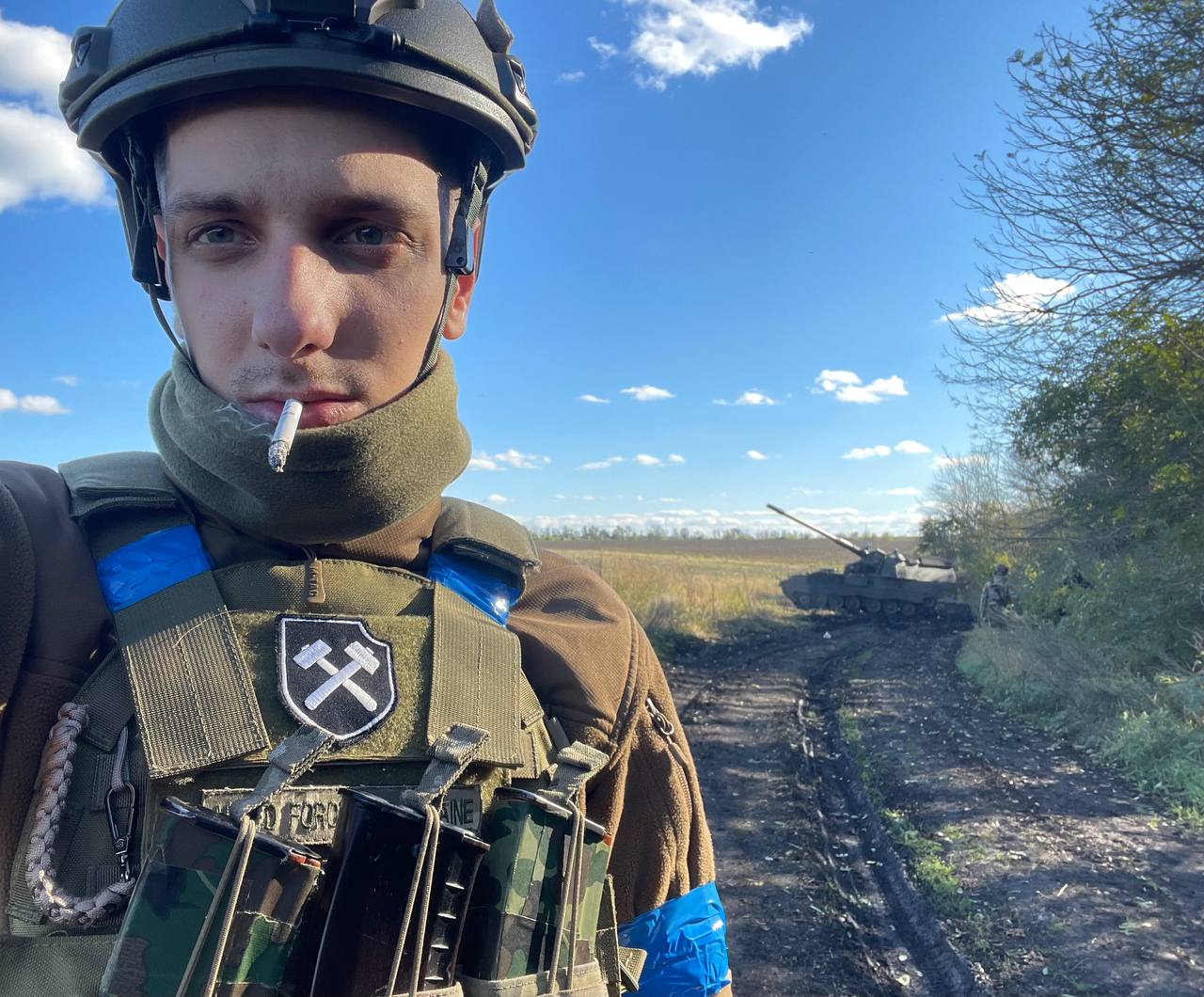
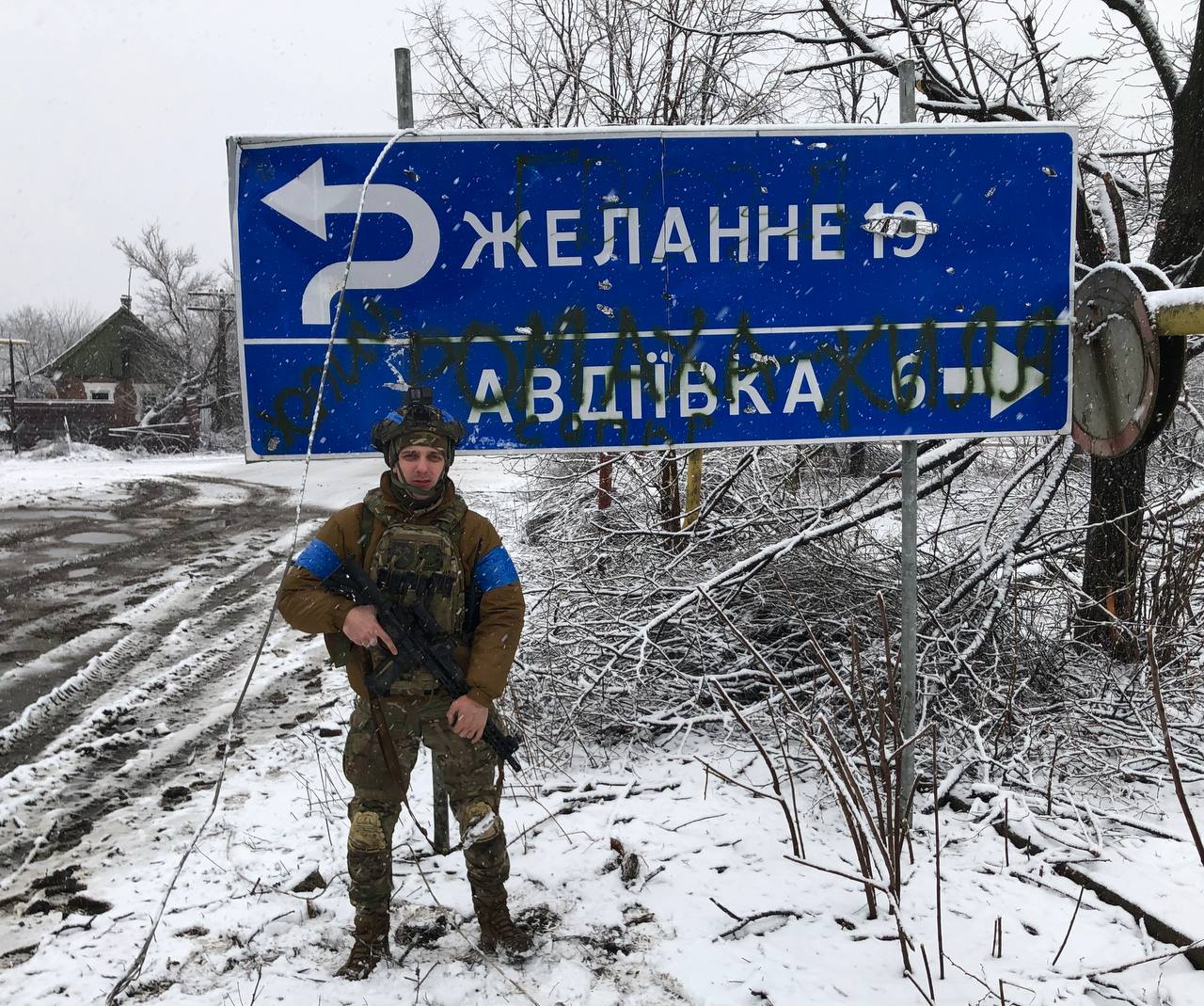
The soldier in the photo is Artem Kariakin, a native of Kadiivka (now occupied Stakhanov in Luhansk region), call sign Skhidnyi (East - ed. note). In his 26 years, Artem is fighting in Donbas and in the blogosphere; the Russia-24 TV channel is filming vicious stories about him, and in his hometown, he is a threat to the occupants and collaborators; they "pin" everything on him that can be "pinned" (and sometimes even something that can't be "pinned").
I receive threats all the time and from people of different levels," says Artem. - Some officials don't like what I publish about them. Some civilians don't like the fact that I used to publish information about "two-hundredths" from among the forcibly mobilized in Donbas. In general, everyone does not like something different. But no one in Stakhanov does not know about me. At the same time, part of the population supports me. They just can't write about it openly".
Artem Kariakin spoke about the history of his struggle against the occupiers, about 8 years of guerrilla warfare and his contribution to the information resistance in an interview with Censor.NET
- Artem, a lot of people liked your photo, it turned out to be very expressive. Did you come up with and translate the inscription yourself?
- I came up with the inscription myself, literally in two minutes I had the idea. To be honest, my girlfriend helped me with the translation: I don't know English perfectly. Literally, two minutes before, I had sent her the text; I said, "translate it to me correctly. She knows English well, and I had originally planned to reach a Western audience. She helped me with the text. Although she suggested to me to add the phrase "to survive and stop the beast". But I decided that would be too pathetic. I clearly wanted to write that we do the rest ourselves, we just need shells and aviation.

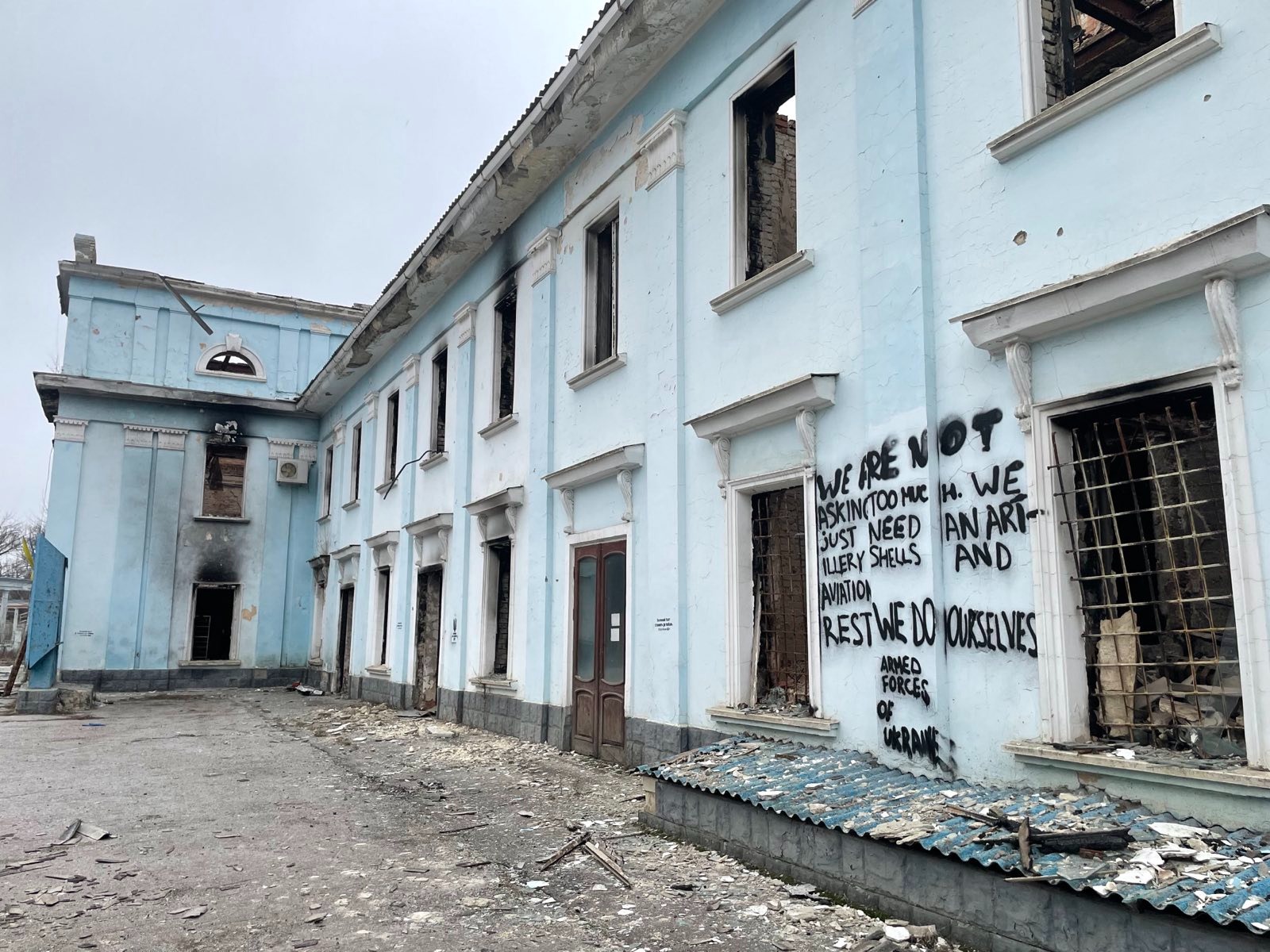
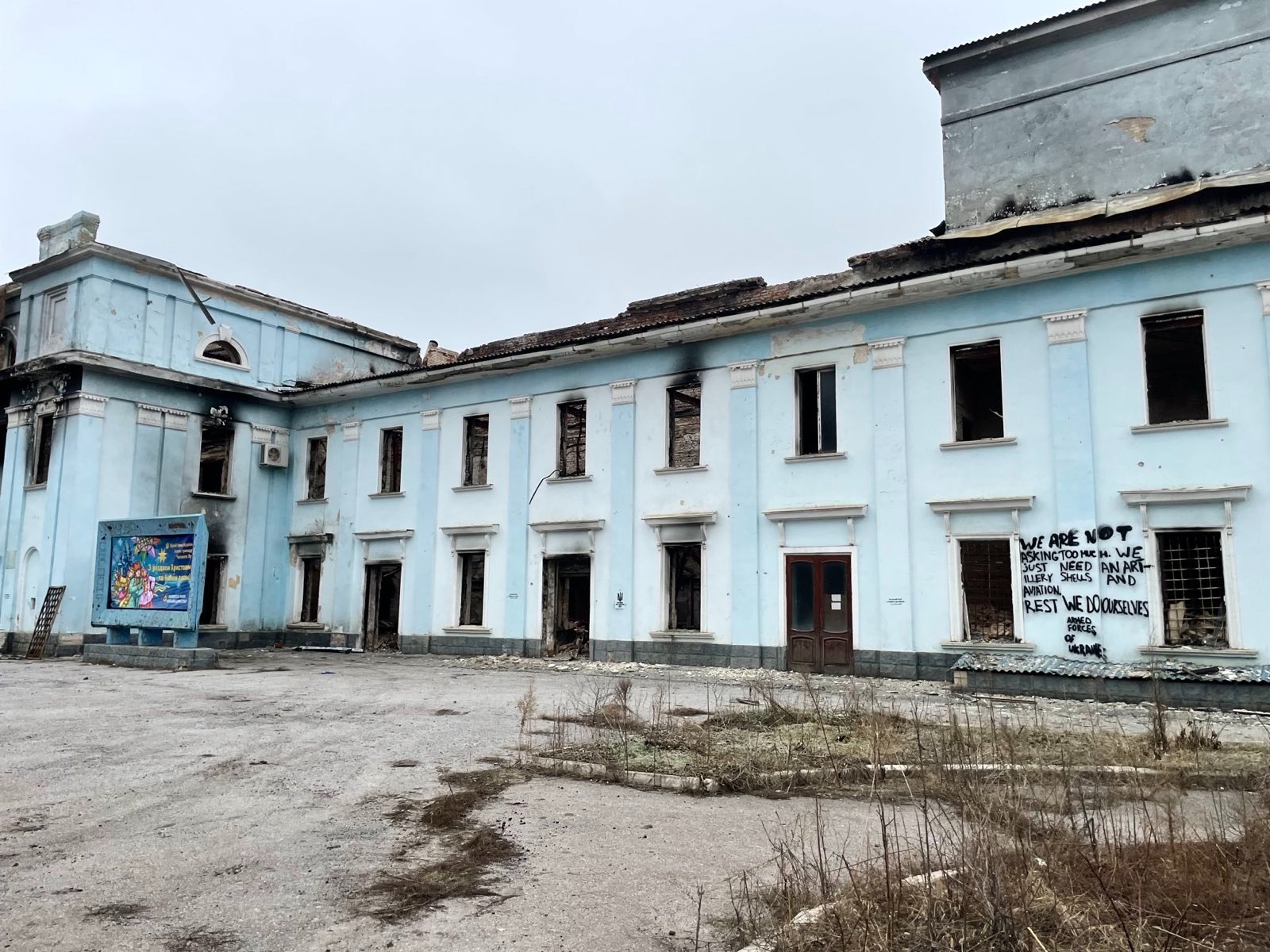
- Yes, there is a sense of restrained pride in this inscription: we don't need anything extra, just give us what we need for combat operations.
- I just wanted to say not that we are already dying and begging on our knees, but that we just need weapons to stop it here and now ourselves. So that other countries don't have to do it somewhere else. That's all.
- The photo has gone viral on English-language social media. Are you tracking it?
- Yes, I try to track it. But I can overlook everything because there are over 3,000 retweets on Twitter alone. Plus many of them were published without links to me, so I can't track everything. But I know it's millions of audience reaches. Very many foreigners published this photo exactly on Twitter.
- Western journalists are already calling you about this photo. Just now an interview with you was published by the Dutch Algemeine Dagbladet. Did any of their questions surprise you?
- This is my second or third interview for a Dutch newspaper. Before that the Swedes filmed me, I was in Kyiv at that time. In general, they do not ask for anything new. They are more interested in my life story in Stakhanov. They also ask what they can do for us and how society or young people in the West should react to what is happening so that it doesn't happen to them. Standard questions - and I answer them quite standardly.
- Please tell me, what if the same journalists (or, say, foreign officials), reacting to your photo, say: Mr. Kariakin, but dozens of countries have already given Ukraine many billions of dollars worth of weapons. And that's, to a great extent, why Putin's plans have not yet been implemented. What will you say to them?
- This is a very cynical question, because they count in sums, and we count in the number of dead. So it is incorrect to ask such a question. It is clear that, in their opinion, this is a lot of help. But we give much more. Every day our comrades in arms die, children die. In Chasiv Yar, where I made this inscription, all schools and kindergartens have been destroyed. There are practically no locals left. Many have left, many have died. Therefore, it is not correct to use sums when we are talking about human lives every day.
- Artem, those who first learned about you after this photo began to google you and read something like the following: "Artem Kariakin is a Ukrainian soldier with the call sign Skhidnyi (East - ed. note), who was born and lived and fought as a partisan in the Russian-occupied town of Kadiivka (formerly Stakhanov), Luhansk region, until 2021."
The information is scanty, so let's go into more detail. How old are you?
- I am 26 now.
- Who was Artem Kariakin at the time of the Russian occupation of Kadiivka in 2014?
- I was finishing eleventh grade and was an ordinary young resident of Donbas. And I took an active pro-Ukrainian position even before 2014. And I did not "choose sides", as they often write about me. Your colleagues, including those in the Western media, often ask why I chose the side of Ukraine. It is an incorrect question: I did not choose any side, as I was originally born a Ukrainian. Back in 2012 in Stakhanov, I participated in a march in honor of the UPA heroes. Therefore, I did not choose a side. I was and remain a Ukrainian. And at the time of the occupation of my city, the only thing I could do at that age to help the Armed Forces of Ukraine was to transmit information and reporting on the situation in the city. In 2014, I created my first Twitter account; in 2015, I deleted it and created the current one. At the same time, I initially planned to simply report what is happening in Stakhanov from the perspective of a pro-Ukrainian resident. After all, the rest of Ukraine knew little about what was happening here. The country was sure that only pro-Russian residents remained in Donbas, they saw pictures of rallies for Russia, with Russian flags. And I wanted to tell them that we also have those who support Ukraine. And then another idea came along with it. I began to transmit intelligence data from Twitter.
- From this point on, please elaborate. "Until 2021, you lived and were a partisan in Stakhanov, occupied since 2014" - how was it like?
- It's really quite simple. In 2014 I did not leave Stakhanov due to my age. Plus my parents didn't want to leave the city... Besides, the hostilities looked a bit different back then. Our town was not being wiped off the face of the earth. That's why my parents didn't see the point of leaving, and they didn't want to help me in any way. They wanted me to stay with them.
After about three years, I could leave the city. But my mother began to get very ill, and my father, on the contrary, didn't want to stay at home; he started going to Russia to work. So I stayed with my mother all this time. I worked remotely, mostly for Ukrainian firms, and I didn't get local rubles anywhere. I worked in design, crowdfunding. I earned a penny or so, which was enough to live on. My mom had to get shots all the time. She was a difficult person, but she was very attached to me - and I made a choice in her favor. However, I realized that staying in Stakhanov was fraught with very negative consequences.
In 2020 my mom died, and I wanted to get out of there completely. Because I'd had enough of it for all these years. But then my father, who had taken the death of his wife very hard, asked me to stay with him. A year and a half later, my father died, and only then I left the city. In general, I will not lie: I stayed in Stakhanov primarily because of my family.

- Since before the war you took part in a march dedicated to the UPA, it means that you were visible in Stakhanov. And, I would hazard a guess, you looked like a black sheep against the background of the majority of your age-mates in the town. With your, to put it mildly, not pro-Putin views, how did you manage not to attract the attention of employees of a special department?
- I tried not to attract attention. But there are a lot of moments. I am a representative of Shakhtar Donetsk ultras, many people knew me from the stickers that I used to put up in the city before 2014. They were stickers of patriotic, nationalist, ultras, etc.
At the beginning of 2014, pro-Ukrainian actions had already started in our city - and many people saw me there. So when most of the pro-Ukrainian residents left, I was waiting for them to come for me. By that time, many of my acquaintances had been detained and backroomed. They must have informed about me too, because you can tell about everything there. But, apparently, due to my age - and I had just turned 17 in the summer - they did not think it necessary to come to me. Plus, perhaps in 2014-15, many people might have thought that if he stayed here, then he had taken our side. He changed his mind, reconsidered, saw how Sloviansk and Kramatorsk were being bombed - so he probably cleaned up his act and stayed here...
- So you were cured of the Bandera poisoning.
- Naturally, after the summer of 2014, I did not walk around with Ukrainian flags anymore, as it was deadly dangerous. Somehow I managed not to attract attention. On Twitter, of course, I was completely anonymous - with anonymizers and so on. However, in 2015, the first snafu occurred when my ex-girlfriend told her ex-boyfriend something about me. Namely - that I am a Ukrainian adjuster. And the rumor went viral. But it didn't go further than talking to this man (who was, by the way, an ardent pro-Russian campaigner).
- You're lucky. Did she grass up you deliberately or did she accidentally tell about you?
- Deliberately grassed me up. She wanted to reconcile with her ex-boyfriend. And as a pretext she shared that, here, I am such a bad person, and also a Ukrainian adjuster.
- I see. What happened next?
- The next day he met me, took me to the smoking room to talk and said: "Artem, she told me that you are a firing pointer, but I don't care about that, although if I wanted to, I would tell the guys from the company, and they would kill you tomorrow...
That was the end of it. Although later, I know he told all his friends about it. And he had specific friends: he knew about the LPR-affiliated Luhansk Youth Association, the youth parliament, the Ministry of Emergency Situations, the Ministry of Internal Affairs and so on. As I found out later from conversations, they just didn't really believe this girl.
- You know, what you can't say about an ex to win back the favor of another ex.
- Yeah. Plus, the next day, I didn't go anywhere. I went to the technical school as if nothing had happened - and my behavior looked illogical in their eyes. Probably, they thought so: if I was really a firing pointer - I would have probably escaped.
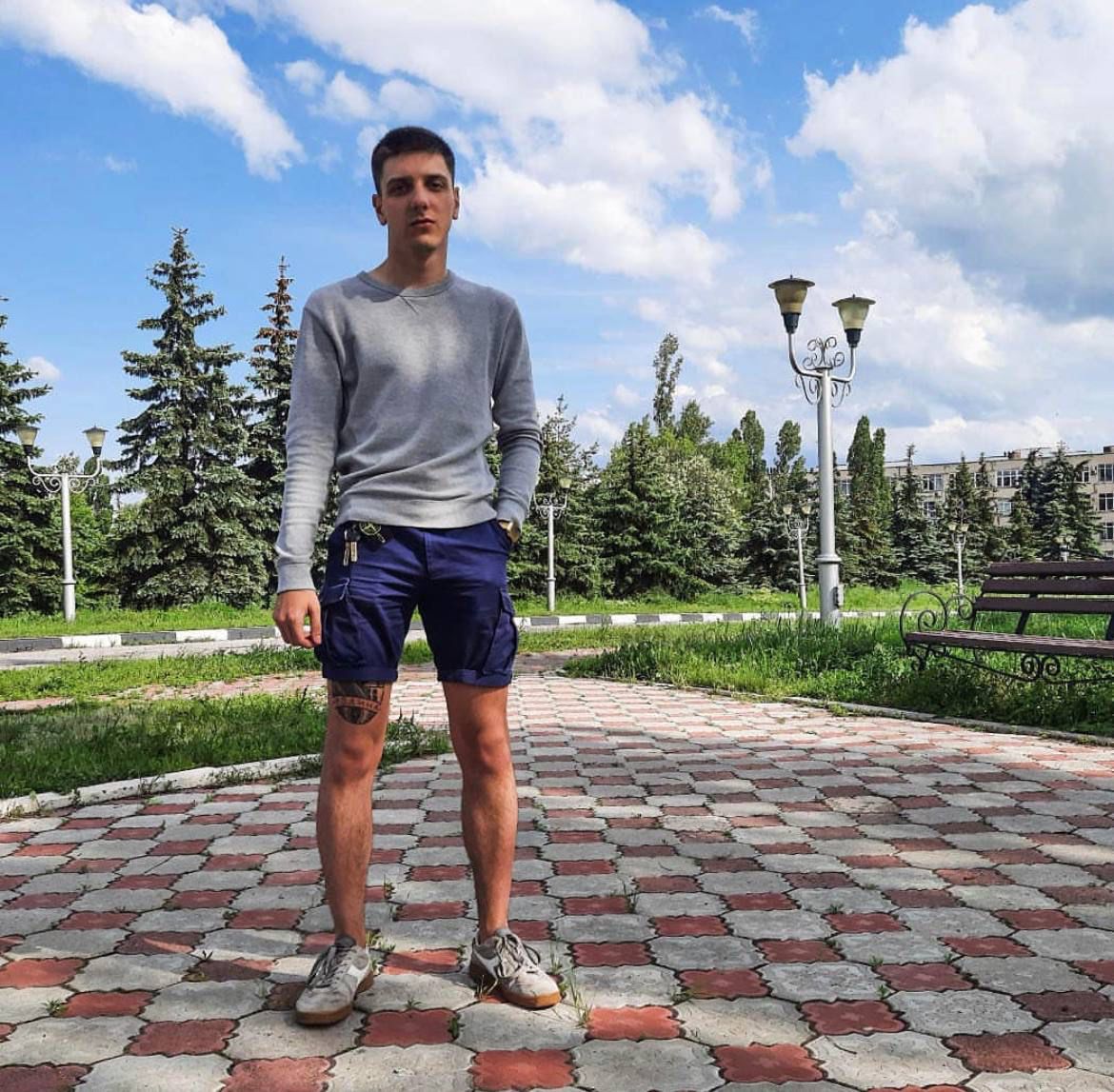
However, three years later, this person came to my house again with accusations: they and their friends had seen some pro-Ukrainian publications on my Vkontakte account. For two days this person broke into my house. I didn't know it was him; my mom and I thought it was the Ministry of State Security. Then we realized it was him. We talked again: he said that he had just come from the municipal police department, they were looking at my publications. And, I quote, "make up your mind; we live here in the LNR, and if you are in favor of Ukraine, either leave or we will put a bag on your head".
It is clear that he was threatening in this way. But it could have ended very badly. If I had been tortured, I would have had something to confess.
- In general, you were lucky.
- Yes, although there have been different cases. In 2017, I was "accepted" in neighboring Pervomaisk for a photo of one of the places of deployment. This is the building "Pervomaiskvyhillia", where the sixth separate motorized rifle regiment of Ataman Platov was deployed. I took the photo without noticing that they were sitting on the roof. They had a secret there, that is, an observation post. I thought that the building was already empty and took a photo to show it to someone. But 5 seconds later two automatic riflemen came up from the roof and shouted: stop, bitch! And that was it. I stayed put. I even wanted to run - on reflexes it was the first thing that came to mind. Now I realize: if I had moved, they would have shot. Well, they certainly wouldn't have let me go then.
- But you stayed standing in place. What happened next?
- They went downstairs and started looking at my phone. Well, I think, if they find out that I have Twitter, it's all gone. Plus I forgot I had a gallery on my phone. And when this young "LNR" militant was scrolling through my gallery, every photo made my heart sink. He was scrolling through it, and I didn't know which photo would be next. I mean, I don't remember - maybe I didn't clean up something, did I? Because when you get used to the situation over the years, you might not delete something. Vigilance decreases...
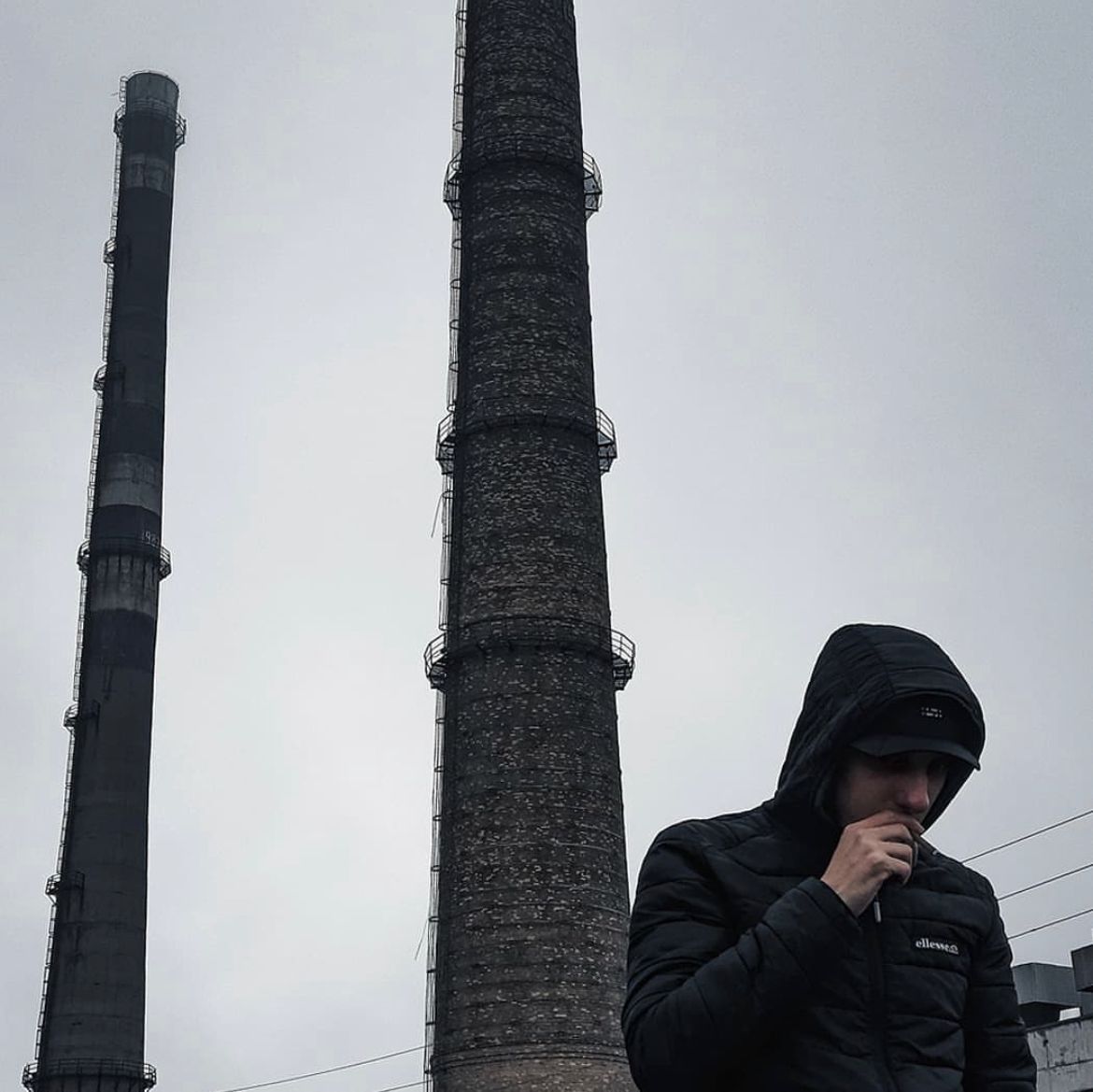
In general, he did not find anything from me. He saw that I had taken pictures of some flowers and a boiler room pipe. He asked me why. I answered: "I just like photography." "Well, Babai will be here soon, and we'll figure it out..." (Not the famous Babai, but a local one).
- So, did he come?
- A black Cruiser arrived, and two bearded men, Don Cossacks, got out. They asked what happened. Automatic riflemen explained that they had detained a photographer. Babai was so sleepy that he didn't bother to make any inquiries. He asked: had you found something in the phone? The young man said no. In fact, the young man was very negligent in checking my phone.
- And thank God for his negligence.
- The older man looked at me and said: give the boys some cigarettes and get out of here. And that was it. Although again, if they had scrolled a little more, and gone to Twitter, everything would have ended badly.
So it wasn't that much of a success at staying under the radar. There were dangerous moments.
- It's already partially clear how you gathered and forwarded intelligence. And who were you sending it to?
- To different people, to different departments. Plus I had a lot of acquaintances from Shakhtar Donetsk ultras who went to fight in the AFU after 2014. Some of them were in Debaltsevo in '15 when the Russian Federation offensive was underway. Stakhanov was a big military hub for Russians at that time, and I could really help a lot of my friends who fought in Debaltsevo. I could simply warn them when the "grads" were coming to fire. And they were firing, roughly speaking, every 10 minutes. I could see from the balcony of my house where they were firing from. And as soon as three "grad" cars hit, I would immediately tell my boys: they have arrived, let's take cover. Sometimes it helped a lot, because they literally had a minute to run for cover. Then they came out, thanked...
I transferred my data to various structures. I also tried to help Inform Napalm online community with information on the same tactical marks on Russian equipment. Back then, there was no such open invasion as there is now, so every chevron, every tactical mark on the equipment was important; the nationalities of those who were fighting for Russia. All this was very important to identify.
- Did different departments in our country need different information?
- Absolutely right. Someone, for example, was interested in information on the work of enterprises, factories - starting in 2016-17. I tried my best to collect information about how people work, how many people work. We had quite large enterprises in Stakhanov: ferroalloy plant, carriage factory.
In general, different slots of information had to be collected. I can't say that I'm an intelligence genius. There are a lot of people like me - there were and still are to this day. Now I am just doing, among other things, that I am collecting information from that territory. I have created a Telegram channel for this purpose. A lot of residents who are still there are in touch with me. They are pro-Ukrainian - they help me with intelligence. They trust me, because they remember from Twitter when I wrote from the occupation. And in 2022 on Twitter I already started to collect data from them by myself.
- Let's go back in time again. Your parents passed away and you decided to leave, didn`t you? Especially as the interest of local employees of a special department in you was growing.
- My father died in November 2021. So did my grandmother. I had two funerals in November. To be honest, it wasn't that I was thinking about leaving at that point. I wasn't thinking about anything at all. Because I was simply alone. In 2020, my mom died. In 2021, my grandmother and then my father died. It was a huge shock for me. I just didn't know what to do next. And then my friends from Kyiv started to pull me through. They kept calling me, helping me in any way they could. They said: leave now; the longer you will be on the point of, the worse it will be later. Thanks to that, I did not stay there to wait out the winter until spring. Now I understand: if I had stayed there for a couple more months, I would have been forcibly mobilized into the army of the Russian Armed Forces with a 90% probability. And my story would have turned out much sadder and more surreal than it did in the end.
As for the interest in me. I don't think anyone was interested in me there because I left without any problems, went through all those 'LPR' customs. I don't think I was on any lists, except maybe "on notice" as a not completely trustworthy citizen. But they didn't take me very seriously.

- So you left. It was one or two months before the start of a full-scale war. What happened next?
- In December, I came to Kyiv. I wanted to start a normal life without war. I did not expect that it would come to my house again. But when the processes of forced mobilization on the territory of the occupied Luhansk region started (it was the beginning of February 2022), I renewed my Twitter, started to engage in OSINT, collecting various information on this situation. Because I understood: it was clearly heading towards an offensive, towards a new phase of the war. I understood - but, of course, I did not expect such a large-scale war.
After my father's funeral, I felt completely lost. And then something started to happen, and I renewed old acquaintances on Twitter in Stakhanov, Alchevsk, and other occupied cities. I began to collect data bit by bit, joined all the chat rooms, open and closed, that I could. That is, I began to collect information. Later, in the spring of 22, it helped me a lot. And to this day it helps me.
- How did you feel on the first day of the war?
- The same as everyone else. I woke up in Kyiv to explosions. Three days later, just in the yard of my house, I went out to see people standing with weapons. They were building checkpoints nearby. I said: so and so, I want to help. And the next day they offered me night duty: if you are not afraid, come. That's how I got my first weapon. Without a passport, without anything. They just gave me a Kalashnikov LMG. They asked me if I knew how to use it. - No. - It's simple, fold back the bipods, lay down and shoot...
That's how my work at the VDTC (Voluntary Formation of a Territorial Community - ed. note) began. It lasted on the outskirts of Kyiv until the end of spring. Then, in the summer, a comrade in arms offered me to join another unit and fight in other places.
- In other places - where it was?
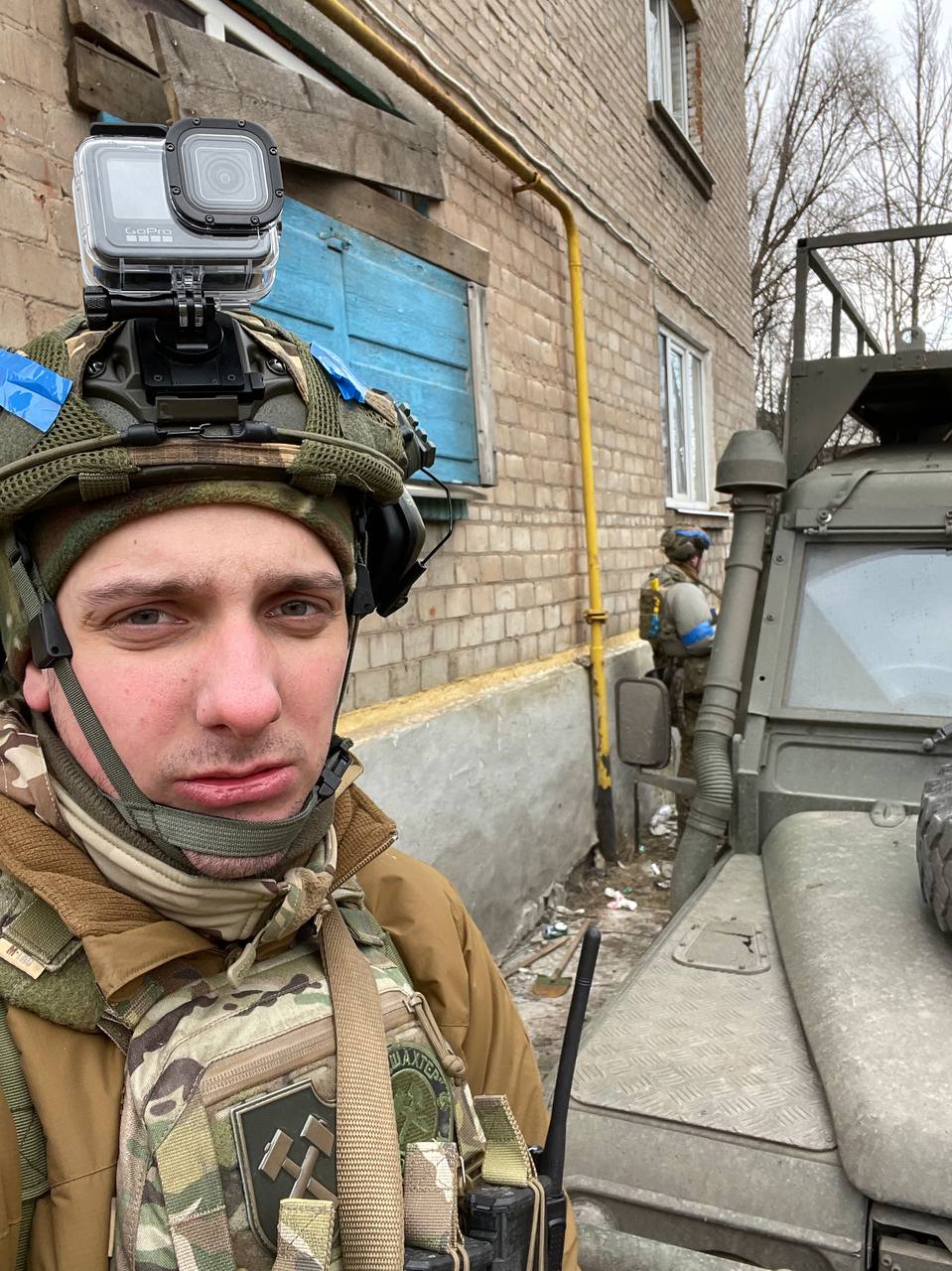
- In the summer, I was already in Bakhmut.
- Not exactly in native places, but in Donbas.
- It is very close to Stakhanov there, so it was doubly pleasant for me. Although at first I was not even officially registered. I went with this unit as a volunteer fighter. In general, at that time I was not very interested in it. I thought: we'll deal with this case step by step....
- Tell me, what is Bakhmut to you? A town that no longer exists, but the name remains...
- Honestly, I don't associate it with anything good. How many of our lives it took... But Chasiv Yar, where we are now, is close to Bakhmut - and one way or another we have to think about it. In Chasiv Yar there are a lot of inscriptions "Artemovsk Bread Factory", it reminds us of Bakhmut. But I would not like Chasiv Yar to turn into Bakhmut to the fullest extent. The city though smaller - but the battles for it can be about the same scale.
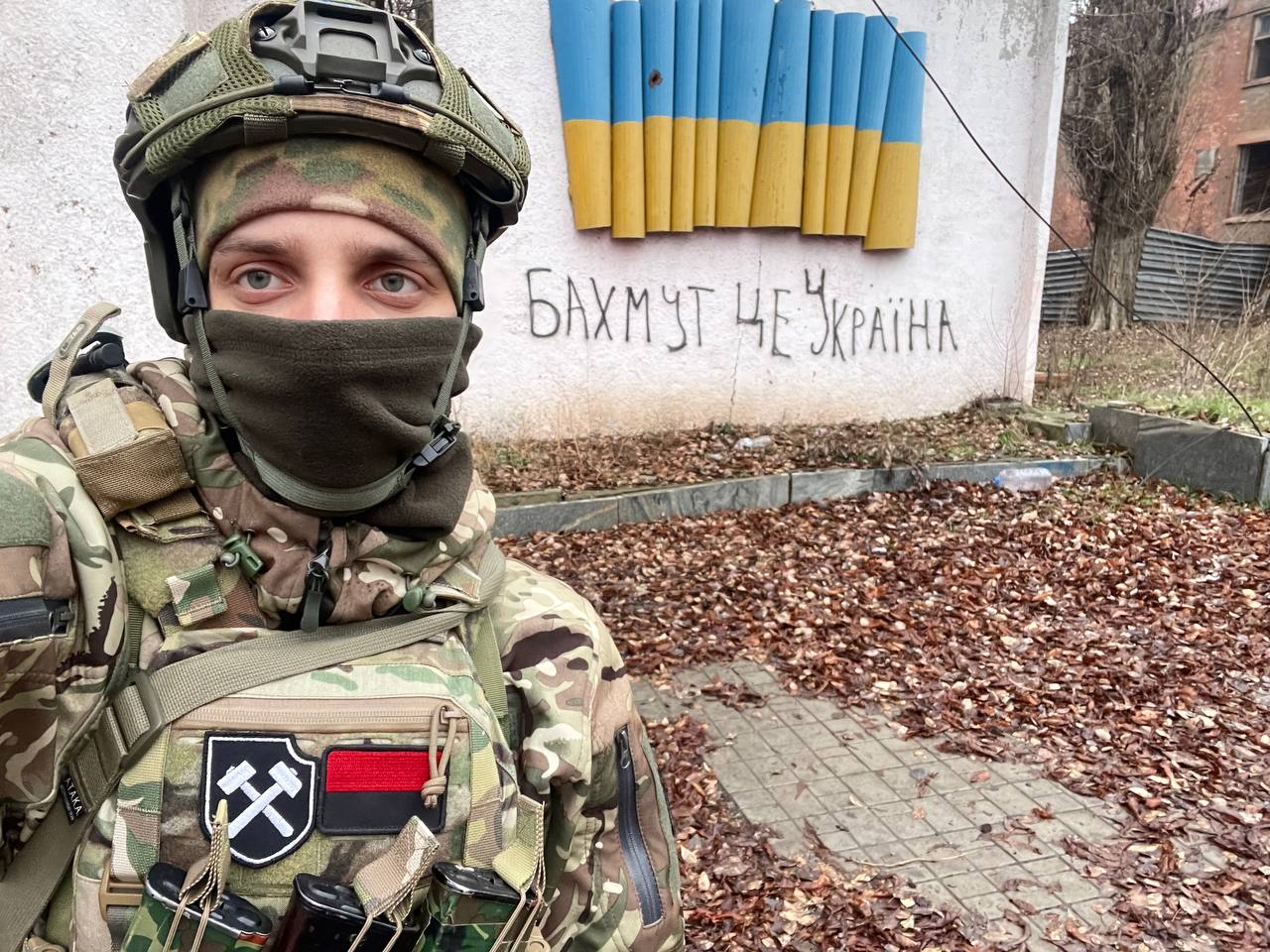
- I noticed that in your posts you talk about Chasiv Yar almost with tenderness.
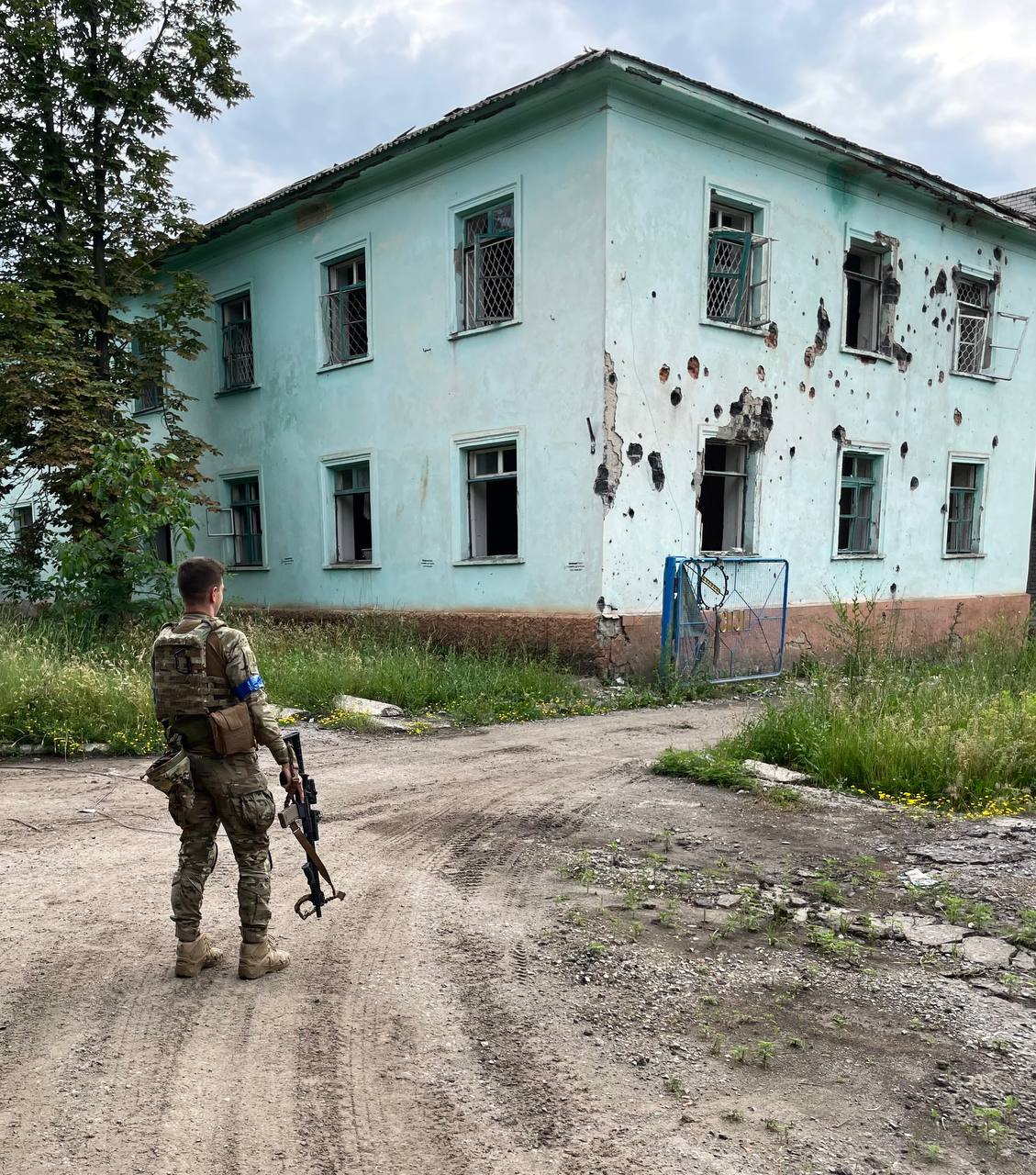
- I wrote about the fact that, in fact, Chasiv Yar is now not as strongly fortified as it needs to be, and in general can repeat the fate of Bakhmut. That is, history is repeating itself. I did not want it to turn out to be as tragic. Besides, you gradually get used to the cities where you are based, where you fight, and they become dear to you. You memorize every street - and then, when you come back in rotation, you see completely different streets. Over time, all our cities are erased; they cease to exist in one way or another. Even if Kramatorsk is not actively bombed, it does not mean that it is not being destroyed. This is noticed more by the locals. But this is understood by me and all the military who are based in these cities.
- How does a Ukrainian soldier, like you, feel when he is fighting in his native land?
- He feels that he is fighting somewhere in his native land. People who come from other regions, this is still a bit of a foreign region for them. But we know the local public better, we know who thinks about what. We can tell the difference between a local who is genuinely nice to us and vice versa. And it feels special. When I first came to Bakhmut, I stood looking into the distance and it seemed to me that literally across the field was my home. Although it took about an hour to get there. But that hour is just gone. It's like you're home - but also away from it. Before, you used to take a jitney cab from this city to your Stakhanov - and everything was fine. But here the field you're looking at is completely mined; artillery is flying from there - and you realize that from there, from the end of the field where your house is, all kinds of missiles are flying at you right now. It looks very surreal.

In any case, it is much more pleasant for me to be in the Donetsk region. It's somehow closer to home than, say, Kharkiv region, where we were in 2202. Somewhere else, there is hope that all of our cities will be liberated and that we will move forward.
- A difficult question: when Ukraine de-occupies the entire Donbas, will we feel like we are in hostile territory, won`t we? After all, 10+ years under complete pro-Russian propaganda, in the frontline zone, and even though the Donbas has always been the electoral zone of pro-Russian parties. Let's say that Ukraine has returned to these occupied territories. But the same people remain there. You know their psychology, how they perceive reality. What should we do so that we don't feel like strangers to each other?
- I think only time will help. It is clear that due to the ten-year war, we will feel like strangers for the first time. There will be no trust in the locals because during the 10 years of occupation, many people have gone over to the other side. Only time will change the situation. And you also need to understand the specifics of the people of Donbas. Most of the locals do not care what flag will hang; the main thing is that everything will be fine; that people will have work and there will be no war. This is their main thesis. Yes, there are many active ideologically pro-Russian people there. But in most cases, the reason for this is Russian propaganda. In most cases, these people simply do not know what they are talking about. They have no idea about Ukraine, about the Armed Forces of Ukraine. And we just need to show them the real Ukraine, which they have not seen on Russian TV. To show real AFU fighters - so that they realize that they are not threatened by anything, no one will kill them in the streets for the Russian language.
This, of course, raises another question: what to do with collaborators? But this will have to be solved by law. Our special services, courts, and prosecutor's office will need to be involved. Legislation will also need to be finalized in this direction. And people who did not cooperate with the Russian occupation administration are unlikely to be threatened. And when they realize that they are not threatened by the coming of Ukraine, I don't think they will have anything against it.
But those who fought for Russia will most likely leave these cities. Those who worked in the occupation administrations will be even more likely to leave. That is, there will be mostly ruck who do not support either Russia or Ukraine; who do not care. If they are given what they ask for (and they don't ask for much - jobs, pensions and a peaceful sky above their heads), then in general I don't see any problems. They'll just need time.
Now the Russians are acting competently: having studied the inhabitants of occupied Donbas, they have realized that they trust few people and will only shake an outstretched hand that has a carrot in it. And what are they doing? They made roads from border to border, practically in the entire Luhansk region. (I can talk about Luhansk region, as I am constantly communicating with my agents). Plus they repaired a couple of schools, put windows in the maternity hospital. They did that - and immediately got enormous loyalty from the locals. So it really works. They don't need much; a renovated hospital that hasn't been renovated since the 60s is enough. We can learn from this and adopt it.
By the way, I will probably have to wear a mask for a long time in Stakhanov. Many of my comrades in arms even say: if we go to Stakhanov, you will wear a mask and glasses so that no one recognizes you. Because I have my own history there. They "pin" too many things on me there.
- We will talk more about this, but for now, tell us: in what episodes of the war were you most afraid?
- The scariest was probably in the occupation. There was no fear as such during the period of combat operations because you don't have time to realize it. But when you are sitting in the occupation and your heart is flying out of your chest, when you hear someone coming up the stairwell, and you think it's the Ministry of State Security or the FSB, and you realize that you have nowhere to go... It's a real occupation. You don't go anywhere if you're already wanted; you don't disappear anywhere. It was scarier than I was there, I was nowhere else.

- You're a man of experience in this war. You know the pros and cons of our army. If you had half an hour alone with President Zelenskyy or Commander-in-Chief Syrskyi (you choose which one you want to talk to), what would you say to them? What would you try to convince them of?
- If by freshly long-standing issue, I would probably ask a question about defensive structures and a clearly established line of structures along the front line. Because we clearly have problems with this. It is different in every region, in every district, in every section of the front. Somewhere they are building fortifications, somewhere they are concreting. And somewhere there is nothing at all. This point is incomprehensible to me. We are losing the war in engineering. As an army and as a state. We laughed for a long time at the Wagner line they were building. But we don't even have a similar line! Especially on the territory of the Donetsk region. What I see now in the area of Chasiv Yar - we simply do not have any fortifications there. And this is at a time when the enemy has literally concreted and mined everything on every section of the front! And it saves their lives.
We don't have that. We are somehow not used to digging a lot, and we have nowhere to hide and save our lives in Chasiv Yar except in the basements of ordinary houses or former businesses. This makes our situation very much worse. And we had enough time to dig in while there was no offensive on this section of the front. And it's not quite clear to me why nothing much has been done. The enemy has impregnable fortresses in the south, closer to the Crimea. We have nothing like that. This also applies to the Sumy region; I have many friends who serve in border areas there, and they say that the border is not protected. This is the issue I would like to discuss. Something really needs to be done about it. Because we can always say that we are retreating to pre-prepared positions. But it is much more important, perhaps, to prepare them. Much in advance, before we have to withdraw to them.
- You are also a popular blogger with thousands of followers on Telegram. There you are also at war with collaborators and occupiers. You write harshly about the accomplices of occupiers in your hometown. You publish their phone numbers. In response, you were taken up by the Russian propaganda, up to the TV channel Russia-24. It came to manipulating the graves of your relatives. Tell me about that story.
- The story is simple: a couple weeks ago, a long message from an anonymous user arrived on my Telegram account. They said I'm such a bad-ass, I've been sending money to the occupied territories for a long time so that locals would give me intelligence for that money - but I couldn't find the money to pay someone to take care of my parents' graves.
They tried to play on this story somehow. They said that you, an insensitive bastard, say in interviews that you dream of visiting your parents' graves, but you don't look after them personally. And they wrote me that they cleaned up there; they did it there for me because they are men of honor and all that. And they sent me two pictures of the graves, where they had two big wreaths and a Russian flag, which they put on the graves of only their military personnel.
- Am I right in thinking they were trying to kill two birds with one stone? First, to show how honored we are. And secondly, to smash you with a Russian flag on your parents' graves.
- They weren't trying to show they were honorable. They just wanted to conduct an informational and psychological operation on me, to prick me with graves. But they wanted to do it skillfully so that they would not be accused of desecrating graves. To do this, they invented a story that they cleaned up there - and supposedly that's the only reason they put wreaths and flags there. But first of all, I know that my father has distant relatives who look after the graves, and it is always cleaned more or less normally. And secondly, in the middle between my parents is the monument of my great-grandfather, and you can see from the photo that there the top of the monument is chipped off and at the bottom. When I left, that wasn't there. What did they want to show with that? I don't know. They did it themselves or other vandals - I don't know. But their main purpose was to hurt me. I don't think they expected me to publish it. But I posted the whole thing literally five minutes later. And I replied to them in a private message that it was, to put it mildly, a low and unsuccessful campaign.
Many media picked up on this topic. I was asked about it in a Dutch newspaper, among others. Moreover, this topic was not approved even from the Russian side. And a week later I learned that some military men in Stakhanov went to the offices of ritual services, showed these photos and asked whether these wreaths were theirs. That is, they were looking for the performers of this action. And after the military started to come some people in civilian clothes. I don't know who they were. But, apparently, they did not coordinate the action among themselves and started to find out if I had done it myself. Because this psyop against me - on the contrary, it worked against them. Because even the pro-Russian far not everyone appreciated such a prank.
- You mentioned that there is a lot of other stuff that is being "pinned" on you there. For example?
- I am constantly being accused of recruiting young people in the town of Stakhanov to obtain intelligence. The Russia-24 story showed two young boys, schoolchildren, who were allegedly recruited by me. Allegedly, I sent them money for intelligence. In fact, they were two schoolboys who had read my channel, watched the interview and, let's say, wanted to be a little bit gay. Threw a couple of pictures at me, told someone about it, and were detained. They're in no danger there. And the real agency that works on Russians inside the cities has not been caught yet and it is unlikely they will ever get to it.
They also attribute various deaths to me, mostly deaths of civilians in Stakhanov. They still "pin on me" two pregnant girls who died in the summer of 2022 in Stakhanov. They accuse me of the deaths of all the grandmothers who actually died because the Russians made Stakhanov a huge military hub and set up deployment sites in the middle of residential houses. Naturally, civilians also suffer from this. But in this, according to Russian propaganda, I am to blame as an adjuster and a person who collected intelligence, thanks to which the strikes were carried out.
I am really sincerely hated by a part of the city there. I wouldn't be surprised if they go to church and give me candles for my repentance. I receive threats all the time and from people of different levels. Some officials don't like what I publish about them. Some civilians don't like the fact that I used to publish information about "two-hundredths" from among those forcibly mobilized on the territory of Donbas. In general, everyone does not like something different. But there is no one in Stakhanov who does not know about me. At the same time, part of the population supports me. They just can't write about it openly.

- Do I understand correctly that your work is mainly about information resistance and working with contacts in the occupied territories?
- Mostly. Although we also have work here on the front lines. But to a greater extent, yes, intelligence, which later helps to destroy certain targets. And informational resistance - it's something that's just gone on its own. It's not a mandatory activity. But I am quite good at writing about the occupied Luhansk region, so why not, if it works and many people understand what I write? I specifically chew up some details about what they have going on. That is, living in their city, they do not know many details and only from my channel they learn the details. And I believe that these are the processes that will help us in the future when we return to these cities.
- Let me ask you as a pro: what are the Russian occupiers and collaborators afraid of in the information sphere?
- To be honest, I don't know what they are afraid of and what they are not. Let me say this. They very carefully monitor everything we write, post, publish. They did not like the fact that I published military equipment in the town of Stakhanov, obviously photographed by someone. It was a risky action on my part, because theoretically, one can determine who took the photos. But we tried to do it as carefully as possible, with a delay. And the people who took the photos were not arrested. No one found them until the Russians started installing cameras literally at every turn. Well, it was coming to that... They do it everywhere. Crimea has been covered with cameras for a long time. As well as the rest of Russia.
At the same time - what role did these photographs play? They essentially showed the Russians that they were not at home and had entered a foreign territory. This, by the way, goes back to the question of whether, having returned to the occupied territories, we will feel like strangers there. That's how the Russians feel now. If in the spring of 2022, they entered Stakhanov as if it were their home and naively believed that the entire local population supported them and they had come to save them, then later, when they saw that they were constantly publishing photos of their equipment on Telegram, they realized that they were far from their own territory. That there are a lot of people here waiting for Ukraine and cooperating with Ukrainian troops, with special services. This played a tremendous role in terms of the psyop. They became afraid even of their own shadow. It may be loudly said, but in reality, it is true. Because they started to pay more attention to the locals and trust them less. And more often ask themselves: why are we here at all?
- You write your posts in Russian, you call Kadiivka Stakhanov, and you talk to me in Russian. Why?
- Yes, I call Stakhanov as Stakhanov, which is more perceived by the local population than if I wrote in Ukrainian and spoke about Kadiivka. Because the local population, without regard to their political views, still perceive the name Stakhanov more. They are not used to the new name yet. I knew that this would be more correct - I would reach the local population more. And so it happened. If I had always written about Kadiivka in Ukrainian, I probably would not have gathered so many subscribers. It should be understood that not every Stakhanov resident subscribes to my channel, because it is simply dangerous. But everyone in the city knows about the channel. And after each hit they immediately "ran" to me to read what happened. Because I often write earlier, where it hit, than their local authorities or neighbors.
- When we win, are you going to come back home? And what do you want to do in general?
- I am often asked this question, and I notice that the answer is gradually changing. In 2022, I said: of course, I would return and live there permanently. But the more time passes since I left, the more you realize that you probably won't be able to live there anymore. Not even because of all these military events. Just after living in big cities for a while, you realize that that small Stakhanov is a little bit not for you.
At the same time, I still have the idea that I will set foot on this land again. I will visit my parents' graves - with normal wreaths and without Russian flags. But will I live there? I would like to do something significant for this city as far as one is able. Maybe with some pro-Ukrainian actions, something else. But I can't say that I will be able to live there as I used to live there, when my friends and I used to go to soccer games, and a fight with fans of the opposing team was the biggest incident.

On the other hand, if we start fighting over football again, it means that there are no other reasons for fighting in our country anymore...
Yevhen Kuzmenko, Censor.NET
Photos, video: archive of Artem Kariakin


