



Use your MIND, or we will lose our country - Hero of Ukraine, EOD pioneer Illia Zheved
How long will the war last and what could be its outcome? Illia Zheved, the Hero of Ukraine, EOD pioneer of the Rubizh Brigade of the National Guard of Ukraine, spoke with Anna Miroshnychenko about this and not only.
He also spoke about how the Revolution of Dignity affected him, how the brigade fights according to NATO standards, what was the most difficult thing about the war, how he is preparing to return to the army with an injury, and what role society and the state play in this.
In an interview with Anna Miroshnychenko, he spoke about what civilians can tell the military, how rehabilitation goes, and what difficulties wounded soldiers face.
In the programme "Who is with Miroshnychenko?" - exclusive details.
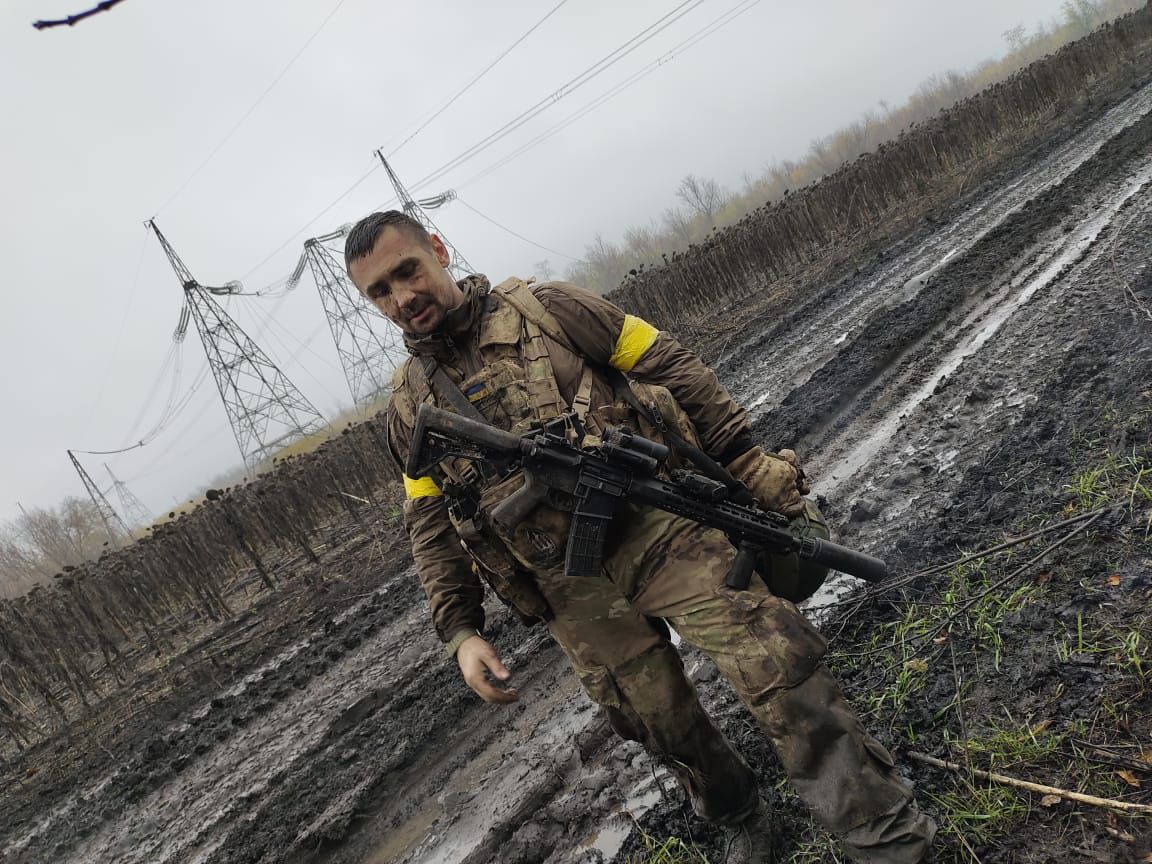
Zheved Illia Mykhailovych, contract serviceman, senior sergeant, EOD pioneer of the rapid response brigade of Hostomel, first battalion of the special forces reconnaissance platoon, previously served as chief sergeant of the reconnaissance platoon for 4 years.

ABOUT THE INJURIES
- It can't be seen now, but you have an injury and are currently undergoing rehabilitation, right?
- Well, rehabilitation? I go to the service and rehabilitate myself.
- Tell us about your injury and what kind of injury you have?
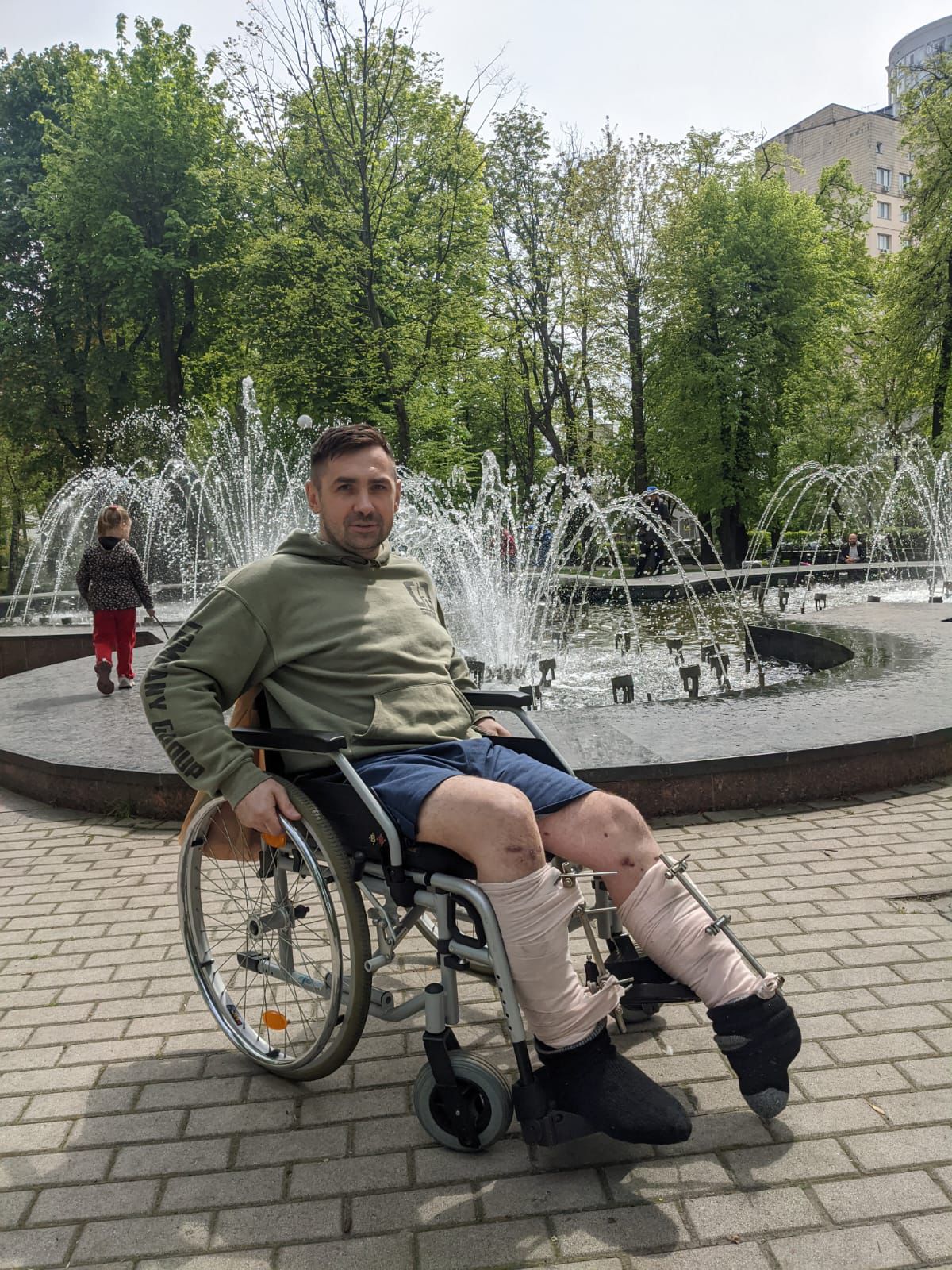
- I was wounded on March 24 near the town of Kurdiumivka-Ozarianivka, we carried out assault offensives for a foothold for further counteroffensives in the spring of 23. We entered a plantation, plantation was densely mined, we were moving towards the enemy, less than 100 meters away from the enemy, according to the plan of action, sappers should come there, clean out a path, this is a mine-clearing device, and along which they should enter the enemy's position, eliminate them, seize the position and gain a foothold there. While we were waiting for the sappers, the guys who were leading us, from aerial reconnaissance, passed us information, said that the enemy was doing something near Kolomyta, preparing to open fire. I was in the front group, the first to go was a sapper, followed by Mykola Raptor, a scout, and the third was me as the senior group commander. The plantation was very narrow, there were acacia trees, narrow trees, in fact, there was nowhere to hide and there were trenches nearby, so I decided to duck into a trench. I ducked into the trench, there was an explosion, I thought it was nothing, it had happened many times before, everything was fine. Then I tried to jump out of the trench, but I couldn't, the fog had dissipated, I thought I would jump out of the trench too, I couldn't feel my legs, that's it, Iliushka (hypocoristic of Illia is Illiushka - ed. note), I have no legs, what to do. I was wondering what was wrong. Then the fog cleared, I looked, my right leg was fine, everything was fine, and my left leg was torn, my inoxes were torn, I was wearing cool combat boots, which I was constantly using, and my fingers were torn off, I think, it's nothing, just my fingers were torn off, I tried to jump out of the trench, but I could not get out because my legs were broken. I called the guys, told them that it's a disgrace, I'm wounded, they got me out, the infantry guys provided medical assistance, the evacuation team came and took me away, that's all, it's nothing. They amputated a little bit of my leg, 2/3 of my foot, the heel remains, thanks to prosthetics and myself, rehabilitation, I am recovering, I will continue to fight, I will go to war in the summer.
ABOUT REHABILITATION AND INCLUSION IN UKRAINE
- How do you rehabilitate yourself?
- I was in a wheelchair for 9 months, I went to the gym myself, I do everything myself, I go to the gym myself, I once wanted to find a rehabilitation center, but it was very expensive, I had to pay about 10 thousand hryvnias for 7 sessions, plus taxi expenses. I also had expenses, I couldn't afford it, so I signed up for a gym, went to the gym in a wheelchair and worked out there, and I was in touch with a rehabilitation therapist from Dnipro, Koachatkov, and he advised me online what to do, how to do it, and that's it.
- What keeps you afloat?
- In what afloat?
- In principle.
- In life?
- In life. How do you not give up, how do you go through with a sense of humor, with black humor, how do you do it?
- I don't know, I'm positive in life, that's all. Why should I be disappointed? God gave me a mind, gave me arms and legs, luckily I was born a Ukrainian, thank God I'm not a Muscovite, so I can enjoy life, all the guys in the unit are like that, even better, I'm just mediocre.
ABOUT EVOLUTION AND REVOLUTION
- You're downplaying all his merits, he is a Hero of Ukraine, by the way.
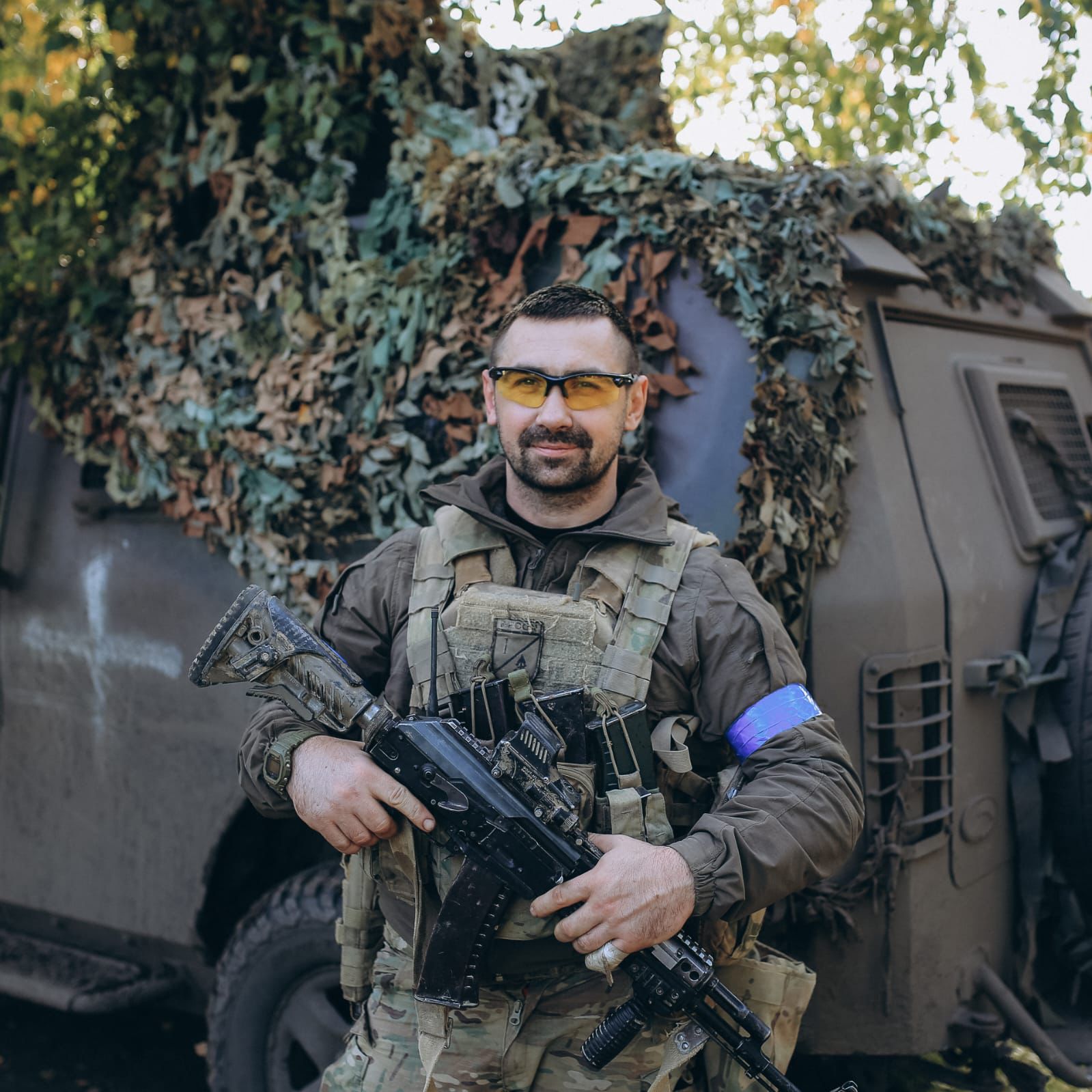
It may sound like I was just doing my job and that's it, but for society, it's like some heroic deeds from heroic mythologies about Heracles or something, but all the guys were doing their job, some better, some on the front line, in more dangerous operations. My function as a staff sergeant was partly management, organization, logistics and gathering of the operational situation. I also took part in some operations in Rubizhne, Sievierodonetsk, Bakhmut, Zaitseve, the suburbs of Bakhmut, counter-offensive actions on the Lyman. I was just doing my job, which I like. In general, I have always dreamed of being a military man, but before 2014, military service was not prestigious, it was neglected, in my opinion, I may be wrong, but in my subjective opinion, in 2014, during the Revolution of Dignity, I wanted a different life, I did not want these "fixers" who has what connections, who has "cooler connections, the cooler guy". I wanted to live civilly and develop because this gangster way of life that we inherited from Russia did not appeal to me, although it was a shortcut to success, and I chose the path of the so-called bright side in 2014 when Russia invaded Ukraine in a hybrid way, I realized that my feelings about being a military man were that, come on, Iliushka, go ahead, your time has come.
- If those people had thought differently, then, with you in 2014-15-16, if everyone had stood up to defend Ukraine, everyone had united, you must admit, then we would have said what? The ATO, there is a war going on somewhere, we did not hear about it in many cities and did not even know about it.
- I wonder if these are post-Soviet consequences of our destroyed history, of not having an ideology, an identity – who Ukrainians are and what greatness we have in this world, what a real, courageous nation we are and what we deserve for our achievements-and that they have been stolen by Russia. If people understood who they are, perhaps they would become more conscious. I also think that these are post-Soviet consequences, when everyone lived, you know, for themselves, and for some people there is a state. And the state does not exist without us, we are the state, and if we do not realize this, we will be some kind of tribe of an African republic in the center of Europe or under Russia. I can't say that I was such a patriot before 2014, but in 2014 everything changed, I was very ashamed of myself for who I was. I was also interested in the well-being of my family and that was it, and everything else was something made up. And then the Revolution, European values, I rethought and I was ashamed of myself and I'm very glad that it happened.
ABOUT PREPARATIONS FOR A GREAT WAR
- Back then, in 14, 15, 16, did you understand as a military officer that this was just the beginning and that sooner or later Russia would advance and that we had to prepare for a full-scale invasion?
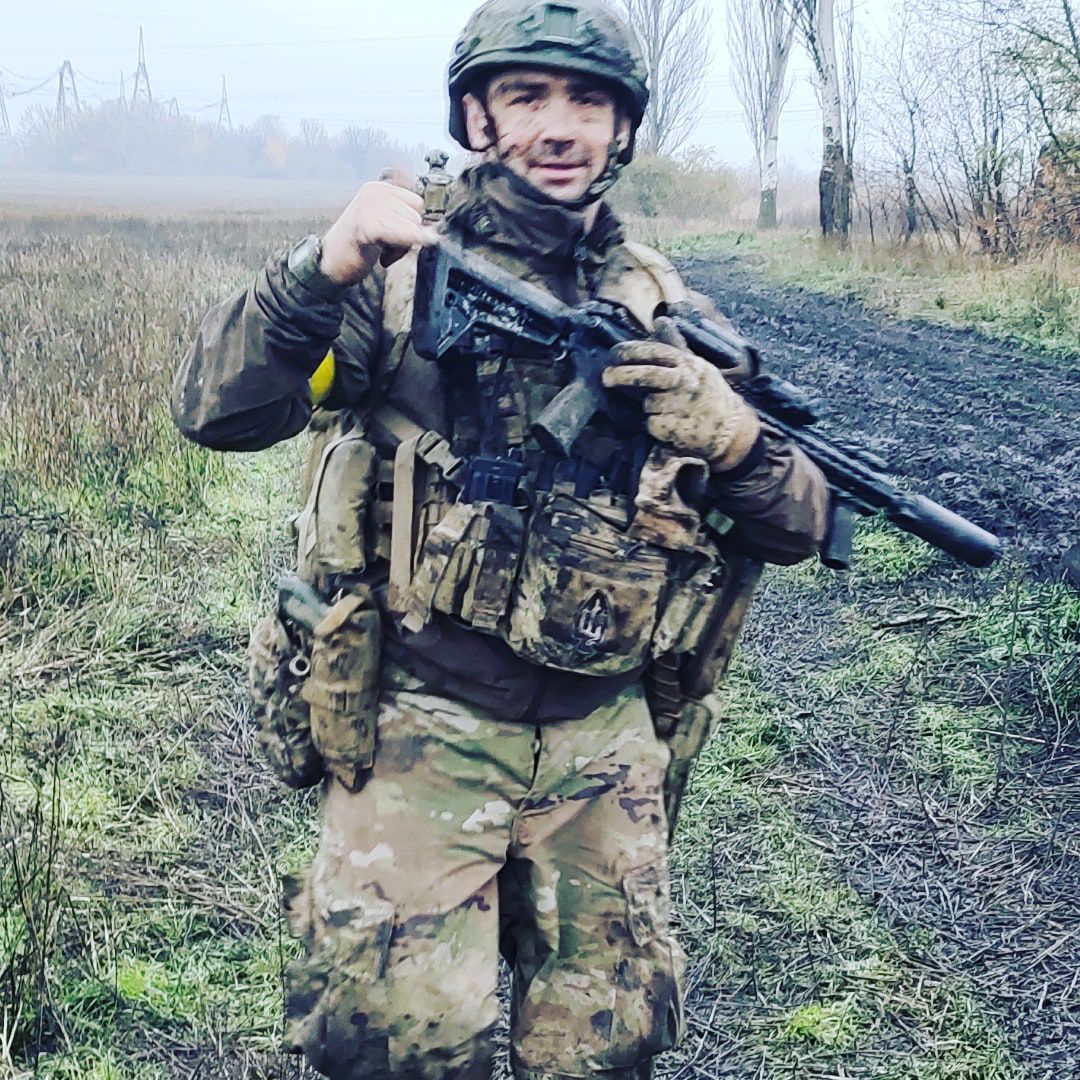
- Yes, I understood this, because I served with many educated guys, historians, and we had a lot of communication between battles, between rotations, they told me, and then I started to take an interest myself, to read and realized that Russia would not get away from us that easily. There will be a full-scale invasion, there will be a war, and we have time to prepare for the decisive battle that has now come.
- How did we prepare?
- We prepared well, I'll say that.
- And the state?
- The state? This is, you know... also good. Let's count it this way: if we withstood this invasion, it means that we were more or less prepared properly. Yes, we made mistakes, some naive ones, some more, but if we withstood them, we are not in defeat, which means we prepared well, but not as well as we would have liked.
- What should we do next?
- To live, prepare, fight for the future. To fight and do everything for victory: to live, think, love, eat, do things, everything, for the sake of victory.
- You see, there are not so many people who want to fight now, you must admit, not like it used to be when everyone ran and grabbed weapons and went to the borders in their region and defended them.
- It is possible. This is the consciousness of people. In every family, in the environment, there are people who died and were wounded, and it's one thing when you hear about it in stories, but when someone is around and you see it, people are scared away, they begin to assess their capabilities, their future, not everyone is ready to give their lives for Ukraine. I took an oath of office, it's not just empty words for me, and serving the Ukrainian people and our future is a priority for me, the goal of my life, it sounds pathetic...
- Do you think it is still possible to unite Ukrainians now, I mean, the law on mobilization is about to be passed. Do you see any prospects that the country will return to the beginning of the full-scale invasion and we will see unity?
- Yes, I see this, but it is the state that should systematically do ideological work with the population, with society, emphasize consciousness, their future, that it is good that today is a day, but someone pays for this day with their health and life, and something should be done for this, and not just live with your head turned away as if the problem does not concern me because I am looking in the other direction. It's just a matter of getting through to people's consciousness and understanding whether they are Ukrainians and worthy of being - that's all. This is the job of the state and teachers, and it is the job of our military to fight and give people the time to come to their senses. And if not? We will lose the country. As it happens, so it will be. This is the story. What should we do?
ABOUT CONVERSATIONS IN WAR
- In war, do you have such conversations, global conversations, not about how the day went or tomorrow, but globally, does the military think about some prospects?
- No.
- About the same unity?
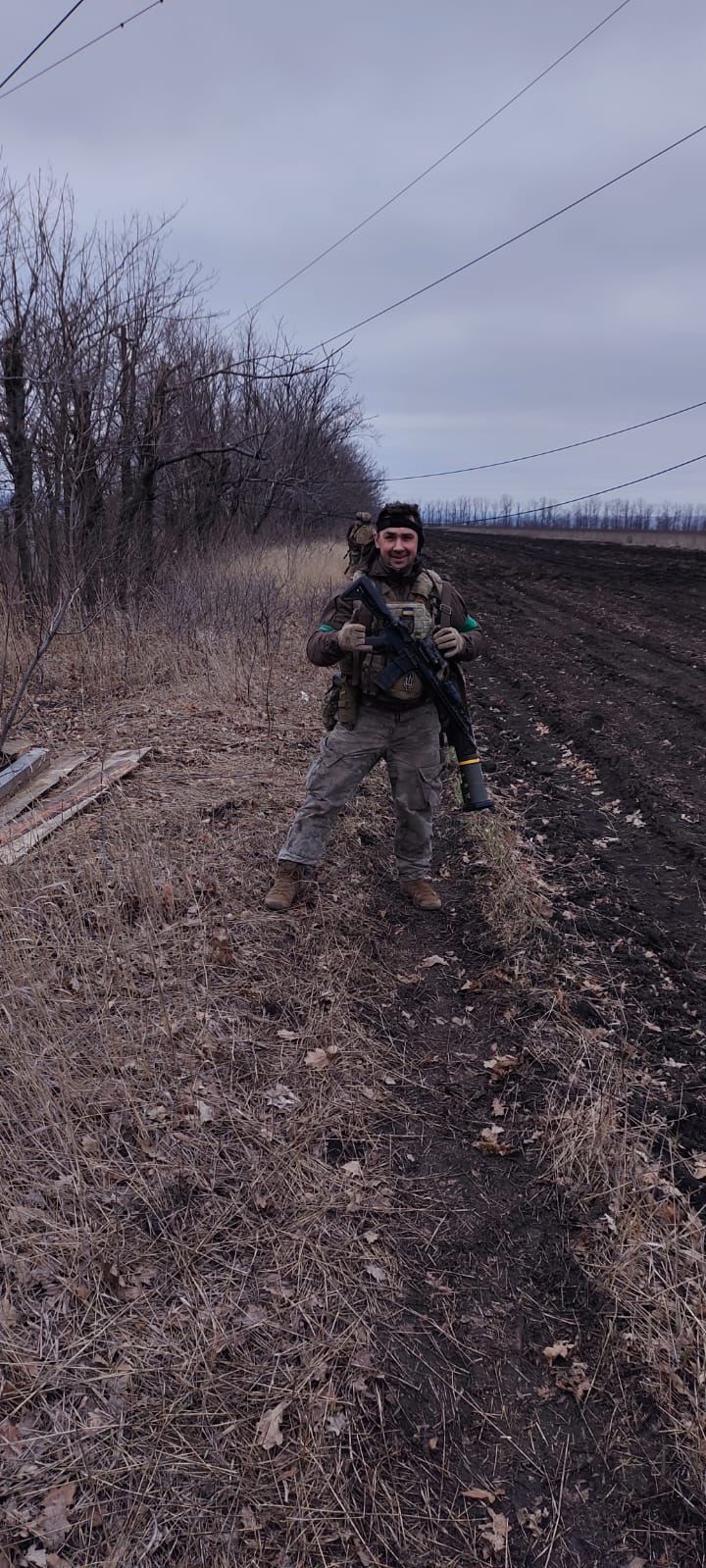
About unity? We have a division, a team, and we have been a team since 2018, and we are already united by a common cause, doing a common thing. It's easier to go to the store - you bought me coffee last time, and I bought you coffee, and this is a common goal - a common goal to destroy the enemy, and so there is no time for global ideas, you know, you have a task and you need to prepare for the next task. The combat brotherhood is like a family. My wife is jealous. I have a wife with whom I live and love, and there is also a military family, and who is the priority? It can be difficult sometimes. There is a family here and a family there.
- You need to be on time for both.
- It is necessary to be on time.
ABOUT NATO STANDARDS
- Tell me, if we are talking about a rapid response team, what is the difference between a rapid response team, let's explain to people, and a regular team or a team with a different name?
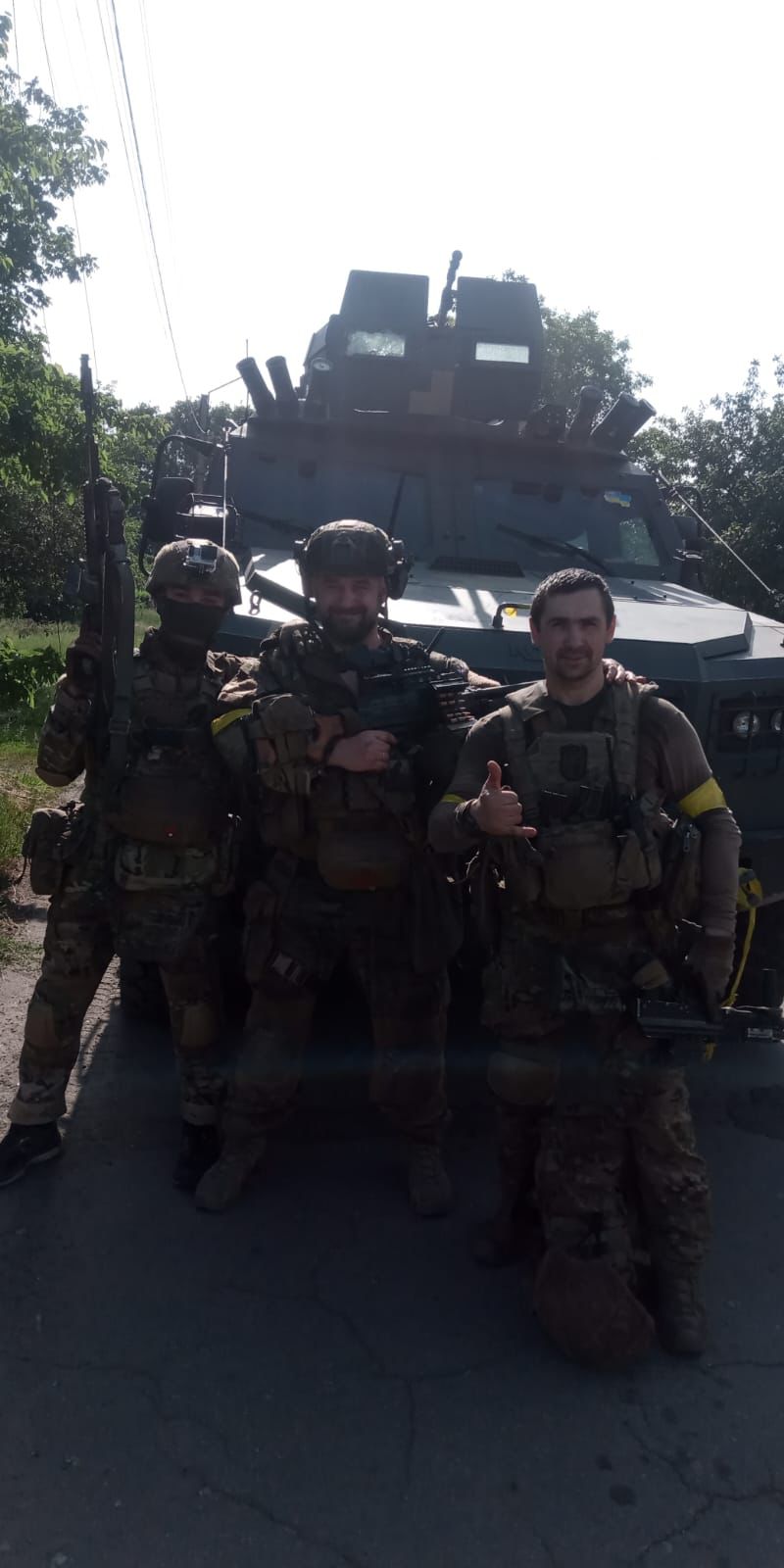
- The 4th Rapid Reaction Brigade of the Hero of Ukraine Serhii Mykhalchuk, which was created in the spring of 2016 and is one of the first brigades of the National Guard, and perhaps in the Armed Forces, to be based on NATO standards. A very strong non-commissioned officer corps was being trained, operations planning, command - everything was divided according to NATO standards, divided into sections, units were also divided into sections, the role of non-commissioned officers and the approach to military operations were distributed according to NATO standards.
- Can you tell us what these standards are and how they can manifest themselves in combat?
- Let's take our brigade as an example. There is an enemy who says that it was like in Rubizhne, they gathered people in Luhansk region, our people or prisoners, and said: you are assigned to a position, go ahead, if you do not capture the position, we will shoot you when you come back. This is planned at the level of the Russians, I don't speak for everyone, but at first it was like that. As for the command of our unit, there is a defined task, a line, planning is carried out, the section is divided, tasks are defined before the operation, the commander gives a preliminary order, he prepares people, there are standards for how much work each person should do, how much time is allocated for the operation and for training. Then, each role in the unit is determined, what it does and what it is responsible for, checkpoints are distributed, the mission execution line is set, all possible moments from evacuation to logistics are thought out, and full observation, coordination of actions during the operation and also combat operations are carried out.
ABOUT LOSSES
- You may have a memory of the war. Surely there is an episode, Illia, that you will remember forever and will tell someone else?
- You know, there is no such thing. In Rubizhne, for example, there were up to 10 such memories every day, the only thing that was not very positive was when we lost our first comrade Valerchik Odnorob, that was the first memory, and then all the guys we lost, those are the memories. And the operations, everything, hustle, the work, you know, it's cool to remember some moments of work, how we did it, smiled, what happened, how it was, who said what, and there were many situations like that, there is no single one, there are many, and the only thing I often remember is the guys who died. It is, you know, like a piece of your soul, it consists of puzzles, and they took a piece of it, tore it off, and in its place was dry, cold, and you were so bright, positive, energetic before you lost your comrades, and when the guys died like that, a piece of you and... this construction is partly gray.
- When you lose your comrades, you obviously fight with different feelings, do you?
-If there is an expression of emotion, it is unprofessionalism, as my commander, the Hero of Ukraine, Lytvyn Vitalii Serhiiovych, said, heroism begins where professionalism ends. That is, if there is a thirst for such emotions, for revenge, the thirst for emotions must be cold. First and foremost, it is professionalism; the best revenge on the enemy is to eliminate him. The only way to eliminate them is to do it professionally and efficiently, with a smile on your face: "Good evening, we are from Ukraine."

ABOUT FEAR
- The feeling of fear - how to overcome it in war?
- Yes, fear is an interesting thing, sometimes it happens... I don't know how to tell you, sometimes it was scary, going to an operation, but fear, you know, in the period when you are going from the base to the point of performance of tasks - there is fear, and when you are already on the task - everything, everything else goes away and you only have a task, only you think about its performance and there is nothing else. When you start doing your job, there is nothing, only the schedule, the operational situation, you, the enemy, the circumstances in which you understand what to do, and when you arrive at the base, you have done your job, you think about it, everything, it happened, but you are not afraid to die, because we will not understand it, you died and that's it. You do your job as long as you can do your job, and as long as you live, you live. When the time comes to die, you die.
ABOUT SUPPORT
- How do you burn out in war?
- I don't know.
- Have you ever had such feelings?
- I don't have guys like that in my unit, I know that nowadays in the Armed Forces units guys stand for six months or more, do not leave their positions, it is very exhausting, I understand everything and why does it happen? Maybe people burn out physically, emotionally, I can't answer that, everyone has their own mental state, psycho-emotional, everyone has their own level of external core, in our command, in the unit, everything is very high quality, basically no one... We were without rotation for almost a year, we did surgeries, traveled, worked. We had the opportunity to go to a permanent location to rest, but we stayed because it is war, we had to fight. We support each other with motivation. Burnout, maybe, was when we lost our comrades, then the sludge, it was hard, but my job as a sergeant was to cheer up the guys and it was hard for me, but if we all become tired and tired, nothing good will come of it, I realized that the guys did not like it very much, but I had to cheer them up in different ways, to say, hey, guys, you heard, they took everything well, so yes, supporting each other and sergeant's work is sergeant's work.
ABOUT RUSSIANS
- How do you see the enemy now?
- I see the enemy as if I were to compare the movie "Lord of the Rings" and there were simple orcs and there was a pumped-up orc who had intellectual abilities and was healthier than anyone else, that's how the enemy appears to me - it's a big orc who has intelligence, strength, a desire to kill, to capture, and who is not just dangerous, what is the word for it, is there another word for more dangerous? The most dangerous creature that can be - that's how it seems to me. And who can professionally use his properties, abilities, qualities for his own purposes.
- And we have to fight this enemy for some time. What stage of the war do you think we are at now, what would you call this stage?
We once talked to a journalist who said that our war was like a boxing match between a light, medium, and heavyweight warrior. We were technically better, and the other guy was a strong warrior, and the other guy was technically not so good, we were already in rounds 8-9, but we were losing strength, and he had strength, he was gaining strength, plus he was gaining technique. What do we do? We need to take more spirit, take strength from somewhere and fight, hit the enemy, hit his sore spots, so that he cannot afford to take bigger actions, hit him at critical points.

ABOUT THE NEEDS OF VETERANS
- You are now on a large land, let's say, engaged in rehabilitation, do you think the state is doing enough for rehabilitation, for you, for your comrade in arms?
- It is not enough, I think we have faced this recently and it is going through a process of formation, it is all going on so fast and not everyone understands it, because there are urgent problems - the frontline that need to be solved, it also needs funds, attention, and this needs to be addressed, because many guys want to return to the front, but they need to recover and this is largely done through private enterprises, private volunteer foundations, rehabilitation specialists. It would be good if the Ministry of Veterans would provide support, develop a system of management not just for veterans, but separately from the ministry, which would accompany the wounded and their plans for the future. He wants to return to the front, he is undergoing such rehabilitation. He wants to return to civilian life, but to be useful to the army - this is the rehabilitation, this and that. That's all, I think. There are a lot of problems, and the state is solving them, but not to the extent we would like, but we cannot want to solve them to the extent we want, because we have a full-scale war, the economy is destroyed, it is impossible to demand 100 percent from the state, and if we compare it to the United States, there is no war in the United States, they live peacefully, their economy allows them to allocate funds and resources. Here, on our territory, there is a war going on, and in principle, thanks to concerned citizens, patriots, people who support the military, by the way, many of my friends supported me financially, morally and physically, and I am very grateful to them. Only the state cannot exist without society, and society cannot exist without the state, because they are one and the same. Society is the state, the state is society. The problems of the state – the military, the wounded-should also be the problems of society. Society must consciously help people with injuries, for example, there are problems with wheelchairs, I have encountered this.
ABOUT INCLUSION
- How long have you been in a wheelchair?
- 9 months.
- What problems did you face in Kyiv?
- The wheelchair ramp, the subway. But it's good that the state paid money, so I could afford a taxi if I needed to solve some issue, there was a special inclusive taxi that came and loaded me, but there were few of them in Kyiv, a regular taxi came, so it was a bit of a problem. The taxi driver would come and see that I was in a wheelchair, and I had these pieces of iron to prevent scratching the dashboard. Or call not a regular taxi, but a public minibus taxi to fit the wheelchair. And the stairs. Sometimes I had to get to some places, so I would get out of the wheelchair and go upstairs on my ass, then go up or down, my wife or friends lifted the wheelchair, turned it around, and then they lifted me up, put me in the wheelchair and took me there. Then they started making some wheelchair ramps, something, somewhere, something like that.
ABOUT THE ATTITUDE TOWARDS THE MILITARY
- What is the attitude of civilians towards you? Have you noticed any dismissive or disrespectful attitudes?
- On the contrary, with respect. Even I was insulted by people, you know, they looked at me pitifully, someone came up and gave me money, and I told them - what are you doing? I'm a military man, you're insulting me. I was getting coffee somewhere, and they didn't take money from me. I understand that this is respect, but as a military man, I was offended. In general, people showed respect, helped, and no one was indifferent. There was even a case when I was going to the gym on my own in a wheelchair and a man in a car stopped and asked if he could give me a ride, help me. I said, "No, I'm fine, I'm here on my own, I turned on the music, I came quietly, I left quietly, and that's it, I went on my way and that's it.
- That's why you came today and said "I'll buy you a coffee, you see", you immediately said, "Okay, I'm paying, I have money, it's fine".
- Thank God for the state and the command... I know of cases where they don't pay, but it's not the state, it's the commanders on the ground. I would like to see more control over the commanders, over their decisions. According to NATO standards, after any operation, an analysis of actions is made. And I would like to see more operations, some events, some actions - after a period of time, an analysis of actions would be made, conclusions would be drawn, and we would start from this conclusion in our further action planning. I would like to see more responsibility, but now everyone will say that those who have no acquaintances or who is good or bad are responsible, but I would not like to hear such words, I would like everything to be honest, if you deserve praise, you are praised, if you did something wrong, you are analyzed, looked at, and then you are evaluated, your actions are assessed. I would like to see the same with politicians. We have politicians who come to power, serve the people, but no one is responsible, they make a mess, leave and have some privileges as deputies, or former deputies, but no one is responsible for their actions, deeds, what they say, the adoption of laws or any hype, and the question is why?
ABOUT PSYCHOLOGISTS
- How do you psychologically rehabilitate after you have been to war? Because you can, you know, heal a wound physically, but what you saw and experienced will always remain in your mind?
- I believe that the role of psychologists, psychotherapists and support from fellow soldiers is underestimated. Many guys, young and old, come back from combat, get PTSD, something critical happened there, they didn't face it, they didn't respond, and unfortunately they commit shameful acts, they pass away, and we need to work with this, because this is our future, our Ukraine and the support of our brothers-in-arms, and yet the work of psychologists and psychotherapists is very important and underestimated. We have chaplains, but not all of us are faithful, and religious, everyone has their own religion, and a psychotherapist is a person with whom you can share and not be judged, to convey what is inside you - it is very important to open up, to talk, because it is not always possible with your comrade in arms, because there is humor, there are jokes, there ... you can't always open up, but to have someone to open up to, to share with, it's very valuable and it's a shame that we underestimate this role nowadays, we see it this way - a person is physically healthy, so it seems that everything is fine in his head, but in fact we don't know what's inside him, what worries him, what feelings and thoughts he goes to bed and wakes up with and what actions he plans to take.
ABOUT CIVILIANS
- What do you think a civilian should ask a military officer?
- When will the war end?
- Not about the war. I'm going to ask you about it at the end, by the way. What should civilians ask the military? What would you like a civilian person to come up to you and ask?
- "Man, are you okay? How can I help you?" - I guess that's about it. I would say, "I need this and that. Or, 'I don't need it today, let's do it tomorrow.
- And if they thank you, what do you say in return?
- Do they thank you? I say you're welcome. There is no need to thank me because I do my job and I love my job. What are you thanking me for, if it's my job, I'm not thanking you for doing your job. We are all doing our job on the ground. We need to thank the teachers who educate our children, our future, thank the doctors who cure us of our illnesses, thank them. Everyone is doing their job. Of course, if there is a critical limit, there is a feeling that we should be grateful, but... We need to thank, you know, the volunteer fighters, the mobilized guys, for agreeing to go, for giving up their civilian life, their warm kitchen, their wives, their entertainment, and going to fight with the guys, they deserve gratitude, but I, a contract soldier, a military man, I prepared for this war consciously, I don't need to be thanked, I love my job, I love my country, and that's it.
ABOUT THE VICTORY
- Speaking of victory, how do you see it? Do you have an understanding of it now, at this stage?
- I don't see it at this stage. It's like, you know, a fairy tale, but I don't know the end of it, maybe the victory will not be in my lifetime, maybe in 50 years, like the example of Azerbaijan and Armenia, who got their territories back in 25 years, but the size of their territories was not the same as ours. And with our size, it may take 100 years to win, and what it will look like in 100 years is a fantasy. I think that there will be a war until there is no one to defend, and then the fact of the treaty, the surrender of us or the enemy will be proclaimed, and that's it. There will be no freeze, I don't believe in it, nothing will happen, it will just be like a fight between two people until their last breath.
- It's just that the Russians have a lot of people, millions of them.
- Then they will win if we don't think, be conscious, and don't prepare technically for this. Only a lot of cockroaches can be defeated by technical means - how else? There is no other way. If it's man to man, then of course they will win, but we need intellectual forces, technical forces, there is no other way, if we don't use consciousness, understanding, then we will lose the country, that's all. It's not patriotic, but it is what it is.
- Are you an optimist or a realist?
- I am a positive optimist in my life. I signed myself as a positive optimist.
- What are you going to do with your injury in the war?
- Nothing, I will run and fight on, I hope for the professionalism of the prosthetists, they will do everything, if not, they will cut off my leg a little bit, put on a standard prosthesis and I will run quietly, that's all. Many guys fight with prostheses, it's not a problem, it's all in the head and in the perception, that's all.
- I think people need to learn from you.
- And I still need to learn from young people.
- You're wounded and you say the phrase 'they're going to cut off your leg a little bit'... it's just...
- These are normal things, there is nothing here... The body is your tool, you work with it and work with it, it's good that you have two legs, two arms, it's not so difficult to put the tools together and that's it, it's good that it is.
- Thank you very much for the conversation...
- The pleasure is mine, very pleased!
- And I thank the viewers for watching this conversation and I would like to hear feedback about our Illia in the comments, please give him something positive so that he has the strength and inspiration to continue fighting.
Anna Miroshnychenko, "Who is with Miroshnychenko?"


