



Denys Nahornyi, Artillery Chief of Staff of 4th Rubizh Brigade: "War will turn from trench warfare to subterranean warfare"
Denys Nahornyi, Lieutenant Colonel of the National Guard, Artillery Chief of Staff of the 4th Rubizh Brigade, has been involved in countering the Russian invasion for ten years. He has vast experience and heavy battles in the hottest spots of the frontline. In 2014, he liberated Mariupol, Novoazovsk, Volnovakha, was in the Ilovaisk cauldron, and later at the Svitlodarsk bulge. After the full-scale invasion, he defended Rubizhne, Sievierodonetsk, Lysychansk, and Bakhmut.
He is currently fighting in Donbas, so we recorded the interview remotely. We started the conversation with how Denys ended up in the war.
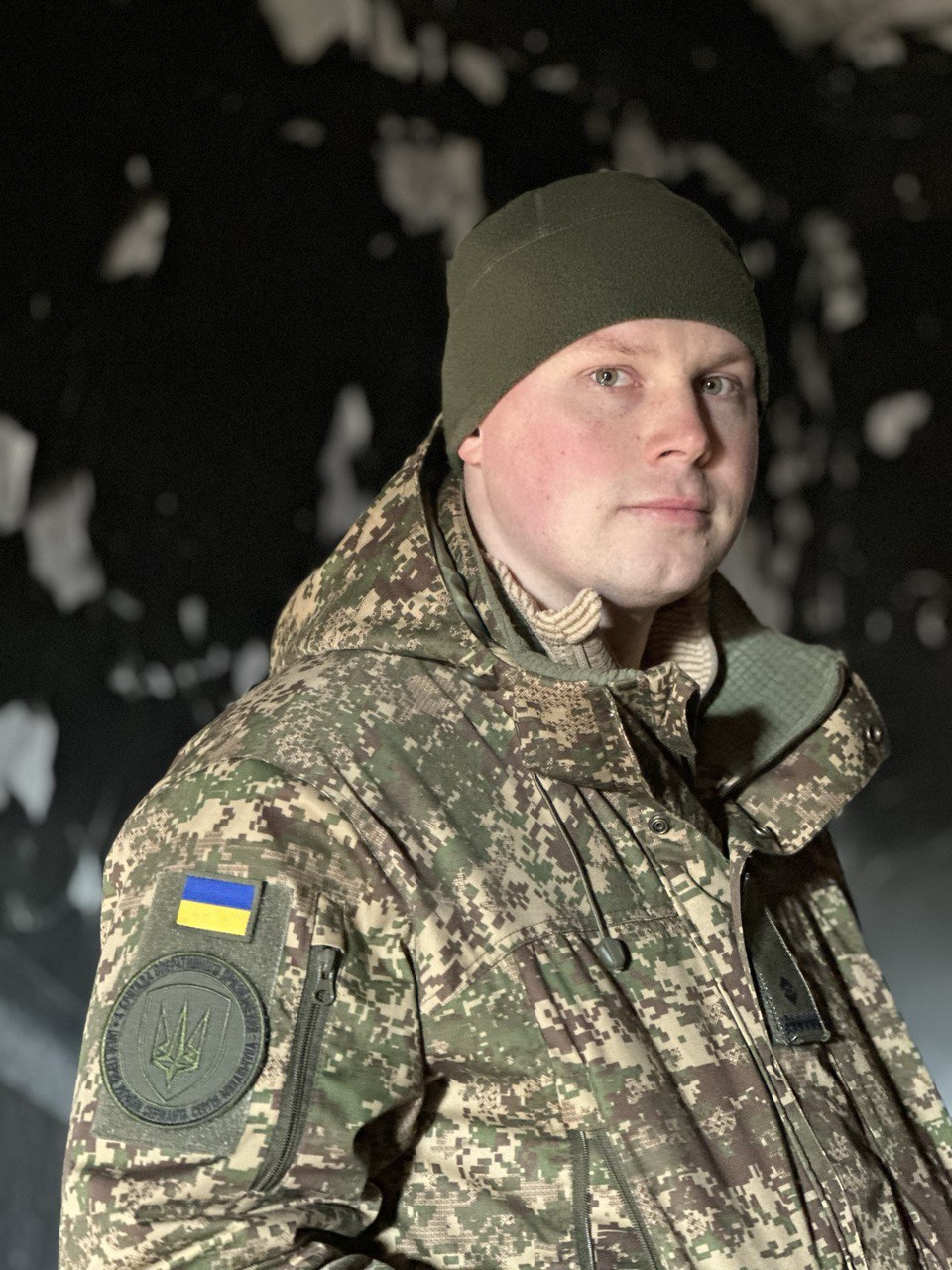
- In 2014, you went to war as a volunteer fighter. Why? You were only 20 years old at the time.
- Yes, I was 20 years old, but I felt like a man. A man doesn't stand idly by, he goes and defends what he has: his home, his family, his country. That's how I was raised. My parents are military. So were my grandfather and great-grandfather. I think it was an honor for me to fulfill my duty from "a" to "z". I am still fulfilling it. I do it in such a way that I'm probably already fully involved, to the end (smiles. - O.M.).
- So, as I understand it, your family took your decision calmly, didn`t they? Or did they refuse?
- No one knew that I went to war. They thought that I was studying while I was already quietly assaulting in Mariupol. Then it happened that journalists came to us and filmed a story. My mom, as usual, turned on one of the TV channels and saw me running around in my uniform with a machine gun. She was a little surprised (smiles. - O.M.).
- Did they scold you?
- No, they didn't scold me. I have been independent since childhood. My decisions are respected. I especially like that my father always supports me in every way. This is very important. And there is a tradition of being in the military. So it's a family thing.
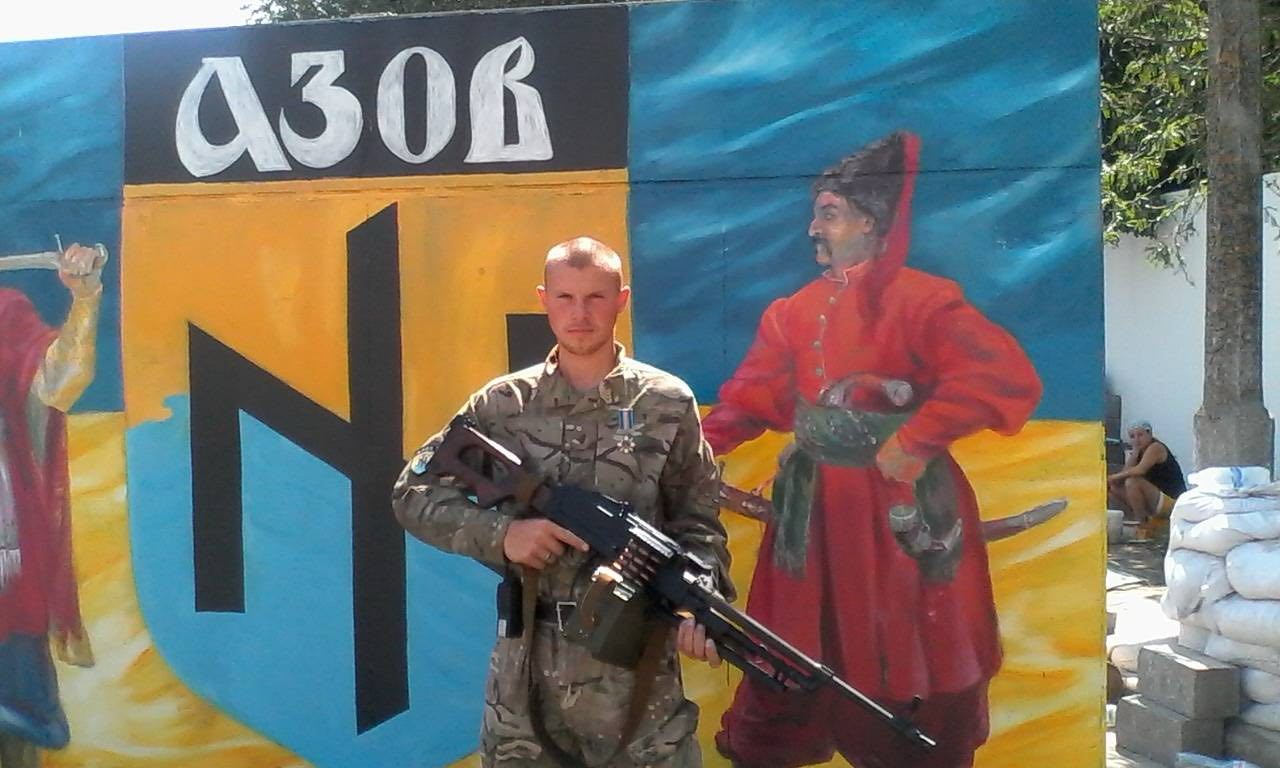
- You mentioned Mariupol. As part of Azov, you participated in the liberation of this city, as well as Novoazovsk and Volnovakha. What were the battles like then? What would you say about that time? What was the enemy like?
- As one of my colleagues characterized it: it was a war of checkpoints. The enemy was quite prepared. There were such scouting parties. Of course, they were hiding behind separatists. But we were facing well-trained and well-supplied Russian fighters. Ours was all about bare enthusiasm. At the time, we had the feeling that we could conquer an entire city with a machine gun. It was easy! To recapture and liberate the entire country to the 1991 borders. Everything was on such an upswing. Later, when the siege and defense of Mariupol, the Shyrokyne operation took place, when artillery, tanks, Grads were involved - the steeds, the men all disassembled and everything was in a mess - it flashed through my mind: we do not live by one machine gun...
- The support was weak, to put it mildly.
- Not just weak. It's no secret that we got a completely broken army that was supported by the people. That is, it existed primarily at the expense of volunteers, volunteer fighters, both military and civilian. It was thanks to this impetus that we had more or less combat-ready troops at the beginning of 2022.
- In the summer of 2014, one of the most tragic stories of the beginning of this war happened - the Ilovaisk Cauldron. You were there too...
- Yes. You know, I remember probably every minute of how everything happened. These are really tragic moments. Then I started to realize that life is a thread that can be torn.
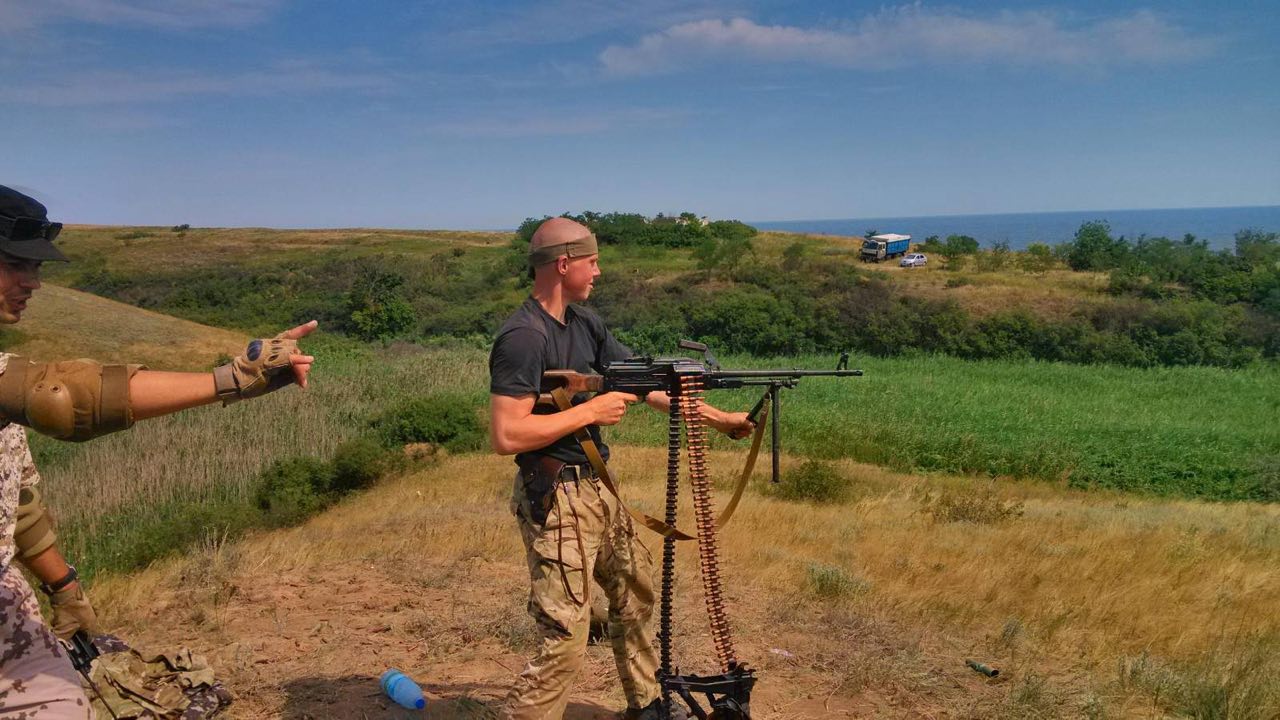
We just woke up in the middle of a field that was on fire because Grad was firing there. It set the dry grass on fire. Everything was burning in a crescent shape. When the operation itself began, the stop before Ilovaisk with the words Poltavske (a village near Ilovaisk - O.M.) on it became a landmark for me, because I felt a part of home (Denys is from Poltava region - O.M.). I remember when we moved across the border, there was a sunflower field. I can still see those sunflowers in my mind's eye.

I remember how Kolia Bereza, Tania Chornovol's husband, died. I remember the whole battle in full. How the machine gun jammed, how mines were constantly falling to the right and left. There was a powerful general battle with the use of all forces and means. There was no aviation. The first "200ths", heavy "300ths". The first such commotion in the command, when you try to find someone, but nothing is clear. Dust and blood everywhere. Shock! At the end of the battle, it was very hard. Extremely... And you come out and see the body of the late Bereza (he is silent for a few seconds. - O.M.). These are my memories. All this left a certain scar on my life. Although it gave me an experience that cannot be compared to anything else.
- How did you manage to go out?
- Several times we went on attacks like that. The situation was difficult. Everything was spinning. Our location was hit by Grad rockets. Then we started to withdraw, to go out. We jumped into an armored KAMAZ truck. We got out through some forests, fields, plantations. As we were driving, we saw a checkpoint. It had a tricolor on it. It was clear that it was the wrong checkpoint. We drove through it, threw our weight around. The separatists did not even have time to realize who they were. And somehow we managed to go out.
- Didn't you have a premonition the day before that the Russians would violate the agreements and start shelling our convoys with the military?
- I was more uncertain about the separatists than about the Russian career military men. It was still possible, in principle, to negotiate with the Russian career military men about withdrawal. But in general, of course, there was no trust in them. As well as, I repeat, to the separatists and the local population.

- Is it the same with the locals now?
- Absolutely! Unfortunately, television has not worked in our favor here. People are being properly "brainwashed". The older ones generally live in thoughts of the Soviet Union, like sausage for twenty and everything like that. It's quite a sad situation just because they've been brainwashed with some nonsense.
- The Russians went further in their "appetites" from this "brainwashing" and on February 24, 2022, launched a full-scale offensive against Ukraine. You were in Stanytsia Luhanska at the time. Did you know about their plans?
- A week or so before the full-scale invasion, the intensity of shelling increased, and Grad and Uragan systems were actively used, which was not typical for the JFO at the time. The OSCE has disappeared somewhere - it just disappeared! We understand that it was of no use. Sometimes they were even harmed. It is possible that there were Russian agents there. And the culmination of this whole performance I'm talking about was aviation, specifically helicopters. When they appeared on the border, it became clear: it had begun! From February 23 to 24, I was woken up at three in the morning. We were leaving Stanytsia Luhanska again through fields, forests and plantations because the village could be surrounded. Most people were lucky to get out and escape because the Russians did not have a coordinated command yet - they were just marching in columns.
- Where were you then?
- We were defending Trokhizbenka. That was when our brigade suffered its first significant losses. The first company was attacked by two Russian brigades, but it stood firm to the last, although it was simply "wiped out" by the same tanks. There was a planned withdrawal to Sievierodonetsk, a regrouping. The defense of this city was just beginning, as the bulk of the Russian army was just entering the territory of the Luhansk region. We were redeployed to Rubizhne. Here the fun began - the battle for every house and apartment. The guys were just "getting teeth" into the concrete and holding on. So many people were killed there... To give you an idea, there were 15-30 Russian soldiers against one of ours. The streets were littered with corpses of Russians. They had a lot of ammunition at that time. For one of our shots, we received 40-50 of theirs. We had to engage in an unequal confrontation in duels, maneuver, and cunningly destroy their batteries. It was a terrible "meat grinder" with chemicals, aviation, and everything.
- What helps you hold on in such situations?
- My colleague said a great phrase: "I am not at war with people but with the enemy." This is how I perceive what is happening. In addition, the time I spent in the ATO and JFO also had an impact. You perceive everything as a computer game, but you have one life in it, not several. Plus, I find it interesting and fun to be with my comrades. Even if you just talk to a person, it boosts morale tremendously. And the conversation can be about a can of stew or how many hits you've had today. It also improves your mood when you see our "bird" flying up into the sky and burning the Russians. Or when their columns and warehouses explode. "I like the way it burns, the way people fuss" (laughs. - O.M.).
- You fought in another hottest spot on the frontline - Bakhmut. The enemy began actively attacking it in the summer of 2022, but the situation was most fierce in the winter and spring of 2023. How was the battle for Bakhmut for you?
- It was expected. Because Popasna was originally in that direction. I saw it being destroyed to the ground - block by block, house by house. The situation was similar in Rubizhne, but I paid special attention to Popasna. It became a litmus test for me because of the Wagnerites. I finally realized that they would continue to advance like this. I thought that Bakhmut would be next. Their tactics would not change, because they had concluded that they were successful. In the end, it happened: what they could not take, they threw chemicals at it and destroyed it to the ground. So now Bakhmut is a town that has been leveled to the ground and simply ceased to exist. There are only three poor, undestroyed buildings left. But this attitude and behavior is quite expected from Russians. They leave behind scorched earth.
- You are still in the Bakhmut direction. Do the Russians continue to use the same tactics here that you are talking about? I call it "nearly scrape the tops of the trees".
- Yes. I call it the "bulldozer" tactic. Nothing has changed for them. The only thing that has changed is that after the Wagnerites, the entire "Russian Ministry of Attack" began to use it. And in all directions. They couldn't think of anything smarter than to use it on a massive scale. More killings, more deaths. Moreover, they do not count people. They are ready to sacrifice even half of their country and then call this war sacred to them. Now, against the backdrop of their fake elections, it will be like a "balm to the spirit." The more Russians die, the better for their government. The only thing they can't stand is the destruction of the economy. This will be fatal for them.
- The situation at the front is complicated and tense. How do you manage to hold back the enemy?
- Symbiosis of the troops. If we don't have enough ammunition, it doesn't mean that the situation will be too critical. We need to come up with something new. For example, UAVs. There is now a whole line of them that to some extent compensates for the lack of artillery shots. Plus, we need to remember the methods of large-scale defense: the deeper you dig in, the easier it will be. Most likely, the war will turn from trench warfare to subterranean warfare, because the development of UAVs makes the front line and its logistics extremely difficult. First, because of the monitoring from the sky. Secondly, FPV strikes. Third, mining. Fourthly, to get to the desired point, you have to constantly risk your life, which is something we do not want to expose our personnel to. Therefore, we have to go "underground" more and more.
- The enemy is also using new products. They didn't have FPVs before. Now they have a lot of them. And even at night...
- Any war is a development. Yes, it is bloody and difficult to perceive. But after a period of stagnation, you have to fight for your life by all available means. Both we and they will have an impetus for development. I've studied many historical examples of how most scientific discoveries were made for military purposes. Even civilian ones were useful, like SpaceX. You see, it provides us with communication. Because without it, there is no control.
- Speaking of command. You are the Artillery Chief of Staff of the 4th Rubizh Brigade. What approach do you use in your command to keep the guys combat-ready and motivated in such conditions? How do you interact in general to perform tasks as efficiently as possible?
- The approach is very simple: to tell people the truth, explain the task, monitor its implementation, and keep an eye on certain areas. In any unit, there are several of them: technical, logistics, personnel and combat training. If they are fully controlled through deputies, relevant officials and the task is explained to the soldiers in an accessible and high-quality manner - from "a" to "z" - and they understand it, everything works. Similarly, we should not have any privileges. We all serve here, doing a common job. Everyone has responsibilities that must be fulfilled. Let's put it this way: there should be a "carrot and a stick". But the carrot should be in sufficient quantity (smiles. - O.M.).
- What kind of "carrot" should it be?
- Rotation, vacations, gratitude, support. Even a simple conversation. Asking a person if they are in pain, if they need something, and we will help them. That is maximum openness to the personnel. This is a family!
- What is the mood in the family now?
- It's a combat one! We are now implementing various changes so that people can rest, fight and study without spending 30 hours a day, which they don't have. A soldier should always be in such a state that nothing bothers him either at the front or in civilian life.
- Rotations and vacations are exactly what you need for a good rest. And for this, we need replacements. It's no secret that we have problems with mobilization. How do you feel about this? Do you discuss this topic with each other?
- I believe that there are many things that are not explained to people about mobilization, which is why they are afraid and do not go to the army. Yes, defending your country is a sacred duty. When you have to pick up a rifle, there is nothing super scary about it. I talk to civilians. They say that they are afraid of being thrown into some kind of "meat grinder" right away. There is no such thing! You will be trained first. No one will throw you to the front line with an assault rifle and say, "'Assault the plantation! You will be trained until they see that you are ready and meet the level of performance that will allow you to go to the front line. No one will send you into the attack with sapper blades or bayonet knives, as the Russians do. This will not happen! People are told that the commanders here are some kind of beasts. Wait, how can a commander be like that? He is also a human being. As long as I have been working, I cannot say anything bad about my colleagues. Only good things.
- What advice would you give to those who are hesitant to go to war?
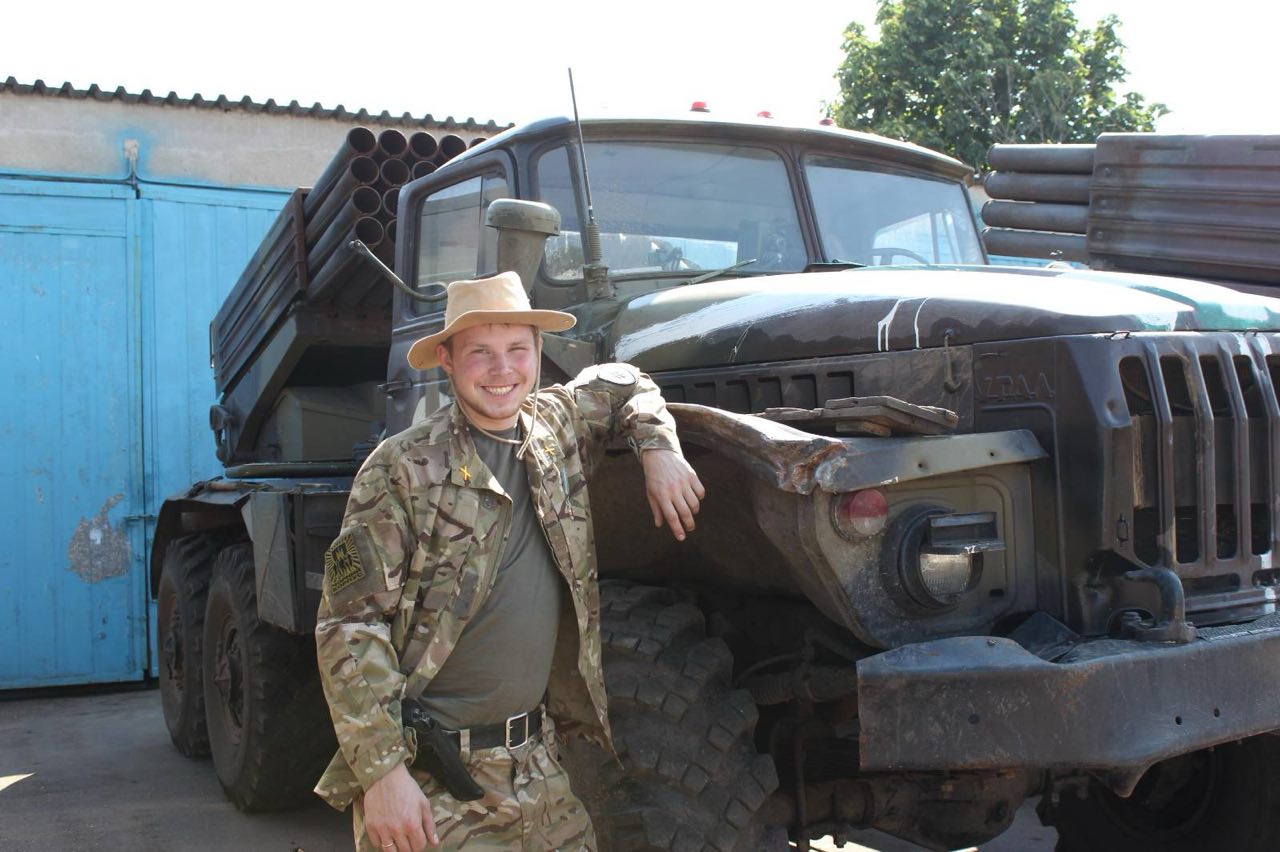
- Do not be afraid. There is nothing super scary here. Yes, you will be afraid of the first shot and the explosion. It is like the first love (smiles. - O.M.). Well, it will explode. So what? Now it's exploding all over the country. Nothing will change from the number of explosions. Therefore, you should not be afraid, choose our unit - the 4th Rubizh Brigade, especially the artillery, come to us and destroy the enemy. We will teach you, show you, tell you, dress you, shoe you, give you weapons and you will fire so that it will burn. And then you will get a medal for it (smiles. - O.M.).
- It was such a good advertisement!
- This is my favorite artillery! It's my soul! Even my wife sometimes asks me: "Who do you love more - me or the artillery?" I answer: "Honey, of course, you! But I also adore the artillery" (laughs. - O.M.).
- The enemy is also mobilizing the population. Obviously, after their so-called presidential elections, these mobilization activities will intensify...
- That's right.
- On the battlefield, do you feel that the Russians are preparing for something large-scale?
- This feeling has blurred out so much that with each new wave of them, you don't pay much attention to it anymore. There are so many of them that we don't feel this scale anymore. We just destroy them. The more we destroy, the better the "harvest" will be. You only feel the scale when a large amount of ammunition falls on you. And as I said, there are a lot of personnel there. But their elimination is handled by professionals (smiles - O.M.).
- But professionals have a lack of ammunition.
- Yes, there is. Given the current symbiosis with drones, tanks, and aircraft, in principle, there is enough ammunition for defense. There is not enough for offensive and counteroffensive actions. There is a problem here. To attack, you need resources. So we expect Europe and America to provide this. When we get what we need, it delights our hearts and souls. The red button is being pushed hard (smiles. - O.M.).
- I'm asking about the Russians' preparations because President Volodymyr Zelenskyy has also said that Russia is planning an offensive for late May or early summer. Are we ready for this?
- We are absolutely ready to repel their offensive! However, the Russian offensive is not over now. They are constantly checking our front line: they have accumulated forces and tried it, then they try again. We are trying to concentrate where they are most concentrated so that they do not break through the front line. Although it is unexpected where they will come from next time.
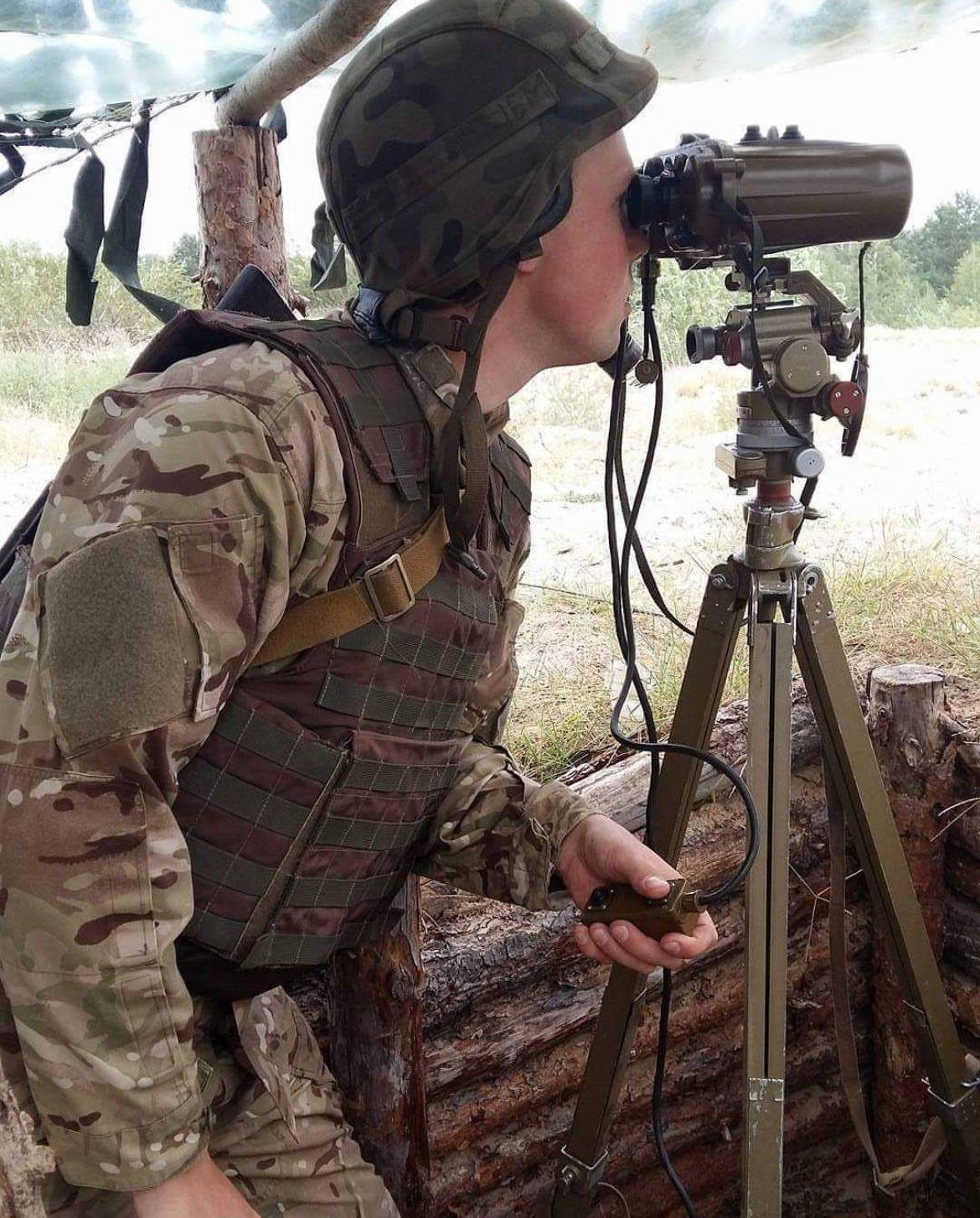
- Zelenskyy also said that the format of the end of the war will depend on this year. Although the military is saying more and more that it will drag on for years. Being inside the process, what do you think about this?
- Russia is several times bigger than Ukraine. This is the first thing. Second, the number of square kilometers of occupied territories, including Crimea, is very large. Returning to the 1991 borders is definitely not the end of 2024. I don't know what needs to happen for the Russians to leave. Unless they completely collapse economically and Russia collapses. Maybe we don't know something, and it will collapse soon, and we will be drinking beer for five hryvnias on Red Square (smiles. - O.M.).
- This is hardly to be expected, given the size of the country. Unfortunately.
- We need to prepare for a protracted war, strikes on our economy, and severe winters. We need to be stronger than ever, to withstand these times and emerge victorious.
- All Ukrainians should realize this. However, today you can find different opinions and moods in the rear. I assume you see this too.
- I will say one thing: trust the people who are fighting, not just the TV. They will never abandon you or offend you. Watch less TV and be prepared to fight for your life, family and home. Unfortunately, this is the bitter truth of war. The Russians came here with one goal in mind: to wipe us out. That's why I say we need to be strong. Only by uniting and uniting as one, as we did at the beginning of the full-scale invasion, will we have a result.
Olha Moskaliuk, Censor.NET
Photos were provided by Denys Nahornyi


