



German Pianist Nuron Mukumi to give concert in Kyiv: "This is way to affirm values of resilience"
When we talk about cultural diplomacy — especially crucial right now — we sometimes forget that it works both ways. The reciprocal visits of international musicians to Ukraine, who are not afraid to travel to a country where they may face Russian shelling or hear air-raid sirens, are exactly the kind of meaningful gestures. Today, renowned German pianist Nuron Mukumi will be giving a concert at the National Philharmonic of Ukraine, together with the National Honored Academic Symphony Orchestra of Ukraine.
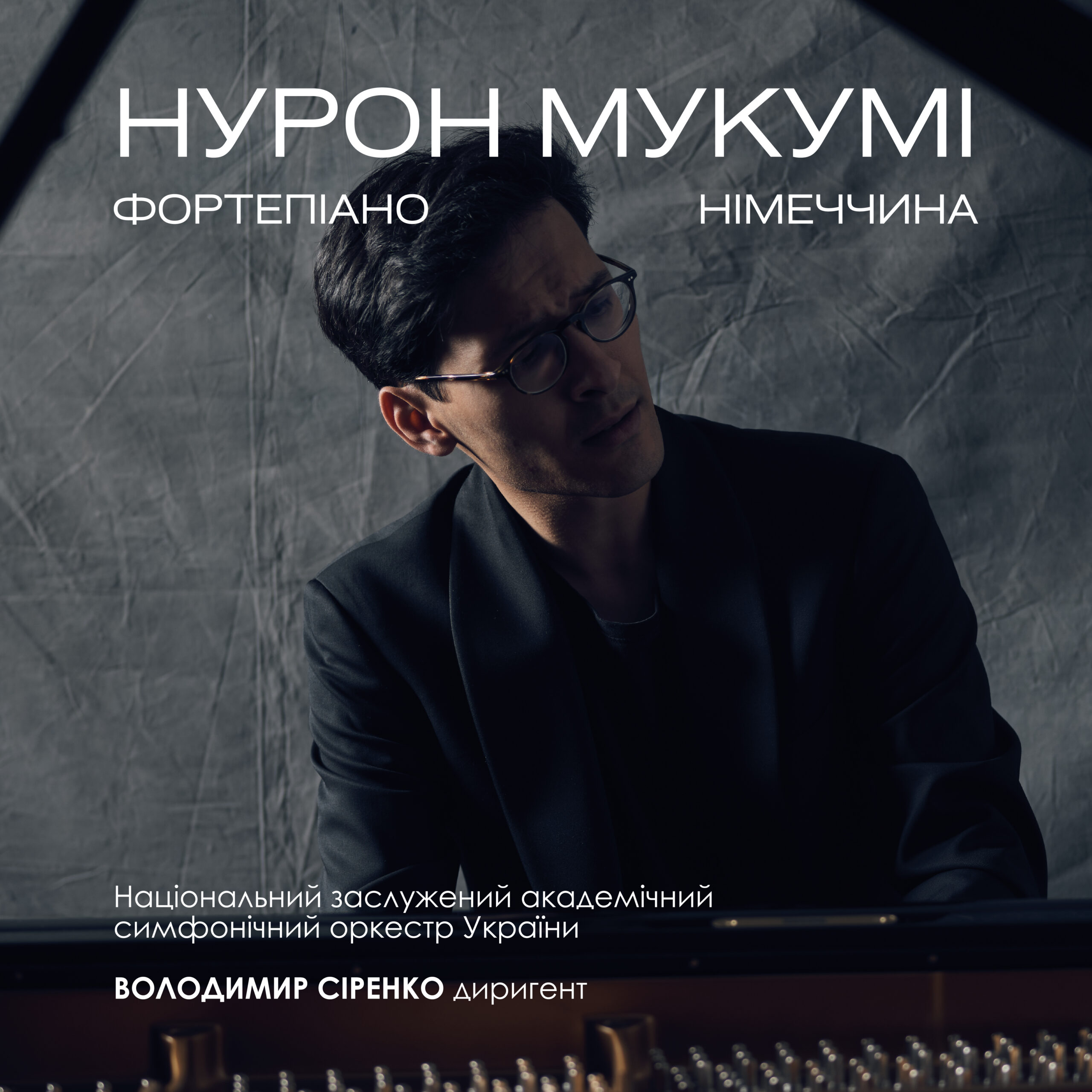
A warm relationship has formed between the pianist and the orchestra. His stories about their joint tours sound more like admiration for the Ukrainian musicians. Notably, alongside Beethoven and Bach, the program will also include a symphony by Ukrainian composer Zubytskyi.
Over the past four years, Mukumi has performed with this orchestra twelve times and, as he admitted, has developed personal friendships with its members. Their first concert together took place in the winter of 2021, when the orchestra was on tour in Germany. In November and December 2022, they toured together in Austria, Liechtenstein, Switzerland, and Germany. Nuron Mukumi says that during this time, he had many conversations with the musicians and was deeply moved by their personal stories. After the tour, he organized a charity concert, and the funds raised were used to purchase generators and lighting equipment for the orchestra — so they could continue rehearsing and performing despite the winter power outages in Kyiv.
Today, Nuron will once again perform with the National Symphony Orchestra of Ukraine — but this time in Kyiv. The following day, he will lead a masterclass for music students.
I had a chance to speak with Nuron on the eve of the concert. He explained that he sees his visit to Ukraine as a contribution to the affirmation of resilience and freedom.
— You speak very sincerely about the work of the National Honored Academic Symphony Orchestra of Ukraine under the sound of enemy missiles or air defense systems. But why do you personally choose to come here and give concerts under such conditions?
— After the final concert of our 2022 tour — and again after the final concert of our 2025 tour — I felt deep sadness when I realized that my friends and colleagues were about to head back to Kyiv. They had to travel by bus for two days. I understood how much effort they had put in to make it all the way to Germany and other parts of Western Europe. I also realized that if they never came back on another tour, I might not see them again. At that moment it became crystal‑clear to me: it was my turn to make the effort.
So I decided to come here — not just out of solidarity, but to contribute through my work. Being here, playing with the orchestra and running masterclasses for students arranged by the Vere Music Fund, gives both me and my work a deeper sense of purpose and all the friends and colleagues around me give me the strength to push the risks into the background.
— You’ve said that you’re looking for ways to support the National Symphony Orchestra of Ukraine. Does this relate to your joint tours? What do they mean to you?
— Yes, working together is part of it, but my commitment goes beyond that. I want to support the National Symphony Orchestra of Ukraine in every possible way. That includes being physically present here, making music together, and using my voice during our concerts in Germany to remind audiences that this is not just one of many national symphony orchestras in the world.
This orchestra is truly unique. It is the face of Ukrainian culture on the international stage — especially during its tours abroad. And in Ukraine, their work is even more powerful: they offer hope, strength, and dignity to people who are going through immense hardship. They show that culture is not just entertainment; it's about identity, resilience, and humanity. For me, being alongside them is a way to affirm these values. Other forms of support for the orchestra include sharing my "testimony", for example, today I gave a phone interview from Kyiv for NDR Kultur (Norddeutscher Rundfunk Kultur), where I spoke about my experiences over the past few days. And on Saturday, I have another interview scheduled with Hessische Rundfunk Kultur (hr2).
— What do you tell your colleagues and supporters in Europe about the war still ongoing in Ukraine?
— I do everything I can to document what I see and stay active on social media — sharing not only what’s happening around me, but also what I’m feeling here. The very fact that I’m physically present in Ukraine has already changed how my friends, family, and colleagues in Germany react. The messages I get now are more personal, more emotional, and more engaged. And that means a lot to me. I also realized that I hadn’t truly understood certain things until I came here: the sound of a ballistic missile, which I heard on Sunday, April 6 — and how it leaves your nerves exposed for days afterward, how people keep working even after a night like that, with little sleep, under constant worry. I marvel at how people have been enduring this for years and I can’t even imagine what it’s like in the East. You can see the resilience of Ukrainians who live here on so many levels — even the fact that they still manage to keep a sense of humor during the hardest days, after so many years — I only came to understand this by being here and I’ll do everything I can to share that once I’m back in Germany.
National Philharmonic of Ukraine, Column Hall
April 9, 7:00 PM
Program:
Johann Sebastian Bach – Nathan Rachlin. Chaconne from Partita No. 2 for solo violin (1717–1720 / arr. before 1962)
Ludwig van Beethoven. Piano Concerto No. 5 in E-flat major, "Emperor", Op. 73 (1809–1811)
Volodymyr Zubytskyi. Symphony No. 3, "Dramatic" (1980)
Buy tickets: https://philarmonia.com.ua/product/event275200/


