



Call sign Teacher: "I feel sorry for draft dodgers. They’re ones who will never understand they are men."
Since the start of Russia’s full-scale invasion, he has been through the hottest sections of the front line and knows what war looks like without any gloss. Yevhenii Yeremenko, call sign Teacher, now serves as Chief of Staff and Deputy Commander of the Kraken 1654 Unmanned Systems Regiment of the 3rd Army Corps.

Yet before February 24, 2022, his life had nothing to do with the military and looked completely different: he ran a logistics company that delivered parcels from the United States to Ukraine, worked without a rigid schedule, and could head to the Carpathians or travel abroad at a moment’s notice. Back then, he invested heavily in himself, trained actively, pushed himself to keep developing, and read a lot, filling his head with knowledge and skills. He did not take talk of a major war seriously; the world around him seemed fairly stable.
- How did 24 February 2022 begin for you?
- In the morning, my friend Yupik called me and said, "War! Let’s grab a coffee. We'll think about what to do next." So we went. Everyone around us was bustling about, and we were sitting there drinking coffee. We called our friend Romas from Azov: "We’re ready to join up and fight." He replied, "Get your families out and go to the west of the country." We were like, "OK — friend’s out." We went to the military enlistment office and stood in line. Then Romakha called to ask if we needed anything. No. He followed up: "Have you made it far? Where are you?" We said, "Not really, we’re standing outside the military enlistment office." That’s when he agreed to pick us up. That’s how we linked up with Azov veterans and started our military path.
- Did you ask Romakha later why he didn’t take you right away?
- He understood how serious the situation was, and we weren’t prepared. It was hard for him to make that call, because we were his friends who had never fought before. He also knew there would be losses, so at first he "took that option off the table" for us. And we told him, "Listen, maybe our mission is to die outside Kyiv" (he smiles — O.M.). And we were completely serious. He said, "Drop dead how?" We said, "Well, if not here, then somewhere else. But we have to do something. We can’t stall, run, or go soft. We have to act." That was the mood. Personally, what gave me extra motivation was seeing terrified people and realizing someone had to protect them.
- How did your training go?
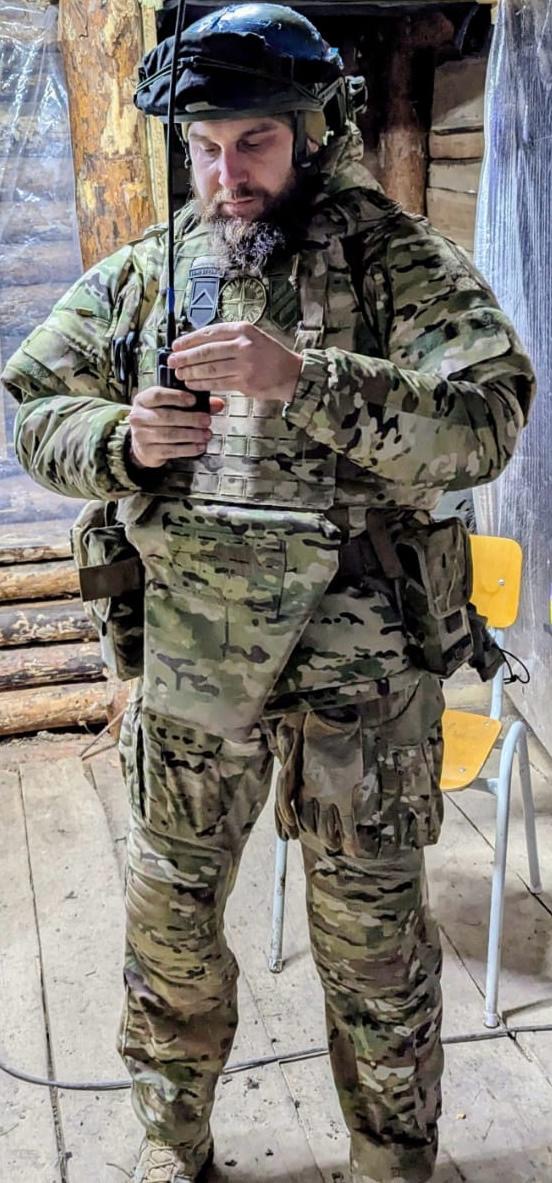
- Listen, great! (he smiles. — O.M.). I was issued a weapon that very evening. In about 20 minutes, they ran us through tactical medicine. I said I didn’t understand anything. The answer was, "It’s fine, it’s fine! The main thing is: let your eyes see, and your hands do." For the first four days, we were organizing things during the day, and every night I watched videos on tactical medicine and weapons handling. In between, I talked to Azov veterans, they explained and showed me more on top of that. It was all pure improvisation. Essentially, when it came to my first combat run, I had no training and no time on the weapon.
- So how did you handle it?
- Fine. Honestly, it was a huge contrast, because I’d never seen war up close, only movies or old footage. My first run was to Horenka, a place I used to go every summer to swim at the quarry. And there I am, driving in, something’s burning, something’s going off. It felt like I’d walked into a movie. But, as I said, it was fine because we were with Azov veterans who kept telling us what to do, and we listened: "Unload, take these things to that basement; we’ll leave the rest here. This is where we’ll stand watch, and over there we’ll observe." I liked being under their command.
Then we came under fire, and I truly felt what shelling is like. And somehow, little by little, I got drawn in. You could say a kind of soldier’s drive kicked in. Of course, it was scary, but it was also very interesting. There was a strong motivational factor: you saw what kind of people were next to you, how they worked, and what mindset they had. You simply couldn’t let them down. That’s the first thing.
Second, you realize you’re a man defending your country, and you have to find strength in yourself, some inner reserves, to keep going and act.
Third, I can’t say the war really "clicked" for me, but I also wouldn’t say I felt anxious. Sure, it was scary and uncomfortable, but there was this inner mindset: if you focus on the task and work through it step by step, you manage. The moment you start getting distracted and thinking, "Will I get lucky or not?", it throws you off hard. So maybe that total focus also helped and produced a positive effect.
- You were fired up, right?
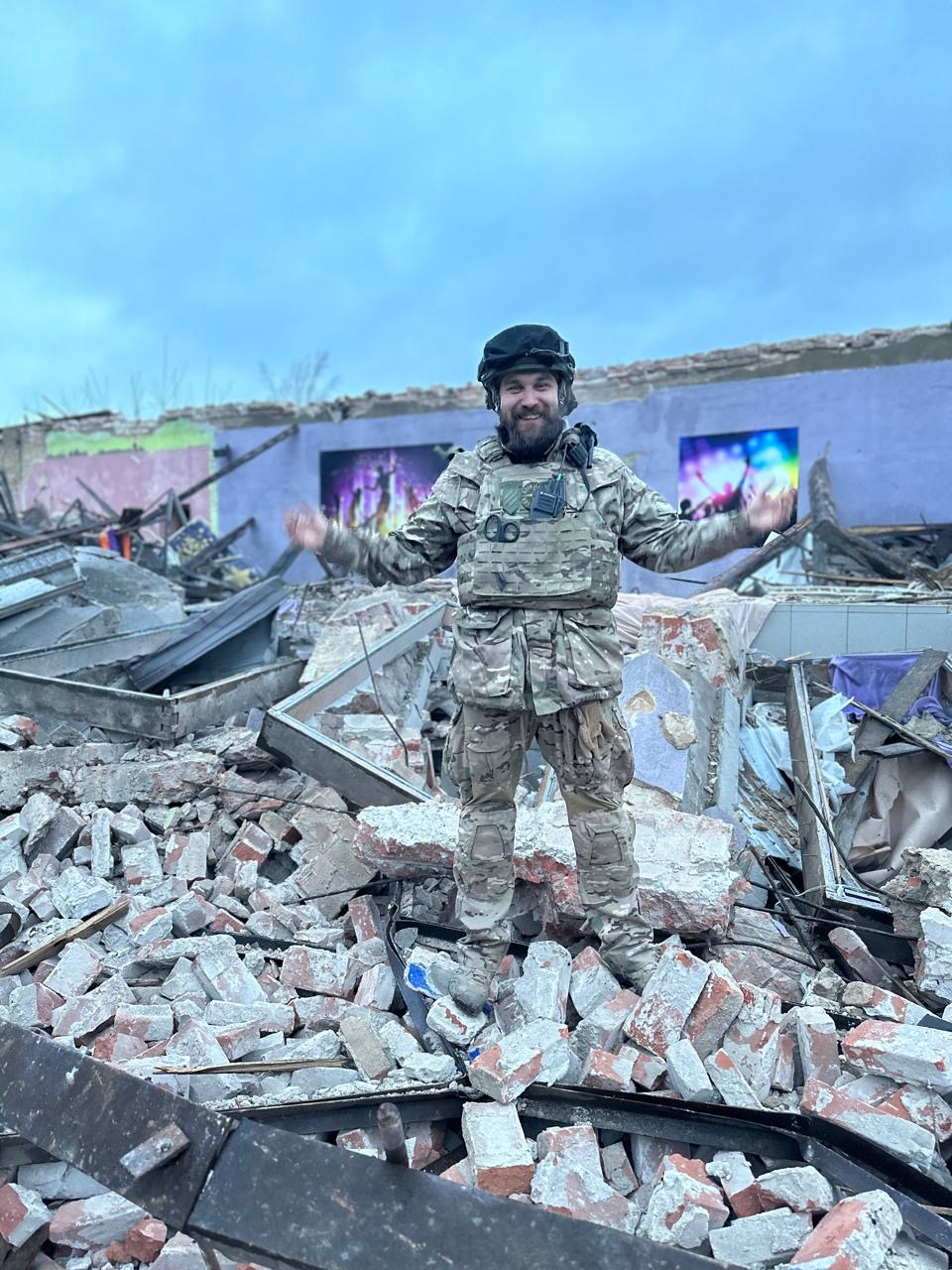
- Extremely fired up. We were running on pure adrenaline: "We’re going to kill them all." It felt incredible.
- What did you feel when the Kyiv region was liberated?
- You know, I was already getting pulled in. We realized we’d done our job on that stretch of the front, so we immediately started thinking about what else we could do.
But we ran into the fact that we still couldn’t do whatever we wanted (he smiles — O.M.). There’s a chain of command that has to decide our next steps. So we did a bit of small-unit coordination: went out to the training range a few times, studied tactical medicine, got kitted out, found some vehicles, and we were issued heavier weapons, machine guns, and modern anti-tank grenade launchers, then we headed to the Zaporizhzhia direction.
- You’re from Kyiv, and at the time, you weren’t officially enlisted. Did you ever feel like going back to civilian life?
- No. It’s true we weren’t formally enlisted, but something much stronger kept us there—the team. That was it: you were already part of the "tigers" system. You build warm, almost family-like bonds. And once you’ve started something, you either see it through to some kind of logical end or you die. That’s when the very best in the best men showed itself.
- War really does bring a lot into focus, including what you called a man’s essence. Did you have acquaintances who fled abroad at the start of the full-scale invasion?
- Of course. My circle of friends changed a lot. Before that, I had, roughly speaking, two main groups I hung out with: one in Fastiv, where I’d go visit my grandmother, and another in Kyiv. I was also part of a football community. From the Fastiv and Kyiv groups, no one joined any military unit at all. And from the football crowd, only a few did. Some left the country, others stayed.
- What did you see when you arrived in the Zaporizhzhia direction?
- We arrived in the Zaporizhzhia region feeling that after Kyiv, we were fierce "top-tier recon scouts" (he smiles. — O.M.). But over there we were fighting in built-up areas, in towns and villages. Here, it was shelterbelts and treelines. And now you’re running through the woods. You have to dig a lot and set yourself up. There wasn’t the same sense of safety you had in the Kyiv region. But after a couple of weeks, you adapt and realize you can fight well here too. Of course, the enemy was more professionally trained for combat. But we learned, looked for their weak spots, and strengthened our own advantages. We got good results there.
- And then came Bakhmut…
- Oh, we rolled out to Bakhmut thinking we were "tigers" too, that we’d kill them all because we’d already been through the Kyiv and Zaporizhzhia campaigns. And there, it really was a "cold shower." We felt the difference: near Kyiv, it was the regular Russian army, but maybe they themselves didn’t fully understand what they were getting into; in Zaporizhzhia, it was also the Russian armed forces, but in the Bakhmut direction, it was all mixed together. For the first time, we ran into the enemy’s full spectrum, every branch and element operating together and we felt that pressure. They were coming at us from every direction, and, excuse my French, we got our asses handed to us. But again, we adapted, both to the conditions and to the enemy. And that’s when the volunteer movement and motivation really stood out. Everyone at their level understood how important their contribution was, from an ordinary soldier to a brigade commander. Everyone realized something had to change, in ourselves and in the way we did things. And that was probably the first time we truly understood it was a toe-to-toe fight. Back then, there weren’t that many drones, and it was pure military romance: whose character was stronger, who was better trained, who shot straighter, who wasn’t afraid to do something extra, something you don’t do every day. And little by little, it all started to fall into place.
- I know that in Bakhmut you also trained foreign fighters. Is that where your call sign came from?
- No. I got it back at the very start of the invasion. There was a lot of chaos then, and I kept repeating, "Alright, guys, stay calm, don’t panic. Yes, the situation is tense and unclear, but we have to push through" (he smiles. — O.M.). I worked a lot with people, explaining things, talking them through. I kind of got pulled into that military routine very quickly. That’s how the guys came up with the call sign. I didn’t really care what it was, so it stuck.
As for the foreigners, that was an interesting story. Even though we were anti-tank troops, no one forgot that we were soldiers. We had to cover the toughest sectors and that’s what we were doing. Naturally, we also had to provide cover for our infantry. We told the command we needed mortars. They found them for us. Along with mortar crews, but it turned out those crews were made up of HUR (Defense Intelligence of Ukraine) personnel and foreign fighters. We were asked who could speak decent English. I said, "I speak English and French." So they were assigned to me. We thought specialists were coming, but instead, these were people who had only worked with mortars on a training range. They hadn’t taken part in real combat yet. We were like, "Well, that’s some help we got" (he smiles. — O.M.). I talked to them and said, "Guys, everything will be fine. Let’s get acquainted, I’ll show you what works and how." They said, "We know everything." I said, "Then go to work." "Where?" "To war." "No, we need help." I said, "That’s where you should have started." We ran them through a formation inspection, checked that they were fully equipped, and then took them out to look at the position. They were thinking they’d find some basements or buildings and work from there. I said, "No. That’s not how it works here. You know there’s this thing called a shovel. Here, one for each of you. Come on, I’ll show you what to do with it." They said, "We’re not digging." I said, "Oh, you will. If you want to live, you have no idea how fast you’ll learn to dig."
At that point, we were working roughly fifty-fifty: one crew was set up near a building, while we were still digging out a proper position for the other. Then it turned out they knew how to fire but not how to adjust their fire. We taught them fire adjustment. Communication in English took up a lot of time, since not everyone spoke it. That’s when I realized they needed to be able to train and adjust on their own. We set up live feeds for them. I made a special communication map so that even someone who didn’t know English could understand at least one or two key words. I also needed time to rest and handle other tasks, I couldn’t sit on the radio 24/7. And they did very well. Honestly, they did a great job.
- And how did they fight?
- Great. At first, a lot of things felt strange to them. We wanted not only to cover our infantry but also to work deeper. I told them that. They said, "That’s very close to the line of contact." I replied, "It’s fine, everything will be alright. The infantry will cover you, and you’ll cover them." I visited them at their positions. They really clicked with our way of communicating. They felt our willingness to take risks and our sense of brotherhood. When we said goodbye, I could tell they were sad, our cooperation was ending, and they had to move on elsewhere.
- Then came Avdiivka. What did it become for you?
- It was the peak of difficulty and exhaustion. It was extremely hard. The enemy had been preparing for it for a long time. And at the start of the fighting, we didn’t fully understand what was happening, we figured it out as we went. We lost many, not just "tigers," but ferocious warriors, the true flower of the nation. But we realized we had to change our approach: build stronger defenses using anti-tank weapons, artillery, and uncrewed systems. Tanks had to operate from covered positions. In other words, it had to be a serious, layered military setup.
- When I asked Slip what was the hardest part for him in Avdiivka, this was his answer: "Any advance requires bringing up logistics and heavy weapons and changing the operational situation, because you can’t move forward without reshaping it for the entire unit. There are losses and wounded along the way. Sometimes you have to make a choice: you keep pushing forward, but you run into logistics problems that may lead to casualties, though you might liberate, say, a few more square kilometers; or you stop, dig in, and plan further, knowing that in the meantime the enemy will be building new defensive lines that you’ll later have to break through, at the cost of human lives." And what about you?
- I agree with Slip. Every time you plan an operation, you think it through so that there are no losses. But in Avdiivka, even during the planning stage, you knew that there would be losses. That's the situation...
- Am I right in understanding that this was the hardest period for you during the war?
- Exactly. Avdiivka was the hardest stage we went through.
- Tell us how the Kraken 1654 Unmanned Systems Regiment of the 3rd Army Corps was formed.
- I want to say that we are very grateful to Andrii Yevhenovych (Biletskyi. — O.M.) for believing in us and doing everything to ensure that our traditions and experience continue to spread and that new commanders grow. I’m convinced he saw that even back when the 3rd Assault Brigade was still operating, many people had already outgrown their level, so the next step was necessary. It could have been done through a division and then a corps, but he made that decision, and we fully support it.
In modern warfare, everything is done by personal example. People won’t believe you if you’re not with them and not doing the same things they are. They won’t follow you if they doubt your leadership. And you can’t achieve anything if you don’t multiply and pass on your experience. That’s why we started forming different units. For us, it’s a challenge. At the beginning, it was hard, because none of us had ever worked at that level before. It’s one thing to build a battalion when you all know each other; it’s another to form a new unit immediately, without prior coordination or rotation out of combat. But I want to note this: in my view, what is happening "at the top" right now will largely never be effective. I keep saying we need to change the doctrine, the approach, the training and completely rewrite the Armed Forces of Ukraine. And it’s crucial to do that based on the experience of the people who are actually carrying out these operations.
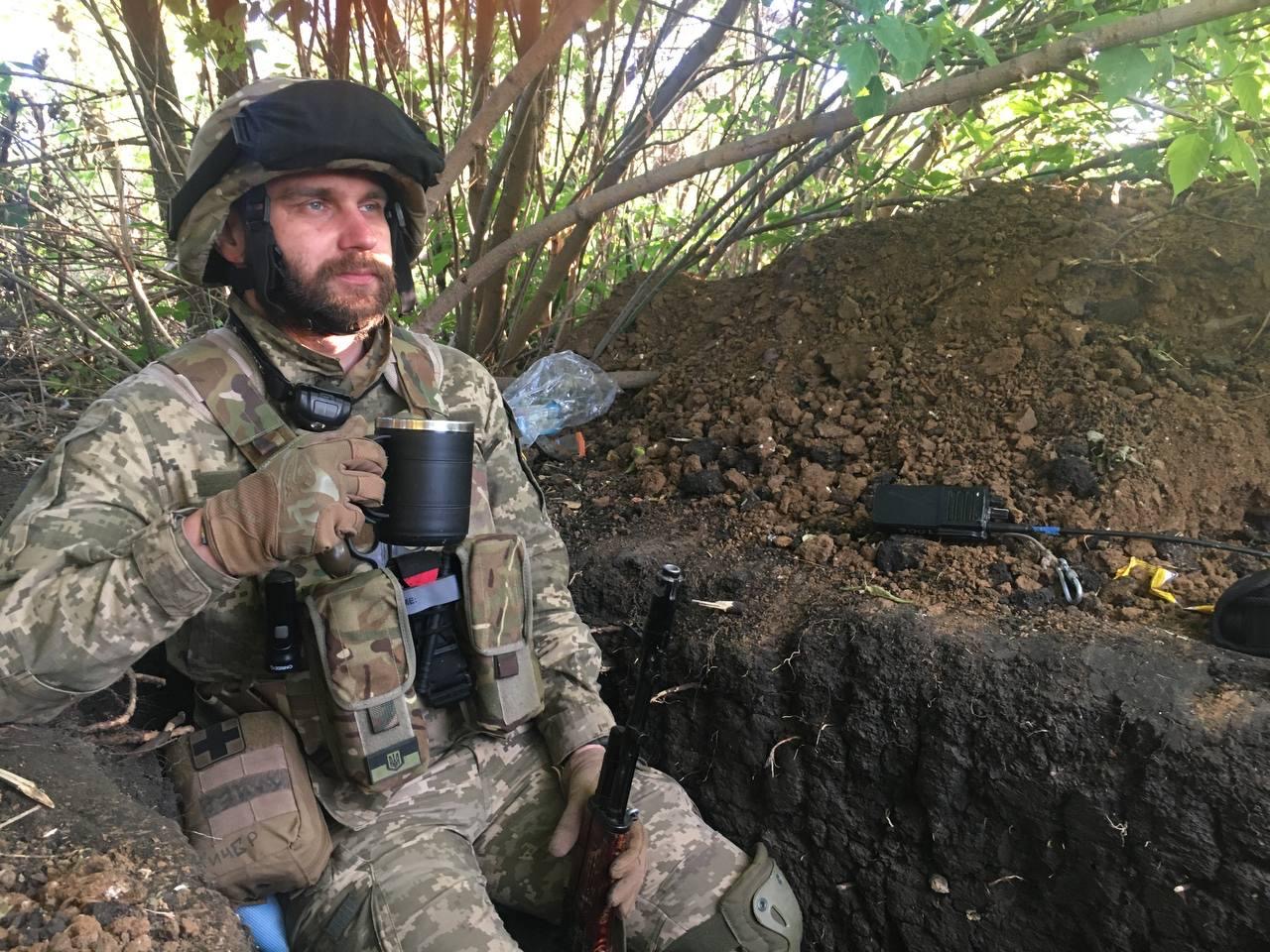
So, to repeat myself, forming the regiment was difficult at first because many processes were happening at the same time—recruitment, force build-up, and so on. People started taking on new positions; some even skipped a level and moved up two ranks at once. But I already feel that we are playing an important role on the battlefield and can influence it. With our own resources, we are capable of repelling enemy assaults and operating in a systematic way across the operational space. We assembled this "train," put it on its "tracks," and it gradually started moving. A regiment isn’t just about deploying to positions and fighting. It’s also sustainment and logistics and not just resupply. Logs have to be sourced somewhere, cut, and delivered. That means vehicles or armored platforms have to be moving to bring everything in. Personnel need uniforms, first-aid kits, and so on. In other words, forming a unit is a very large and complex set of tasks, especially since we started everything from scratch. Three groups came together: the forming battalion of the Armed Forces of Ukraine, the 21st Separate Special Purpose Battalion; veterans from the 3rd Assault Brigade, who formed the backbone of the anti-tank battalion; and the core of the Kraken special unit, who transferred to us from the HUR.
- What challenges arise during the formation process?
- When it comes to sustainment, the main issue is the distribution of assets, drones. Some units are supplied to an excessive degree, while others are not. It would be fair, for example, if you are holding 10 percent of the entire front, you receive, roughly speaking, 10 percent of all drones. The guys told me how they go together with other units to pick up UAVs: some get 4,000, while we get 800. To put it mildly, that’s not very fair.
On top of that, I believe some programs need to be reworked, because so-called "e-points" don’t reflect a unit’s quality. If you look at DeepState data over the year we held the Kharkiv direction, our line of contact did not shift. In some areas, we even took control of forest belts and settlements. The number of platforms like Orlan and Zala in the 3rd Assault Brigade’s defensive sector was minimal, roughly three or four detectable UAVs over a 50–60 km stretch, because the enemy understood it was better not to fly near us. Adjacent units had 10–15. Yet "e-points" were allocated based on sheer numbers. Yes, they are a certain performance indicator, but broader factors need to be weighed more heavily. How are we supposed to rack up those "e-points" when the enemy has lost so much equipment trying to assault our positions that they switched to small infantry group tactics? And then they realized it’s more effective to strike at the seams with adjacent units, where the chances of success are higher. This is an issue that needs to be addressed.
- By the way, how would you describe the current situation in your sector?
- We’re holding our positions as we were before. The enemy can’t achieve anything. In the Kupiansk area, things are more or less stabilizing, for now (we recorded this interview on December 6. — O.M.). What it will look like in two weeks is hard to say. But I’ll put it this way: the enemy has had no serious success in Kharkiv region. I wouldn’t say anything here is critical. Some things are very difficult, but we will handle it.
- How often is your regiment replenished? Are there people who want to join you specifically?
- Yes, there are. I think word of mouth plays a role here, people understand who this unit is built from. Our reputation is already working in our favor. For example, some knew that I was moving from my role as chief of staff of an anti-tank battalion to the same position in the 21st Separate Uncrewed Systems Regiment, and they understood there would be fair treatment and a professional approach. And as command, we will indeed do everything in our power to ensure our unit functions at full capacity.
Yes, there are. I think word of mouth plays a role here, people understand who this unit is built from. Our reputation is already working in our favor. For example, some knew that I was moving from my role as chief of staff of an anti-tank battalion to the same position in the 21st Separate Uncrewed Systems Regiment, and they understood there would be fair treatment and a professional approach. And as command, we will indeed do everything in our power to ensure our unit functions at full capacity.
- Do women join your unit?
- They do. But look, we have women who are real "tigresses", genuinely ready for anything. They fought alongside us, served in the infantry, never refused any task. Essentially, they serve on the same footing as men. So full respect to them. At the same time, I’m against bringing women in en masse while we still haven’t run out of men. Everything has to happen in sequence.
And frankly, not all women are ready for war. Many overestimate themselves and then run into the reality that it requires a lot of work, physical work included and it’s not for them. So women need to trust our experience more: how we recruit, how we talk to people. Not every woman is an assault trooper. We need clerks, technicians, medics. But what matters is a genuine desire to work in those roles. Sometimes, for some women, it’s just a "cool story", being in the military and hanging out with the guys. But I want to stress this: men have to step up, so the "roosters" in Kyiv, for example, find their balls and join the military.
Look, if we had full-fledged rotations, the situation would be different. We’ve been fighting for almost four years. Everyone wants a bit of rest. If more men joined the Armed Forces of Ukraine, they would already have roughly the same level of experience as we do, and we’d all be able to properly replace one another. Even if we were given six months to take a breather and sort out personal matters, we wouldn’t be gone that long, we’d be back in three months. And in civilian life, there would be far more people who actually understand what war is and what’s really going on. The nation itself would be more aware. Right now, that’s a problem.
- How do you feel about draft dodgers?
- I feel sorry for them. They’re the kind of people who will never understand that they are men. Their worldview is quite limited. It’s obvious to everyone: if they don’t join in defending our country’s sovereignty now, they’ll end up defending someone else’s. Here, they have a chance to earn respect, receive proper training and equipment, and serve under commanders who value human life as in the 3rd Army Corps. And after the war, they’ll be heroes: you defended your country, your wife and children love you, your parents are proud of you. They trade all that for some illusory belief that everything will somehow work out. But if they don’t join us now, then later, if things here end badly, they’ll be fighting on Russia’s side against Europe. And there they won’t be treated as people, but as "meat." They’ll get commanders who drive them forward and "cancelled them ." That’s double damage.
That’s why the state has to step in now and shake some people awake. First, create conditions that make people want to join the military. Second, motivate civilians. Third, bring them in. Even if someone is forcibly mobilized, they still go through adaptation within the unit—getting to know the team, the routine, the habits, gradually being drawn into combat operations. Of course, everything depends on circumstances. In Avdos, things were happening in such a way that there simply wasn’t the time or ability to work with people, bodies were just needed. Now there’s a great opportunity to integrate into this whole military process in a proper, step-by-step way. I think it’s excellent (he smiles. — O.M.). We know how to work with people. And that’s how they adapt and eventually become like us.

- My friends in the military have shared plenty of examples of how real "top-tier recon scouts" emerged from people who, before the full-scale invasion, were afraid even of the sight of blood or from those you’d never imagine were capable of heroism.
- We’ve got a guy in our unit with the call sign Shakhtar. A contract soldier who spent about two years opening a gate somewhere. At first, we kind of laughed at him. And then it turned out he was "Rambo." He’d hear something and say, "I think someone’s there. I’ll be right back." He’d go, kill everyone, and come back. One time, he went again, the guys didn’t hear any shots, just some movement. Later, he says, "Something went wrong with my rifle, so I knifed him." In other words, he’s a completely different person from the one who first came to us.
You can even see these changes in how they look. They show up in skinny pants, with certain habits. A month or two passes and they’ve bought proper C.P. Company gear, grown a beard, slapped on some cool patches, the changes are undeniable. Even their behavior shifts: more confidence, straighter posture, a much stronger presence.
- Toward the end of our conversation, I want to recall your quote: "There will be no second season of the series. How it ends depends only on us." The so-called peace talks are ongoing. The battlefield situation is difficult. Do you see an end to this in the near future?
- I think those talks are complete bullshit. Do we need a peace deal at all? Yes and no. We really do need to regroup, choose our next development vectors, and prepare people. But, does the state and those who run it need that? I don’t think so. They understand that most of them won’t keep their positions after elections. Our mental stance will also matter: what did our friends die for? For what?! So things could get even worse? That’s a grim story.
Putin will then have to explain to his own people what he achieved in four years of the "special military operation," why their losses are so high, and what the overall situation is. And he achieved nothing! He grabbed a bit more territory, that’s it. And after all that talk about taking Kyiv in three days so what?! Come on.
Is all this beneficial for America? The interest there is money, not Ukraine or anything else. So in the end, all these talks are just a distraction. I can’t say for sure whether this is meant to throw us off balance a bit, give the Russians time for additional mobilization and to prepare new "meat," or allow someone inside our country to gain some personal benefit.
To sum it up, I’ll quote the classics: we just need to hold out one day longer than the enemy. That’s it. The Russian authorities have been looking for weak links among us through their agents, while at the same time deliberately creating conditions of poverty at home so that, for many, the 200,000 rubles offered for a contract look like a fortune. We just need to wait until the war starts affecting those who feel safe today, the so-called middle class. When they start drafting not only the homeless, alcoholics, and prisoners, but them as well, they’ll start howling. We just have to outlast them. It will be extremely hard, but in this process, like a diamond, the gene of our nation is being cut and polished. We’ll understand who we are. If you look at history, we’ve always suffered, but it has made us stronger.
Olha Moskaliuk, Censor.NET
Photos provided by the Teacher


