



Yehor Firsov: "We are in new era of warfare. In historical context, this is comparable to invention of atomic bomb"
Not long ago, Donald Trump publicly reproached Volodymyr Zelenskyy, claiming that Ukraine "has no cards" in a serious geopolitical game. As if we are merely observers at the table where great powers decide the fate of the world. However, events surrounding Iran have shown otherwise: Ukraine does not just have cards, we have trump cards.
And one of them is the unique experience of modern warfare. This is already acknowledged by our partners, who reached out to us for assistance, specifically regarding countermeasures against Iranian drones. On March 10, Zelenskyy announced that Ukraine had responded and dispatched professional, fully equipped teams to three Middle Eastern countries.
We recorded this interview with Yehor Firsov, an officer of the "Kraken 1654" unmanned systems regiment of the Third Army Corps, on the eve of this information being made public. During the conversation, we discussed exactly this: why the Ukrainian experience in combating Iranian UAVs might be needed by allies, how rapidly warfare technology is changing, and the fact that those abroad still do not fully grasp the scale of the new reality.

"Recently, I have been feeling that the world is entering a new era of the super-influence of robots, which we in Ukraine encounter daily, both our own and the enemy's," Yehor says. "This will be a period of artificial intelligence application and many, many things that, as of today, we cannot even imagine. And, of course, when it comes to wars and aggression, Ukraine is currently one of the states best prepared for these new challenges. That is the good news. The worst news is that another country is ready for the wars of the future—Russia."
- Iran has precisely been helping Russia, particularly in the supply of "Shaheds," the production of which the Russians have already streamlined and are using en masse during attacks on Ukraine. This also played its part, didn't it?
- Let me add to that: last year, Russia signed a strategic partnership agreement with Iran, but it is providing almost no help during the current crisis. This serves as a signal for those in this alliance of authoritarian states: none of them will support each other, so everyone will have to deal with their own problems independently.
Regarding the "Shaheds", that is a different story. Recently, the prestigious YES conference took place, attended by representatives from leading nations. I will not name names, but these are very influential people at the level of defense ministers and their advisors, who are highly focused on the topic of war. I told them: "Imagine that Russia, instead of Ukraine, attacked a European country. Russian tanks would roll in, and missiles would fly. What would happen? They would be destroyed. But what if this happened now, in 2026? Tanks will no longer roll in; instead, thousands of 'Shaheds' will fly, various 'Rubicons' with their FPVs, and thousands of drones of different types will emerge, and together they will turn that country to ash. Are you ready for such a scenario?" I saw that they were very alarmed and realized they are still in the past, while the aggressor country has effectively already taken a step into the future and has become technologically several heads taller. Consequently, they do not even know what to do. Of course, I would have liked to hear the answer: "Mr. Firsov, do not worry! Our intelligence is aware of this, and our defense industry is already operating at the appropriate level." But that is not the case! And for us, these are major challenges.
- It is currently often discussed that, due to this situation with Iran, Ukraine will recede into the background of the global agenda, leading to a decrease in aid. What is your opinion?
- Both yes and no. The focus of attention will indeed be blurred. However, I believe that at the level of a certain military group, we even need to participate in this war. Ukraine is currently number one in countering Iranian technologies. We are essentially the only country that has countered these weapons and that can supply effective countermeasure weapons against the same "Shaheds" and set up infrastructure in the confrontation with Iran. Therefore, I very much hope that some part of our military will be able to go and help conduct such operations. Hypothetically, this could be at the battalion level, I am not ready to speak about specific numbers right now. But I know for sure that we need to keep our finger on the pulse in this war. We must understand it and comprehend its specifics. Where else, if not there, should we implement our "super-experience" that we gain daily?! For example, today, shooting down a "Shahed" is a routine matter for my regiment. Yet for those countries considered economically highly developed, it is a difficult challenge. They do not know what to do about it.
- If you were offered, would you agree to go and help?
- Look, I am a military man, so I will follow orders. But overall, I would gladly share information and technologies with our allies if such a task were set, in exchange for the continuation of the aid provided to Ukraine.
- At what level are our technologies now? How much are we evolving? In early January, the Commander-in-Chief of the Armed Forces of Ukraine, Oleksandr Syrskyi, published the following post on his Facebook page: "The past year has indeed become a year of a major breakthrough in this direction. The unmanned component in the Armed Forces of Ukraine has significantly increased. We are not stopping. For 2026, we have planned a further buildup of the capabilities of the Unmanned Systems units." Is this breakthrough sufficient to counter Russia, which is increasing its forces?
- As I said, we are in a new era of warfare where both robots and artificial intelligence are actively used, at least in the initial stages. In a historical context, this can be compared to the invention of the atomic bomb. Those who saw the movie "Oppenheimer" remember well that America formed its own team, which very quickly deployed entire camps, experimented, and raced to gain access to the atomic bomb. Germany did the same. Billions were spent on it, but the United States gained the advantage. The same process is happening in a certain technological advancement. In 10–15 years, some country will be the first to reach the use of artificial intelligence on a comprehensive level. That is, many processes will go through a sort of "military ChatGPT," where commanders will set certain parameters, and AI and programs will perform tasks en masse.
Back in 2023, we flew across a field and struck a dugout with our first FPV drone. Even then, I considered it cutting-edge technology. Compared to what is happening now, three years later, there is simply no comparison. The operations being conducted today, where a fiber-optic "mothership" drone flies 20 kilometers and releases three to five more drones that fly further to find their targets, are on a different level. One was controlled via fiber optics, while others used analog or digital communication. Now, every drone deployment is a significant technological operation involving the coordination of other systems. Previously, we were on a "chessboard" where each "piece" fought for itself; now, it is transforming into an ecosystem with specific openings, techniques, and its own progression of events.
Of course, it is difficult for me to assess which stage of the journey we are currently at. But comparing it to 2022–2023, it is a staggering leap. This development will continue as long as the use of the latest technologies allows. Currently, we are anticipating that the Russians might devise engine acceleration for the "Shahed." This refers to a jet engine that could allow a "Shahed" to reach speeds of over 500–700 kilometers per hour. Will our interceptors be able to shoot them down? This arms race in Ukraine takes place daily across various headquarters. By the way, we have an advantage here because we have a large number of local teams. The enemy's advantage is that they are major players who scale everything immediately. That is, we can innovate, but we do not bring it to scale. The enemy copies from us and immediately develops it at the appropriate level.
- Why do we not scale in this way?
- That is not a question for me. But, I repeat, we have this advantage in the vast number of teams. For example, every workshop-R&D unit in the regiment is its own highly developed think tank. Similarly, all production sites of every company in Ukraine are also very strong, world-class teams.
- The enemy is also not standing still. Recently, cases were recorded where a single "Shahed" transported two additional FPV drones. "Shaheds" equipped with Starlink reached Kyiv until the Russians were disconnected from the system. In late February, a fiber-optic drone reached Kharkiv for the first time. And in the Zaporizhzhia direction, our military shot down a Russian "Klyn" UAV equipped with artificial intelligence. The enemy can scale all of this as well, can't they?
- What you have just listed is not news to us in the military. It is only a fraction of what makes it into the news. There are hundreds of times more such cases. You could say that new kinds of know-how appear every day. Both the enemy and we are testing tools. The tool that proves effective is then actively utilized.
You listed some of what the adversary uses, but we have plenty of interesting things as well! We also fly FPV drones 40 or 50 kilometers deep into enemy territory. We also use Starlink en masse. This is what I am talking about: the race for technological advancement. You must constantly be one step ahead of the opponent. If you fail to do so, you will lose. Units are constantly discussing how to improve their technological edge, how to fly even further, how to bypass enemy EW, and so on. Sometimes, the military personnel who run workshops or engage in R&D use such professional terminology that even I, someone who has been in this field for many years, do not always understand them. Their level of technical communication gives the impression that they are speaking a different language. Ordinary citizens would understand even less what is being discussed.

Over a year ago, I gave you an interview. Before this conversation, I wondered what had changed during this time. On the one hand, globally, nothing. On the other hand, two things. First, the war has become even more technologically intensive overall. Second, in my opinion, we have realized that the fighting will continue for a very long time. It is like climbing a mountain and thinking, "Just 20 more meters and I'm at the finish line!" You climb up, the horizon appears, and you realize there are another 200 kilometers to go. It seems to me that this anniversary (four years of full-scale war) has brought the understanding that the horizon of the war is completely unfathomable. Before, we first thought about surviving, then we waited for the counteroffensive, then for Trump's promises to end the war, but now it has become clearly evident: no miracle will happen. We will simply have to run in this total marathon of war.
- As I see it, this realization has not reached all Ukrainians by far...
- Not to everyone at all! But that is the point of our interview, to voice an alternative opinion. Although, you know, those who read it already understand what is happening; they follow the news and are aware. But those who wait every day for some figure to come and end this war with a single word will not read it. They live in their own large bubble of some hypothetical TikTok.
- I do not have it, so I was surprised to learn that there is actually quite a lot about politics and war there now.
- But that is how the algorithm works. If you are interested in the war, it will provide you with such content. If not, it will show some cartoons and create a parallel reality where everything is great: laughter, jokes, and that is it.
- However, there are people like us who realize that "this rain is here to stay." A blog by Mariia Berlinska titled "What's next for drones?" was published on our website. In it, she writes, among other things, that Russia may already be planning an operation even larger than our "Spiderweb," where operators thousands of kilometers away could simultaneously attack our critical infrastructure with hundreds of drones. She suggests that Russian UAVs could potentially operate autonomously across Ukraine. What do you think?
- Here is the situation. First, it is a thousand percent certain that the enemy is working on an operation similar to "Spiderweb." Look, we could not send any of our missiles to Murmansk. Therefore, we had to take a creative approach to the process. We had to check satellite imagery and look at the location where this operation was conducted—at the military aircraft that were just sitting there, seemingly in safety. In our case, the situation is completely different. Neither in Zakarpattia nor anywhere in central Ukraine is there a situation where everyone is relaxed, thinking that nothing will fly in. Everyone is defending themselves as best they can in every corner of our country. So, in this regard, it is both slightly easier and more difficult for us at the same time.
Second point: the adversary can already reach almost to Kyiv on an FPV wing—the technological capability exists. But there is no point! So, it reaches there, then what?! However, we must be prepared for the enemy to potentially take control of one of our highways somewhere a hundred kilometers from the border, making it impossible for a fuel truck to drive on it. Perhaps not just a fuel truck, but anyone at all. This could easily happen. We need to prepare for any scenario, embrace chaos as the norm, and be very flexible. Because only through flexibility—when you adapt and restructure—can you gain an advantage.
- We are adapting. We already have interceptor drones against "Shaheds," which are effective both in the rear during shelling and at the front. How is your unit doing with them?
- We also use them as much as possible everywhere. They are indeed effective; they show results. But I say again: this is only for a certain period of time for their application. Perhaps it will pass when the enemy adapts and creates, for example, faster targets. Then we must be ready to use other weapons, hypothetically, laser ones. We will need to think about exactly how to accelerate the interceptors. That is, restructuring technologies according to the challenges we face and reacting to them.
- And currently, interceptors are not a panacea?
- Look, everyone is racking their brains over how to better and more effectively use interceptors to shoot down "Shaheds." There are several key points here. First: radars. Because the radar is the protagonist in this story, not the drone, so that you can see where this "Shahed" is flying. Second: trained crews across the country. Third: it is not excluded that we will have to create certain units at the community level to shoot down "Shaheds." For example, buying these radars with local funds, connecting to the general system, and training our own human assets. Perhaps creating a modern "Air Defense TDF," for example, from young people under 25. You know, flying these types of drones is even easier than FPVs because, for instance, there is self-homing. There is less hassle with their setup. On an FPV, you have to understand what kind of ammunition you need—HEAT if you're working against equipment, or fragmentation if against infantry. Here, it's simple: if you need to shoot down a "Shahed," the ammunition is already part of the interceptor's arsenal. Plus, you work in much more comfortable conditions than 10 kilometers from the front line. There is no EW. That is, there are a huge number of advantages. Therefore, I would consider creating these so-called "Air Defense TDFs," involving as many people as possible and training them. This would be an additional link to help shoot down "Shaheds" and would serve as a reserve for the front if anyone later wants to join the Armed Forces of Ukraine. The more echelons of these anti-Shahed assets we have, the harder it will be for the enemy.
- The enemy often sends UAVs for reconnaissance to non-frontline cities, followed by massive shelling. They also need to be shot down, right?
- There is a certain nuance here. Once, I saw a reconnaissance drone flying over Kyiv. I don't know its type. But it was as loud as a "Shahed." Air defense started firing at it from everywhere at once. I realized it was a mistake because that is how you can give away your location. Perhaps the air defense didn't know it was specifically a recon drone: they saw an object on the radar, identified it as not ours, and received an order to destroy it. But in doing so, they demonstrated where they were located. We have a very treacherous enemy. Besides conducting reconnaissance via photo or video flights, they also lure out the units working against them. A scout needs to be shot down without engaging powerful systems. If a machine gun team does it, they can later relocate by vehicle. But if it concerns a more stationary complex, it cannot be exposed, lest the adversary gain an advantage. That is the point, how complex everything has become that you cannot afford to shoot down such a drone and reveal your air defense positions.
- Many nuances to consider. Is this a very complex job?
- Very complex. One could already write monographs on taking these nuances into account. When all of this began in 2023, there were a few tools and forms of their application. Hypothetically: FPV, "Mavic," some recon wing, "Matrice," "Autel," and a few more types of drones. Everyone knew them. Today, there are hundreds of names, application tactics, and techniques. And all of this must be taken into account.
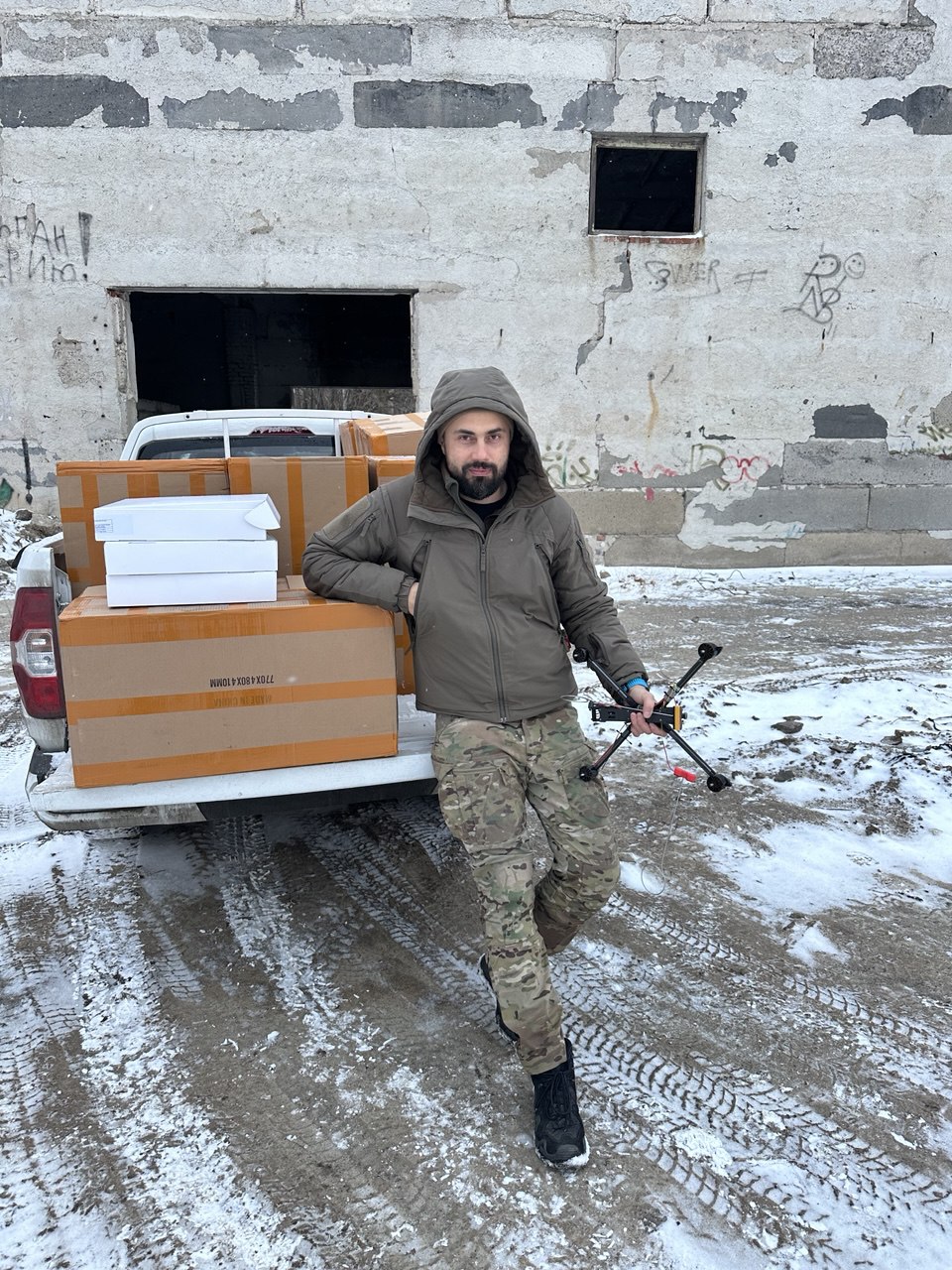
I don't want to offend anyone, but in my view, the commander of the future is a guy in glasses who knows all the specifications and performance characteristics of various ground and aerial drones, who knows how to calculate correctly and press the right buttons, rather than some brave infantryman who went through 2014. That is because very little of what war was like back then remains today.
- Even compared to 2022, a lot has changed. For example, the field of Unmanned Ground Vehicles (UGVs) is developing quite actively now...
- By the way, many people think it looks like this: an operator sends a steel "Robocop" on wheels to our positions to, for instance, evacuate a wounded person. But this task will not be successful unless you conduct a comprehensive operation to protect it from the air. If you just deploy a UGV now, there is a 90 percent chance it will be destroyed. In other words, if you don't protect it with other drones, your operation will be under a major question mark. This is another point about it no longer being enough to just move "one piece on the chessboard." You have to consider many different factors and have a combination of subsequent steps.
- You and I periodically discuss these changes and constantly remark: "Nothing like this has happened before!" I suspect that in a year, we will be recording an interview and recalling today's UAVs with nostalgia.
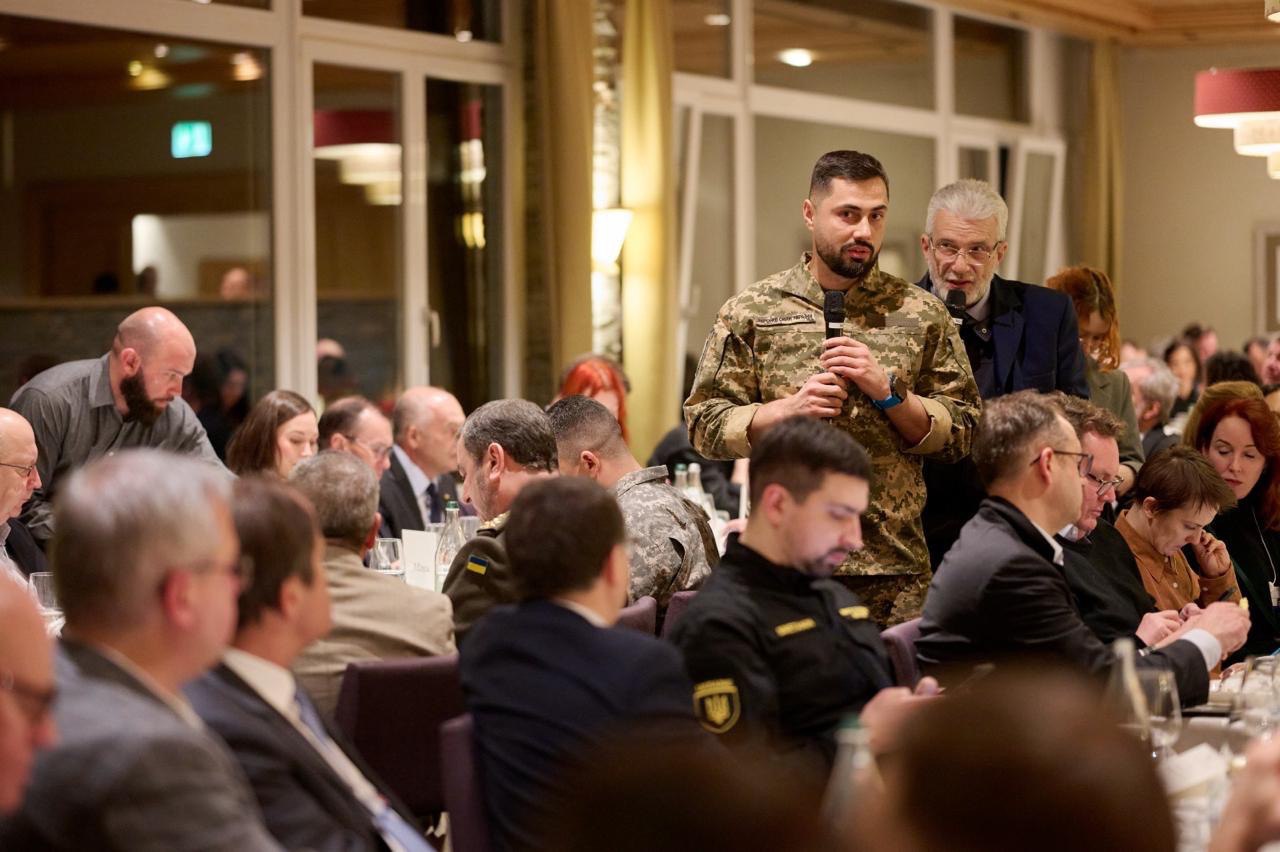
- You know, last year I was invited to the Economic Forum in Davos. Foreign presidents, prime ministers, and ministers were present at the dinner. I gave a speech. I thought beforehand: what can I say in two minutes? Why waste words?! I'll tell it as it is. I get up and say: "I see a vast number of security measures here: guys with machine guns, military personnel, checkpoints. But all of this is nothing compared to the challenges you face. If, for example, a missile is launched here from another country, there is a 99.9 percent probability that various air defenses will shoot it down. But if from that mountain (pointing out the window) some group of terrorists launches an FPV drone here, no one will be able to do anything." Everyone sat there in shock. Afterwards, they came up to me and said: "We are the most protected territory. What FPV drone?! It can't appear here!" Over the past year, I have constantly seen news that some mundane UAVs without explosives, excuse me, bent the entire infrastructure over a barrel, leading to significant losses for airlines, and the military could not shoot them down. And we are talking about NATO countries. Many other things are happening that I warned about in Davos, and I was told with a smile that such things could not be. This future arrived literally six months after my speech. That is why I say that we, Ukraine, are already in the future. We see it and are trying to cry out to our allies from the civilized world: "Guys, get ready, because it’s going to be hard!"
One more point: Russia now considers itself one of the strongest countries in the military sphere. They already feel it. Because they have hundreds of factories producing various types of modern drone weaponry, from FPVs to "Shaheds"; they have hundreds of thousands of orcs who have gone through this modern war, and millions who support it. The question is: what is the point for them to stop now? Compared to 2022, they have realized their strength as a militarized state even more. I think they regret starting with Ukraine because their goals were not realized—strategically, they lost. But there is another side: they learned here and now, I repeat, they feel like one of the strongest armies in the world. They understand that taking some European country would already be easy for them, really in three days, as they said about Kyiv in 2022. This is today’s reality.
- The fact that they do not intend to stop is evident both from the situation at the front and from the behavior of the Russians during negotiations. At the beginning, you mentioned their "Rubicon" center, which is currently continuing to build up its strength. It is called a powerful structure. For example, Yuriy Fedorenko, the commander of the 429th separate unmanned systems regiment "Achilles," recently spoke about how they recruit the best "human material" there, mostly young men who are either "selected" during contract signing or prepared in so-called "patriotic organizations" starting from ages 16–17. What is your take on this?
- We have units that are better in many aspects. We talk about "Rubicon" because they are now doing what we did in 2024–2025. For example, they used to be accustomed to driving along highways and did not expect an FPV to fly in and destroy their Ural truck transporting ammunition. Now they have prepared: they have smartwatches, spectrum analyzers that detect drones, guns that shoot them down, special warning teams, nets, and so on. In other words, we taught them how to defend themselves, just as they taught us how to shoot down "Shaheds."
But when they started acting like us in 2025, it was a surprise for us. Although we, the military, realized that such a thing was possible. In our field, everyone knows that our "Muramasa" group was the very first to start flying long distances, 30–40 kilometers, back in 2024. We would fly in and see numerous targets: Urals, MT-LBs, tanks, and so on. Sometimes our eyes would wander: what exactly should we hit? But even then, I thought that one day the orcs would fly to us the same way. And this "one day" has arrived, and we were not properly prepared for it. We did not set up nets, as they did; we did not buy anti-drone guns, while they selected Yakuts who have been hunting all their lives and positioned them to shoot at our drones. At one point, we simply failed to maximize the potential of UAVs to break and stifle them. So, it became unpleasant news for us that they started flying just as we did. Plus, last year, they gained another advantage; there are many more drones now. If in 2023–2024 we took 20 drones on a mission and that was considered a whole arsenal, now that quantity is next to nothing!
- Is "Rubicon" an analog of our Unmanned Systems Forces?
- I will put it this way: it is a significant challenge and a strong, dangerous adversary.
- So, what is to be done?
- We must not lose this war of technologies; we must always be one step ahead, uniting the best engineering minds, finally establishing engineering headquarters, and maximizing incentives for our defense industry to grow. R&D units must constantly produce new solutions, with the best ones being scaled. We need to become a kind of Taiwan, providing ourselves not only with drones but also with various components: circuit boards, motors, and electronics.
But the main story is our internal organization. For instance, how do we motivate a 22-year-old to join these Air Defense self-defense units? Is the infrastructure for that in place? No. Is there an opportunity for a mayor of some town in the Kyiv region to study the experience and use local funds to buy a radar to train people to defend against "Shaheds"? This would create additional practices that would then spread further. Perhaps someone reading this interview will think: "What nonsense! What kind of Air Defense TDF?!" But that was the same reaction in 2022: "What the hell is an FPV drone?! We have tanks and Grads!" Yet we see today's reality. Therefore, we must not stagnate; we must continue to be creative and imaginative, building a more effective system than the adversary's and organizing ourselves so that the enemy has no advantage anywhere. When that happens, and the Russians see that they launched a thousand "Shaheds" and all were shot down, or they sent a thousand orcs, and all remained in the Ukrainian soil, and this happens constantly—then they will reflect and actually sit down at the negotiating table. We must finally kill their belief that we can be defeated.
- Some units are taking the initiative to train volunteers, including young people. I know that your Third Army Corps has created its own pilot school, "KillHouse Academy." Is this the step forward you are talking about?
- Firstly, for us in the Third Army Corps, it is a huge advantage that such a school exists, as it is a true source of personnel. We constantly receive a large number of applications to join our unit. People arrive already trained because they have completed one of the best training programs. They understand what they will face. This allows us to operate effectively. I should remind you that our corps controls over 150 kilometers of the frontline. It is commonly believed that we are in the Kharkiv direction. However, we also manage to cover the Lyman direction in the Donetsk region, where very heavy fighting is ongoing. The enemy is having no success here. But Lyman is important to them because from there they want to launch offensive operations toward Sloviansk, which is about 15 kilometers away, and Kramatorsk, both of which are key strategic cities. On the other hand, they are planning an offensive on Izyum in the Kharkiv region, which must be taken into account. We also manage to operate in the Luhansk region, which many have forgotten about, but three settlements there remain under our control. Someone might say this is unimportant, but that is not the case! Because the enemy cannot fully control the Luhansk region. For our delegation, these are even certain "trump cards" during negotiations. Andrii Biletskyi often points out that the best guarantor of our security is precisely the soldier at the front who defends the land. And that is exactly what this is about, the military is holding the line.
Secondly, I want to urge people to come to "KillHouse Academy." It is indeed the best. Such educational institutions should appear in all regions of Ukraine. That is, there should be many of them, and they should, in particular, cooperate with local self-government. By the way, according to my functional duties, I am also responsible for subsidies from territorial communities. And when I visit, for example, a production site, I always visit the local administration. And here, I have seen two starkly different worlds. You walk into one mayor's office — the room is covered in flags and patches, and he is as competent as possible, knows what is happening, and helps various units with his subsidies. But then there are real, excuse me, scumbags. In their offices, there isn't a single hint of war. One even had banknotes hung up with the inscription "Follow your dream." People like that shake three documents in front of you and say: "Do you know how many requests we have here?!" As if to say, they're fed up already — how much more can they take?! Moreover, they behave as if you have come to see a president or a very high-level official. And, you see, you feel like at least punching him in the face because you realize: this guy is very far from reality! We have been fighting for five years so that the orcs wouldn't come to his community and bend him over a barrel, and yet he sits there acting like a big shot, basically asking me why I shouldn't just go to hell! This is very infuriating, and you don't know what to do with this anger. I thought for a long time about whether to address this topic publicly, but I held back. Now I have decided to tell you generally that such a problem exists. There is the answer to the question: why are we not two steps ahead of the enemy? Because there are such "people" for whom the war is somewhere in a parallel reality.
P.S.: Friends, the "Muramasa" group is actively recruiting. You can submit an application to join via the link:
https://docs.google.com/forms/d/e/1FAIpQLSfotsaCvBuAaF0cqRrfjRl3apIQBBWB_ufxdp64GPQh2QlxZQ/viewform
Olha Moskaliuk, "Censor.NET"
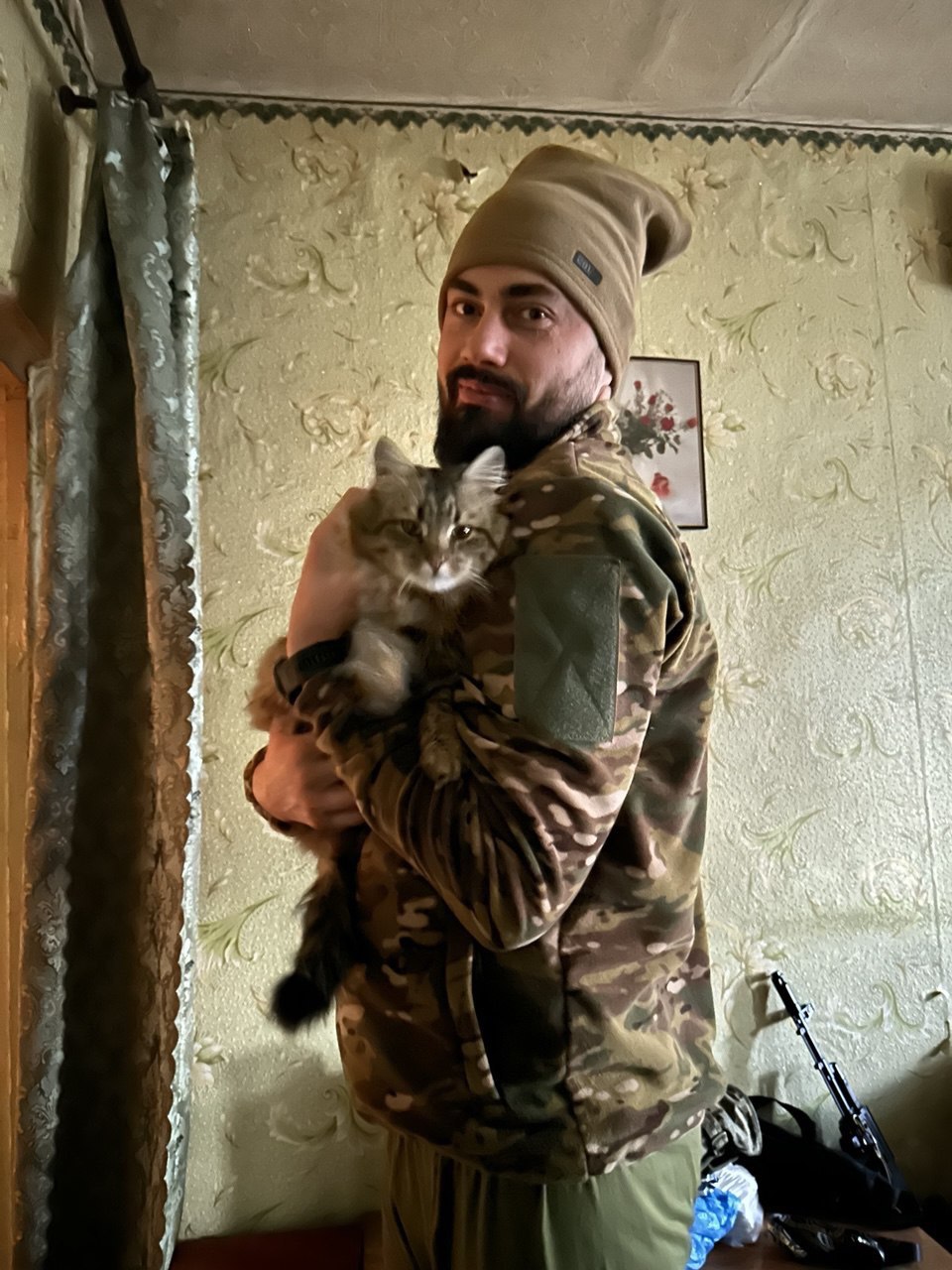
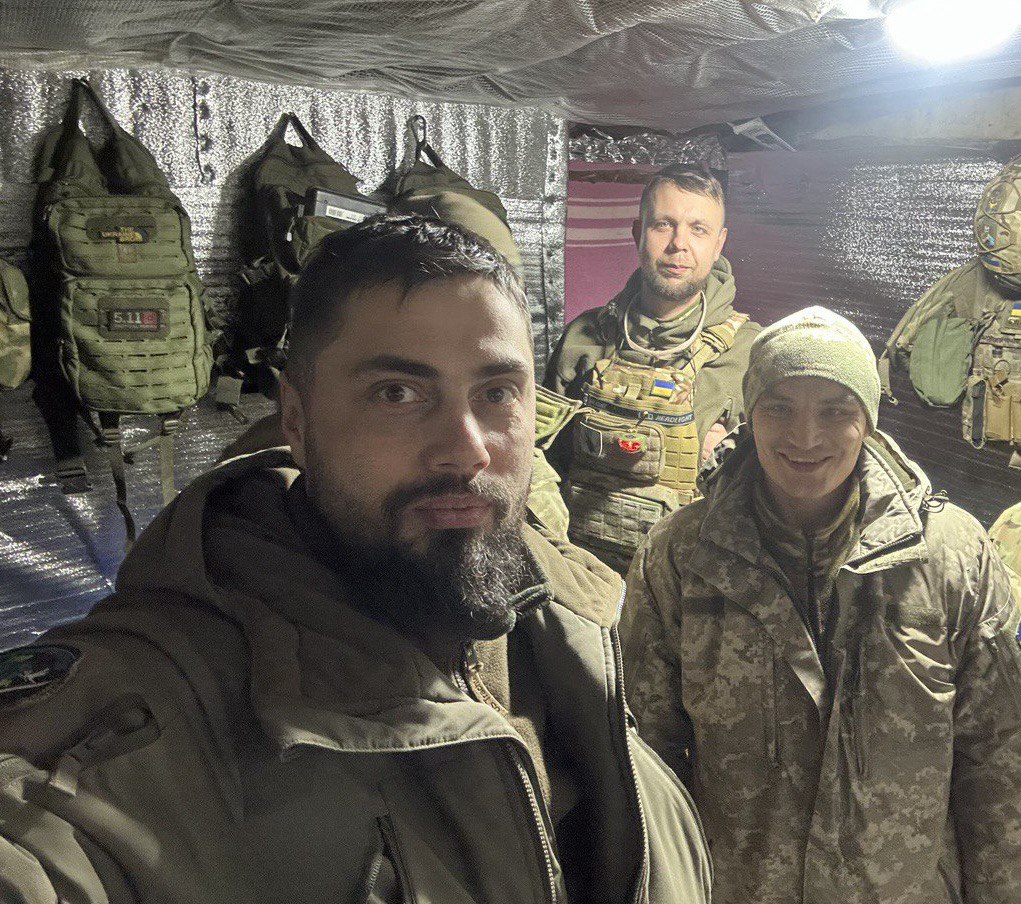
Photos and videos provided by Yehor Firsov


