



"AFU command shifted from Zaluzhnyi’s reasonable and humane system to Syrskyi’s dysfunctional authoritarian system" – Hero of Ukraine Kashchenko
An officer with vast frontline experience gained directly in the war since 2014, respected by his troops and one who has personally taken part in combat, left the ranks of the Armed Forces of Ukraine several weeks ago. He now speaks candidly about what is happening in the army and why it is precisely those who know how to protect their personnel who are the ones walking away.
How many such cases have there been when a commander is removed, his troops publicly speak out in his defense, unhappy with the decision of the higher command, yet that changes nothing. And the officer disappears somewhere into headquarters, pushed as far away from the front as possible. The same happened to Dmytro Kashchenko. After he was removed from the post of commander of the 58th Brigade, nothing more was heard about him. A few months ago, it became known that he was leaving the army. He had every reason to do so; several wounds sustained in 2014-2015 had seriously damaged his health. But let us be honest. Dmytro Valeriiovych, a career officer who has been in the army since his youth and has risen through all the ranks, received the title Hero of Ukraine for the defense of Chernihiv, Kyiv, and Sumy regions in 2022 (an account of those events can be read here). He was ready to continue dedicating himself to serving the country and the army, but it was precisely the atmosphere within the command of the Armed Forces of Ukraine that forced him to take such a radical step.
ON LEAVING THE ARMY: THIS IS A WAR, NOT A CAREER LADDER!
- More and more often, I hear from experienced officers that they want to leave the army. Some already are. Why is this happening?
- The command model in the Armed Forces of Ukraine has changed," replies the Hero of Ukraine. "It shifted from a reasonable and humane one, I will call it Zaluzhnyi's system, to Syrskyi's dysfunctional authoritarian system. Here is what I mean. During his tenure as Commander-in-Chief, Valerii Fedorovych, guided by his personal qualities, common sense, humanity, understanding of the family issues that arise in every household, and the procedures for executing tasks, always found time to check in on a brigade commander's work. As a brigade commander, you could always reach out to him directly to talk and seek advice: 'I have problems and see no clear solution.' He would offer guidance and help. Syrskyi's current leadership represents a typical Soviet mentality, where the main priority is to fear the boss and bully subordinates. Under Zaluzhnyi, nothing of the sort existed. He treated people reasonably.
- What do you mean by bully?
- I’m the boss, you’re the idiot. And any sensible ideas that arise in the minds of unit commanders are of no use to Syrskyi — he is convinced he knows better. That is the first and foremost reason. When a normal brigade commander is replaced, and an incompetent one comes in, people start leaving him immediately. They either follow the commander if he is transferred to another unit or go to someone they know is decent. And officers run from a commander-in-chief like that.
That is the main reason. Everything else stems from it. No one hears you. They do not even want to hear you. If you do manage to get through to someone and convey your point of view, they turn you into an outcast. Experienced officers know this: if you cannot influence the war in any meaningful way, it is better to leave for a place where you can at least have some impact, where you can still do some good for the state. It is all very simple.
I was removed from my post as brigade commander for having my own point of view, and this dismissal occurred at the sector commander level. However, after I was removed from the position, I had a meeting with Zaluzhnyi and explained my position regarding how and what had happened. And while I was initially being transferred to the role of Chief of the Training Directorate, following my conversation with Valerii Fedorovych, I was promoted to Deputy Commander for Special Actions of the Special Operations Forces.
- There have been rumors in the army that you told the sector commander to go to hell, and that is why you were removed…
- I did not. But yes, I did have several heated arguments with certain superiors. They may well have been heard at very different levels…
At the time, various Marianas Bezuhlas were roaming around the front, passing information to the Presidential Office. And later I got word that it was specifically the Presidential Office that was unhappy with me... How true that was, I still cannot say to this day.
- How bad is this political interference in military affairs, this dissatisfaction in the Presidential Office, for the army?
- It is very bad. Politicians should know the situation at the front and in the army, but they should not be running the war. Their job is to provide support, not to command. There are people whose job it is to command.
After four months in the Special Operations Forces, I went to study at the National Defense University. As I was finishing my studies, I expected to be offered a post as deputy commander of some operational command or corps... But instead, I was appointed head of the troop employment planning directorate of Operational Command East. That was a demotion. And a fairly serious one.
- You’ve never been diplomatic.
- Never!
- But in the army, that is also a useful quality if you want to move up the career ladder.
- This is war, not a career ladder! People are dying! Our soldiers end up either dead or alive. So diplomacy is a rather questionable thing here. In war, everything must be done to maximize the chances of personnel surviving. There is only one choice here — protect your people and do everything for them so they can carry out their missions. Otherwise, you are killing them with your orders.
- When did you realize the system had no use for you?
- At one point, someone who had spoken with Mashovets passed on his words to me: ‘The 58th Brigade has seriously deteriorated.’ That was while I was still its commander. I do not know what he meant by that. I asked: ‘Set up a meeting for me so I can talk to him and understand what exactly is wrong.’ I was told that Mashovets was an adult and a self-sufficient person and would not be meeting with me. Well, okay. So to this day, I still do not know what was meant. But I think someone heard my negative remarks about the country’s leadership. And behind closed doors, it was said: ‘Get rid of him the f…‘
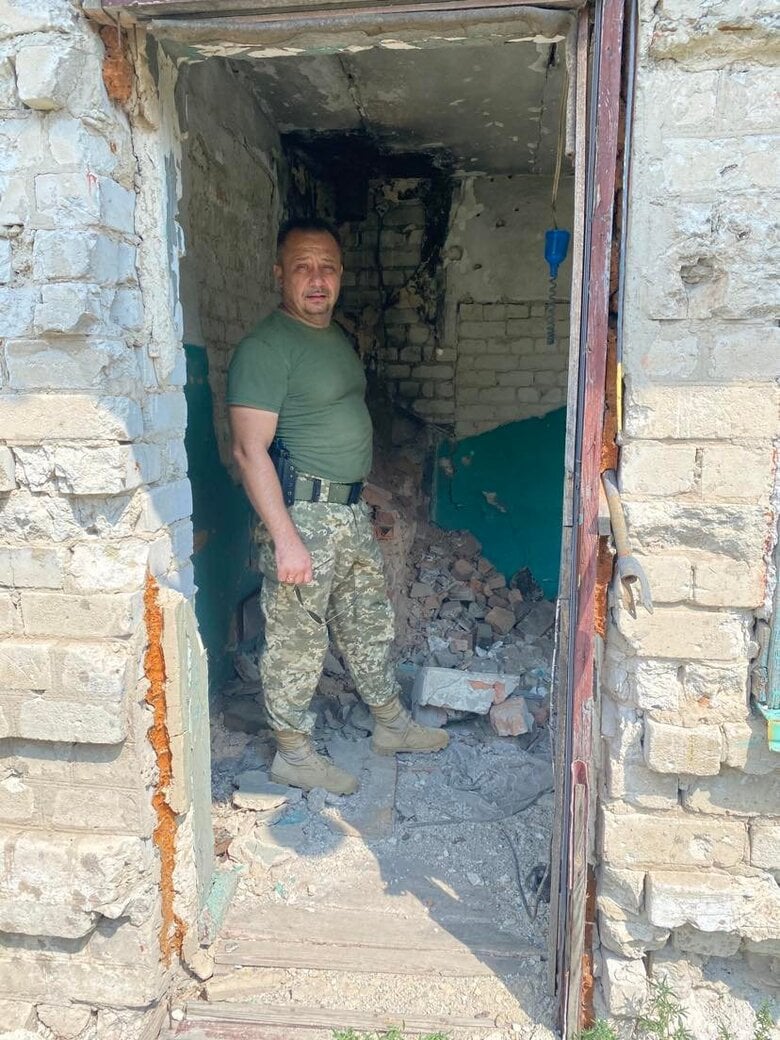
POORLY CONCEIVED FRONTLINE OPERATIONS: SYRSKYI’S PROBLEM, AND THE PROBLEM OF MOST OF THE GENERALS AROUND HIM, IS THAT THEY HAVE NEVER GONE ON THE ATTACK THEMSELVES
- These days, people often say that large, high-profile operations begin whenever talk starts about Syrskyi being removed...
- I see the situation a bit more broadly. It is possible that the country’s political leadership has ambitions when it comes to military operations. And those ambitions are voiced: we would like the battlefield to look this way or that way. And Syrskyi nods and says, ‘Yes, sir. Absolutely.’ If the president had wanted to replace Syrskyi, he would have replaced him. Why was Zaluzhnyi replaced? Because he had his own opinion. And he voiced it.
I believe the Kursk operation was complete madness. We were told that we would exchange the captured territory for our own occupied land. That did not work. If all the metal in Pokrovsk were sold for scrap, it would be worth more than the entire Kursk region put together.
- It seems the idea was to carry out a raid into enemy territory...
- If it had been a raid, the actions would have had the hallmarks of a raid. The Air Assault Forces have raid experience. And half of today’s brigade commanders took part in the 2014 raid when they were platoon and company commanders. Any one of them could have called Zabrodskyi and asked him how it is done, what is needed for it. They could have sought his advice on how to plan such an operation. He would definitely have advised them; he would not have refused. Two heads are better than one, though having several is not a pretty sight.
- Now more and more people are saying that the Kursk operation was planned without thinking through who would follow behind the paratroopers, and that the logistics and evacuation routes were never properly worked out. They say this is still how things are done now: ‘You go ahead and start, and we will pull someone in behind you later.’ But that is not right, even from a civilian’s point of view.
- That is exactly Syrskyi’s model of command.
When you are planning to go into the woods, you think everything through down to the last detail: where and what you will sleep in, what you will eat, how you will get there, what you need to spend a day or a week outdoors. You do not just get up from your desk and leave exactly as you are. You need time to prepare. One person needs several days to get ready for a trip into the countryside with an overnight stay. A brigade is six thousand people. They need time to prepare for any operation. And they are not going for a walk. They are going to fight.
But Oleksandr Stanislavovych planned something out for himself, pictured it in his head, and reported to the president: ‘I’m ready.’ In situations like this, I always think of the joke where a man says, ‘I’ve brought the firewood.’ And the horse looks at him in surprise and says, ‘Didn’t exactly bust your ass, did you?’ You are ready. What about the troops? Then go and attack yourself. Syrskyi’s problem, and the problem of most of the generals around him, is that they themselves have never gone on the attack.
- But surely there are sensible people around him?
- Well, then, they are not sensible. Everyone who is sensible is nowhere near the wheel. They are simply removed. You have your own opinion, you do not like our opinion — then get the hell out.
Syrskyi has never been a brigade commander in wartime. In 2002, he served as a division chief of staff. During Debaltseve, he was commanding a troop grouping. And how did Debaltseve end? We know.
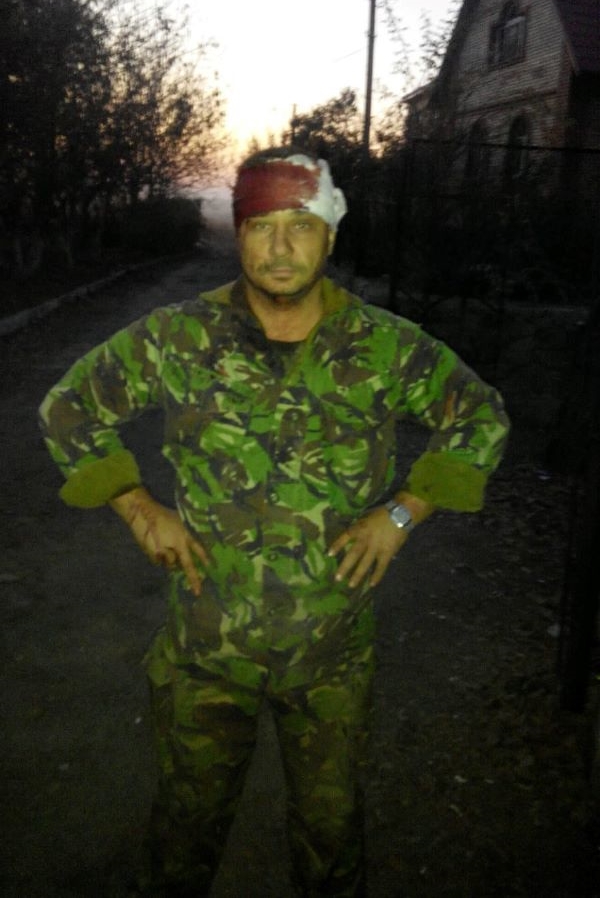
This photograph was taken in the fall of 2014 after Dmytro was wounded near Donetsk.
Some photographs of the Commander-in-Chief provoke questions, widespread discussion, and jokes: why does he arrive at a brigade command post wearing body armor with magazines? What are they for? Who is he going to shoot at? And with what?
I traveled to the battalions as deputy corps commander without even an EW system on my vehicle. And even if I had one, I would have given it to those who needed it far more. And how would it look, a battalion commander walking around his command and observation post in a T-shirt, while you arrive all geared up...
Besides, it is not the Commander-in-Chief's task to tour the units. He does not need to go there. What for?
I am not suggesting that everyone who has participated in an assault should be promoted to brigade commander. We must be selective. But for me, a guy who has never personally participated in an assault is a bad sign.
- Well, the President did say that all generals should be in the trenches.
- And has he been in a trench himself?
- Well, one could say that this is not the President's job.
- But ten years ago, that exactly should have been his job when he was handed a draft notice. Yet back then, he was saying: 'I owe you nothing.' Well, today, draft dodgers are saying the exact same thing he said.
When the President sidelined Zaluzhnyi and began favoring Syrskyi, the command model changed, and the lying began. And when he became Commander-in-Chief, this scaled up from "Khortytsia" to the entire Armed Forces. At the moment, for a brigade commander, everything runs smoothly. Everything is fine-tuned. Why should he lose his position if he speaks his mind?
- To keep the situation under control…
- So, the General Staff was receiving a false picture of the situation, but you arrived at the brigade headquarters and saw the whole truth? Then I have a question: you appoint the commanders yourself. Does that mean you are appointing people who will lie to you?
- But we see that this is exactly a major problem at the front—truthful information is not being reported upward...
- The distortion of information began when Syrskyi took command of 'Khortytsia'. He secured a direct channel to the President, thereby violating the chain of command in the military. Understandably, the President had one picture from the then Commander-in-Chief and another from Syrskyi. Zaluzhnyi provided more objective information. Syrskyi provided the information that was more pleasing.
I have an example of how one of my officers became a battalion commander. Zaluzhnyi personally worked with him on tactics while serving as the commander of Operational Command North. I worked with him on other issues. Pasha Palisa worked with him. Why? Because he would go to Syrskyi for an interview, and Syrskyi would question him this way and that, grill him, test him... And still wouldn't appoint him. It is a mystery to me how, with such careful selection and such an approach, some of the current commanders of assault regiments became commanders. What changed in the same person's approach to appointments? At the time, I was a brigade commander, his appointee, so to speak. Why wasn't my word trusted that this candidate suited me as a battalion commander? I am the one who has to serve with him. I am taking him for myself, not for you. In the end, Oleksandr Stanislavovych listened to me, but he gave us both a hard time, the battalion commander and me. For some reason, the current ones get no such hard time. Even though most of them have no military education at all!
I think that Oleksandr Stanislavovych Syrskyi was incentivized to let certain people assume high-level positions. But what posts should they be appointed to? God only knows. "Let's create assault troops!" And so, new positions emerged. Every battalion commander and brigade commander has a few trusted people in their unit who will go through fire and water for you. I think those kinds of people brought those "assault troopers" to Syrskyi: "Look, there are guys who know so-and-so, they can always resolve complex issues." But where do we place these people? "Let's create separate assault battalions..." They assaulted some position a couple of times. Produced a good picture for the cameras. "Let's expand them into regiments..." And how competent those commanders are does not matter. One of those appointees, who now holds a general's rank, was beaten up by soldiers while drunk, and the video was leaked online. Yet Syrskyi keeps him close. Because he is convenient, he just nods his head. "The first method for estimating the intelligence of a ruler is to look at the men he has around him," Niccolò Machiavelli once said.
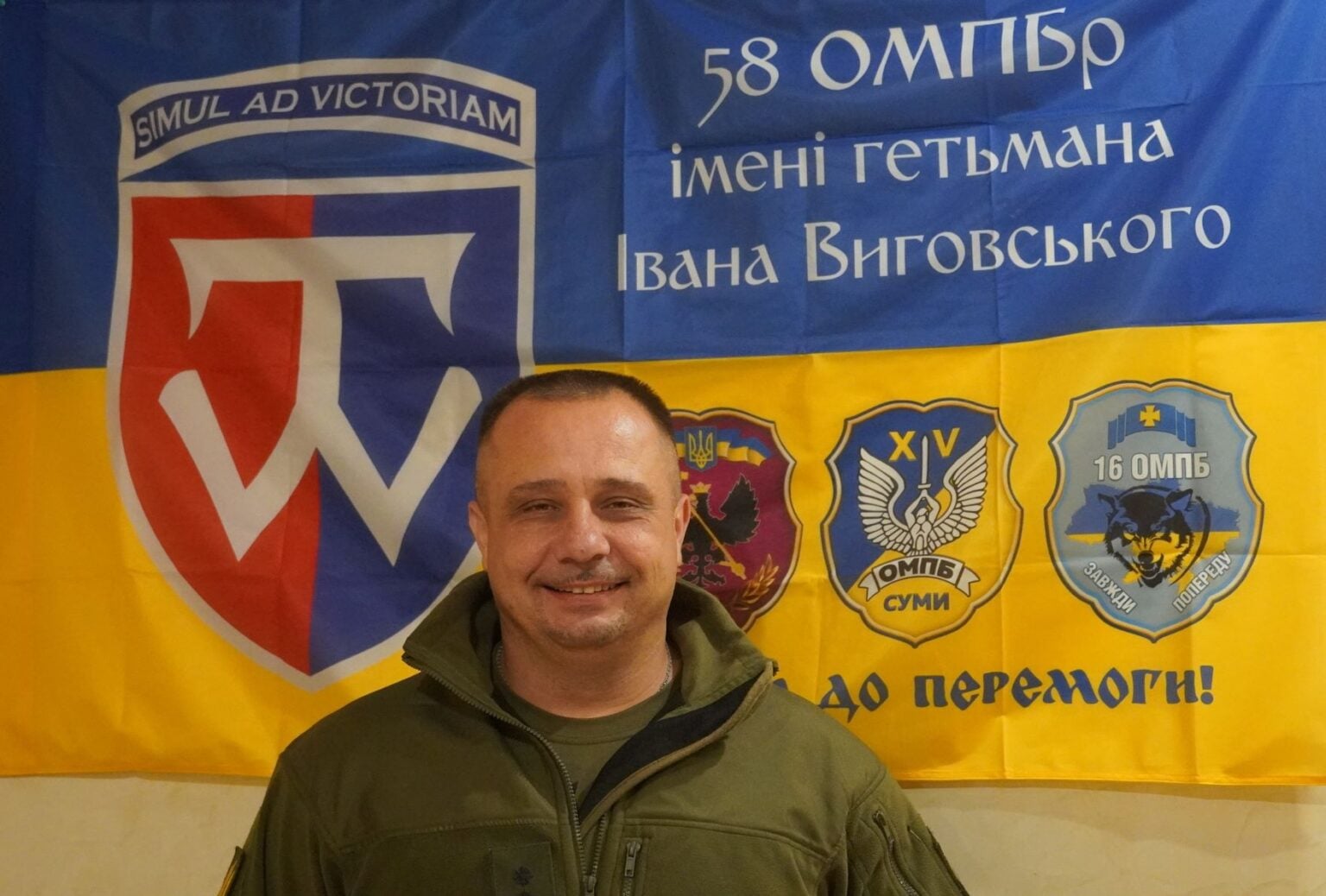
ASIAN FORM OF GOVERNANCE: EVERYTHING IS BUILT ON FEAR
- Let's recall history," Dmytro Kashchenko continues. "There is a specific form of governance, the Asian one. It is adopted in Russia. And we are no exception, because the Soviet regime imposed it on us for over 79 years as well. This is when a minister is afraid of the prime minister, an enterprise director is afraid of the minister, and a shop manager is afraid of the plant director. Everything is built on fear.
Once, the military was also built on this. Remember didivshchyna (hazing - ed.), which everyone was terribly afraid of. And it did exist. But these dynamics have disappeared from our army... Fortunately.
But the question still lingers in the minds of some officers: "How can I possibly upset a general?" And it is upon this that relationships within the system are currently being built. Zaluzhnyi was against this. He wanted to see the situation exactly as it was. But Syrskyi provided an opportunity to look at things differently, painting a different picture for the President. This influenced the President's decision: we removed one Commander-in-Chief and installed a second one, who is convenient for me. But a machine runs very poorly on such fuel.
Now let's return to the brigade commanders. I cannot say that it is very difficult for them to serve right now. It was difficult in 2022. Back then, brigade commanders did not know what to do. They lacked a clear picture. At present, the operational processes in the brigades are well-established. Not long ago, literally right before my discharge, I had to command one of the brigades for three or four days while they were looking for a new brigade commander. And I reported the loss of Novoivanivka in the Huliaipole direction. They were forcing me: "It needs to be recaptured." "With whom?" I asked, knowing the situation in the brigade. They pressured me: "Come on, a decision must be made." Naturally, I did not go along with it. Assault what? With whom? To give such orders, you must first show it by your own example.
- This was the case with Klishchiivka. Brigade commanders showed on streams that there was nothing left to hold on to, but the higher command demanded endless assaults...
- And whose sector was it? Syrskyi was exactly the one responsible for it at the time. If he had gone on an assault just once himself, and a bullet had put a hole in him somewhere, he would know what it is like. But instead, bypassing Zaluzhnyi, he reported: "We will take it back, we will assault it... "And every settlement is turned into a fortress.
- And then there are these records—200 days in positions, 300 days, a year... Because only those who survive walk out of them. And they stayed in those trenches for so long not because they wanted to, but because they could not be pulled out, evacuated, or rotated... These are not stories about courage, but about the changing nature of the war. And the fact that people often simply cannot be replaced by anyone...
- The heroism of some people is the cowardice or stupidity of others. Why do we cling to that piece of land when we should be building defensive lines? These are not just trenches. Look at how many trenches there should be at a platoon strong point and how they should be equipped. There should be trenches every 300 meters. Between them is a positional space of up to a kilometer. Then there should be trenches again.
Zaluzhnyi is often criticized because a book about fortified defense lines was seen on his desk. People wrote on social networks: "It is a disgrace that he is reading a 1941 book by Major General Smirnov. It is not relevant today, because two and a half thousand years ago Sun Tzu said..." Wait a minute. You think Sun Tzu is relevant, but Smirnov is not? Let's look at our war from the perspective of World War I and World War II. We often hear the opinion that warfare has changed completely. Pardon me for asking: in what way exactly has it changed?
- Because whoever has more drones wins...
- Fine. Let's take World War I. Aviation had just appeared back then. What did it do? They would take a box of grenades into the plane. One pilot steered, and the other dropped grenades from above. And quite often, they shot from a rifle. My question is: doesn't a drone do the exact same thing? Furthermore, a pilot would fly and observe: the trench goes like this here, and like that there. Then he drew it on a map. Doesn't a drone do the exact same thing? It is just that today, there are links where the human element has been removed. And now this drone is not as huge as an airplane, but small. It both drops munitions and sees the picture. Tomorrow, artificial intelligence will be added to it. A human will only need to change the battery on time. And then a couple more links will be removed. The chain will shorten. So, fundamentally, nothing has changed. The trenches were the same. Artillery remains just as it was. They showered positions with phosphorus. The only thing that has changed is that artillery has become longer-range, more accurate, mobile, and camouflaged.
- But if there is no infantryman on the front line, this territory cannot be considered under our control?
- Previously, a million men with rifles sat in trenches. Let's put bells around the perimeter instead of people. Weapons will operate based on motion sensors, firing to clear the area. Can this be done? It can. Are there at least some radar reconnaissance systems? Yes. Are there drones? Yes. Everything can be tied into a single system so that it is not a guy sitting there with an automatic grenade launcher, but rather automated systems set up. Then the soldier's only task will be to change batteries.
- So you believe that the course of the war has not changed and will not change?
- No. It is the technology itself that changes.
- But the math definitely does not change. There are fewer of us. There are more of them. And that is a huge problem
- How long has trade existed in the world? Many centuries. The principles of money have not changed for centuries. Wars are the same. We called our war a hybrid one for a long time. But wars are always hybrid. If earlier they used horses and mammoths, today motorcycles have been added. If a thousand years ago one tribe fought another over the territory of a third, the latter stopped trading with the attacker. That is the economic impact. It is just that, again, certain links have been reduced significantly. Three hundred years ago, to send 300 dollars to Singapore, you had to send a messenger. And that meant riding forever. And now, you drink coffee and send money by pressing buttons on your phone. And those one hundred dollars will cross thousands of kilometers in just two seconds.
All winter, we were told: in the Pokrovsk direction, the Russians would be exhausted by spring. How can that be? Russia has a mobilization resource of 20-25 million. If we kill 50 thousand of them a month, as Fedorov predicts, that is 33-40 years of work. In 33 years, the most active ones there will die, while the most cunning and smartest will survive. And they will give birth to more cunning and smarter children. Who will develop more cunning and smarter weapons and teach subsequent generations how to fight. In 30-40 years, more than one generation will grow up.
Our theoretical mobilization resource is 3 million. Even if we calculate losses at a ratio of one to three, we will last for 15 years.
- They are trying to exhaust us with attacks on infrastructure... And this winter, they almost succeeded.
- Kyiv is the most centralized city in Europe in terms of heating. The left bank of the capital has, roughly speaking, one thermal power plant. They smash it, and everything stops. Why, during the years of Ukraine's independence, did no one think that a command post would be heated by the same thermal power plant as half the city? And when it is destroyed, you will freeze. It is all simple. You build a residential block — put a boiler house there. 50 years ago, they heated with coal. Keep it, maintain it, do not demolish it. Gas became available? Set up a gas boiler nearby. Over time, other technologies developed—install another one. You would have redundant systems.
It is our economy that is exhausted. But in Russia, when it is said that an oil refinery was destroyed, think about how many they have in total? Over a thousand? And how many did we destroy? Ten? What damages are you talking about? What stagnant economy? Whose? But this is the mindset of the President. He thinks: "I am younger than Putin. I will outlive him." But he will still laugh at you.
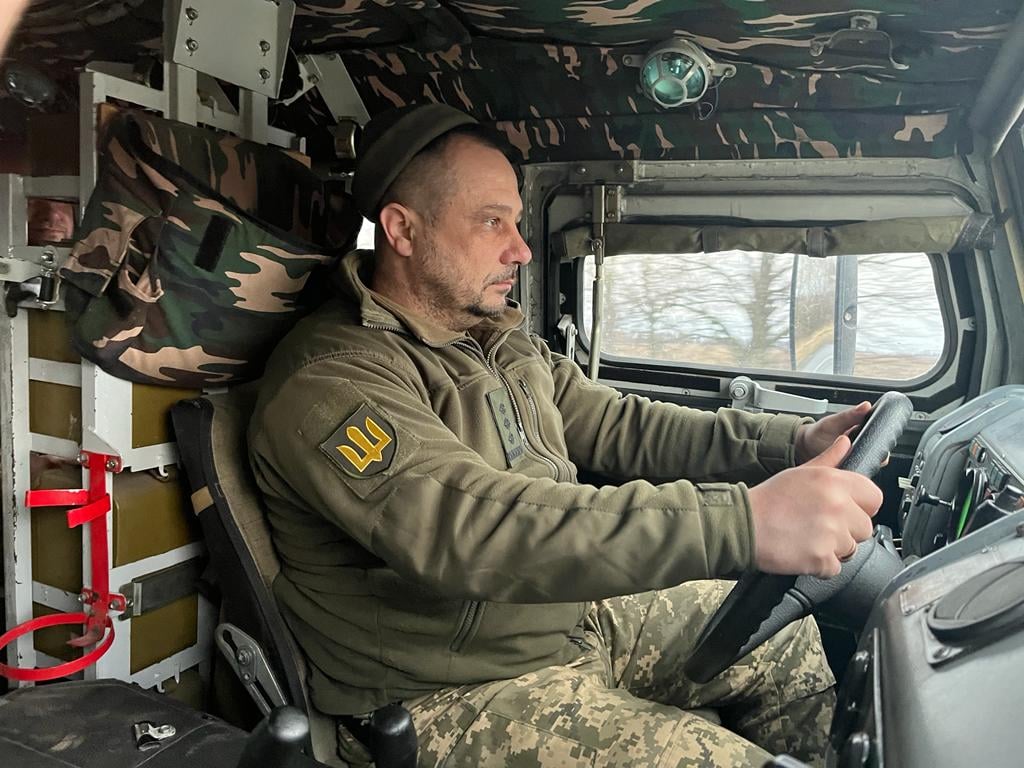
CORRUPTION IN THE ARMY: A SOLDIER UNSCREWS A CAMERA FROM A DRONE AND SELLS IT ON OLX BECAUSE "THEY ARE STEALING ON A LARGER SCALE AROUND ME, SO WHY CAN'T I?"
- From time to time, the general public becomes aware of corruption abuses in the military," Dmytro continues. "And at various levels. The country was shocked by the case of the chief of food supply of one of the brigades, who used the proceeds to buy himself a house not just anywhere, but in Bali... But in this case, I was left with many questions for the brigade commander, because he could not have been unaware of what was going on. It is impossible. Or he was completely detached from operations.
I had six Muslims serving in my brigade. The battalion commander approached me, told me about them, and said they needed different meat. Then they caught up with me themselves and explained that they did not eat pork. I gave an order to the deputy commander for logistics. And the meat supply was adjusted for six people. It is possible; it is not difficult. How did I know this? Because I communicated with people.
The guys came to the deputy commander for political affairs and me, offering a few thousand dollars so we would turn a blind eye to certain issues. But they left with nothing. I had a loud scandal with the Deputy Minister of Defense, Khalimon, against whom bribery cases were opened, when rotten food was sent to the brigade. We drew up acts, documented everything, and returned them. And as a result, we won. We received what we needed and of the highest quality.
The path to overcoming corruption is very well known. Lee Kuan Yew said it back in the day: "If you want to defeat corruption, jail your three closest friends." Jail them!
- He jailed them straight to Israel.
- What do you mean Mindich fled? Well, try running across the border. Once in a while, someone does manage to swim across the Tysa River, others drown. But if you look broader, look at the army, it turns out that many commanders have their own pocket Mindich. This becomes obvious when another corruption scandal arises.
- But you did not have one when you were a brigade commander, right? There are commanders who refuse the schemes that have been established in units for years...
- Before me, the brigade commander was Mykhailo Drapatyi. Under him, any schemes were already simply impossible. I took over the brigade from him without any corrupt elements and did not create any myself.
- As far as I know, those 'pocket Mindiches' are very surprised when a commander refuses to cover up established schemes. And from time to time, we hear what 'gifts' some commanders demand from the brigade when they get promoted... They sometimes drive out in brand-new SUVs worth tens of thousands of dollars...
- This hydra has penetrated everywhere. And it manifests itself very differently. Consider this: a soldier receives a drone, unscrews its camera, and sells it on OLX. And why not, if they are stealing on a larger scale all around, he thinks. Once, I was building a garage at home and called a neighbor to help. We are digging a hole and talking. And he is a KrAZ and KamAZ driver. He kept complaining to me: 'They stole everything, they are all scumbags. In the past, I would leave the garage in the morning—and I already had a 25 in my pocket.' I ask him: 'And where did you get that 25?' - 'Well, where. I siphoned off diesel, sold it. That's how I had it.' - 'So,' I continue. 'Following your logic, I, who stole 200 tons of diesel worth 20 million dollars, am a scumbag. And you, who stole 20 liters of diesel for 25 hryvnias, are not a scumbag.' I tell him: 'I have bad news for you. We are both scumbags. The only difference is that we are scumbags with different opportunities.
From the accounts of former colleagues, I know of instances where cameras are unscrewed and sold. Someone looks at the battalion commander and sells diesel fuel. Another looks at the brigade commander, who turns a blind eye to what is happening with the food supply, and does their own thing...
Once, I was a young company commander, a senior lieutenant, and it so happened that for a week, company commanders were on duty in the dining facility. My turn came. I distributed the tasks. I sat in my room. A sergeant runs in: "Should I get you some potatoes?" "Well," I say, "potatoes? Sure, get them." Lunchtime arrives. I call the sergeant: "Where are the promised potatoes?" "They are sitting right over there." "Bring them here." And he brings me a bucket of potatoes. "What is this?" I ask. "You said to get some potatoes," he replies. "I meant fried, to eat." "Ah. It is just that the duty officers usually take them like this..." "I am a company commander, not a warrant officer. I do not drag things home from the warehouse." That is the difference. For me, it was disgusting and shameful back then. The scale of this bucket of potatoes changes, but the essence remains. But I do not want things to be this way in our army or in our country.
- Besides the fact that I quite often hear from exemplary officers that they want to resign, many also say this: when the war ends, I will leave the country...
- It makes sense. Because it is quite difficult to build a business here. I have an acquaintance who is a lathe operator; he opened his own workshop. At that time, fifteen years ago, he said: 'My lathe has not even made a single turn yet, but I have already paid 20-25 thousand hryvnias: tax authorities, fire department, occupational safety...' Why is this the case? What is the point? And it is exactly the same everywhere, and with each passing year, it only gains momentum. This frustrates not just me, but the majority of those who are fighting.


