



"Last autumn, ’Molniya’ hit our prosphora bakery..." – OCU priest on life and service in frontline Sumy
A sunny April day; birds are chirping above the Resurrection Cathedral. Generally, there is silence around, but no sooner had Father Petro and I begun our conversation than sirens wailed through the air, and a voice from the loudspeakers began summoning citizens to shelters. In frontline Sumy, people have long since grown accustomed to these sounds, yet a logical question arises.
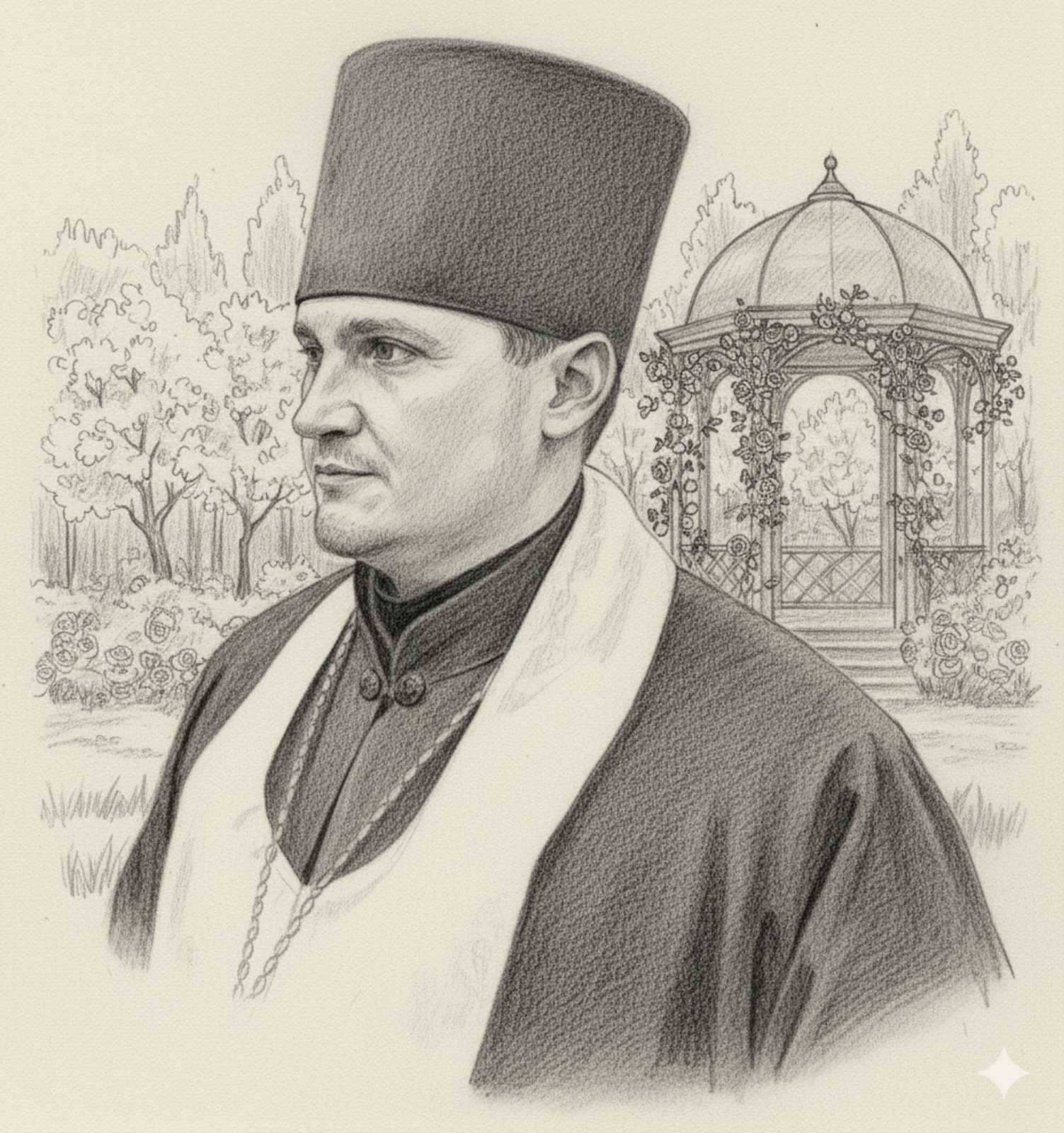
- Father, when a service is underway, and an air raid siren is heard, what do you do? Is the service interrupted?
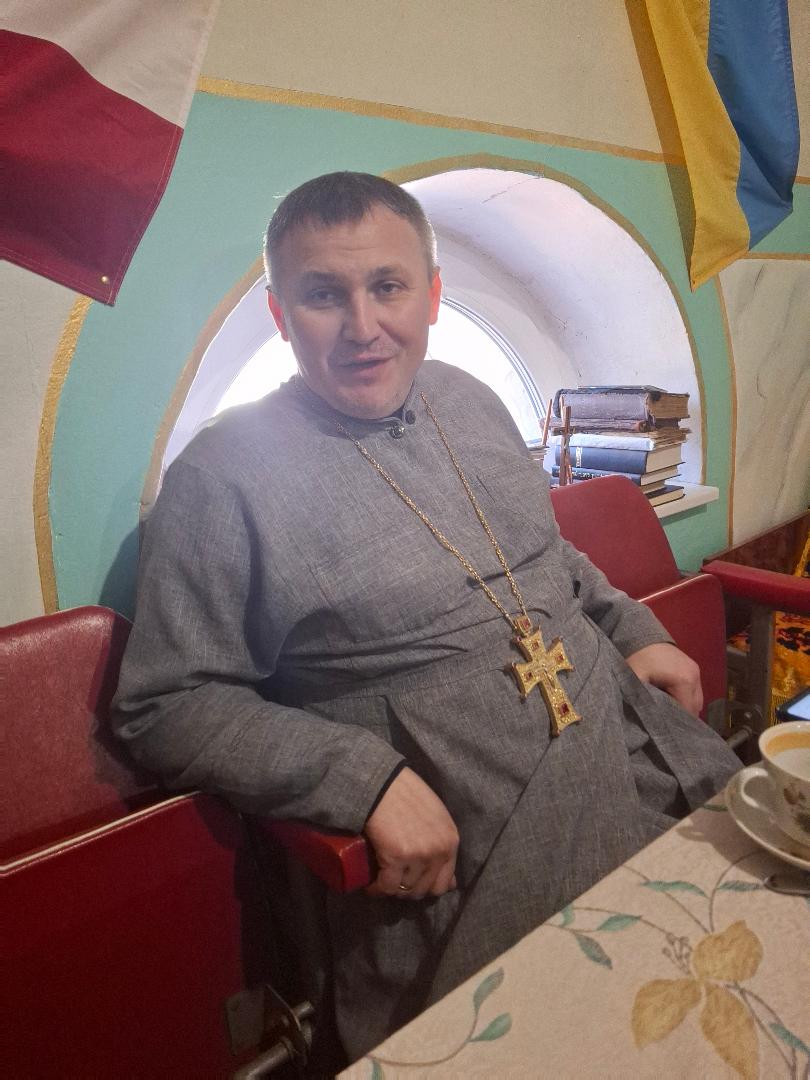
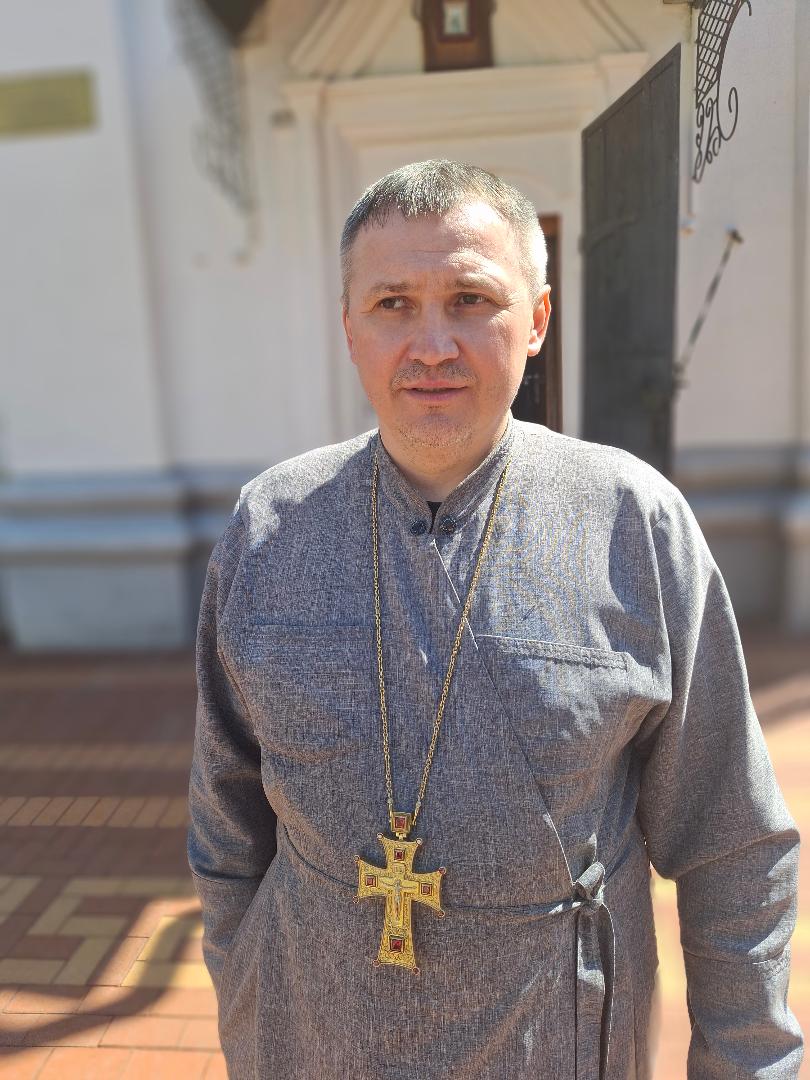
The 45-year-old secretary of the Sumy Eparchy of the Orthodox Church of Ukraine, Mitred Archpriest Petro Popadynets, shrugs his shoulders.
- The service, naturally, continues, — he says. — "God helps those who help themselves," as they say. People act at their own peril and risk. After all, it is mostly believers who attend church...
- And is it evident from those who remain in the church during alerts who truly believe?
- No, that is not the point. There are many who leave the church, while some stay. People here tend to attend services on major holidays. We recently marked the anniversary of a tragedy where 35 people were killed in Sumy following a missile strike, exactly a year ago on Palm Sunday. Consequently, people now treat air raid warnings with trepidation, and many leave the building.
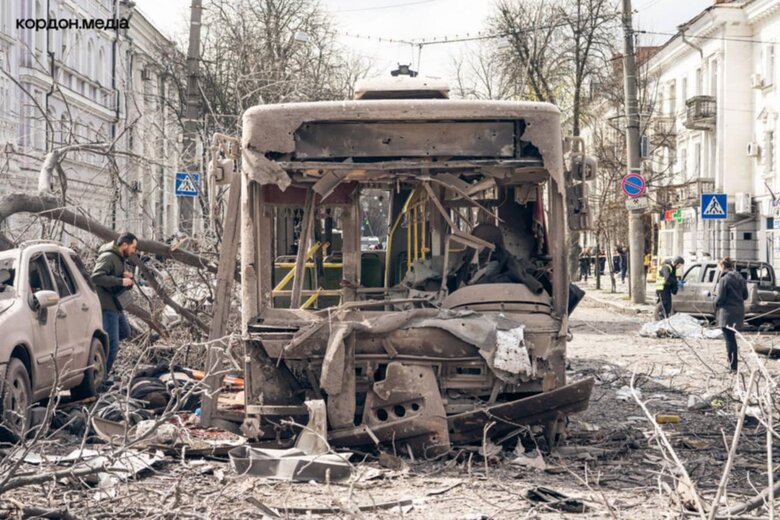

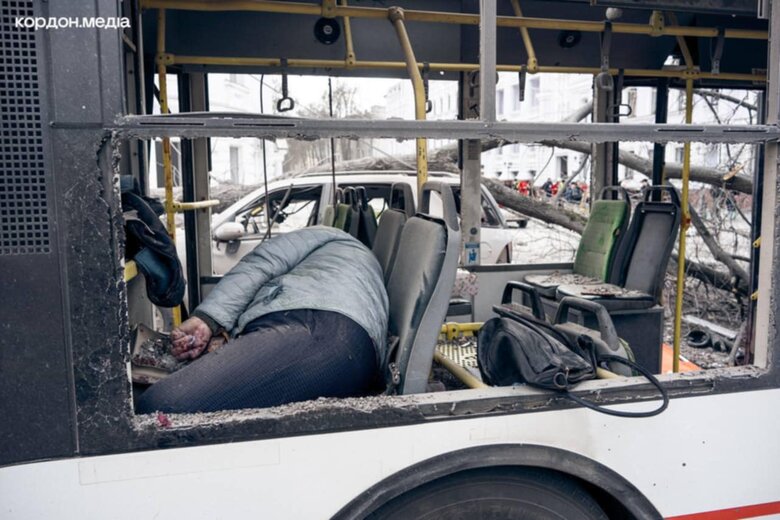

April 13, 2025, is a dark date in the history of Sumy.
- Are there enough shelters nearby?
- Yes. We have announcements both on an outdoor stand and inside the church, with phone numbers and addresses of places where one can quickly run and take cover.
- But the shelters themselves are empty.
- During the first year, everyone would enter. Later, as you can see, they got used to it, they adapted. It is very unfortunate, but that is life.
- It is the same in Kyiv. People have become accustomed to both alerts and aerial attacks.
- Well, in Kyiv, it seems to me that people use shelters more often. I was in Kyiv recently. My two biological brothers are fighting; they joined as volunteers. I travel there from time to time to visit my brother's wife. She lives and works in Kyiv.
- What roles do your brothers have in the war?
- Infantry (he smiles — Ye.K.).
- Do you help them?
- Yes. The main problems occurred in the early days of the war, as we had to buy everything from carbines to God knows what else. There was nothing. And the load-bearing vests for body armor — that was madness!
- And where are you and your brothers from?
- From the Lviv region, a village near Morshyn, about 10 kilometers away. Stepan Bandera’s father served as a priest in our village. There is a museum-estate there. The village is Volia-Zaderevatska.
- Did your brothers join the war as volunteer fighters?
- Yes, on the very first day. This is despite the fact that neither of them had served in the army.
- So you are all from a village with a historical "Banderite" background. Tell me then, Father, how did you, a priest of a church considered "non-canonical" by the occupiers, consciously choose to remain in Sumy during the first days of the war? You must have realized that you were, at the very least, on a list of unreliable persons. Did you think about what they might do to you? Take you POW?
- You know, I became a priest because I am a believer. I do not know what they would have done, whether they would have imprisoned or tortured me, knowing my Western Ukrainian registration.
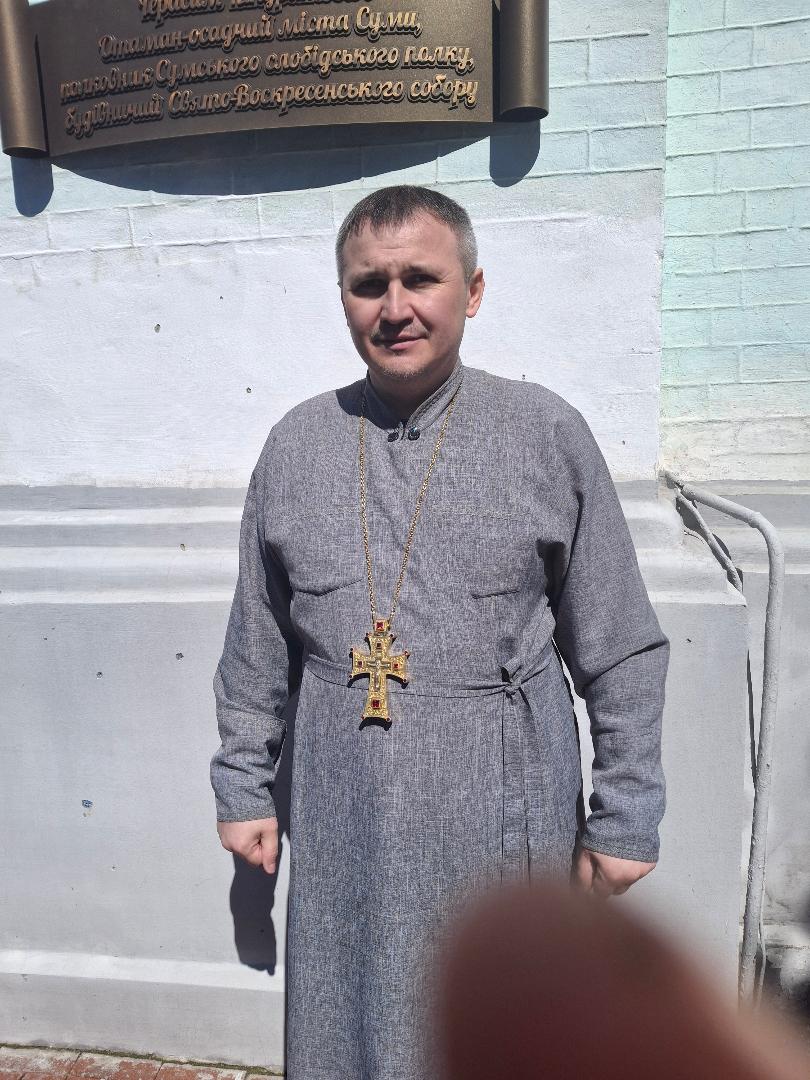
- Did people tell you in those days, "Father, leave this place, you are in danger!"?
- They did, and more than once. My fellow priests said so; they moved their families out on the first day. But I felt differently about it.
- And your family — was staying their decision as well?
- Absolutely. They were all with me.
- Please tell us about them. How old are your wife and children?
- Three children. My wife turns 43 this year. The eldest daughter is 20, the middle one is 18, and the youngest is 10.
- That is now. But four years ago, when the family council met to decide whether to leave or stay, what did they say?
- They said: if I go, they go; if I stay, no one goes anywhere.
- Were you pleased? Or was it more anxiety-inducing than pleasing?
- It was more anxiety-inducing because I was looking for vehicles to put them in and evacuate them. Leaving the city was a catastrophe. The city was effectively surrounded. The Russians were here and in the center. It was a horror. They were everywhere.
- Everyone felt anxious in those days. Essentially, did the churches turn into humanitarian hubs?
- Yes, on the first day of the war, people flocked to our Holy Resurrection Cathedral, located near the administration building. And indeed, it was the first humanitarian hub — a massive one! By the 25th, the church was already packed with food, various supplies, medicine, clothing, body armor, and combat boots. Later, after a few days, hubs opened on Voskresenska Street. We collaborated closely very often. Young women with medical backgrounds would come running to us.
- What was in shortest supply?
- There was a crisis with tourniquets. We had very few of them. But we shared what we could. Those were the first days of the war — you know what it was like?
- Indeed. Battles were raging on Herasyma Kondratieva Street, near the artillery school.
- Yes. Initially, I headed to the checkpoint there. But it was terrifying, so I didn't reach it. We also have a chaplain, Father Mykola Tolyar; he worked as a chaplain at the artillery school. They were surrounded there and were putting up a fight.
- Did many people from the church leave Sumy at that time?
- Many left Sumy. They used backroads and trails, bypassing main routes to avoid running into the Russians. That is life; everyone has their own. Some were frightened; some had reasons to be afraid, for their families, or perhaps due to a patriotic past... Many young men stayed. In the early days of the war, our friends and volunteer fighters would come, and we helped them however we could. We coordinated by calling our parishioners and our friends across the city and the districts.
- The Russians did not manage to enter Sumy then. Nevertheless, how do they generally treat those priests of the Orthodox Church of Ukraine — a "hostile" church from their perspective — who did not have time (or did not want) to leave an occupied city or village?
- We have one priest, Father Oleksandr. He was pressured very severely there, physically and mentally. They beat and tortured him. But he used to have acquaintances from the Moscow Patriarchate, and through them, he managed to get in touch so that the Moscow priests could intercede. And he was released. Otherwise, a catastrophe would have occurred.
- Did you have to communicate with "colleagues" from the UOC during this time? Generally, does such communication exist, at least unofficially?
- There is a lot of it; Moscow priests often communicate with the Bishop. And what makes them "Moscow" anyway? They are all our people, mostly from Zakarpattia, Ternopil, and the Lviv region.
- It is simply that their church is called the "Moscow" church.
- Yes. They do communicate. There are many who want to switch even now but are afraid because of one thing or another — perhaps they took money from someone. They have incriminating evidence on them, so they are simply afraid. During the war, Father Roman Kulishov transitioned from Hrebenykivka. Their village was occupied. He would constantly go up to the bell tower to charge his phone and read the news. Then he would tell the people in the church what was happening, how the battles were going, how our forces were fighting back, and where the Russians were positioned.
- So there are plenty of decent people there.
- Absolutely. In Okhtyrka, the massive Transfiguration Cathedral with Father Ihor Solovei switched… Many have. Moskalenky in the former Bilopillia district recently. The senior priest there, Father Mykola Lyubomyr… Many priests have transitioned. The large Cathedral of St. Paraskeva-Piatnytsia, where Father Hennadii Korobeinyk serves, switched. His son, Vasylko, also died; he too had joined as a volunteer fighter. A fine lad — tall, athletic, he served as an altar boy...
In total, five of our priests have died in the war. More than twenty of our clergy have gone to serve as chaplains.
- Concluding the conversation about the Moscow Patriarchate. Do I have the correct impression that, as an institution, it was in many ways a branch of the FSB?
- Why was? It still is, I believe. You cannot sit on two chairs. If you are Ukrainian, unite in the Ukrainian church. Now we have the Tomos, and we are the recognized fifteenth church in world Orthodoxy. What is preventing them from switching?
- Do you try to convince your colleagues from the other patriarchate to switch to the OCU during meetings?
- We have joint meetings, prayer breakfasts. We greet each other and ask: "Lads, have you decided?" I believe the war would not have happened if the Moscow Patriarchate did not exist in Ukraine. Starting with the titushky. They were bringing them here from northern districts, from Hlukhiv, through Derkach and his ilk, and it continues to this day. We saw Moscow Cossacks in their churches. How was Ukraine seized? Also through Moscow churches. Girkin — he even came to the Lavra...
- By the way, about Andriy Derkach. You know that he is now a senator in Russia and even received an order for betraying Ukraine. Do you think his people continue to work for the Russian Federation there?
- I do not know for certain, but I think they are working as they always did. He had some security firms. In the village of Cherneve near the village of Peremoha (Hlukhiv hromada), a congregation was transitioning to the OCU. The people signed a petition, the whole village gathered to switch along with the church (it’s an ancient church). We went there with our priests. But Derkach had already brought in his security firms. His people with pistols, Moscow priests — it was a total madhouse! The whole village was against them, yet they seized the church — and that was it!
I believe that every Moscow priest who has not switched to the Orthodox Church of Ukraine by now is a typical awaiter waiting for the "liberation of Ukraine." Our most recent transition was from a massive church in the center of Trostyanets. You know, many who switch are worthy clergy, believers, and pious. There are also patriots, but for some reason, their patriotism manifests very late.
- Let us return to the first days of the full-scale war. Sumy was under enemy siege. What were you doing during that time, and did you sense any change in the people?
- In the early days of the war, people came to the church bringing everything they could. They brought it so we could pass it on — everything for the military. Many went to fight as volunteers, ill-equipped and with nothing. Meanwhile, our checkpoints were all around the city. We went to Kosivshchynska Street — the lads there were standing in sneakers, in summer trainers! But people had brought so much, and since I had a car, we were able to distribute it. I often went out with the Bishop to see what people needed, then we would stop by the cathedral to see what suitable items we had. We would load the car and head to a checkpoint. We did this many times.
- In the early days of the Great War, a significant part of the Sumy region was occupied. Did you have to travel to the occupied territory for pastoral duties? Or was there so much to do here, and traveling there was too dangerous?
- There was a lot to do here. And it was definitely dangerous to travel. My passport registration was in Lviv. But we were in constant communication with our priests who were under occupation — via the internet and phone; every day our priests were in contact with the Bishop.
- What did they tell you?
- They said: "Bishop, services are being held." They mentioned that Russian soldiers would enter the churches, but they tried not to bother our people. And who knows what nationality their soldiers were, because some could barely speak Russian. So they did not distinguish which patriarchate a church belonged to. We were constantly communicating with our priests, giving them instructions on how to conduct themselves.
- And what exactly did you advise?
- Not to provoke them, to protect the people so they would not be shelled. And — to serve. Because the most important thing is if people come. Mostly, in the occupied territories, people gathered near the churches, specifically those that had basements. Many of our churches have basements. So they hid there, as the enemy shelled indiscriminately. Bridges were blown up — it was impossible to reach Putyvl or Hlukhiv.
- Did they check phones as well?
- They checked everything. In the Krasnopillia area, a funeral procession was underway; our priest was burying someone. It got to the point where the Russian soldiers even checked the coffin! They pulled out the deceased to see if anything was being carried. They even told our priests, "Face down on the asphalt!" They made everyone lie down and fired over their heads.
- Has your life as a man of the church changed significantly since the fighting began in the Sumy region? I understand that for you as a clergyman, God is always present, but war changes the lives of the flock, sometimes radically. And you have to deal with this flock every day.
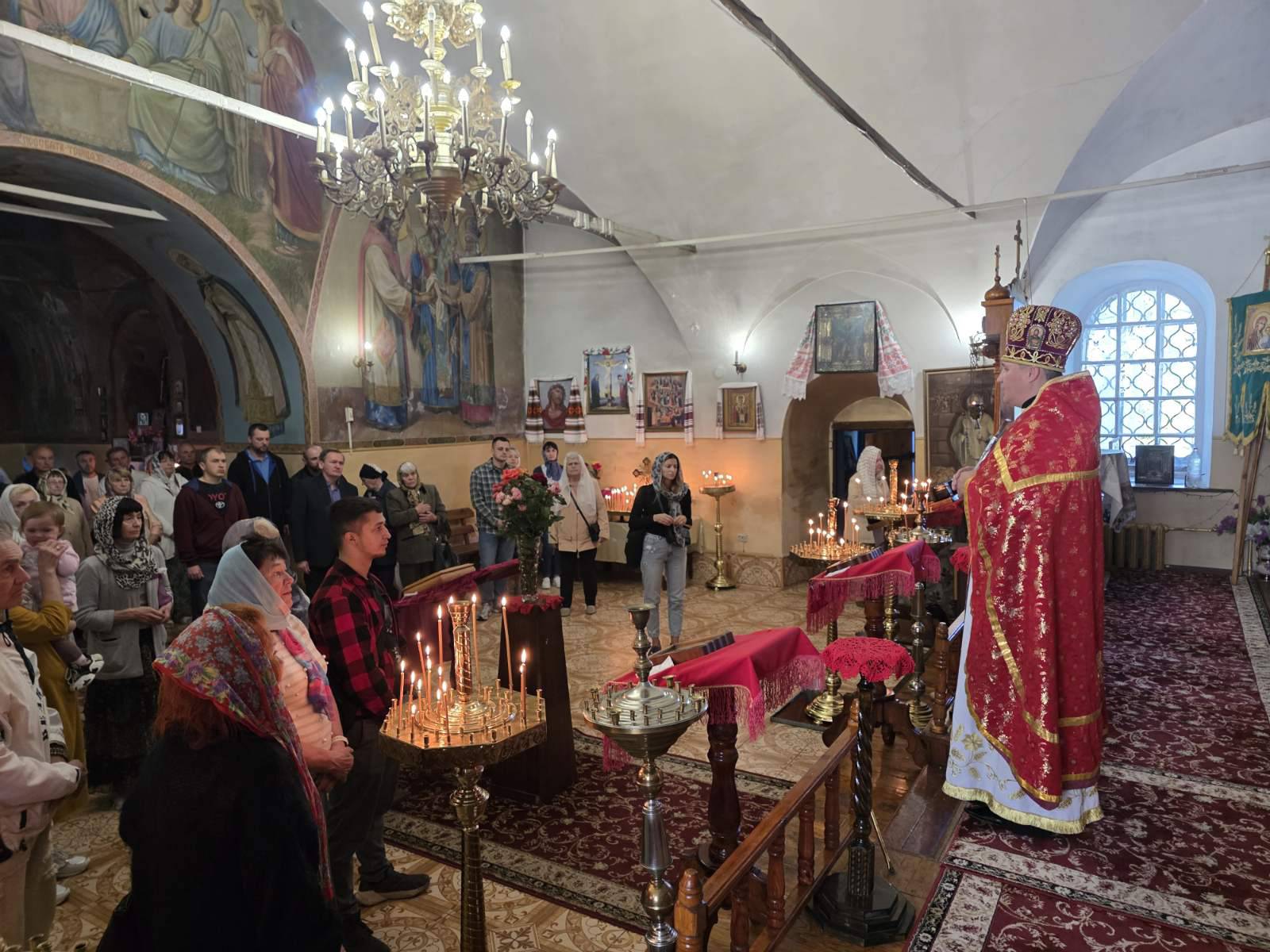
- One could say that everything has changed radically for the parishioners. They have become much more anxious and are deeply worried due to the shelling. Naturally, people find solace in the church and in spiritual conversations with a priest. Furthermore, both our cathedral and our priests in Sumy conduct many funerals. People see all of this—they come to say their goodbyes, and among them are many military personnel.
- So, unfortunately, anointing of the sick and funeral services have come to the fore.
- We just held a funeral for a young man this Tuesday. An elderly, elderly mother came. People perceive and see all of this. It is as if life goes on; it isn't going anywhere. But people often come to confession feeling somewhat broken in spirit. One has to lift their spirits and reassure them that life continues. Especially since we have lived with that neighbor for nearly 400 years, and all this time, they have wanted to destroy our nation, to wipe us off the face of the earth.
- Do many people come for confession? More than during relatively peaceful times?
- More. It is very noticeable because people are worried; almost every family has someone at war.
- And why do they come? Is it because there is so much in their hearts that they want to give it to God specifically during wartime? Or do people realize they should confess regularly because of the war?
- Both. And a great many servicemen come.
- Tell us, what do the servicemen confess? Of course, the seal of each individual confession is sacred to you, as it is to me. But generally speaking, what do the military say when they come to confess?
- Many of the men who come for confession have either stared death in the face themselves or have witnessed the death of a brother-in-arms. Or they have been wounded themselves.
- ...or they had to kill someone themselves...
- Or they killed someone themselves, and I reassure them, because the Ukrainian church believes that this is not murder. Although it is the killing of a human being, it is a matter of defense. They are protecting. If they hadn't done it, they would have been killed, and other people would have been killed. We are defending our own land, given to us by God.
- What else do they share during confession? Because the stereotype is that confession is only about one's sins. But what you're talking about—well, what kind of "sins" are those...
- There are many people who say they launch missiles, and then they don't know what happened there. But it weighs on their souls; they feel they have killed someone or something like that. One has to reassure the person, that it is thanks to you that we all live; because if you do not protect us, there will be neither a state nor a people. You see what the Russians are doing to people in the East. There are many such cases.
Servicemen also come to confess about their family matters, because perhaps a wife is abroad, or there is some infidelity. One has to smooth all that over, calm them down, and say that this should not be done, as it is a sin. We give them our phone numbers; the men are constantly in touch. We try to direct them to the nearest chaplain available to us.
- Families, deaths, the wounding of various people. What else do you hear during confession?
- Mostly that. Family, the grief of killing, tragedies, wounds. Accordingly, they sometimes use alcohol to dull the pain. They speak about this consciously.
- That is, of course, a major problem. Commanders deal with it more strictly. What do you say?
- The church forbids it; a soldier who drinks vodka cannot be considered worthy. Perhaps on leave or during rotation—that is completely different. During war, it's about the safety of your life and the safety of your brother-in-arms. The servicemen themselves say: when you think soberly, you make better decisions.
- About the fact that sometimes women are brought in (to the front -ed.), do they confess that?
- They do. During hostilities, during the war, many people come to confession.
- Apart from spiritual aid, can you assist the military in any other way?
- We constantly fundraise for military needs. Most recently, we bought a pair of generators and six high-quality off-road tires. Many of our parishioners who are fighting need help. We also work very closely with volunteer centers operating in Sumy. Lads come to us needing everything from nets to trench candles. We give them our own candle stubs so that the volunteer girls can make trench candles. We contact volunteer centers by phone and ask what they have in stock. Then we provide addresses or go there ourselves.
- Does it happen that a serviceman calls at night, saying: "Father, help me"?

- Yes, from a broken-down vehicle to God knows what.
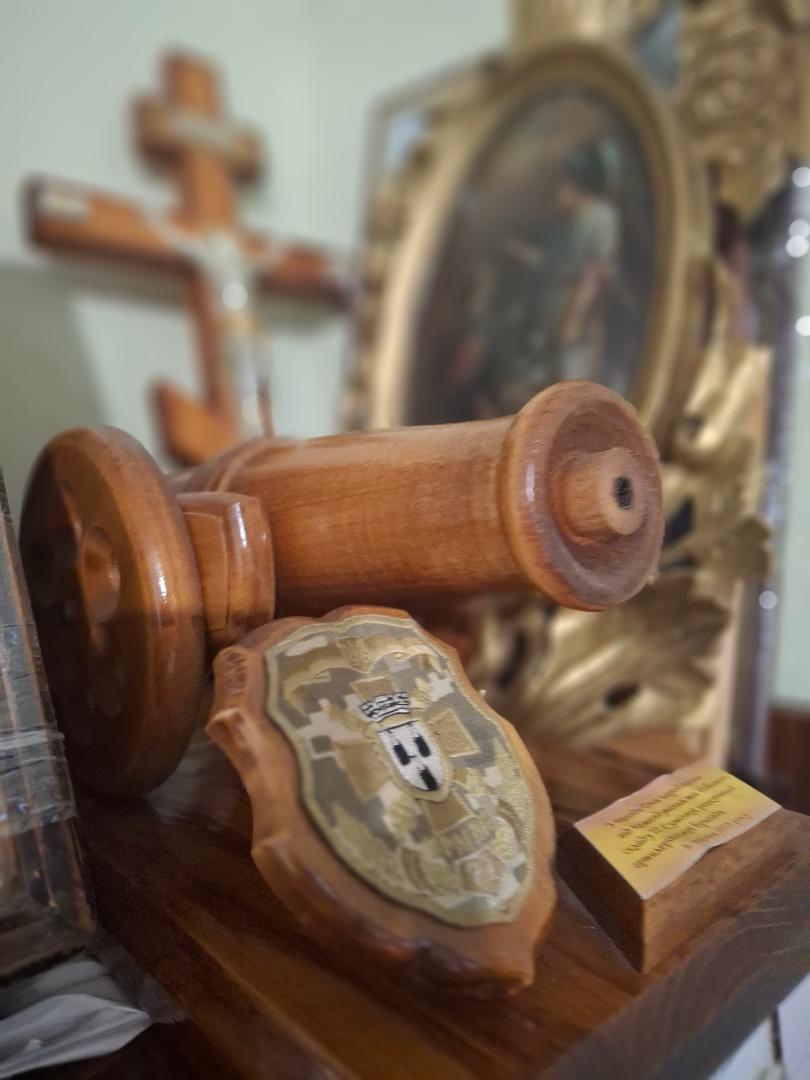
When we deliver what the guys need, they want to thank us somehow. Someone might give us patches, another a whole flag or a small wooden cannon.

- And is the war reflected in the texts and prayers of the church service?
- We have slightly adjusted our services and our schedule since the beginning of the war. Previously, we held daily Akathists and various prayers. Now, we hold a short daily Moleben. The Primate of our Church, His Beatitude Epiphanius, issued a decree, and together with the Holy Synod, specific prayers were created: "For our victory," "For our military," and "For the entire Ukrainian people." We read these prayers every day, including during the Divine Liturgy. There are specific points where we insert them, including during the diaconal petitions—when the deacon offers the relevant petitions, and the priest recites the prayers for our victory and for the military.
- When you visit the front lines, what prayers do you recommend to the soldiers in times of danger or spiritual distress? The standard "Our Father" and "Hail Mary"? Or something else?
- Whenever we bring aid to the men, we always hold a Moleben for them and sprinkle them with holy water. Naturally, we don't go empty-handed. Our church has published tiny prayer books specifically for the military. If someone doesn't know the "Our Father" or the "Hail Mary" by heart, we give them one. It’s convenient, small, and fits into any pocket... We also bring belts inscribed with Psalm 90; the guys wear them too. And crosses, and everything else. There are prayers. If there's time, he can take out the prayer book. If there's no time, say the prayers you know by heart. If you don't know any by heart, pray in your own words. Whatever your heart says, that is your prayer. Everyone prays—especially, as the guys tell us, during danger or missile strikes; they recite every prayer possible. Almost all the men say that there are no non-believers in war. You might find some occasionally, but when danger strikes...
- Sumy currently lives under the constant hum of enemy drones. Their rattle is heard every day. They hit infrastructure facilities, gas stations, and residential buildings. You say yourself how much this unnerves the parishioners. How is your family handling this?
- They aren't. When we hear them, we pray they fly past. That’s all. Regarding the people and these strikes: it is a great miracle that our prayers—the prayers of everyone who prays, both believers and priests—reach God. Yes, drones and Shaheds strike, but most of them, thank God, result in almost no casualties.
- Do you see God’s hand in this?
- God helps those who help themselves. One must take precautions, but prayer does its work.
- When a drone is flying, what prayer do you recite? And is it mentally or aloud?
- Mostly mentally. From the "Our Father" to "Have mercy on me, O God." There are many prayers; people pray in different ways. Right now, during the Easter period, you recite the troparion "Christ is risen from the dead..." to yourself. Every holiday has its own prayers, but there are also general ones. For instance, "Let God arise..." is read in times of danger. Psalm 90 is also read during danger; that is the psalm written on the belts we distribute to our men.
- We are speaking now in the Resurrection Cathedral. Has it been hit by anything during the war?
- Last autumn, a "Molniya" hit. We have a prosphora bakery. Our bakers, a mother and daughter who are elderly, were baking prosphora on the second floor. They said they dropped under a table—and then came the blast! That area used to be a passage from the cathedral to the bell tower. The explosion riddled the sealed doors there; they are metal on the outside and wooden on the inside. They are ancient, Cossack-era doors. Church vestments were hanging there, too; they were not damaged. However, a few icons fell, windows were blown out, and a window frame was dislodged.
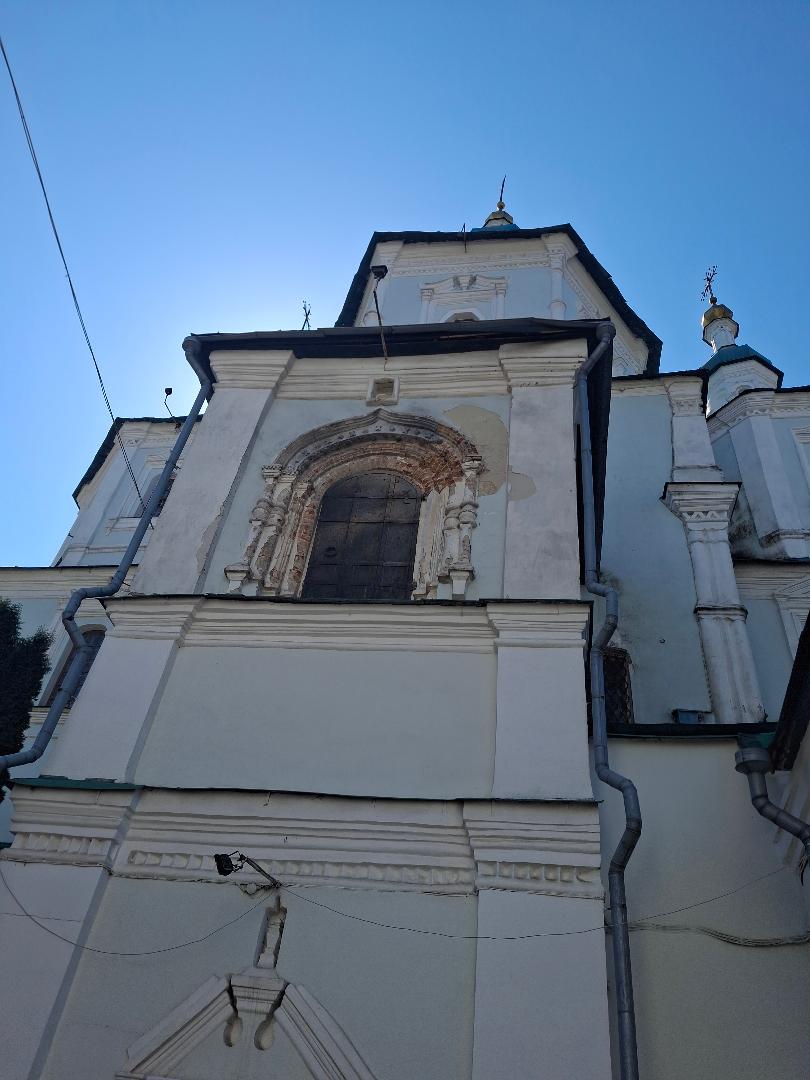
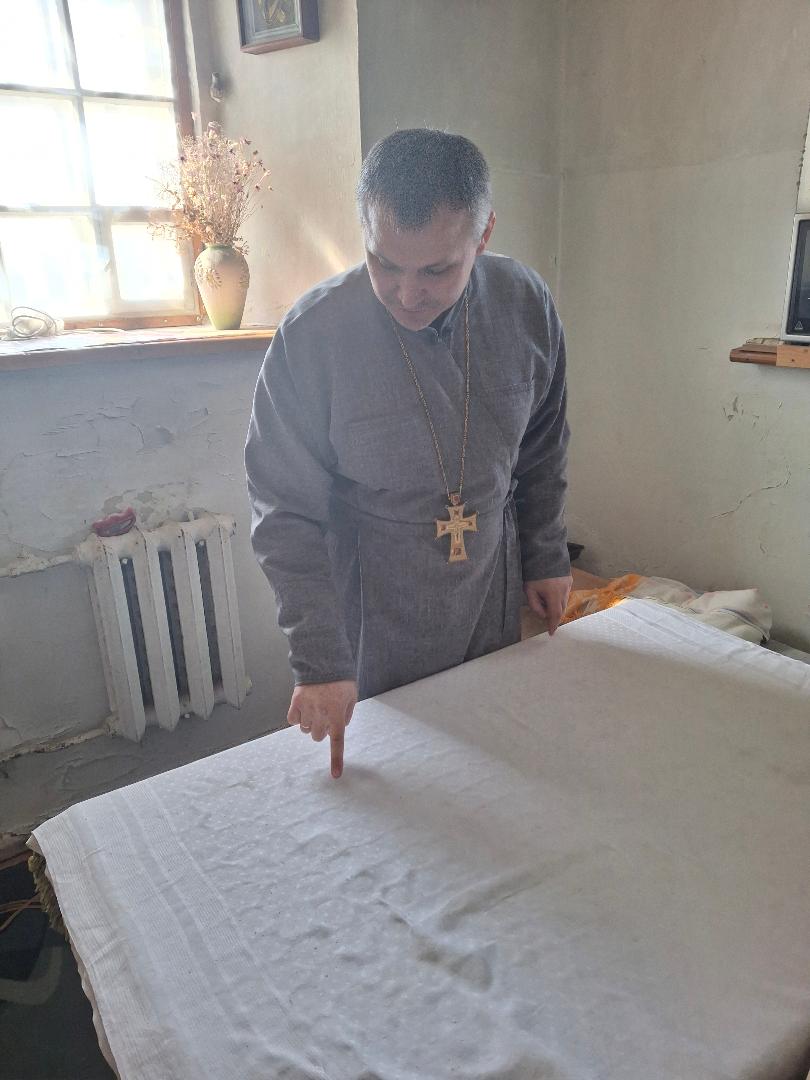
Trace of the drone strike. In the same prosphora bakery
- It is good that everything turned out fine... Father, tell us about your brothers who volunteered. Are they fighting together?
- Separately. One volunteered in the West, and the other from Kyiv. They are fighting in the Donetsk region.
- What do they write to you? Do they long for home?
- They have good commanders there. They have proven themselves well, and they are given leave from time to time.
- What do they tell you?
- Each has their own stories. Entirely different accounts about the guys, and about mines, mostly. It is horrific right now. Getting there and back is very difficult. Trenches, if you want to live, the middle brother says, you have to dig and dig. He sent a video where you can only stick a hand out to record the impact site on a mobile phone.
- Did you, like your brothers, have the desire to become a chaplain? Or does everyone have their own area of responsibility?
- Everyone must work in their own place.

- And what does the Bishop say to you and other priests regarding this?
- The Bishop provides instructions to every priest and every dean. He convenes meetings. It is dangerous right now to gather all 130 or 140 clergy of our eparchy in one place. Therefore, the Bishop mostly gathers the deans of the church districts from each raion center. He speaks with them, gives instructions and orders on how to conduct services and what to do during danger. Many priests have basement facilities where they conduct services for safety.
- Do threats from Russians and pro-Russian organizations reach our OCU priests?
- Much less during the war than before it.
- What did they write or say back then?
- It varied. Once, Moscow Cossacks wrote to the Bishop and me (in 2014, right during the revolution, we were in the Kyiv Patriarchate at the time) that they had 6 or 8 grams of lead for each of us.
- Well, how is a lad from a "Banderite" village supposed to take that?
- We have lived through two revolutions, you see, and now the war. But if this structure did not exist in Ukraine (I mean the Moscow church) perhaps there would be no war at all. Because Putin came to defend their church as well.
- I look at their religious web resources and television programs. It seems like the same Bible as yours. Similar icons. Many things are similar, they are Orthodox, after all. Yet they, their leadership, and even ordinary priests, send people to kill a "brotherly" people, as they themselves call us. They direct their military to kill innocent people. How does this happen? Do you have an explanation?
- How did it happen? Ecumenical Patriarch Bartholomew said they need to be "re-churched" from scratch. They are so deeply mired in their "Russian world." Although I try not to use the word "Russian" and I correct everyone.
- Why?
- This is our history. We are Rusychi. They have no connection to the word "Rus." They stole everything from us, from faith to icons.
- Are you of the opinion that we should not give them our historical and cultural markers?
- Absolutely!
- Does this apply to the Russian language as well?
- Every language is God-given. During the feast of Pentecost, the Holy Spirit descended upon the apostles, and they all began speaking in different tongues. But this does not apply to them. Bishop Methodius, our head of the Sumy Eparchy, always says: we built everything for them. The Bishop worked in Russia for a long time.
- Yes, I remember, he was born in the Krasnoyarsk region.
- ...so he says that almost everything there is populated by Ukrainians. It is just that there are those who do not remember because they were turned into mankurts. Some do remember that they have relatives in Ukraine. Although there are Russian commanders whose mothers are from the Poltava region—yet they launch missiles, do you understand?!
- A commander of one of the brigades that entered the Kursk region at one time told me that the locals there speak with a Ukrainian "h-sound" and spoke Ukrainian with our troops... There are many Ukrainians there. This commander believes that Ukraine needs to reclaim its lands. Do you agree with this?
- Absolutely. The Bishop always says: first, we must defend what is ours—and by no means leave to China what was built by us. St. Petersburg was built on the bones of Cossacks. Almost all the saints of the Russian church are originally from Ukraine, graduates of the Kyiv-Mohyla Academy. St. Joasaph of Belgorod, St. Innocent of Irkutsk, St. Demetrius of Rostov, and many others. All the saints, archbishops, and metropolitans who became saints, who built dozens and hundreds of cathedrals and monasteries across the Russian lands—they are all our people. The Bishop believes we must not leave our heritage to China. But first, we must defend our own.
- Now for a difficult question—but you hear it all the time, both in confessions and in casual conversation. Even if we recall last year’s horrific shelling of Sumy, when 35 people died. At the time, I interviewed a man from a bus that had burned. He survived and helped pull people out of the bus. But there were burned people there. And when they ask you: "Father, where is your God? Children are dying, charred people who were heading to the cemetery on Palm Sunday." And then this strike caught them. Why didn't God help?
This is the straightforward approach people take. What do you say in response?
- The Lord has nothing to do with it. I tell them: war and murder have existed since time immemorial. The Lord gave man free will to choose between good and evil. If you do good, you live eternally and save your soul. If you do evil, the consequences are immense for many generations, for society, and for other nations. And where is God? The Lord acts precisely through the hands of our soldiers, our male and female defenders. For if not for Him, they would not have that love for their state, for their parents, for their relatives and friends—perhaps we would not even exist. The land would not exist. It is precisely through their hands that the Lord protects life for future generations.
It is hard to say; grief and tragedy strike many families who are burying their husbands, children, and brothers. But we must endure. It is an immense pain, an immense sorrow. But we, as believing Orthodox Christians, know that a person does not die. For life would be in vain if we knew that life ended at the grave. The body returns to where it was taken from—the earth, dust, ashes, water. But the soul goes to God, to live eternally with Him in joy, love, and His grace. This is what we believe. It is these soldiers who are the Ukrainian New Martyrs—those who have died, suffered, or been wounded, who walk on prosthetics, without arms or legs. These are New-Ukrainian martyrs who suffer and endure heavy trials for the faith of Christ, for the Ukrainian land, and for the Ukrainian people.
- You strike me as an optimistic person...
- That is true.
- And this is despite the fact that you deal with anxiety, pain, and hatred all the time... But are there moments in this war when you are happy?
- I am always happy because I am alive. The Lord gave me life. I am happy because I have the opportunity to serve God and the people. I have a wonderful family. I am happy to be Ukrainian. I am happy that there are worthy people who went from the very beginning of the war, taking up arms, untrained and empty-handed. I saw these men from the start. With what zeal they defend their land. When I see this, I am a happy man.
Yevhen Kuzmenko, "Censor.NET"
Photo: by the author, from Father Petro’s archive


