



How to ensure army is manned? Thoughts on mobilisation from platoon commander Yurii Butusov
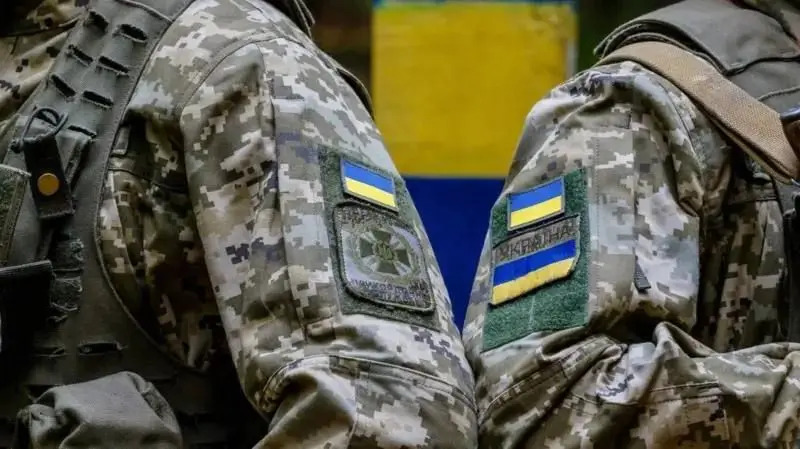
I’m looking everywhere for people to join the UAV company—the majority of my new recruits are military personnel against whom criminal cases have been opened due to violations of military discipline; there are also volunteers from 2022, young people on 18–24-year contracts, soldiers who have returned to service after being discharged, and those who have been forcibly mobilized.
So, here is my list of priorities for ensuring the army has enough personnel.
1. Increase the pay of infantrymen.
The Ministry of Defence and the General Staff plan to significantly increase funding for the infantry, and raising the basic pay to 250,000 per month is a justified decision. There aren’t that many people on zero at the moment; they should be provided for as if they were elite troops. I believe that a certain amount, at least 100,000 per month, should be allocated to every infantryman on the front line, in every battalion, so that infantry units can provide themselves with everything necessary to carry out their tasks. After completing tasks in the infantry for six months, a person has the right to transfer to any other position within their brigade.
2. Reduce the outflow of experienced military personnel from the army.
For every year spent on the front line in combat or staff roles, soldiers should receive a bonus of 400,000 hryvnias and an additional two weeks’ leave per year. This is beneficial for the state, as the outflow from the army for non-combat reasons is comparable to combat losses.
3. Foreigners
There are over 8 billion people on the planet, half of whom live in areas of military conflict, in countries where 3–4 thousand dollars a month is a major incentive. Unfortunately, there is no systematic effort to recruit foreigners to Ukraine. Indeed, in the first four months of 2026, a total of just 500 foreigners were brought in, all by a single unit – the 2nd ‘Khartiia’ Corps – using non-state funds from a volunteer foundation. Moreover, ‘Khartiia’ has a waiting list to bring in around 1,000 volunteers per month, but there is currently no possibility of obtaining state funding to facilitate their transfer.
4. Reduce the number of AWOL
Firstly, we must resolve the issue of conscientious deserters who do so with the aim of transferring to another unit. After serving in combat roles for two years, any soldier should be entitled to an automatic annual transfer to a combat role in another military unit. Units with a better reputation will attract more high-quality personnel.
Secondly, deserters are everywhere, but there are units with high rates of desertion, whilst others have far fewer despite performing the same tasks. Cases of desertion above the average level should be subject to official investigations into the likely responsibility of commanders and existing organisational problems by the General Staff, the Ministry of Defence and the military ombudsman.
5. The problem of mobilisation via the Territorial Recruitment Centres and the involvement of army corps and brigades in mobilisation
Three to four times fewer people reach the front line than are mobilised. Responsibility for individuals during mobilisation is fragmented across various government bodies. The registration systems are riddled with errors; corrupt officials trade in deferrals and deregistrations, with their own plans for recruiting people in the police, their own plans at the TCR, and their own plans at training centres. It is clear that mobilisation cannot be entrusted solely to the police or solely to the TCR; they will not resolve the existing problems, which they are already involved in. The main beneficiaries of receiving reinforcements are corps and brigade commanders. Therefore, army corps and reserve units should be assigned to each region to carry out mobilisation measures in conjunction with the police and the Territorial Recruitment Centres. This will improve anti-corruption controls, and every conscript will be assigned to military personnel who have a vested interest in them and will look after them from the very start. Commanders, meanwhile, will receive their planned reinforcements and bear personal responsibility for their conscripts.
6. Mission Control for the infantryman
Just as the Ministry of Defence has introduced Mission Control for every drone sortie, so too is Mission Control necessary for every infantryman. How long has the infantryman been on the front line, what supplies are drones delivering to him, what communications does he have, and when is his rotation scheduled? And every instance of casualties and every case of personnel missing in action must be recorded, and an after-action review must be conducted with the involvement of the General Staff and the Ministry of Defence. Commanders who allow systematic, unjustified losses of personnel must be stripped of their right to hold command positions and transferred, regardless of rank, to infantry units in non-command roles.
7. Russians
The experience of deploying Russian volunteers from among prisoners of war on the front line has been very positive. In the Russian army, people are treated like cattle; they know that if they are exchanged, they will be thrown back into the line of fire, and therefore their chances of survival are significantly higher when fighting for the Ukrainians. Thousands of Russian assault troops are taken prisoner every year. Russian volunteer units should be established in all our units that are prepared to take on such responsibility.
8. Lowering the conscription age to 23 exclusively to replenish UAV units with young recruits
Young people aged 23–25 are needed to staff drone units; this will significantly improve the survivability of our infantry and allow us to substantially strengthen Ukraine’s advantage in high-tech weaponry.
9. Contracts for volunteers
The 18–24 contract should be changed to an 18–22 contract, but it should be signed not for one year, but for at least two. If a person joins the infantry voluntarily, they should receive the same payments – a 1 million hryvnia bonus regardless of their age.
Yurii Butusov, Censor.NET


