



Many people think that UAV operators sit kilometre away from line of fire in relative safety. But in reality, pilots can even get involved in close-quarters combat, - veteran Volodymyr Musiak
Volodymyr Musiak (Pirate) is a historian whose military career has outlasted his professional one. He went to defend Ukraine back in 2014 and only recently managed to earn his long-awaited master’s degree. In the meantime, he also represented Ukraine at the Invictus Games and the Warrior Games.
He refers to the ATO and the Joint Forces Operation as a different kind of war – not because things were easier 12 years ago. Having served in the infantry and gone on to lead a UAV company in the 44th Mechanised Brigade, he recruited mainly infantrymen into his unit, a decision that subsequently proved successful. He was recently awarded the Order of Courage, 3rd Class.
In an interview with Censor.NET, he recounted how he nearly lost his life, but was reluctant to discuss how he acquired his weapon in combat. Read on to find out how he is currently assisting his comrades and about veteran rehabilitation.

WAR IS 90% DAILY LIFE AND 10% COMBAT
- I’m originally from the Odesa region, then I lived in the Poltava region. In 2014, I went to war, which is very often called the ATO, then the Joint Forces Operation, but in reality it was a war. I joined a volunteer unit – first the Right Sector, then the Ukrainian Volunteer Army. And I specifically joined the Armed Forces of Ukraine in 2022, on 24 February.
My godfather from Kyiv rang me and said: "It’s started." I had everything packed: my rucksack, my service weapon. I’m a historian by education, so it was obvious to me that sooner or later a major war would break out. Many people thought I was paranoid, but I simply packed my rucksack and went to the military recruitment office. We’d agreed on this in advance with our local veterans – the idea was that if the recruitment office was still open when things kicked off, we’d meet there, and if not, we had a designated meeting point.
- What was your status when you went to the recruitment office?
- I had a reserve contract with a marine brigade, but at that point, I couldn’t get through to anyone. I went to the military registration and enlistment office, and they enrolled me in what would later become the ‘Odin’ separate combined assault unit, which I was happy to join. It was mainly made up of lads with combat experience and responsible commanders. And after I became an officer, I ended up in the 44th separate mechanised brigade.
- Did you deliberately choose the infantry?
- I just joined the army. I didn’t think about what role I’d play; the main thing was to defend the country. I’d picked up some skills in precision shooting from my time in the ATO-OOS. I taught myself, then took courses on my own. I’d also got the hang of flying drones a bit through my work. And all these skills came together for me in the army.
- Nowadays, many soldiers admit, recalling the first weeks and months after 24 February, that they were mentally preparing to die. And there is a certain tendency to say that, compared to a full-scale invasion, the ATO was a fairly ‘light’ war. However, I know that it was during the ATO that you found yourselves in a situation where you had to get hold of weapons with your bare hands. You also say that these are two different wars.
- Actually, I think I was lucky in that battle.
After the ATO, we prepared and trained regularly, so we didn’t feel disoriented or panicked. We knew exactly what to do and with whom. We were even split into teams.
And regarding "we’re going to die". We’re not kamikaze; we weren’t going to die. General Shukhevych used to say: "Let our enemies die for our freedom." In other words, there’s always the possibility that we might die, but we weren’t going to die; we were going to defend and win.
As part of ‘Odin’, I fought in the Donetsk region, and after redeployment we were sent first to the Lyman sector, then to the Kharkiv region.
- Do you remember your first impressions of combat?
- Combat is combat – it’s war, hard work. As I was already an officer, my main task was to preserve the lives and health of the servicemen and to carry out the assigned tasks. This included sharing my experience, trying to bring the men together and create a kind of brotherhood. Not just so the lads wouldn’t think they’d been ‘shoved in here’, but so they’d understand why they were there. War is 90% daily life and 10% fighting.
I joined the brigade as a psychological officer, but that didn’t match my experience. The command saw this and transferred me to the role of deputy company commander for psychological support. Over time, I became company commander.
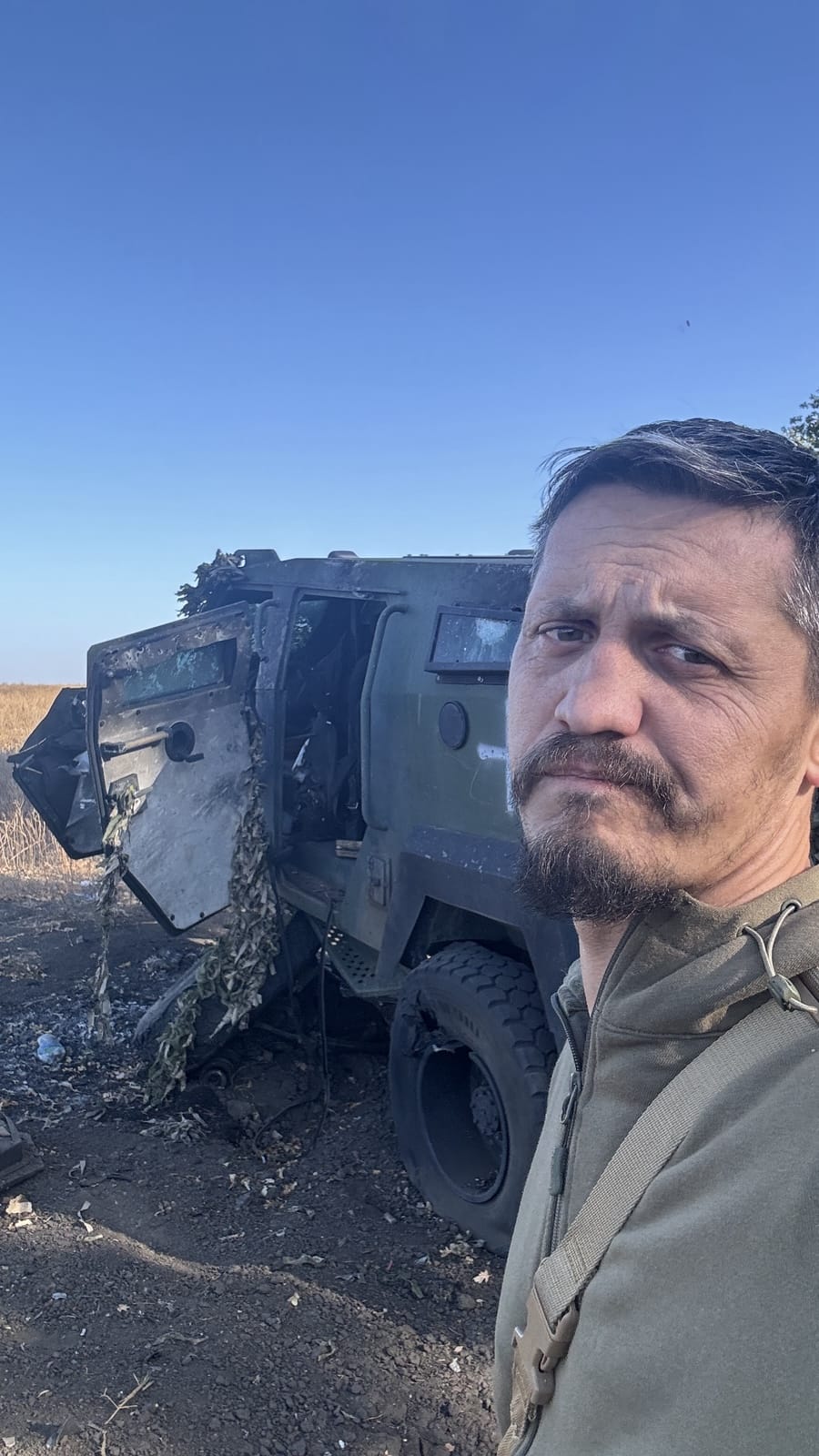
WE MUST DO OUR JOB SO THAT OUR INFANTRY DOES NOT ENCOUNTER THE ENEMY
- And when did you start working with UAVs?
- When we began to expand, I was entrusted with setting up and leading a strike UAV company. I’m not a desk-bound commander – I was constantly at the front lines, taking part in the fighting. First and foremost, they are my comrades; only then are they my subordinates. That’s how my rapport with my lads and lasses developed.
On 15 October 2024, I was wounded when enemy drones were attacking us. The drones and artillery were pounding us for about three hours. We thought we wouldn’t make it out of there. My lads weren’t surprised to find me there. They gave me a bit of a telling-off for going in there, but they were understanding.
- You jumped straight to 2024. I gather this wasn’t your first injury. So it was the last, but not the first?
- I was lucky; before that, I’d only had concussions – officially two. He must have been born in an embroidered bulletproof vest. Shrapnel just tore my trousers a couple of times.
- Officially two concussions, but unofficially more. Why is that?
- I didn’t seek medical help. If I had, I’d have had to go to hospital and wouldn’t have been able to stay with my lads. So I quietly set up an IV for myself or just relaxed.
I realise that’s wrong (lots of people have told me off and will continue to do so) and it sets a bad example for the soldiers. But that’s just the sort of person I was. Even after being wounded in 2024, I refused to be hospitalised until one of the doctors shouted at me, saying: ‘No, you’re going, because your eardrums are ruptured; at least let that heal.’
- You said you thought you’d die in the battle where you were wounded. So, did you have no hope of being evacuated? Or were the approaches too difficult?
- I knew that even if we died, they’d get us out. Actually, I liked my command’s approach in that regard. But the conditions there were… Firstly, we were under very, very heavy fire. And on top of that, the Russians started laying mines from a distance and doing everything they could to stop us from getting out. It was a very sunny day, not a breath of wind – you could see everything. If I’d lit a cigarette there, the smoke would have risen straight up. So I realised that going to evacuate us under those conditions was madness. But there was some even more reckless, brave bloke who came to get us.
I don’t know his name, but I’d like to shake his hand. They threw us wounded in there and whisked us out very, very quickly under fire. The whole vehicle was riddled with holes; there was no time for introductions. It was only later, in hospital, that I was told an M113 had taken us out.
- Were you already working on UAVs back then?
- We were doing slightly different work back then. Unfortunately, I can’t go into the specifics of that mission.
- UAV operators’ paths to drones vary; how did you get into it? Were you appointed company commander and had to learn everything from scratch, or did you already have some skills?
- No, not quite from scratch. There was a period when I, so to speak, was discharged after suffering a concussion and worked in a civilian job at an agricultural enterprise. Even then, I became interested in Mavics for civilian work and, with the help of YouTube, mastered the Mavic.
When the full-scale war began, I went to the front with my Mavic. I then started developing my skills in this area and completed a course on copter-type UAVs in the army.
Among the people I recruited into the unit at the start, there were only a few who knew anything about drones. We simply took decent, responsible lads who were willing and able to learn. I recruited many specifically from infantry units that had seen combat, and that proved to be a major advantage.
People often say nowadays that in war, everything depends on UAVs. I disagree with that; I wouldn’t downplay other military specialities. My battalion commander and I always said that we had to do our job in such a way that our infantry didn’t have to face the enemy.
In other words, if our infantry did come into contact with the enemy, it was our failure. It’s very tough for the infantry lads, and we do everything we can to make their service easier. The soldiers who came to us from the infantry to become pilots know first-hand just how hard it is in the trenches, and that’s why they gave 120% to help their former comrades in the trenches.
- Which drones do you most enjoy working with?
- I’ve actually done very little drone work myself. After becoming an officer, I was mainly responsible for organising the crews’ operations and training. In other words, the lads and lasses were doing the work, whilst I made sure they had everything they needed to do it.
When you’re in command of a company, no matter how much you might want to stay put at a position for a week, you simply don’t have that option, because there are so many people, crews and positions to oversee and look after.
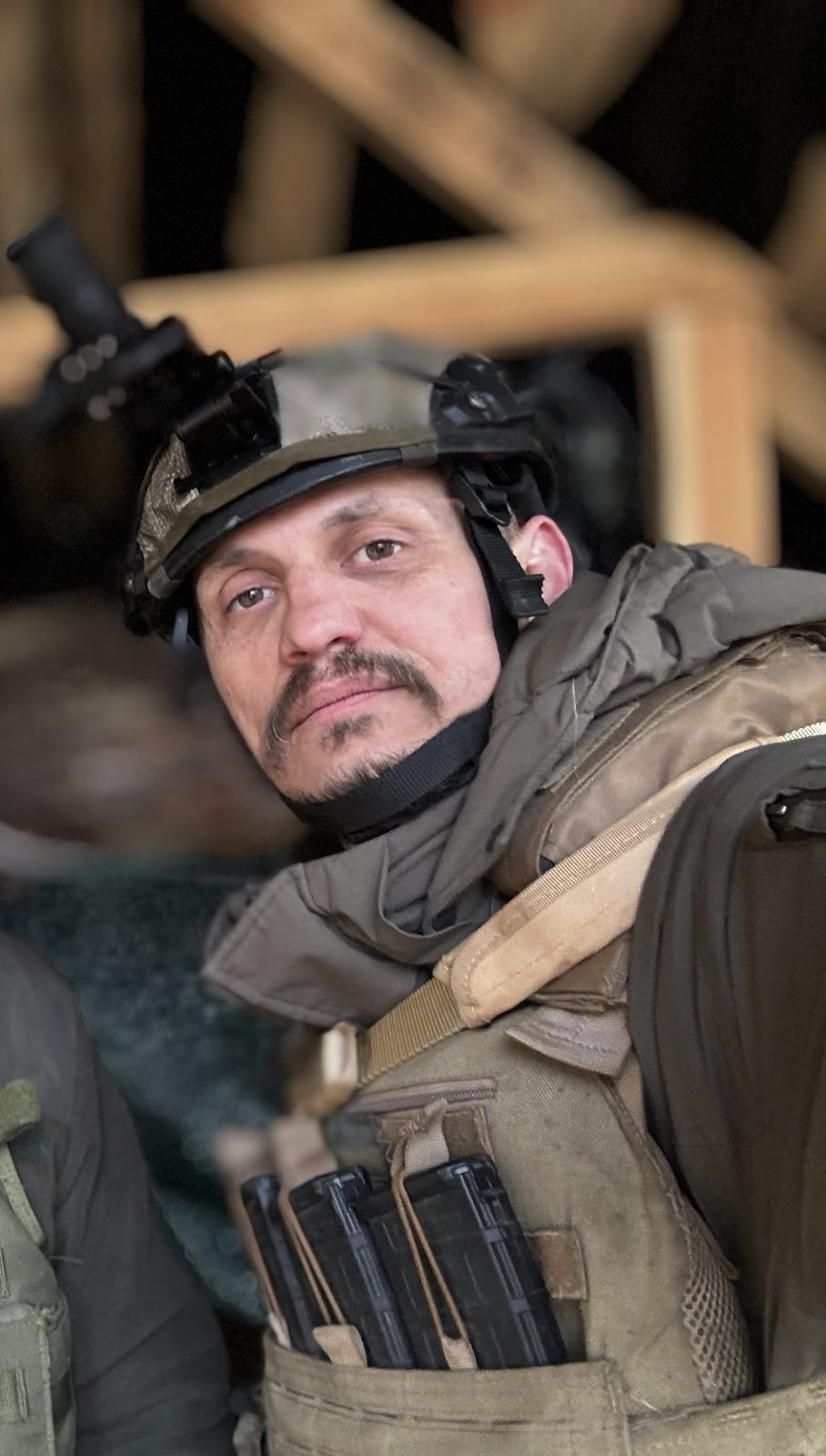
YOU NEED TO MASTER ALL TYPES OF DRONES, DON’T PLAY FAVOURITES
- Which drones did your subordinates prefer? You probably discussed this.
- We worked with both FPV drones and FPV bombers, the ‘kamikaze’ types. Unfortunately, I had to leave the army before we had any ground-based robotic systems. Now, the unit I served in has ground-based robotic systems, so the lads and lasses are getting to grips with them.
There are different calibres for different tasks and conditions. The main thing is to master them all. Don’t play favourites, but use them all. That is, in one place a FPV drone might fly straight into a hole, and in another a ‘Vampire’ might fly in and drop a large bomb on a dugout.
- Have there been any extreme situations in your company? Say, a drone duel?
- It was more dramatic than that: one of my crews got into a firefight. The enemy closed in to within forty to seventy metres. Some of them engaged in close-quarters combat, then one operator raised his ‘Mavic’ to monitor the enemy’s position. And, thank God, we held our ground. What I’m getting at is that many people think – well, pilots sit a kilometre away from the line of fire in relative safety. But in reality, pilots can even get involved in close-quarters combat.
- There have been more situations where drone operators have taken on the role of infantry. Were your men mentally prepared for this?
- Of course, because I only had the best in my unit. I always told them they were the best. And when, for example, they were resting between deployments to the front line, we tried to hold regular training sessions in marksmanship and first aid. Let me remind you, many of them came to me from the infantry. So they had experience, and, thank God, they didn’t lose their heads.
- I’ll ask the question about duels with the enemy again. I assume you’ve had them.
- Some of our comrades from the battalion had an incident where, just as they were launching an attack, a Russian drone flew into their dugout. They didn’t drop their remote controls, successfully launched the attack, and then there was an explosion. Thank God everyone is safe; they were only concussed.
UNDERESTIMATING THE ENEMY IS A SIN. BUT THE RUSSIANS STILL DON’T STAND A CHANCE
- You’ve been through some serious fighting yourself back in the day, then became an officer, so now you’re more focused on morale and logistics. Don’t you ever feel nostalgic for the adrenaline rush of the front line?
- I used to get that feeling, and I’d constantly go out to the front line to be with the lads. It wasn’t even about being addicted to the adrenaline; I just knew it was much easier for me to make certain decisions on the spot. For example, finding a new position for the pilots.
So whenever I had the chance, I’d go out too. Some of my colleagues were surprised that such things happened. And our battalion commander also regularly visited the positions, which surprised a great many people too. I was lucky with my battalion commander, because he’s just as combative as I am.
- Within the scope of your responsibilities, you observed the enemy both from an infantry perspective and from the perspective of UAVs. Did you analyse their combat skills?
- Not studying your enemy is a huge mistake, because the enemy is also evolving; they aren’t standing still either. If you don’t take everything into account, you won’t last long. I hope they don’t send me to a psychiatrist after what I’ve said, but I really admired the skill with which they attacked us in that battle, which was the most terrifying for me. We hid in the cellar, and they found us there without fail; you could sense their professionalism. I said goodbye to my son then, because I thought we wouldn’t make it out alive.
It’s a mistake to underestimate the enemy, but I don’t want to overestimate them either. The Russians don’t stand a chance anyway, because we’re defending our own land. It will always be harder for an occupier than for someone on their own soil.
- Have you had to deal with them, perhaps with prisoners of war? Have you seen anyone ask them this question?
- I have. They all cry, claiming they’ve only just arrived, that they were brought here against their will. At the start of the war, the story was ‘we came to man a checkpoint’, and then ‘I’ve only just been conscripted, they forced me’. I haven’t come across anyone who would admit they came here of their own free will.
- Were you discharged from the army due to injury or for another reason?
- I’ve been in the group since 2019. They didn’t even want to take me into the army; I had to hide the fact that I was disabled. It’s been a year since I left the military in March. Since then, I’ve finally completed my master’s degree and received a Master’s in History and Archaeology.
I also opened a social gym in Karlivka, Poltava region, for combatants, their families and the families of the fallen, thanks to a grant from the British Royal Invictus Foundation.
Even before the war, I was part of the Ukrainian national teams for Invictus and Warrior Games. I remember how, after the previous war, sport had a positive impact on my well-being, so I decided to give it a go. I won the grant, bought the equipment and secured premises from the local council.
In particular, I try to help those who have just been discharged from the army or are on leave. Civilians don’t go there; there are commercial gyms for that. We have a place for our own – not just for doing sport, but also for chatting or simply sitting in silence together.
And most importantly, I’m giving my son back the time I stole from him while I was at war.
WE HAVE SO MANY VETERANS NOW THAT SOCIETY NEEDS TO BE INTEGRATED INTO REALITY
- Tell us more about your experience of taking part in these veterans’ competitions.
- I was part of the Ukrainian Invictus 2020 team, but then COVID struck, and all the competitions were cancelled. Our competitions took place in April 2022, and the Warrior Games were held at the end of the year.
- So you were given leave from the army to take part in the games?
- I was actually forced to go. I was taken off my post with instructions to tell other countries what was happening here. Medals and results didn’t matter. Before the Warrior Games, I hid at my post and asked the command not to go, but the same thing happened because the order had already been given.
I didn’t bring back any medals. At first, everyone said that medals weren’t the main thing, but then they asked, half-jokingly, where the awards were. And I ask them, how are we supposed to prepare for professional competitions at our posts, when we need proper nutrition, sleep and a routine?
- Ultimately, to what extent did you manage to convey to the world what you wanted to?
- There were separate press conferences for our team, and foreign journalists were taking comments. Plus, veterans from other teams were asking about what was actually going on.
In the US at Warrior, they asked in more detail about the experience of modern warfare, because at Invictus in the Netherlands, few people yet understood the realities or knew what to ask us. The veteran community was more open and more willing to listen.
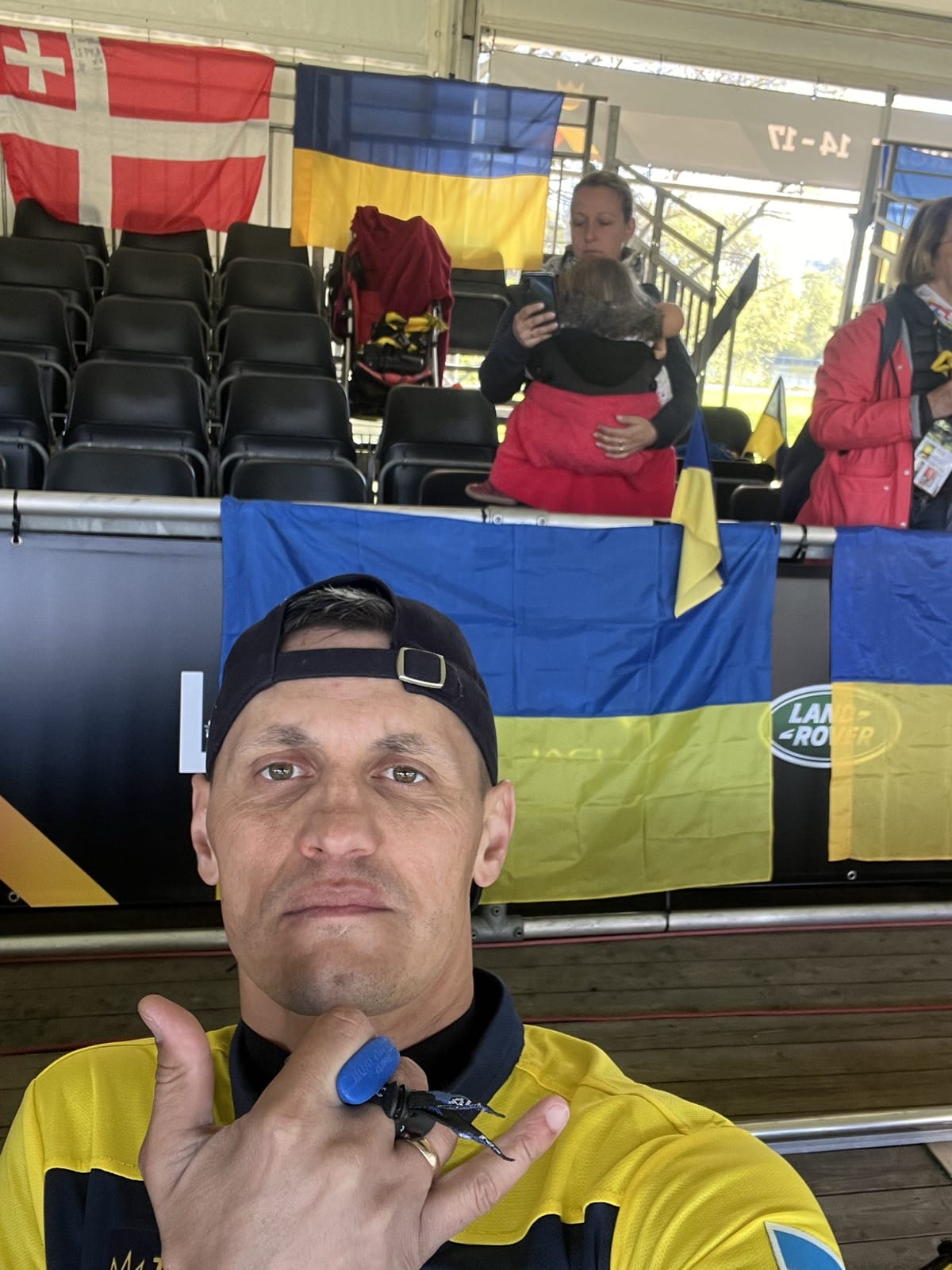
I’m also a member of a veterans’ bikers’ club. Last year, after I was discharged, I needed to clear my head. I rode my motorbike to a gathering of veteran bikers from all over Europe in Berlin, and then to Denmark. I met up with some veteran friends there too.
- Do people come to your sports centre only from Karlivka, or from the wider region as well?
- ‘Centre’ is a bit of an exaggeration. We don’t even have proper facilities. We operate not because of, but in spite of.
- So they’re putting a spanner in the works?
- Thank God, no. I told the local authorities straight away: ‘If you don’t want to help, then just don’t get in the way’.
So we’re just a community gym; all combat veterans and their family members can use it, regardless of where they live. People come from the villages, and soldiers just passing through. Once, a soldier’s car broke down and he left it at the garage (the lads also repair military vehicles for free). I looked at him and asked: "Mate, when was the last time you had a shower?" All soldiers know that a shower is sacred. I gave him the chance to just have a shower, and you should have seen the look of joy in that sergeant’s eyes. So this isn’t just a gym. It’s a place of strength for our own.

- You’re contributing not only to the physical but also to the mental health of veterans and their families, because the sense of having been part of the war stays with you for life. At the same time, as a veteran yourself, you can also observe from the sidelines how veterans adapt to civilian life – I mean, without any amputations, you wouldn’t immediately tell that you’d been to war.
- I try to wear entirely civilian clothes without any military elements, but people can still tell I’m a veteran.
Generally speaking, work needs to be done with people who have been wounded as soon as they arrive at hospital, rather than leaving them to fend for themselves. In this respect, I like those units that have their own support services.
- Setting aside the support services, what are the nuances in society’s readiness for the return of veterans?
- In my opinion, society isn’t ready. When we returned from the previous war – the ATO and the Joint Forces Operation – people said we had to reintegrate, to return to society. But now there are so many veterans that society needs to adapt to reality. I’m not talking about any antics here, but I mean the changed mindset of this group of people, their heightened sense of justice. It won’t be the case that we’ll all suddenly forget what we’ve been through. Think of any post-war country – it hasn’t happened anywhere. This needs to be a comprehensive effort involving both society and the veterans.
Olha Skorokhod, Censor.NET


