



Battalion of soldiers who refused to fight captures Akhmat regiment command post and survives four encirclements
The battalion commander, who took over a unit with 274 soldiers listed as having refused to fight, speaks in detail for the first time about what really happened, why they withdrew from Kursk Oblast, and how he brought every fighter out alive.
A regular, newly formed battalion made up of ordinary mobilized soldiers and volunteers showed extraordinary results during combat operations in Kursk and Belgorod oblasts. This battalion went in and carried out its combat missions despite being encircled four times. It was this battalion that captured the command post of the 1434th Motor Rifle Regiment Akhmat.
Unique combat operations, unique experience, and behind all of this is the 30-year-old battalion commander of Ukraine’s Armed Forces, Yevhen Kochervei, call sign Almaz. Hello, my friend!
Hello!
What condition was the 1st Infantry Battalion of the 22nd Mechanized Brigade in when you took command?
The battalion had been badly battered: there were 274 soldiers listed as having refused to fight, and very little infantry was available.
Were there any people on the positions at all?
There was no infantry from the battalion on the positions.
First of all, I introduced myself. I told every fighter about my own path and made it clear that we did not have such a system as "refusers." If someone has the will to serve and defend the state, there should be an appropriate position for him. As for my deputies, I had only three career officers.
There was the deputy commander for technical support. He had studied a long time ago, graduated, and then was mobilized. There was also a deputy for moral and psychological support and the chief of staff. Those were the three career servicemen. The rest were all non-career personnel.
Did you have company commanders?
There were no company commanders. There was one company commander, but the personnel did not respect him because he liked drinking alcohol. As soon as I started talking to the personnel, I checked who the leaders were.
I immediately paid attention to that, to whom the people followed, who communicated with whom, who people turned to. And I chose from within the unit who should be put in those positions.
I saw that in that company, his platoon commander, a junior lieutenant, was a sensible officer and could become the company commander. He remains the commander of the 2nd Company to this day.
Where were you at the time when you took command of the battalion? In which area?
When I took command of the battalion, we were in the Klishchiivka direction.
That is, near Bakhmut. Where heavy fighting was taking place.
It was a shock for me that they could not recover the fallen from the forward edge. I took the chief of staff with me, took my driver, who had transferred together with me, and the three of us went to the forward edge and pulled the fallen out from there.
We recovered the KIA soldiers, I gathered the unit commander and the deputy, and told them: it can be done. The strangest thing for people would probably be this: when we entered Klishchiivka, we had certain teams at the MK there. We went in, I entered with the chief of staff, we were going to recover the fallen, and a serviceman was walking toward us. I asked him, "Where are you coming from, if it is not a secret?" He told me which position he was coming from.
I said, "And which battalion are you from?" He said, "The 1st." I said, "I’m from the 1st too. I’m your battalion commander." When he found out that I was the battalion commander and had come to recover the fallen, he was shocked.
For them, it was a major revelation that this could be done.
How long did it take you to turn the worst battalion into a combat-capable one?
I think probably more than a month. In fact, I probably had to live at the command and observation post constantly for a month or two.
I could not even really leave to wash properly. Everything had to be controlled, from the most basic things, such as communications equipment, because they did not really understand how to use it, to basic reporting and identifying the directions from which someone was firing. It was very difficult to polish everything to the standard I knew and to the way it had to be done. Later, they started carrying it out, and it began to produce results.
They began capturing infantrymen. We managed to capture a T-62 "Turtle" tank as a trophy, which, as they say, popped up in the rear.
That was a very well-known episode. It was on video.
At first, I wanted to destroy it. It was moving around, circling. Everyone was firing at them: friendly forces, our troops, and the enemy as well.
When they started checking it, it turned out there was infantry inside. They pushed an assault rifle through the vision block and captured those servicemen.
How many Russians did you take prisoner?
We took two then.
One of them was a commander, and the other was a gunner. The driver-mechanic ran off somewhere. I do not know where he went, but he escaped.
And I said, "Check whether maybe someone knows how to drive it." My serviceman told me over the radio, "No one knows how to use it or how to start it."
Visually, I thought it was probably a T-72. Over the radio, we started telling him what actions to take, what manipulations to carry out in order to start it, shift into gear, and reverse back. Then I saw that he had done all the manipulations.
But before that, he said, "This will be the first time in my life that I drive armored equipment. I only drove an L-200 once in my life. Before that, I could not really drive properly." I said, "It is all right. The main thing is to do everything correctly, and you will manage."
And that was it. I saw him slowly reversing, and everything was fine.
Let’s note that this was probably the first major high-profile success, the first time your battalion, the feat of your fighters, appeared in a video online.
Yes.
That was probably the first thing we saw.
What happened next after those battles around Klishchiivka? As far as I remember, the 22nd Brigade, which had been fighting there for a long time, was withdrawn to Sumy Oblast for recovery because the personnel were exhausted. To rest, recover a little, get some sleep. And everyone thought there would now be a long period of recovery, and the brigade would be resting.
How much time did you actually spend resting and recovering in Sumy Oblast?
Thirty days.
Thirty days?
Yes.
That was not much.
Thirty days.
We had limited manning. And we ran them through training, drilled them, honed them. My instructors from other brigades, whom I brought over to my unit, came to me. And they sharpened those skills because it would save lives. And because it would produce results.
And then you found out that this was not recovery, but preparation for an offensive operation.
Funny as it may sound, they told us almost at the end of the recovery period, when we had already gone to a meeting.
As far as I remember, you were among the first to carry out the mission to break through into Kursk Oblast, together with units of the 225th Separate Assault Regiment.
Its commander is Hero of Ukraine Oleh Shyriaiev.
He went first, and I was coordinating with the 82nd.
The 82nd Air Assault Brigade. It also broke through into Kursk Oblast in the same sector together with the 225th Regiment.
I established coordination with them. We gamed out all stages of the follow-up actions.
How we would proceed, how we planned to act, how we would link up in the event of their success. They carried out the breakthroughs very well, really brilliantly.
An infantry battalion that had gone from a battalion of soldiers listed as having refused to fight to a combat-capable unit received a mission, was pulled back for recovery, and while still in recovery and rest, was tasked with carrying out assault operations on the territory of the Russian Federation.
Just imagine the scale of the missions. What were the results of your battalion’s combat operations from August 2024 to May 2025 on the territory of the aggressor state? What losses did the enemy suffer as a result of your battalion’s actions?
We roughly calculated the numbers using Delta and checked all those strikes and kills. There were 598 killed and around 760 wounded.
We also captured 73 enemy soldiers. Not counting equipment, we also destroyed equipment: BMDs and tanks, up to 46 units combined.
And we captured another 13 pieces of equipment. Ural trucks and so on. But that equipment later, as they say, paid off for us.
Those were the results of the combat operations. Plus, later, you also moved continuously from Kursk Oblast to Belgorod Oblast. You were seriously active on the occupiers’ territory there.
Tell us, what were the results of the combat operations there?
In the Belgorod sector, according to Delta, 198 were killed and around 100 wounded. Plus 10 prisoners.
All of this was done by a single battalion.
In terms of numbers, as I understand it, that is roughly four times more than your battalion’s entire personnel strength.
Which was manned at 68%.
Yes, four times more people were killed, wounded, put out of action, and captured than the number of people you had in total.
An incredible result, friends, incredible. And this is exactly what I want to emphasize: how it is done. A battalion commander who organized a team, the people who came in, what an organizational feat this was, a command-and-control feat, and how much the improvement in the quality of command turned a battalion of soldiers listed as having refused to fight into an assault unit that inflicted such incredible losses on the enemy.
This is a very instructive and very important story, one that shows what the quality of organizational command means in modern warfare, and why it will always be of key importance.
How did the offensive in Kursk Oblast begin for you? What mission were you given, and how did you start carrying it out?
After receiving the mission to clear a company strongpoint near Mykolaievo-Darino, I immediately went to the 1st Company because I had broken the operation down into stages: which units would be involved, who would enter after whom. And the order of the columns.
I positioned the equipment, including attached tanks and self-propelled artillery for support, and determined who would move behind whom and how each element would carry out its task. I assigned two UAV teams to each company, riding behind them on buggies, plus mortar teams. Each unit, each company, had its own specific assets that it used.
I also distributed responsibilities: I would go in with the 1st Company, my deputy would go in with the 2nd Company, and the chief of staff would go in with the 3rd Company, in order to maintain communication with the ground, with our territory, because I was not confident about the communications. After receiving the mission, I immediately went to the 1st Company, gathered the personnel, and explained the task. We moved out and initially hit a snag.
They thought I would stay somewhere off to the side, that I would not go with them. When I saw that they had stopped while they were moving, I called the unit commander on the radio and asked what had happened.
"I don’t know, something with the equipment," and some kind of excuse-making started. I drove up to them, checked: "Ready?" "Ready." "Ready?" "Ready." "Yes, ready." I said, "I am going with you. I will be in the HMMWV, behind you, and we will carry out all the actions."
We moved together. The HMMWV pulled up and fired through the area, the tank kept things under control, and the chief of staff relayed to me over the radio what he could see visually from above: where the enemy was, where they were moving, and where they were firing at us from. I sent the infantry farther ahead, while the unit commander and I began clearing the dugouts and checking them. We entered one dugout, and my infantrymen had missed three people inside.
We went in there and cleared it.
You personally cleared the dugout and came face to face with enemy soldiers?
Yes. Then my deputy went in there and said, "Commander, there is enemy personnel there." We immediately got on the radio and started shouting: "Gentlemen, move in very carefully, clear everything carefully, check every fighting position, clear everything out."
How many of them were there where you went in?
We took 18 men prisoner, around 20 escaped, and there were about four men whom we killed. The rest, as they say, all ran off.
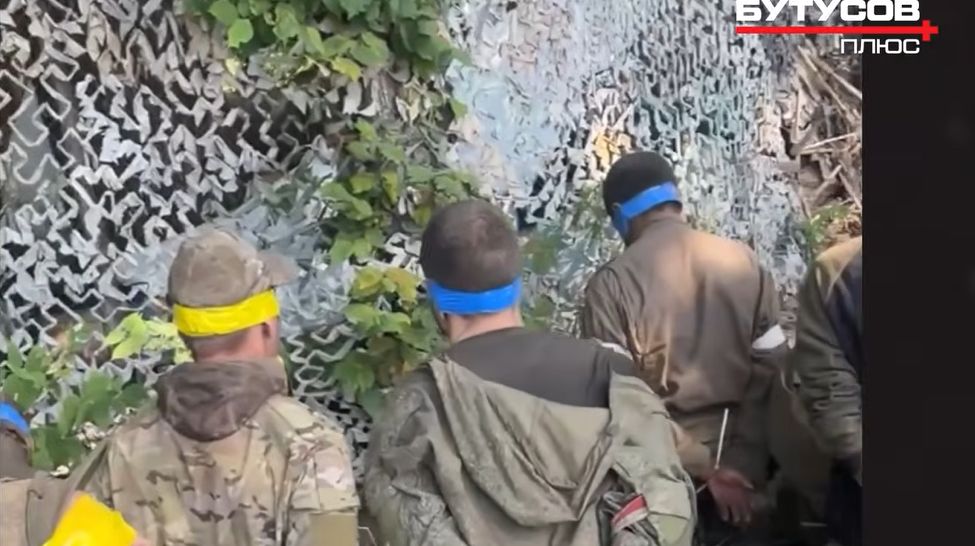
We went in, and there was a platoon commander there, a junior lieutenant who had previously fought in Luhansk Oblast and so on, and who had received awards from the president.
The Russian president?
Yes.
And we went in, and he was sitting there with his subordinates. They raised their hands.
What Russian unit was this?
They had been attached to the 1434th Akhmat Regiment. They were holding positions along the border.
So you were breaking through the border defense held by the 1434th Akhmat Regiment. Very interesting.
At that point, I spoke with the personnel we had taken prisoner. There were conscripts there, a warrant officer, and a platoon commander.
I asked them about Akhmat straight away. They said Akhmat was the first to run.
Akhmat ran, while they had been attached to it?
Yes. They were the first ones to run. There were FSB officers and Akhmat fighters there.
And they were the first to flee. Then the others could not figure out where to go. At first, they wanted to run.
After the platoon commander stayed in the dugout and the rest began getting lost and could not understand where to run, we managed to take them. Then I received instructions to coordinate with the 82nd Brigade, with its 1st Battalion.
They had secured positions on the outskirts of Zelenyi Shliakh and Novoivanivka so that we could pull up, replace them, and finish clearing the area. They would advance, secure a foothold, check the area, and we would come in behind them, take up positions, and they would move farther ahead. We were already dealing with the clearing and that work.
They had to do all of this quickly and step by step. So that we would not be delayed, immediately after that column went in, the 1st Company carried out its mission in Mykolaievo-Darino, and the 2nd Company moved on the right flank toward Zelenyi Shliakh and Novoivanivka. We arrived there right away, replaced them, and began clearing the area.
Russian troops from the 810th Marine Brigade began turning up there in the 22nd Brigade’s sector, just as they had in ours. We had very clear coordination, because there was very little time and everything had to be done competently and properly. So after the infantry unloaded, replaced the guys, we immediately went in to clear the area.
And that immediately produced results. We captured a captain, the chief of engineering troops, who had built all of that defense: all those trenches, dugouts, and positions, where each of them was located. He knew them all.
And where did you capture this Russian officer, the engineering captain?
In Novoivanivka.
During the clearing operation?
Yes, during the clearing operation. Some were hiding in houses, some in vehicles, some in basements.
Some tried to change into civilian clothes and get out. Where there were civilians, we approached them and spoke to them normally, properly. They told us that certain people were located here or there.
And we moved through everything calmly and carefully. We did not raise hell there or destroy everything indiscriminately. We went through it all competently and sensibly.
This was already the first village liberated directly by your battalion.
Yes.
What enemy losses were there in Novoivanivka during your assault?
Around 12 were killed, and we took around 13 prisoners.
Thirteen to sixteen prisoners. The 225th Regiment and the 82nd Brigade acted very competently, breaking through very effectively.
We cleared all of it quickly. It was a moment of surprise. No one could understand who was where.
Even later, my mortar crews, who were behind with cover there, were also taking prisoners. Six terrified conscripts came out toward them. They could not understand where they were, and they were also taken prisoner. No one mistreated them there. Everything was normal, with an adequate attitude.
After he laid out the information for me about the command post of the Akhmat regiment, I studied it. There were about 40 dugouts there.
So, in Novoivanivka, you received information about the command post of the 1434th Motor Rifle Regiment Akhmat.
It was right after Olhivka, and there was a large forest there, two by two kilometers. We later called it the "Akhmat Forest." We gave it that nickname.
How was this strongpoint and the defensive belt of the Akhmat regiment near Olhivka organized?
Where the command post was located, almost everything was in dugouts. There was a certain section in the trenches, near the entrance, plus revetments.
There was a lot of equipment there, including civilian vehicles, pickup trucks, and Ural trucks. It was all positioned in a circle, but directly at the entrance, positions had been set up, and a trench had been dug to engage.
So earlier, the Russians, through the Russian Defense Ministry, spread information as if there were only conscripts there and no troops. But in reality, the enemy had deployed an entire motor rifle regiment there, directly along the axis of your attack. The elite Akhmat force was there.
We saw that video where Kadyrov showed an entire square in Grozny packed with fighters and equipment. It was presented as this powerful army heading to war against Ukraine. And they were exactly on the axis of your main attack.
Yes, but there were 850 of them there. Their area of responsibility ran from Sudzha to Tetkino.
Their personnel were deployed in certain sections. And this was the actual command post from which they controlled everything. After I captured the captain, he told me about it, because I immediately asked what was nearby so that I could understand things later.
And he told me, "There is a command post there." Then I received a call. We had been issued satellite phones because there was no mobile signal or internet there.
I had a satellite phone call. They called me immediately and said: This is your next task.
That command post. Well, they did not say it was a command post. They simply said that the tree line, because two helicopters had unloaded marines there.
Yes, that 810th Brigade began transferring reinforcements by helicopter into that forest, where they had positions.
And they landed them there. After receiving the mission, I immediately checked the personnel.
At that moment, my 3rd Company had not yet been committed. I took a unit from the 3rd Company. I took tanks.
I studied the layout, how it had been built. And I looked at it...and clarified with him roughly how many personnel there were. I went through how to do all of this properly.
I clarified with the prisoners how many personnel were there. I asked the captain for an approximate headcount. He drew me a diagram of how it was set up.
I looked through all of it. It was all drawn with one pen on a single sheet of paper. But it helped me understand how to do it properly.
After explaining to the 3rd Company commander how it would happen, I moved into a tree line opposite the forest and set up my command-and-observation post on the grass, with a tablet in my hands.
And what equipment did you have there?
A tablet, on which I immediately watched my own drone feed, because I had a UAV up.
It was right there near me. I was immediately monitoring what was happening there. Plus, I had a Satcube in front of me. Internet access that allowed me to watch the feed and receive certain information from my senior commander. And Kropyva as well: I was studying where everything was, what was where, and how it all fit together. And I was commanding.
Please tell us about the destruction of the Akhmat command post.
Well, first of all, this really was an outstanding success achieved by the infantry of an ordinary infantry battalion. How did you manage to do it with infantry alone?
We managed to do it primarily because when I deployed the first column, which fanned out in front and was fighting, I felt that they could not push farther, that pressure was building on them.
They were being engaged with RPGs, very competently. Later, I found Wagner patches there and so on. It was not purely Akhmat there.
There were marines, ordinary Russian officers, and soldiers as well. I was watching them, and they were working very competently. They skillfully used single-use weapons.
They skillfully used rifles. When I saw that pressure was building on them, I redeployed the 1st Company and immediately sent them in as reinforcement so they could move in from the flank and strike from the flank.
Then they began running away from our soldiers along the trench. And our troops pushed through. Prisoners were brought to me right away.
It was not far to bring them to me, as I was in the neighboring tree line. I immediately clarified which units they were from, where things were, and what was where.
And I passed all the information over the radio, in order to understand how many of them were there.
Where they might go, roughly. And what we could expect from them. I questioned them for all the information.
One of them said, "I was a cook there," and so on. "I cooked food for 56 people." Those were the ones in the forest.
Plus the 810th. Those two squads that had been unloaded there, just over 20 men.
From the helicopters. But they were then left alone in Olhivka. And we pushed through to the end.
We forced them out, secured positions, and established lines. Then we fully checked everything.
Their dugouts were very competently built. Several entrances. Plus toilets, washbasins, a shower.
Everything they had was underground. Toilets underground, the shower too.
And where the washbasin was, there was a passage through which they escaped.
Because we controlled the dugout from two sides. They locked themselves in from the inside and exited through the rear.
So, Akhmat did not defend its command post?
They failed to defend it because our infantry were highly motivated and very confident. We had no losses.
When our fighters felt that they could operate competently and without losses, they began to produce very good results.
They started clearing the area very well. I would simply give commands: clear it, throw grenades in. They understood me from half a word. When we entered, there was a safe there, and they had a Gnom. It was smoking.
It was 100% a Gnom. Secure communications have to be destroyed, burned. Whether on our side or theirs, everyone knows that. And from what I saw, it was clear that yes, it was theirs.
So they burned the secure communications equipment.
The documents definitely contained their locations. Thanks to the fact that we passed them on to the senior commander, he delivered fire strikes and very effectively destroyed certain senior officers. And I am very grateful to the Akhmat regiment for leaving behind such valuable information.
How much weaponry and equipment did the Akhmat regiment abandon at its positions?
There were around 13 pieces of equipment. There were Ural trucks, pickup trucks, UAZ vehicles and jeeps. The Ural trucks were all packed with ammunition and supplies, which we later used against them. They effectively handed us a new vehicle; it had 1,500 kilometers on the clock.
It came straight from Grozny, straight from the parade, from Kadyrov, right here, and they delivered it to you. Very convenient. And you are driving it.
Yes, we took them, covered up the markings, and used them to keep carrying out missions.
Their EW systems were excellent. A 2024 model, fresh and brand new. It paid off for us and also saved the lives of our servicemen.
What ammunition did the Akhmat regiment leave behind, and how much?
Igla MANPADS, grenades, 5.45 and 7.62 rounds. I was very satisfied with the quantity because there was a lot of everything. There were 82-mm mortar rounds.
Plus ammunition for the ZU anti-aircraft gun. We did not have to transport it from our territory, from Ukraine; we used their ammunition directly.
After that, I moved into the settlement of Matviivka-Vietreno and took up defense there.
From there, I turned toward Korenevo. They assigned me a sector. I was given a certain battalion from our brigade.
Unfortunately, it was not holding the positions where it was supposed to be. It seriously dropped the ball. And I immediately contacted the 225th Regiment.
We agreed that, if needed, I would support it from the flank so that the enemy would not get in on its side. We closed off the TMK areas and pulled concertina wire across them. I managed to blow up the dam near Korenevo.
The water went through. I wanted to blow up the bridges next, but unfortunately, we did not manage to do that, because we began moving out, and the enemy was already there. Then, after a certain period, they launched assaults. When we captured a platoon commander, they had already brought in the 106th Airborne Division.
The 106th Airborne Division began transferring its units there, to Korenevo, to stop you.
The battles for Korenevo were very difficult for us because the attached unit we had really dropped the ball.
It assured us that it was in position, because the 225th Regiment had completed its mission, deployed along the bridges, and everything was fine, everything was in place. That battalion was brought in to replace them, and we all hoped they were standing there. Everyone was doing their own job.
Then that battalion was handed over to me. I was told that this was my area of responsibility, which had grown a little, from several kilometers to 13 kilometers. I was already holding from Vietreno all the way to the forest, past the settlement of Korenevo. And I also had a certain number of personnel near Akhmat Forest, near Olhivka.
Whenever we entered each position, unfortunately, there were no personnel there from the unit that had been attached to us. While we were looking for it and figuring things out, we were losing time. Unfortunately, that time was very valuable to us.
So the enemy immediately began counterattacking, right? You were immediately deploying your defense because heavy pressure began right away?
A little more than a week passed. They began probing certain sectors locally. Our troops then captured four servicemen and one officer.
And he provided that information. They had received orders to completely clear the area up to the settlement of Novoivanivka. They had two options for the advance: either move toward Novoivanivka along the highway or advance along the Korenevo–Snagost axis.
Those were the two options for where they would attack. I immediately passed information to the senior commander that they were preparing and that those lines and directions had to be reinforced. There were certain episodes where our guys — EW operators and signal troops — were holding positions.
And they repelled enemy BMD attacks from the flank. I am very grateful to them for carrying out their mission competently and precisely. No one ran.
Everyone held their ground, opened fire properly and effectively, killed the enemy, even those trying to flee. During the first episode, using their advancing BMDs, they immediately ran over one of their own servicemen.
The second BMD turned around and also ran over one of its own paratroopers.
Yes. And thanks to our guys who were holding there, the EW operators, signal troops, and air defense personnel, they opened fire very competently. Nobody moved; everyone held their positions.
Even though a fourth BMD was moving, firing its 30-mm cannon and cutting through the tree line. Thanks to everyone carrying out their tasks properly, nobody ran; everyone held their ground, and our side suffered no losses. We found the enemy and repelled their first attack.
This was the first attack by the 106th Airborne Division, right? Their first mechanized assault.
What were the results of the battle for the enemy? What losses did they suffer?
At that moment, around 16 to 18 bodies were lying near the positions.
We did not let anyone escape. Everyone who tried was left lying there on their territory, in that grass. As for the equipment, one vehicle got through, while another was hit near the settlement of Korenevo, right at the turn. And all that infantry was finished off and, as they say, left there.
When did you capture prisoners from the 106th Division there? Who were they?
Privates, and there was also an officer, though he was killed. Young guys, around 20 years old, all contract soldiers.
Everyone we spoke to among the prisoners had fought on other fronts. Some had come from Luhansk Oblast.
So they were all experienced.
Yes, they really were fired up. Most of our guys were 40-plus. Forty to fifty-plus.
When was the first time the enemy managed to create serious problems for your defense?
That was on Sept. 10. Around 11 or 12 pieces of equipment were trying to break through.
They tried attacking me head-on. It did not work. They tried on foot, they tried with vehicles — it did not work.
Then they tried probing the neighboring sector. Unfortunately, they succeeded there. And they broke through the line.
That was the breakthrough. Thank God, we had support. The 47th Brigade and the 82nd Brigade were already there then.
They repelled the attacks very effectively. They did not manage to push through Novoivanivka from the Snagost direction.
Then, two days later, on Sept. 12, after two or three days, I began turning the flank. Unfortunately, I had been expecting a frontal attack. I thought they would come from the front.
That I would be meeting them head-on. But they came from the rear. They drove straight onto my mortar crews.
And effectively cut off everything for me up to the highway.
So you ended up encircled? Was the battalion encircled?
Yes. My company commanders. My command-and-observation post was several tree lines away from them.
And my company's command posts ended up encircled. The commanders of the 1st, 2nd and 3rd companies, as well as the machine-gun platoon commander.
We sent in equipment and personnel. We widened the sector. We pushed through.
We created a corridor through which we rushed in with two vehicles. We evacuated the drone pilots from there.
The mortar crews, the 82-mm teams, the heavy machine-gun crews — you could say they were all cut off. They destroyed my 120-mm mortars that had been positioned farther back.
But the smaller assets all remained. We broke through and extracted the commanders and the infantry. We pulled them over to the flank.
We brought infantry in there in force. We made it clear that everyone was close by. We repositioned the assets and repositioned the drone pilots.
In the neighboring tree line, we established blocking positions to secure the flanks. And after that, we continued holding the defense like that.
Tell me, was this the only time your battalion ended up encircled in Kursk Oblast?
No. Unfortunately, it happened four times.
Four times you were encircled? And each time you acted the same way? You did not withdraw the unit, you restored the situation?
That was exactly what we planned for. Though later, when the North Koreans appeared, things changed.
The most epic moment was with them. When my guys got encircled, and I saw that they were pressing in large numbers and that we had to pull back, the guys climbed into a cornfield and hid there. Funny as it may sound, I told them to lie low off to the side and not move.
On your orders?
Yes.
Tell us what happened, when did this combat episode take place?
It was sometime around late January or early February. Forty men were moving in one direction.
It was a Korean offensive, Korean special forces, several brigades of Korean special-purpose troops, well-trained, moving forward.
Please tell us first about the Koreans. What were they like, their uniforms, how combat-capable, trained, and equipped were they?
Our defensive belt was set up very well and competently. We had positions on the heights, everything was wrapped in concertina wire, tangle wire, and mines. Everything was at the highest level. Every position had assets, firing ports, everything was properly arranged.
But when we looked, we realized they were Koreans only after we saw up to 40 men moving along one road without stopping. We fired at them with everything we had, the infantry and everyone else. We had been engaging them since 4 a.m. You would drop them, and by our count, it was approximate. I do not even know the exact number. On one edge, within 50 meters, there were up to 40 Koreans standing behind every tree. And when they tried to advance, they jumped over the concertina wire, doing rolls like some kind of special forces.
They came up, ran forward, jumped over it, and kept moving, kept advancing. They were all young, mostly young. And they worked very competently.
Were they well-equipped?
They were very well equipped. During the first stage of their assault, they all had body armor, helmets, eight magazines each, all with AK-12 rifles, all with collimator sights, and grenades.
There is a very well-known video and photo taken by your fighters, when they showed Korean faces close up from drones. It was one of the first concrete pieces of evidence that it was them.

Yes, they could not understand what was happening.
When an FPV drone was flying at them, they did not know whether to move forward or backward or how to react. But fighting them was very difficult. Very difficult.
Our guys were incredible. They delivered fire strikes, destroyed them at close range, and held their ground. I had one position that was completely cut off until eight in the evening. No one could get out of there.
We held on until evening so that, thanks to certain Special Operations Forces units that sent in HMMWVs, they could rush in and extract our personnel. That is how we got out of that encirclement. They held out there until evening, from four in the morning, from the moment the fighting started, until 8 p.m. The guys held out while encircled at that location.
An incredible display of infantry resilience, when people trust you as their commander and trust their brothers in the battalion so much that, under conditions of a continuous assault, they keep fighting and hold their ground.
Then came the next encirclement. When that phase ended, they withdrew.
Why did they withdraw? What happened?
As I understand it, at first, they had no communication with the Russian soldiers at all. They advanced, pushed through, carried out certain tasks there and then pulled back. We started repelling attacks and then realized: these were Russians.
The Koreans were gone, and the Russians came in again.
Then, when we started using FPV drones and everything else against them, the Koreans simply kept moving forward. But when we realized these were Russian soldiers and opened fire, they immediately ran away. That was when we understood that the 22nd, the same unit that had operated with us earlier, had also started operating against us.
The Russian 22nd Motor Rifle Regiment against Ukraine’s 22nd Brigade. So whenever someone said "the 22nd is operating," it meant the enemy. In this case, the enemy was operating against us.
Some of those we took prisoner would come up and say, "We are from the 22nd." And our guys would say, "So are we, now come over here." And that is how we took them prisoner.
The third phase...
I remember there was also a prisoner, well-known from the video. A 63-year-old assault trooper from the 22nd Regiment was taken prisoner.
What happened to him? How was he captured?
That was already during the second wave of Koreans, when they had rotated out for recovery, rested somewhere, and then launched a second push. That was already in February.
Did they shoot well? Was their level of training high?
Their level of training became very good after that.
They probably conducted an after-action review, looked at everything, and analyzed all their shortcomings. This time, when we went out, they already had countermeasures against FPV drones and UAVs. They were no longer afraid, no longer simply sitting and watching a bird approach, but were already trying to destroy it.
And when an FPV drone was flying at them, they tried moving through tree lines and using different methods to evade it. And when this third encirclement happened, they advanced in four columns against my positions. Two tree lines were in my area of responsibility. They had orders to clear the area up to the settlement near Mala Loknia.
I looked at the number of infantry advancing on my positions, and they outnumbered us six to one.
How many fighters did you have on the position?
There were eight men on that position. We pulled them back, hid them. I pulled back the rear positions that we had and sealed off the bridge near Mala Loknia. We blocked the bridges and established defensive lines so they would not be able to advance farther.
I had enough personnel to block those approaches. And they pushed through everything they saw on the move up to the settlement. They were firing at everyone, civilians and non-civilians alike, simply advancing in waves.
They reached the bridge and ran into my men. My troops opened fire. They pulled back onto the street, threw smoke grenades, and some of their personnel remained there, while the rest, as I could see, started retreating.
Meanwhile, my servicemen stayed hidden off to the side and did not move. Then I gave the order to immediately send in two IFVs. They moved out, loaded up the groups that had been holding the blocking line, rushed forward, and drove onto my previous positions. They secured them, established a line, placed four servicemen on the forward positions, and then two squads moved out to clear the rear and check which positions were where.
So you carried out a counterattack against the enemy and got into the rear of the force that had attacked you.
Simply incredible. Friends, this is what a competent maneuver in defense looks like. An unbelievable story.
And all of this happened after they had effectively pushed through during the day, while we retook everything by evening. Around six or seven in the evening, we rushed back in, secured the positions, and restored all our lines. And the guys who had been there, those with light wounds, we immediately loaded up and evacuated.
After that, we held those positions for almost two months.
What happened to that Korean assault grouping that had broken through toward Mala Loknia?
They reached the bridge, threw smoke grenades, and almost all withdrew back. Well, those who were still alive.
Some wounded remained at certain locations, and the rest pulled out. Then, in the morning, we observed around 46 enemy troops moving in.
The Russians had already moved in.
Yes, the Russians. They were moving in and wanted to attack us. Along exactly the same route the Koreans had used.
But my troops were already on those positions. And when we opened fire, those guys were taken prisoner.
They did not know where they were going. They thought everyone was still holding there, that the defense was still in place, and that they could calmly advance there. Right, and that was the 22nd Motor Rifle Regiment.
Did the Koreans surrender at all?
Yes. Unfortunately, at one location, on one position, we held four North Korean servicemen in a semi-encirclement for six hours.
We were even shouting at them in Korean, searching online for different phrases on how to tell them to surrender. We tried everything. After we had completely exhausted them over those six hours, one immediately blew himself up with a grenade, then the second one, the third shot himself, and the fourth was already bleeding out.
Please tell us about what was, in fact, a truly shocking and outstanding chapter in the fight against the Koreans...The Russian army effectively showed that it was unable to break through your defense without the Koreans. They called in North Korean special forces for help.
And there was this outstanding episode: fighters of the 1st Battalion of the 22nd Brigade even captured the body of a Korean officer. I was surprised that a diary was found on the body. As I later established from the diary, this Korean officer was a company commander in the Korean special forces with the rank of lieutenant colonel.
He had cover documents and kept a diary. Do you know under what circumstances this killed company commander was captured? During what actions, and how was he eliminated? After all, he was a strong, well-trained, and highly motivated Korean special forces soldier.
And still, a company commander, a significant figure.
I looked through some of their documents. Most of them had cover identities.
When we realized he was an officer, it was already after he had been killed, when we were clearing them out.
Once we had finished clearing the area, it became known that he was the unit commander.
What is interesting is that he had an anti-drone shotgun, an assault rifle, and grenades.
But I noticed that he had barely managed to fire his assault rifle. He still had almost all his magazines on him. Everything was new: an AK-12, practically unfired.
He had also fired several shots from the shotgun, apparently at drones. But the ammunition for the assault rifle was almost untouched.
And what happened to him? How was he killed?
As I understand it, this was exactly when we were pushing through, and they were transmitting over the radio.
They were duplicating all this information over the radio. And I understand that he was in the center of the battle formation and was relaying everything: what they were doing and how they were moving. Why did we clear them out? Because we were pressing them from three directions and clearing that entire tree line.
They did not expect our guys to be in different locations. They did not expect to be pushed and cleared out from different sides.
Had we known he was a company commander, maybe things would have gone differently, or something else. But we were not sorting them out. Everyone saw that they were all young, all trained. And almost every group had shotguns with them.
One group would move with an SVD, a machine gun, and a shotgun. The next group was the same. How it happened and why he ended up in that particular group, I do not know.
But thanks to my guys, who really pushed through effectively from different directions and cleared the area well, I am very grateful. I saw that he had his maps on him. And on the map, the route toward Mala Loknia was marked.
That was exactly the attack route. He may have been commanding the unit that broke through into Mala Loknia.
Yes, I think he was the one overseeing that phase, so they could reach the line.
They had orders to reach the line, throw smoke grenades, clear the area, and leave. The major mistake they made was that they did not wait for the Russian infantry. Had they waited for the Russian infantry, it would have been much harder for us to do this and restore the lost position in such a short time.
On what date did this battle with the Korean special forces take place?
Sometime around Feb. 14, if I am not mistaken. Feb. 14, 2025.
You have described a fairly clear picture of how you repelled, in principle, all the assaults in a coordinated way, thanks to support from neighboring units and the senior commander’s fire support assets. Nevertheless, you had to withdraw very quickly from what was effectively the fourth encirclement when the enemy did eventually capture the buffer zone in Kursk Oblast, around Mala Loknia and Sudzha, in March. Please tell us why the defense ended that way, even though you had repelled such a huge number of advances and attacks.
We received instructions from the senior commander.
It was planned. There was nothing like: "That’s it, abandon everything and get out." Everything was arranged very competently. We withdrew to certain lines and held at those lines.
Then we gradually withdrew like that. And as we were withdrawing and moving to certain lines, we came up with different ways to use all of it. As for all the assets that were there, I effectively took almost everything out.
We found old equipment, some damaged vehicles from neighboring units, changed a wheel, loaded the mortars, loaded up the assets, sent the vehicle with infantry, and reached the point, because all the routes and bridges had been blown up. They were very tightly controlling those bridges and all the logistics routes that existed. So we looked for different ways to do it properly.
We drove through marshes and across rivers in vehicles and reached a bridge. Unfortunately, the vehicle caught fire because it could not withstand it, but thank God, we reached that line. We carried our assets across to the other side of the water.
Funny as it may sound, there was a walk-behind tractor there. The guys found it and decided to use it. They reported that such equipment was available. I said, "No problem, take it, camouflage yourselves, and move out quietly."
They loaded certain assets, covered the guys with straw, and put a chainsaw on top. The serviceman driving the walk-behind tractor put on an old sheepskin coat and a Panama hat, hid all his camouflage, and it was not even clear he was a serviceman. That is how he evacuated the infantry on the walk-behind tractor. We immediately evacuated the wounded, then the assets, while the rest of the infantry waited for the order.
So that the remaining units could pull up and withdraw calmly.
Did all your fighters withdraw on command?
Yes. Every single one of my servicemen got out. Even one guy who was wounded and, unfortunately, had lost a leg, was recovered, given aid and evacuated.
That’s it, he is alive, in stable condition and receiving treatment.
Tell me, please: you were carrying out missions continuously in Kursk and Belgorod oblasts this whole time, right? And you were never pulled back for recovery?
No, we were not withdrawn for recovery, and unfortunately, there were no reinforcements.
You carried all of this out without reinforcements, maintained the battalion’s combat capability the entire time, and defended a battalion area without replacements.
We did not receive personnel replacements. What saved me was that we had attached units we worked with, and we assigned some of our own senior men to positions alongside them, and they carried out missions very skillfully and effectively.
On the Kursk axis, we had moments when we put on enemy identification tape, approached from the side, cleared positions, maneuvered around, came in from the rear and cleared all the positions we had lost. Sometimes this involved just four servicemen. The enemy could not understand what was happening.
And we carefully and competently cleared them out, then took their radios, and the enemy kept running farther, thinking those were their own servicemen. There were even cases where they shot some groups head-on because they thought they were their own troops.
So each time you used a flexible maneuver defense.
You were not holding some position to the death.
There is no point in simply holding a position, a patch of ground. There are constant FPV attacks, artillery strikes, infantry assaults and so on. If you fixate on one point, it will only lead to personnel losses.
The enemy will know where you are, and there will be many such problems. When I see that the enemy has overwhelming pressure, I pull back to the second line that I have prepared, because I almost always build defenses in three stages. Funny as it may sound, even with a small number of servicemen, I organize things so it is easier and more effective for us to move from one location to another later on.
Tell us about your combat path. What allows you personally to think and act so analytically and decisively?
I have been serving since 2013 up to the present day. I served at every level: as a soldier, senior soldier, junior sergeant, sergeant. I went through the positions of platoon commander, company commander, deputy battalion commander, and battalion commander. I personally took part in assault operations while serving as a platoon commander, company commander, and battalion commander.
And when you go alongside your personnel, of course, it is understood that this is not entirely correct, that it should not necessarily be this way. But when I went with them, when I saw that it was possible, that it produced results, and that there would be no losses, then they saw that I trusted them, they trusted me, and we worked very well together.
I studied at the National Academy of Land Forces from 2017 to 2021.
God willing, when the time comes and everything works out, I will take command of a brigade and build things the way I see them, so that it produces results.
Thank you, my friend. This is an impressive story, an impressive account, and honor and glory to the warriors of the 1st Mechanized Battalion of the 22nd Mechanized Brigade. You demonstrated true military art, a real example of courage and effective execution of combat missions in Kursk and Belgorod oblasts.
Thank you, my friend, and glory to Ukraine.


