



"Leg is gone, so be it. It is what it is," combat medic Krasavchyk on Serebrianskyi Forestry, his friend’s death and cost of mistakes at front
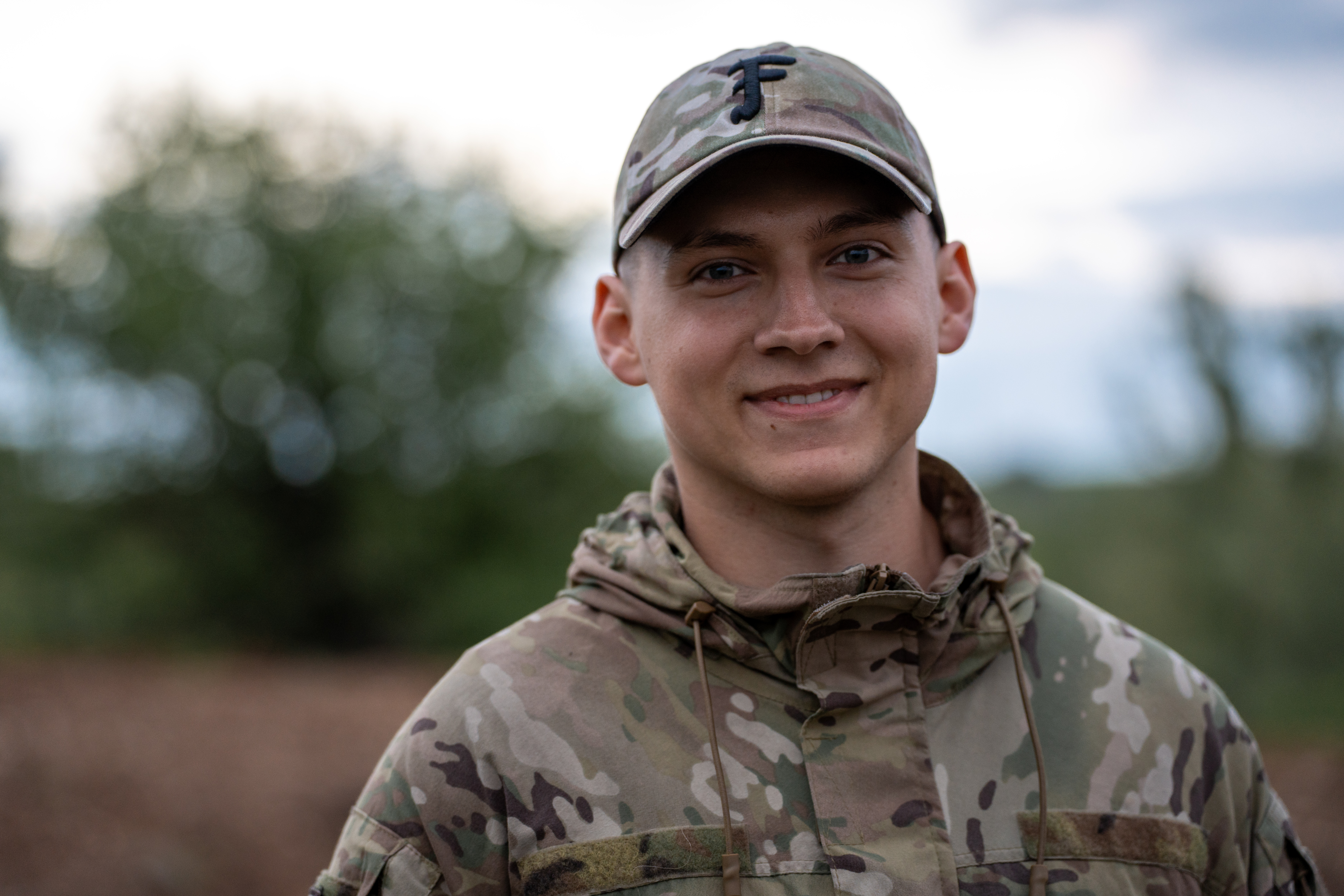
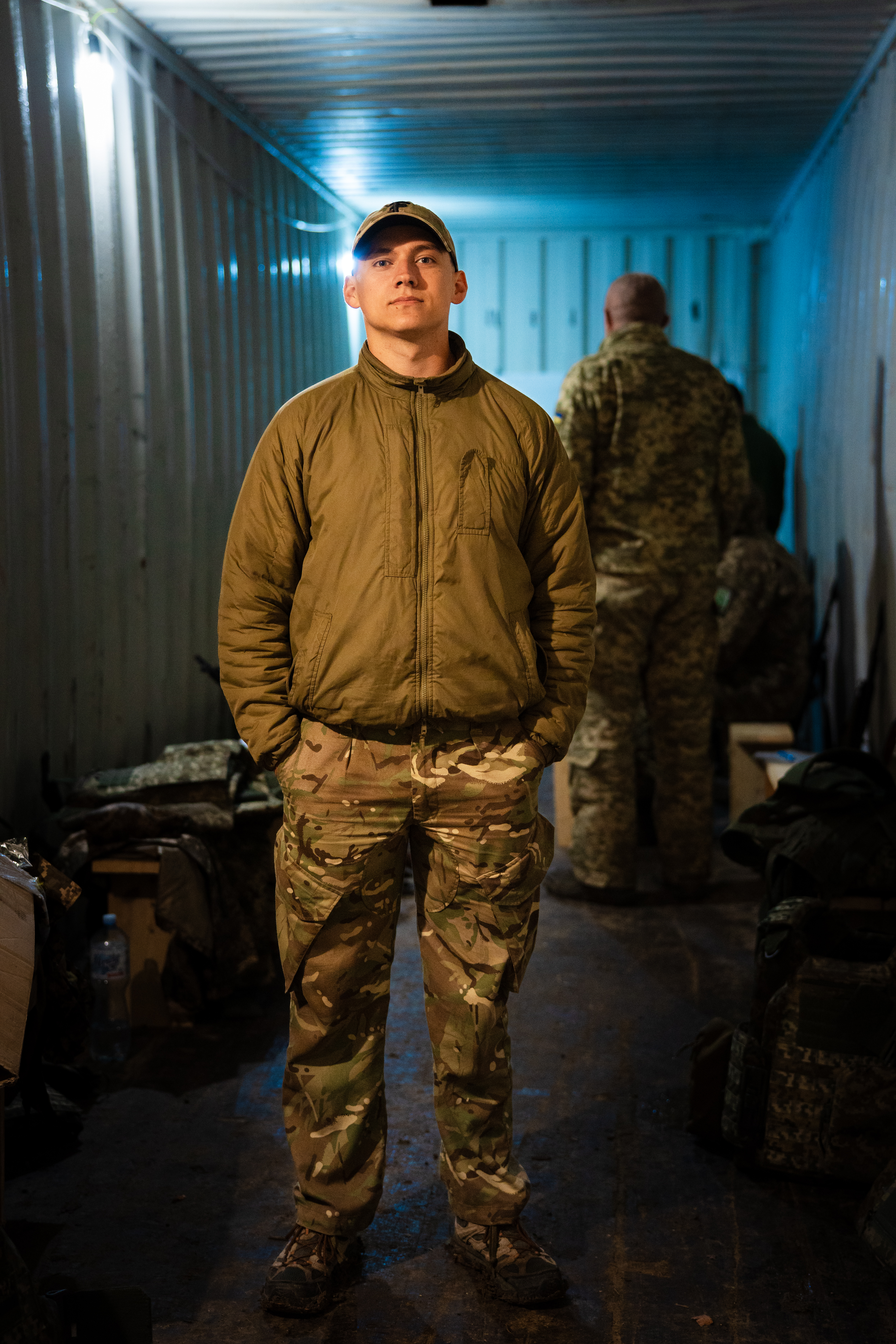
When Dmytro Dmytriev, a combat medic and senior sergeant of the "Sribna Triika" unit within the SBGS "Pomsta" brigade, arrived at the front line, he was 21 years old. At 22, he lost his best friend in the war and saved dozens of severely wounded soldiers. For providing rapid and proficient medical aid, his brothers-in-arms gave him the call sign Krasavchyk. At 23, the border guard was awarded the Order for Courage, 3rd Class.
At the same time, Dmytro admits that initially he was not a patriot and did not dream of a career as a medic. We talked about how to avoid the lion's share of limb amputations after sustaining wounds. And spoke frankly about how the major war takes away one's youth and teaches a different appreciation for life.
– Dmytro, so how did you end up at the age of 21 in one of the most intense sectors of the front – the Serebrianskyi forest?
– I am a medic by education; I graduated from a medical college in Odesa in 2021. I sat and thought: okay, what should I do next? Going on to study to be a doctor at a medical university – there is no money. Getting a state-funded education is something from the realm of fantasy. If I just go to work without studying, they will simply draft me for mandatory military service. So I decided: I will sign a three-year contract with the border guards. That would give me just enough time to figure out what to do in life. That was the foolproof plan, but something went a bit wrong. (he laughs).

– Becoming a doctor, it seems, was not your dream?
– No, not at all! It was, I would say, a spontaneous decision. I never thought I would be a medic. I just couldn't figure out what I wanted to do at all after high school. A vocational school, becoming a welder – definitely not; a plumber – no. Some kind of economics – no; mathematics, too. I liked biology, so I thought: well, let it be a medical college. At the time, it was a very... frivolous decision. But, in principle, I am satisfied with how things turned out.
– The front. You are only 21 years old. How psychologically difficult was it to adapt?
– When we deployed to the Serebrianskyi forest, there was a fear of the unknown, somewhat unpleasant because you don't understand what awaits you. Within a week, I realized that it was not that scary.
– Was this, in general, your first combat experience?
– Well, I wouldn't call the beginning a real military experience. We deployed there in January 2024. For the first three or four months, there was no combat as such. Well, not counting some shelling. But in the spring, in May, the real action started. That was when we had severe WIAs. And it was only after I completed tactical medicine courses with the Azov fighters that proper combat work began.
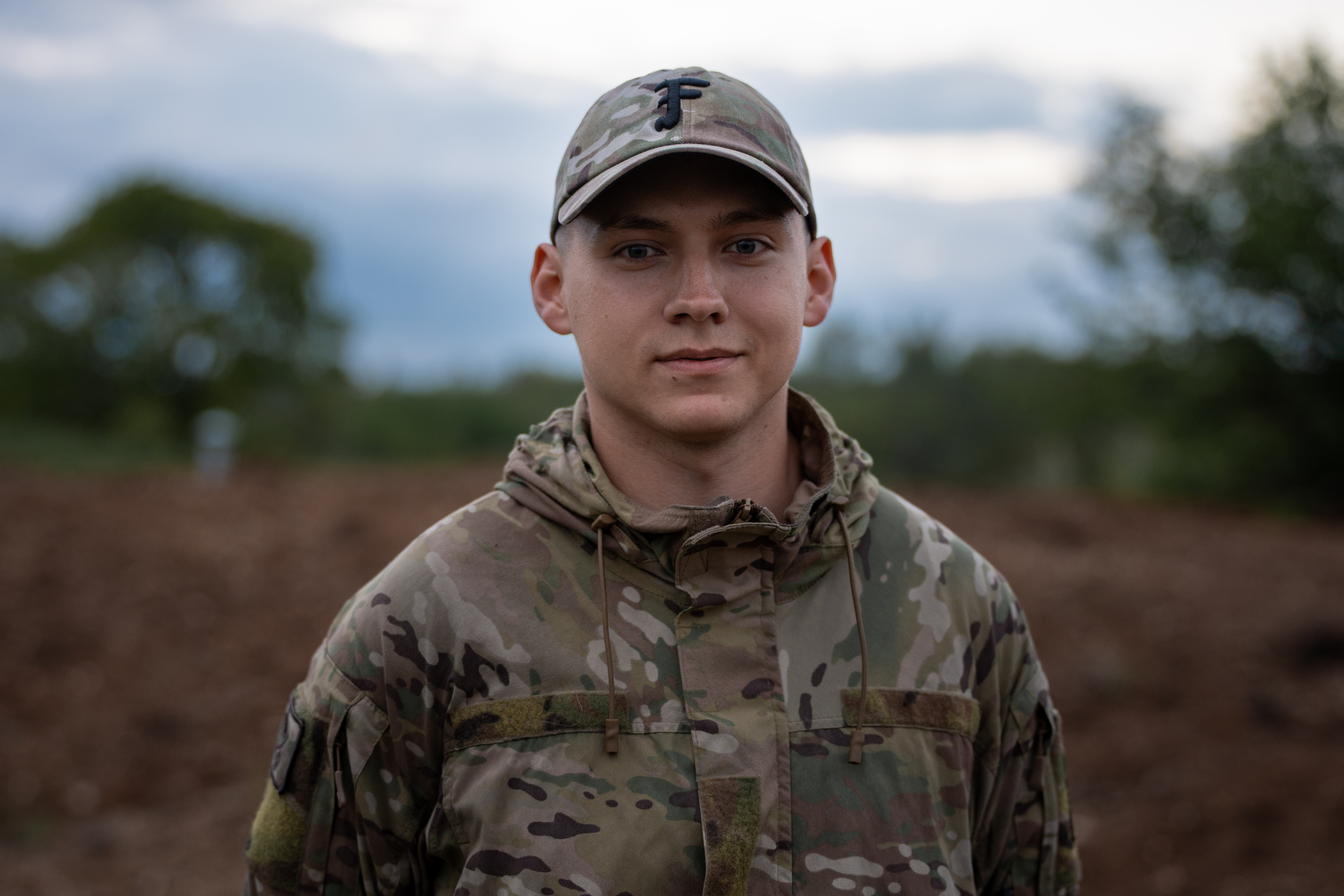
THE MOST TERRIFYING THING IS INSERTING A DECOMPRESSION NEEDLE. A LITTLE OFF THE MARK - YOU HIT THE HEART AND KILL A PERSON.
– You already had a paramedic diploma; did this knowledge give you an advantage in these courses compared to soldiers who had no medical skills?
– Minimally. Medical education provided a foundation, but I saw real tactical medicine only at the front during the AZOV courses. Very pleasant people, true professionals, they taught us perfectly. A brother-in-arms was with me, call sign Metalurh. He had worked as a metallurgist his whole life. And after this course, he provided aid just as proficiently as I did.
– What is considered the pinnacle of skill, the most difficult manipulation in tactical medicine?
– For me, personally, such a manipulation is the decompression needle.
- Explain it for non-medics.
– When a chest wound occurs, air can start to accumulate
The person swells up, this wounded half of the chest begins to press on the healthy one, on the heart. Without rendering aid - tension pneumothorax - traumatic cardiac arrest. When there are signs of a tension pneumothorax, the combat medic performs decompression. A needle is inserted, then the needle is removed, a plastic catheter remains - air escapes, and the lung expands.
– Do you remember your first time?
– Of course! Such an unforgettable feeling... when you insert it, tension fills the air. Because if you miss, take it a little closer to the center, hypothetically, you can simply stick the needle into the heart and kill the person. That is why there is no decompression needle in standard military first aid kits. It is only in the arsenal of a combat medic.
– How many such decompressions have you performed?
– Not many. Five in total.
– Your first severe WIAs. How many wounded could there be in a single day in general?
– I remember one date - July 30, there was a massive assault. It started in the morning and lasted all day. We had 23 WIAs that day. And from that moment on, a meat grinder began in the Serebrianskyi forestry. There could be wounded in the morning, then at lunch, after lunch.
– Wounded with severed limbs, abdominal wounds, or severe burns. All of this can be shocking when encountered for the first time. How did your psychological adaptation go?
– It wasn't difficult for me at all. There were such moments: a soldier walks in by himself, takes off his outerwear — he has no fingers on his hand. You look: "Wow!" You exhale and do the job. (he smiles.) – A wounded man is a wounded man. The leg is gone, so be it. It is what it is. It has already happened. He is already here. You need to quickly take charge and work, not sit and stare – "Oh, what a horror that he is without a leg!"
The most difficult part is when the wounded lose a lot of blood. Then they lose consciousness, and here it is important not to let them completely "fade away." We stop the bleeding, give them tranexamic acid, which helps the blood clot, painkillers, antibiotics, and start warming them. We try to talk to them, support them. Wounded soldiers were rarely left us for the stabilization point unconscious.
– Were there any wounded who surprised you with their resilience and courage?
– Actually, there are many such people. There was an older man whose arm was torn off closer to the elbow. I am bandaging him – he just lies there with absolutely zero reaction. There was also a guy named Dania — he stepped on a "Lepestok" (PFM-1 anti-personnel mine - ed.) His foot was blown off. And the other foot had a shoe on. He was wearing those Jordans. To distract him a bit, I asked: "So, do Jordans not save you from 'Lepestoks'?" And he joked back in response.
There was another severely wounded man. I was establishing intraosseous access for him, an injection into the bone. He screamed a little. Because it is, unfortunately, not a pleasant procedure. But at the same time, he kept repeating: "Glory to Ukraine! Ukraine is free!" "Guys, I love you! Thank you!"
– Have you ever had to save severely wounded friends?
– There was one incident when it was reported over the radio that a comrade was a WIA. He served with me as a combat lifesaver, helping out. Then he went to a position. While they were carrying provisions, there was an AGS (automatic grenade launcher -ed.) attack. It was reported that he was WIA. And we immediately ran after him.
We arrive, and he is just... A piece of shrapnel flew into his neck; unfortunately, he died. We just took him back, and that was it. When you remember this, of course, it is sad. But you somehow live on with it.
WHEN BANDAGING A POW, I WAS INFORMED OF A FRIEND'S DEATH
– Have you provided first aid to prisoners of war?
– Yes. A few times. I came across either former convicts or people from some remote Russian village. It wasn't even interesting to talk to them. I bandaged them up, and off you go.
– I have to ask a cliché question: was there no hatred after so many severely wounded and killed brothers-in-arms? Did you want to hurt the prisoners?
– There was one POW I wanted to beat the sh#t out of.
– What was special about him?
– Not him... When I was bandaging him, I was told that during the assault, two brothers-in-arms, Molfar and Siava, were killed. I hardly knew Molfar, unfortunately, we just greeted each other. Siava was my friend. We served together, were on duty together, talked.
Most of my brothers-in-arms are 30–35, 40 plus years old. They have their own lives, I have mine; our interests don't overlap. But Siava was my peer; we had many common topics. You could say he was a kindred spirit. We often joked with each other.
A day before his death, he came to us either to get water or he needed the internet, I don't remember exactly. We are sitting and talking, and then a soldier runs in and says that the b#stards have entered the position. Siava was actually a signalman, but then he volunteered to be one of the first to go restore the position.
A group gathered, and they left. And the next day, it was reported that he was a KIA. A person you knew, with whom you served, with whom you joked. And simply at some point, there came a chilling realization that this person is no more... And that's it...
– What happened to that captured occupier next?
– We provided aid, and he was taken further away. I would, of course, have liked to do something to him right there, but I wouldn't have done anything.
– What is your moral "red line"?
– I believe that if someone is wounded, they need to be provided with aid. In this regard, you treat them the way you would want to be treated. If I were wounded and found, I would want to be given aid, not to be beaten the f#ck up.
– Currently, there is a shockingly high number of limb amputations following injuries. It seems to me that there could be far fewer of them. Or not?
– Yes, that is a completely valid thought. People arrive from some training centers untrained. They cannot even fold a tourniquet, let alone apply it.
– What are the main mistakes people make that lead to a soldier losing a limb when they might not have had to?
– Sometimes they apply a tourniquet where it is not needed. Where there was no massive bleeding.
– Just a wound?
– Yes. There might be some scratch or a tangential wound, but they thought it was massive bleeding and applied a tourniquet to the wounded person because they got a little scared.
And then, and this is a veeery important point – a serious mistake, they do not reassess what they have done. If everything is done correctly, they should reach some shelter and reassess these manipulations there. Look at the nature of the wound, whether it even requires that tourniquet, whether there was massive bleeding or not. And only then make a decision on what to do with it. The majority of people do not do this. They apply the tourniquet and forget it is there. That's it, everything is "great." Since evacuation takes longer, the risks of losing a limb skyrocket.
– What needs to be done to save a limb?
– Conversion.
– Conversion is the replacement of a tourniquet?
– Yes. Conversion is when, if the wound allows, simple wound packing is performed, pressure is maintained there, a pressure dressing is applied, and then the tourniquet is slowly loosened. And that's simply it: blood flows to the limb, the bleeding is stopped, and the limb remains alive.

– After how many hours with a tourniquet is it over, and the leg cannot be saved?
– We give the guys 4 hours. We tell them that they have 4 hours to perform some manipulations to remove that tourniquet.
In general, the TCCC (Tactical Combat Casualty Care) guidelines — the American protocol for providing aid to the wounded in combat conditions — specify 6 hours, but that is for combat medics. Because they are not combat medics, we give them 4 hours so they can do something about it.
– There is another side to the problem of a lack of training – deaths from blood loss.
– Yes, these foolish stories where people say they loosened the tourniquet by half a turn every 2 hours in the presence of massive blood loss. If you look into it, more often than not, these are the stories of people who did not have massive bleeding. And correspondingly, nothing happened to them. I know stories where people loosened the tourniquet on themselves because it hurt, or something else — they bled to death and died. His brothers-in-arms rendered aid, carried him into a shelter, and went out to look for other wounded, or there was some kind of skirmish. They return — and he is dead, and the tourniquet is loosened.
– I spoke with a soldier who had both arms blown off. He says, "The greatest pain that I will never forget is the pain from the tourniquets. It wasn't as painful when my arms were blown off." Is that how it is?
– A properly applied tourniquet will hurt, it will hurt a lot. That is how a tourniquet works. You have a choice: either do not endure the pain and bleed to death, or endure it and live on.
– In your practice, have there been cases where a soldier was in agony, and it was difficult to provide him with aid?
– It happened once. About 50 meters behind our dugout, a soldier from the 4th Rapid Response Border Commandant's Office was wounded. A soldier ran up asking for help, saying there was a shrapnel wound to the arm and the head. In their dugout, it's dark, nothing is visible. Ten people watch in confusion as their wounded brother-in-arms burrows into a sleeping bag, screaming: "Let me go! It hurts!" I say: hold him! One person held a flashlight to illuminate. Two held him by the arms, another sat on his legs. The wounded man is just lying there, spread-eagled, and screaming: "Guys, I beg you, please, don't!" And at that moment, I bandaged him, inserted a catheter, and injected painkillers and antibiotics. And, I think, I also had tranexamic acid there, injected that into him too. He calmed down a bit. I left, and then medevac picked him up and took him to the stabilization point.
– You have seen a lot of pain. How do you avoid becoming a cynical medic who doesn't administer painkillers because he simply doesn't care?
– It is that kind of work — sometimes the wounded person is in pain just from the rescue process itself. We simply learn not to panic and to work with a cool head. In combat medicine, everything is based on priorities, and that is exactly what the MARCH algorithm is for. But even when you work quickly and strictly according to the situation, you understand that in front of you is not a "case," but a living person. When a team works, we administer painkillers faster, because while one is doing one thing, another can take care of the pain relief.
– Is there squeamishness? What took the longest to get used to?
– It took a long time to get used to the smells. Firstly, blood itself doesn't smell very good. Especially when it gets on clothing and time passes. Then the people themselves – in the reality of war, it's impossible to be a clean freak. Such is life. And last year, when problems with evacuation began, people would arrive with wounds that were already festering. So the aromas in our triage point were quite intense. I didn't throw up, but there were a couple of times I gagged.
– Did you maintain the cleanliness of the triage point somehow?
– We were near the river, right on the bank. That saved us. We cleaned blood from clothing with hydrogen peroxide. I ordered aerosol air fresheners for myself. It sprayed a little bit on its own there, and the aroma was pleasant, a mountain scent. (he laughs, – ed.)
– Were there moments when you could have been killed?
– How could it be otherwise in a war?! Once, I was asked to take gasoline out to an ATV. I went out, didn't even put on my body armor. I figured it was a two-minute walk. I took the canister, brought it to the driver. He is refueling it there. I am walking back, stop to adjust the camouflage net where our provisions were stored so they wouldn't be visible. I hear something buzzing overhead. I was under a tree. I stick my head out toward the road and see that this crap is hovering right above me.
I panicked a little, didn't know where to hide. I ran back to the ATV. There was a pit where it was parked, a kind of parking spot. And just a net stretched over the top. The driver and I ran in there. I squeezed into a corner in that pit, curled up. The driver also lay down. We hear the drone making a drop. A grenade exploded. It dropped right next to the ATV. The ATV was peppered with shrapnel. And, thank God, that was it. It was pretty scary then.
– In this hour of conversation, you have shared enough stories for a decent movie about a combat medic. Do you personally feel that you have done a lot for your brothers-in-arms and for the country?
– I can't really say that I've done a lot. Because there are people who have genuinely done a lot. I did what... Something that I could do. What was in my power, I did.
– How has the war changed you over these four and a half years?
– I think about this periodically. Every year changed something. Last year's me will differ from who I am now. I have gained more confidence.
– In what?
– Just in myself. In my actions.
– Do you feel like you have matured?
– That is true. You just somehow value your life more, perhaps. You want to try many things. Because you have seen literally with your own eyes that life goes like this: snap — and that's it. And that life is gone. And you somehow want to see more, try more. And not to live your life in vain, no matter how short or long it may be.
– And not in vain — what does that mean?
– To do something useful. To do something useful for people. And for myself, of course, too.
– What is on your wish list?
– I want to go to the mountains – climb higher in the Carpathians. I want to travel the world. I want to go on a bicycle trip across Ukraine. When I signed my contract in '21, I can't say I was motivated. But now I am a more conscious Ukrainian, probably. More motivated. I cannot imagine myself in another country. When the war ends, I want to live at home in Odesa. I don't just want to. Somehow, they are all so dear to me.
– Because a high price has already been paid for independence.
You didn't just pay. You did some work for the sake of the people you are with.
– Right now, young men and women aged 18-24 are thinking about whether it is worth signing a contract. What would you advise from your experience? Is it worth it?
– People must be properly motivated. Not just: "They will give me a million, I will go serve for a million." That is the wrong approach. They must be prepared for what awaits them at the front. Currently, youth movements are actively developing where young people are trained: medicine, weapons handling, tactics. And this is very cool, because trained people can go and sign a contract. I repeat — if you just wanted to make some cash, that is not an option. I would choose some other way to earn money. You must want to defend the State; this must truly resonate with you. If not, you won't have an internal foundation, and you will break. And we need to win!
Nataliia Konova, for Censor.NET


