



Few days before she was killed, Hospitaller Iryna Tsybukh wrote to friend: "I am becoming ’Minute of Silence’ zealot"
On 30 June, ChekaFest, dedicated to the fallen combat medic, will be held in Lviv’s Shevchenkivskyi Hai for the second time. In addition to performances by the bands Iryna listened to during her lifetime, the festival will also feature educational programmes, as she believed it was important to convey to Ukrainians the significance of history and the need for continuous learning. This festival is not only about Iryna. She researched and developed the topic of commemorating those who have fallen in the Russo-Ukrainian war. So ChekaFest is a tribute to all those who gave their lives for Ukraine, but it is also a kind of bright sorrow.

Everyone who speaks about Iryna inevitably uses the word "love", because she radiated it, and because she herself was about love: love for her country, for children, for her family. To protect her loved ones, in 2023, during a rotation in the Serebrianskyi Forest, she wrote a will with specific instructions for the farewell ceremony, offering advice on how her mother, father and brother should live without her, what to sing when remembering her, and where to find the strength to keep going.
Ira was born on 1 June and was killed on 29 May, two days before her 26th birthday. It was around these dates that her friends and family decided to hold ChekaFest. Last year, it brought together thousands of people. This year, the programme promises to be rich and profound. Ahead of the festival, we spoke with Iryna’s family, her friends and her comrades-in-arms. During these conversations, I became convinced once again that Iryna’s personality was so multifaceted and expansive that no article could fully convey her scale. Ukraine has lost one of its finest daughters, someone who could have influenced the country’s development.
Iryna’s friend, Iryna Saievych: "People like that don’t die! What will?"
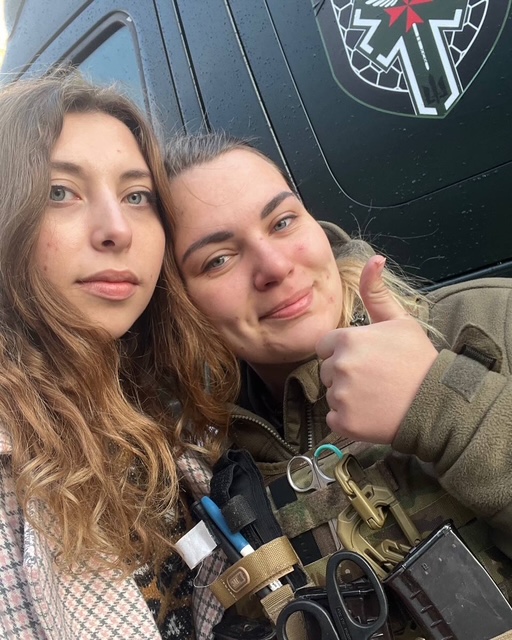
- The story of our friendship began in our youth. I was 19, and Iryna was 17 when we met. At the time, she was perhaps the youngest volunteer in Lviv. At least, I didn’t know anyone younger than her. And yet she was constantly travelling to the front line. There, she would say she was 18. On one of those trips, she was given a grenade pin, which she wore all the time – around her neck or on her wrist. Before that, she’d been given the call sign of some Greek goddess, but after receiving this gift, it became quite natural to call her Cheka. From then on, she herself began bringing grenade pins as gifts for her friends. That is why we named the festival after Iryna’s call sign – ChekaFest. This year it will take place on 30 May, between two important dates – the day of Iryna’s death and her birthday. It was important to her friends and family that on her birthday, her friends would gather around her. And also… In the will that Iryna left behind, she wrote that, as a farewell, Ukrainian songs should be sung at her grave and a bonfire lit. That is what happened on the day of the funeral. That is what happened last year at the festival. Iryna’s younger brother, Yurko, is the driving force behind the festival. Last year, he was defending his thesis whilst organising the festival. It wasn’t easy, but he and others close to Iryna decided to organise it again this year, thereby expanding the community of those for whom Iryna was dear.
One aspect of the festival is music. Maryna Krut, Iryna’s friend, will be there. There will be other bands that were important to her. Lots of great music. This year’s educational programme will explore the theme of identity. As last year, there will be areas dedicated to remembrance. Because the main idea of the festival is remembrance.
It was Iryna who actively promoted and established the tradition of a minute’s silence at 9 am across the country. She invited representatives of major businesses to a lecture on 9 May 2024 so that they could introduce this tradition in their companies. And the fact that Lviv, Ivano-Frankivsk, Vinnytsia, Chernivtsi, Kyiv, and other cities now come to a standstill at 9.00 am is largely down to Iryna.
Her desire to honour the fallen emerged a very long time ago. Several years before the full-scale invasion, she began approaching the issue more systematically. Ira enrolled in a master’s programme in public administration precisely to look for ways to turn it into actual policy. Why do we not have such a national tradition? Ira often said it was because of the Soviet Union, which erected monuments to unknown soldiers everywhere, erasing names and faces, making them seem disconnected from the people living nearby. They were faceless. It was important to her that we know the names, stories, and faces of our heroes, know their children, and support their families. Iryna discussed this with lecturers at the School of Economics and spent a great deal of time talking with Anton Liahusha. Eventually, those reflections evolved into the idea of spreading the minute of silence. That is why Iryna communicated with businesses, major companies, and civil society organisations, explaining why they should incorporate the minute of silence into their daily routines and how to do it properly. Shortly before her death, Ira was supposed to return from another rotation. She already had a meeting scheduled with the Ministry of Economy to pursue this work with businesses in a more systematic way. Around that time, Ira wrote to me: "I am becoming a ‘Minute of Silence’ zealot." Now, during the minute of silence, we remember Ira as well...
While still in high school, Iryna knew for certain that she wanted to become a journalist. In fact, that is where the two Irynas met — in the newsroom of a Lviv television channel.
"Ira was a ray of stability and kindness. She carried so much love and warmth within her. Nothing felt frightening when you were with her. She guided me through all the key events of my life. And when she, already working for Suspilne, suggested going to Sievierodonetsk to reform the local newsroom, I agreed: I broke up with my boyfriend, quit my job, and followed her there... Later, we moved to Kyiv together. Ira led the way. When she was gone, all of us became orphaned, even those who were much older than her. She was an authority figure, almost parental."
Everyone I spoke to, I asked the same question: where did Ira, a Galician woman and descendant of a family that included UPA fighters, get such love for Donbas? Why was she drawn there? Iryna made her first documentary film, "Distance", about the children of Donetsk Oblast. In fact, she presented it in Sievierodonetsk shortly before the full-scale invasion. On 24 February, the screening was supposed to take place in Kyiv...
- "Ira was very straightforward. Local Donetsk television was not entirely prepared for that directness. A local host would come out after broadcasts, while Ira had been feeding him sharp questions through his earpiece during the live programme — questions he did not dare ask the guests because he feared Iryna’s criticism. He even coined the term ‘Tsybuling’, meaning bullying, but derived from Tsybukh... But over time, we all became close friends and often laughed about this unusual word. Despite her bluntness, Ira made people fall in love with her. She created many projects for UA: Donbas. For ‘12 Myths About Donbas’, she involved the Ukrainian Institute of National Memory. She spoke about how Ukrainian Donetsk and Luhansk regions truly were, explaining that these regions in fact had a long history and had once been Cossack winter settlements. At Iryna’s initiative, actors from the Sievierodonetsk theatre read poems written by Ukrainian soldiers. And even during the recording sessions, she projected the energy of the main person in the room, teaching the actors how to truly act. ‘That is the intonation you need,’ she would insist. It turned out fantastic. And everyone listened to her. Because from the very first moments, she became an authority wherever she went.
"It was she who suggested: ‘Let’s teach media literacy to children across Ukraine.’ And we travelled everywhere there were clubs or school television studios. She focused on regions close to the front. During those meetings, she deeply cared about the children’s stories, because for many of them, in the conditions they lived in, being pro-Ukrainian was very difficult. Teachers with Soviet mindsets, Russian television channels still reaching those territories, imposing everything Russian. But despite all that, the children still felt Ukrainian. Ira saw enormous potential precisely in children."

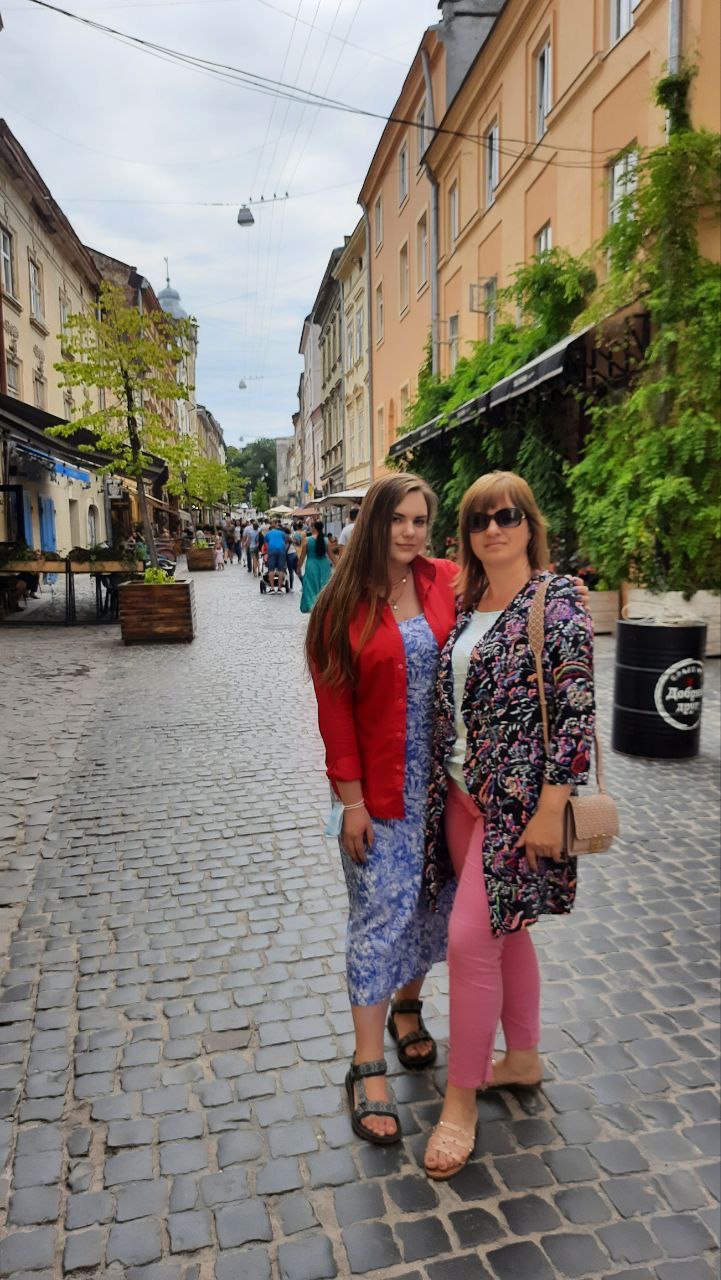
At the age of 18, Ira, together with volunteer Hennadii Dubrov, a friend known as Bizon (he is in the photo with the two Irynas), who had been through the Maidan and was a cyborg defender of Donetsk Airport, travelled to schools to talk about the Revolution of Dignity. She asked pupils about common myths, whether they had heard that oranges at the Maidan had been injected with drugs, and explained why this was not true. Ira had seen the Maidan with her own eyes. Her uncle was among the protesters, and she would come to visit him there. Some teachers, Iryna recalled, were very sceptical of her stories. But she did not stop. She kept travelling and talking. Because she wanted to change people through different methods. And she succeeded. Iryna’s family is now very close to Sonia, whose school Ira visited with lectures. Largely thanks to Ira, Sonia decided to become a servicewoman and is now undergoing training.
After the first attacks on 24 February, I wrote to Ira: "How are you?" She was in the east. She replied: "I’m looking for a way to get to Kyiv so I can join the Hospitallers." It turned out that, without publicising it, she had been undergoing training and preparing. She had her "ticket" to the Hospitallers, and she was not going to exchange it for anything else.
I came to see her at the base two weeks later. I was afraid to stay in Kyiv on my own. That was when I saw a different person. Before that, she had been Ira the friend, the one we laughed with, dreamed with, fooled around with; now I saw an adult woman putting together first-aid kits until three in the morning because she had to leave for duty in the morning...
Ira did not avoid the question of being killed or of death, but discussed it with many friends as a practical matter that had to be planned in advance.
"In her messages, Ira kept writing to me: ‘We nearly died today,’ ‘I don’t know whether I’ll survive this rotation.’ She told me how, during the fighting in Kyiv Oblast, under heavy shelling, she lay in the grass and said goodbye to everyone. But neither I nor many of her other friends believed she could be killed. People like that don’t die! It is simply impossible. What will? She would live to see the end of the war and change the country. Even though she served in areas where losses were enormous: the Serebrianskyi Forest, Marinka, Krynky. She went behind enemy lines with the guys.
"When Ira was killed, Sonia arrived the day before the farewell ceremony and stayed at my place overnight. We sat on the balcony for a long time, remembering Ira and joking about her a lot. It was a kind of psychological defence mechanism. We joked that she had gone to heaven, and there were lots of her admirers there, because people loved her terribly wherever she went; wherever she ended up, someone was guaranteed to fall in love with her right away. We joked then: ‘There must be a battle in heaven for Ira’s heart.’ And at that moment, lightning appeared in the sky. I understand that it was a coincidence, but it felt as if Ira was somewhere here, in this space, and could hear us."

I could not pull myself together for a long time after losing her. Before, she used to pull me out of difficult situations, somehow doing it in a way that lifted me to another level. And then I found myself without her... At one particularly difficult stage in my life, I had to call Iryna’s mother. I was sobbing uncontrollably. And her mother told me: "We need to learn to grow an inner Ira. Otherwise, we won’t make it..." And I made an important decision: now I live with a sense of an inner Ira. When things are hard, I have a dialogue with her, I write to her on Telegram. When you lose someone so close... At the funeral, I imagined lying down next to her and being covered with earth as well. It made it easier. For a while, I was with her in that earth. Over time, I began to dig myself out little by little... If it is this hard for me, I cannot imagine what it is like for her family. Their grief cannot be compared with anyone else’s.
Iryna’s friend, musician Maryna Krut: "People come to the festival because they want to learn about Ira. It is about memory, but not only about Iryna; it is about everyone who is no longer beside us"

- We were fairly close friends. Of course, when Ira was gone, I found this loss very hard to bear and understood that there would be no simple way to come to terms with her death. I wanted to do something as a sign of love for her. Something grand and large-scale. Something that would keep Ira’s memory alive. For me, as a musician, the most natural thing was to create music. But I decided to go a little further: every year, during Iryna’s days, from 29 May, the day she was killed, to 1 June, her birthday, to hold a festival in her honour. Last year, it took place for the first time. This year, it is to be held between her birthday and the day she was killed, on 30 May.
When we talk about music at this festival, my priority was to invite the artists she listened to on the road and in life. If she saw these artists playing at her festival, she would be happy.
Long before her death, Ira wrote a will. She sent it to me and to one more friend of hers. In addition to asking for ten songs to be performed during the funeral, she also asked for a bonfire to be lit, and we did that at Marsove Pole. I remember that moment well: we lit the bonfire and wanted to play music, but the speaker died. So we started singing ourselves. I pulled the singers present out of the crowd. And we all sang together for about four hours. That was when the band Shepit was formed; it is opening our festival this year. We decided to invite one young name every year. In this way, we give newcomers a good platform to present themselves to the public.
People come to the festival to learn about Ira. It is a festival of memory, but first and foremost, it is about her and about everyone who is no longer beside us. ChekaFest makes it possible to live through different emotions.
The bands performing this year, DakhaBrakha, Pyrih i Batih with the full line-up, and ShchukaRyba, will definitely perform those ten songs from Iryna’s will. We are continuing this tradition. We sing them abroad and present them specifically as Iryna Cheka’s list.
Ira talked a lot about death. But every time she did, it was as if death heard her and moved away from her. During her final rotation, we did not talk about it, and Ira was gone. I noticed this painful symbolism...
Iryna wrote the will during her rotation in the Serebrianskyi Forest. She wrote from there: ‘It’s so intense that I don’t know whether we’ll make it out of here’...
Maryna’s acquaintance with Iryna began with a birthday greeting.
A mutual acquaintance asked me to congratulate Ira on her birthday. I recorded a video. Later, we met in person, and I promised: ‘I’ll come to you during your rotation. I want to see how you work, how you live, and sing some songs.’ We met in Donetsk Oblast: Kramatorsk, Druzhkivka.
I did not know Iryna before the full-scale war; that is just how it happened. But once we became friends, I saw two sides to her. One was a very adult, incredibly wise leader with high intelligence and emotional intelligence, sensitive and perceptive. All the best epithets that can be applied to a leader were inherent in Ira. The other side was Ira, who was only 25. Still rebellious, impulsive, rather sharp, gaining experience. There was a striking contrast between her age and what she was doing.
Iryna’s friend Tetiana Pylypets: "People come to the festival because they want to learn about Ira. It is about memory, but not only about Iryna; it is about everyone who is no longer beside us."

- Only recently, when Iryna’s first teacher was preparing a programme on remembrance, she and I realised that it was she who had brought her third-grade class to the children’s library on Okunevskoho Street for an educational hour. That was when I issued Iryna her library card. Around fifth grade, she began actively shaping our life in the church, because we were also neighbours and lived nearby. Ira performed at the church. She was the one who brought me into that community. We organised many events in which she took part, often reading poems. At around 12, she created a group at the church called Potykhenku and started organising many activities herself.
"In 2014, when her uncle, her mother’s brother, went to the front, my first volunteering experience happened. Ira told me that her uncle was in Luhansk Oblast, at the 27th checkpoint. And he was an active reader. When Iryna asked what he needed, he replied: ‘We have everything. I need an e-reader.’ We raised money and sent him an e-reader so he could read during rest periods. Thanks to Irynka, I learned what a thermal imager was. We bought that device then and sent it to her uncle in August or September. Around that time, we also began weaving ‘lisovychky’ camouflage suits, and we still do it to this day.
"Ira gathered young people at the library where I worked. Sometimes we set up tables for 200 to 300 people. Iryna’s mother is a master of pysanka painting. Everyone who joined the workshop painted one pysanka for themselves and one for a soldier. We packed all of it and took it to the front. At the same time, Ira helped me organise the Kalmius festival. She was already in the 10th grade when she brought me a note saying her mother allowed her to go to the festival. That was how she first ended up in Donbas. We stayed overnight at an acquaintance’s place and slept together on a sofa. She kept tossing and turning terribly at night and eventually admitted that she had forged the note. Back then, from Lviv, it seemed as though war in Donbas was in everyone’s yard. Although we were 80 kilometres from the front line.
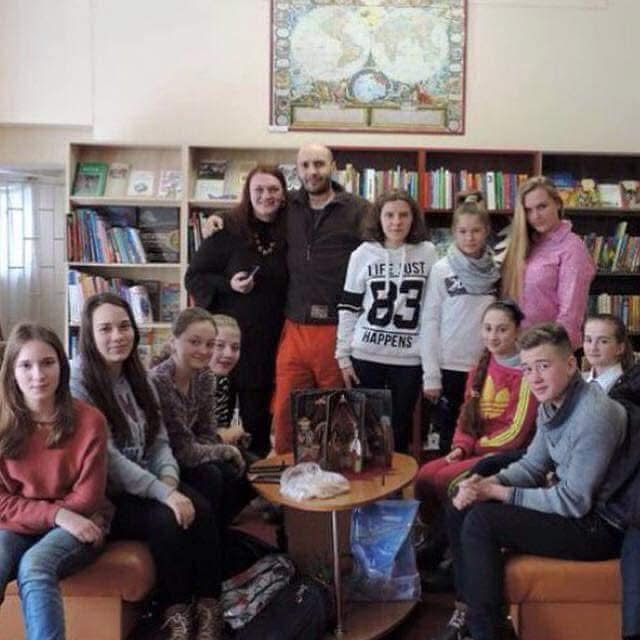
During those festivals, Ira became close with our active circle. Maksym Potapchuk (in the photo, standing in the centre), now an officer of the 25th Sicheslav Airborne Brigade, was a Plast scout leader. It was he who encouraged Ira to focus on the children of Donetsk Oblast. Already while preparing to apply for journalism studies, she was developing programmes on how to speak with schoolchildren and debunk fake narratives. That was how she began implementing this idea, travelling independently; it became her own separate educational programme.
After Iryna moved to Kyiv to work and study, we always met her on our way to the festival. She constantly produced reports, stayed involved in our lives, and supported our initiatives. After the Russians killed her, children whom she had once visited with lectures and spoken to consciously chose the path of becoming soldiers. Some even stayed with her parents while looking for a place to live, because many of those towns and villages where Iryna had visited schools ended up under occupation. The fact that those children grew into conscious people ready to defend the country was a direct result of Ira’s influence, even though she herself had still been a child when she travelled with those educational programmes; she was not even twenty yet...
Last year, ahead of the anniversary of her death, we received an invitation from Suspilne to watch a film that Iryna had made but had not had time to present widely. I was struck by how powerful it was. Of course, I was deeply moved at the end of the film by the acknowledgement to Maksym and me for making her fall in love with Donetsk Oblast... Perhaps for the first time, I cried so hard that I could not calm down for a long time.
When Ira sent me her will, it devastated me emotionally. She asked me to pass it on to her brother, mother, and father. In the will, there are words saying that we must act. Those were the words that shook me. When I read them, it felt as though Ira herself had jolted me awake, as if I had walked straight into a glass door.
Ira believed deeply in libraries and helped with strategic reforms. She used to say that, in order to reform, you first have to become visible. And she did a great deal to make that happen.
Tetiana is twice as old as Ira was, but they were very close friends. Now Tetiana is equally close with Iryna’s mother and grandmother...
- All the connections Ira left behind are still very much alive. Oksana and I talk endlessly about Irynka. And her cousin completed an internship with us; she is studying printing and publishing. All those relationships continue.
At the Ivanychuk Library on Rynok Square in Lviv, every visitor is greeted by a photo of Irynka, and by following the link next to the portrait, people can access her recommendations for books and podcasts.
That is already the reading list of a 23-year-old woman. Because it includes Snyder, Hrytsak, and Viatrovych. It is a reading list for people ready to work for this country. But as a child, Irynka’s favourite book was The Toreadors from Vasiukivka. When schoolchildren found out about that, they brought us a beautiful edition of The Toreadors from Vasiukivka published by A-BA-BA-HA-LA-MA-HA, along with a letter for whoever would borrow the book. It included the words: ‘If you love books like this, then nothing will stop you on your path.
As a teenager, Ira loved detective stories and adventure books. She became friends with Zhadan, read him extensively, and was outraged that everyone saw him as a lyrical poet, because she admired his prose and recommended it to everyone. She loved Izdryk’s poetry. She enjoyed both listening to and reading Viatrovych, never missing his public lectures. She was focused on studying the history of Ukraine and on contemporary authors who speak in a modern language. She also became deeply interested in the traditions of the Kyiv people and read ethnographic books about vyshyvanka embroidery.
From the perspective of physical loss, it seems to me that Irynka carried within herself a healthy fatalism, which is why she tried to accomplish more, to connect people with one another, because all of us are now interacting. On the ninth day after Irynka’s death, we went out at nine in the morning to several locations. We had posters and called on people to stop and honour the fallen. We explained that this was a healthy initiative of a healthy person. The police helped us and blocked the roads. This morning, as I was walking, there was not a single car, person or sparrow that did not stop. The initiative she started is spreading. And when I see cities coming to a halt, I realise that it was all the work of one single Irynka.
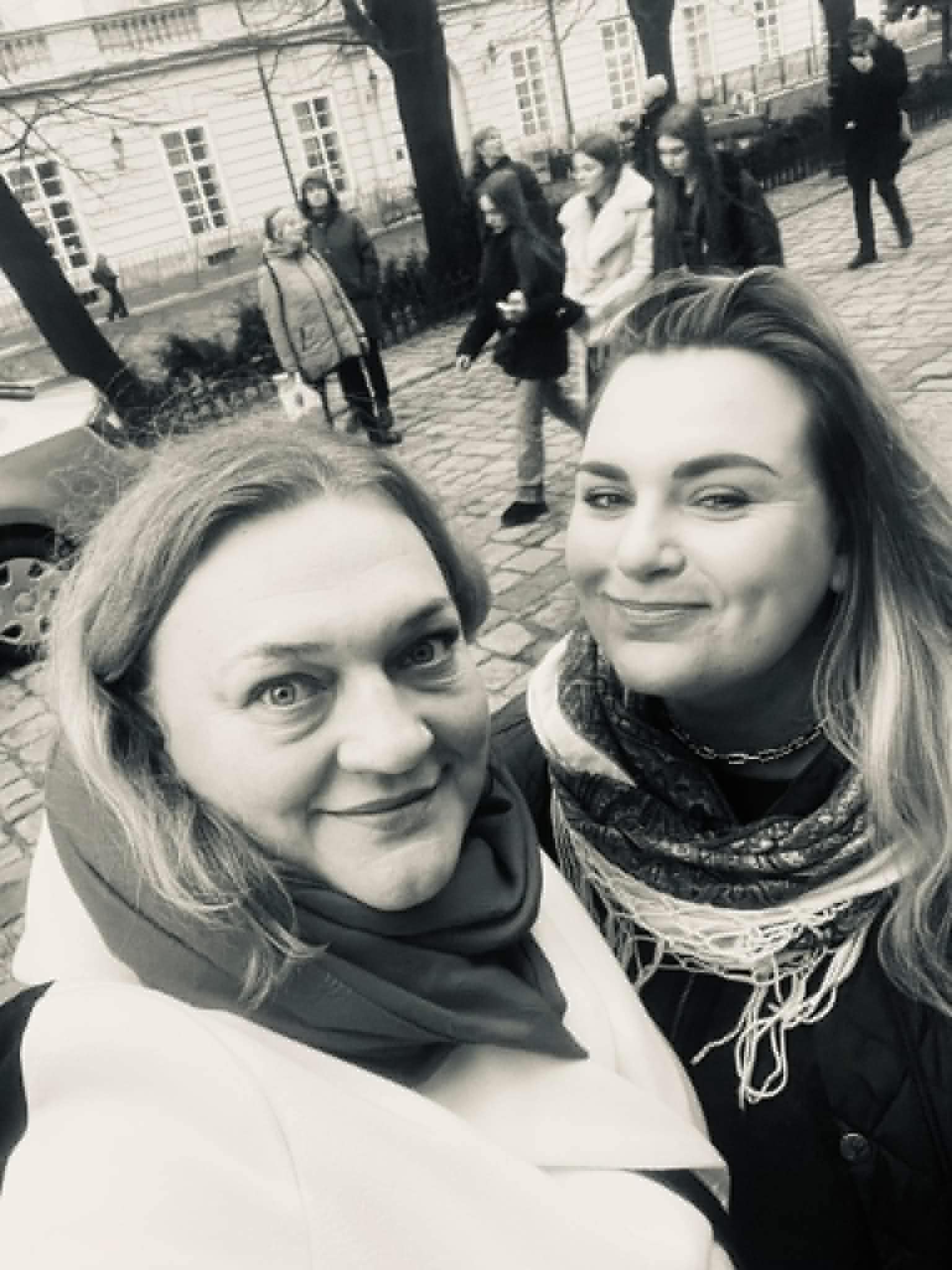
It is not about simply standing still and staying silent, because for many of us, a minute is not enough to list the names of all the fallen we would like to honour, whose deeds we know. But during those 60 seconds, we can think about what we can do today to make things worse for the Muscovites. Iryna embedded that meaning into the minute of silence as well. By remembering, you plan actions to make things worse for the enemy. Every day I realise how much of Ukraine can be seen through Irynka!
Iryna’s younger brother Yurko: "When Ira came home after the liberation of Kyiv Oblast, all of us begged her not to go back there."

Yura is six years younger than Iryna.
- Ira was always a mentor to me. I could clearly feel her support and guidance. That was who she was — someone who helped, advised, and directed. She planted thoughts and doubts. And they grew. Ira guided people.
Of course, Ira had the privilege of being the older sister. I was the ‘fetch this, bring that’ younger brother. And I was a good boy. I did whatever I was asked. She took advantage of that, and as a child, it annoyed me. But later, the roles reversed. She herself was always helping me.
Several times during the conversation, Ira’s brother repeated the phrase "a strong figure" when speaking about her. He came to realise this while she was still alive. And everyone who knew Iryna says the same.
- In 2020, Ira invited me to a training course with the Hospitallers. It was a very comprehensive course that gave participants the fundamentals of combat medicine. That was the place where she truly received a deep foundation as a combat medic. It was in the Hospitallers that she gained a much better understanding of what exactly needed to be done to save lives. She used to say that she got her foundation in the Hosps during that training. And I can confirm that.
From my training group, there was a person who immediately went on their first rotation. But it was autumn 2020, and the deployment was calm, without wounded. During that period, Ira was focused on her studies at the Kyiv School of Economics. At the beginning of 2022, when people were already talking about an offensive, I think she clearly understood what her plan was and stayed in contact with the Hospitallers, who themselves were actively preparing for a large-scale war. That is why, on 24 February, Ira returned from Donetsk Oblast after screenings of her film and immediately went to the base.
Ira was very close with the family: with our mother and father, grandmother, and, of course, with me, her brother. But her communication with each family member was built differently.
- Ira shared more with me than with our mother because she did not want to traumatise her. She told me a lot. In the first months of the full-scale war, she felt that the end was coming very soon, that the country would not hold. She saw government institutions burning documents in central Kyiv. She evacuated wounded people from the Sviatoshyn metro station. And everything she saw then felt to her like the end of everything. The Russians were almost in Kyiv! Despite that feeling of collapse, Ira continued doing her work clearly and consistently, evacuating many civilians.
"I remember very well the first time Ira came home after the start of the full-scale war. It had been two or three months since the invasion began, after the liberation of Kyiv Oblast. Everyone begged her not to return there. But her position was clear and understandable. She knew what she was doing.
Ira had many difficult rotations. She told me how they spent more than an hour evacuating a wounded man to their vehicle. Waiting was hard; every minute mattered for saving a life.
Iryna and our mother had their own ritual. They texted each other every day, morning and evening. Ira did not need to write much: ‘Kiss. Everything’s okay.’ She and I did not have such check-ins; we talked a lot. She asked me to speak about my life, while I, comparing what was happening to me with her experience, felt it was somehow absurd to talk about volunteering in Lviv. Over time, that balance changed. I realised that we simply had different experiences, and that what she actually lacked were stories about ordinary life. So we talked about everything. My phone is full of voice messages.
We agreed from the start: if anything happened, they would call me. My number was listed in Iryna’s documents. And to this day, I still tense up whenever an unknown number calls me. I really do not like talking on the phone... That evening, Yana Zinkevych, the head of the Hospitallers, called me...
The importance of a minute’s silence is, of course, extremely important to Iryna’s brother.
- Formally, the minute of silence already existed, but in reality, very few people observed it. Ira believed that the ritualisation of remembrance was extremely important. It is a moment of unity, when the entire country stops, and everyone has someone to remember. But at the same time, it is also a collective story. I support making it as flexible a ritual as possible — if someone forgot, did not realise it was nine o’clock yet, or was still asleep, that is not a problem. At any moment during the day, people can stop and remember the fallen. But at 9 a.m., we are all united. We are collectively living through the experience of war. Most people have someone to remember. That is how Ira explained why observing the minute of silence mattered. That is why Ira and the girls began introducing other remembrance practices as well. The plan was broad. Ira did not manage to implement everything. The NGO Vshanui, which she founded, continues this work. And in Lviv, the city authorities joined in. The minute of silence is announced through public alert systems. And the city comes to a halt. It is a fantastic result!
Yurko is one of the organisers of ChekaFest.
- The story of the festival is horizontal. There is a team of enthusiasts, people driven by ideas. Most of the co-organisers do everything on a volunteer basis. It was a collective decision to support Maryna Krut’s idea of holding an annual music and educational festival, because education was extremely important to Ira. The musical part of the festival is about culture. The first year was extraordinarily difficult. But we knew we would hold the festival again in the second year. Now I know we will do it in the third year as well. And this is also partly about the key issue in commemorating Iryna — the culture of remembrance. This festival is an example of shaping a new, human-centred culture of memory. Now it is no longer only about Ira, but about all fallen soldiers. The further we move from the first anniversary, when everything was still unbearably painful, the more the festival over the years will take on its key focus — remembrance of fallen soldiers. So, having such an overarching goal, and already understanding this, we definitely will not want to stop. ChekaFest is an important mission. I would also say that right now this festival is building a community of people who share common values and experiences of living through war; it is also an important point for forming mutual understanding.
And also... I do not believe in the afterlife or in signs. That is my rational side speaking. But there is still an emotional part that I cannot help feeling. There have been many moments when it feels fair to say that Ira contributed to my efforts as well. During the first festival, heavy rain had been forecast. And we had no backup plan in case it happened. But the rain passed around our venue.
I asked Yurko whether he listens again to his sister’s voice messages.
- I do revisit some video materials: Iryna’s interviews, her podcasts. I return to those. I know that many of her friends replay her voice messages and continue texting Ira, but I have not gone back into our chat or opened it. I am still not ready for that yet...
Iryna’s comrade-in-arms Taras, callsign Liutyi: "Ira heard things others paid no attention to"
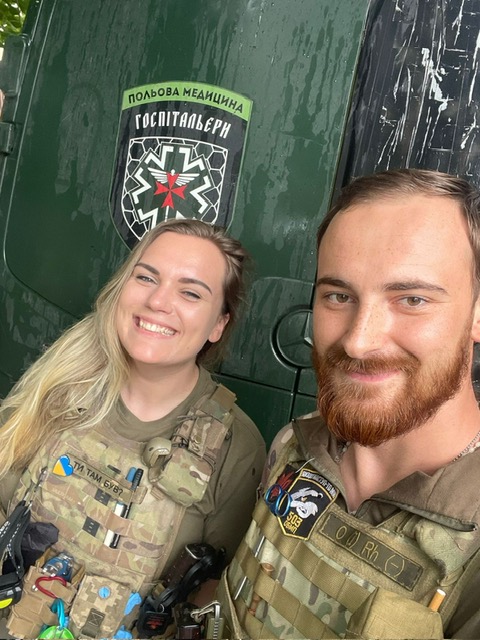
- In the Hospitallers, I was initially the commander of the 38th crew. Ira and I had two encounters. The first was when I was being assigned to a crew in April 2022. I was about to leave for my first rotation when Yana Zinkevych arrived. Ira was selecting people for her crew at the time. She noticed me because I am medically trained, can drive, and also know how to shoot... But Yana said: ‘He’s strong, and you already have strong crew members. He’ll have his own crew.’ So Ira took Nimets instead. I had already completed two major rotations when Ira wrote to me: ‘Hi. Our surgeon is dropping out. Could you join us for two weeks while I look for a replacement?’ I agreed. That was how the first two weeks of our shared two years began. At that time, Ira’s 5th crew worked on two-week deployments, though later we stayed on rotation for a month and even six or seven weeks.
I arrived there and got to know the crew. At first, they did not really trust me, but at the end of the rotation, Ira handed me a grenade pin. That was the highest sign of trust. And I stayed with that crew for two years. True, before the second rotation, I injured my leg and was undergoing treatment when Ira called me and asked whether I would join them again. I pulled myself together and went to them without fully recovering...
Many people asked me how it was possible that I, a crew commander, went into a crew where I was now being led, and by a woman at that. But I had absolutely no complaints about Ira’s methods. Besides, we were the same age and discovered mutual acquaintances; for example, one of her classmates turned out to have been my university groupmate. Ira had her own approaches to working with people. Every evening she held briefings where we discussed what we had done wrong, where we could improve or work faster. Everyone had their own mini-area of responsibility. And it had a great effect on the crew’s internal atmosphere and on communication with the units we worked alongside. Because everywhere we went, people would say: ‘If the 5th crew is nearby, we know we won’t die.’
I am a medic by profession, worked in emergency care, and have experience making split-second decisions about what to do and how to do it. With gunshot wounds, when you have no possibility of conducting an MRI and your only diagnostic tools are your medical skills and intuition, you understand one thing only: you have no right to lose a person. And somehow it worked out that, fortunately, we did not lose a single patient in our hands. No matter how critical the wounds were — head wounds, chest wounds, junctional bleeding — thanks to speed, medical skills, the constant training we initiated and the fact that we were continuously improving, working on the fine motor skills of our hands so we would know exactly where everything was kept and how to grab the necessary instrument without looking or thinking, we managed to save the wounded. It got to the point where we could establish venous access while moving, even as the vehicle drove off-road. Our patients were kept warm, too; we administered only heated infusions. We converted a small refrigerator into a heater. We could have dead phones, but the heater absolutely had to work.
At the stabilisation point, while transferring the wounded, when I was handling the patient together with the medics, the driver cleaned the vehicle, while Ira or the paramedic, connected us to the power grid to charge a large power bank. Those were our mandatory operating rules. We always had everything needed to wash the vehicle perfectly, so that not a single stain of blood remained, and so that our next patient would not have even the slightest chance of contracting an infection during treatment.
I knew that Ira had written a will and given it to Maryna Krut. I reacted negatively to that. You need to live, I told Ira, so many people know you! You know, there are ordinary people, and then there are people who become ideas. And an idea has to live on. It is like Che Guevara: they killed the body, but the idea survived. In a rough sense, that was also true of Ira. Because she became a kind of ideologue of the minute of silence, which had not really existed in the state before. It was she who laid a certain foundation for remembrance and for understanding its importance for future generations. That is already a person-idea. You can destroy the body, but not the idea. Her importance for society and for reshaping the mindset of people aged 35 and older was incredible. She could reach anyone. And in conversation, she always had arguments and counterarguments.
Even before meeting Iryna, there was a situation where my life hung by a thread, and I had already said goodbye to life. It was on the Bakhmut direction, near Klenove. I went out with a unit as a combat medic and left the crew in a safe place. Then a Grad strike hit. I was left alone with a wounded man, with no communication, nothing. A drone was flying above us, giving coordinates used to target us with mortar fire. Had I been alone, I might have tried to run across the field, but with a wounded man, that was impossible. We had to hold out until morning, when the enemy changed out the Mavic drone and reloaded. We had about 20 minutes during which we covered a decent stretch of road. Thank God we made it out; that wounded man is alive. But in that ditch where we were hiding... Fragments were falling onto our heads. Nearby, there were dead bodies; the smell made that clear. The wheat field caught fire... I kept wondering whether the fire would spread to the bushes hiding us. It did not...
I always understood where I was going. That is why I cleaned my house until it was spotless, so that if I were killed, no one entering my home could say that I had left a mess behind. During rotations, I did not shave or trim my beard. Whenever we took photos, I always joked that they were ‘for the memorial portrait’. All of us understood where we were and what we had signed up for. But at the same time, we believed in luck, in our skills, while also understanding that we could end up in the wrong place at the wrong time. There were times when we evacuated wounded men across minefields... Somehow, we got through. We were lucky.
After my first rotation, I transferred everything I owned to my relatives. I also thought about what I needed to write down: how I would want to be buried, how I would want my family to be treated, what ideas I would leave behind so they could be continued. When I wrote my own will and sent it to Iryna, she told me about hers. It was an interesting conversation — with mosquitoes buzzing around outside the house after a hard day, over two glasses of... well, Sprite. It was about an ordinary day, not about death... We spoke directly about the possibility of being killed. And about what could be done to hold on longer and make society far more conscious.
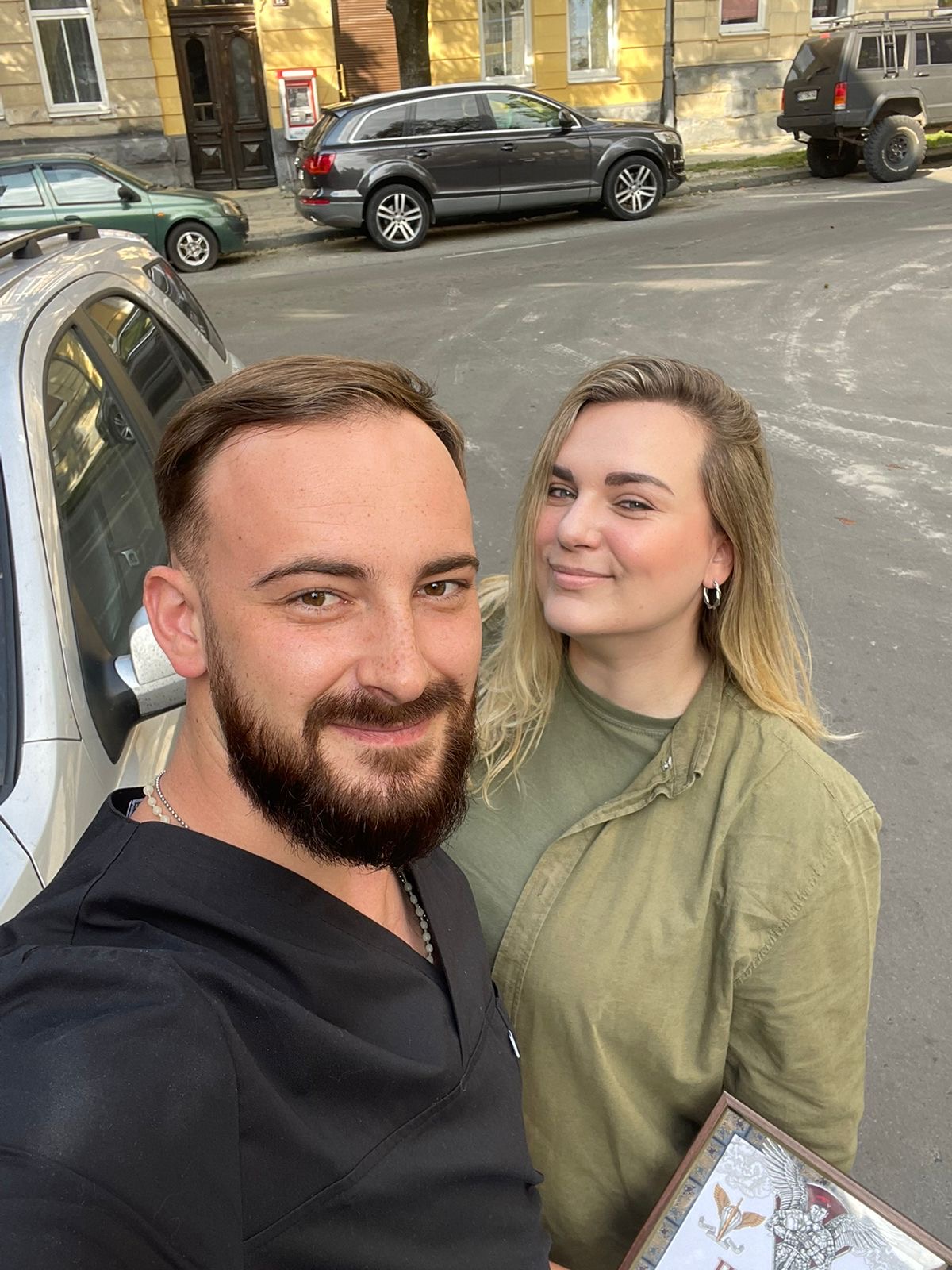
When I started working at a military hospital, Ira would stop by; we kept seeing and talking to each other constantly. On the evening before her death, we were texting. A couple of days later, I was supposed to meet her in Lviv. It was the final days of her rotation. Meanwhile, I was attending a tactical medicine conference organised by the Serhiy Prytula Foundation. Ira sent me a photograph of herself. A very beautiful one. We joked about each other. She wrote, ‘Love you,’ and I replied that we would talk tomorrow. That night, I was travelling to Lviv. On the train, I could not sleep; I felt unwell. In the morning, as soon as I got off the train, I started repeatedly calling Ira. It was around seven in the morning. She did not answer. I felt even worse and became nervous. I thought maybe her phone was on silent, that she was asleep after a night shift. But then a comrade called me and told me what had happened. I had just changed clothes to go into surgery...
You know, Ira noticed things others paid no attention to. Once, I complained to Ira that I could not perform autodermoplasty because I lacked a certain instrument. She asked what it was called. A few days later, she sent money to the seller of dermatomes. And the knife was delivered to me. Every time I see severe burn wounds now, it reminds me of Ira.
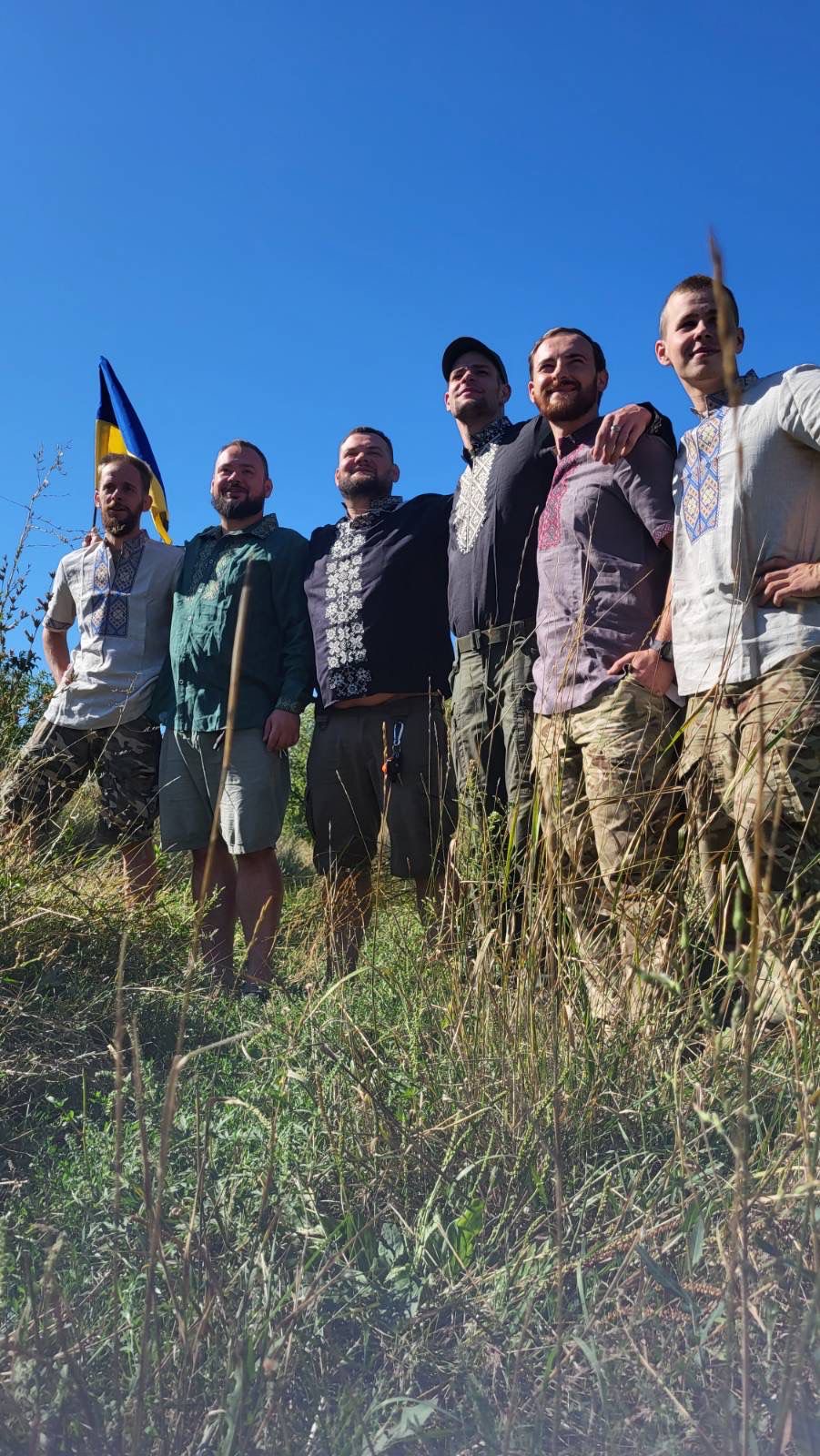
On 24 August, Ira gave every member of our crew a vyshyvanka. At that time, some of us did not even own one. For us, it was not about the embroidered shirt itself, but about the level of culture in her mind, her upbringing, her high intelligence, about her soul...
Ira was like glue: from tiny particles, she could unite a very large circle of close-knit people who shared common interests and a single understanding of who we are, people who identified themselves and respected themselves as Ukrainians, as a nation.
Iryna’s mother Oksana: "I do not feel Ira’s absence. To me, she is on a long rotation"
- I think none of us fully understood what awaited us, that a war had begun which would last not a day or two, and that Irynka would be deeply involved in it, serving right on the zero line positions. But she did not ask us either...
In one of our conversations, when we were trying to convince her that she could be more useful in a different role, not on the line of fire, she told me: ‘What is the point of all this for me if I won’t have a country?’ Yes, we tried to persuade her to stop going on rotations, but Irynka’s intellect, awareness and patriotism — and these are not banal or loud words, but words that truly describe my daughter — demanded difficult decisions. And all we could do was support her however we could.
During the Kyiv campaign, from Ira’s posts I understood what was happening and realised she was living through hell. But she always told me that everything was fine. I only learned what was really happening from her social media. One of our first conversations after the full-scale invasion happened after I saw a television report about Russian ‘chmobiks’ (Chmobiki are russian citizens who were mobilized as a result of partial mobilization in Russia in September 2022 - ed.). I told Irynka about it, and she said: ‘Mum, I see them right in front of me. And they are not "chmobiks". This really is the world’s second army, very well equipped. They are trained. Maybe some of them do not know what an electric kettle is, but the situation is difficult. Drones are flying above us.’ Ira was one of the first people to openly speak that truth.
Even while still at school, Irynka already had published work, which is why she tried herself in journalism. After her first year at university, she switched to part-time studies because she moved to Kyiv to work in various media projects and at Suspilne, gaining skills and experience. I really wanted her to have a student life, but she found it boring.
Why did Irynka fall in love with Donbas? I do not know where it came from at all, especially since it was dangerous for her life, but she believed she could bring change. One of her first independent projects was ‘We Switched’, in which she filmed short videos about people switching from Russian to the Ukrainian language. Even such small steps she considered important. She knew how to choose the right words and convince my husband and me that this was what had to be done, and that she could not act differently. She saw some kind of mission of her own. Of course, as a mother, I wanted her to be safe, wanted peace of mind for myself. But when we thought about her choice and about what she truly wanted, we took her side, supported her decisions, and helped her however we could. I even wrote to her in our family chat: you know that I will always support you. Of course, at the same time, we worried terribly about her.
In Kyiv, Irynka met Hennadii Dubrov, callsign Bizon. He was an active participant in the Revolution of Dignity and went from the Maidan straight to fight as a volunteer, serving at Donetsk Airport. He was an extraordinarily kind and caring man. He would meet Ira after work and cook for her. Hennadii himself was from Mykolaiv, and his mother still lives there. On 10 April 2022, Bizon was killed in Slobozhanshchyna. Iryna took this loss very hard. She was on rotation at the time and therefore could not attend the funeral.
As a child, Irynka was an angelic child, well-behaved; we never had any problems with her. The first person to tell me that my child was no ordinary child was her first teacher. Now Olena Serhiivna and I recall those moments, because we have a joint project in the education department about memory. She teaches educators how to speak about heroes in schools. Love of truth was Irynka’s defining trait. And also, when she was at school, she was friends with boys. Girls appeared in her circle later and very selectively. Despite her steel character, Irynka was very gentle with those close to her. Probably because as a child she felt the warmth of her grandfather, with whom she went to the forest and fishing, and her grandmother, with whom she would work together in the vegetable garden. And, of course, she grew up and was raised in family traditions and respect.
We had an agreement that my daughter would text me in the morning and in the evening. And she would write to me: ‘Everything’s good. Kiss.’ The same in the evening. I would ask: ‘When will you call?’ or ‘When should I call you?’ When there was no message, I sounded the alarm. Of course, Irynka could fall asleep after a hard duty shift and fail to write to me on time. Then, after her explanation, I would reply: ‘Go with God. Kiss.’
My daughter did not tell me the details of her service. But sometimes she shared that she had transported a wounded man and sang Sich Riflemen songs to him to keep him conscious. Someone told her on the way that his child was about to be born... She covered someone to keep him comfortable. I know that Irynka’s crew made a warm evacuation vehicle so that the wounded person would be comfortable and well. She said she might remember neither the face nor the name of a fighter, but she remembered minute by minute what had happened to the wounded person and the details of his injury.
I am in touch with Fagot, a marine battalion commander. Irynka evacuated him during her first rotation. She saved him twice. There was a battle, and she was forbidden to drive as close as possible to the place where the wounded could be brought out. But she drove very close. And that was priceless. Later she told me: ‘Mum, every metre closer to them is a life saved — someone’s brother, son, father or husband.’ And because the crew was close to that battle, they saved the wounded; 11 people were brought out to them at the same time.
In addition to saving the wounded, Ira was constantly involved in medical training. One commander once told her: ‘I’m not going to apply those tourniquets that many times. How much longer can this go on?’ He came to me last summer and said: ‘A night battle. I was wounded. In one hand I had my weapon, in the other, a tourniquet. I still don’t know how it ended up tightened on my leg.’ That officer said it was solely the result of training with Iryna.
What Ira feared most was losing someone from her team. She said she would not survive that... She worked on their development. She wrote an Instagram post about each of them.
Where did Ira’s knowledge of Sich Riflemen songs come from? There were UPA fighters in our family, and my daughter knew that well. And we always respected Galician traditions. There was a theatre studio at the church called Potykhenku, where they worked on various social projects. Ira also took a lot from there. My daughter always went to Shevchenkivskyi Hai for haivky spring songs. At first, she sang there herself, and later she directed the performances herself.
All ways of remembering her are important to me, because at the beginning, when I started coming back to myself, I was afraid she would be forgotten. Perhaps I did not immediately join all the processes launched by Ira’s friends. ChekaFest is an event that unites all of Ukraine; it carries the meanings that were important to Irynka. And they are important to me. Why did she love songs? Because they are the continuity of our history. That is why there is a list of songs she wanted people to sing and spread, and of books she recommended reading.
This is a place where people can meet their own kind. They can bring their children, or grown-up children can bring their even older parents. And they can spend time in a community united by shared meanings.
"The existence of the will Irynka wrote deeply affected me. Even though she and her crew had looked death in the face once, twice, three times, and understood that it could happen to them as well. More than once my daughter tried to start conversations with me about it, convincing me that we needed to talk about such things because we were living through a war. But I did not even want to hear about it... Only with time did I realise what a courageous step it was, permeated with love for us, for the family. It is a message for all of us, guidance on how to live as worthy Ukrainians and understand who you are. She even took care of her father and me in the sense that she wrote: if journalists bother you, you are not obliged to speak to them; if it is hard for you, then you do not have to. She did not pressure anyone and thought through everything in such a way that no one would feel guilty. That is why she wrote all of it. It is so deep; she reflected on everything, every detail, about saying goodbye to her, about our future life without her...
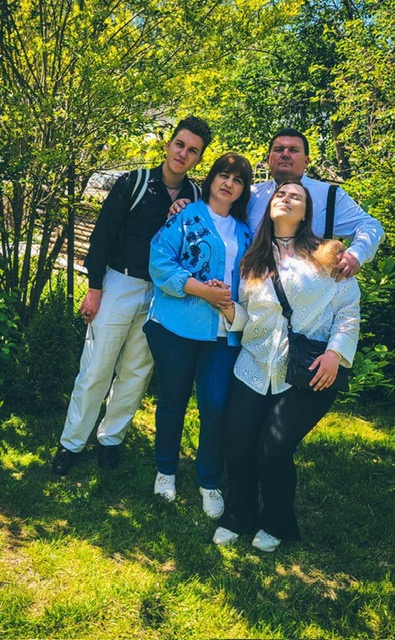
Over these almost two years, my husband has dreamed about our daughter, but I have not. I see many signs now that I never used to believe in. I feel that she guides me and helps me. I do not feel her absence. To me, she is on a very long rotation.
I cannot comprehend her death, and I do not know whether I ever will.
Before she was killed, Irynka was home for Mother’s Day in 2024. We had dinner together, and on 9 May she had planned a meeting with representatives of major Kyiv businesses to discuss the issue of uniting through remembrance. Memory of a person is not contained in a memorial plaque or a street name. ChekaFest is a living organism where energies are exchanged. Last year, it was incredible. Everyone who came was happy to see one another. That is the value of it — remembrance and communication, the opportunity simply to spend time together, even if only for a day. That is why we are waiting for everyone on 30 May at ChekaFest. It is important for us, for Irynka’s friends, for honouring her memory and for carrying her ideas forward.
Violetta Kirtoka, Censor.NET


