



Identity becomes key to national security amid civilizational war - UCF head Nataliia Kryvda
Professor Nataliia Kryvda took over as head of the Supervisory Board of the Ukrainian Cultural Foundation just over two years ago. The new team essentially had to rebuild trust in the institution following a series of scandals, when, effectively under manual control, some projects were rejected while others received state funding.
Today, it can be stated that this has been achieved, and the UCF is once again being discussed as a significant player in supporting culture, just as it has been since its inception in 2017.
We planned to focus this conversation for Censor.NET primarily on the UCF. However, in an interview with Ms. Kryvda, it is impossible to bypass her academic role as a Doctor of Philosophical Sciences and Academic Director of the Edinburgh Business School. In fact, she is currently on a major European tour in her capacity as a Ukrainian scholar.
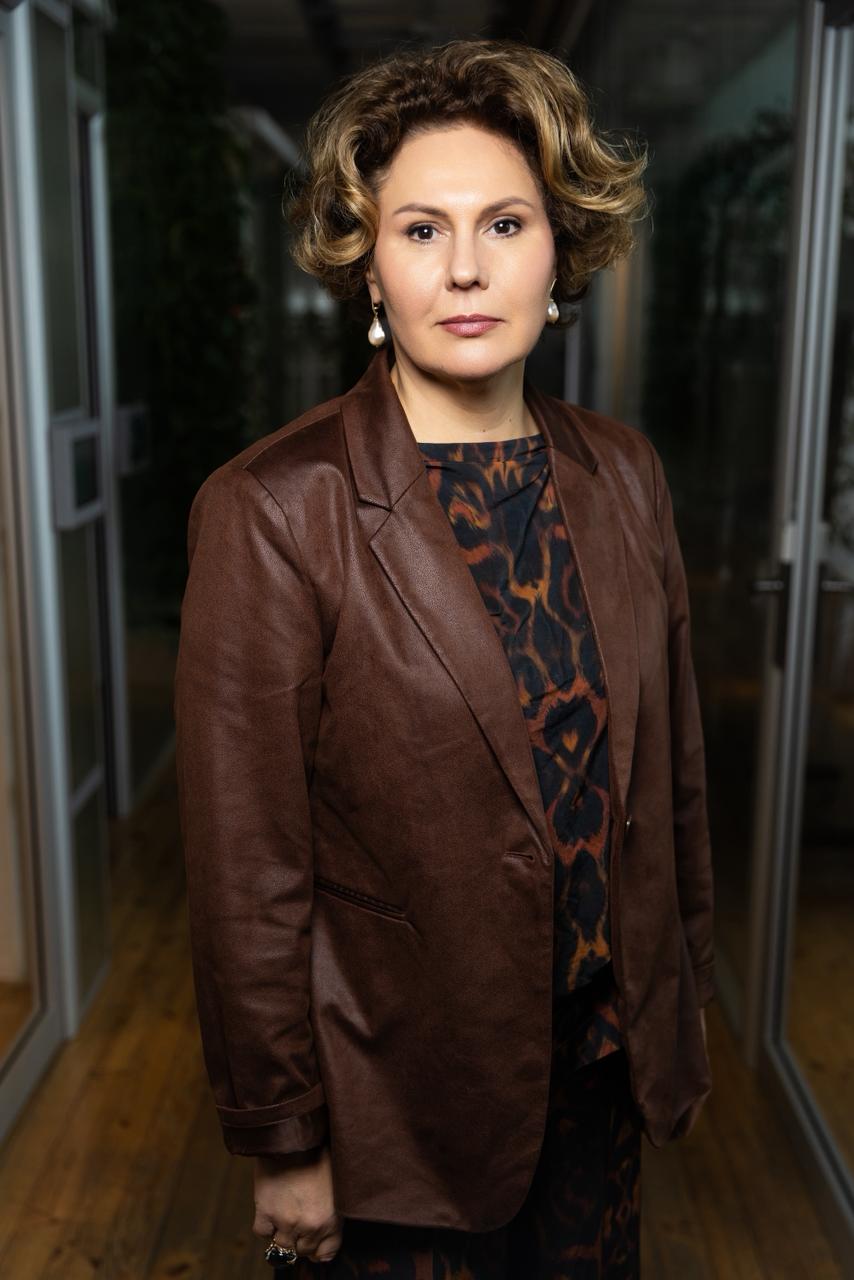
SEVERAL DOZEN UNIVERSITIES HAVE ALREADY SIGNED A MEMORANDUM ON UKRAINIAN STUDIES
- Nataliia, it is appropriate to speak with you primarily about the Ukrainian Cultural Foundation and the strengthening of national identity. However, you are currently on a business trip with the mission of solidifying the understanding of Ukraine in the world. Tell us about this first.
- I am currently abroad in my capacity as a professor at the Taras Shevchenko National University of Kyiv, on a major tour at the invitation of the Global Coalition of Ukrainian Studies. When speaking about the purpose of the tour, it is worth recalling a well-known yet seemingly invisible problem. Russia has long maintained a powerful presence in the academic environments of other countries in the form of research institutions, and it uses this environment to infiltrate the rest.
Professors and students receive support from Slavic or Russian studies. In fact, these so-called scholarships provide them with the opportunity to do internships in Russia, pay for their education, and so on. In this way, firstly, the research agenda is formed. And secondly, an internal, intimate sense of gratitude towards "great Russia," with its "great culture," is cultivated.
We do not have such large budgets; we cannot act symmetrically. Individual successful projects, such as the Harvard Ukrainian Research Institute or the Ukrainian Free University in Munich, only underscore what we would achieve if we had this influence.
How is the academic logic formed in a student studying or a professor teaching Russian studies? They write an academic monograph, and from scholarly research, it makes its way into university textbooks. These professors move from university to university. In this way, a certain perception is shaped—for example, about the "history of Ukraine, which does not exist," or how it is allegedly part of Russian history. And then this makes its way into school textbooks (and this is the worst part for us). As a result, mass school education leads to generations of French, Czech, Italian, and German people learning that Ukraine does not exist, and that the full-scale invasion was a "necessary step." Over time, these children grow up and become citizens and voters.
- Ukraine currently indeed lacks the funds to create a parallel network, and we are also losing in terms of time. How can the current initiative remedy this?
- This is an initiative under the auspices of the First Lady, implemented by the Fund of the President of Ukraine for the Support of Science, Education, and Sports. This fund has supported the Global Coalition of Ukrainian Studies. Several dozen Western universities have already signed memorandums on researching Ukraine. This involves studying our country as a component of the European or global process, not just the Ukrainian language or literature.
I received an invitation to join such a trip for the first time and, in turn, invited my colleague, Professor Rena Marutian. Together with the initiative's leadership, we signed promising memorandums with the universities of Barcelona and Valencia (as of the time of the interview. – Ed.). Subsequently, it will potentially be possible to open departments, establish translation studies, and empower all those who are already working on Ukrainian topics in European universities.
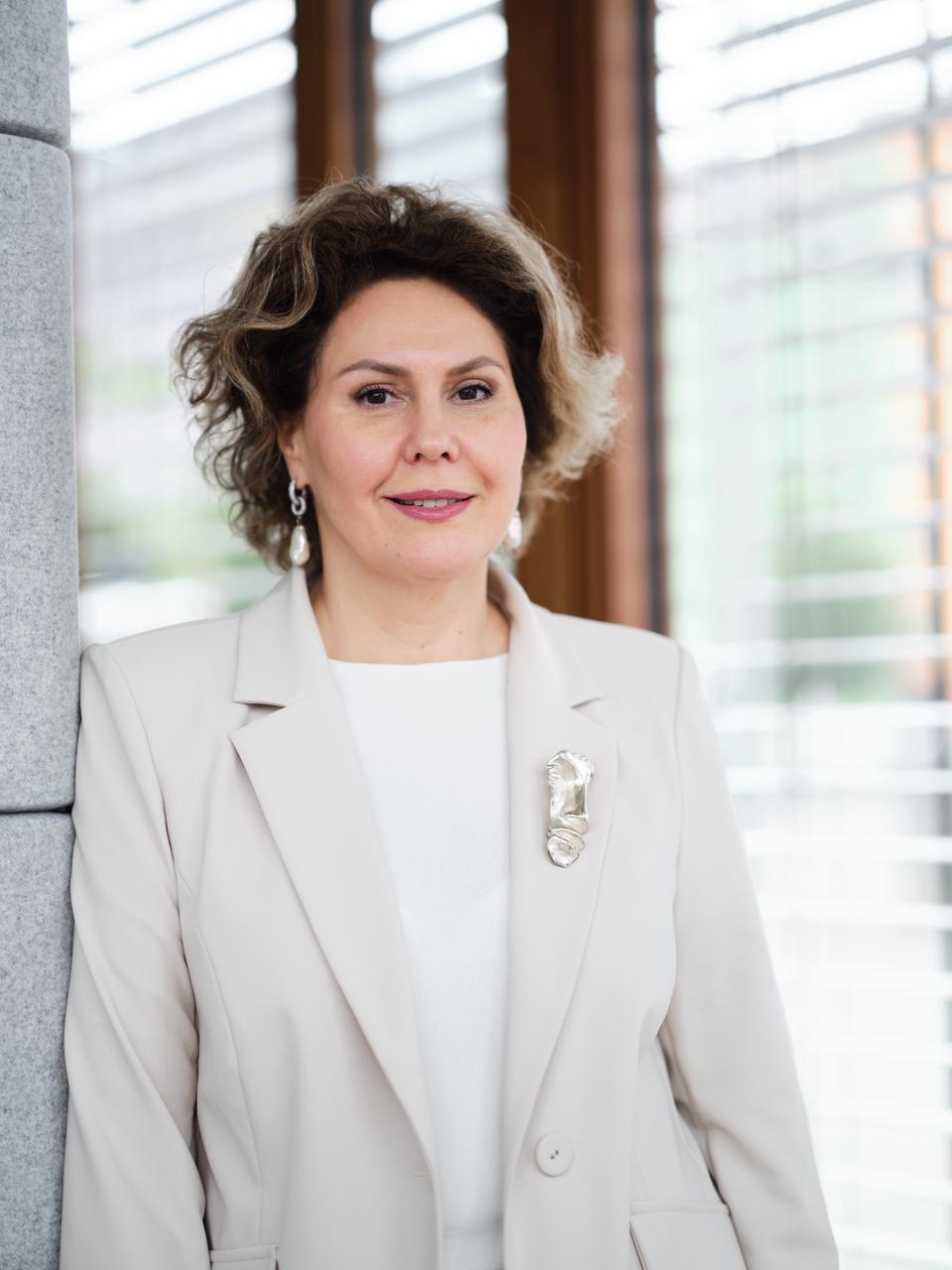
ITALY HAS STRONG STATE SUPPORT FOR UKRAINE, BUT AVERAGE ITALIANS WONDER WHY UKRAINE DOES NOT GIVE UP ITS TERRITORIES
- As far as I know, you also had a lecture component, meaning you directly joined the educational process.
- I delivered lectures on Ukrainian culture in both Barcelona and Valencia. Then there was a panel discussion featuring Professor Rena Marutian and the artistic director and manager of the Franko Theater, Yevhen Nyshchuk. However, as I understand it, the strategy will consist of uniting all Ukrainian educators currently present in local universities, regardless of their specialties. Some universities promise that they will even allocate a separate course on Ukraine. A promise does not mean it will happen, but we are at least appearing in the field of their intellectual interests.
I then continued my mission in Italy, where Professor Marutian and I were invited by Svitlana Tereshchenko, the founder of the Borysfen association. Italy is a "weak link" in terms of resilience against Russian propaganda. The Institute of National Resilience and Security conducted a study on how Russian propaganda operates through the Russian church, and Italy is, unfortunately, fertile ground for propaganda.
In Milan, at Bocconi University, I also delivered a lecture and participated in a discussion. Naturally, their front pages feature Palestine and "The Devil Wears Prada 2". But I said without hesitation: "The Devil does not wear Prada; the Devil wears the uniform of Russian soldiers." I do not know if my sad joke landed well with this student audience.
The next stage was Bologna. In the city, 26 Ukrainian associations united, rented a municipal hall, and invited my colleague and me to speak and present the study on the impact of propaganda. There were rather interesting characters among the audience. For instance, there was a young man who was a Eurofederalist (meaning he advocates for strengthening the European Union). And we were specifically talking about how Russian propaganda is aimed not only at fostering a love for Russia in Italy, but also at undermining trust in institutions, the European Union, NATO, their own national governments, and so forth.
- If we summarize even just a few days (at the time of the interview), were there any shocking questions for you regarding Ukraine and the current war?
- We were not asked such questions because a kind of natural filter took place. The people who attended our events were those who understood at least something. They may hold different political positions, but they are in context.
However, people outside the Ukrainian, student, or political circles live in a completely relaxed, calm world. Both Italians themselves and Ukrainians who have lived here for 20-30 years admit that Italians are not patriotic in our understanding of the word. They are genuinely surprised as to why Ukrainians do not give up their territories in exchange for peace. For them, this is normal; for them, this is a way of thinking. I am generalizing, but this is the result of several dozen conversations.
Every time I reiterate that Ukraine is fighting for European values, I quote my student, who said that European values today wear Ukrainian digital pixel uniforms. Foreigners look at me with surprise. For them, this is simply an exaggeration and exaltation. Italy is traditionally Russophile, and there is a great deal of Russian culture here. On the other hand, they have very powerful state support for Ukraine. Their Minister of Culture stated very firmly that due to the opening of the Russian pavilion, he would not attend the opening of the Venice Biennale, just like more than 20 ministers from other countries.
The deputy mayor of Bologna, which is heavily populated by Russians, stated that they do not merely support Ukraine. "The Ukrainian soldiers fighting in Ukraine today are the heroes of our time," he said. And among the audience was an elderly man who said that his grandfather fought in World War II as a partisan, thereby saving the dignity of the Italian people, and if his grandfather were alive, he would be with Ukraine. And Garibaldi would be with Ukraine, the listener assured us.
- This work to unite and expand the academic and societal study of Ukraine must be very long-term and very systematic to achieve results. In the future, where should the intellectual resources for this be sourced?
- I think there will be two streams. On the one hand, there will be those Ukrainian students, educators, and professors who are already there—they will obviously form the core. But it is very important to involve others. The second stream will be such that we offer students the opportunity to study Ukraine as an object of research.
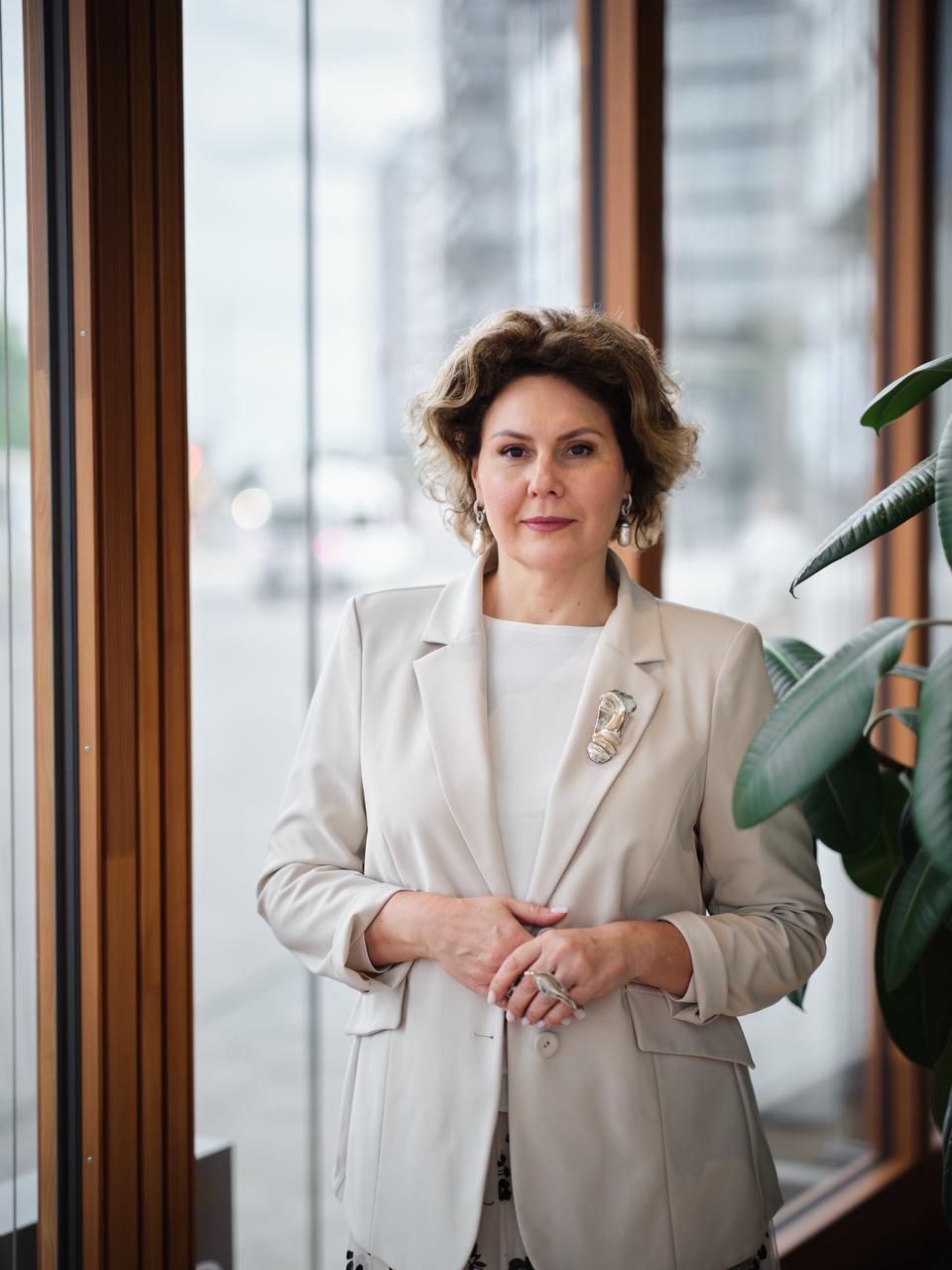
THERE IS A PHRASE OF THE UKRAINIAN NOBILITY - "NOTHING ABOUT US WITHOUT US". THEREFORE, WE INVITED THE MILITARY TO JOIN THE EXPERT COUNCIL
- The Ukrainian Cultural Foundation has existed for 9 years now. The results of its activities are visible – a multitude of events or realized works bear the mark "supported by the UCF". However, you took over as head of the Supervisory Board of the Foundation in 2024 during a crisis following interventions in the competition results. How would you summarize what has been achieved during your tenure as head of the UCF, and what goals do you still set for yourself in the future?
- The issue is not about my persona. The heightened interest arose because the composition of the Supervisory Board was updated. The previous board committed a series of inappropriate actions, and there were major grievances against it.
This caused public outrage because up until that point the Foundation had protected its reputation – perhaps applicants took offense, or someone vented their sense of injustice in offensive posts. However, the blatant usurpation of power and manual control over projects sparked genuine outrage. Following that, through protests and public discussions, a new Supervisory Board was elected.
High hopes were placed on the new composition of the Supervisory Board – we were supposed to stand in the service of public interests. And, it seems to me, the Supervisory Board, together with the Foundation's team and the directorate, tried to cope with this task.
One of the tasks facing the new Supervisory Board was to conduct the election of the executive director of the Ukrainian Cultural Foundation in a transparent manner. Anastasiia Obraztsova possesses experience, a principled position, energy, and proactivity; it seems to me that Ms. Anastasiia and her team are doing their job with high quality.
It is important that the members of the Supervisory Board were not afraid to go public. It seems to me that we are all, in various ways, trying to convert our personal symbolic capital into interest in the Ukrainian Cultural Foundation, thereby strengthening it.
- Among the very obvious changes is the creation of several projects jointly with the military.
- It is immodest to say, but I am glad that the Foundation supported my initiative, and last year we implemented a program with the Third Assault Brigade – "Cultural Assault". And this year we implemented a program with "Azov".
This is, to a certain extent, a personal story, because my son-in-law is fighting, and my daughter was a combat medic before the birth of her son. The point is that artists want to create projects about the war - this Ukrainian Cultural Foundation program is called "Reflections of War".
- But you involved the warriors directly. Does this carry the subtext that artists do not always understand how the war should be discussed?
- The Foundation team and I understand well that reflections of war have their own specifics. There is a famous phrase of the Ukrainian nobility: "Nothing about us without us." And so we proposed that the military join a kind of advisory council. Before the projects are submitted to the experts of the Ukrainian Cultural Foundation for evaluation, they undergo a certain review by the military. It is intended that the military assess the projects for relevance: this is adequate, this is incorrect, and this does not correspond to military realities or practices; therefore, such themes or vocabulary cannot be used. This greatly increases the quality of the projects in terms of their proximity to a realistic representation of the war.
- Thanks to the addition of military themes and cooperation with local authorities, a visible expansion of the geography of implemented projects has occurred. A few years ago, the UCF Strategy noted that there were practically no applications from some regions.
- Yes, on the initiative of the Foundation's directorate, we approached it from a different angle; the Foundation began signing memorandums and combining its budget with the regional budgets of frontline areas. First, it was the Zaporizhzhia region, and just a few days ago, the Dnipropetrovsk region.
The region has a budget for culture, but it is not enough for large projects. The Ukrainian Cultural Foundation also has some budget, but it is not enough for large projects, or we would like to have more. And so we sign a memorandum on 50/50 financing.
And then everything is done according to the law; cultural figures and practitioners, civic or artistic organizations from a specific region apply for competitions, undergo expert review, and we finance the winning projects jointly with regional budgets.

SOMETIMES APPLICANTS READ THE DOCUMENT SUBMISSION RULES INATTENTIVELY. WE WILL RAISE THE ISSUE OF IMPROVING PROCEDURES AT THE UCF
- You have repeatedly emphasized the importance of adopting a new law on the UCF. What changes should become key?
- Promoting the law is the result of joint efforts by Verkhovna Rada deputies, members of the Supervisory Board, the Foundation's directorate, and non-governmental organizations. Among the Supervisory Board members, Volodymyr Vorobei and Bohdan Lohvynenko hold a particularly active position, for which we are very grateful. For many years, this law could not get off the ground, but now we have united and are promoting the changes. A meeting of the Verkhovna Rada Committee on Humanitarian and Information Policy has already taken place. Many changes will be put to a vote, for example, regarding long-term projects.
Look at the lifecycle and implementation of any project. First, the project wins the competition, then we wait for the negotiation procedures until June. In July, at best, they provide the money. People sadly joke that "culture in Ukraine lives from September to November." Because at the end of November, it is already necessary to prepare reports on the use of funds, which the treasury only accepts in December. For us, the key point is to ensure the existence of long-term projects, allowing funds to carry over from one financial year to another.
And finally, I cannot fail to mention another area of work that we set for ourselves - this is the attraction of international funds.
- You have already started doing this successfully.
- This is teamwork - and yes, we have started doing this very actively. Our joint project with PFRU, which is funded by seven countries, operates very powerfully.
- Previously, you emphasized the need to rework the UCF Strategy up to 2027. Why was this a matter of principle?
- The strategy is not a concrete block, but our working tool. Wherever we can, we take into account the context and the current situation. The strategy must be flexible, despite preserving core values and a long-term vision. But the strategic and tactical toolkit can definitely change.
Therefore, we will convene a meeting of the Supervisory Board at the end of 2026 and see what else can be adjusted.
- I would also like to ask a question regarding the internal workings of the UCF. From time to time, project rankings are published across various blocks – showing how many points each received. Another ranking was published in the spring.
It is understandable that there will always be dissatisfied people who experience offense or disappointment differently. However, I looked at the substantive reactions. For instance, if you visit a community of screenwriters. There, many people who pitched their projects share the same grievance: the recommendations that experts attach to their conclusions contain somewhat unrealistic expectations. For example, screenwriters are advised to hire a PR specialist to promote their project. Although, as a rule, film projects are already very poorly funded and are created on enthusiasm.
How do you discuss this internally – regarding how to communicate with contestants?
- This is a very important question. We had rather heated discussions about this - both within the Supervisory Board and together with the directorate. The directorate, as required by the Statute, is always present at the meetings of the Supervisory Board.
In my opinion, it is worth considering three levels. First. Are there complaints about the quality of the experts' work? Yes, there are. Do all experts perfectly understand the field? Obviously not, because that is impossible. Do we engage high-quality experts? Yes.
I constantly tell people who are dissatisfied with the quality of expertise: "Join in, become UCF experts." But those who consider themselves true professionals in the field go into the expert role quite rarely. This is partly because the procedure is designed so that if you are an expert, you cannot submit your own projects to the competition.
Therefore, there are questions regarding the expertise, but we are working to build expert capacity; we have conducted a series of training sessions for experts.
The second issue. Do applicants fill out the packages, the application packages, qualitatively? Usually no.
- Really, no?
- Unfortunately, this is a human factor, and it is understandable. I am not blaming anyone right now. I am trying to explain. Applicants often do not read the conditions attentively, missing explanations and clarifications regarding the format of the documents; and these are the requirements of the treasury or other state bodies, not the whims of the UCF, therefore they are mandatory for implementation.
And the third point, a very important one. This is exactly what the members of the Supervisory Board insisted on – the obsolescence of certain procedures of the Ukrainian Cultural Foundation.
And one of the tasks we set for ourselves for the summer is reviewing those procedures where we can, without violating the law, improve the formats of cooperation with applicants. For example, the number of appeal submissions, or the attachment or non-attachment of a certificate. A significant number of problems are bureaucratic in nature. For instance, one can obtain a certificate from the Ministry of Justice, but cannot get it from Diia.
The Foundation's documents and instructions state that the treasury requires documents only from the Ministry of Justice. Unfortunately, not all applicants paid attention to this clarification. This is a requirement of the State Treasury, because it does not accept documents from Diia, and it is, accordingly, written into the UCF documents.
- I see. And the people filling out the application form act by following the path of least resistance.
- They rely not on the rule of law, but on common sense. Especially since we all remember this winter, how often we had electricity outages, which also affected the websites and databases of the Ministry of Justice.
As the Supervisory Board, we will hold a special meeting where we, together with the directorate, will try to make the procedures more transparent and understandable.
FOR THE FIRST TIME SINCE COVID, MAJOR PLAYERS WITH LARGE BUDGETS HAVE RETURNED TO US
- And the final block is financial. There has been a certain increase in the budgets of cultural institutions. The budget of the Ukrainian Cultural Foundation was increased by 160 million, and it now amounts to over 410 million hryvnias. Is this a significant increase in project funding for you?
- I will note with a certain pride that this is the result of consolidated efforts. The Supervisory Board, the directorate, the Verkhovna Rada committee, individual figures and practitioners, the media, and mass media. We talked about increasing the budget for a long time. And for 2026, the budget of the Ukrainian Cultural Foundation has finally been increased.
Perhaps that is why, for the first time since COVID, major players have returned to us - such as Oleh Skrypka, Valerii Kharchyshyn, GogolFest, and Yaroslav Ladyhin. These are the ones who announced their applications publicly (because they remain anonymous to the experts). Previously, the Foundation was not of interest because it could not finance large projects. Then suddenly a window opened, and major players came to us. And major players mean loud players. Consequently, dissatisfaction with the UCF procedures and selection results has increased in the public sphere.
This is a certain information trap. On the one hand, it is great that we received major and newly interesting applications. On the other hand, applicants who did not pass the competition began to actively criticize the Ukrainian Cultural Foundation. And these processes are healthy; this is how it should be.
- I can already imagine how you will be reproached that Skrypka, Kharchyshyn, and Ladyhin – being quite famous names with greater influence and resources – create competition for smaller projects.
- This is both yes and no. For example, I am glad that major players have returned to the UCF competitions, because this attracts attention and strengthens the impact of investments in culture. On the other hand, we have identified the need to overcome bureaucracy (as much as possible). Those public remarks expressed by the applicants related, in particular, to what I have already mentioned – the certificates from the Ministry of Justice. I reiterate, this is a treasury requirement, and applicants should treat such requirements with understanding.
UNDERSTANDING ONESELF AS CITIZENS OF UKRAINE CAN AT LEAST PARTIALLY OVERCOME INTERNAL DIVIDES
- I would like to conclude with something global. You talk a lot about the formation, or re-formation, of Ukraine's collective identity. But on the other hand, when discussing these projects with the military, the so-called divide in society along this line immediately comes to mind. It is understandable that it is also being pushed by Russian propaganda, but across many parameters, it is palpable.
There are moments when civilians understand the military and vice versa. Those who are less involved in the war do not understand those who bear the brunt of this war. How would you propose resolving this on an ideological level?
- Only communication and thoughtful, balanced conversations will help. Different positions must be heard. Yes, our enemy is watching closely, and when they see a small crack, they immediately launch a stream of dirt, and then this small crack suddenly seems like an abyss. Therefore, let us keep a cool head, maintain critical thinking, and genuinely consider every time: is this a real divide in society that needs to be overcome, or is it an imaginary confrontation imposed by the enemy?
Modern society is heterogeneous; presence or absence in the country, participation in hostilities or the lack thereof provoke an internal sense of injustice in people — such "exclusion" arises not only during the war, but right now it radicalizes communities particularly acutely. If we are citizens of the country, if we are figures and practitioners — I say this very consciously and not for the sake of pathos — then it is worth joining the transformation of the country. Somewhere it is worth suppressing one's ego, somewhere hearing another, somewhere understanding that your experience is not the same as the experience of others.
When I speak with adult women of my age who say: "God, what happiness that I was able to get a certificate (exemption from mobilization - ed.note) for my son, at least my heart is at peace," it tears me to pieces. I did not get any certificate for my child; my daughter simply informed me that she had become a tactical medicine instructor and joined the military to train combat medics. I did not even know where she was, near Bakhmut or Chasiv Yar, because I found out about it after the fact — Mariia did not want to worry me.
So how can I reconcile my internal feeling with the feeling of this woman? Her experience and my experience are completely different. On the other hand, I cannot compare my feelings with the feelings of a soldier who is at the front — his existential experience is completely different. When I work with veterans, give lectures, or conduct master classes, I choose every word carefully. I repeat many times that I might "sound" inadequate to you right now, so please advise me on how best to express it.
- In any society, fragmentation has existed and continues to exist, yet there is still a common foundation, a common image. What constitutes the common foundation for Ukrainian society?
- My recent academic interest is national and cultural identities, collective and cultural trauma as an instrument of identity formation. National identity is a rather imagined phenomenon, but we can have strategies for its formation. Can identity become a subject of construction or formation? In a situation of civilizational confrontation, an existential war — probably yes, because it becomes the key to national security. Is it worth saying that identity itself must sprout in a calm, safe situation?
I think civil society, the academic community, and state institutions should take the lead and say: "Let's try to create conditions, provide tools, and spaces where people realize and develop themselves as citizens." Not only as Ukrainians, Jews, Crimean Tatars, Gagauz, or Bulgarians, but specifically as citizens of Ukraine. Respect for and development of the ethnocultural roots of communities are very important, and this is worth contributing to. By the way, the Ukrainian Cultural Foundation has a separate program to support the cultures of national communities; however, apart from Crimean Tatars, few people apply for these programs. Therefore, national and ethnic cultures are very important, but the values of civil society are even more important.
The state and society, I repeat, must and can demonstrate leadership in creating opportunities for citizens. And we are creating spaces, creating opportunities, proposing methodology, and stating that in the conditions of an existential war, the cause of which is the erasure of national identity (PACE Resolution of June 2024), this very national identity requires development. A shared understanding of oneself as citizens of Ukraine can at least partially overcome internal divides.
Olha Skorokhod, Censor.NET


