



16-year-old European Chess Champion Anastasia Hnatyshyn: "There was arrival hundred metres from my chess school"
...The chess world is accustomed to talented child prodigies. But even against this backdrop, the success of Ukrainian player Anastasia Hnatyshyn at the European Championship in Batumi was a sensation. Not only because the champion was not yet 16 at the time, but also because the European Championship was a classical chess tournament "for adults."
People were impressed by Nastia’s remarkable progress: she started the tournament ranked 76th in the initial rankings, and finished first! She also added an incredible 214.4 points to her ranking, propelling her from 233rd place into the elite top 20 of the world women’s rankings!
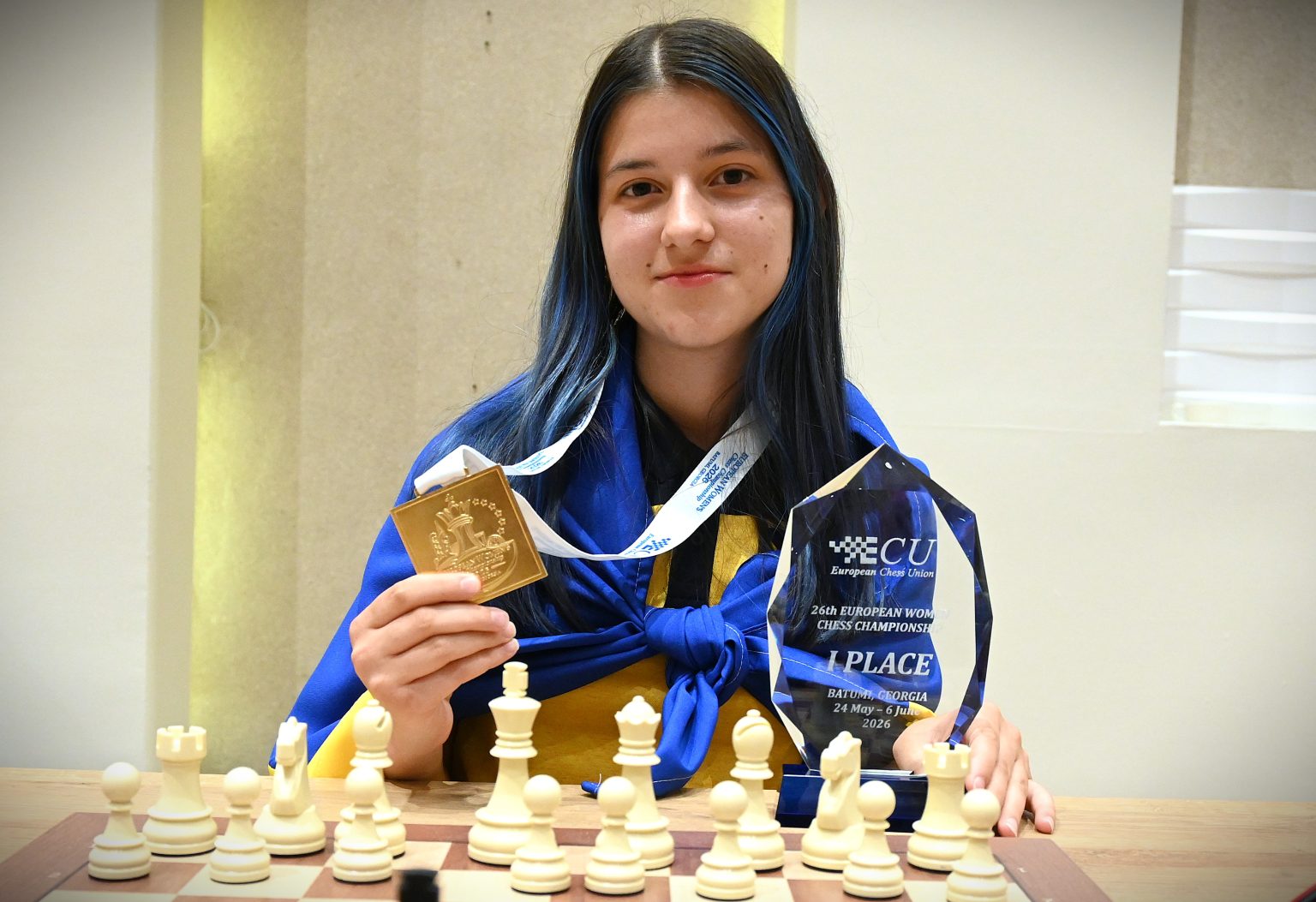
Of course, she will have to defend these hard-won positions, and Nastia herself understands that there is a lot of hard work ahead. But how can one not rejoice at this success – especially as, for Ukraine, despite the war and all the difficulties, Hnatyshyn’s victory is not the first chess triumph in recent times. Last October, the Ukrainian men’s team won gold at the European Team Championship, and in April, 17-year-old Roman Dehtiarev from Kharkiv sensationally won the European Individual Championship.
Anastasia’s success is also important to us in terms of global media coverage. On the international stage, Ukraine’s sporting world — unyielding and charismatic — is now predominantly represented by women. Track and field athletes Yaroslava Mahuchikh, Iryna Herashchenko and Yulia Levchenko, fencer Olha Kharlan, tennis players Elina Svitolina, Marta Kostiuk and Oleksandra Oliinykova, and our other top female athletes are not only winning for Ukraine, but also speaking out for Ukraine. They remind the world of the Russian-Ukrainian war; they tell of rocket and drone attacks on Ukrainian cities; they demand that Russian athletes take a public stance on this war.
And although the graduate of Lviv’s ‘Debut’ Children’s and Youth Sports School is only just beginning her journey among the world’s chess elite and must focus on her training, in time Hnatyshyn will also have much to say about Ukraine’s survival during the war. All the more so because, in her outlook, Nastia is a well-rounded and patriotic person. At least, that was the impression formed by a journalist from "Censor.NET" after speaking with the new European champion.
And we began with the latest developments.
- Nastia, how were you received in Lviv? I saw that you and your coach went to the town hall. Was there a crowd on the platform to meet the train carrying the champion?
- (Laughs) There was no crowd, but I was given a very warm welcome at the town hall. I received a thank-you, and we spoke with the coaches.
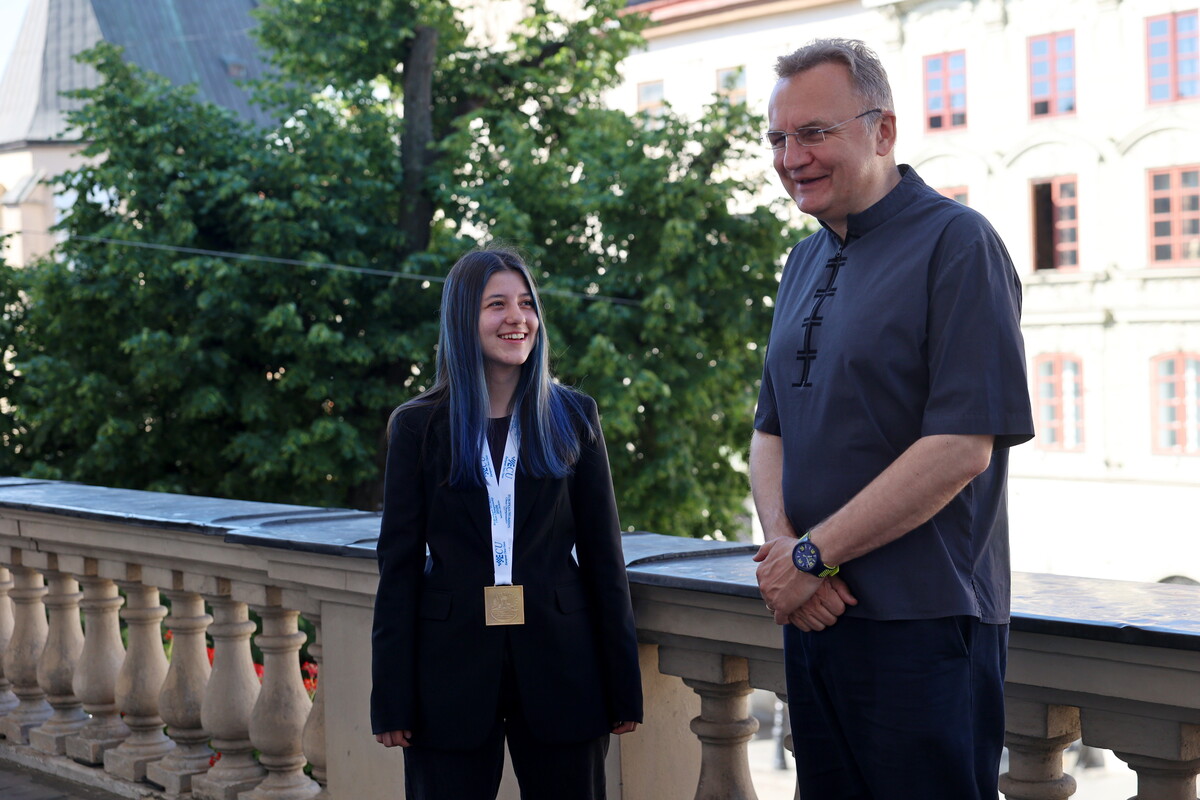
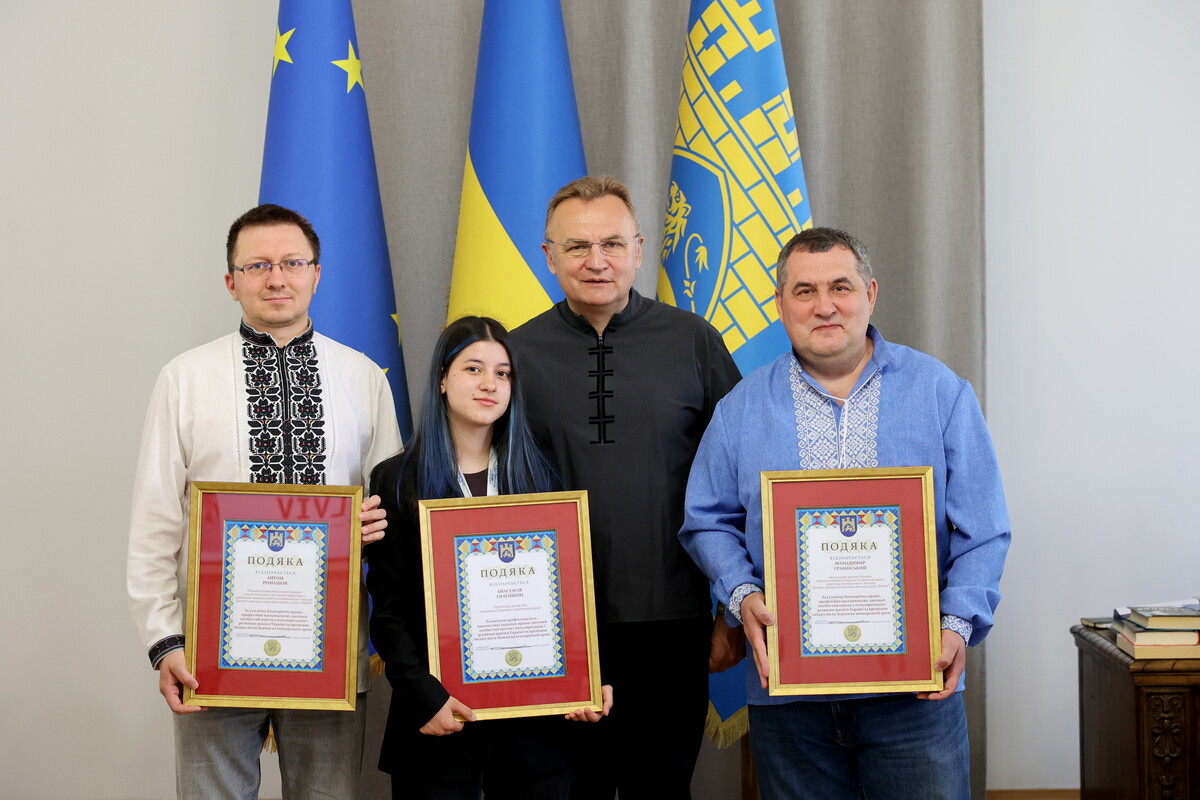
At the meeting at the town hall. On the right in the blue embroidered shirt is coach Volodymyr Hrabinskyi
- And how were you received at your local chess school?
- There’s a chess camp on there at the moment. And lots of children wanted to see me, have their photo taken with me...
- ...to touch you...
- (Laughs) No, just to have their photo taken and see me in person. They were really fascinated. I immediately remembered that 10 years ago, when I came to this school, I was 6 years old too. And now, 10 years later, I’ve won the European Championship!

- Tell me, did your heart skip a beat at any point during the tournament because things were going so well? Or, on the contrary, did you feel the thrill?
- I’m always excited. And this time, the excitement kicked in from the fourth round, because I beat a very strong player (Estonian Narva Mai, – Y.K.). Then in the fifth and sixth rounds, I managed to win as well. But after a heavy defeat in the seventh game, that excitement was gone. You just had to hang in there!
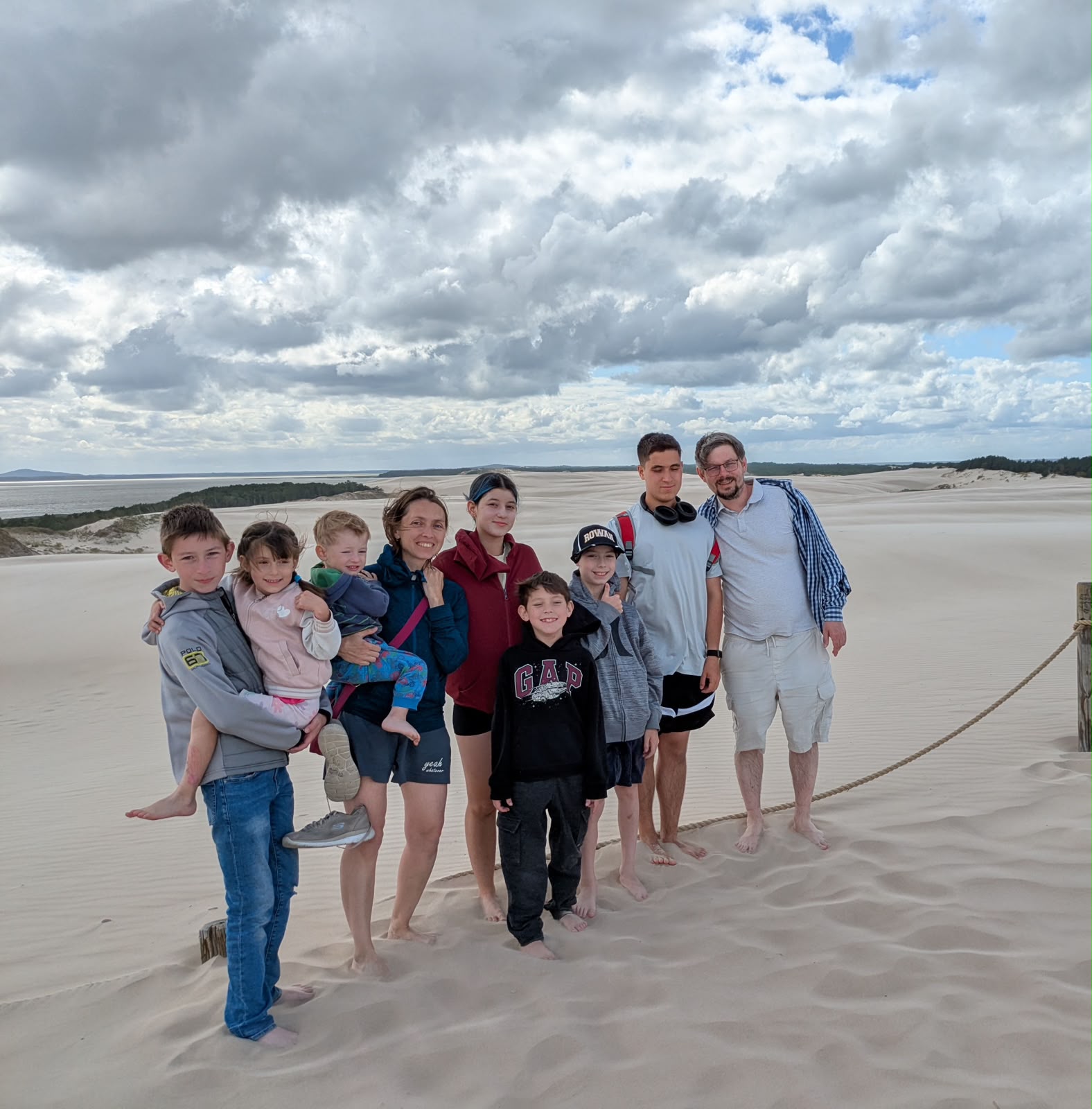
- But you didn’t just hold on, you pulled yourself together – and kept winning! It’s no wonder that following your success, the Secretary General of the European Chess Union, Theodoros Tsorbatzoglou, spoke with great respect: "Anastasia has one sister and six brothers; in total, eight children in this brave family are living in modern conditions, amidst air-raid sirens. That in itself is impressive, and in times like these, children better understand the meaning of life and the need to make an effort to build their future."
- That’s not quite right about the family composition; in fact, there are seven of us – five brothers and two sisters. I’m the second oldest: one of my brothers is two years older than me.
- Correction accepted! And this phrase from Mr Theodoros – that in such circumstances, hearing sirens every day, children better understand the meaning of life – do you feel something similar? Have you started to perceive life differently?
- I suppose so. I’ve come to appreciate more the opportunity to play chess – and so on. On the other hand, I live in Lviv, where the situation is still much better than in eastern Ukraine or in Kyiv. I have more opportunities to train.
- It seems as though Lviv is far from the front line — yet this war has caused a great deal of harm to both the city and the region. Have there been moments over the years when you were genuinely scared?
- It was scary in the early days of the war. And also — about two years ago, there was a strike nearby, about two or three kilometres from me. And there was another strike recently in the centre of Lviv, 100 metres from my chess club! I could have been at my lesson that day. But I wasn’t.

On that day, 23 March, Lviv was in turmoil; several dozen people were injured. Among other things, the enemy struck the historic city centre, hitting the Bernardine Monastery – a 16th-century landmark. Photo: Andrii Sadovyi
- But were there other children in class? And was it very loud?
- Yes, it was noisy. What’s more, the Ukrainian Championships were taking place in Lviv at the time of that arrival; they said it was just as noisy there.
- And how do you react yourself when you hear an explosion or an air raid siren? Do you go to the shelters?
- If there are explosions at night, I’m asleep, and I sleep quite soundly, so I don’t hear them. If it’s during the day, I stay calm — I’ve got used to it now. When we’re training, we go to the shelter. Otherwise, no.
- Do your friends from abroad ever message you saying: "Anastasia, what are you doing there? Grab your laptop, your clothes — and get over here straight away!"? Have you had messages like that?
- No, they haven’t. Lots of people have asked me what the situation is like in Ukraine, but no one has written to me like that.
- And what do you usually reply to these people?
- That it’s scary, that it’s hard; that they shouldn’t turn a blind eye to what’s happening in Ukraine. I explain that I live in western Ukraine, that my situation isn’t as dire as it is in Odesa, Kyiv, the east, or Kharkiv.
They probably understand as much as they can. But they still won’t fully grasp what people living in these circumstances are going through.
- And where are your children when there’s shelling?
- With us, with the whole family. They’ve got used to it too; if there’s an air-raid siren or they say something’s flying in, they go for cover.
- Does chess help during the war, during the air-raid alerts, to somehow escape into another world and not think about the danger? You get absorbed in the game — and forget about the anxiety...
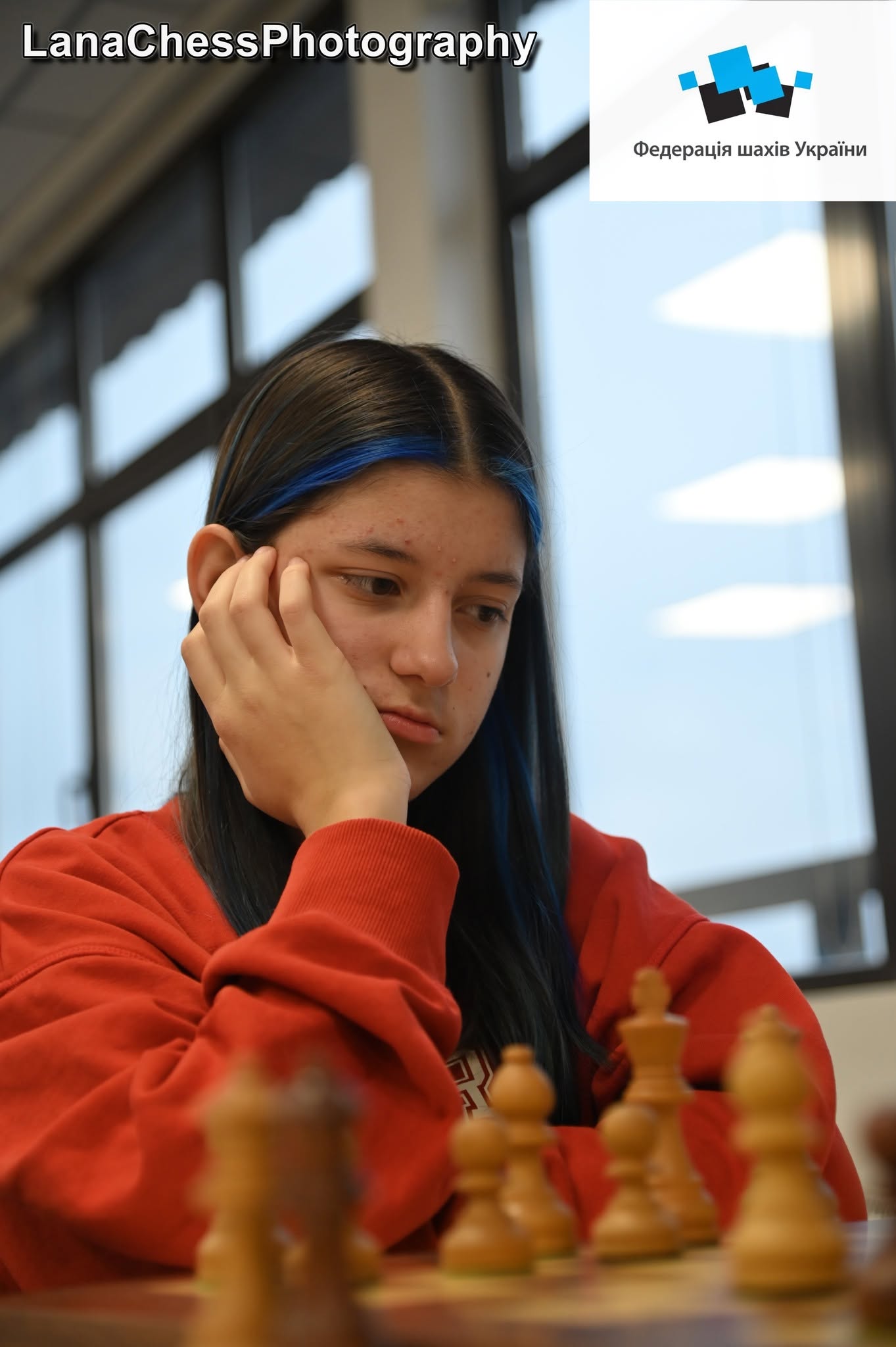
- I think all athletes are like that; they enter the world of sport and immerse themselves in it. For a couple of hours a day, you’re not interested in what’s happening in the world (smiles. — Y.K.).
- Do you support Ukrainian women in other sports? For instance, did you follow how Elina Svitolina, Marta Kostiuk and Oleksandra Oliinykova spoke so resolutely about the war and the shelling at the French Open? It not only prevents the world from forgetting this war, but also inspires their fans. What are your impressions of their performances?
- I’m generally a very sporty person, so I follow a lot of sport and support not only the women but the men as well. Of course, I followed our tennis players at "Roland Garros". I think they’re absolutely right to speak out about it. In any sport, it’s very important to remind athletes and people watching sport about what’s happening. So that they don’t forget.
- But in the comments on social media or under posts in the Western media, alongside the support from some people, others write: ‘Ukrainians, why are you picking on Russian athletes? Sport should be separate from politics!’
- (Seriously, with conviction) I disagree. Athletes still represent their countries. Sport cannot be separate from politics. You embody your country; you march out with your flag.
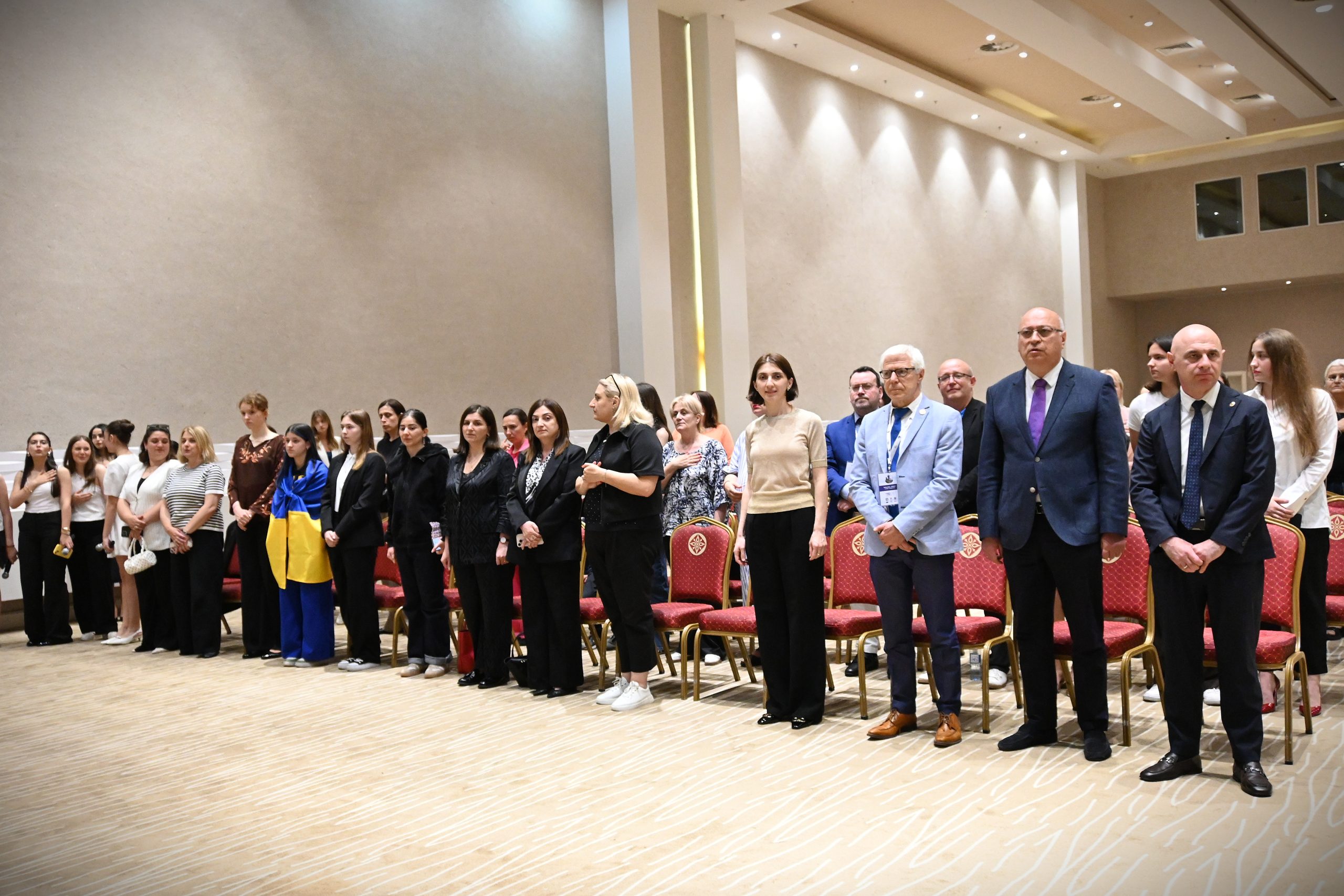
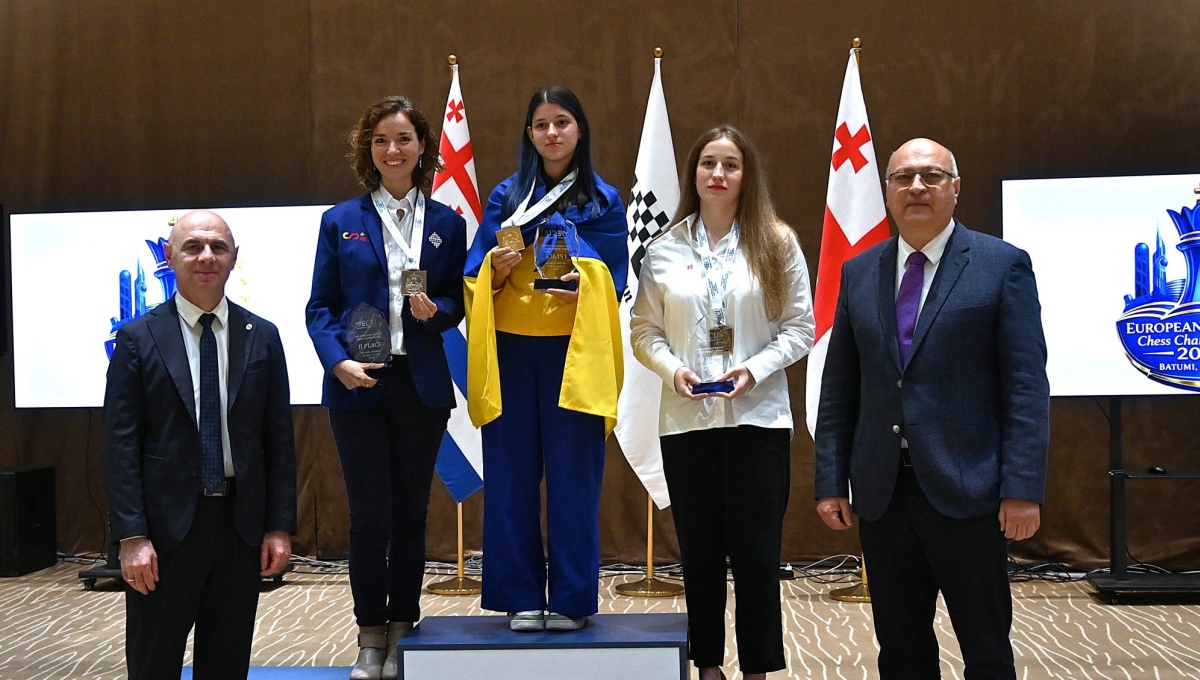
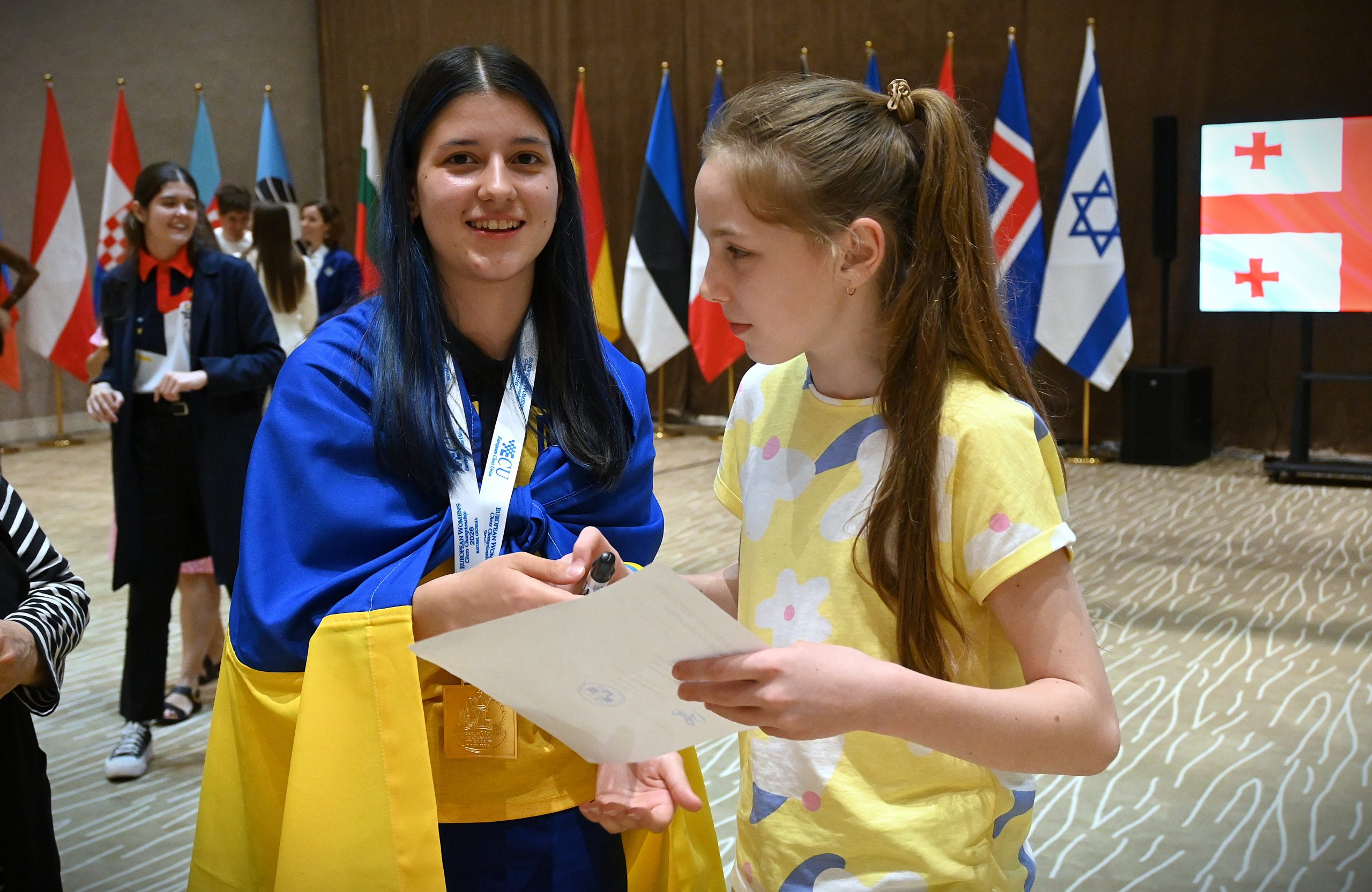
At the closing ceremony of the European Championships in Batumi
Like it or not, sport will be in politics! And the fact that the Russians say sport is separate from politics is wrong. They still march out with their anthem, flag and so on.
- Russian women are traditionally prominent in chess too. Even if they currently have to play under a neutral flag for other countries. Do you have a particular mindset when playing against them? Or do you feel like the Yugoslav grandmaster Svetozar Gligorić, who titled his book ‘I Play Against the Pieces’? As if to say, it doesn’t matter who the opponent is — I play against the pieces, leave me alone...
- For the most part, I don’t play against the pieces. But when I go out to play against Russian women, I feel a bit more desire to win and have extra motivation.
- And how do they behave in games against you? Are they restrained, or do they also have a particular desire to beat you?
- I’d say quite reserved. They can’t do anything about it, because they’re playing under a neutral flag anyway.
- Should we expect pro-Ukrainian gestures from Ukrainian chess players, similar to those made by our tennis players? Or is chess, by definition, a quiet sport, where people only fight for their country at the chessboard?
- We can expect it. And I think it should be done. Although there are fewer opportunities to do so in chess than in tennis – because we don’t have a press conference after every game, as they do after every match. But I still believe it needs to be done.
- And generally speaking – what can a young woman, who is best at playing chess, do for her country, which is at war? Well, apart from people reading ‘Anastasia Hnatyshyn from Ukraine has become European champion’ – what else can you do for Ukraine?
- I could organise an auction. Start a fundraising campaign.
- Let’s go back to your victorious European Championship – because, given the field of the tournament, you probably hadn’t planned on winning a medal. By the way, what goal did your coaches set for you before the tournament?
- I have two coaches – Volodymyr Oleksandrovych Hrabinskyi and Adrian Bohdanovych Mykhalchyshyn. Adrian Bohdanovych said it was time to compete in the World Cup – so I needed to try to stay focused. So I set myself the goal of trying to fight for a place in the top ten. And before the tournament, I would have been very happy just to make the top ten!
- Why do you think your breakthrough happened at this particular tournament? Did the quantity of work on chess translate into quality?
- A great deal of work — including psychological preparation — has been done since the start of 2026. Perhaps it has all paid off...
- And specifically, what did you need to work on psychologically?
- How to get myself in the right frame of mind – because I have this thing where, after a defeat, I can’t pull myself together for a long time; it keeps going round and round in my head – and so on. And also — how to handle critical positions when you’re short on time during games and have so much to calculate. In situations like that, you need to clear your mind of distractions — just focus and concentration! I’ve worked on that a great deal.
- Do you ever find yourself in a position where you have a significant advantage, and you’ve even mentally marked it as a win — yet you still end up failing to win? It’s well known that in chess, the hardest thing is sometimes to win a winning position...
- That happens to me quite often. Lately, admittedly, less so, but when there’s less time (rapid, blitz) — then very often.
- You’ve been training at Garry Kasparov’s Chess Academy for several years now. Did he congratulate you on your gold at the European Championship?
- Yes.
- What did he say?
- That I’ve done well, and he’s really looking forward to our next chess camp. And that I need to keep working hard, because there are still plenty of goals ahead.

Photos from the Kasparov Chess Foundation Session in Croatia by Lennart Ootes
- I’m not asking you to reveal any secrets — but could you at least tell me what Harry Kimovich advised you at the camp (just as his mentor, world champion Mikhail Botvinnik, once advised young Garik)?
- He advised me to improve my calculation of variations. Calculation is very important in chess. There are people who say: you should play intuitively, and then sort things out during the game. But at Kasparov’s school, they insist on one thing: you must calculate — and only then make your move! It was at the Academy that I realised my calculation skills were a bit lacking. Because I was used to playing intuitively — and only then figuring out what to do... But there, at the Academy, they demand a great deal from me.
- Do you dream of making the Ukrainian national team for the Autumn Olympiad?
- Yes. I’ve already made the team. I’m really looking forward to competing.
- By the way, will the Russian women be playing there?
- I don’t know. I hope not.
- Why is that?
- I don’t think they should be playing there.
- Tell me, has anyone from Russia or Belarus ever written to you to apologise for Russia’s aggression?
- No. Not once in four and a half years.
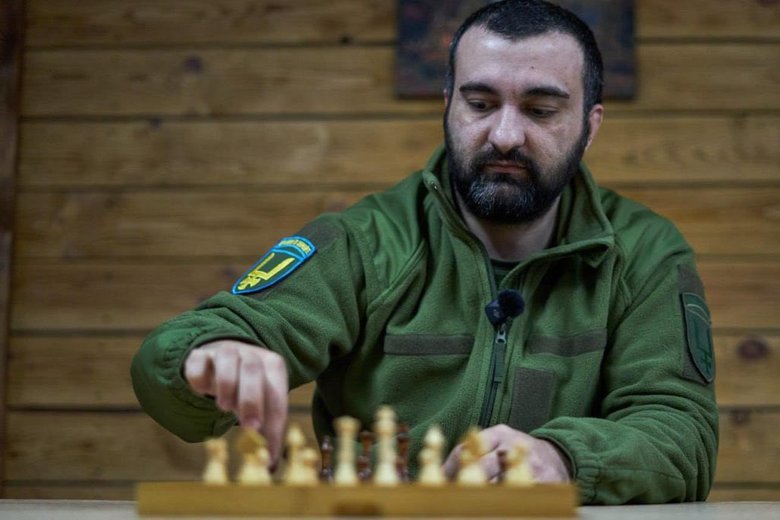
- You have before your eyes the example of Ukrainian grandmaster Ihor Kovalenko, who had been fighting for several years, then returned and performed brilliantly at the European Team Championship in Batumi itself.
Have you read his interview?
- I have. What struck me most, I suppose, was that he can’t sleep in a bed.
- ...yes, and in the hotel room he made a bed for himself next to the bed, because after the front it felt strange to him to sleep on a soft surface.
Ihor is staying in Ukraine, but most of our players live, play and train abroad. Don’t you feel like moving there yourself?
- No. I love Lviv very much; I have my family here, my coaches, my whole life is in Lviv. I love travelling, but home is still the best.
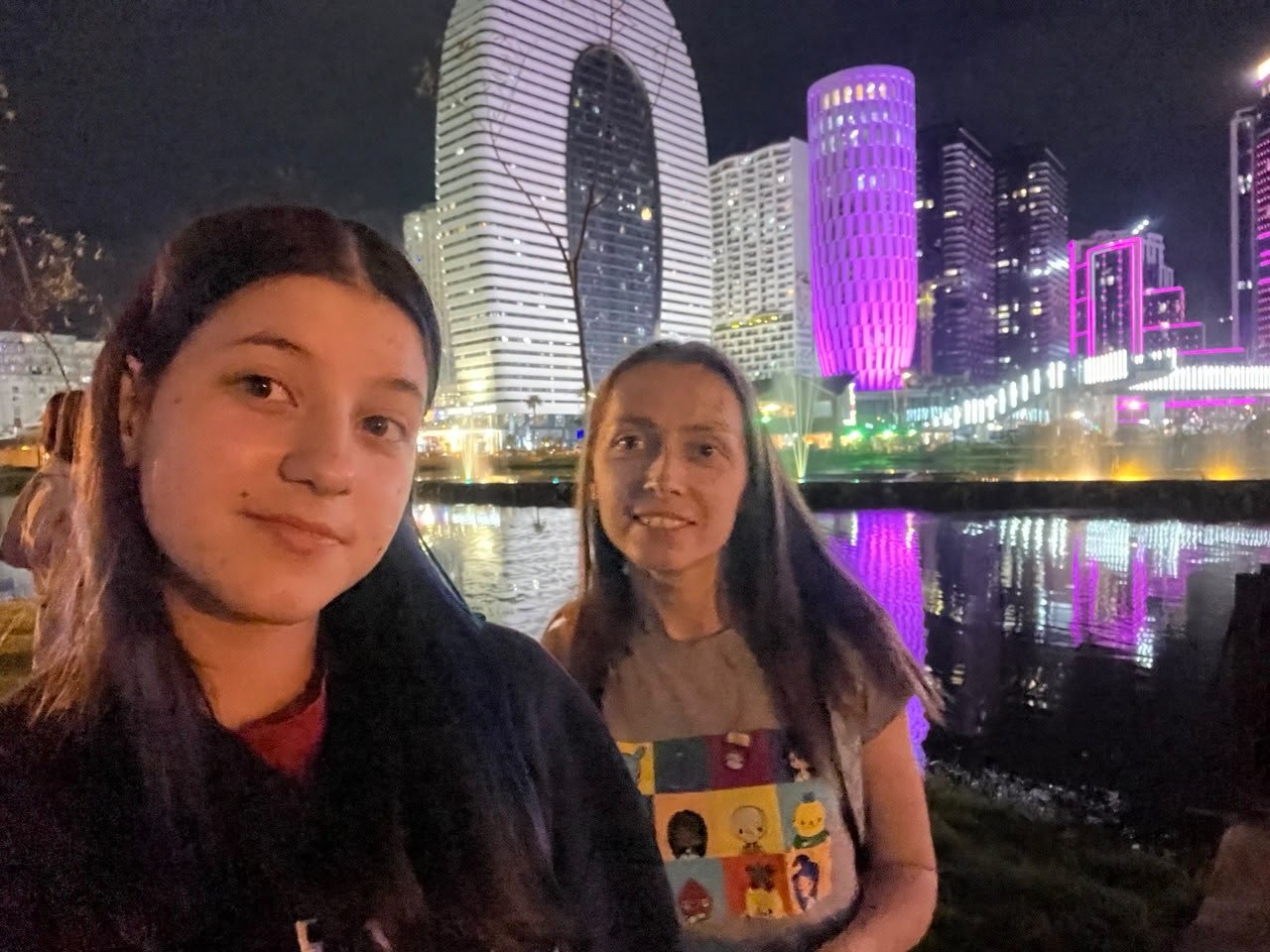
- Does your mum go to tournaments with you?
- We take turns; sometimes I go with my grandad, sometimes with my dad, but mostly with my mum.
- Don’t your younger brothers get jealous that their older sister gets all Mum’s attention?
- They’ve got used to it (smiles. — Y.K.).
- What did you and your mum bring back for them from Batumi?
- Lots of churchkhela. And for my eldest brother, some spices, because he loves cooking.
- Nastia, can chess fans in Ukraine be sure that, after such success, you won’t be struck by star syndrome? Because now you have to maintain your high rating — and that might be even harder than achieving it.
- Star syndrome? No, I’m not at risk. As for the rating, I know it will be difficult to defend. And generally, after this victory, the year ahead will be very tough. Because people will have very high expectations. And my rating is very high right now. I realise I’ll have to work five times harder to stay where I am.
- Well, then we can rest assured about your mental state. And from the point of view of physical fitness, will you be able to cope with this path? Because it’s only people who know nothing about professional chess who think that chess players are nerds and don’t really need to be fit. And then they’re surprised when they hear how many kilos the contestants in world title matches lose.
How do you approach your physical condition? Do you do any sport?
- Yes, I love sport. At the moment I’m doing aerial yoga and I walk a lot around Lviv. Physical activity is generally very important in chess to build stamina. Many people go running. I don’t like running, so I walk instead. And I play chess for at least four hours a day, sometimes even five or six. The main thing isn’t the quantity, but the activity.
- Did the city council give you any extra grants?
- I’ve received a letter of thanks from the mayor, and there’ll be a bonus as well.
- What will you buy with the bonus? Or will you give the money to your mum?
- No, my parents let me manage my own money. You know, I really fancy going on holiday and visiting Paris. So I plan to spend the money on travelling.
- That sounds great! Where exactly in Paris do you want to go?
- I want to walk around the famous sights. I also want to visit the Dior Museum. And, of course, go to Disneyland!
On 12 June, Anastasia Hnatyshyn turned 16. Congratulations from "Censor.NET"!
Yevhen Kuzmenko, "Censor.NET"
Photo: from the Hnatyshyn family archive, European Chess Union


