



Major Oleksandr Shyrshyn: "Those who send people off in droves aren’t held to account. Everything’s fine with them – it’s war, after all."
The courts have found no fault with the former battalion commander of the 47th Brigade, who is being persecuted for speaking the truth about ill-conceived operations and senseless loss of people. At the same time, Oleksandr does not feel the need to resign from the Armed Forces of Ukraine; rather, he wants to bring about change and see those responsible for the deaths of dozens of people during the encirclement receive just punishment.

If a soldier starts talking about the way things are done in the army and expressing his views on the command structure and certain situations he has witnessed, once he’s been discharged, rumours start flying from all sides: he’s just jealous, he wasn’t offered a post, he wasn’t given a rank, why did he keep quiet whilst he was still part of the system… If, on the other hand, a serving officer dares to voice dissatisfaction with what he is facing – with senseless orders, or the fact that those responsible are not punished for failed or poorly planned operations – the rhetoric is different: he’s playing into the enemy’s hands by revealing the truth; why air our dirty laundry in public? We should sort things out after the war; he’s labelled an ‘undisciplined officer’…
But we have no time to wait. It is clear that the army should have changed a long time ago, and much has indeed changed within it. But, as a rule, this has happened not because of, but in spite of the system. Unfortunately, quite a few senior commanders have been dragging practices from the Soviet era into our army; unfortunately, lies and distortions of the situation at the front are leading to losses of both personnel and territory. Naturally, everyone wants good news and our victory, but this will not happen unless we assess the situation honestly.
At present, our army consists not only of career soldiers who were trained for this and who chose this path for themselves as children. Many of the officers who had begun to form the backbone of the new Ukrainian army were lost to the war, particularly in the first few months following the full-scale offensive. At that time, the military spoke frequently of a shortage of platoon, company and battalion commanders. They began, quite literally, to train these roles from among the motivated civilians who had come forward to defend the country. And now we know of many examples where such former businesspeople, successful philanthropists, educated managers and astute entrepreneurs have gone on to lead large units, thereby introducing modern management methods into the army. But, as experience shows, not all commanders are happy about this; far from everyone wants change. This, of course, irritates these new officers. And they do not hold back. They tell the generals exactly what they think, right to their faces. There are not many of them, but they do exist.
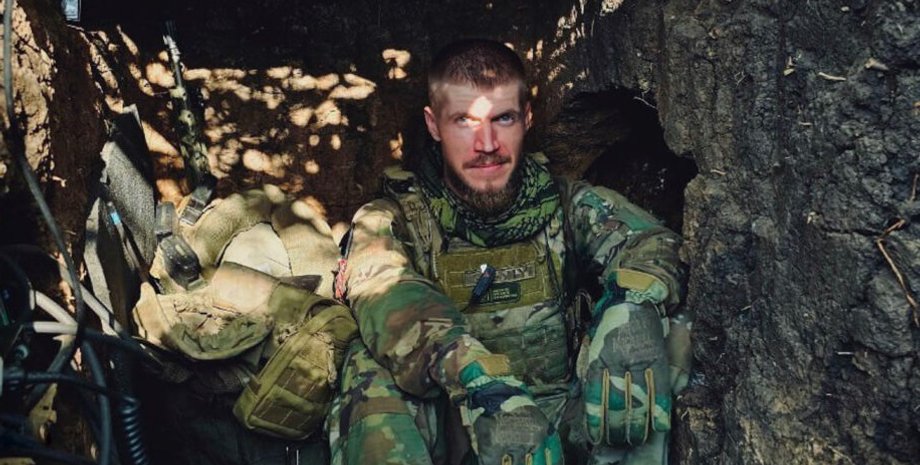
Oleksandr Shyrshyn is the most striking example of such an officer, who, following his public statements and his listing of all the problems he faced in his role as battalion commander, is being, as they say in the army, ‘multiply by zero’.
A few days ago, we met Oleksandr in Kharkiv, where he is currently, as he puts it, ‘shuffling papers’. He, like those who have the courage to disagree with the ‘general’s party line’, has been shunted into a post where he can neither make decisions, nor influence the course of the war, nor communicate with the troops… But I can say with certainty that this has not broken Oleksandr at all, nor has it affected his motivation to serve in the army. What’s more, the very first thing I asked him was whether he might consider leaving the Armed Forces of Ukraine, but the officer categorically refused. The reason why is explained in the text.
"I HAVE NEVER SCREWED ANYONE OVER: NEITHER NEIGHBORING UNITS NOR MY COMMANDER"
– Let’s make one thing clear straight away: I’m not building a career, I’m not clinging to positions or ranks, which is why I’m prepared to speak openly about the way things are done in the army… I won’t say that I’ve kept quiet in the past. I have had, and still have, certain principles when it comes to conducting combat operations. I have never in my life misled anyone – neither my comrades nor my brigade commander. If my men abandoned their positions, I would say: ‘My men are abandoning their positions’, however painful it was for me to admit it. If I were to be stormed, if the soldiers abandoned their positions or refused to carry out a mission, I would say exactly that: they’d refused, they hadn’t done it. It was unpleasant for me as a commander; I realised that this was my mistake, that I couldn’t influence everything. And at the same time, I understood that if I didn’t do this, I would be putting the people standing to my left and right in a difficult position. For me, this was always a matter of principle.
The second important thing has always been to stand up for my people. I valued the lives of my comrades and subordinates; for me, this is an immense resource and a huge responsibility. So, when a task was set, I would ask questions. I understood my capabilities; I knew whether I could carry out the task or not. If I couldn’t carry it out, I would speak up about it, suggest an alternative solution, and look for other options. If they wanted me to carry it out, I would ask for help to ensure I was provided with what would enable me to complete the task. And that’s why I always stood my ground.

– You joined the army voluntarily…
– A month before the full-scale offensive, I signed a reserve contract with the 80th Airborne Brigade. So I knew which brigade I’d be assigned to if necessary.
– Did you have any combat experience at that point?
– No.
– Did you receive your officer’s rank whilst in training?
– Yes.
– Why did you sign a contract with the 80th in particular?
– I was looking for a unit closer to where I lived. Besides, at the time I knew that the 80th was one of the best brigades in our army.
– So you were due to be deployed to some pretty hotspots with them in 2022.
– And I did. One battalion was in the Mykolaiv region, the other in the Kyiv region. But I had to wait a month for the combat unit to be formed. Even before that, however, I’d made arrangements with another battalion and was sent first to the Kherson region, then to the Donbas…
– And when did you see your first battle, when did you experience the war at close quarters?
– It was in the Hirske–Toshkivka area. We were holding the flank whilst our troops were being withdrawn from Zolote. A fairly large group of f#ckers came at us, and a firefight broke out. That was my first and most unpleasant experience.
– You were supposed to fight with the 80th Brigade in the Serebrianskyi Forest…
– Yes. I was standing a little higher up when I was hit. My position was near the Svatove–Kreminna road.
I had a brilliant company sergeant major – a young lad, but experienced; in short, a really great bloke. He’s still serving in the 80th Brigade. I had an amazing comrade-in-arms – ‘Chemist’, a scout. He went missing in action; he’s most likely killed. He was the sort of person I’d ask a lot of questions of; he’d show me everything. That’s how I pieced together a more or less complete picture – based on their experience, on what I’d seen, how they operated, how I operated – and I had a rough idea of what I needed. Although, again, if you compare what I knew back then with what I know now – they’re worlds apart… It seems to me that if I’d had back then the knowledge I have now, or, say, a year ago, I think I could have achieved much better results. Even though our results had already been pretty good.
– How did you end up in the 47th?
– After the Izium area, during the Kharkiv operation, we were advancing towards Svatove-Kreminna; our unit ran into some difficulties and started to fall apart. We had a decent unit, good lads from whom I learnt a lot, who’d been through 2014 – ordinary soldiers, sergeants, very down-to-earth people. I was actually lucky to have ended up there. But certain problems arose, which I reported to the command. As a result, a conflict situation arose. In front of everyone, I reprimanded the deputy brigade commander for his inappropriate behaviour towards my fighters – the lads who had only just come out of their positions. Other officers were present as well. And he decided to send me into ‘exile’, for re-education. So I decided to request a transfer. At that time, the 47th Brigade was, I suppose, the one receiving the most media attention. I knew Markus, got in touch with him – and arranged the transfer.
– What was your rank when you joined the 47th?
– As a platoon commander. I was immediately offered the post of company commander, but I said I wouldn’t be up to it. I believe it’s a position of great responsibility, and people need to have certain skills and knowledge before agreeing to take it on. At the time, it seemed to me that a company wasn’t for me. I was happy enough as a platoon commander, running around the trenches and through the woods. But over time I became a company commander and, bit by bit, worked my way up to battalion commander.
At first, we were on a training exercise in Germany. Not everything we were taught could be applied in our circumstances, but… Firstly, we went through a certain process of team-building – as a company, first and foremost; for me, that was very important. Secondly, there was the new equipment, the ‘Bradleys’, and how to use them. We studied these vehicles and drove them. I established a good rapport with the instructors. We probably did more shooting than any other unit in the brigade and carried out a wide range of exercises. I really enjoyed it. I also worked closely with the person in charge of our company. He’d simply come up to me and ask: ‘What do you want? What do you need?’ – and we’d tweak certain elements of the programme. We couldn’t change everything, but we adapted certain parts of the programme to suit what was important to me, taking into account my experience and my understanding of combat operations. So, in my view, it was useful.
"WE REACHED THE DESIGNATED LINE WITHIN A WEEK – WITH MINIMAL LOSSES IN EQUIPMENT AND PERSONNEL, BUT THE HIGHER COMMAND WAS DISSATISFIED – BECAUSE WE DIDN’T ATTACK THE ENEMY HEAD-ON, BUT AROUND THEIR FLANK"
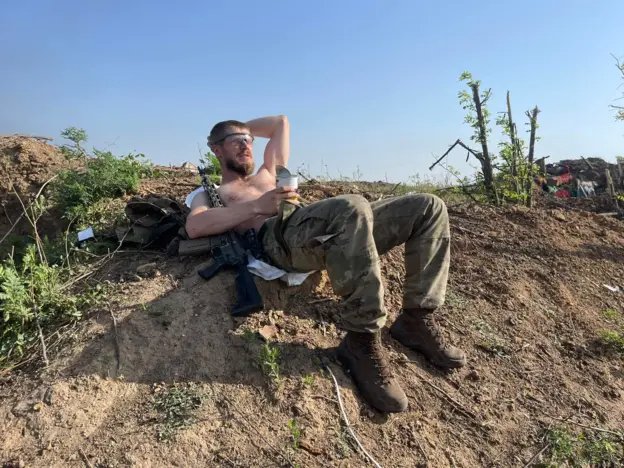
– There’s now increasing talk that the operation in the Zaporizhzhia sector was, in many respects, poorly planned, with units advancing head-on into minefields. When did you realise that something was going wrong?
– Oh… Although there were certain problems, I still didn’t lose hope that we’d manage to achieve something. Perhaps that sounds rather naïve… I realised that, due to a leak of information, they were expecting us. At the same time, I understood the level of our training, equipment and capabilities. That gave me hope that we’d manage to achieve something. It was obvious that we wouldn’t complete the task we’d been set – we wouldn’t recapture Tokmak or Melitopol, for example, in three days. But I realised that something could still be done. If we disregard the fact that those f#ckers knew where we were heading, that we’d chosen the wrong direction, and that there were a whole host of blunders in terms of planning, I’d also add the lack of combat experience among most of the units and personnel who were sent in to carry out the operation. That’s the first point. Secondly: if we take the 47th Brigade, initially it was made up of motivated people, but later on it was topped up with just anyone. Moreover, there came a point when the people in leadership and command positions—who were supposed to direct the battle—were unable to do so. It’s not that easy to command a battalion, nor is it that easy to command a company. And this means that, in a complex situation, people are unable to make quick decisions.
– Was control lost?
– Control was lost, or it was completely absent at certain stages. Some links in the chain failed, which caused us further problems. One such situation arose precisely when my company was storming the enemy’s company strongpoint. I now realise that this was a task for the battalion, but my company carried it out. Had I received support from the battalion at that moment, I think I wouldn’t have lost my men, and we wouldn’t have abandoned the line we were storming. There was absolutely no command from the battalion – simply none at all; I don’t know where the battalion commander was at that moment, or what he was doing. The deputy battalion commander, whom I approached and told that I needed basic supplies so that I could help my fighters, who had been cut off from everyone, said: ‘Yes, yes, everything will be supplied’ – and nothing happened. My men had to make their own way out, which was extremely difficult; some of them were killed, and some were ‘were three hundred'. Consequently, morale plummeted.
– But you kept trying to move forward. How did you rally those who remained in the ranks to carry out a mission from which people never returned?
– In my opinion – at least, I’ll be speaking about my own company now – the men were hugely motivated. They were ready to work and fight, despite all the difficulties we faced. Shortly after that tragic incident in my company, we were given a new, very difficult mission. But we had to act differently. I went to my men – I’ve never hidden anything from my fighters – and said: ‘Look, this is the situation; there’ll be no support in terms of evacuation or supply of ammunition; at most, I’ll be able to send a vehicle out twice a day.’ I asked: "Are you ready?" Oleh Sentsov played a major role at that time; he said: "I’ll go," and the others followed suit: "We’ll go too." The men gathered and set off. That was our first successful mission, carried out brilliantly, despite the lack of time for preparation. In short, it all went really well.
– Did you hold your ground, or did you fall back?
– Yes. After that, we continued our assault operations. But after that, I’d go in with my lads, leading part of the assault with some, and bringing in reinforcements with the rest. Basically, we advanced bit by bit. Once things started to go our way, our motivation soared.
The understanding that something was wrong came when we started advancing in columns, when it was impossible to maneuver those columns because, first, there were many of them; second, they were large; and third, they were waiting for us. In general, restricted movement, minefields - there were many factors indicating that we needed to change our approach. We could not act the way we wanted to, and we were not achieving the objective we had been given. We needed to change the planning.
– And in that situation, as you understood it then or understand it now, who was responsible for changing the planning? Who should have done it, who could influence it - the brigade commander or higher command?
– I cannot say, but I know for sure that Corps Commander Zubanych really sent people to slaughter. There were many things like that. I know that the then commander of our brigade, Oleksandr Sak, tried several times to stand up for us, to explain that the tasks were too difficult... In our battalion, they removed the battalion commander, and there was no command and control at all. A 23-year-old guy fresh out of the academy was left there, very responsible and sharp. I started helping him because there was no one else; he was alone.
They changed our brigade commander and set us the task of assaulting head-on. I said: "For five kilometers, we carried out these pointless frontal assaults - I lost a lot of people, a lot of equipment. Has life taught you nothing?" Eventually we sat down, and I said: "We are not going to do it that way. We will go in from the flank." We planned everything, how exactly we would drive in. We went in, and the b..tards started running...
– So if it is planned properly, it works that way?
– Yes. The only thing is that we did not reach the line we had been assigned within the deadline we had been given. But we already had a certain foothold to build on and move forward from. Then the hysterics started: they came at me, fuming: "We told you to go straight in head-on, and you did not do that..." In short, we took the designated line within about a week, maybe a little less, but we took it - with minimal losses in equipment and personnel! We accomplished the task! And we accomplished it, in my opinion, properly and effectively. But we planned it at the battalion level. Although, again, we heard dissatisfaction from the command.
"THERE CAN BE NO DEMOCRACY IN THE ARMY"
– When did you see that neighboring units or units nearby were lying about what was happening? At what stage did this begin?
- It happened frequently right from the start and continues to this day. The first time I encountered this problem was with the 80th Brigade. It was a difficult situation; we had to improvise everything on the fly. I walked in and asked: who’s where, where are our people, how many enemies are there, where have they advanced to – just to get a grasp of the situation. I wasn’t given all the information at that point. I was still planning where we could go and how to deploy our positions. I asked who was stationed nearby – they told me: ‘Such-and-such brigade is here, and such-and-such over there.’ But in reality, there was no one there anymore; everyone had fled, and no one had reported this to anyone. We drove into an ambush, our convoy was wiped out – and I sustained my first injury. That’s when I was absolutely flabbergasted – they were so careless about the fact that, because of an abandoned position and a failure to report, or incorrect information, someone could die… After that, we encountered similar situations in the Kharkiv region, but that was more a problem of information sharing and coordination between units, rather than anyone running off somewhere. And then – in the Zaporizhzhia region. Exactly the same situation. When we’re on the move, and I know the 33rd Brigade is nearby, my lads spot a target, and I say: ‘Don’t shoot, they’re our own,’ because I think it’s them coming through. It turns out they were bastards, and we didn’t kill them – in fact, we ended up rescuing them ourselves. Then there was a situation where we took up a certain line of defence in front of Robotyne; the 10th Corps was supposed to advance through our positions. And they ‘advanced’ – storming my positions and killing three hundred of my men. Things like this still happen; nothing has changed. But I’ll put it this way: these problems have been present in all the world’s armies throughout history. It’s the very principle on which the existence of an army is built. As the Czech writer Stanislav Komárek said: the army is the most incomprehensible and senseless formation that could possibly exist – but only in peacetime. That’s exactly how it is. As long as there is war, society needs an army, it needs troops. But in peacetime, who knows what happens. In quiet times, we should have been preparing for the possibility that something might happen, figuring out how to act, and training people. All of this is overlooked, and then this situation of chaos sets in, and no one can cope…
– And they simply start looking for someone to blame.
– Yes. Everything is built on authoritarianism, although the army cannot exist without it, no matter how much we might want otherwise. There can be no democracy in the army. A democratic army can exist only in a conscious society that is ready to give its life for its country or fight for it.
– Could you have been discharged on medical grounds because of your wounds?
– I was not going to do that, and I did not want to. Somewhere deep inside, you know, I have this understanding that there is still something I have not finished. It does not let me give up, although I often want to. But there is a certain motivation: there is still something I have to do.
– To do something - in the sense of changing things, pushing it through, so that this no longer happens, so that people start talking about it, so that they are not afraid to speak?
– This is part of the elements I have to influence, at the very least.
***
– It is certainly no secret to you that everyone is now saying that those who are in the army are serfs. And you are precisely an example of someone trying to fight that serfdom where it should not exist. Why does the command want there to be serfs? It could be an assembly of free people. And it should be.
– It should be. But we see who is currently heading the military; we see the methods people use and how they bear no responsibility whatsoever. We see that only those who are loyal receive favor, certain support and supplies, and that is it. We see the example of the assault regiments...
– ..and what it has led to. Just the horror that has finally come out into the open.
– I think not everything has come out yet. And this is being covered up by the Commander-in-Chief. A person is using his authority to cover up crimes. No one is being held accountable except those who are unwanted, those in lower positions. It all comes down to some ordinary soldier or sergeant who, for example, failed to hold a position. Even though he could not have done it, because someone messed up the planning, supplies, support, reinforcements, rotations, and everything else. But he will be the one to blame. And so on. Meanwhile, those who make and approve decisions, who send people to their deaths in batches - they are fine; "this is war."
– And they also make money from the war. Let us be honest...
– There is enough evidence of that. The question is whether law enforcement agencies are ready, or whether they want, to deal with it. Because at this point, I do not see such a desire. In my entire life, I have never stolen anything or pulled any schemes. The first thing they wanted to hold me accountable for after my post came out was pots! Representatives of the Military Law Enforcement Service (MLES) came to me and went around the units. Later, people told me that they were demanding: "We need someone to make a statement against Shyrshyn. Who is willing?" But people did not agree. Then they started looking for some mistake - they found nothing. Then they started looking for money - where and how I had allegedly made something on the side. But I always tried to build the fairest possible system for receiving payments. It always hurt me when one of my infantrymen received the same amount as someone in the rear. I cut payments to officers, cut payments to sergeants, and tried as much as possible to provide for those carrying out combat missions, those in the worst conditions. When they found no financial grounds either, these commissions started looking for missing property. They found some.
– You can always find something; everyone in the army knows that.
– Part of the lost property was pinned on me when I took over as battalion commander. It turned out that I was responsible for pots that were not in stock when I assumed the position. I had to pay money for that. They also found about 200 million worth of spare parts missing, but those were spare parts exclusively for Bradleys. People repair vehicles in combat conditions, replace parts, and do not always have time to write them off. But who am I going to sell Bradley spare parts to, and where would I even sell them? Tell me.
– There is certainly no line of buyers waiting for them...
– They kept pressing me and wanted to pin it on me. But it was sorted out; the guys wrote them off.
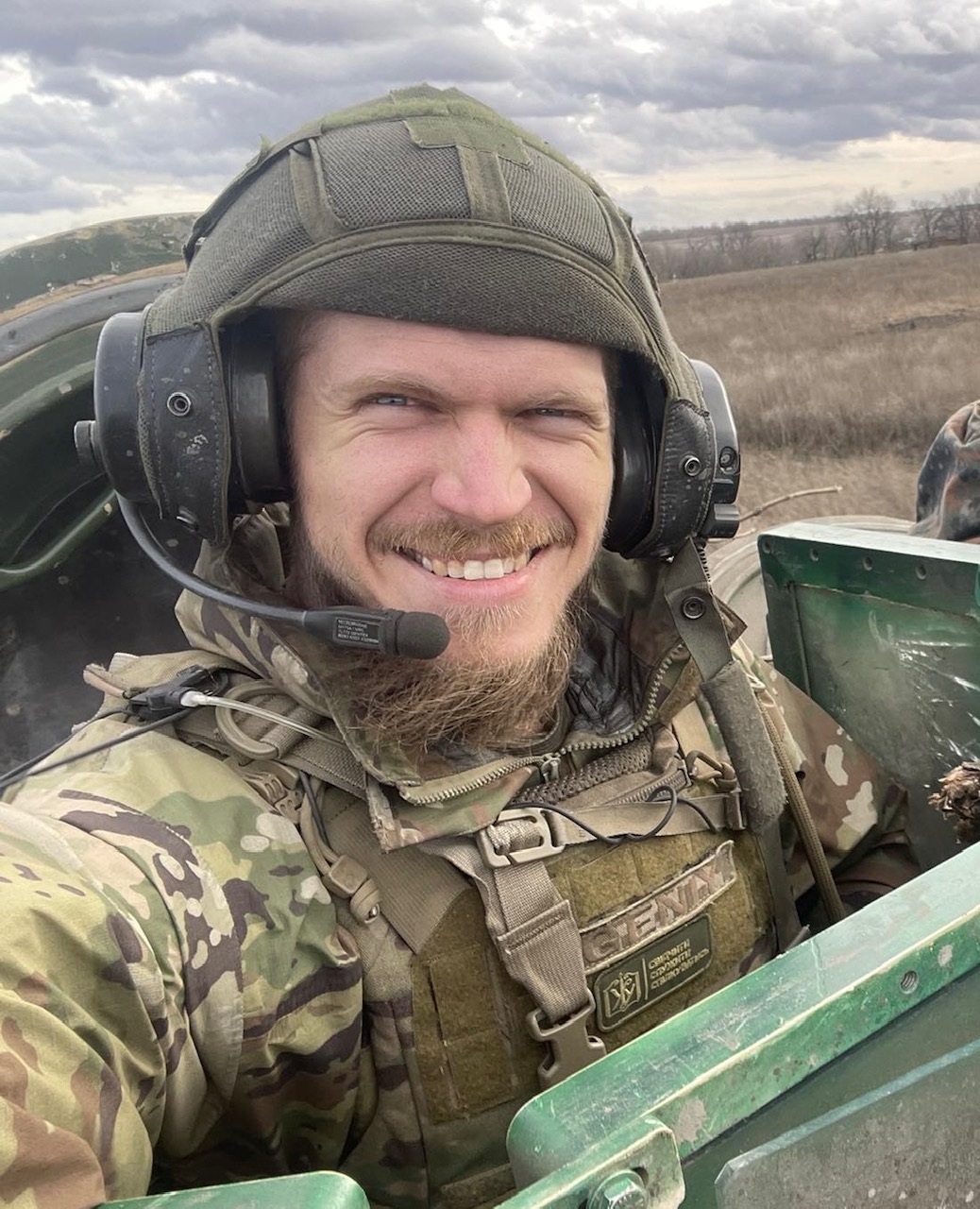
– Were there people who came to look for compromising material on you, but told you: "You wrote everything correctly, you are right. But we have to do this"?
– Very few. Almost none. There were people who wrote to me and thanked me, even people in high positions, with high ranks. Members of parliament wrote to me; some offered help. But the general mass of people, including those who, in my opinion, should have taken my side, remained silent. That is one thing. Second: Syrskyi’s lapdogs started writing all kinds of filth, which made it very clear for us to see who was working on which side, who was loyal to the Commander-in-Chief.
– I once saw, from one brigade commander, an instruction sent down from above on how a specific person should be attacked on Facebook. Then I saw online who was carrying it out. But I also know those who refused and did not follow the instructions. Those "requests" even specified: "The text should be approximately like this" - followed by several paragraphs of what in journalism is called a hit piece.
– There was a similar instruction against me as well. I was told about it. Skelia did the worst job of carrying it out - they did not even change the text they had been sent. And now they ask why I insult them so much, why I treat them that way, and so on. Then I was told that Syrskyi had been shown the results of the campaign and backlash around me. They saw that they were losing with their actions. But when Syrskyi was asked: "What do we do next?", he said: "We continue."
"NEAR AVDIIVKA, MY UNIT KNOCKED OUT 67 PIECES OF ENEMY EQUIPMENT WITHOUT HAVING ENOUGH FORCES AND MEANS"
– Did you take part in the Avdiivka campaign?
– Yes, my battalion of the 47th was the first to go in there. I came in for coordination - and saw how incompetently everything there had been set up, you cannot even imagine... My people were still holding positions in Stepove when Avdiivka started collapsing. Stepove was in a pincer. We held it for a very long time, killed a hell of a lot of b..tards there, knocked out equipment - 67 pieces, I think - despite not having enough forces and means. In short, we were hammering them there...
– Are those 67 pieces confirmed?
– Yes. It was possible to count them there, and I sat and counted every knocked-out vehicle. Not all of it was done by my battalion; part of the work was done by the 110th Brigade; they definitely destroyed a couple of pieces. But the vast majority were knocked out by Bradleys and by my infantrymen. Some blew up on mines because my sappers were working - they should be given credit; they were laying TM mines right under the b..tards’ noses, absolute beauties. One attached fighter of mine went in and almost threw an anti-personnel mine into a b..tard’s hands. The guys did an awesome job. Then we pulled back and gradually began losing our territory. Given the forces and means we had, we acted very effectively.
I will tell you a story about Avdiivka. We went in and had to assault and retake certain positions in Krasnohorivka, because it had just been lost. We were given a task that was impossible to carry out with the forces we had. That is one thing. And second, the situation we were being given did not correspond to reality. I spoke at the time with the corps intelligence chief, who did not know what was happening in his sector at all, he had no clue whatsoever. When I asked him basic questions, he could not answer some of them, and answered others as if I were some person off the street who understood nothing about the army. I asked: "How many assets will be involved in support of my operation?" He said: "All that are available." I said: "That answer does not work for me, because all that are available... You may have three of them, and that is not enough for me. Or you may have, let us say, fifty, but you will not use them for me." He said something about how many guns he was providing, and I started laughing, because what he had drawn up for me was unrealistic. I said: "Fine, how many shells are you allocating for the task?" He moved his fingers around: "500 here, 500 there, a thousand over there. Will that do?" I started laughing in his face and said: "No, it will not. This is not my first day in the army, and not my first day at war. First, you do not have that many shells; second... In short, given all the restrictions, it is impossible, simply impossible." Back then, we drove around to a lot of units to gather information about what was really happening in the area where we were supposed to operate. We came to our brigade commander with a report and started explaining that everything was not at all the way it had been presented to us. The positions they were saying were empty were occupied by the b..tards, and where our people were supposedly standing, there was no one... In short, there were a lot of things like that. "Yes, we already know." - "Then assign me a task based on the data that actually exists now, not on what was there in the morning." In the end, it turned out that with our own forces we could carry out only part of the work. We went to carry it out. And at that moment, a column had lined up in Yasynuvata - almost a hundred pieces of equipment, and no one said anything about it. At that time, we had no way to watch the live feeds. The commander of our battalion was somewhere coordinating with other units, and I had to do part of his work. So my last vehicle moves out, and I see that literally right behind it, a column of enemy equipment is moving. I was stunned and asked: "How did this happen?" - "They had been preparing to leave Yasynuvata since three in the morning." No one told me about it; there was zero information, nothing at all. Had I known this was going to happen, I would not have sent my people! In the end, we lost three squads out of six. Two squads were partly intact, partly wounded; we recovered them. And one squad did not dismount, which is why they stayed alive.
Everyone understood that it was a massive enemy offensive. Everyone was stopping it - the 110th, us, the Presidential Regiment... Tanks, Bradleys, FPV drones, ATGMs - everything we had was working. And the result was awesome; I do not know how much equipment and how many b..tards were killed that day. But... The thing is...
– ...that this is not how it is done.
– Yes. There is no point in sending 20-30 people to assault three positions if a column of a hundred vehicles is moving. This led to losses. It was after that that everything kept snowballing until we stabilized the sector near Stepove. That was where we unlocked the potential of the Bradleys; that was where the crews probably realized their full potential.
"I TRIED TO PULL MY PEOPLE OUT OF ENCIRCLEMENT, BUT THEY DID NOT WAIT UNTIL THE DESIGNATED TIME - AND RAN. ONLY ONE FIGHTER SURVIVED. AND AFTER THAT THEY TELL ME: SEND ANOTHER TEN PEOPLE IN THERE. ARE YOU COMPLETELY OUT OF YOUR MINDS? - THAT WAS THE LAST STRAW FOR ME"
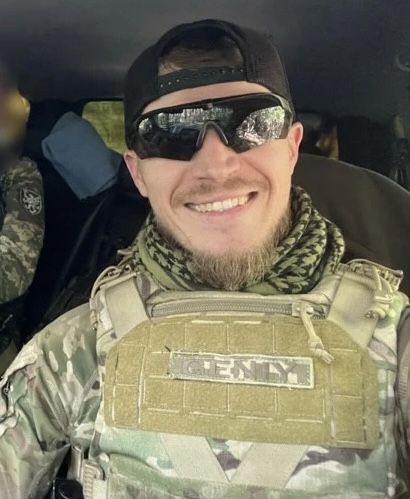
– How did you feel about entering the Kursk region? I know there were fighters who refused to fight on Russian territory...
– I supported the Kursk operation in the early stages of its implementation. In my opinion, it was one of the best decisions we could have implemented...
– To enter their territory?
– Of course! We humiliated those b#stards for the rest of their lives! But we did not stop in time. We went in there without the kind of heavy losses we later started taking, when it was already clear that the tasks being assigned were impossible to carry out. The conditions needed to do it had not been ensured. You explain this, and they tell you: look, the paratroopers are not whining. The paratroopers are whining internally; it is just that no one is saying anything upward! I was probably the only one who was sending unscheduled reports, explaining that this is not how it is done. I said that we could not move in along a single road that was under fire. I received a reply: the commander of the 1st Battalion is to create a new route. An entire grouping is standing there, and the commander of one battalion is supposed to make a route? Are you serious? At the same time, I did push through several additional routes. They did not serve us for long, because they were short; I could not secure the entire sector. I took a breaching vehicle and cleared a road. Because we had to look for opportunities.
At first, our actions were successful. For some time, we were able to hold on. But you understand that the enemy moved its best FPV operators there and concentrated its most experienced elite units. There were GRU troops there, the 155th, the 810th... All the combat brigades... Marines from the 177th. We needed to make a decision to take another line, fortify it, and inflict as much damage on them as possible. And at the same time, hold them on another sector. We did not do that. Instead: assault here, forward, forward. And they do not care when you run out of people because of injuries, because of something else, because you cannot hold the sector. And the number of b#stards does not decrease. They only keep saturating the area with them, bringing in additional forces. Plus, they were operating in our rear.
– But the fact that we ourselves stretched the front like that... Was it worth doing? Perhaps if there had been no offensive in the Kursk region, we would have held Pokrovsk...
– I believe it was the right thing to do. As for Pokrovsk... If we had not continued pointlessly losing people there in nominal offensives, and if we had given support at that moment to the sector commander whom Syrskyi was trying to humiliate and show that he was supposedly incapable of doing anything there... I mean Drapatyi. I think it was a matter of principle: "Look, I can carry out the Kursk operation, while he cannot hold Pokrovsk." Of course, when you do not replenish a hot sector and instead take away its most combat-capable units, then excuse me... What happened will happen...
In my opinion, Drapatyi is one of the sharpest generals we have. Judging by the sectors he stabilized, he is definitely capable of doing it if he is provided with the necessary resources, but he is most likely seen as a rival. And they are trying to bring him down.
– When did the critical mass build up for you, and when did you realize that you had to write publicly?
– For a long time, I tried to resolve all of this within the brigade. But even there they started accusing me of raising uncomfortable issues... When, in response to my objections to sending people on a senseless task, I was told: "Sorry, the general said so." Who is he? Let him send his own children on such missions, let him go and assault himself... Then I appealed higher up, to the General Staff. Well, appealed - at that time, an inspection from the General Staff had come to us. I showed the colonel: "Do you not understand that this is not how it is done?" He replied: "That is not what I am here for. They see the whole picture higher up; they know better. I came to help you." And by "help," he meant checking documents to see if there were any mistakes in them!
Then inspections from the grouping came, and there was an investigation into me. I showed everyone: "Do you not understand that this does not work?" After that, they sent my people several kilometers deep into encirclement because Skelia had gone in there. I spoke with the commander of Skelia and asked: "And what next?" "Next, we will assault this settlement." - "Are you serious? With two squads?" - "That is the order. Orders are not discussed." - "And then what?" I asked. "Then we will assault the next settlement." "Well, you are an idiot," I thought.
– Did you immediately see that gangster rules prevailed in the command of this assault unit?
– I had seen fragments of it back in the Zaporizhzhia period, but there it was still more or less manageable. But in Donbas, when a stoned sergeant who is directing a battle shows up, or an officer... Later I heard different stories from other commanders who had dealt with Skelia, and then I saw for myself what was happening in the Belgorod region and the Kursk region, and I was pretty stunned. No one hears anything you say, because you are nobody. So... All my appeals produced no result. I tried to appeal even higher. That person told me: "I will speak with Syrskyi, but whatever he decides, that is how it will be; you will not change anything." And that is what happened...
Eventually, there was talk that my people would be pulled out of encirclement. I hoped that maybe now something would stabilize, that there would at least be a chance for evacuation. But everything kept getting worse. I demanded: "We need to pull the people out," and they told me: "No, hold the position." So I planned the withdrawal of my people on my own decision, coordinated with neighboring units, and decided how I would pull my people out. I asked that no one be told about it, so that no one would know. I coordinated with the neighbors: "I will be pulling people out; do not shoot them. Copy that?" - "Copy that." I assigned tasks to the drone operators and mortar crews so they would cover the withdrawal and provide support. In the end, all that was left was to wait an hour and a half, two, maybe three hours until gray light, and the people could not take it. They simply ran. And they were all shot up. Only one survived, if I am not mistaken. Some of them blew up on tripwires. It is very frightening. And I could not explain over the radio that I had already planned everything, that they just had to wait a little longer and there would be a way out... The people could not take it. And at that moment they tell me: "Send another ten people in." - "Are you out of your minds?" After I said everything I thought, they told me: "Write a report refusing to carry out the task." Fine, nothing else to do. I wrote the report. But I did not write that I was refusing; I stated: "In order to carry out this task, this and this must be done. If that does not work for you, remove me from my position"... That was not a refusal!
– You wrote it wisely...
– Because I was not refusing! It was common sense. That is all. And then it all kicked off. I duplicated the report with a Facebook post. It was not for hype or likes; it was a kind of insurance policy... If investigations into me began, if they wanted to hold me accountable for something I was not guilty of, I would have a certain element of protection, an argument. My post was picked up by the media. Quite a lot of military personnel supported me, which made me realize that I was not the only one facing this problem.
"HOW IS THAT POSSIBLE: A MAJOR IN CONFLICT WITH A GENERAL?"
– I hope you are not AWOL now...
– Representatives of the General Staff and other representatives are trying to put a lot of obstacles in my way. I do not understand where these people’s honor and dignity are, or why they even hold officer ranks if this is how they act. Honestly, I was stunned when this situation happened...
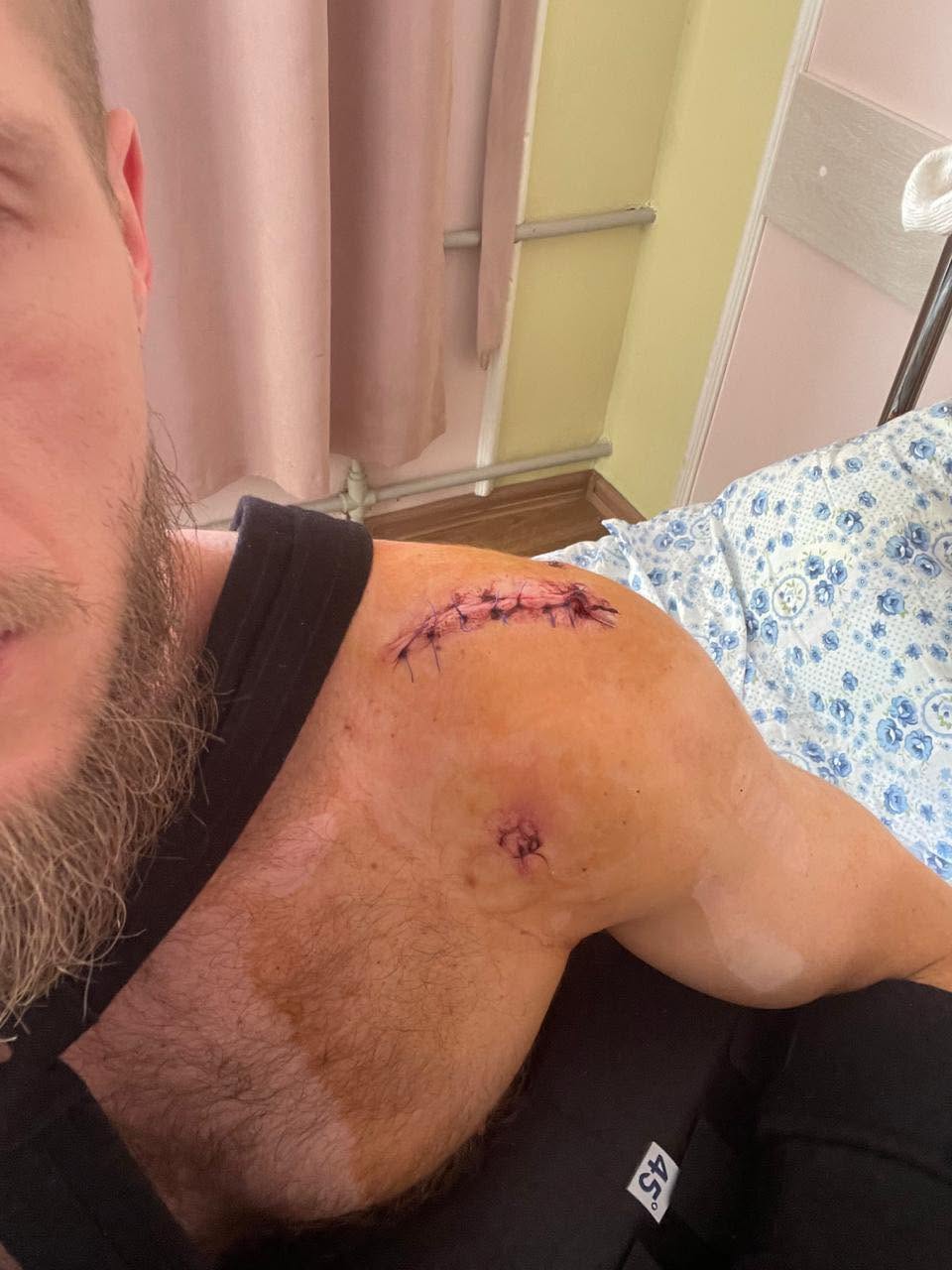
– In short: you are in hospital, after surgery...
– It was literally the second or third day of my treatment. Just so you understand, I had left the ward either to go to the shop or simply to go outside, which is not prohibited. I was on the premises; I had not gone anywhere. And at that moment, during those ten minutes when I had stepped out, the chief medical officer of some hospital called: "Urgent! Such-and-such person is being looked for by the General Staff. Check the ward. If he is not there, discharge him retroactively." The phrase was said: "He is in Kyiv and has done something there." My doctor replied: "He cannot be in Kyiv; I saw him today." - "Check! If he is not in the ward, discharge him." But how could they have discharged me if I had had surgery two days earlier? A frightened nurse ran outside and found me, saying: "Who are you that the General Staff is looking for you? Who are you in conflict with?" - "With Syrskyi." - "What do you mean, with Syrskyi? What is your rank?" - "Major." - "How is that possible - a major in conflict with a general..." - "Just like that." Everyone was scared out of their minds. I still do not understand how anyone could sink that low.
– You filed a lawsuit over...
– I am challenging the reprimands and the property they pinned on me. We have already won the case, and now the 47th has filed an appeal. I was also given a reprimand allegedly for failure to perform my official duties, but in fact it was because I was wearing a T-shirt with the words "Need attention" on it - that is exactly how Syrskyi publicly described me... We also won that case, as well as the appeal. We are waiting to see whether there may be a cassation appeal.

– Does this amuse you?
– No! It does not amuse me at all! I want justice. What irritates me more is that people made a mistake, kissed Syrskyi’s ass, did something to distinguish themselves in his eyes, tried to punish me, are now losing the case, are filing an appeal knowing in advance that they are wrong, that they will lose again and again, that they are morally wrong and legally wrong. State funds are being spent on this, covering court fees and everything else. They are spending taxpayers’ money and continue to do so instead of admitting their guilt and calming down.
Any system must operate according to rules. And there must be such a thing as the rule of law. Even if it is the army. Until we reach the point where rules are followed, those responsible are held accountable, and there is no biased attitude toward those who express their own opinion, we will not achieve change. These changes must be achieved precisely in this way. All oversight bodies, including the president of our country, must take this into account. Because the longer we delay changes, the higher the price we pay. Yes, we have no time to play around, no time for experiments, and no human resources to waste thoughtlessly. None! We have a goal - to win this war or at least survive. We must start acting in this direction and build a legal system even in the army, despite all the distortions that may exist there. There must be no place for arbitrariness in the army.
– Were you just as principled in your civilian job?
– I was a sales manager. I worked on finding clients, negotiations, concluding deals, manufacturing the product, and then providing follow-up support and repeat cycles. I developed the client base. I sold household appliances.
You know what I like about private companies, and what should also exist in the army and other spheres of state life? There are such things as competition, selection according to your skills and knowledge, and responsibility. You screw up - you pay money. You screw up - you get fired. You were selected, you have skills, and you show results? They develop you. You do not show results - goodbye. We will find someone else for your place. Here it is the opposite. You show results, but you disagree - goodbye. You send thousands of people to their deaths - here, have 15 battalions.
– Have you always had this kind of character?
– Yes.
– That cannot be easy. How is it for you, living with it?
– I like it.
– In recent days, there have been new attempts to carry out reforms in the army. How do you assess them?
– Let us put it this way: this is not reform. This is an attempt to smear over a systemic problem with I do not even know what. It is like instead of restoring a building, they hang something on it. In the opinion of these would-be "improvers," it looks newer, but in fact it looks scarier than something unrestored and not covered with God knows what. This is the same situation. Here, the approach has to be much more systemic. Many things that require change have to be taken into account.
– Do you see how the situation with the TCRs can be fixed, with people hiding and attacking TCR representatives? Is it possible to fix this neglected situation, and how?
– Nothing is impossible. It is a question of price and time. There is a demand for justice in society, both among the military and among civilians. We have to understand this demand and satisfy it. For some reason, today we have a lot of healthy men who are exempted from mobilization, with the ability to travel and feel free. And a lot of those who are "exempted" in the army and cannot go anywhere. Maybe we should swap places? You will be exempted from mobilization in the Armed Forces of Ukraine - it is a stable job, with a salary, all the conditions, and support. I am sure the military would easily cope with the work of the exempted person they swap with. More than sure! For some reason, we have privileged people who arranged their exemptions from mobilization for money. The lack of accountability for this affects the mood in society.
The next point is the issue of quality within the military itself. And the quality of command and control, first and foremost. When a person understands that tomorrow he will end up in the 425th or 225th Assault Regiment and the day after tomorrow he will be found dead, or never found at all, or shot in the head because he failed to carry out an order from one of the commanders, he is not very eager to join the military.
There is another issue: who gave anyone the right to beat TCR personnel? I do not understand why they do not use weapons. Let them create precedents. This is a representative of the authorities, of a military structure... And they have the right to use weapons if they themselves are performing their duties and not exceeding their authority. How many cases of such beatings and even killings have we already had? Countless. Has anyone been jailed? Has anyone been punished? No. That means it is being allowed! Why have we not created conditions of economic coercion, restrictions on people who do not fulfill their duty? They live in this country, they were born here, they were educated here. They did not leave, but they do not want to defend the country either.
– Such people should receive a non-citizen passport of Ukraine...
– I agree that there should be certain restrictions. Including on voting. People who are unable to learn the Ukrainian language, unable to learn the most basic historical events, unable to recognize the b#stards as aggressors... I once really liked an idea from Valerii Pekar, with whom we spoke about this topic. Look: you have the right to drive a vehicle only if you pass an exam. It is the same here. Living in a country, voting - that is a certain responsibility. You have to know and understand something about the country. You do not fulfill your duty, you do not ensure the security of your country? Then why should you hold high office or be involved in public service?
– But there are also plenty of uneducated, barely literate people in the army...
– The army is a certain cross-section of society. And this cross-section of society covers its ignorance with blood and thus pays for its right to live in this country. Some people do not pay for that right in any way.
– Will you live to see changes in the army?
– If Syrskyi does not wipe me out by then, – there is sarcasm in Oleksandr’s voice as he answers this question, a voice that until now had been clear, with steel in it. – But I am not afraid, and I have never been afraid.
– Never at all? Even in combat?
– Yes. Once, before I was even 18, I jumped with a parachute. I had dreamed of it because my father was a paratrooper, and I really wanted to take part in jumps as well. I saved up the money. The instructors explained everything and said that being afraid was normal. I even thought: is something wrong with me, because I was not afraid at all? In short, I was not afraid until the aircraft door opened in front of me. I jumped on my own; no one pushed me, but that was when I felt inner anxiety. It was the same in combat. Before the first small-arms engagement, I did not feel fear. There were certain worries, a sense of anticipation, but I felt fear only directly during the clash.
P.S. We hope this conversation will not become a catalyst for another attempt to "deal with" an undisciplined officer who "allows" himself to speak with journalists about problematic issues in the army. Believe us, many people share his views. And they are experienced officers who would sign off on every statement by Oleksandr, though not publicly. So perhaps conclusions should be drawn, and the army should actually be changed not declaratively on a Facebook page, but by truly starting to protect people’s lives and listen to those who see the situation directly on the line of fire? And instead of persecuting Shyrshyn and inventing reprimands for him, perhaps a place should be found for him where he will be effective? Especially since he says: "I am ready to do proper work that will be useful. Where that will be does not matter."
Violetta Kirtoka, Censor.NET


