



Mercury retrograde for Cabinet of Ministers: How notice of suspicion served on Stefanishyna changed Svyrydenko’s life and whether Fedorov will be dismissed
In recent years, Ukraine has developed a strange tradition of changing the government in July. What is more, the announcement is made on a Sunday, leaving everyone confused and giving rise to countless theories.
Thus, on Sunday, it emerged that Yuliia Svyrydenko would become Ukraine’s ambassador to the United States because Olha Stefanishyna was leaving the post due to personal circumstances. Is the country really facing such a severe personnel shortage that even the ambassador to a country as important as the United States must be replaced by the prime minister? A question with no obvious answer. It therefore appears that the Cabinet reshuffle was given the simplest possible explanation. In reality, however, there are far deeper underlying issues.
One of them emerged over the following day – whether Mykhailo Fedorov would remain defence minister.
According to information that emerged on Sunday evening, the most likely next prime minister of Ukraine is Serhii Koretskyi, the current head of Naftogaz. Other names mentioned for the post included – as has become something of a running joke –Denys Shmyhal yet again, along with the unexpected candidate of Kharkiv Mayor Ihor Terekhov and current Defence Minister Mykhailo Fedorov.
So what happened, and why is Yuliia Svyrydenko, who had faced no criticism, suddenly stepping down?
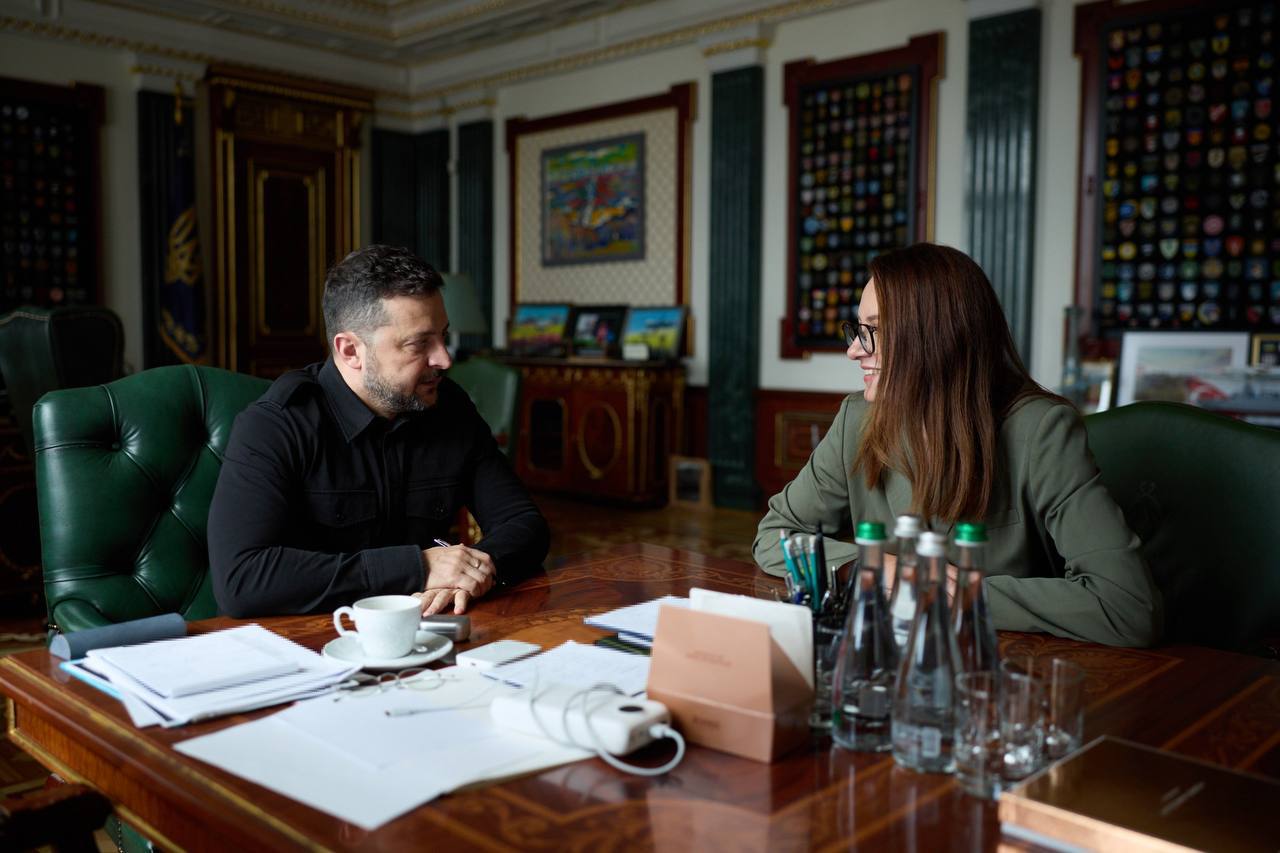
As a reminder, Svyrydenko was appointed prime minister almost a year ago, on 17 July, after a year of rumours that President Zelenskyy had grown tired of Denys Shmyhal and wanted to replace him with the even more loyal Yuliia.
On the first attempt, in 2024, Davyd Arakhamiia managed to postpone the replacement. But in the summer of 2025, when former Deputy Prime Minister Oleksii Chernyshov was served with a notice of suspicion by law enforcement over the illegal receipt of 14 apartments in exchange for a land plot, and subsequently over illicit enrichment as well, this became a pretext for replacing the Cabinet and finally appointing Yuliia Svyrydenko prime minister — at the time, she was regarded as a protégé of Andriy Yermak, head of the President’s Office.
However, her very first decisions showed that she was not quite as dependent as had been assumed: she secured government posts for several of her own people, including Deputy Prime Minister Taras Kachka and Oleksii Sobolev, who was appointed economy minister, while her close associate Tetiana Berezhna was appointed culture minister. Six months later, it became clear that when choosing between Yermak’s interest in remaining head of the President’s Office and common sense, Svyrydenko chose the latter and supported his dismissal.
Svyrydenko was appointed prime minister at an exceptionally difficult political moment, when the President’s Office, through a senseless decision, attempted to dismantle NABU and SAPO. It was then that Ukraine’s partners warned for the first time that they could suspend financial support for the country. Yuliia Svyrydenko’s main task was therefore to hold the Ukrainian authorities together and maintain the greatest possible balance between them and Ukraine’s European partners.
However, regarding economic initiatives, Svyrydenko moved in the wake of the President's ideas, including the payout of various "thousands" programs.
Therefore, the interpretation of one of the sources in the Ukrainska Pravda article stating that the President was tired of being a babysitter and wanted a more independent Cabinet of Ministers sounds somewhat strange — because, in principle, it appeared that the Office actually had a demand for a different kind of behavior.
Moreover, the president and prime minister looked perfectly cordial in their latest photographs.
"My hypothesis is that, with winter approaching, they realised Yuliia would not be able to handle all of this — neither the energy sector nor the ballistic missile threat, and decided to look for someone more systematic," a Censor.NET source within the Servant of the People faction said.
It is probably unnecessary to mention that MPs learned of the decision from the official announcement. The Verkhovna Rada leadership found out only a few hours beforehand. Even on Monday evening, the Cabinet still did not understand what was happening.
"In fact, the original plan was different: Svyrydenko was supposed to move to the President’s Office, while Budanov was to take over the General Staff. But everything was changed at the last minute because Stefanishyna is facing a notice of suspicion," another source told the publication.
Olha Stefanishyna was sent to the United States as ambassador in July last year. Interestingly, just one day before that decision, Rustem Umerov was being named as a candidate for the post, while the deputy prime minister was tipped for a position in Brussels.

Interestingly, it was said at the time that one of the reasons for sending Stefanishyna as an ambassador was her rather strained relationship with Svyrydenko, and it was decided to separate the women to avoid clashes.
At the time of her deployment, Stefanishyna was already a suspect in a criminal investigation into the abuse of a European grant and embezzlement of funds back in 2013. That case is already in court. However, in recent years, journalists have released several more investigative reports regarding Stefanishyna's family and her assets — one was by Ukrainska Pravda, revealing that her ex-husband's company was selected in a competition to manage the Trade Unions Building (where a NABU investigation is also open), and the second was by Hromadske journalists concerning the use of an undeclared apartment. In fact, the latter will apparently become another notice of suspicion for the Ambassador to the US.
"Well, an ambassador facing two notices of suspicion would have been too much, so they decided on a reshuffle," a source close to the President’s Office said.
It is said that the decision was made by an extremely narrow circle and has not leaked beyond the President's Office over these past few days. Although during this time, Serhiy Koretskyi still managed to attend the summit in Ankara with the President, which many journalists now interpret as a presentation of the future Prime Minister to the Europeans.
Currently, Koretskyi is 90% likely to succeed Svyrydenko as Prime Minister. He agreed to give it a try during a meeting with the President.
What is known about him?
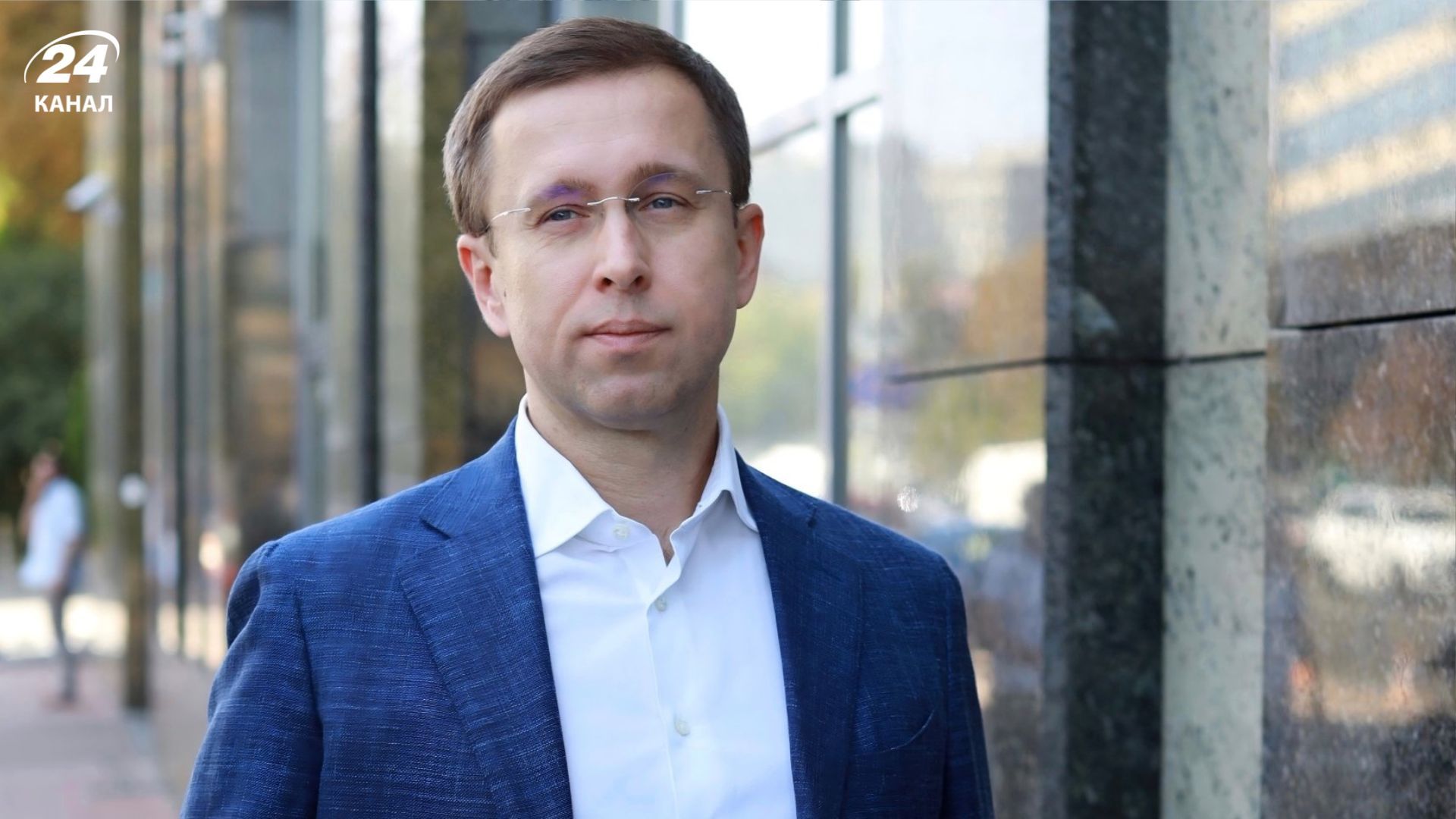
Serhii Koretskyi is a 48-year-old top manager from Lutsk who has spent his entire career in the fuel business. He started in the late 1990s as a security guard in Ihor Yeremeiev's Continuum group, worked his way up to the CEO of the management company, and in 2013, headed the WOG gas station network. From 2002 to 2006, he was also an assistant to Yeremeiev, who was elected to the Verkhovna Rada from the "For United Ukraine" bloc. After leaving Continuum in 2018, he developed his own projects, including Idealist Coffee, and from 2019 to 2022, he was a co-founder and Chairman of the Board of the Swiss energy trader Centurion Group SA.
His public-sector career began on 9 November 2022, when he was appointed director of Ukrnafta and Ukrtatnafta after the companies were placed under the management of the Ministry of Defence. In effect, he became the face of the "de-Kolomoiskyisation" of the oil production industry. Koretskyi delivered strong management results: while Ukrnafta posted aggregate losses of more than UAH 10 billion in 2013-2022, it earned around UAH 40 billion in net profit in 2023-2024. Koretskyi himself attributed this to switching procurement to Prozorro, eliminating intermediaries, and revising the terms of cooperation with the Kremenchuk Oil Refinery.
In April 2025, following an open competition involving 62 candidates, the supervisory board appointed him chairman of the Naftogaz management board. Koretskyi had to run the company amid constant attacks on its facilities and the need to import gas, making it difficult to measure his effectiveness in figures. It is more a question of resilience.
"It will be interesting to see how he communicates with Shmyhal. After all, they come from the same sector, and Koretskyi previously held more junior positions. He and Yuliia barely spoke after the reshuffle," one of the publication’s sources observed.
Now to the question of how much Koretskyi’s Cabinet will differ from Svyrydenko’s.
According to MP Yaroslav Zhelezniak, the following officials will retain their posts: First Deputy Prime Minister and Energy Minister Denys Shmyhal, Culture Minister Tetiana Berezhna, Health Minister Viktor Liashko, Finance Minister Serhii Marchenko, Sports Minister Matvii Bidnyi, Social Policy Minister Denys Uliutin, Veterans Affairs Minister Nataliia Kalmykova and Foreign Minister Andrii Sybiha.
However, there are conflicting accounts regarding the last two officials. They may also be replaced.
It appears they will finally get around to dismissing Oksen Lisovyi.
There is also talk of dismissing Taras Kachka, who would be replaced by Vsevolod Chentsov (Ukraine’s representative to the EU). It should be noted that Kachka has had an exceptionally difficult year, as he became deputy prime minister for European integration just as the decision to dismantle NABU and SAPO was adopted and had to clean up those Augean stables. The work of the Kachka-Kos group brought him into numerous conflicts: the deputy prime minister found himself caught in the crossfire of discontent from all sides — from the President’s Office to activists — including over the debate on the selection process for prosecutor general.
The Ministry of Economy will be left to Sobolev (though rumor has it he is also nervous), while the Ministry of Agrarian Policy will be resurrected, and it will be headed by Taras Vysotskyi.
Oleksii Kuleba, who is rumored to also be involved in the Midas case, is expected to finally leave the government.
His ministry will be divided into the Ministry of Regional Development, to be headed by Vitalii Bezhin, and the Ministry of Infrastructure, the candidate for which remains unknown.
In connection with the appearance of Ihor Terekhov among the ministerial personnel, a joke emerged that if the latter is appointed specifically to the Ministry of Infrastructure, not paying utility bills will now become state policy. The joke stems from the amount of utility debts in Kharkiv, where Terekhov serves as mayor.
"In fact, I think Davyd simply promoted Terekhov in the chat. After all, people are considering the creation of a joint party. But he will not go to the Cabinet of Ministers," says a source among the "Servants".
The Ministry of Justice will finally be headed by Denys Maslov, who has been expected in this position for half a year already, but who has many matters in the committee that he simply cannot abandon.
And now the key question remains: will Mykhailo Fedorov stay in his position?
While on Sunday evening Censor.NET sources had little belief in the possibility of his dismissal, they now appear more uncertain.
"I do not know why they are talking about rotating Fedorov with Klymenko. Maybe they want to scare the latter?" speculated one of the MPs.
"And which of them are they actually scaring — Fedorov or Klymenko? Because it is unclear who will have it worse," replies another.
"Yes, Klymenko is probably more compliant and will do what he is told," suggests the second source.
Over half a year at the Ministry, Fedorov radically changed the approaches to forming orders for drones, and now does this based on strike statistics. Furthermore, at his request, the DPA held a tender for the purchase of 155mm rounds and announced a similar closed tender for drones based on tactical and technical characteristics, rather than by name.

Name-based ordering itself was a key corruption risk in previous procurement procedures, because the DPA could effectively purchase only a specific product, even if a cheaper equivalent was available alongside it.
Naturally, many companies are unhappy with this and even claim that the minister is promoting the interests of one particular company. In reality, however, that company had been among the market leaders even before his appointment.
In addition, work on the NATO-Ukraine Strategic Defence Procurement Review has gained momentum under Fedorov.
Although Ukraine has been fighting very successfully in recent months, partly thanks to its supply of drones, it cannot be said that the problem of protecting the country’s skies has been resolved.
The minister’s reform of military contracts appears to have drawn more scepticism and criticism than approval from service members because it offered no answer on demobilisation.
Nevertheless, it is the beginning of the process.
There is, however, a caveat. The President’s Office has noticed the media’s fondness for Fedorov and, as the authors of an Ukrainska Pravda article observed, it has also noticed that Fedorov has not disbanded his team of political strategists. The minister is therefore suspected of pursuing an independent strategy ahead of the next elections.
But there is another reality. By dismissing Fedorov, the President’s Office would probably be doing him a favour, because the country would gain a reformer stopped just as he was gaining momentum. One might assume that, as in Kubrakov’s case, he would be forgotten within three months. But anyone who remembers the beginning of Viktor Yushchenko’s political career knows that this can provide a strong launchpad for a political career.
It has been said more than once that changing the defence minister every six months is a very bad idea. Six months is barely enough time to launch reforms. Some of the consequences left behind by previous ministers remain a burden, as rewriting orders can take up to six months. And if even the General Staff, which, despite claims to the contrary, is seriously at odds with Fedorov, is angered by the prospect of yet another reshuffle, that is a clear sign that nothing good comes from putting everything on hold to explain what technical specifications are and how the food catalogue works.
In this game, however, the choice appears to be driven not by logic but by the element of surprise.
Tetiana Nikolaienko, Censor.NET


