



From debt write-offs to protection of combat allowances: what financial changes are in pipeline for military personnel
Bill No. 15458 has been registered in the Verkhovna Rada to amend the Tax Code and other laws of Ukraine regarding the settlement of overdue debts owed by military personnel, civilians who have been deprived of their personal liberty or are missing in action, their family members, and persons with war-related disabilities during the period of martial law in Ukraine and in the postwar period.
The document grants banks and other financial institutions the right, at their own discretion, to write off the loan debts of the specified categories of citizens, so that these financial obligations are not passed on to their families. It also increases the amount of tax-free debt for all individuals from 25 per cent of the minimum wage to 100 per cent of the minimum wage. Furthermore, the amount of debt written off will not be taxed as income of the borrower or members of their family who have inherited such debt.
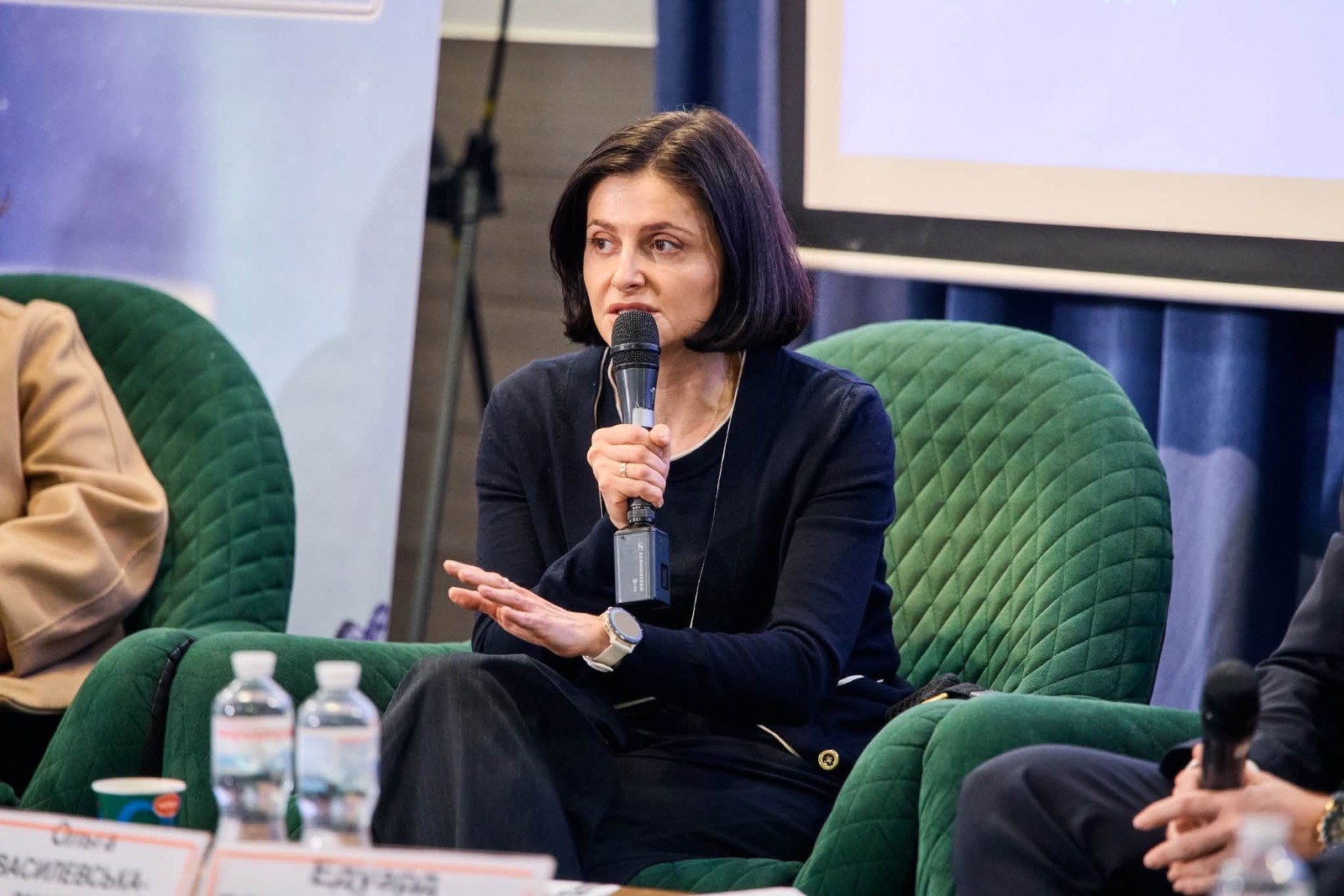
We spoke in more detail about this draft law with Olha Vasylevska-Smahliuk, a Member of the Ukrainian Parliament, who chairs the Verkhovna Rada’s Inter-Committee Working Group on analysing the situation and developing legislative proposals regarding the regulation of the non-performing loan (NPL) market and lending to military personnel.

"THERE IS NO OBLIGATION UNDER CURRENT LEGISLATION TO WRITE OFF MILITARY PERSONNEL’S DEBTS"
— Ms Olha, what issues did the working group need to address regarding the protection of military personnel?
— From the outset, the working group aimed to address the legal regulation of situations relating to so-called non-performing loans. Across Ukraine’s financial system as a whole, the level of NPLs at the end of 2025 stood at over 300 billion hryvnias, with the majority of problem loans originating in the state-owned banking sector.
Therefore, on the eve of the announcement of the so-called major ‘bank sell-off’ (the National Bank is actively preparing certain banks for privatisation, in particular those previously nationalised), it became necessary to resolve the issue of NPLs. As a result, at the end of 2025, Ukraine’s banking system carried out a record-breaking clean-up of its loan portfolio: according to the NBU’s reports, the volume of NPLs fell over the year from 393.2 billion hryvnias to 189.3 billion hryvnias – a reduction of 203.9 billion hryvnias, or more than half (-51.9 per cent). Moreover, whilst the reduction between January and November amounted to just 21.36 billion UAH, in December alone the banks wrote off 182.55 billion UAH of non-performing loans. The reduction in NPLs is continuing even now, and this is also a direct requirement of the World Bank and the IMF.
These are often bad debts where out-of-court recovery has proved unsuccessful, cases are stuck in the courts, or a significant proportion of proceedings are stalled with the State Enforcement Service.
Following the first meetings of the working group, I began to receive a flood of enquiries from military personnel, their family members and veterans. They had effectively been excluded from the lending market due to the provision stating that, for the duration of their service, military personnel and their family members are exempt from paying interest, fines and penalties. As a result, it became unprofitable for banks and other financial institutions to grant loans to these protected categories of citizens.
We conducted a survey in the banking and non-banking sectors regarding the rate of loan refusals for military personnel and their family members. Among financial institutions that responded honestly, the refusal rate can reach 60 per cent. Serhii Pozniak and other veterans have also raised this issue, emphasising that as soon as a financial institution discovers the status of a military personnel, veteran or member of their family, the loan is immediately refused; naturally, this reason for refusal is not officially stated.
Thus, we face two fundamental problems. The first is the emergence of barriers to lending to military personnel and their family members due to an imbalance in the regulatory burden and the statutory prohibition on charging interest, late payment charges and penalties.
The second is the ambiguity of the Ministry of Defence’s clarifications regarding the scope of persons to whom this concession applies and the write-off procedure. The current provision of Part 15 of Article 14 of the Law of Ukraine ‘On the Social and Legal Protection of Military Personnel and Members of Their Families’ is set out in a single cumbersome sentence spanning more than 15 lines. It is practically impossible to apply it correctly without the involvement of specialist lawyers or relevant authorities: it is not always clear whether the provision applies exclusively to serving military personnel or also to those who have been demobilised. Inconsistent interpretations lead to numerous complaints against creditors and create social tension.
— Wouldn’t it be simpler to obtain an official clarification from the Ministry of Defence or the National Bank of Ukraine?
— No, because the Ministry of Defence provides contradictory clarifications. Over the past four years, the ministry has issued several specific comments, some of which contradicted one another, which has only added to the confusion.
This legal uncertainty has led to different creditors applying the same rule in different ways: one creditor may grant a concession to a particular individual, whilst another may refuse it for a similar loan. Lenders are taking a conservative stance and applying the concession only in cases where they are 100 per cent certain, as any broad interpretation carries regulatory and tax risks for them.
As for the National Bank, the regulator does not have the authority to determine the status of military personnel.
Together with market representatives, we have drawn up a clarification in the form of a summary table with a clear list of criteria. I submitted this document to the Ministry of Defence, but they refused to take it on board, advising us to refer to an article published on their official website.
— What rules do banks follow, then?
— Banks either rely on one of the clarifications circulated by the market or interpret the legislation independently. The lack of a uniform approach means that financial institutions are looking for any formal grounds to refuse applications from protected individuals.
The second important set of issues concerns loans taken out by prisoners of war, those missing in action and fallen defenders. At present, banks write off such debts only in exceptional cases. The main problem is that when a debt is cancelled (written off), a tax liability arises for either the bank or the heirs, and one of the parties is obliged to pay personal income tax.
— Do banks write off such debts voluntarily or as required by law?
— Exclusively on their own initiative. There is no obligation under current legislation to write off soldiers’ debts. We intend to change this.
— Is tax payable upon write-off?
— Yes. That is precisely why we are proposing to enshrine in law the right of financial institutions to write off debts owed by protected categories without incurring tax liabilities for either the creditor or the debtor or their heirs. The Ministry of Finance has certain reservations regarding budget revenue, but Members of Parliament, the banking community, veterans and the families of the fallen fully support this initiative.
"WE ARE CONSIDERING THE CONCEPT OF INTRODUCING SPECIAL ACCOUNTS FOR MILITARY PERSONNEL"
— It is well known that sometimes banks do not write off the debt but try to recover the funds from the wife of a fallen soldier. The courts often rule in favour of the families, but legal proceedings involve costs for solicitors. Is it possible to resolve this issue systematically?
— Only by amending the legislation. At present, financial institutions have a legal right to recover debts from heirs. The wives and mothers of those killed in action inherit not only the property but also the debts; and if the bank writes off the debt, it is the heirs or the financial institutions, acting as tax agents, who are obliged to pay tax on the forgiven debt.
— If a person is declared deceased, but the body has not been returned, no post-mortem has been carried out and the soldier is considered missing in action, then, accordingly, there is no question of inheritance. There are also other situations: when a wife comes to the bank herself and offers to pay off a loan taken out in the name of her husband, who is missing in action, but she cannot find out exactly how much she needs to pay, as the bank cites banking secrecy and refuses to provide her with this information. She simply pays as much as she can, without realising when she should stop. Are you considering allowing banks to communicate openly about the amounts involved in such cases?
— No specific changes regarding access to banking secrecy for relatives have been considered within the scope of this draft law at present.
— What advice would you give to a woman who has learnt that her husband has gone missing and that a loan is in his name? Should she inform the bank immediately of his disappearance?
— Follow the procedure laid down by law for such situations: notify the financial institution immediately and provide official supporting documents to stop the accrual of interest, fines and penalties. We are also working to ensure that financial institutions receive information about prisoners of war and those missing in action automatically via credit reference agencies. This will serve as an additional safeguard against fraud – in particular, the taking out of fraudulent loans using lost military personnel’s documents.
— The working group is also raising the issue of loans taken out by sole traders who have been mobilised. What is the problem here?
— This request came from the banking sector. Clarifications from the Ministry of Defence and the relevant legislation regulate the status of military personnel exclusively as private individuals, without covering their activities as sole traders.
Financial institutions believe they have no grounds to grant concessions on business loans to entrepreneurs. The following situation arises: a person took out a loan to develop their own business as a sole trader, went to the front line, has no employees, and their business activities have effectively ceased. We propose the following approach: if an entrepreneur closes their sole trader business or suspends operations due to mobilisation, their outstanding debt should be subject to a concession whereby no interest, fines or penalties are charged.
However, if a service member is serving but their business continues to operate, generate income and pay wages to employees, there are no grounds for granting such relief. In such a case, the bank assesses the fulfilment of obligations on the usual terms.
— So you are proposing a clear distinction?
— Exactly — to enshrine in law the criteria that are currently lacking. If the business is operational and generating profit, the loan obligations must be met. If, however, the business relied solely on the mobilised entrepreneur and has ceased trading, the accrual of interest and penalties must be suspended.
A separate issue is the verification of military personnel.
— What exactly do you mean?
— To be exempted from the accrual of interest, fines and penalties, a serviceman is forced to collect numerous paper certificates (Forms 5, 12, etc.), which is difficult to do directly from the front line. Furthermore, there have been cases of forged military ID cards being presented, the authenticity of which financial institutions cannot verify independently.
We have worked with the Ministry of Defence to develop a mechanism for sharing documents via the ‘Army+’ app. With the serviceman’s consent, the financial institution will receive electronic confirmation of his status, which will prevent fraud and simplify the process for our defenders.
— How will the issue of individuals who have deserted and are wanted by the authorities be resolved?
— If a service member has left their unit without authorisation and is wanted by the authorities, they should not be entitled to benefits. Data integration via ‘Army+’ will enable financial institutions to verify a person’s current status in real time and prevent the unauthorised granting of repayment holidays (this issue is currently only at the discussion stage).
— Does the draft bill resolve all the existing problems faced by military personnel in the credit sector?
— Unfortunately, no. There are an enormous number of problems facing military personnel, and they are all very diverse. For the most part, they currently relate to enforcement proceedings, summary proceedings in the courts, and so on. All of this requires systematic regulation and, at times, votes in the chamber that may not be entirely popular, so it is too early to discuss them at present.
— When is draft bill No. 15458 expected to be considered in the plenary chamber?
— The bill’s co-author is Danylo Hetmantsev, Chair of the Verkhovna Rada Committee on Finance, Tax and Customs Policy. Initially, consideration was planned for December, but we have agreed to initiate a vote on the main provisions and the bill as a whole immediately after all the necessary procedural steps have been completed. The bill is fully ready for consideration.
— What other initiatives are currently being developed by the working group?
— An important issue is the freezing of military personnel’s bank accounts as part of enforcement proceedings. Currently, under the law, only an amount equivalent to two minimum monthly wages is unfrozen for the debtor. The law protects certain types of targeted payments, but the mechanism for lifting the freeze is complex and time-consuming – time that military personnel simply do not have, particularly whilst undergoing treatment or carrying out their duties.
We are considering the concept of introducing special accounts for military personnel, into which their pay, combat allowances and funds for medical treatment are paid. The aim is to legislatively restrict the possibility of these funds being fully seized by establishing a guaranteed minimum amount to be preserved (for example, no less than 90 per cent or full protection of earmarked payments). This initiative, like the issue of loans to mobilised sole traders, is currently undergoing detailed legal review.
Tetiana Bodnia, "Censor.NET"


