



Butusov on battlefield situation: Tusk’s statement on Ukrainian losses, offensive near Lyman, advances by 3rd Army Corps units
Another stream by Yurii Butusov on the situation at the front: the Polish prime minister’s claim that Ukraine is allegedly losing around 27,000 troops every month; the Ukrainian offensive in the Lyman area and the rapid advance of units of the 3rd Army Corps; and the August operational report of the strike UAV company of the 23rd Assault Regiment "R.U.G," part of the National Guard’s 2nd Khartiia Corps.
There have been many high-profile developments in recent days.
Polish Prime Minister Donald Tusk’s statement that Ukraine is allegedly losing around 27,000 troops killed and wounded every month.
Perhaps the most significant development in the war has been the Ukrainian offensive in the Lyman area and the rapid advance of units of the 3rd Army Corps, which have liberated a number of very important settlements near Lyman and effectively routed the Russian offensive force. The offensive is still ongoing.
The Russian command continues to make utterly absurd statements. Russia’s Ministry of Defense released a screenshot claiming that, despite Biletskyi walking around Sviatohirsk, Russian troops are actually conducting clearing operations there. As ridiculous as that may sound, this is an official statement by the Ministry of Defense.
The next important development worth mentioning is the August operational report from my strike UAV company, part of the 23rd Assault Regiment "R.U.G." of the National Guard’s 2nd Khartiia Corps. We have published the report. Once our unit joined R.U.G., I was able to start publishing these reports. I had a report for June; I did not have time to edit the July report, but we will publish that one too. There is also plenty of interesting footage in it. And now we have the August report. You can watch it and ask questions about our combat operations and the situation on our Kupiansk front. And, as always, I will answer all your questions about joining the unit. Friends, I invite everyone who is considering mobilization and is able to join us. I would be very glad.
I also noticed another important issue: Russia’s strikes on our metals industry. Virtually all metallurgical plants have been shut down. The enemy is waging an economic war against Ukraine. This is another important topic worth discussing.
There is also a new interview with former Defense Minister Mykhailo Fedorov about elections in the country. So there is a great deal of military and military-related news.
Now, Tusk’s statement. Polish Prime Minister Donald Tusk said that Ukrainian losses amount to around 27,000 killed and wounded every month. The Polish prime minister made this statement during an address to the Polish parliament, the Sejm. The statement has caused a major stir, and many people undoubtedly see it as fully verified official information. It must be said that this information is inaccurate and, in fact, entirely unsubstantiated. According to the data I have, the actual losses are completely different. Completely different. Ukraine’s losses at the front are significantly lower. I contacted sources in the leadership of Ukraine’s Defense Forces and can say that the actual losses are roughly no more than a third of that figure, or, in some periods, a quarter. So, frankly, I find it very strange that Tusk came up with this information.
I want to point out that the figure of 27,000 killed and wounded far exceeds the total number of people Ukraine mobilizes each month. If these figures were accurate, Ukraine would simply have no one left to fight. Fortunately, that is not the case. I can tell you that the number of killed and wounded amounts to no more than about 30% of the figure cited.
It should also be noted that a significant number of personnel in Ukraine leave the ranks because they go absent without leave or for other reasons unrelated to being wounded or killed, for example, various grounds on which they can legally leave military service. These include caring for someone who is ill, health conditions, or age.
Even if you add up all these figures for a month, the total would still be nowhere near 27,000, not even half that number. So, frankly, it is very surprising that Tusk obtained such information and chose to announce it in the Sejm. I would honestly be interested to know his source. I am very surprised that the Ukrainian government is not asking where the head of the Polish government got this information and why this figure has not been refuted. Well, it is strange.
Next is a major development that is currently causing an uproar throughout military circles in both Ukraine and Russia. It is the surprise Ukrainian offensive near Lyman. Let us look at the map.
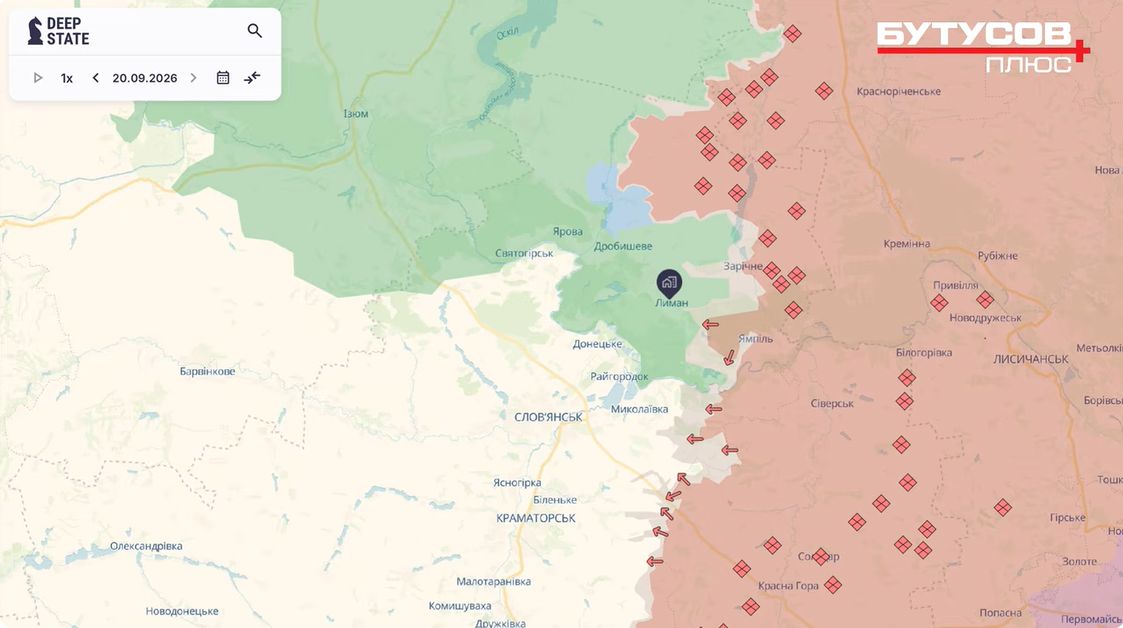
This truly is an outstanding development. I want to say that, unfortunately, we rarely get to take pride in achievements by our troops that allow us to say unequivocally that we have turned the tide of a battle and routed the enemy.
Unfortunately, this has happened very rarely in recent years. But this is precisely one of those instances when a major, important battle is ending in an unequivocal Ukrainian success. This is the battle to defeat the Russian offensive force that was attempting to encircle the city of Lyman, then advance toward Izium and encircle the Sloviansk–Kramatorsk urban agglomeration from the north. As is known, 3rd Army Corps commander Andrii Biletskyi announced Offensive Operation Vivaldi and the liberation of a number of settlements.
I want to emphasize that the 3rd Corps’ liberation of the villages of Shandryholove and Drobysheve is now of key importance to the defense of Lyman.
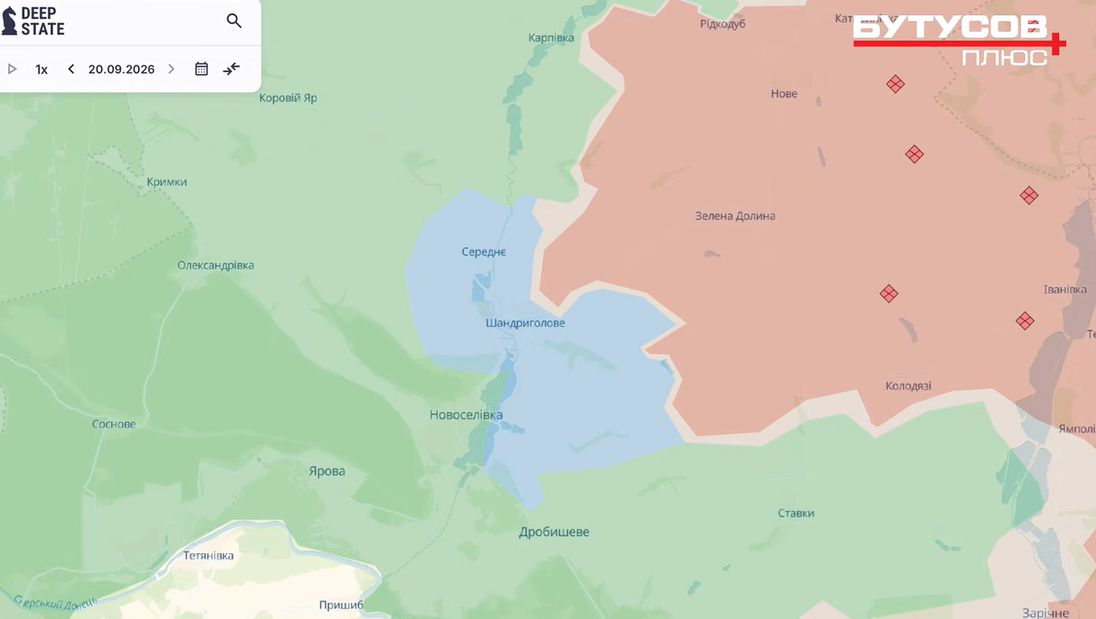
This is the last ridge commanding the approaches to Lyman. I took part in those battles in May 2022. I was at the positions of the 79th Brigade’s paratroopers, who fought bravely and heroically for Shandryholove and Drobysheve.
This was a key sector. The enemy was advancing and committing all its forces there to break through to Lyman. In fact, early this year, the enemy managed to capture almost all of Shandryholove and a substantial part of Drobysheve. The Russian Ministry of Defense triumphantly announced their capture, but we can now see that the DeepState map is entirely accurate: following a swift counterattack, both Drobysheve and Shandryholove have been liberated and retaken, and full Ukrainian control over them has been restored. The gateway to Lyman is therefore in Ukrainian hands: the key defensive area protecting Lyman is now held entirely by Ukrainian troops.
So, all those claims by the Russian Ministry of Defense that we have been discussing and, incidentally, let me remind you that it claimed Russian assault troops were continuing clearing operations in both Sviatohirsk and Lyman. In reality, we can see just how far Russian troops have been pushed back from Lyman. This means that the Russian strike force advancing on Lyman and attempting to capture the city from the north has been defeated, and the enemy has been driven back. This is undoubtedly a remarkable success. The fact that it was achieved so suddenly, catching the enemy by surprise, demonstrates that new methods of warfare have not put an end to maneuver. Maneuver, both at the operational level and at the tactical level on the battlefield, continues. It has not disappeared or lost its importance in the drone era.
Drones cannot replace ground operations or perform all their functions. Ukrainian troops have now demonstrated this through their actions near Lyman, which is currently securely defended. The Russian bridgehead north of Lyman, beyond the Chornyi Zherebets River, covering around 80 square kilometers, has been completely eliminated. It was a large bridgehead where the enemy had been building up forces for a long time. This is an outstanding success, and it deserves recognition.
I hope the country’s leadership gives due recognition to all units of the 3rd Army Corps and everyone who made a decisive contribution to this outstanding offensive operation. We can only thank corps commander Andrii Biletskyi, who managed to keep his operations concealed from the enemy across such a large area for so long.
A few questions that have come in.
Why did the authorities ignore Tusk’s statement about 27,000 casualties a month? He says losses increased over the past month.
Friends, I do not know why this happened. I can tell you for certain that this is not some fabrication or speculation on my part. We mobilize far fewer people each month than the 27,000 Tusk cited. I think our actual monthly mobilization figure, the number of people who actually reach military units, is roughly half that. That is my estimate.
So there is no basis for citing a figure of 27,000. This information is incorrect. Perhaps the authorities simply paid no attention or failed to notice it. It is very strange.
It would be better to keep quiet about this altogether. There was already a counteroffensive that was loudly publicized. Let the guys quietly get on with their work without unnecessary noise.
You simply need to read what is online more carefully. The 3rd Army Corps command has already issued numerous statements and posts about this operation, and DeepState has published a map showing the advances.
So it is very good that you are so concerned, but in this case you are not fully informed. The information I shared is not classified.
In your opinion, is eliminating Russian generals more of a positive or a negative? Might it be better for them to keep preventing more talented officers from taking over?
This is indeed an important question. I think that in this case, in Russia, after all… I have actually thought about this too: whether it is worth eliminating certain Russian generals at all. In fact, they do us little harm. Frankly, compared with what is happening in Russia… certainly, but there is an argument here.
Russian generals bear responsibility for war crimes. In that respect, punishing them is important as a matter of accountability for war crimes. This is a significant way of exerting pressure. Because the war is being fought…From a common-sense perspective, look at what the Russian army is doing, given its combat potential: it outmatches Ukraine many times over, with several times as many troops, tens of times as many weapons, and vastly greater military and technological capabilities. Yet Russian generals and Putin himself are incapable of translating all of that into results.
But the argument is that, first, there must be accountability. Second, in Russia, incompetent generals are in fact replaced by others who likewise demonstrate… I cannot say all of them, but they demonstrate a similar level of incompetence. We must not underestimate the enemy, and I want to point out that several of the Russian generals who were eliminated were actually strengthening the Russian army’s combat effectiveness. Their elimination is therefore significant from a military standpoint. I would highlight the elimination of the commander of the Russian Navy’s naval infantry forces and the commander of the 4th Motor Rifle Brigade, Hrunis, whose command was due to be expanded: the enemy was expanding the 4th Brigade into the 4th Motor Rifle Division.
The commander of the naval infantry forces, formerly the commander of the Russian Armed Forces’ 155th Naval Infantry Brigade, and the commander of the 4th Brigade were opponents who genuinely caused us problems. From a military standpoint, their elimination is a major achievement and seriously weakens the Russian army. Russian military personnel, including commanders, must therefore be eliminated whenever the opportunity arises. Incidentally, I would like to note that Ukraine’s Defense Forces have eliminated 21 Russian generals since the start of Russia’s full-scale invasion.
Yurii, what is in short supply today? What do the Armed Forces of Ukraine need? Well, the first thing we lack is drones.
There is a shortage of drones and infrastructure for drone positions. I would also add a shortage of reliable, high-quality munitions with good explosives.
The main needs are weapons to strike the enemy, and reconnaissance and strike capabilities. Drones above all. There is a severe shortage of drones. From what I see on our sector of the front, we receive no more than 15%, 10–15%, perhaps 20% for some items of what we need.
Yurii, which battles have you taken part in? Could you please give us a little more detail?
Dear Arsenii, there are videos on my channel with plenty of information about my direct involvement, including in some assault operations, and about what I do in the war. You can watch all of that. Thank you for your interest. I am currently taking part in the fighting for Kupiansk in the Kharkiv region.
On what dates did the operation near Lyman take place? Was it September or August?
I think the fighting there intensified somewhat earlier. But what we are seeing now are the results of months of fighting that culminated in such rapid changes on the map.
If you can contact people at the Ministry of Defense or establish the actual number of Ukrainians killed, could you do this every month and produce a report?
If the Ministry of Defense needs this, take it up with them—why not? For now, I simply looked into this shocking statement by the Polish prime minister for myself. I needed to comment on it because those figures are genuinely shocking and do not match our actual mobilization figures.
Next, I would like to briefly comment on the report on my channel covering the combat results of my strike UAV company in the 23rd Assault Regiment "R.U.G" of the Khartiia Corps for August this year, meaning last month. Some of you may have already watched the video; others may not have. I strongly recommend it.
Strikes on Russian UAV operators’ positions. We mainly target equipment and Russian drone pilots’ positions, because troop deployments now… And when we spot Russian infantry, we do not fly past them either.
Flying into dugouts, missions to block supplies to Russian UAV positions. Let me remind you that my company is called the Company for Countering Enemy Unmanned Systems Launch Positions. Our task is to combat enemy drone operators. This involves several elements: reconnaissance of enemy positions; fiber-optic drones and digital FPV drones that strike enemy positions directly; we have interceptors targeting enemy Mavics and reconnaissance quadcopters; and fixed-wing strike drones that block logistics, carrying out what is known as battlefield interdiction. In other words, they block all enemy combat logistics. Everything heading there.
Currently, 70% of supply traffic consists of vehicles delivering supplies to Russian UAV operators. Russian drone operators account for the bulk of their logistical requirements. We strike them, preventing the enemy from freely supplying its positions whenever it wants. So, friends, I want to appeal to all of you. If you are willing and motivated, if you want to find a truly supportive team, receive personal attention, have direct contact with me, and be able to discuss personal and service matters with your commander at any time, if you want real combat work in a professional team, please write to us and get in touch.
I have people from all backgrounds. Some have been fighting since 2022 and form the core, the backbone of the unit. There are also many foreigners: they come to me almost every week, and we recruit them. I currently have two fighters from Poland serving very successfully. They are great guys, and I am very grateful to them. A third volunteer from Poland is now on his way.
I also have more than 20 fighters from Latin America, and new fighters keep joining. They work very effectively to support our UAV units and our pilots. Many others are joining my units too. Most of the service members are people who once went absent without leave and have found their combat family in our company. A substantial number also join through mobilization. And, very encouragingly, some are people who had already legally completed their military service. For example, someone who was legally discharged a long time ago has now joined us and returned to service: Yulii Kim, a sergeant from the 72nd Mechanized Brigade, a highly experienced and respected infantryman.
He was a civilian, having legally left military service. He had every reason to remain one: wounds, blast injuries, and many other grounds, including personal family circumstances. Nevertheless, he returned to service, and we now rely on him to handle a great many matters very effectively. So I want to say that we have people from all backgrounds. We are very happy to welcome everyone, and everyone can find a place in our ranks. Please, I appeal to all of you: watch more videos on my channel and make your decision. Now, the questions.
Yurii, a tank company commander is writing to you. How are we supposed to operate when each vehicle is issued only three rounds? How can this be resolved so that we do not send our men to their deaths?
Thank you, Mykola, for what is, without exaggeration, a cry of anguish.
Yes, unfortunately, there are serious problems. Serious problems with supplies for combat operations, particularly acute—and in some units extremely acute. Unfortunately, this is not an isolated case. Unfortunately. What can I say?
I do not know how to obtain tank ammunition and get it delivered, or why it is not being issued. We lack any clear concept for employing our firepower. A tank today is effectively a self-propelled artillery piece. It should be part of the overall fire support plan. In other words, it is either a self-propelled artillery piece, a role a tank can, in principle, perform well, or an assault vehicle.
In the latter role, a tank with a gun is not actually a particularly suitable platform: a gun is not needed for such tasks. But when we have a tank that can use its gun effectively and is not supplied with ammunition, what can I say? It simply means there is no planning and no proper organization of supplies for our troops. I cannot explain it any other way. It is deeply regrettable.
Yurii, have there been any noticeable changes under Mykhailo Drapatyi’s leadership?
I can say that certain changes introduced by Mykhailo Drapatyi, the new commander-in-chief, are indeed worth noting. The new commander-in-chief has been actively visiting the front. He has changed command methods. Significantly more responsibilities are now delegated to corps and brigade commanders on the ground. Drapatyi has established two groupings of forces: the Center grouping and the Azov grouping in Donbas, which are effectively two groupings of forces, the first…
Drapatyi’s appointment of Biletskyi and Prokopenko as commanders of two groupings of forces in Donbas is a major step toward decentralizing command and responsibility for sectors of the front, and moving away from micromanaging brigades and even corps. In other words, the commander-in-chief is delegating authority to army-level groupings of forces. Each grouping effectively comprises three corps, making it equivalent to an army. This significantly improves command at both the operational and strategic levels, because the commander-in-chief no longer needs to contact 15 corps commanders to obtain a picture of the situation. Instead, he has several commanders of groupings of forces to report to him.
I hope Drapatyi carries out the same reform here in the Kharkiv region. We also need a grouping of forces. A grouping effectively already exists in the Zaporizhzhia region, built around the Air Assault Forces. So establishing groupings of forces is, in principle, a step toward establishing army headquarters. This is an entirely correct, obvious, and necessary approach. Instead, we have established operational commands that are administrative bodies but are also expected to command troops. This cannot work. The administrative structure must be separate, and there must also be a permanent, formally established structure for operational command of troops.
This is not simply my personal view: it is set out in doctrine, reflects international military experience, and is contained in the very NATO manuals our politicians love to talk about. There is a US Army manual literally called "Army, Corps, Division," which clearly explains why these structures are necessary, how these groupings, major formations and formations operate, how they differ, what their tasks are, what personnel strength and sectors they are designed for, and how they should function. So establishing groupings of forces, which I hope will be transformed into armies with formally defined organizational structures, is more than just another reform. Drapatyi is simply doing the obvious things that Ukraine’s leadership should have done many years ago, at least five years ago, but failed to do. I hope this will be done now.
I like Drapatyi’s initiative to establish infantry training battalions within army corps. Incidentally, I have written many times, including since 2014, that only Ukraine and the Soviet army organized things so that, during mass mobilization and a major war, infantrymen were trained at separate training centers and only then sent to combat brigades. Meanwhile, commanders constantly complain: how can this be, why do our instructors have no combat experience, let us recruit only those with combat experience. But where are instructors supposed to get that combat experience if they are not part of a combat unit, so they can pass it on to soldiers at the front?
Special training units within division-level formations were devised long ago, back in World War I, allowing infantry divisions to train their own infantrymen using personnel with the most recent and relevant combat experience. This was a sensible approach used by armies around the world in both World War I and World War II. Yet Ukraine has followed the Soviet reform under which divisional training battalions were disbanded in the 1970s. They were not disbanded until the 1970s, when additional training divisions with posts for generals were created in place of individual battalions.
To this day, we continue to copy the USSR using the template of this contrivance, this strange, utterly absurd and misguided Soviet reform, creating enormous separate training forces. These forces do not fight, or fight only through small units. In reality, they sustain their own structures, sit at bases and, naturally, have no combat experience. All this instead of transferring infantry training to army corps. If Drapatyi sees this through and delivers results, it will be a major step forward.
I also want to note that Mykhailo Drapatyi is now focusing on bringing in foreign recruits. This is important to him, and he is working to ensure that recruitment can genuinely be scaled up. This work in support of combat operations is necessary. I hope Drapatyi sees these reforms through and makes them effective. For now, I cannot point to any other steps. Everything currently planned has only just begun, and I hope Mykhailo Vasylovych has the strength to implement these changes step by step.
Unfortunately, as far as I can see, Drapatyi is being prevented from doing certain things. For example, we have Air Force commander General Kryvonozhko, who has already turned 60, and there are quite a few questions about him. It is not that he is a bad person; he is a good, dedicated person. But just imagine someone over 60 holding such an important position, working continuously through sleepless nights and days. I am not even talking about his ability to learn. Physically, it is simply impossible to sustain this pace in such a position for so many years at that age. It is extremely difficult.
In armies around the world, generals and commanders at this level are subject to certain limits on their tenure and must meet certain physical health requirements. Why are these requirements in place? As far as I know, from what I have heard, Drapatyi’s proposals for changes to the Air Force leadership have still not been implemented, and that is not Drapatyi’s responsibility. Unfortunately, I see that we are once again in a situation where the commander-in-chief is not being allowed to do everything he seeks to do. This poses a very serious risk.
It is sad that such approaches persist.
What is the situation in the Dnipropetrovsk region? Is Pavlohrad under threat?
As for Pavlohrad, the enemy is currently making no progress in its offensive operations in that sector.
Pavlohrad is quite far from the front line, but unfortunately well within range of constant enemy missile and drone strikes. Unfortunately, these will clearly continue. So Pavlohrad is certainly coming under attack, and I deeply sympathize with all its residents.
What is the current situation in the Dvorichna sector? Is there a chance of pushing the enemy back across the Oskil River completely?
There is certainly a chance. To make that happen, specific combat operations need to be carried out. We are also involved in those operations.
My positions are in the Oskil area. What can I say? The enemy is attempting its own assaults here. There are quite intense meeting engagements, and the enemy is doing everything it can to expand its bridgehead across the Oskil.
The enemy is making every effort to capture Kupiansk and Kupiansk-Vuzlovyi. Significant forces have been committed to this, and the enemy is constantly receiving reinforcements. So the fighting is difficult, but overall, anything is possible. We have certain tactical advantages and certain opportunities. We, the 23rd Assault Regiment "R.U.G.," are conducting combat operations quite effectively.
Nevertheless, we cannot discuss what the next operation will look like at this point. Units of the 151st Mechanized Brigade are fighting very courageously in the Dvorichna area. They deserve great respect. The brigade has clear, firm command and well-organized combat operations. It is a pleasure to work with them.
Everything possible is being done there to turn the tide of the fighting in our favor. We in the Khartiia Corps, which is responsible for this sector, are also making every effort. I think the fierce fighting in this sector will continue.
Why should the military have to buy UAVs or their components at their own expense? Why is this such a major problem?
It’s a systemic issue. Far fewer resources are being allocated to defeating the enemy at the tactical level. There isn’t enough money; there aren’t enough resources.
I see our main problem now as the very poor standard of combat planning and the failure to allocate resources in line with the tasks assigned. One important appointment made by Mykhailo Drapatyi was that of Comrade Fil as head of unmanned systems in the Armed Forces of Ukraine. Fil is the UAV chief from the 3rd Army Corps, someone with a thorough understanding of all the military’s problems with drones and drone supplies. I have high hopes that appointing someone like him, with his sense of responsibility and energy, will not only improve the distribution of supplies reaching the military but also raise, at the highest level, the issue of increasing funding for drones and the infrastructure needed to operate UAVs at the tactical level, primarily for the brigades directly holding the front line.
According to official data, most Russian occupiers are eliminated by the brigades holding their own sectors, rather than by reinforcing units. Most occupiers are eliminated by UAVs operated by the unmanned systems units of the infantry brigades holding the front. Those brigades undoubtedly need priority funding.
Yurii, is there a risk of losing liberated territory during Russia’s autumn offensive, given the changing weather conditions and the use of heavy equipment?
The enemy does not have the forces to advance very quickly and cannot achieve surprise. Under current conditions at the front, only Ukrainian troops can achieve surprise, but doing so requires enormous organizational effort. I do not currently see the enemy having the ability to capture all the liberated territories. But I do see a determined intention to seize Donbas, Zaporizhzhia, and as much of the Kharkiv region as possible, because the enemy needs to secure favorable positions for further offensives against Donbas.
Former Prosecutor General Kravchenko submitted his resignation from the prosecution service, and the new acting prosecutor general signed it. How is this possible remotely?
Frankly, I do not know. It is very sad that a prosecutor who previously served as a military prosecutor left the country during hostilities.
Honestly, I did not expect this from Kravchenko. It is very sad, a huge disappointment. I did not expect him to do something like this. What kind of example does it set for all his subordinates? Simply appalling.
Yurii, what can you say about enemy infantry numbers? Is the Russian army becoming exhausted?
I think there are significantly fewer enemy infantry troops at the front than in previous years. There is indeed a shortage, and there are signs of serious exhaustion. But look: fewer enemy infantry troops does not mean the enemy has lost the ability to recruit and send new assault troops to the front.
Russia still has manpower. Alongside the heavy losses the Russian army has suffered this year, it is also important to note that the enemy has assigned a significant number of personnel to its newly established unmanned systems forces, support roles and air defense. The enemy certainly has not lost its combat capability. A reduction in the number of assault units does not mean it has run out of personnel altogether. What it lacks is the manpower to keep conducting assaults like this under drone attacks.
They are trying to change the situation qualitatively. So the situation is very difficult. If we are to stop the Russian offensive completely and kill significantly more Russians than they can recruit, we need to be realistic. We need to plan our strategy and tactics realistically and assess the actual results of our work objectively. We pour enormous resources into certain efforts, such as bombing some Wildberries warehouse with a salvo costing $50 million. Then we do not have enough basic Mavic or Matrice 4T drones at the front. We need to weigh these priorities logically. The only thing Russia can run out of now is infantry. That is all. It is unlikely that we can deplete any of Russia’s other resources completely.
Russia can be made to pay dearly for the war. The cost of the war can be increased severalfold, even tens of times over. But only one thing can stop the Russian offensive: eliminating its troops. We start killing more Russians than they can recruit into assault units, and we halt their advance. Otherwise, the war will continue. All this talk of peace will mean nothing to the Kremlin aggressor. It is merely a verbal smokescreen.
What is the situation around Komar in the Velyka Novosilka sector?
I cannot tell you. I do not currently have sufficiently detailed information about that area.
We have been told that somewhat more Rubikon personnel than usual are being deployed to the 2nd Corps’ area of responsibility. Are they really such experts, or is fighting them entirely feasible, with their crews being regularly eliminated?
Rubikon does not possess any unique technology. Its units use the same equipment as Russia’s unmanned systems regiments, brigades, and even battalions.
Structurally, Rubikon is a combat and training unit that conducts both strikes and combat training in different sectors of the front. It is not a unit with special equipment; it provides high-quality reinforcements to army units and improves their combat effectiveness. In my view, the main problem at the front today is not Rubikon but the newly established battalions, companies, battalions, regiments, and brigades of the unmanned systems forces that the enemy has deployed at every level, primarily within Russian brigades and divisions. That is the main danger: the deployment and expansion of Russian UAV positions and increased supplies to them.
This is, of course, accompanied by certain qualitative improvements in how these systems are commanded and controlled. Are there vulnerabilities? Can we strike the enemy in the air? Absolutely, and this is happening in many sectors. But it must be stressed that this is a very difficult task. In fact, combat planning must now begin with planning operations against enemy unmanned systems positions. This is the main task at the front.
Who would you like to see as the new prosecutor general?
I do not know.
Someone who will simply hand over their passport and say they have no intention of fleeing anywhere, whatever anyone shows about them on YouTube. I would like someone with that kind of resolve, someone unafraid of responsibility. Is it possible for people like that to be appointed here? I have serious doubts. Unfortunately, the situation in our law enforcement agencies during the war is grim.
Friends, thank you all for being here and watching the stream. Thank you all for your support. Once again, I urge you to support the Butusov+ channel if you can. And everyone looking for their place at the front in this war, who wants to find a team where every person is treated professionally and with care, please get in touch. You can send me a private message on Facebook Messenger or Instagram.
I will be sure to see it and reply, and we will talk. Friends, thank you for joining the stream. Today, I am more convinced than ever of our victory. Thank you for joining, and glory to Ukraine!


