



"I am society’s cleaner": Full story of investigation into Iryna Farion’s murder
What was perhaps one of the highest-profile trials since Ukraine gained independence has concluded in Lviv. This was not the first murder of a Ukrainian politician. But it was the first time a female politician had been killed. And unlike in most similar cases, investigators do not believe this was a contract killing. Viacheslav Zinchenko, an 18-year-old from Dnipro at the time of the murder and now one of Ukraine’s youngest prisoners serving a life sentence, acted alone, according to investigators.
THE VERDICT
The presiding judge is wearing an embroidered Ukrainian shirt under his robes.

Judge Petro Nevoyt
"It is the Feast of the Intercession, and the judge is deeply religious," says Nataliia Romanyk, the Farion family’s lawyer, explaining his embroidered shirt.
The small courtroom is packed. National Guard personnel have divided the room in two. On one side are journalists and those who have come to support Farion’s daughter. On the other are Zinchenko’s supporters and his mother. The street where the court is located has been closed off since early morning. Supporters of the Farion and Zinchenko families have gathered there too. Police stand guard between them.
For five hours, the three judges take turns reading out the verdict. They stand to deliver its operative part:
"Find the defendant guilty. Sentence Viacheslav Fedorovych Zinchenko to life imprisonment."
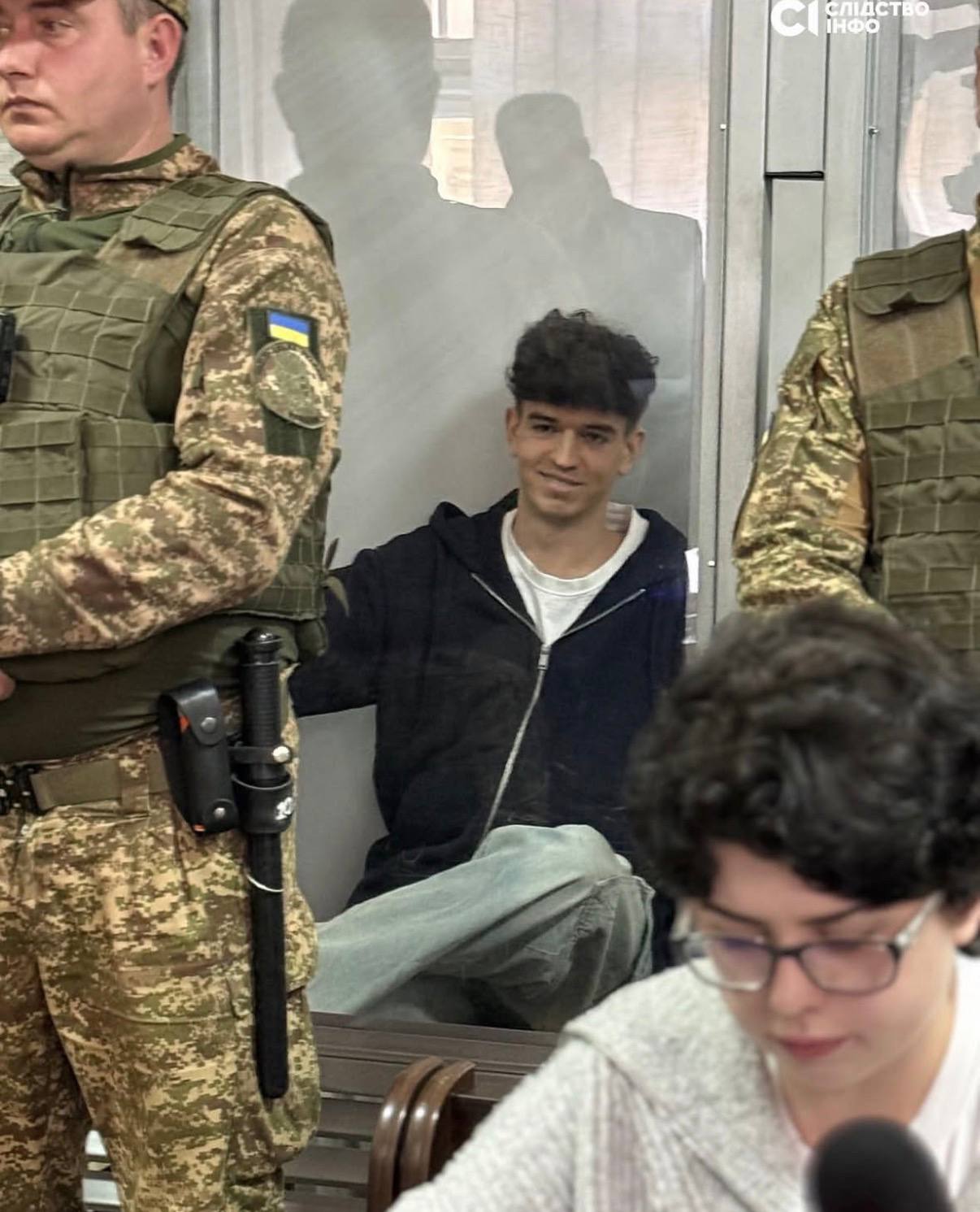
Zinchenko in the courtroom. Photo: Slidstvo.Info
The defendant listens to the entire verdict with little visible emotion. He smiles only occasionally. On hearing "life imprisonment," he rolls his eyes. The linguist’s daughter is crying. But after hearing the verdict, Sofiia Osoba does not hide her relief:
"The court has made a historic decision! Iryna Farion used to say: I am temporary, but the idea I stand for is eternal. So today we have become stronger."
The court also ordered him to pay her daughter UAH 5 million. She will donate the money to the Rubizh Brigade, where her late husband served.
Delaying the trial?
In a separate ruling, the court calls for disciplinary action against the defendant’s lawyers for delaying the case. The trial lasted more than two years. Hearings were indeed postponed repeatedly, either because the lawyers failed to appear or because of Zinchenko’s own actions. The defendant, for example, declared a hunger strike and staged a suicide attempt in the courtroom.
"I cannot say for certain whether he was on a hunger strike. As for the hanging attempt, it was a show. If you recall, when journalists asked him what had just happened, he said: ‘I knew nothing would happen. I knew they would come and save me.’ ‘I’ll put on another show,’" says the Farion family’s lawyer.
Closing arguments, the final stage of the trial, lasted more than four months. The defendant’s lawyers (there were four over the course of the trial) repeatedly requested adjournments. The court even ordered that he be assigned another lawyer through the state-funded legal aid system. But she, too, requested adjournments of closing arguments; the final hearing before the verdict alone was postponed four times. In the end, neither the defence lawyers nor Zinchenko himself delivered a final statement. Zinchenko did not admit guilt.
The murder and arrest
On 19 July 2024, at around 7:30 p.m., Iryna Farion is waiting for a taxi outside her home with a suitcase. She is due to spend the night at her daughter’s home with her grandchildren, as the family plans to leave for a seaside holiday in Bulgaria the following morning.
According to investigators, Zinchenko approached her at almost point-blank range and shot her in the head. Farion is taken to hospital in critical condition. At 11:20 p.m., doctors pronounce her dead.
A week later, Zinchenko is arrested in Dnipro. In the notes on his phone, investigators find a message to his father intended to be sent later:
"I hid this from you not because I am an idiot, a thug who was recruited like some sucker, but because I love you and worry about your safety, and I am safer when you do not know about it. I love you. Do not turn your back on me. I hid this for your own good."

Photo of case materials from the Instagram account of Farion’s daughter, Sofiia Osoba
How was the killer tracked down?
According to then Interior Minister Ihor Klymenko, law enforcement officers worked for 139 hours without interruption. They checked the attacker’s possible escape route and searched around 100 hectares of woodland. More than 60 forensic examinations, 1,500 people questioned and footage from 170 surveillance cameras helped investigators piece together a detailed picture.
"You can see exactly what he was looking at and googling at the time, what films he watched. ‘Gangster Petersburg,’ for one," explains lawyer Romanyk.
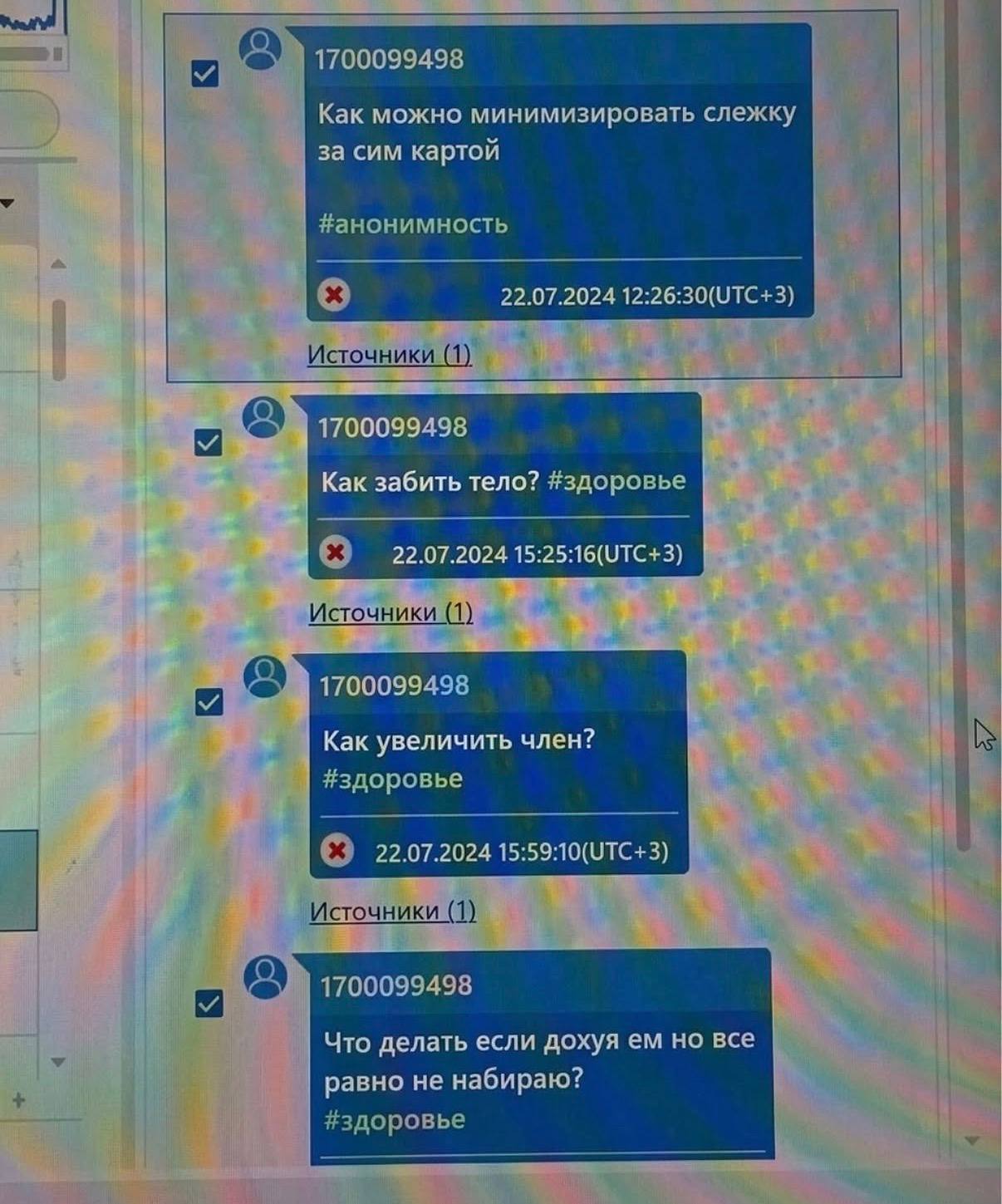
Screenshots of Zinchenko’s search queries
"We can reconstruct his whereabouts almost minute by minute. There are no gaps, except when he went into those woods and disappeared, before a disguised figure emerged (a person who had changed clothes - ed.)."

Zinchenko near Farion’s home on Masaryka Street. Photo: Ministry of Internal Affairs
The first known photograph of the killer outside Farion’s home was taken by a neighbour. The man attracted attention because his clothing was clearly unsuitable for the weather. The photograph underwent forensic facial comparison with an image of Zinchenko. Experts concluded that they showed the same person. Another key piece of evidence came from forensic scent analysis of traces left on the bench and chair where the disguised man had sat.
"Each person has their own individual scent. Scent traces are unique," Judge Petro Nevoit said, adding that this confirmed Zinchenko’s presence at the murder scene.
"Incidentally, how did Zinchenko get caught? He made a mistake. He thought he was very clever and went to scout the area in a T-shirt. A selfie of him wearing that T-shirt with a palm tree on it was later found on his phone. The day after arriving in Lviv, he took a bus towards Ms Iryna’s home wearing that very T-shirt. So we can establish that, after arriving in Lviv, the young man does not go to the Opera House, meet friends, go to the cinema or somewhere else to meet girls, but heads towards the woods on Masaryka Street. As I understand it, he found himself a hiding place, somewhere he could leave his backpack. There is footage of him leaving his apartment, and every time he has a large backpack. It was the analysis of that footage that made it possible to find him. They reviewed the footage and questioned everyone they could again. Because, as people say, killers sometimes attend their victims’ funerals. Ours did not, but many people, a huge number with similar features who had attended, were questioned."
Preparations for the murder
The first entries about Farion on Zinchenko’s phone appeared on 13 September 2023. Prosecutors found subscriptions to Telegram channels and chats related to Farion, her home address, photographs and other material.
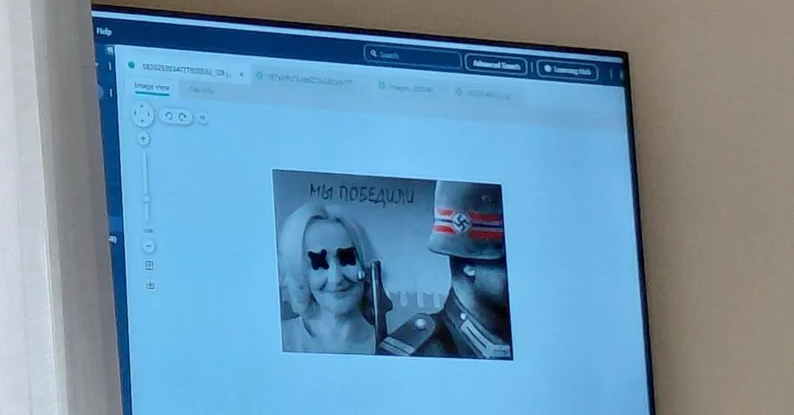
A photograph of Farion from Zinchenko’s phone
On 8 July 2024, while travelling from Dnipro to Lviv, Zinchenko wrote a note:
"The wish I heard most often on my 18th birthday was that my plans would come true. Thank you to everyone who wished me that. I am carrying them out, doing exactly what I want. While everyone was holding rallies and writing ‘Philological Front, out of the Polytechnic!’ before peacefully dispersing, I was quietly smiling and sharpening a knife, after which I did what millions wanted. I am this society’s cleaner. It is all out of personal animosity. There can be no remorse. Even if I am caught and it could get my sentence reduced, I have chosen my path and will follow it to the end. Otherwise, I will not be able to look at myself in the mirror or do anything. This situation leaves no room for half measures. You have to go all the way."
"Judging by the slogans included in this note, these were the rallies held outside Lviv Polytechnic after the notorious scandal involving the 3rd Assault Brigade," explains prosecutor Dmytro Petlovanyi. He is referring to the language controversy that arose in November 2023 after Iryna Farion publicly criticised Russian-speaking Armed Forces of Ukraine soldiers, particularly those from the 3rd Separate Assault Brigade and the Azov Regiment, saying she could not call them Ukrainians.
"So those dates marked roughly the first stage of preparations. We subsequently identified the sellers from whom the defendant bought clothing and other items, including a bucket hat, glasses, a GoPro camera, a white Nike backpack and a black Nike backpack with white panels, the one the defence told the court was not his and whose origin was unknown. These purchases date to late April, May and early June 2024, so effectively around a month before the events."
Zinchenko travels to Lviv with one backpack. He sends the clothing later seen on the killer via Nova Poshta. The court found this evidence relevant.
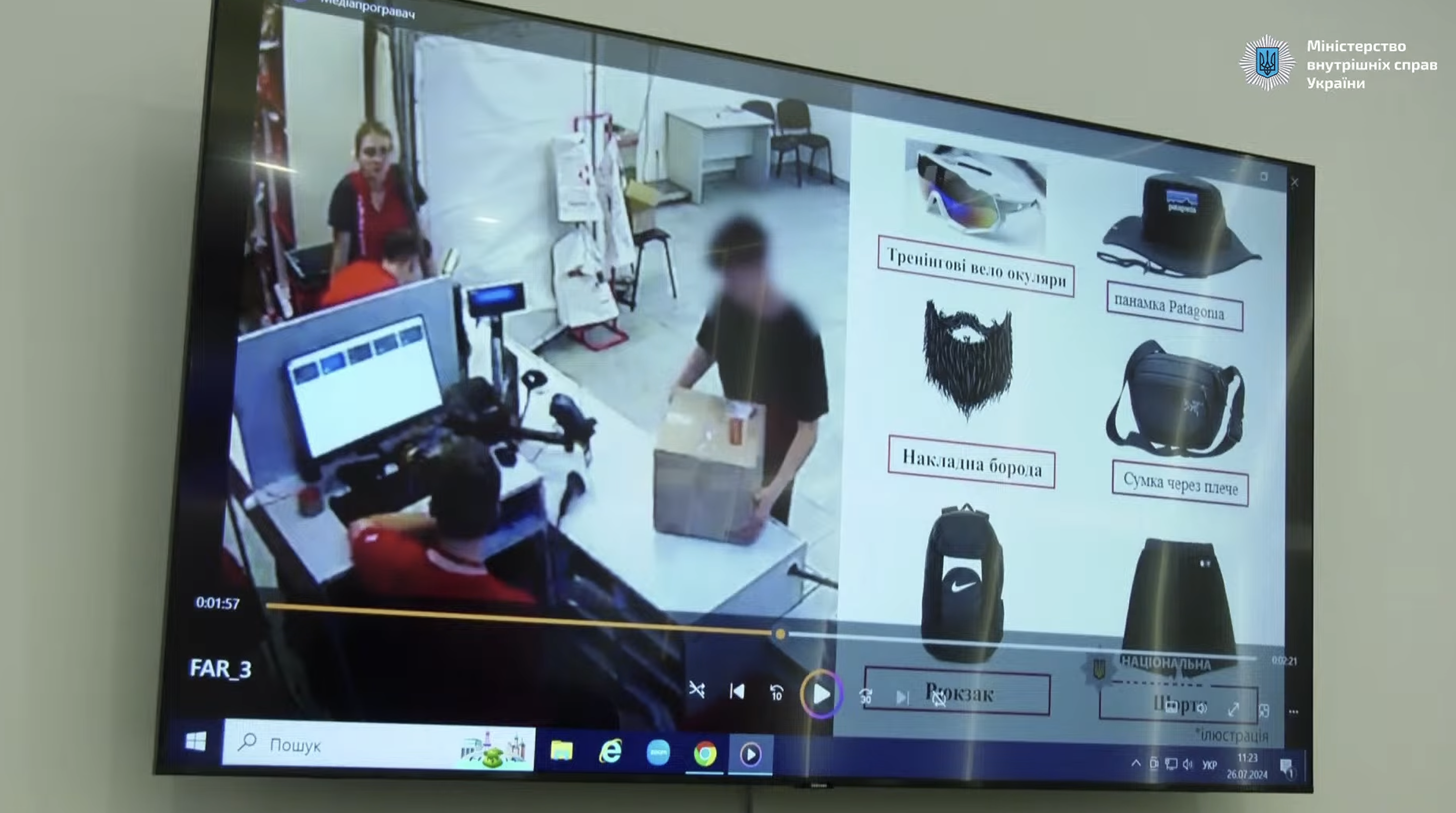
"Zinchenko prepared for the crime in advance, purchasing the necessary changes of clothing to disguise himself, glasses and a bucket hat, and establishing his intended victim’s home address, the layout of streets in the area, routes and power outage schedules at her place of residence," the judge read out.
The prosecutor explains that Zinchenko had three sets of clothes. "The first was the undisguised outfit in which Zinchenko, the defendant, visits ATB and Rukavychka stores and moves between apartments. The second outfit was what we provisionally called ‘Jordan’: Jordan shorts, a Nike T-shirt and a Nike backpack with white panels.
"And the third outfit is worn by the person who enters Masaryka Street: a Patagonia bucket hat, white-framed glasses and everything else."
So we can clearly establish that a person leaves the rented apartment in ordinary clothes, the person the defence acknowledges is Zinchenko. Then there is another outfit, when a young man emerges wearing a cap and carrying a backpack with white panels, and we never see them at the same time. Only one person leaves the apartment. A second forensic facial comparison also confirms that the person in the surveillance footage stills is the defendant, Zinchenko.

The prosecutor cites testimony from an anonymous witness as further evidence that the person in the bucket hat was Zinchenko. The witness said he recognised the suspect in Farion’s murder in the photograph released by police. He had encountered him while walking his dog in a strip of woodland. The witness participated in the hearing by video link from another court in Lviv, but only his voice was broadcast through the monitors; no image of him was shown.
"This witness confirms that it was Zinchenko. He was not wearing glasses at the time, he had on those trousers and that top, but no glasses or bucket hat. Why is this witness’s identity protected? Because he fears for his life. He was unwilling to testify without protective measures in place. At that point, no one knew what was behind it: whether Zinchenko had been recruited, whether there was a Russian connection, whether Russian intelligence services were involved," the prosecutor explains.
The defence, meanwhile, had two witnesses of its own who insisted that they, too, had seen the killer and that it was not Zinchenko. One even claimed that the killer looked more like a girl, although he used male pronouns to describe the person.
"I sat down on a bench. There was already someone I did not know sitting there, wearing a hat and carrying a bag. I sat down beside him. He seemed to say something in my direction, and I replied: ‘Are you saying something to me?’ He looked straight at me, and I saw his eyes. That person’s eyes were smaller. And the height: he is taller, whereas that person was shorter."
Where is the weapon?
The pistol used by the killer was never found. According to the judge, investigators found only a spent cartridge case. A ballistics examination concluded that the attacker had fired a non-standard 9×18 mm firearm, homemade or converted from a pistol. Searches for such a weapon were also found on Zinchenko’s phone.

In court, the prosecutor read out correspondence obtained by investigators. A person using the nickname Paranoik, alleged to be Zinchenko, arranges to buy a Stalker 2914 pistol from a user named Alek and purchases it for UAH 3,100.

A photograph of a weapon found on Zinchenko’s phone
"The witness who sent him the starter pistol has been questioned, but it was a starter pistol, not a weapon designed to fire live ammunition," prosecutor Petlovanyi says. "We have correspondence in which the defendant enquired about buying a suppressor. We are not alleging that he used that starter pistol, because we ourselves are still not entirely sure whether he could have converted it. But, for example, in the criminal investigation into Parubii’s murder, a pistol was found, yet forensic examination did not establish any connection between it and the murder, even though it was the same type of pistol." This is how the prosecutor explains that the murder weapon is by no means always the central piece of evidence.
Lawyer Romanyk suggests that Zinchenko threw the pistol in the rubbish.
"In Dnipro, the apartment where Slavko lived was in a terrible state of chaos, mess and filth.
"That is precisely why he did not want the video of the search of his home to be examined in public. There was such a mess: socks, clothes, a filthy cooker, and his toothbrush was not in the bathroom but in the kitchen, above the cooker, among the packets of grains. So his behaviour does not add up, because in Lviv he dutifully took out the rubbish every time. Yes, people say that taking out the rubbish is normal. I agree. But if you have been living in a mess and suddenly start taking out the rubbish... Even the women who rented out the apartments were very surprised that the rubbish had been taken out. Rubbish is regularly collected there and taken to a landfill. Can you imagine the sheer volume of it? That could explain why it was not found. I am absolutely certain he did not leave it in the woods. As far as I know, the woods were searched with dogs, and, if I am not mistaken, they even drained the lake, because they considered the possibility that the weapon had been thrown into it. Incidentally, another interesting detail: there was a shopping list (on Zinchenko’s phone - ed.), and it included ‘pepper’. I did not understand the pepper at first. Then specialists explained to me that black pepper can throw a dog off a scent. It was so that he could not be found afterwards. Several service dogs all lost the trail at the same spot. Well, he had prepared thoroughly. He is far from stupid, I have to give him that, but that was precisely his undoing: the feeling that he was smarter than everyone else, that he could evade and outwit them all, his attempts to learn how to cover his tracks. For example, he obtained material from Russian websites explaining how to leave a phone behind and keep it switched on to create the appearance of activity in a particular location. And he left that phone in the rented apartment."
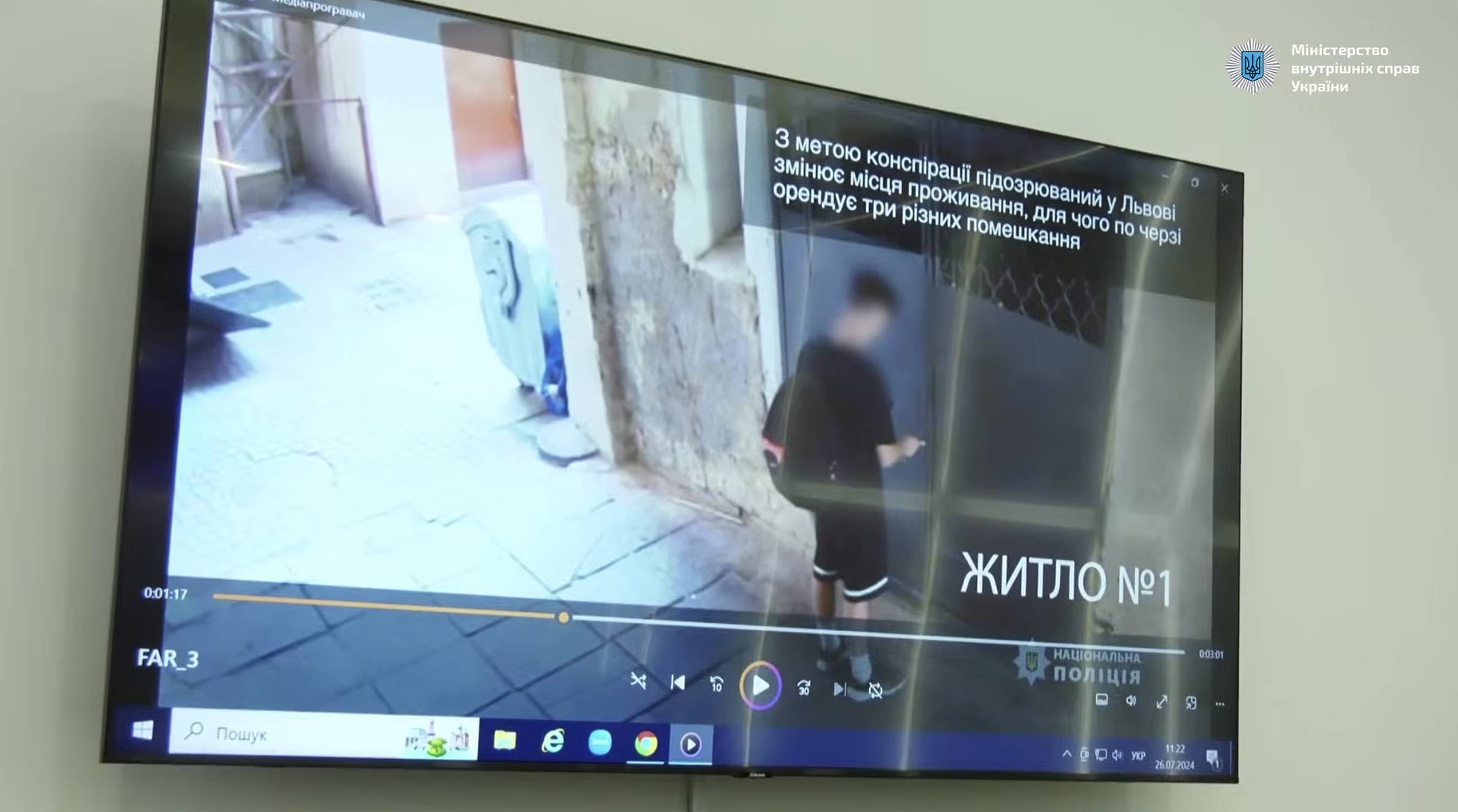
"He has several textbooks on forensic investigation, and I would say these are not even student textbooks but fairly advanced professional texts written specifically for law enforcement officers. These are substantial works that set out detailed methods for conducting pre-trial investigations. He had material on methods of investigating arson and, I believe, fraud. As I understand it, this was intended to help him conceal his digital traces," the prosecutor says.
Another piece of evidence of preparations for the murder would be the Google search "Masaryka power outage schedule" (the street where Farion lived - ed.). The camera on the building did not record the moment of the murder because it was not working at the time due to a power outage.
A Russian connection?
The only footage of the moment of the murder would appear on the Telegram channel of the Russian neo-Nazi movement National-Socialism/White Power. A woman’s scream can be heard in the video, and it shows cars that were in Farion’s courtyard at the time of the murder. The same Telegram channel also published a "liquidator’s manifesto". Its author explains his actions in terms of neo-Nazi ideology, calling Farion an "enemy of Ukraine" and a "race traitor".
Stills from the GoPro footage
The camera was never found either.
"A small fragment of video that is difficult to identify, but clearly it was meant as proof: ‘I was the one who did it.’ It was a publicity stunt: ‘I can kill in Ukraine. What can you offer me?’
"So he was willing to accept money. He expected rewards and offers afterwards from Russians, perhaps the intelligence services, perhaps neo-Nazis. I do not think he would have been particularly averse to either, because, let us say, his ideology was rather vague. For example, did you know that he was a member of Right Sector’s youth wing for a time?" says lawyer Romanyk.
When I sceptically ask whether a young man could have acted alone, almost like Dexter from the television series, the lawyer says she did not believe it either.
"When I took on this case, I too expected there to be someone who had ordered the killing. That would have explained everything. Because it is more logical to believe that the enemy, Russia, had Ms Iryna Farion killed by some young boy. But that was not what happened.
"This was conceived, planned, and carried out by one person. There is his final correspondence, which is what allows me to talk about the money. When Slavko returned to Dnipro, he felt safe. He realised that he had done it and got away with it. Then he started looking for weapons again. There were more searches about buying weapons. He was looking to buy ‘shot’ again, and he wanted a new phone. And there is this exchange: ‘Are the offers of money still on the table?’ They replied: ‘Yes, send your wallet address.’ And he sent it. So he was willing to accept money. But he was not being directed; he was not carrying out someone else’s instructions. He conceived it and carried it out himself."
The prosecutor explains that this was correspondence with representatives of the same neo-Nazi movement, National-Socialism/White Power, which posted the video showing the moment of the murder.
- Did they approach him first? Or was he, in effect, selling his services to them?
- It is impossible to establish. You see, not all of this correspondence was preserved; some of it was recovered. The chronology is incomplete, and at times the topics of conversation are missing. So it is impossible to establish who contacted whom first. There were scheduled Telegram messages in which he asked the channel administrator, in the event of his arrest, to advise his parents on how to use his cryptocurrency wallet.
- Was the cryptocurrency wallet found?
- Yes, but it contained $600–640. So there was no huge sum coming in. He made money from crypto, and he was also constantly looking into traffic monitoring or something like that, another way of earning money online. His bank accounts were checked thoroughly and in their entirety. There were no incoming transfers that would indicate he had been sent money specifically to prepare for the crime, buy a weapon, or as payment for the crime.
What was the motive?
Another piece of prosecution evidence was a covert recording made in Zinchenko’s cell at the pre-trial detention centre.
"Zinchenko was talking to his cellmate. When he was asked why he had done it, his answer was that it was out of personal animosity. When asked how he could feel personal animosity towards a victim he had never met, he replied that she insulted Russian speakers," prosecutor Petlovanyi says, recounting the recording.
In its verdict, however, the court ruled this evidence inadmissible, reasoning that covert investigative measures are used when evidence cannot be obtained by other means.
Nataliia Romanyk is convinced that Zinchenko had psychological problems.
"As I read his notes, Google searches and some of his books, I began to understand him more and more as a person. I realised that he was probably a miserable person riddled with insecurities, who felt unable to establish his own worth as a human being and an individual, and was looking for something he could do to prove something to someone. It probably had to do with his relationship with his father. His father expected a lot of him: ‘You must be a great footballer, you must get a driving licence, you must get a job.’ He also had, for example, a book called ‘Incels: How Virgins Become Terrorists’. It is a study linking the absence of a sexual or emotional partner to the possibility of sublimating that sexual energy into criminal activity. And the case materials do show that he had no relationships with girls or, for that matter, with boys. If these were the books that interested him, that lack of fulfilment could have translated into carrying out a criminal plan."
It should be added here that psychiatrists examined Zinchenko and found him legally sane.
"There is a report from a psychological and psychiatric assessment. Among its key descriptions are that he is goal-oriented and reacts negatively to criticism," the prosecutor adds.
In addition to a dossier on Farion, Zinchenko’s phone contained information on, for example, lawmaker Vatsak. The defendant had also taken an interest in the dates of Vinnytsia Regional Council sessions. Nataliia Romanyk quotes his note:
"These are the people he was considering as his next victims. I quote: ‘Akhmetov, Buzhanskyi, the head of a Territorial Centre of Recruitment (if there is one), Dmytruk, Vatsak, Poroshenko (would be ideal), Yatseniuk.’"
Romanyk is convinced that, had he not been stopped in time, Zinchenko’s next victims would have been those he believed he should kill. "Because, according to his notes, ‘I am society’s cleaner!’, he was the one deciding which citizen should be the next victim. He needed recognition. I look at his behaviour during his arrest: proud, silent, determined. He was arrested at home, bare-chested, holding his head high, almost like Che Guevara. So this can be explained by his worldview and the books he read."
The prosecutor adds: "You could say that he is quite intellectually complex. When his father says during questioning that he would discuss Kant with his son in the kitchen when the boy was 16, that says a great deal. I think we would struggle to find many teenagers who discuss Kant with their parents. The number of books speaks for itself. His phone was full of them. The 52 were just those that interested us: ‘Preparing for Terror’, ‘Terror as a Method of Revolutionary Struggle’, that sort of thing."
He certainly understood that he could be arrested. His Google searches included, for example, "interception plan" and "suspended prison sentence". But we were unable to ask whether Viacheslav understood that he could face a life sentence rather than a suspended one. The defence, specifically lawyer Diana Kara, declined an interview.
What was left out of the case?
From the outset, hearings in Zinchenko’s case were accompanied by confrontations between his supporters and those demanding punishment for the defendant. Supporters attended almost every hearing and greeted Zinchenko beside the prison van. As a result, security staff thoroughly screened everyone attending the proceedings. Shouts of "Free him!" were drowned out by cries of "Shame!"
At one hearing, Zinchenko supporter Olena Petrus from Brovary even told Farion’s daughter: "You killed your mother yourself. You have more motives."
Journalists from the "Zmovy" project identified the most active members of the defendant’s support group. A private Facebook group publishes posts asserting his innocence. One of its administrators, who uses the name "Svitlana Volodymyrivna", livestreams daily on TikTok. According to the investigation, these broadcasts mainly spread false claims about the Farion case and demean the victims. The journalists established that her real surname is Nazarenko and that she organised the support group while living abroad, without ever attending a hearing.
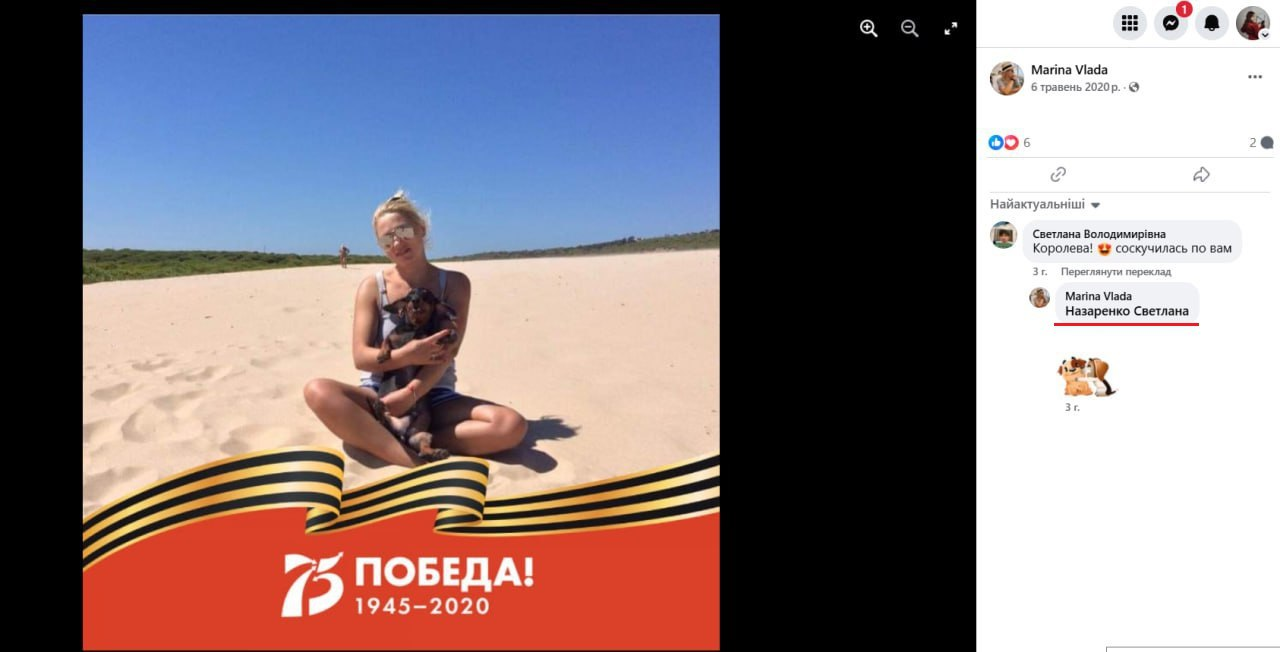
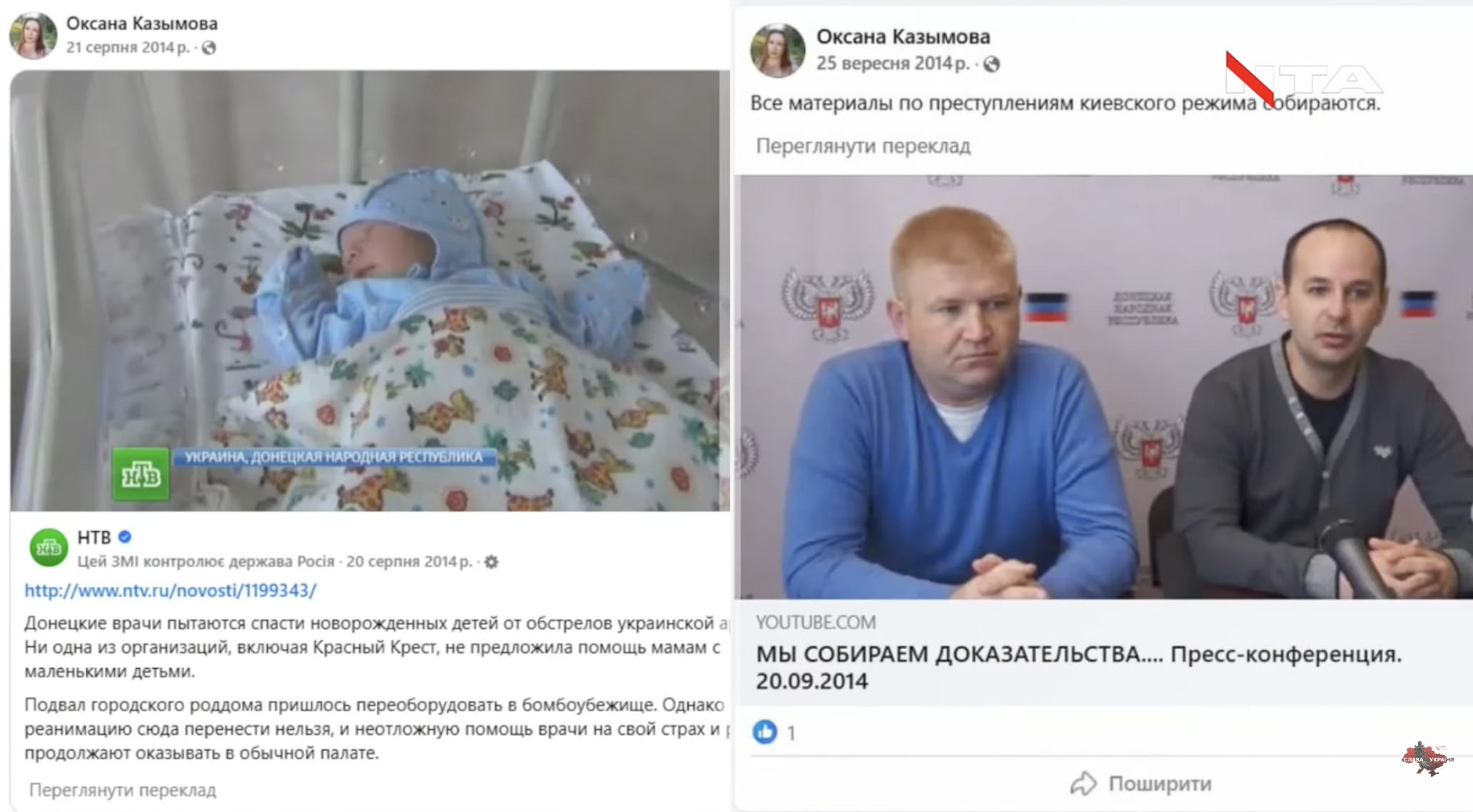
Among the group’s members, the journalists also name Oksana Kazymova, who, after hostilities began in eastern Ukraine, accused Ukrainian soldiers on Facebook of shelling civilians and shared propaganda material.
"I am speaking about this for the first time today," says the Farion family’s lawyer.
"There are so many things the public does not know about. For example, Sofiia (Farion’s daughter - ed.) and I receive pictures depicting Sofiia lying in a coffin. People order rat poison and have it sent to me. They send me a wheelchair, things from sex shops, fake blood, skeletons and ridiculous books. So there are people who, as I see it, are not entirely rational. I do not know what they hope to achieve. Could we ask law enforcement to investigate this? Of course we could, but I am not Don Quixote, tilting at windmills."
Perhaps that is a mistake, however, since most of the supporters come from other cities. Law enforcement would do well to check whose money they are using to travel to court hearings, print T-shirts bearing Zinchenko’s face and socialise in local cafés, and whose money they are willing to spend on a VIP cell for him.
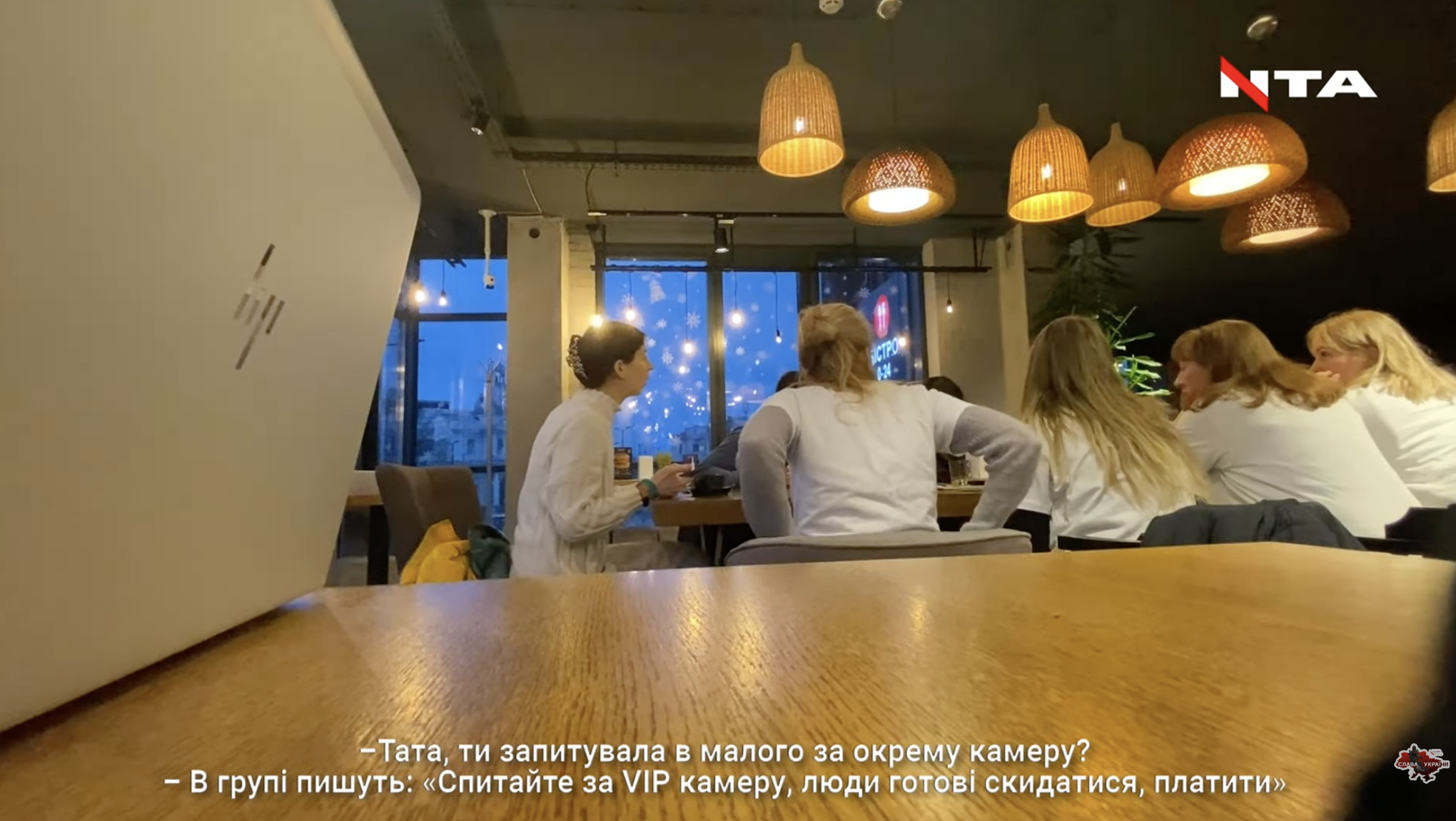
Screenshot from the Zmovy project’s video investigation.
What happens next?
The verdict will take legal effect once the appeal period expires, on 30 October. Zinchenko’s mother has already said she will appeal. After the hearing, Zinchenko himself smiled as he got into the vehicle with his guards and made a heart shape with his hands.
Screenshot from a Suspilne News video.
Olena Lunkova, for Censor.NET


