


"Imagine what it’s like to serve in military knowing that your commander cracked down on Maidan protests while you stood on other side of barricades"
That is how subordinates of Ihor Plakhuta, commander of the Territorial Defense Forces, voice their anger. Personnel in this branch of the military say they urgently need changes and reforms, and that Plakhuta must be replaced because he only shows that he values his subordinates in words and in front of the cameras.
I think it is wrong to say that territorial defense is no longer territorial at all simply because its troops generally fight wherever they are needed, far from home. All of Ukraine needs defending, and territorial defense troops must defend it wherever necessary. So the Territorial Defense Forces are doing exactly what they are supposed to do. But they were originally created to defend the communities where members of these units live. The concept had already changed by the summer of 2022. Perhaps if the military had had enough personnel, that would never have happened, and the territorial defense units in Cherkasy and Lutsk would have continued preparing for a possible attack from across the border and serving around their respective cities. But it has long been an open secret that territorial defense troops are used to plug gaps on the front line, as the saying goes. They are attached to combat units that do not have enough personnel of their own to hold their positions. That became the norm. That is why territorial defense troops say they were "lost in a card game" and ended up where they were never supposed to be…
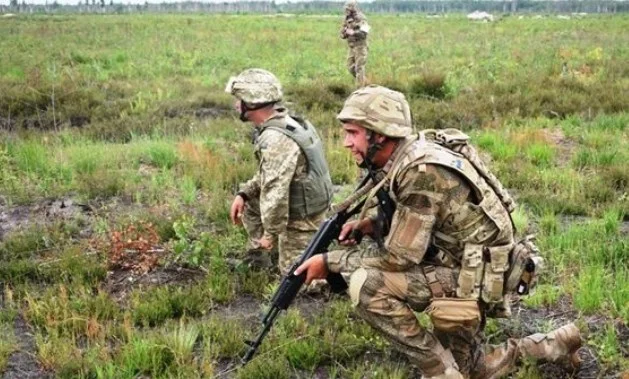
In 2022, after the enemy was driven back from Kyiv, Chernihiv and Sumy, talk began of disbanding the Territorial Defense Forces and transferring their personnel to combat brigades. Officers who fought on different sections of the front and saw territorial defense troops in their own areas of responsibility still think that would have been the right decision.
The situation is now getting worse because these units still mostly fight as attachments to other formations, where their views carry little weight and little thought is given to what they are put through. For some reason, this branch of the military was never reorganized into corps. And the commander of the Territorial Defense Forces is a man whose reputation is directly tied to the crackdown on Maidan protesters in December 2013. That is an established fact, and it angers those serving in the Territorial Defense Forces. So does the fact that Ihor Plakhuta, who attained the rank of general back under Yushchenko, has never commanded a single Ukrainian army unit during the Russo-Ukrainian war and has no combat experience apart from that same attempt to disperse the Maidan protesters. Even that experience hardly speaks in his favor. After all, he failed. Unarmed people who stood up for their beliefs proved stronger than a security officer who was prepared to carry out Yanukovych’s criminal order… Yet in time he went on to join the distinguished ranks of the Armed Forces of Ukraine and take command of a force made up overwhelmingly of those very same volunteers from Maidan!
A few days ago, a series of stories about what goes on in the Territorial Defense Forces appeared, written by someone the command had literally driven out of the service. The author uses metaphor to describe the rules and practices in place in today’s Territorial Defense Forces. Those still serving are quite fond of both the stories and the practices they describe. But we asked people connected with the Territorial Defense Forces about the commander and about how personnel are treated. We cannot name those who shared their views, but we can assure readers that all of them are from within the force.
"THE TERRITORIAL DEFENSE FORCES HAVE BECOME ‘DONORS’ TO OTHER BRANCHES OF THE MILITARY, AND NO BATTALION OR BRIGADE COMMANDER HAS BEEN AWARDED THE TITLE OF HERO OF UKRAINE"
"On November 21, we will mark the 13th anniversary of the start of Euromaidan, which grew into the Revolution of Dignity. Many of those who took part are now fighting on the front line. Most were civilians who had never pictured themselves in the military but took up arms to defend their country."
- Just imagine what it’s like to serve in the military knowing that your commander cracked down on the Maidan protests while you stood on the other side of the barricades. What shared values are you talking about? — asks a service member from one of the Territorial Defense Forces’ units.
"Plakhuta must go!" That conviction is felt especially keenly as another anniversary of Maidan approaches.
- And why have they scattered us along the front line? Why aren’t we in command of our own brigades? Why can others fight as independent units while our battalion and even individual companies are always attached to other formations? How are we any worse? — asks another soldier, visibly frustrated. He serves in a battalion of a Territorial Defense brigade and has never once seen his commander.
This is another question that both rank-and-file troops and commanders in Territorial Defense units are asking.

"The Territorial Defense Forces need an immediate and thorough overhaul. The current command, led by Ihor Plakhuta, has shown poor management, a lack of authority, and an inability to defend the interests of its own units. The commander’s record makes matters worse. His involvement in the crackdown on Maidan undermines the trust of his personnel and makes it impossible for him to advocate effectively for the Territorial Defense Forces. The damage to his reputation is dragging down the entire force.
Instead of standing up for its people, the command adheres to a toxic Soviet style of management built on shouting, humiliation, and a refusal to listen to subordinates. Competent, intelligent officers are pushed out and replaced with commanders who are ‘convenient’ for the leadership. The force is losing personnel at an alarming rate, and developing new professionals in a rotten system is virtually impossible.
The Territorial Defense Forces have become ‘donors’ to other branches of the military. Entire brigades, battalions and even combat-ready companies are ruthlessly broken up, leaving troops unable to fight as cohesive units under their own commanders. The Territorial Defense Forces remain the only branch of the military that has yet to adopt the corps system and continues to operate under an outdated, inefficient model.
The units are also treated deeply unfairly. When Territorial Defense troops fighting as part of the Ground Forces win, others get the credit. When they lose positions, the Territorial Defense Forces take all the blame. Although Territorial Defense units have fought since the first days of the full-scale invasion, no battalion or brigade commander has been awarded the title of Hero of Ukraine in that time. That shows how little regard the senior command has for its own troops."
"THE ASSAULT ON MAIDAN PROTESTERS WAS TO BEGIN SIMULTANEOUSLY FROM SEVERAL DIRECTIONS, WITH FORCES ADVANCING FROM MYKHAILIVSKA AND KOSTOLNA STREETS AND EUROPEAN SQUARE"
"By early afternoon, Maidan was already crowded. December 10, 2013, was damp and gray in Kyiv, another gloomy day in the winter of the revolution. Despite the weather, people gathered in the square to protect the main stage and the tent camp from unlawful actions by security forces carrying out the orders of Yanukovych’s criminal regime. A stocky man walked among the crowd, close to the line of confrontation. He smiled warmly at everyone he passed, as though he genuinely wished everyone there well.
The assault was to begin from several directions at once. The Internal Troops and Berkut moved in from European Square and from Mykhailivska and Kostolna streets, trying to clear central Kyiv completely. Instytutska Street was another approach. The line of confrontation ran directly beneath the pedestrian bridge, and the barricades built under it became known as the ‘Lviv Gate.’
The Maidan Self-Defense’s most experienced companies held the gate. They would be the first to form volunteer battalions during the Anti-Terrorist Operation, and their fighters would return to the military as veterans in February 2022 and form the backbone of Ukraine’s Territorial Defense Forces.
A black karakul hat gave away the rank of the man, gray as a shadow. He was a general. People looked at him with undisguised disgust as he clambered onto the parapet beneath the pedestrian bridge, slipped in among people wearing green ‘PRESS’ vests and peered intently into the crowd, as though he wanted to count everyone there.
Despite the ominous black column of security forces, a spirit of freedom and resolve prevailed among Maidan’s defenders. Their only protection was orange construction helmets and a crucifix set against a blue-and-yellow flag. That was all.
On the other side stood hundreds of men with jaws clenched, cheekbones sharp and temples throbbing. In protective knee pads and fingerless leather gloves, the attack dogs of the law enforcement system stood in formation, trained to cut through crowds and tear them apart. Behind them, shifting from foot to foot, stood soldiers of the Internal Troops whose job was to grab people and bundle them into prisoner transport vans.
- That’s General Plakhuta! - Someone among the protesters shouted.
Then a little-known Internal Troops commander whom Yanukovych had entrusted with clearing Maidan, and now the commander of the Territorial Defense Forces of the Armed Forces of Ukraine, he stopped abruptly, tucked his neck into his jacket collar, turned, and disappeared behind the security forces. He left only to return. The assault would begin at around 1 a.m.
…It was a brutal beating. More than 50 people were injured. But despite the efforts of Plakhuta and Yanukovych’s other security forces, Maidan held. The coordinated actions of the Self-Defense companies enabled them to hold out until morning, when the first metro trains brought thousands of Kyiv residents back to Independence Square. They were unwilling to hand power over to criminals and their lackeys."
- Are you trying to teach me? - Lev growled.
- No. Nobody tries to teach you anymore. They just go around you like a pothole in the road. The wiser ones quietly steer around it. The younger ones fall into you, cart and all — the retired colonel sums up aptly.
"THE TERRITORIAL DEFENSE FORCES ARE THE SECOND-LARGEST BRANCH OF THE MILITARY"
"Everything the Territorial Defense Forces have achieved has come in spite of the current leadership. Those successes rest on the dedication of capable commanders on the ground who can supply their units independently, build direct links with their peers, and deliver results. The command, however, treats such initiative with hostility. Effective teams are deliberately broken up, and their leaders are pulled out and transferred to other units.
What changes do the Territorial Defense Forces need?
The troops need a modern, charismatic commander with an impeccable record. They need a leader with the strength and willingness to stand up for the Territorial Defense Forces, protect their people, and drive positive change. Building a new, effective command system means opening paths to promotion for modern, educated, and honest officers.
The new approach to command should be based on the following principles.
The effectiveness of staff work is measured solely by results on the battlefield.
Combat experience must be a prerequisite. Every officer at a higher-level headquarters must have firsthand front-line experience from the full-scale invasion. The front is a complex mathematical equation that keeps changing, where formulas devised behind a desk do not work. People who have been through combat think differently. They are more creative, more adaptable, and able to make the most effective decisions after careful analysis.
Competence over decorations. The leadership should put every medal it has earned in the past in a box until victory. Personnel should be assessed solely on their competence, integrity, and psychological resilience, regardless of rank. Every staff officer should become a true comrade-in-arms to commanders on the ground.
To realize the full potential of the Territorial Defense Forces, the second-largest branch of the military, we need to bring all brigades, battalions, companies and individual crews under a single command. We need to stop using our units to ‘plug gaps’ on the front line.
The Territorial Defense Forces have a unique core of personnel, from soldiers to colonels, who gained their experience and rank in combat. If we stop scattering them, let them build their own command structure and give them basic resources, the Territorial Defense Forces will be several times more effective. Our greatest competitive advantage is the wealth of knowledge and skills our personnel bring from civilian life.
The spirit of the 2014 volunteers is still there. So is the spirit of Maidan, which helped us hold then and will help us now. It lies beneath the exhaustion that has built up over these years of hard fighting. If capable professionals take command, the Territorial Defense Forces will have one less front to fight on. Then we will show what we are truly capable of on the battlefield."
Violetta Kirtoka


