


Yehor Cherniev: "Trump has almost no leverage to put pressure on Russia. So all he can do is put pressure on us"
Last week was full of events that are hard to ignore. New details about Operation "Carthage," which caused quite a stir; news about the resumption of the so-called peace talks; and the results of the U.S. congressional elections, on which continued support for Ukraine will largely depend—all of this has once again brought the issues of internal security and international aid into sharp focus.
These issues require careful consideration and assessment. We therefore decided to speak to Yehor Cherniev, a Member of Parliament from the ‘Servant of the People’ faction and Deputy Chair of the Parliamentary Committee on National Security, Defence and Intelligence, to try to make sense of what is happening.
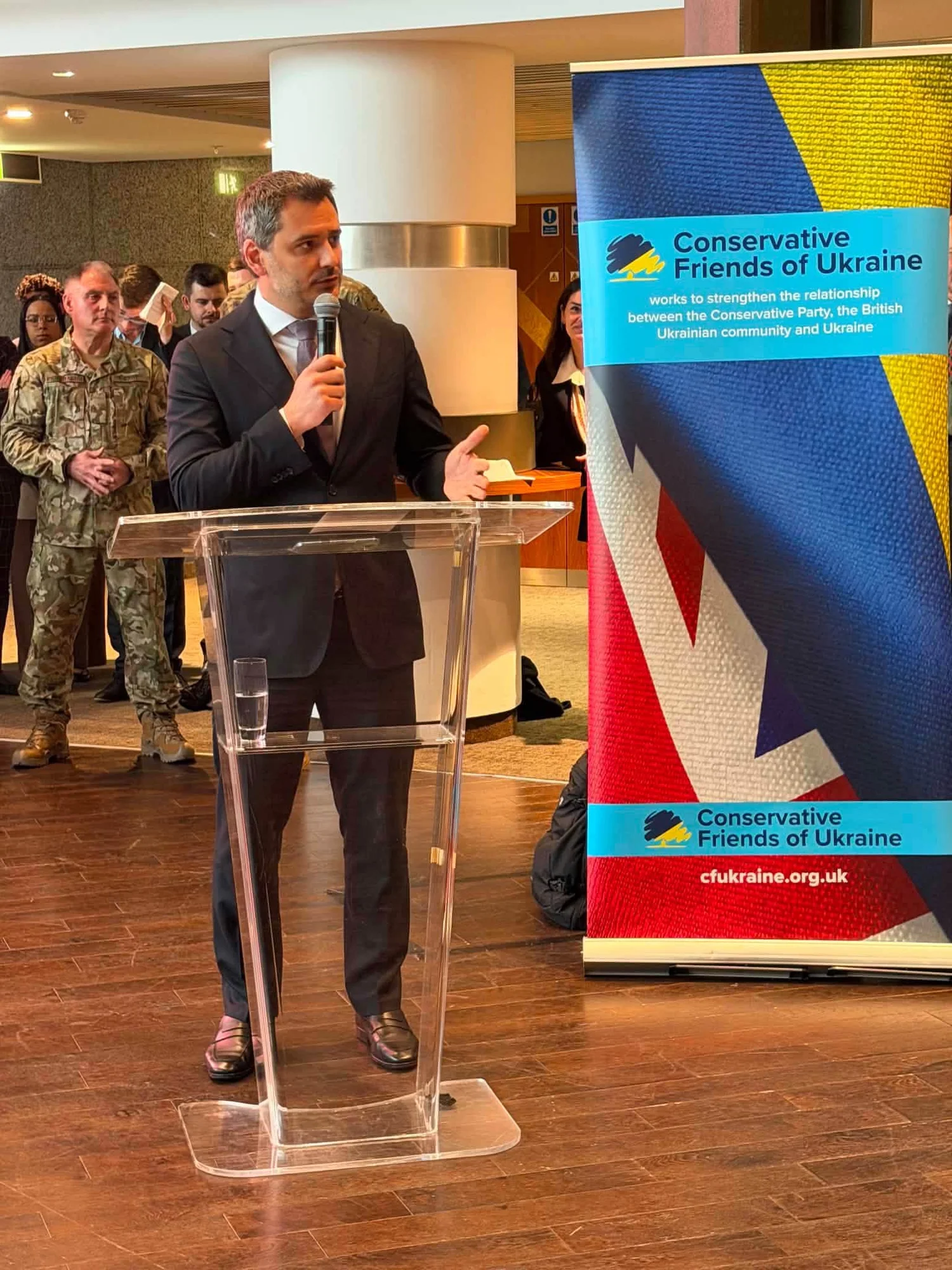
We arranged the interview on Monday ahead of a Committee meeting at which Oleksandr Poklad, Acting Head of the Security Service of Ukraine (SSU), was due to attend to give a briefing on ‘Carthage’. However, as it later transpired, he never actually appeared before the MPs.
- "Carthage" shocked and even frightened many – new footage revealed that criminal networks may have been operating in Ukraine for years with the complicity of high-ranking law enforcement officials. Does this not pose a threat to Ukraine’s national security?
- It also came as a shock to me that the suspects in this case are of such high rank. On the one hand, this whole affair is absolutely unacceptable. I hope that our law enforcement agencies will see this case through to the end, and that this syndicate will cease to exist altogether. On the other hand, I would draw attention to the statement by Nebytov from the National Police, who explained that the police had documented ‘Khimprom’s’ crimes and, six months ago, dismantled the U420 chain of shops. Therefore, we must not view all this one-sidedly. We must now await the court’s decision.
- Finally, the President has also spoken out on this matter, calling it shameful and announcing that he has approved a draft law reinstating the requirement for all SSU staff to submit asset declarations. Admittedly, a debate has already arisen on this issue – with some arguing that it could pose a certain risk due to the disclosure of personal data of security service personnel. Will you support President Zelenskyy’s proposal?
- We discussed this issue in the Committee. Opinions were divided. On the one hand, everyone should be equal before the law and disclose their declarations. On the other hand, there are operational officers whose addresses the Russian Federation – in particular the FSB – is simply waiting for in order to work against them. It seems to me it would be better to ensure that only NABU and the NACP have access to their declarations. As for the declarations of the SSU leadership, these could be made publicly available, as this is information of significant public importance, but with restrictions – excluding residential addresses and details of family members. Such a ‘Solomonic solution’ would be the best course of action until the end of martial law.
- So, in his recent role, could Duka have been subject to such public disclosure?
- I think so. This should apply to the head of the service, his deputies and the heads of departments.
- Should there be personnel changes at the head of the SBU? There has already been much talk that Poklad should resign.
- That decision rests with the President.
- Could Poklad have submitted a letter of resignation, given the circumstances?
- He could. But the investigation files make no mention of his personal involvement or guilt.
- There is also political responsibility.
- Correct. But in this case, the decision rests with him or, as I said, with the President, given that the SSU falls under his direct authority. However, it is worth remembering that ‘Khimprom’ has been in existence since 2015, whilst Poklad took up his post relatively recently and has been focused on conducting operations against the enemy.
- But NABU promises to continue, explaining that we have seen only "the tip of the iceberg". Although, I repeat, even that is shocking. And not only because of the collusion between criminals and law enforcement, but also because of the nature of the methods used to exert influence over those who fall out of favour - beating people with a hammer, dousing them with acid…
- This is the sort of behaviour you’d expect from gangsters in the 1990s. I, too, was stunned that such things still exist in 2026. This is the most sensitive part of the whole affair, in which, according to the recordings, law enforcement officers in particular were implicated.
- The recordings also mention Minister K., whom the perpetrators sought to influence – it is clear that this refers to the then Minister of Internal Affairs, Klymenko, who currently heads the National Security and Defence Council. He himself has already commented on this episode, admitting that "freaked out". What does this mean?
- People can talk about anyone and voice whatever intentions they like on the recordings. If bribery has taken place, it must be established in court, and only then should the appropriate decisions be taken.
I understand that NABU and the SAPO need to demonstrate their work, but it is very important that this is followed by actual convictions, so that there is a body of evidence capable of convincing the court and the High Anti-Corruption Court, which is part of the same hierarchy.
- It seems to me that you are somewhat sceptical about the work of NABU and the SAPO.
- On the contrary, I respect their work, but legal and procedural actions should not be replaced by certain emotional videos, which, of course, stir up strong emotions. The task of law enforcement agencies is not to create entertainment content, but to gather evidence in such a way that it leads to court convictions and prison sentences.
- This story also has an important international dimension. Part two "Carthage" coincided with the resumption of the trilateral negotiation process aimed at ending the war. Might this work against us?
- Indeed, it does not work in our favour, but opinions vary. The day before yesterday I returned from Ireland, where a security conference was taking place, attended by our colleagues from various countries. Naturally, this information had reached them, so they asked me about what is happening here. I explained. They remarked: ‘But it’s good that such schemes are being exposed. It means that the law enforcement agencies are doing their job. Yes, albeit slowly, the country is being cleansed.’ That is the view held by our European partners. But I’ll say it again: the main thing is that any high-profile investigations are followed by actual court sentences and lengthy prison terms.
- And what about the US reaction?
- The US acts in its own interests, which, unfortunately, do not include Ukraine. They are keen to pull Russia away from China so that they do not become allies. Both Republicans and Democrats are working on this, but in different ways. Ukraine is merely one of the pieces on this ‘chessboard’.
- So the current shift in the Senate’s composition won’t be of much help to us overall?
- If we analyse it within the framework of the argument that the United States’ main objective is to sever the Russian Federation’s ties with China, things might improve slightly. But I wouldn’t count on a radical change in US policy overall. Let me explain why. Republicans and Democrats have different views on how they want to implement the intention I mentioned. The Republicans, represented by Trump, are prepared to lend a helping hand to the Russian dictator, tie him to them economically, and lift sanctions so that, firstly, China does not swallow up the weak Russian Federation, turning it into a satellite state. Secondly, to ensure that the Russian Federation remains more closely tied to the Western world than to China and, at the very least, remains neutral in any future confrontation between the US and China. Although, to be honest, it is very naive to count on any of this, because over the past few years Russia has grown much closer to China than it has in recent decades. The Democrats, meanwhile, want to weaken the Russian Federation to such an extent that it can no longer be a strong ally for China and remains a neutral country, albeit one with fewer resources and capabilities. However, neither political force wishes to see Russia’s complete collapse, as they believe this would cause more turbulence and problems on the Eurasian continent than even a weak, yet controlled and predictable, Russia.
I therefore assume that the new Congress may provide us with some military aid next year. I wouldn’t say that the US will once again take on the role of ‘number one donor’ to Ukraine in military terms. I also think that issues which are sensitive for us – intelligence data, Starlink and the sale of weapons to us under the PURL programme – will simply be subject to stricter controls.
- How should we proceed during this transitional period until early January next year, when the new Congress takes office?
- I expect the pressure on us will continue. And it may even intensify, because for the time being Trump is still in full control, and before the Democrats take office he may fulfil the promises he made to Putin regarding the lifting of sanctions, the restoration and improvement of their economic ties – but only as a result of the war ending. He has almost no leverage to put pressure on Russia – there could be sanctions, but these would affect the US economy just as much. So all that remains is to put pressure on us. There aren’t many tools available here either. I don’t think they’ll go so far as to shut down Starlink, because it’s under contract and the Europeans are paying for it. If they breach the contracts, there could be congressional investigations. No one wants to risk their freedom for the sake of Trump’s ‘lame duck’ anymore. Intelligence data also has a certain safeguard in Congress. My personal friend Mike Turner previously, at our request, introduced an amendment to the 2026 defence budget (and this should continue to be the case) stipulating that any decision by the Pentagon or the CIA to cut off intelligence data must only be taken after consultation with the relevant congressional committee. In other words, they must come forward, explain why this is necessary, justify their position, and only then make a decision. I do not rule out the possibility that the US might try to step up pressure on Europe, which is helping us, although I do not see any prospect of this having a real effect.
In fact, if we look at it rationally, the current period is the best time for Russia to withdraw from the war precisely because, whilst Trump still holds full authority, he can fulfil the promises he has made. A Democratic administration, however, would not guarantee this. In principle, no one in Congress will be talking to Putin after 3 January next year. After that, he will have only one option left – to continue the war, which is not the best outcome for either him or us. But counting on Putin to act reasonably is a risky business.

- So there are not even any signs that he is ready to end the war…
- The question here is whether there are any reports on his desk – not even from military officials, but from economists – detailing the true state of the Russian economy today. It’s not for nothing that they’ve now started cutting ‘funeral’ payments and reducing the sums in new contracts. For them, this would seem to be a ‘sacred cow’. The last people whose payments they would cut are precisely the military, because for Putin, war is the meaning of life. I’m not even talking about the social sector – their teachers’ salaries have been paid. When they received their September pay in October, there was a wave of redundancies, because their wages had been cut to a level roughly equivalent to what cleaners earn. All this is happening for a reason, too. In other words, they know full well what their economic capabilities are…
- But that isn’t stopping them!
- Yes, they’re going all out. Putin is banking more on a ‘black swan’ event in 2027 in the form of elections in Germany and France, which, in his view, could turn the tables.
- Indeed, next year there will be important elections in a number of European countries – apart from Germany and France, they will also take place in Italy and Poland. How significant are the risks for us should there be a change of government there? It’s already clear: if the majority sides with pro-Russian forces, we’ll face difficulties.
- Yes, things will be more difficult for us under such circumstances. The greatest threat to us is the outcome of the German elections. Although, when I speak with my German colleagues, they take an even more optimistic view of the situation, despite the rising popularity of the ‘Alternative for Germany’ party. They already have specific plans on how to maintain the democratic coalition and prevent the AfD from coming to power, even after the elections. I hope they succeed. But we shouldn’t rely solely on that. We must be prepared for any scenario. The biggest problem for us is that Germany is currently the number one provider of aid to Ukraine. This year alone, we have received 13.5 billion euros from them. This is a significant proportion of all the aid we receive. I think Putin is counting on the fact that without the support of European countries, it will be easier to break us. That is what he is waiting for.
- So, will the rise of pro-Russian forces in Europe lead to a reduction in aid to Ukraine?
- We are currently receiving aid through several programmes. The first is a pan-European reparations loan, which is set to run for two years. Where might the problem lie? The decision to allocate the funds has already been taken, but not the decision on how they will be distributed. That is decided at the level of the European Commission or the European Council – that is, by representatives of the leaders of European states. There could be some surprises here – for example, certain supporters of Fico (if there is a change of government in the countries we have mentioned) might try to block the actual distribution of the funds, in which case we would not receive them.
The second way of obtaining aid is through bilateral relations, where certain countries set aside funds in their budgets to support Ukraine. Nothing should change in this regard. Although, again, the arrival of new forces in power could lead to a review of certain previous internal agreements.
- So will we need to adapt our approach to the situation?
- We are already trying to work with those parties that stand a chance of coming to power in those European countries. It is difficult, because there are both staunchly pro-Russian political forces and nationalist-pragmatic ones that are focused purely on their own domestic issues. We can work with the latter, as we can convince and demonstrate to them that the war in Ukraine is a war against the Western world, particularly Europe. It is only a matter of time before the Russian Federation decides to confront them.
- Do they all understand this?
- More and more of them do. I’ve been telling them this since 2022. They nodded, but brushed it off. They believed they had the United States and its ‘security umbrella’ behind them. That confidence no longer exists in Europe. They now realise that they must rely, first and foremost, on their own strength and on Ukraine, which can share its experience and technology and is currently acting as a ‘shield’, buying them time to rearm.
- The Baltic states, for their part, have long made it clear that they realise Russia could attack them…
- At the political level, it is not only the Baltic states that understand this. I am in contact, for example, with colleagues from the Netherlands. They are absolutely clear about the potential direct threat from the Russian Federation and are preparing for it – rearming, conducting exercises and running public awareness campaigns.
What can one say when even in neutral Austria, in Vienna, air-raid drills were held a month ago. The same happened in Warsaw, Poland. In other words, they are gradually preparing their societies for the possibility of war, although, as I said, this was not previously considered a real possibility. Therefore, all this assistance is also part of a pragmatic approach from the point of view of their own security. This is yet another argument for the need to continue it, regardless of who comes to power in those countries where elections are due to take place.
- This raises the question of whether a Third World War – which politicians have started talking about again – is possible? What are your thoughts on this? Are we on the brink, or is it already underway?
- In its hybrid form, it has been going on for quite some time. One need only look at the map from the Institute for the Study of War: the number of cyber-attacks has increased exponentially since 2022. Our European partners acknowledge this. Moreover, NATO is revising its doctrines in line with the challenges of modern warfare.
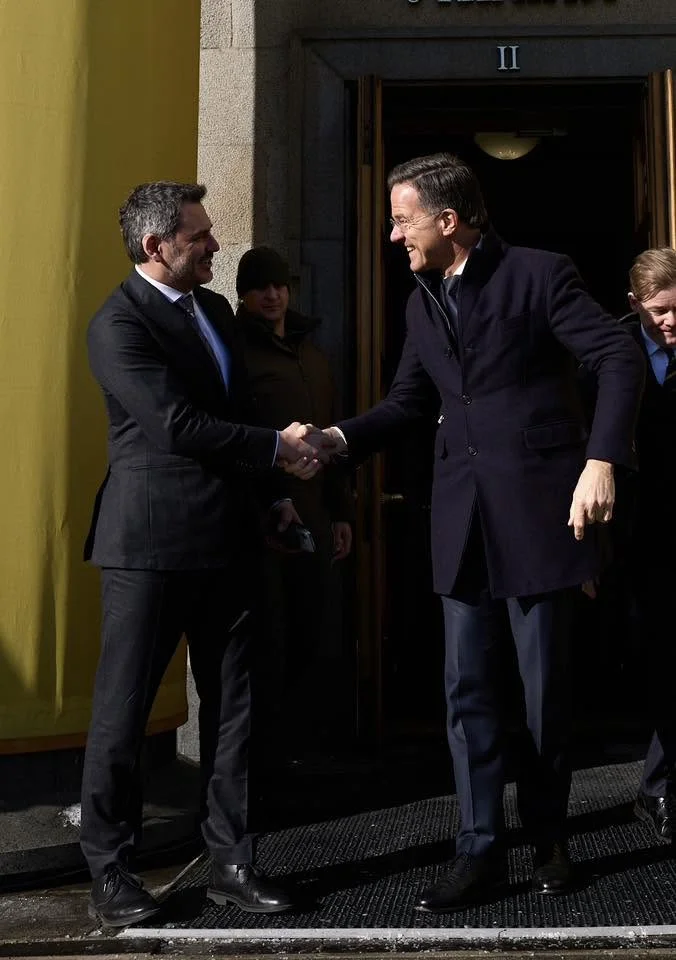
What they are observing in Ukraine is prompting them to review and adjust their own approaches. The irony is that it is not we who are adapting to NATO’s standards, but the other way round. In other words, there is preparation and an understanding that the likelihood of a direct military confrontation with the Russian Federation is very high.
- Under what circumstances might Russia do this?
- Firstly, if it decides to go all out to cut off aid to Ukraine. Secondly, because it realises that by 2030 Europe will have re-armed, so it will become increasingly difficult to do so later on. In terms of the format, this could involve ‘little green men’, as in Crimea, or missile strikes – Russia may be preparing a whole range of different methods. That is why I believe the likelihood of such a scenario is quite high. But Europe still has time.
- How much time? Until 2030?
- I don’t think it will not have time until 2030. There is a high probability that by then the Baltic states and the Gulf of Finland could be affected, because this is a maritime route – both military and commercial.
- The Russians are modernising their missiles and Shahed drones, and ramping up their production. Unfortunately, this is bad news for us, as we have problems with our air defence, a point the President constantly emphasises. He recently stated that without urgent funding for the contract for Patriot , Ukraine may not receive these systems until 2030. The situation regarding the missiles for them is also well known. What should we do?
- Here, incidentally, what is more interesting is not so much how quickly the Russian Federation is scaling up its deployment of the latest weaponry, but rather that orders for heavy armoured vehicles – tanks and IFVs – are still being placed there. These are hardly ever used in Ukraine and are instead sent to storage. This may indirectly suggest that Russia is, after all, preparing for a major ground operation. Right now, they have a ‘window of opportunity’, precisely because Europe itself has not yet learnt how to fight using drones. It is very easy for us to destroy such armoured vehicles. But for our partners, should they come into contact with them, it will be much more difficult to do so.
Returning to your question regarding air defence, I would say that the problem today is not even the funds for procurement – as these have been allocated – but the fact that Lockheed Martin, the main manufacturer of missiles for the Patriot system, does not have the production capacity required to meet all our needs. Moreover, we can only count on a portion of what is produced, as the rest goes under previously planned contracts to other countries and, as a priority, to US stockpiles, because they used up a great deal during the war in Iran. What are we doing in this situation? We are negotiating with our partners to replace the missiles they currently have in stock with those that will be produced for us in one to three years’ time.
- And are they agreeing to this?
- Partly. But from the point of view of their defence capability, let’s put it this way, it’s better for them, because in the long or medium term the balance doesn’t change for them. It’s not at all the same as if they’d simply handed them over to us and then been left without any missiles.
But, again, we must take into account the significant threat posed by the Russian Federation and the shift in the United States’ priorities, as they increasingly focus their attention on the Pacific region rather than on the defence of Europe. All of this directly influences the decision regarding the transfer of those very missiles to Ukraine.
- Europe could offer us an alternative Patriot in sufficient quantities? Or is that too expensive and time-consuming?
- The problem is that the Aster 30 missiles – the European equivalent of the Patriot SAMP/T, which intercept ballistic missiles – are manufactured, as they say, on a piecemeal basis: dozens a year, whilst the systems themselves number only a few over that period. In other words, they exist, but require significant scaling up.
But we’re also working on the Freya anti-ballistic missile. We hope this could also be a solution.
- We’re constantly working on missiles and drones, but there’s a problem…
- We’re now moving into a different technological cycle where simple solutions no longer work. For example, FPV drones, which used to be something you could assemble in your kitchen, are already starting to become obsolete. Take the jet-powered Shaheds, for instance – that’s a much more complex and expensive technology. Intercepting them requires appropriate capabilities. We can no longer do this with a cheap interceptor. Overall, this makes the war more expensive and technologically more complex. Missiles are not a simple technology. There are around 10–12 countries in the world that produce their own ballistic missiles. This is because they are high-tech weapons that require a long development cycle and substantial funding. Our Sapsan took 10 years to develop, if not longer. The fact that the FP-7 ballistic missile was launched within two years is more of a miracle than the norm. But it’s not enough to simply build a test prototype that flies once; you need to fine-tune the process so that every missile is identical down to the micron. An anti-ballistic missile has slightly different guidance parameters, but this is no simple task either.
- But you are aware of the prevailing public opinion regarding FirePoint, particularly following certain interviews with the company’s management?
- I do. But, again, we simply take it as a given that our arms market has grown 50-fold since 2022, and 80 per cent of it consists of low-tech products. To put it simply, FPV drones or projectiles aren’t, as they say, Rocket Science. And there aren’t that many companies producing genuinely high-tech products. That’s why it seems to us that making an FPV drone, a long-range UAV or a rocket is almost the same thing. But that’s not the case. It requires more time and significant investment.
- By the way, recently ‘Ukroboronprom’ received a new head. The post was taken by Ivan Havryliuk, who was previously Deputy Minister of Defence. How would you describe him?
- An utterly professional individual. Under one of the previous ministers, it seemed to me that it was Havryliuk who was actually managing the internal processes at the Ministry of Defence, because he was involved in absolutely every process relating to every issue…
- Are you referring to Fedorov’s term in office?
- No.
- Whose then?
- That was the case under Umerov, because he was more involved in international politics, whilst Havryliuk was largely in charge of internal processes. A lieutenant-general is, after all, a man from the army and understands the processes within the Ministry of Defence better than anyone else. I remember that when you ask him about a particular missile, he’ll tell you who’s in charge of which ones, what discussions have already taken place to speed up their production, and so on. In other words, he’s right at home here.
He now faces some rather ambitious and difficult tasks, because it is not so easy to transform certain ‘monsters’ – the state-owned enterprises we have within ‘Ukroboronprom’ – into efficient production facilities, as not all managers treat them as, shall we say, their own business – that is, like businesspeople. Consequently, some of them survive on subsidies. They need to be restructured. Sometimes, perfectly good state-produced goods that we need are offered by these state-owned enterprises at such prices that it is cheaper and quicker to buy Western equivalents.
- Why is that?
- Because, for example, a huge plant that used to produce goods for the entire Soviet Union now operates just two workshops, yet it factors the use of its entire floor space into the cost of the product. It may be manufactured correctly, but it shouldn’t cost that much. I understand that they need to cover their fixed costs somehow. But they could lease out part of their premises or land, or carry out restructuring. Sorting out these processes will be one of Havryliuk’s tasks. After all, we are in the process of corporatising ‘Ukrbronprom’ so that these state-owned companies can be more independent, which is a separate objective. But independence must be effective.
- Just like the rest of the important processes. In particular, mobilisation, with which we have major problems. A separate issue is the so-called ‘‘busification’", which is causing a significant public outcry. Under the previous minister, the Ministry of Defence was due to submit the relevant proposals to your Committee for approval, but has not yet done so. What is the problem?
- They were supposed to propose them, but so far, indeed, this has not happened. And we are eagerly awaiting them. After all, no one, apart from the General Staff and the Ministry of Defence, can better understand exactly what sort of people and in what numbers they need. I realise that striking that balance between replenishing the armed forces, avoiding such a disgraceful phenomenon as ‘busification’, and ensuring adequate reserves to support the country’s economy is no trivial task.
We are constantly hearing some general ideas, but so far we have not seen them set out in a document and submitted in the form of draft legislation, to begin with, to our Committee. Moreover, we are saying: ‘Give us a draft version that we can discuss, so that we can find common ground.’ After all, we adopted the previous mobilisation law in close cooperation with the General Staff and the Ministry of Defence. Admittedly, on some points we had to strike a balance, as they came with a huge list of ‘wish lists’ that simply could not be implemented. But where necessary, we met them halfway. In other words, we are still proposing that we at least work together on something. However, the bulk of the proposals must come from the military – they know better what they need and how to achieve it. We are ready to discuss this with them.
- And what’s the response?
- "Any day now."
- How long has this situation been going on?
- Fedorov also promised to present a vision for this reform by May or June. He came with some presentations outlining a general vision, which he asked us not to disclose…
- What was your overall impression of those presentations? Do you think the proposals would have worked?
- There were many proposals, and some could have worked. His approaches were based on data. Essentially, that is how he was used to working at the Ministry of Digital Transformation as well. They analysed a service member’s journey from the military recruitment centre to the battlefield, and the path of someone who goes AWOL, why it happened, what the reasons were, and so on. In fact, there is no point mobilising everyone indiscriminately if a significant proportion end up going AWOL or in hospital because they undergo a cursory military medical assessment but are subsequently found unfit for service. Yet the state continues to spend money on them. They also remain on the personnel rolls. What use is that?! So we need to move from quantity to quality.
- Fedorov also proposed recruiting more foreigners.
- Yes, but there are certain constraints here too, including how many we can train and at which training centres. It is not just a question of money, but also of language: we do not have large numbers of Spanish-speaking instructors. Nor are there hundreds of thousands of foreigners ready to come here to fight. So this idea is not a panacea, but it is one option that deserves attention.
- What can you say about Khmara?
- He is quite reasonable and stays in touch with the Committee. He is already involved and up to speed. So far, we have no complaints about him. He has kept some of Fedorov’s team at the Ministry, principled professionals whom we work with.
- Can we actually resolve this mobilisation problem, given the circumstances we find ourselves in?
- I think we need to increase the use of robotic systems on the front line. We cannot afford to fight like the Russian Federation, treating our own troops as "cannon fodder". Biletskyi and Obolenskyi have demonstrated that it is possible to fight using drones and robots while sustaining significantly fewer losses than Russia, even in offensive operations. The formula is: more robots, fewer people.
- Do we have the capacity to do that?
- We are ramping up production. Our domestic arms production capacity that could be funded today amounts to approximately €50 billion. Of that, €25–30 billion has been funded. If we find a way to cover these costs, we will be able to equip units with different types of drones. We are looking for solutions. You can already see how much larger and more frequent our long-range strikes have become. Moreover, we are already using new technologies in those strikes, such as what might be described as drone swarms that select their own targets. In other words, we are improving and scaling up quite quickly. Funding, however, remains an issue. That is precisely why I travel to partner countries and also push for additional funding at the parliamentary level. In some cases, it works. I hope that, thanks to my friendships with some European parliamentarians, we will be able to secure additional funding before the end of this year.
Olha Moskaliuk


