


How Trump derailed sale of Odesa Portside Plant. Interview with State Property Fund head Dmytro Natalukha
The government’s UAH 2 billion target for privatization proceeds has already been exceeded by more than UAH 45 million, thanks to investments by Ukrainian businesses in small assets.
But efforts to sell major assets, such as the Odesa Portside Plant (OPP), have so far been unsuccessful. US President Donald Trump unexpectedly played a role in this when he decided to purchase Russian diesel, which ultimately never reached the United States. This affected potential investors’ behavior: they adopted a wait-and-see approach. OPP, meanwhile, remained a burden on the state’s balance sheet, generating losses.
Business Censor spoke with Dmytro Natalukha, head of the State Property Fund of Ukraine, about the failed auction to sell the OPP, the French advisers providing expert, analytical and legal support to the Fund, sanctioned assets, including those already sold, and plans for the coming year.
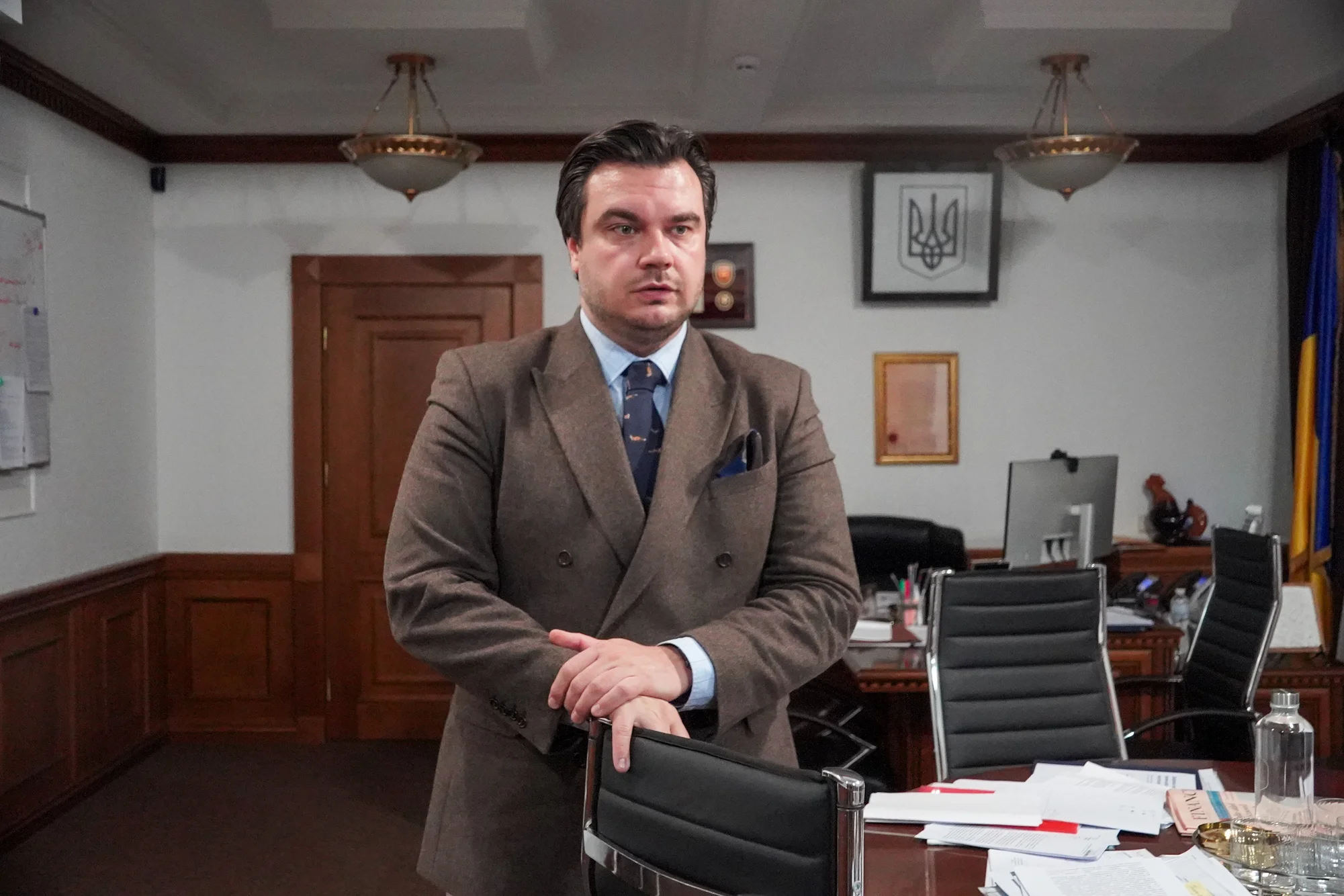
– Another attempt was recently made to hold an auction to privatize the OPP, but once again no bidders came forward. Why do you think potential bidders stayed away from the OPP auction this time? What mistakes might have been made in preparing the company for privatization? What changes do you plan to make to the process for selling the company in the future?
– I don't think any mistakes were made. An enormous amount of work was done. We received seven official inquiries from foreign companies: four from the US, two from Switzerland, and one from the UK.
We processed 20 official letters from foreign parties and held 15 Zoom conferences.
At least four foreign delegations visited OPP accompanied by Fund staff and met with economy ministers and the prime minister. We developed dozens of tailored models for cooperation, with financial calculations.
We uploaded 250 documents to a virtual data room for their due diligence (from the English term "due diligence," meaning "proper care": a comprehensive, independent review of the condition of a company, business, or asset before entering into a sale and purchase agreement - Ed.). The State Property Fund provided support 24/7. We can see that interest in the company remains high.
The problem is geopolitics.
The "diesel deal" was announced just before the auction date. This raised the question of whether international insurance companies, particularly American ones, would operate in Ukraine.
We also have dozens of air raid alerts a day, attacks, new types of Shahed drones, and reduced air defense activity. Through no fault of our own. But all of this triggered a domino effect. A day or two before the auction, participants began "dropping out" one after another: "Let's wait."
– How could diesel fuel supplies from Russia to the United States have affected the insurance market and American insurers? Did they change their operating terms, or were they considering ceasing operations in Ukraine altogether?
– In economics, there is a concept known as externalities, which can be positive or negative. These are the effects and consequences of certain actions that are not apparent now but may materialize later. The "diesel deal" was a classic negative externality in terms of the signal the agreement sent to the world.
The fact that relations with Russia had been normalized, right up to the level of the two countries' leaders, who formally approved the agreement, that the overall rhetoric had changed, and so on. In this light, Ukraine's role began to be seen differently. At least four prospective US investors in OPP did not understand this shift.
The same applies to institutional insurers, who were following developments and, at a certain point, could not say with certainty what the US administration's foreign policy stance toward Ukraine was against the backdrop of the "diesel deal" and everything else. This affected their willingness to invest money in Ukraine.
Prospective US bidders said they were willing to take the risk of bidding in the OPP auction, but only if they secured an insurance contract with an institutional American insurer. No one wants to invest on enthusiasm alone. Everyone needs assurance that their risks in Ukraine will be insured.

– When do you plan to hold the next auction to sell OPP?
– We are consulting with the government about the company’s future, not least because of the substantial losses it imposes on the state budget while it remains idle – UAH 62 million a month.
On the other hand, we continue to receive signals of willingness to participate in the next auction, now from jurisdictions beyond the US – countries in the Middle East and the Far East.
We need to calmly work out how much the next auction will cost the state. If it goes ahead, we will all cross ourselves, settle the outstanding payables using investment funds and turn the page.
Negotiations are ongoing. We are assessing how serious these intentions are, whether bank guarantees can be obtained and, again, discussing insurance. In short, we are examining whether another auction makes sense.
– A year ago, the State Property Fund organized an auction to sell OPP that also failed to take place. At the time, the Economy Ministry attributed the failure to the starting price exceeding the market value. The ministry said it supported your bill No. 13620, which would allow large enterprises to be offered for sale only with phased price reductions. Why do you think large industrial assets should be sold using a descending-price mechanism?
– Prices fall over time – this is an entirely natural process; all assets depreciate. As for bill No. 13620 and the possibility of offering assets for sale again at a 50% discount or through a so-called Dutch auction, where the price decreases, these are simply different models and different views of the ultimate goal of privatization.
Currently, the ultimate goal of privatization is to maximize revenue for the state budget, to squeeze as much money as possible out of an asset during an auction. That is a legitimate objective.
Is it realistic during a war, given the risks we face? That is debatable.
There is another approach to what privatization should achieve. Let’s call it the German approach. It was introduced in the 1990s by an institution in Germany similar to the State Property Fund.
The idea is this: it does not matter how much an asset sells for; what matters is how much investment the auction can secure. In other words, how much investment the company commits to putting into the asset over a certain number of years, and how many jobs it commits to creating or taking over.
So the final price matters less than the obligations to maintain and finance the asset that pass from the state to a private owner.
In our case, the UAH 62 million in monthly losses that OPP currently generates will no longer be borne by the state budget, but solely by a private company.
Germany used this model to privatize 8,500 enterprises between 1990 and 1994. It remains one of the largest privatization programs in the world to this day.
The approach of lowering the price strikes a balance between two objectives of privatization – generating budget revenue and shifting the financial burden from the state to a private owner.
I am convinced this would help us greatly with OPP and other troubled assets, but unfortunately this approach has yet to gain support in parliament.
– In connection with last year’s auction to sell OPP, Agro Gas Trading said it had been prevented from applying to participate, alleging that one of the platforms in the Prozorro system had obstructed its registration. What do you know about this case? Could a bidder be deliberately prevented from registering for the auction?
– From a technical standpoint, it is impossible to deliberately block an auction bidder on a platform that is not state-owned. There are 25 such platforms. They are known as "accredited operators." These are independent private companies with a strong interest in having you register with them and buy or privatize something through them. After all, they earn a commission.
Consequently, when operators prevent a bidder from registering for an asset as large as OPP, they are deliberately depriving themselves of profit.
If something like this were to happen hypothetically, a buyer facing obstruction would still have 24 other platforms where they could submit their documents and register without difficulty.
Three full months elapsed between the announcement of the auction and its scheduled date. If artificial obstacles are created to participation in an auction, the next steps are obvious: contact the State Property Fund and the administrator of the Prozorro system through official channels.
During those three months, we did not receive a single inquiry, complaint, or report of registration problems from Agro Gas Trading. There is no documentary record of any problems during the preparatory period. This looks more like an attempt to justify the company’s own lack of readiness to participate in the auction.
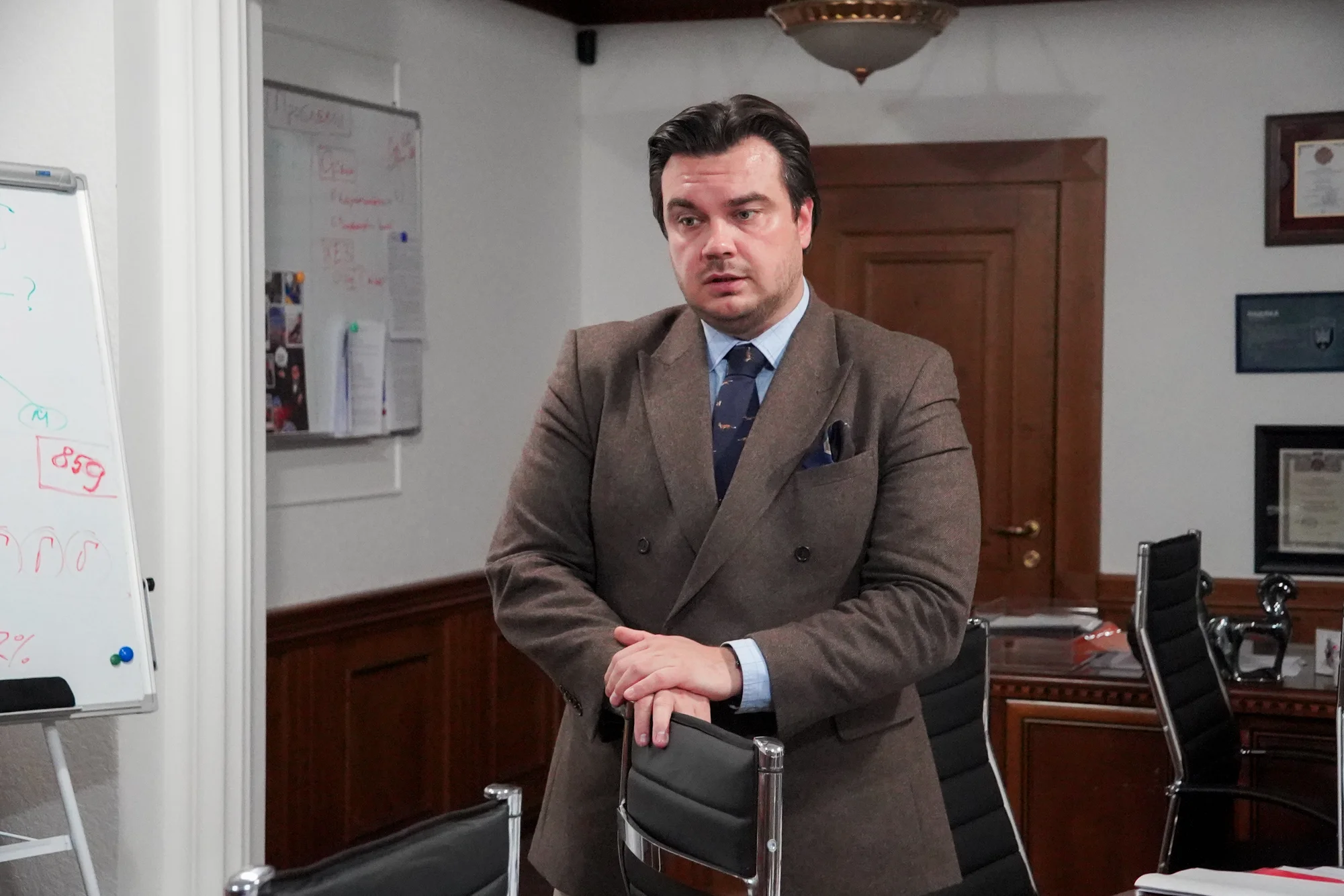
– You said the investor would settle the outstanding payables. OPP is known to owe substantial debts to Dmytro Firtash. Could these debts pose too great a risk for an investor? Is Firtash trying to obstruct your efforts to sell the plant, or perhaps the opposite? Has there been any activity on his part?
– No, there has been no activity, at least none that we are aware of.
The legal teams of all prospective bidders have reviewed the documents relating to this debt. With the assistance of Expertise France, our partner under an EU program, we engaged the law firm Arzinger as a legal adviser to conduct an independent legal assessment of the debt.
They held a meeting with prospective investors and explained why there were no risks. The investors were satisfied that there was a Supreme Court of Ukraine ruling stating that this debt could not be paid. They intended to proceed on that basis.
Although there would have been considerably more bidders without this debt. For some companies, it is a serious obstacle.
How the Odesa Portside Plant’s debt arose
The Odesa Portside Plant has been idle since 2022. Its net loss totaled UAH 808.9 million in 2025 and UAH 609.3 million in the first quarter of 2026. Current payables for goods, works and services stood at UAH 10.8 billion. Most of this is owed to Dmytro Firtash’s Ostchem holding company.
OPP’s debts to Firtash arose in 2013, during Viktor Yanukovych’s presidency, under a contract for the purchase and sale of Russian natural gas.
At the time, the state-owned plant received gas through Firtash’s companies at $430 per thousand cubic meters. Meanwhile, Dmytro Firtash’s companies, Ostchem and Ostchem Gas Trading, purchased it from Russia throughout 2013 at $264.5 and $268.5, respectively.
Between February and December 2013, Ostchem issued invoices to OPP totaling $508.76 million. In 2016, it took the case to arbitration in Stockholm to recover the money. OPP’s management at the time acknowledged Firtash’s claims for $193.25 million and $55.03 million in late payment penalties as of April 2016.
Ostchem subsequently turned to the Ukrainian courts. However, it was unable to recover the money because of the position taken by the Supreme Court of Ukraine: Ostchem owed money to Russia’s Gazprombank and had assigned it its rights under several contracts to supply gas to Ukrainian enterprises. Consequently, the Supreme Court of Ukraine’s June 2021 ruling stated that Gazprombank, a bank of the aggressor state, could become the ultimate recipient of any payments recovered from OPP. Firtash’s companies may have earned approximately $3.7 billion from reselling Russian gas to Ukrainian enterprises in 2012–2013.
According to a Reuters investigation, Gazprombank opened credit lines totaling $12 billion for Ostchem in 2010–2011, which Firtash obtained to finance the purchase of chemical plants in Ukraine (the Stirol concern, Sievierodonetsk Azot and Cherkasy Azot, as well as Nadra Bank, the Nika-Tera port and most regional gas distribution companies). Dmytro Firtash had previously expressed an interest in buying the Odesa Portside Plant.
Firtash is currently subject to National Security and Defense Council sanctions until June 2034. He cannot participate in privatization or lease state-owned property, and financial obligations to him will not be fulfilled.
– You mentioned Expertise France, a French institution. Does it help conduct privatization in Ukraine? What are its responsibilities? Who funds this cooperation?
– It is the French international technical cooperation agency. Our cooperation began under the EU’s Justice project. Initially, the partnership focused on the liquidation and bankruptcy of state-owned enterprises. They provided us with expert, analytical, and legal support.
A full-fledged project to support the State Property Fund began in 2024, funded by the French Ministry for Europe and Foreign Affairs. France has one of the largest public sectors. They have extensive experience in managing state property, corporate governance, and public sector reform.
For us, this is an opportunity not only to receive professional expertise but also to adapt French practices to our own circumstances, particularly in the context of European integration.
– So they do not help prospective French investors operate here in Ukraine?
– No, that is not part of their remit; they remain impartial toward all parties. Unfortunately, we did not have a single French company registered for the auction for OPP, for example.
– Let’s talk about Indar. In late October, you managed to replace its head, Liubov Vyshnevska, who had clung to the position for decades. The state had effectively lost control of the company, but according to media reports, you disrupted certain "schemes in the courts." Could you explain this in more detail?
Also, this summer, criminal proceedings were opened against the State Property Fund following a complaint by an entity affiliated with David Bezhuashvili, the minority shareholder in Indar Insulin Production PrJSC. The allegation is that the Fund is refusing to allow him to buy out the state’s stake, even though the State Property Fund authorized such a buyout back in 2019. What is the current status of this case?
– By the time the buyout order was issued in 2019, the legislation had already changed. Buyouts were no longer available as a form of privatization.
The only way to purchase state property, including state-owned equity stakes, is to participate in a competitive auction. In Indar’s case, that means an ascending-price auction. That was our position in court. When I was appointed head of the Fund in January this year, the case was already at the appeal stage.
We initially lost the appeal, but before the Court of Cassation we successfully defended the state’s right to privatize its stake through an auction rather than through a direct buyout by a single buyer. As required by law. And by common sense, for that matter.

The court ordered the National Police to open a case over inaction, specifically the alleged failure to comply with that buyout order. At the same time, the court froze the shareholding and prohibited any registration changes relating to the replacement of the company’s head.
In effect, the court completely barred the State Property Fund from exercising its corporate rights as a shareholder, even though it holds a 70% stake, which is beyond all reason.
We managed to demonstrate that there were no elements of a criminal offense. The case was closed. This enabled us to lift the restrictions on registration changes. The register was updated to record the head appointed by the Supervisory Board.
What you need to know about the "Indar" case
The Indar insulin plant brought in a minority shareholder (with a 29.29% stake) when it was established in 1997 to gain access to technology. In the first half of the 2000s, ownership of the minority stake was consolidated by the Polish pharmaceutical group Bioton S.A., which specializes in insulin production and regarded Indar as a strategic asset. However, conflicts with the plant’s management over a lack of openness in management and opaque financial transactions prevented it from developing the business in Ukraine.
In 2016, Bioton S.A. eventually sold its stake to David Bezhuashvili, an entrepreneur and former member of Georgia’s parliament. In November 2018, Indar’s charter was allegedly amended to give the minority shareholder a preemptive right to buy out the state’s 70.7% stake without an open auction. The State Property Fund adopted a similar decision allowing the minority shareholder to buy out the state’s stake. However, it subsequently challenged that decision.
In 2026, the Supreme Court definitively overturned the preferential rights granted to the minority shareholder. The State Property Fund launched a review and audit of Indar’s operations in previous years, uncovered abuses, and replaced the management. It is currently preparing the plant to attract an investor and reviewing the current status of its foreign trade contracts.
– Will the minority shareholder have any advantages over other bidders during the auction?
The law provides for no preferential treatment; everyone participates in the auction on equal terms. Whoever places the highest bid wins the auction and gains the right to acquire the equity stake through privatization.
– So in 2019, the State Property Fund authorized the minority shareholder to buy out the state’s stake, but the shareholder simply failed to do so in time. Is that what happened?
– The 2019 order was based on the transitional provisions of the previous version of the privatization legislation. The Fund subsequently revised its position in accordance with the legislation in force. That triggered the lawsuit.
– What was happening at Indar from 2019 onward? How was the company operating?
– The whole situation there is quite interesting. The company was transferred to the Fund, I believe, in 2018. Before that, it had been on the Ministry of Health’s balance sheet.
Liubov Vyshnevska had headed Indar since 2012. Throughout that time, the plant was operating, producing something, selling something and losing some contracts.

We are currently looking into what happened with one of its largest contracts, the so-called Brazilian contract. Why it was lost, on what grounds, whether this could have been prevented, and so on.
Operations continued, and the fact that we recently found 30 "ghost employees" at the plant shows that business activity was taking place that allowed people to be employed and salaries to be paid.
So the plant was operating. It remained state-owned only de jure, while in practice it was treated as private property. The plan, at least on the former director’s part, was to have it sold to someone she favored rather than to whoever won the auction.
– What other assets do you plan to put up for auction in the near future? And when it comes to sanctioned assets, what is the greatest difficulty in privatizing them?
– In 2026, we prepared around 200 sanctioned assets in total. But most of them are not large enterprises. They include cars and raw materials that entered Ukraine under certain contracts but actually belonged to nationals of the aggressor state. The raw materials were seized and are now subject to customs procedures.
Next year, we hope to sell the Kryukov Railway Car Building Works, the Mykolaiv Alumina Plant and the long-troubled Ocean Plaza.
This year, we successfully held 10 auctions to sell sanctioned assets and expect to raise UAH 52 million from these assets in total. We have just received payment for propagandist Artemy Lebedev’s second apartment, on Saksahanskoho Street. His first apartment, on Yaroslaviv Val, was auctioned off back in late June. It was purchased by the drone manufacturer General Cherry. The company appears to have already begun converting it into a Ukrainian cultural space.
However, we have not yet received payment for all the assets. These include, for example, an apartment in the Kyiv region subject to sanctions and Oleg Deripaska’s four Toyota Camry cars. We are also awaiting payment for Kirovohrad Mining Management JSC, in which we managed to sell a 52% stake this year.
Several strategic assets in the large-scale privatization program have been put up for repeat auctions at reduced prices. Repeat auctions at reduced prices were due to take place on November 19 for Russian oligarch Mikhail Shelkov’s Demurinsky Mining and Processing Plant and for Motor-Detal Konotop, which had belonged to Russian Federation Council Senator Sergei Kalashnikov. However, no bidders came forward. The next step planned for these assets is a hybrid Dutch auction on December 21.
A repeat auction for the Hlukhiv Quartzite Quarry, with the starting price reduced by 50%, will take place on November 23. This is another Deripaska asset.
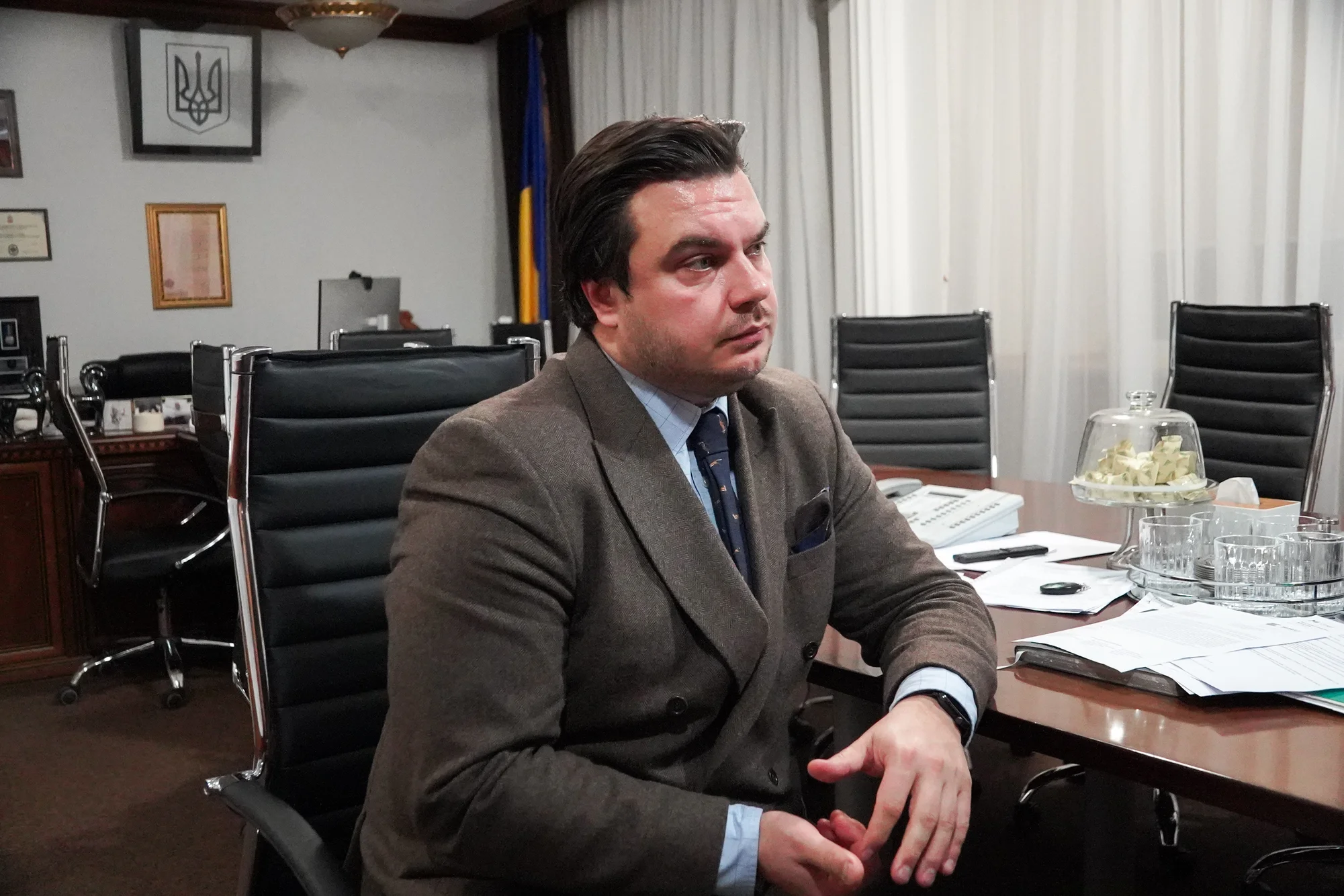
Overall, our work on sanctioned assets is progressing more slowly than we would like. We must prepare sanctioned property for privatization, particularly pools of assets, exactly as specified in the High Anti-Corruption Court’s ruling. This imposes certain constraints on our approach.
For example, in the case of Ocean Plaza, the corporate rights were held by Investment Union Lybid LLC. Alongside the shopping center itself, the company’s balance sheet includes a loan receivable on which interest continues to accrue.
By law, we must also include the interest on the loan in the pool offered for sale. Otherwise, we would cause losses to the state, which is now the creditor and holds the claim under the agreement. But we cannot include the interest in the sale because we are not a financial institution. These are the kinds of legal complications we encounter.
Ocean Plaza was confiscated from Putin’s friends
In March 2023, the High Anti-Corruption Court confiscated a stake in the Ocean Plaza shopping and entertainment center held through Investment Union Lybid LLC by Russian oligarchs Arkady and Igor Rotenberg, close friends of Vladimir Putin.
In June 2023, the Cabinet of Ministers transferred the Rotenbergs’ 66.65% stake in the company to the State Property Fund for subsequent privatization.
Lanita Invest, a company linked to Ukrainian businessman Andrii Ivanov, remains a minority co-owner of Ocean Plaza (through the same Investment Union Lybid LLC).
To finance the construction of Ocean Plaza, Investment Union Lybid entered into a $150 million loan agreement, secured against the shopping center’s buildings, with Cyprus-based Ethoder Investments Limited, which is also linked to the Rotenberg brothers. The loan stopped being serviced in February 2022. In December 2024, the claim under the loan was forfeited to the state.
This debt, now exceeding $197 million, significantly complicates privatization. Ukraine has become both the shopping center’s majority co-owner and its creditor, creating a complex legal issue that must be resolved: whether to write off the debt, sell it separately, or bundle it with the sale of the stake in Investment Union Lybid LLC.
Many assets are scattered across the country and must be physically located, inventoried, and valued. This is particularly true of movable property, such as railcars, vehicles, and raw materials. Fund representatives traveled to the locations where the assets were held, found the property and inventoried it. This work requires substantial staff resources and time.
– Have you calculated how many sanctioned assets the Fund holds in total?
– In total, we currently hold more than 1,500 items of sanctioned property. But again, that does not mean they are all high-quality, highly liquid assets.
There is a great deal of so-called individually identifiable property. For example, several hundred antique weapons seized from Bohuslaiev, the former owner of Motor Sich.
– Which key assets in the large-scale privatization program are scheduled for sale in the near future, and how much budget revenue are they expected to generate?
– Our privatization revenue target this year is UAH 2 billion. We have already exceeded it by more than UAH 45 million.
As for next year, one of the assets most likely to be sold is Kharkiv-Energozbut, a so-called universal service provider supplying electricity to both households and legal entities.
We will also put the Ukragroleasing National Joint-Stock Company up for sale. The Dnipro Electric Locomotive Plant is another potentially attractive asset.
And the assets I have already mentioned – the Mykolaiv Alumina Plant and Ocean Plaza. We may also hold another auction for OPP.
Next year, we will devote considerable attention to privatizing mines. We are waiting for the Ministry of Energy to transfer this coal subsector to the Fund. It includes a fairly large number of coal enterprises for which there also appears to be some demand.

– Are these enterprises in eastern or western Ukraine?
– Both in the west and in the east. Some remain in temporarily occupied territories, while others are in government-controlled areas. We will see. We have not yet seen the full list of enterprises; we are waiting for it from the Ministry of Energy.
There is also an interesting discussion underway about establishing a sovereign wealth fund to manage strategic assets. The proposal is to split the State Property Fund into three separate legal entities.
The first would receive assets in temporarily occupied territories, audit and value them, and prepare claims against the Russian Federation.
The second would take the entire so-called bad bank, meaning assets considered beyond recovery, where debts exceed their book value.
The third would receive all the remaining liquid assets.
– Would this new structure be established on the basis of the State Property Fund? Would there be three divisions?
I am not ready to say; that is more a question for the Economy Ministry. But I think the State Property Fund has enough management experience to perform these functions.


