


Mercenaries from occupied territories were ordered to speak Ukrainian near our positions, – Andrii Hozhii, commander of ’Striletskyi’ police battalion
"Since we started talking, I’ve already received 111 messages on WhatsApp," notes Police Colonel Andrii Hozhii in the middle of our conversation. For a battalion commander, this is a typical work routine: constant communication, dozens of questions, reports, and decisions that cannot be put off until later.
But there is much more to this daily routine than meets the eye. The commander is responsible for the men with whom he has fought side by side, endured shelling and suffered losses. He must not only set tasks, but also understand what is happening on the front line, listen to his subordinates and take responsibility for every decision he makes.
Andrii Hozhii, 45, whose call sign is Ruta, leads the ‘Striletskyi’ special-purpose police battalion. His combat career began back in 2014. Back then, it was Popasna and the 19th checkpoint; in 2022, it was the Kyiv region, Bakhmut, Pokrovsk and the Kharkiv region. In 2024, he voluntarily joined the newly formed battalion under the Main Directorate of the National Police in the Ternopil region, and within a short time became its commander. On 3 March 2025, under his leadership, the unit took up combat positions in Toretsk and is currently carrying out combat missions in the Donetsk region.
Andrii Hozhii has been awarded the Order of Bohdan Khmelnytsky, 3rd class.
In this interview, part of the joint project between Censor.NET and the Ministry of Internal Affairs, ‘Commanders. Front Line’, the battalion commander talks about his journey from an ordinary sergeant to the commander of a combat unit, about the toughest decisions, the trust between comrades, losses and responsibility for his men. He also talks about jokes, family and the thoughts that keep him awake even after the working day is over.
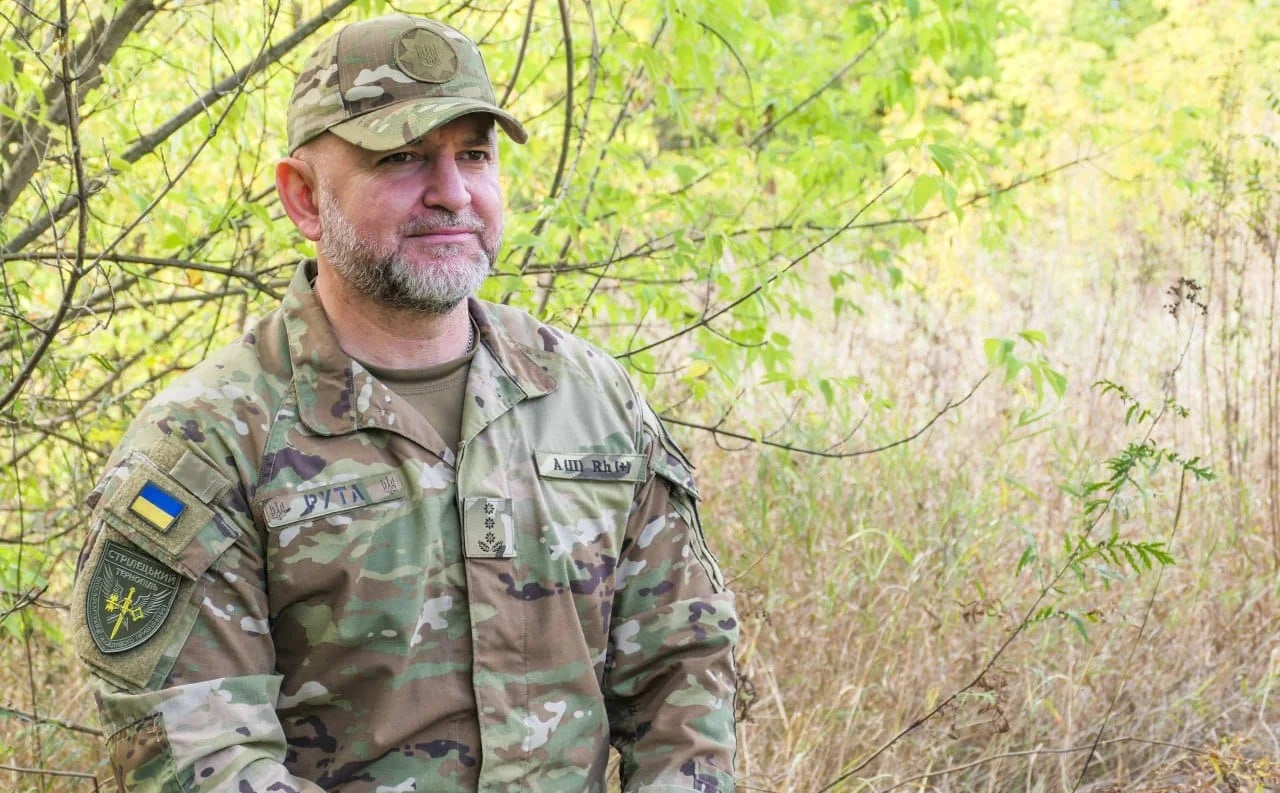
"I joined the Ministry of Internal Affairs in 2002 as an ordinary sergeant, starting right at the bottom. I was then awarded the special rank of junior police lieutenant and worked as a beat officer, an investigator and a head of investigations," he says. - Whilst working, I graduated from the National University; I was deputy head of the Monastyryska District Police Station, then head of that station. Later, I headed the criminal investigation department for the Ternopil region. I joined the battalion as a volunteer when it was first being formed.
- All law enforcement agencies and departments are based on discipline, hierarchy and decisiveness. What skills or experience gained in the police force have been useful to you in the army?
- First and foremost, it’s handling weapons: in the police, you’re taught how to use them. There’s training in marksmanship, tactics and the use of the weapons standard issue to the police. And today, our battalion differs from territorial units in terms of equipment and the availability of weapons. We don’t have heavy weaponry, but we have the full range of equipment used by the Armed Forces of Ukraine.
At the moment, I have a great many volunteers who joined last year directly through the recruitment drive from civilian life. The first problem we faced was that they had absolutely no idea, didn’t know and didn’t understand what a weapon was. They didn’t realise that through thoughtless or incorrect actions, you could cause death or harm – and not necessarily to yourself, but even to a comrade. It was absurd when they would raise their weapons and point them at others. It’s a long story, but, thank God, we’ve overcome all that.
The second thing is discipline and subordination. In the police, they teach you to follow orders; they help you understand what an order is, as well as the briefings, equipment, gear and the sequence of it all. It's hard for someone else to understand right away what, for example, an RPS is, and that the magazines are loaded into the RPS so that you can reach them with your right hand.
You explain that these rules are written in blood; they’ve been honed over many years. But a civilian who’s only just joined will first try to reach for them with his left hand; then you explain how to secure them, but he’ll inevitably stuff them in the wrong way, and by the time he reaches the firing range, he’ll have lost all those magazines. In other words, for some reason, 90 per cent of them want to test out these tried-and-tested rules first, and only then do they actually use them.
- You joined the defence of Ukraine back in 2014, taking command of a combined detachment. Where exactly were you fighting at that time?
- In 2014, I was involved in the liberation of Popasna alongside the Defence Forces – as part of a combined police detachment from the Ternopil region. Next, we were ordered to hold the line at the 19th checkpoint, just before Pervomaisk. It was there that I experienced what it’s like to be targeted by a 120mm mortar and what a rifle battle is. We were there for four months in total.
- What was it that spurred you on and motivated you to go and fight?
- Probably a sense of duty and a patriotic spirit instilled by my parents. My parents are teachers. My father is a history teacher. I realised that I had the skills, the desire and the knowledge; putting all these factors together, that’s why I made that decision.
- Do you remember the first combat operations back in 2022?
- I often make comparisons. When I look back at all those events and emotions I went through in 2014, they seem like a cake walk by today’s standards. Of course, there was fear, but compared to what it’s like now, it’s a world of difference.
- And in 2022, did you become a commander straight away as well?
- In 2022, I travelled to the Kyiv region as a senior officer with the Ternopil regional police. We were carrying out clearance operations at the time. Then, in June 2022, I travelled to the east as part of the ‘Ternopil’ special-purpose police battalion. I was just a rank-and-file soldier. We advanced from Opytne to Bakhmut, and from Bakhmut we moved on to Pokrovsk. Then I went to the Kharkiv operation as a senior officer.
In 2024, I joined the newly formed ‘Striletskyi’ battalion, initially as deputy commander and later as unit commander. By 3 March 2025, the battalion under my command had taken up combat positions in Toretsk.
- You’re talking now about the path of a soldier. But if we consider the path of a commander, looking back, can you recall a certain shift in your mindset – the realisation that you now bear greater responsibility because others depend on you?
- I felt this very keenly myself when, in 2025, one of the positions in Toretsk failed to make contact for a long time for the first time. There were four lads there; it was the front line. It’s impossible not to notice anything there, because everything is fully monitored. And when I was told that there was an attack on that very position, and they hadn’t been in contact for an hour, two, three… The radio or cable might have been cut, but they still hadn’t got in touch. It was precisely at that moment that I felt I was responsible for these men, because it was I who had given them the order to go in there and hold that position.
They got back in touch after a day and a half. There was such a moment of joy – I can’t even begin to describe it to you! They held the position for 72 days. And they were under fire from artillery, drones, airstrikes and over 200 shells. They were ordinary police officers – former detectives, a security officer, and a neighbourhood inspector – who, just six months earlier, had been carrying out their routine police duties there.
When you have to take responsibility, you have no room for error. War is unforgiving; there are no trifles here, no mistakes. Personally, I find it difficult to be a commander. I know every one of my fighters by face; I’ve served with many of them, and I’ve known many for years. For me, it’s not just a surname and patronymic; for me, they’re real people.

- You said that there can be no mistakes in war. But clearly, everyone makes them. How do you try to avoid them? How do you plan everything in advance?
- It’s impossible. I’ve simply given you an example of why I agonise over every decision. Because if, for example, you make a mistake in your planning, there will be casualties. Although casualties can also result from a simple lapse in concentration.
It was April – the first half of May 2025. At that time, one of our positions was located in the residential area of Toretsk, and that is where our comrade was killed. A report came in over the radio from our neighbours stating that the Armed Forces were withdrawing from neighbouring positions. So the occupiers knew that our lads would be withdrawing. We continued to hold our lines to ensure the fighters’ safe withdrawal.
The lads must have let their guard down because they heard Ukrainian being spoken. And instead of opening fire, they asked: ‘Who’s there?’ And that ‘who’ opened fire in return. We subsequently killed that soldier – he was a fighter from our occupied territories. As it turned out, they had been ordered to speak Ukrainian near our positions.
We planned and organised our withdrawal from Toretsk very carefully. I don’t think it’s time to reveal the details yet. I’ll just say one thing. When we withdrew from our positions in Toretsk, we left together with fighters from the ‘Khyzhak’ Brigade.
At that point, the commander of one of our platoons went missing. It was probably because he lost his way due to the weather conditions. They searched for him afterwards, but they’d agreed beforehand that if it proved impossible to find someone and there was a risk to the search parties, they wouldn’t search for long. They walked around, called out, but he didn’t answer. You see, even with perfect planning, errors and irreparable losses are still possible.
- Can you recall your most difficult decisions? The ones that were, well, really hard for you to make.
- The whole problem is that you have to make an important decision within a short space of time. In other words, if you’re told there’s shelling, you have to withdraw the troops, and then there’s a chain of decisions that all follow on from one another. But, again, the enemy also realises that you’ll be withdrawing your personnel. So you have to take this into account when planning withdrawal routes. And likewise, if you decide to leave people in those positions, you have to realise that those positions could well be hit. At the same time, you don’t have all the information at your disposal at that moment. Perhaps the enemy is actually preparing an air strike on that position. That’s why all decisions are difficult; I can’t single out any one in particular.
Logistics and planning win wars – that is a fact. If an operation is carefully planned and there is the right support specifically for that operation, then it will be a success.
- Do you analyse your own operations and decisions, as well as certain spontaneous actions – what worked and what didn’t?
- We always get together and analyse things after every rotation or after every operation we’ve carried out. And if, for example, an armoured combat vehicle was hit by the enemy whilst moving into position, we analyse why we chose that particular route, and whether it would have been possible to make different decisions at that time. When and how much intelligence did we have regarding means of blocking the enemy’s advance, and electronic warfare – which of these did we use, and which did we not use, but could have used?

- You say, ‘we carry out’ – who is ‘we’?
- It’s the deputies, the headquarters, the company and platoon commanders. We also involve the troops, because there are operations we carry out with personnel who were already in that area. For example, I might be given the order to set up a position designed to strike a specific target.
I’m one of those commanders who goes out to the positions. If I don’t have all the information, I go out myself to find a spot for the position. If a commander cannot sense what is happening on the battlefield—that is, if he does not receive information firsthand and does not experience it himself—then he is not a commander. How can I send a soldier somewhere I couldn’t go myself?
- If you or your troops refuse to carry out a particular task or consider it too risky – have you ever had such cases?
- To be honest, I’ve been lucky with my command. They listen to me, and I haven’t been given any ‘silly’ tasks. I can’t speak for others, because there are different situations and different units.
There was a situation regarding the trip to Kostiantynivka. We used one route, which we considered to be the only correct one. Then, once the first group had already set off, my soldiers told me: ‘Commander, driving through there in an armoured personnel carrier is like a coffin on wheels.’ They suggested a detour on foot (I won’t go into the terrain details right now, as it might still be relevant).
I was convinced that we should switch to moving on foot. Yes, it’s hard, it takes longer, and it puts more strain on the troops, but it guarantees the safety of the entire unit. Thank God, we suffered no combat casualties on that route; we used it for a long time, and later passed it on to the men who relieved us.
Our soldiers understand that if things go wrong, no one will abandon them – they’ll be evacuated, taken out, dug out from under the rubble, and given assistance. There were times when soldiers were killed, and I could see within the units that a slump in morale, a psychological trauma, was setting in. I would take people aside to talk; I didn’t hide. We discussed the circumstances under which it had happened. At such times, I wouldn’t allow morale to drop within the unit.
- You’re talking now more about fatigue and fear. But, for example, have there been instances where one of the soldiers openly disagreed with what you said or your orders?
- That does happen, of course. Such instances are rare, but they do occur. In such cases, I say: ‘Explain why you don’t want to do this.’ Usually, there are various factors involved. For example, someone might tell me they don’t think the task is right. ‘All right,’ I say. ‘Well then, how do you think it should be done correctly?’ And it may turn out that the soldier simply doesn’t want to do the job at all. In that case, I’m afraid they’ll have to apologise, but we took an oath, so we carry out these tasks. When we all came here, we knew where we were going and why, and what we would be doing here.
Our main task there is to maintain public order, and whatever the case may be, when you come home, there’s a psychological relief. You have your family, loved ones and children. But here, the stress is constant, 24 hours a day, 7 days a week. And for many soldiers, this factor is precisely the key one.
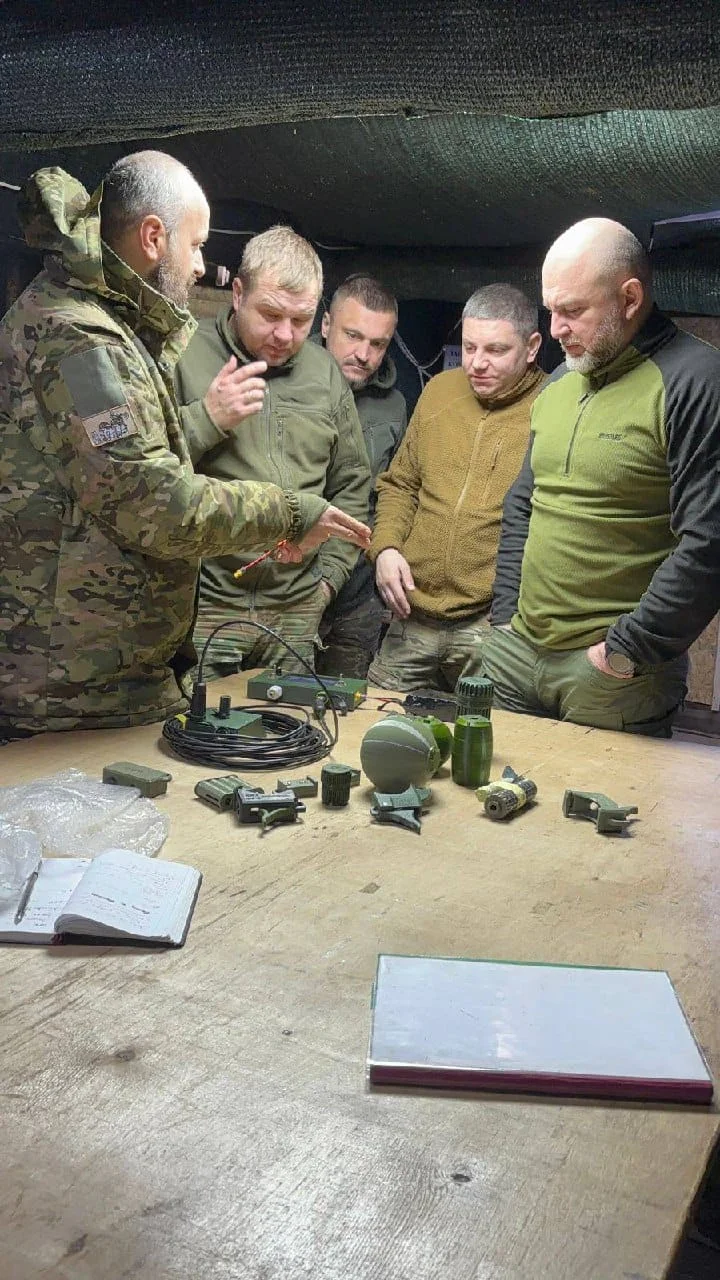
- How can you entrust combat missions to people like that?
- I always look for leadership qualities. For me, a leader isn’t necessarily the one who is older or holds a higher rank. A leader is the one with the most combat experience. Such a fighter instils confidence in those going on a mission for the first time or who are unsure. And it makes things easier for me as a commander, because I know there is someone with experience who knows how to handle critical situations. It is through them that I begin to assess the situation, manage the situation, direct their actions, and decide whether or not to lead the group.
It never happens that only the young soldiers go out on a mission. Even my drivers go to the front lines if they’re needed for a particular mission.
You can’t build authority any other way than by leading by example. My unit knows that, if push comes to shove, the battalion commander can go out and carry out the mission. I realise that I’m not a pilot, not an FPV pilot, and not an aerial reconnaissance officer. I’m no more competent than a pilot at the front, but then again, I gather and analyse this information. What’s more, if I’ve seen it myself, I won’t be fobbed off with the idea that something can’t be done when I’ve seen for myself that it can.
- Tell me honestly, does humour help you a lot?
- If you’d been to our briefings or planning meetings, you’d have had a good laugh – I’ll be frank. We’ve got a healthy atmosphere. For the lads, putting salt in my coffee and then sitting there waiting for my reaction is perfectly normal. Or hiding my car keys, or letting the air out of my tyres. I take it in my stride.
We’ve got some lads who can’t park properly, and they get teased about it. Whilst I’m giving orders, explaining how to drive so the enemy doesn’t spot him… then he goes out of the house to get into his car, but the wheels are gone—the car is propped up on bricks. The lads say: ‘We’ve made sure you’re safe so the enemy doesn’t spot you, so you’ll have to walk.’
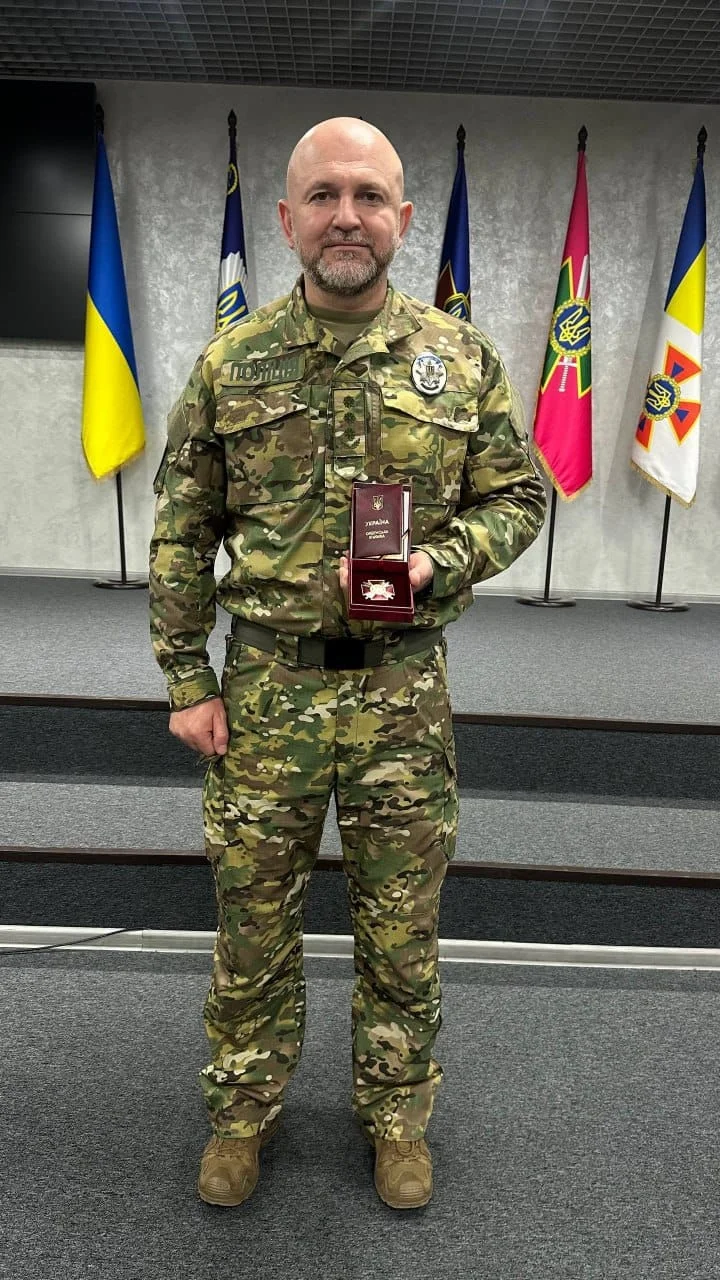
- Have certain internal traditions emerged within your unit that relate to the war and military service?
- The main tradition of our unit is honesty. I believe in equality: if we’re a combat unit, then everyone fights. I don’t have any specialist trainers who teach the troops. They take up positions alongside the same troops – not always, because they have their own tasks too, but they do go out to the front line.
- What do you consider the worst aspect of your relationship with your subordinates?
- The worst thing is deception. I know what sort of situations have arisen in other units. I explain to my lads: ‘You must understand that if you deceive me, I’ll make the wrong decision. Because it was you who reported this or that situation to me.’
- What do you do when a soldier suffers a psychological breakdown and ends up telling a lie?
- There have been instances where I was told the situation was worse than it actually was. A lad has reached a certain point, for example, and still has to cross 800 metres of open terrain ahead of him. He starts reporting over the radio about a sky being dirty and FPVs. And it goes on and on, because he’s waiting for me to come and get him out of there.
Meanwhile, I have to start planning an alternative route. And that all takes time. Or I’d have to go and pick up that soldier, whilst the enemy is analysing the situation – their reconnaissance is at work there too. No one has reconnoitred or checked the alternative route yet, and anything could happen on it.
Thank God, all such incidents ended without fatalities or irreparable consequences. There were losses of equipment and weapons.
- Have you ever found yourself in extreme situations where you had to go beyond the scope of your usual duties?
- A somewhat comical incident happened just recently. In a half-ruined village in the Donetsk region, we were setting up a sort of supply hub roughly 15 km from the contact line. It’s an underground cellar where we stockpile ammunition, food and water so that later, if necessary, we can quickly deliver them to our positions, or use it to shelter evacuated soldiers.
The group had set up camp in a ruined house. In that village, there are perhaps five residents who haven’t left. They’re setting up a shelter in the cellar. A soldier rang me and said: "Commander, they want to speak to you." "Go on then," I said, "no problem." It was an elderly woman who hadn’t listened to the lads and had started shouting. "Hello." "Good afternoon." "Who are you?" I said, "I’m the unit commander." She said she was a local resident looking after this building.
I explained to this lady the Ukrainian Law ‘On Defence’, as well as her constitutional rights and duties. I explained that we were defending the country to prevent the enemy from getting through. The lads then gave her some food. About two hours later, the lads rang back and said she’d asked for some more medicine. I asked for a list of what she needed, sent my medic to the chemist’s, and we bought it and passed it on to her.
- How do you talk about the war with your own family?
- I don’t tell them anything. Everything’s fine with me. My youngest son is already using my own phrases. I ring up and ask, ‘Roma, how are things?’ ‘Dad, everything’s fine.’
- The war will end sooner or later. It seems to me that everyone – even those who’ve come to terms with the fact that they’ll be in the army for a long time – is thinking about the distant future. What is one thing you’ll definitely never forget, even decades from now?
- I won’t forget the Russian atrocities. I still can’t get the image out of my mind of a dead little girl in a pram after a recent airstrike in the Kharkiv region. I simply can’t remain calm when it comes to the deaths of children. I’ll do everything I can to end the war before my children have to go off to fight.
My younger son, has been walking around in a military uniform for 10 years. Do you understand? I mean, he walks around in a military uniform, singing patriotic songs. There’s a red-and-black flag hanging in my house. My son hung it up himself; nobody taught him to do that. My eldest son was 17 when the full-scale war began. He was desperate to go and fight. I said: ‘All right, since you’re going off to fight, here’s an assault rifle from the counter-strike unit without any ammunition – take it apart.’ My son said he’d manage it; there are instructions on YouTube. He spent about 40 minutes taking it apart; his fingernails were covered in blood, his fingers were bruised, and his skin was torn by the rifling. I said to him: "Son, you must understand this properly: you’ll be facing seasoned veterans like me, for whom you’re nothing but a target. They’ve crossed the line and have no qualms."
We ourselves realise that they want to destroy us as a nation. And our children must understand that Russia isn’t going anywhere; that mad neighbour isn’t going anywhere – he’ll still be there. It will take several decades to bring them to a state where they simply cannot wage war against us.

- Is there anything you’re definitely not going to tell your children or grandchildren? And is there anything you’ll definitely tell them?
- What will I keep quiet about? I’ll probably keep quiet about the losses. For the parents of those lads who died – even though I’m not personally to blame – I’m the one who gave the orders. I’ll keep quiet about just how much it hurts me inside. I take everything very deeply to heart.
I’ll definitely tell them about the brilliant lads, the wonderful lads, the brilliant team, and the people who, through their willpower, spirit and determination, stood up to such a powerful enemy. I know who is fighting against me. I hear them on the radio. I know what they know about me. I know which units are there and who their commanders are. I see how they treat their own men. I would never behave like that, under any circumstances.
- How has the war affected you? What has become more important to you, and what less so?
- I’ll never be the same as I was before. Before the war, I still had some long-term plans. I’d work until retirement; I’ve got a solicitor’s licence because I have legal experience, and I’d take up a hobby I love – perhaps beekeeping; I get a real kick out of bees.
Now I have no vision for the future. You work like a robot to make sure tomorrow is better. That’s all. To ensure you protect the personnel entrusted to you. To carry out the tasks assigned to you. And to stop them from destroying us. My younger son once asked me: ‘Dad, aren’t you scared of killing them?’ I said: ‘Son, I’m not killing anyone; I’m destroying the enemy. I don’t feel the slightest bit of sympathy for them.’
- How do you keep yourselves together – that is, how do you maintain your morale and your own sense of self?
- I read a lot. Whenever I get the chance to read, I do.
Well, generally speaking, reading really does organise the mind very well; it even helps the brain to relax and improves concentration. Reading and sport. I’m a disciplined person and I try to exercise, if not every other day, then at least for a couple of minutes a day. I simply don’t believe that anyone doesn’t have time for that. It’s just human laziness. If I can’t manage to go to the horizontal bars, I’ve got a kettlebell. Sometimes I get the chance to go to the gym.
Well, when you’re out on duty, you don’t need any exercise. Covering 17 kilometres on foot a day in a body armour and helmet, whilst carrying another 50 kilograms – that’s a decent bit of cardio in itself.
- Speaking of your socio-political and moral outlook – has it evolved?
- I’m a profound optimist by nature. I suppose that’s what keeps me going mentally and stops me from sinking into depression. The troops are very sensitive to mood and tone. And if I were to turn up at the command post in the morning after a night-time briefing that our positions had been destroyed or overrun, and my eyes were downcast, well, that would set the whole mood for the troops. I never put myself in that position.
I don’t shout at anyone. For me, humiliating someone is unthinkable. I always address people formally, unless we’re comrades. When new people join us, the first thing I tell them is that here they’ll be respected, listened to and trained, but they must also give their all in return.
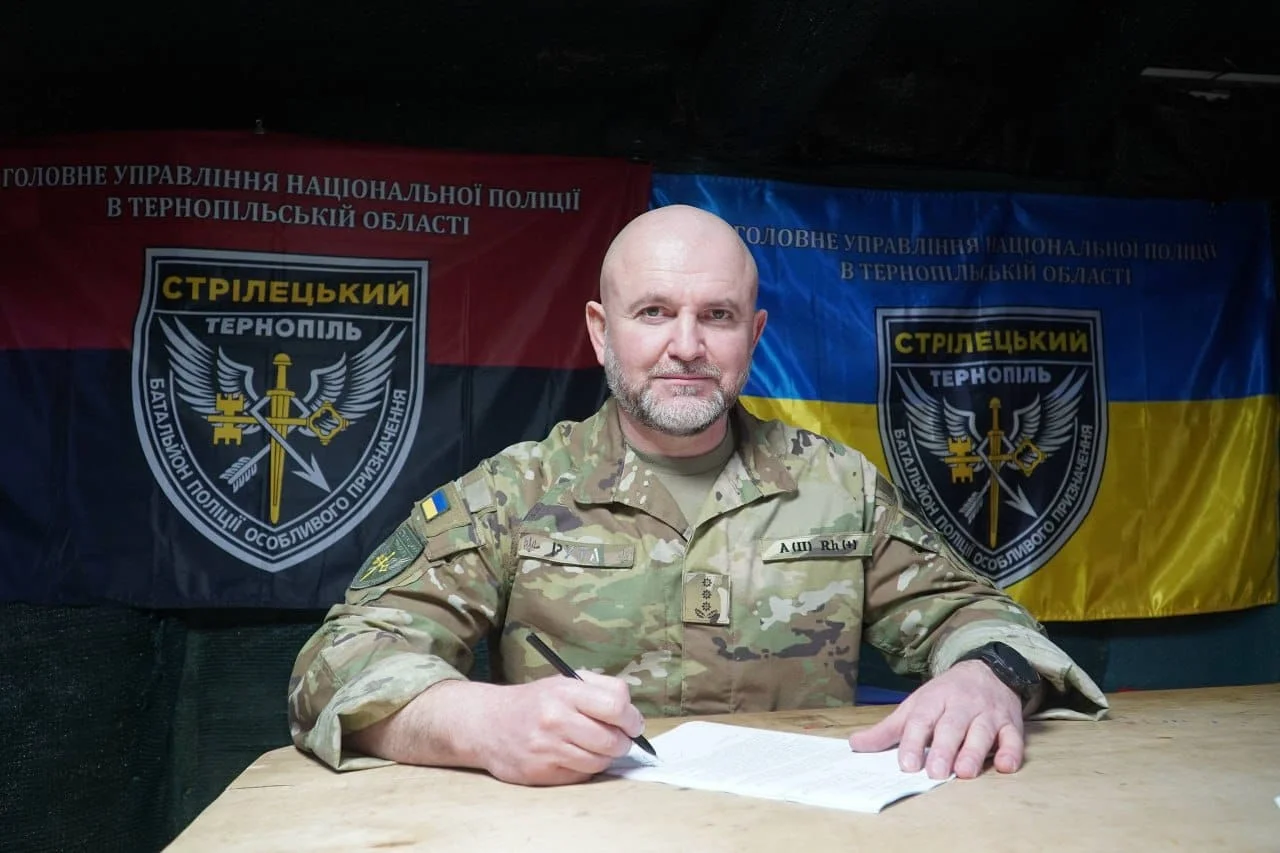
- Have you ever felt the urge to step down from command? Or to take a lower-ranking post?
- Every single day. I get up in the morning, open my eyes. I say: ‘Lord God, thank you for letting me live to see the morning.’ And the second thing I think is: ‘Perhaps today they’ll send me away from here somewhere, or should I write a report myself?’ Every day I ask myself: what are you doing here? But I can’t submit my resignation, because I’d let down the troops who rely on me and follow my lead. There was a survey of the troops asking who was prepared to stay in this unit. Well, 80 per cent of my men wrote that they were prepared to stay here, provided Hozhii remained in command.
- What would you change about your initial decisions?
- Probably nothing. Because all these decisions have led to the situation in my life as it is now. This trial has been given to me because I can endure it; I suppose I’m that self-aware. Because nothing happens for no reason. It’s been given to me for a reason.
- Allow me one final question. What would you say about the cost of a commander’s decision to people who have never been in your position?
- You can’t sum it up in a single word. Everyone wants to be an authority figure. Everyone wants to be respected as a commander. Everyone wants to be listened to. To achieve this, first and foremost, you have to be honest with yourself. Just ask yourself: how would you act if you were in a soldier’s shoes, when a commander like you were giving you one order or another? Would you be able, after it’s all over, to look into the eyes of the soldiers you served with? Or the people you served with? Would they shake your hand on the street after a certain amount of time had passed? Wouldn’t you be ashamed to explain every single one of your decisions to them? For example, I can explain every decision I’ve made. When they ask me there, ‘Why did you do that at that moment?’, I can say, ‘That’s why.’
Being a commander means being able to take responsibility for your decisions and look after your troops.
Olha Skorokhod


