



Xi Jinping’s call to Zelensky: China tried to compensate for damage caused by ambassador’s statement, - FT
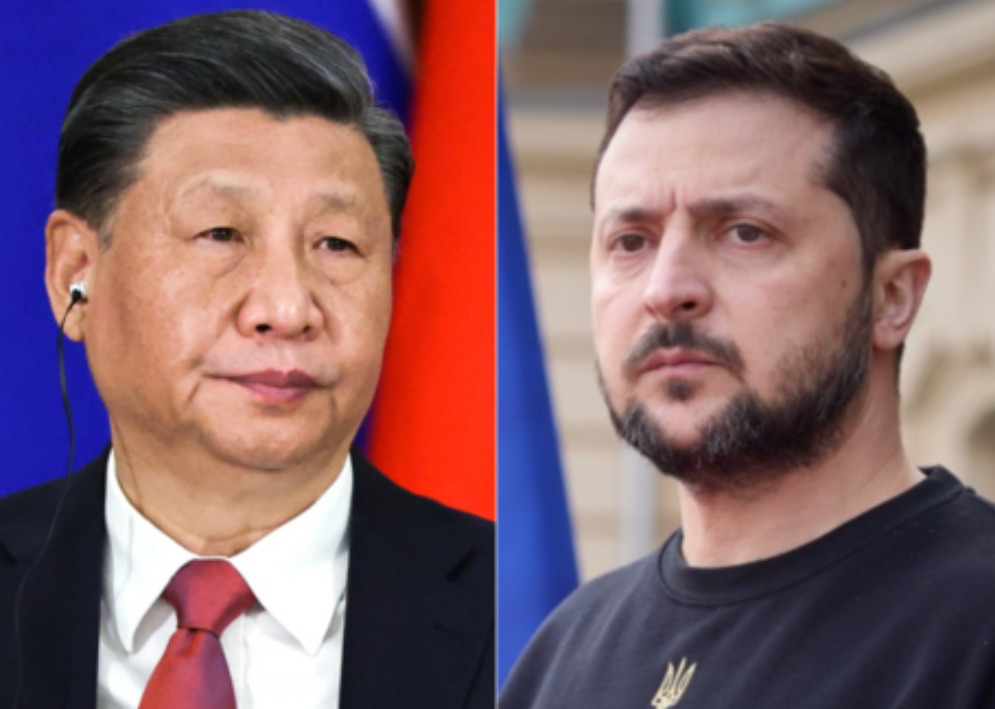
Since the beginning of the full-scale invasion of the Russian Federation in Ukraine, Xi Jinping has spoken with Putin at least 5 times - at a personal meeting or by phone. He called Zelensky for the first time only this week, after the Chinese ambassador angered Europe with doubts about the sovereignty of the post-Soviet states.
This is stated in the Financial Times publication, Censor.NET reports with reference to RBC-Ukraine.
Chinese officials say the timing was coincidental and hailed the call as Beijing's latest step in its pursuit of peace. But in Europe, many see the call to the Ukrainian leader as an attempt to compensate for the consequences of the ambassador's statements in France.
"After the ambassador's comments in Paris, they need to somehow compensate for the losses," said one of the high-ranking EU officials.
Since Vladimir Putin ordered the invasion last year, Xi has faced growing criticism in the West for maintaining close ties with the Russian president. The US demanded that Beijing not supply weapons to Moscow. In February, China published a 12-point document on the war, but it was criticized in the West for not condemning the invasion and for containing more veiled criticism of NATO than Russia.
That skepticism intensified last month after Xi paid a state visit to Moscow but did not immediately call Zelensky, as many had expected.
Many Western analysts believe that Ambassador Lou Chaillet's statement last weekend, in which he also questioned Ukraine's sovereignty over Crimea, played a role in the eventual resolution of the call. Others say China realizes it needs to do more to convince Europe of its sincerity if it is to participate in any postwar settlement. This is particularly important as the EU begins work on a new China policy, which is expected to be finalized by the end of June.
"Russia may not win this war," said Yu Jie, a senior China fellow at Chatham House's Asia-Pacific Program. "China wants to at least have a say in post-conflict Ukraine to prevent Ukraine from turning completely to the West in post-conflict state-building." ".
As the Financial Times notes, in an hour-long conversation between the presidents, the first since the war began, China also said it would send a special envoy to Ukraine, its most decisive step yet in trying to mediate the conflict. The chosen man is Li Hui, a veteran diplomat and former ambassador to Moscow who is currently the Chinese government's special representative for Eurasian affairs.
According to China's official statement, Li will conduct "in-depth communication with all parties regarding the political settlement of the Ukrainian crisis."
Externally, European leaders highly appreciated this call. "This is an important first step by China that is long overdue," said Eric Mamer, press secretary to European Commission President Ursula von der Leyen. A representative of the Elysee Palace emphasized that Emmanuel Macron had urged Xi to speak with Zelensky during the French president's state visit to Beijing earlier this month. Macron has long said he believes China can play a role in influencing Russia, and has told his top diplomat to stay in touch with his Chinese counterpart to prepare for possible peace talks if Ukraine agrees to take part.
However, US officials reacted skeptically. "Whether that leads to some meaningful peace movement or a plan or a proposal, I just don't think we know right now," National Security Council spokesman John Kirby said.
Beijing said that during the phone call, Xi reiterated China's opposition to any use of nuclear weapons in war. "No one will win a nuclear war," Xi told Zelensky.
China's opposition to the use of nuclear weapons is one of the few areas in which it openly disagrees with Putin, who has repeatedly threatened to use them. All in all, analysts say the call is a "flanking move" by China to drum up support against its main adversary, the United States, with which it is in increasingly intense competition over everything from Taiwan and the South China Sea to the economy and advanced technology. .
By presenting a more neutral front, analysts say China hoped to drive a wedge between the US and the EU and show the developing world that it is a world power, unlike Washington, which it accuses of supplying weapons of war. A senior EU official said the call was "a signal to others in the global south that it (China) is a world leader".


