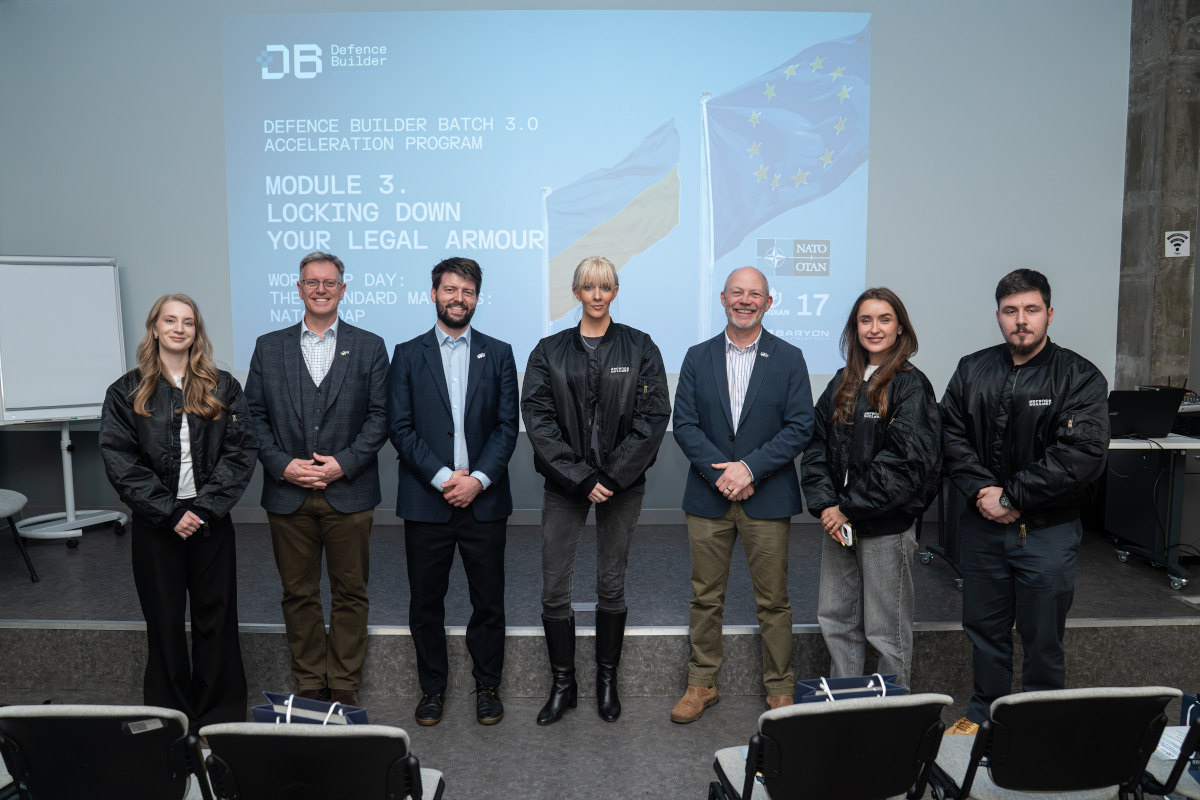
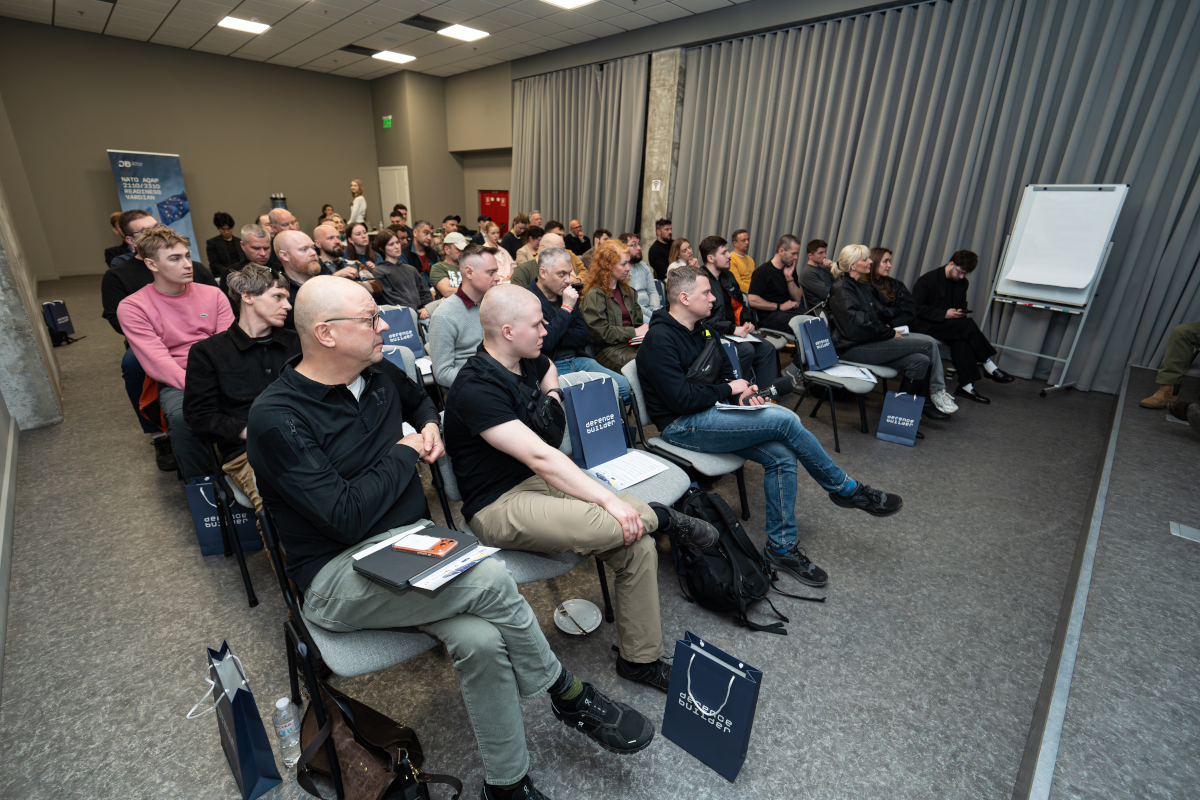
Defence Builder Accelerator held workshop on implementing NATO standards for defence-tech companies. PHOTOS
Drone Industry
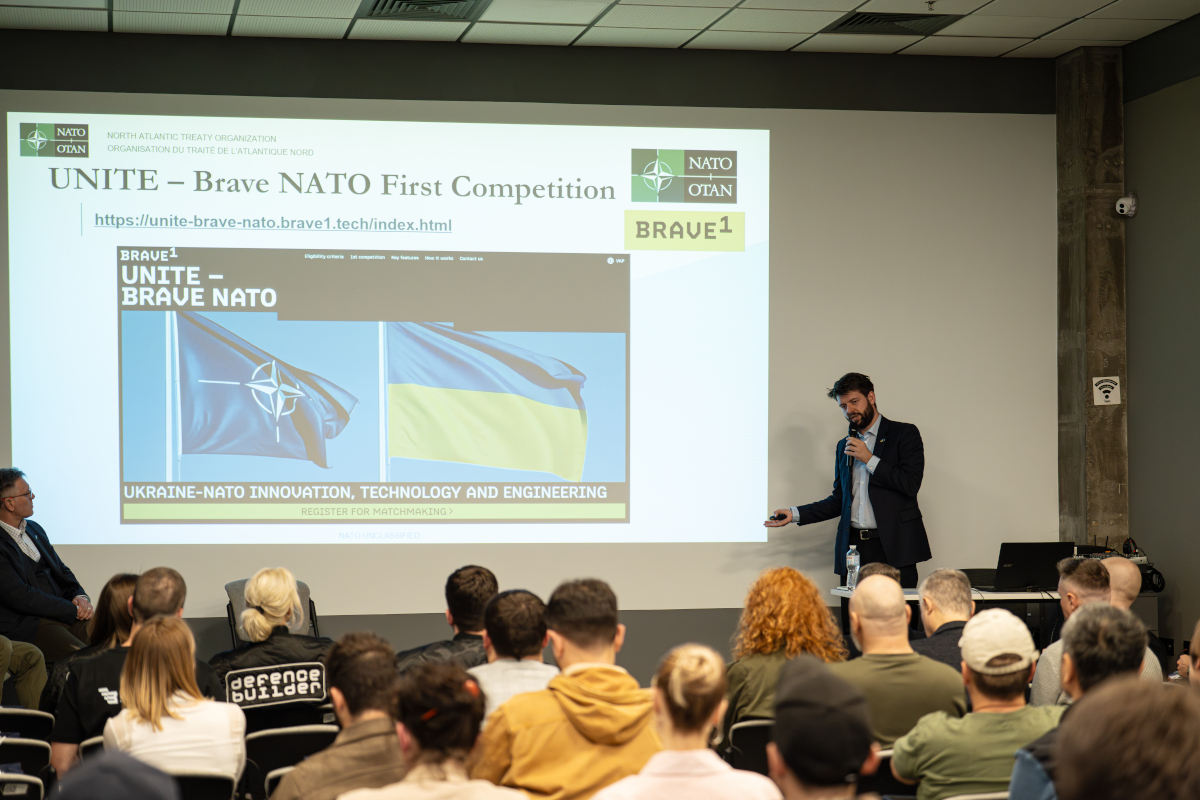
Defence Builder Accelerator held a specialized workshop dedicated to the implementation of NATO AQAP (Allied Quality Assurance Publications) quality standards.
The event became part of the systematic work on preparing defense companies for integration into the Alliance's standards and entering international markets, representatives of the accelerator told the "Drone Industry" project on Censor.NET.
The workshop was attended by teams of Batch 3.0 Defence Builder Accelerator, representatives of the Finnish accelerator 17Tech, as well as alumni of previous cohorts of the acceleration program. NATO experts also joined the event, sharing practical approaches to certification according to AQAP standards - key requirements for quality management systems in the defense sector.
Opening the event, Line Rindvig, CEO of Defence Builder Accelerator, emphasized the strategic role of standards as a basis for scaling defense-tech companies:
"The goal of this workshop is to understand what specific metrics need to be laid down at an early stage of building a defense company in order to subsequently obtain NATO AQAP certification. This workshop is part of the Defence Builder acceleration program. We included this module because we believe that the private sector is responsible for preparing the next generation of defense technology companies - in particular, regarding what metrics and approaches should be laid down from the very beginning."

Partners, including from the Finnish accelerator 17Tech, the Danish consulting company Vardian, as well as representatives of the NATO Representation to Ukraine in Kyiv and the Alliance's headquarters in Brussels, joined the workshop.
NATO representatives presented key tools of cooperation with Ukraine, including the Comprehensive Assistance Package (CAP) and the new Unite Brave NATO program - a joint innovation competition between companies from NATO member states and Ukraine.
"The Comprehensive Assistance Package (CAP) is a trust fund managed by NATO headquarters that supports Ukraine in non-lethal areas: enhancing interoperability and capability development," pointed out William Tonkins, Joint Logistics Advisor at the NATO Representation to Ukraine.
At the same time, he stressed that interoperability is one of the central areas of cooperation: "A few years ago, NATO and Ukraine agreed on an interoperability roadmap - these are 74 areas of cooperation so that our systems can interact more effectively."
His colleague Steve Taylor, Land Domain Advisor at the NATO Representation to Ukraine, focused on practical priorities:
"The three priority areas for the land domain are command and control, which includes communications; air defense, including counter-UAV; and ISTAR: intelligence, surveillance, target acquisition, and reconnaissance. This is what concerns the kill chain - from sensor to shooter. This is exactly what is happening now on the contact line."
He also noted that NATO countries are actively adopting the Ukrainian experience of conducting combat operations.
Edward Shrimpton, Head of Innovation at NATO Headquarters, presented the Unite Brave NATO program, which provides funding for joint developments:
"If there is no funding to launch programs and support activities, it is very hard to get off the ground. That is why we decided to launch Unite Brave NATO."
According to him, the initiative's budget for 2026 is 50 million euros, and the key principle is joint projects between Ukrainian and NATO companies.
Under the terms of the program, a company from a NATO member state and a company from Ukraine submit a joint application, develop a joint solution, and are responsible for the result.
"The idea is that everything is equal from the very beginning. We are focused on solutions at TRL7 and above - on companies that need the last step to scale and be ready for deployment," explains Shrimpton.
Representative of the Ukrainian Armorers' Council Myroslav Popovych outlined the transformation of the Ukrainian defense-tech sector: before the full-scale invasion, private defense companies in Ukraine could be counted on the fingers of one hand, and the volume of the industry was about $1 billion. Now the number of manufacturers is significantly higher, from large to small, there are over 30 certified private schools for UAV operators, and the projected production volume for this year is $50 billion. Half a million people are directly employed in the defense industry.
He also emphasized the critical role of NATO standards in the transition to a modern model of warfare:
"Yes, all these standards, all these markings, all these compatible calibers, even combat medicine - it is 'unsexy'. But this is exactly what wins you the war. Believe me. It is all about communication. 32 countries can be cool - each separately. But if they cannot communicate with each other and are fighting an enemy like Russia or China, it is a big problem."
Summarizing the discussion, the Defence Builder Accelerator emphasized: Ukraine has already made a breakthrough in creating innovations under the pressure of war, but the next stage is building a systemic ecosystem compatible with NATO standards.