



Defence Builder accelerator COO Yana Shkvarovska: "Defense industry remains risky for investors, especially in Ukraine"
Drone Industry
Defence Builder is a leading Kyiv-based defense innovation accelerator that directly strengthens the combat capability of Ukraine’s Armed Forces by accelerating Ukrainian and European defense tech companies in areas critical to the Ukrainian front.
To date, the platform has already accelerated 15 startups: six have been battle-tested, while nine have tested their solutions jointly with the Ministry of Defense. The solutions developed by four of these companies are currently deployed directly on the battlefield.
Drawing on a strong ecosystem of more than 35 mentors, including commanders, investors, and industry experts aligned with NATO standards, as well as a coalition of more than 20 funds within the UCDI Investor Club, Defence Builder serves as a strategically important bridge between European defense resources and the realities of combat in Ukraine, directly contributing to national security and the collective defense of allies.
As part of its Drone Industry project, Censor.NET spoke with Defence Builder Chief Operating Officer (COO) Yana Shkvarovska. Among other topics, they discussed investment in Ukraine’s defense sector, the appeal of domestic companies, unicorns, intellectual property, and returns for investors.

Yana Shkvarovska has extensive experience in implementing projects aimed at strengthening community resilience, particularly in frontline regions. Her work focused on adapting social systems to conditions of uncertainty and preserving their functionality and cohesion during wartime.
That experience became the foundation for her transition into the defense sector. Guided by the principle of strategic prioritization, that every specialist should work where the state’s highest priority is concentrated today, Yana joined the Defence Builder team. As Chief Operating Officer, she has scaled her expertise in managing complex systems to the development of the platform’s internal architecture, which brings together developers, engineers, and military experts.
At Defence Builder, she is responsible for the architecture of operational processes and for building trusted cooperation among Ukrainian manufacturers, international partners, and institutions within the security and defense sector. Her focus is on turning technological potential into a real advantage on the battlefield.
– Please explain what an accelerator is, because not everyone understands the term. What exactly is an accelerator in the miltech industry, and can it be compared to IT accelerators?
– You are absolutely right, the concept of an accelerator is still not widely familiar in Ukraine. But even compared with last year, or with the situation two years ago, understanding of the importance of an accelerator and what it actually is is growing and reaching a new level.
In our case, an acceleration program is a mechanism and an infrastructure that helps startups grow from the prototype stage — or even from a paper concept — into a scalable, successful solution validated by the Armed Forces of Ukraine, properly tested and proven. It also applies to the team, which then becomes attractive to investors.
This needs to be divided into several tracks. We work to teach teams how to survive in today’s defense environment because we understand the incredibly fast pace at which the defense industry is evolving.
Startups at the early stages of development must have a clear understanding, as well as the resources, expertise, and supply chains needed to build both their team and their solution.
From there, all of this develops into investment attractiveness. When the market understands a solution, and when its effectiveness and necessity have been proven on the front line, investors feel far more confident about putting money into it. Especially since it has already been validated by us, and we take responsibility for ensuring that the team is genuinely at the stage where its business and legal structure are in order, its IP (intellectual property – ed.) is properly arranged, and there is a roadmap for how to implement the solution. Under such conditions, investors are much more willing to invest in Ukrainian startups and products.
The defense industry remains risky for investors, especially in Ukraine, because there are many nuances. But we help build a bridge between teams and investment. Without investment, scaling and getting a solution to the front line become highly sensitive issues. And that is exactly what we work for, to ensure that the needed solution ultimately ends up in the hands of the Armed Forces of Ukraine and can contribute to the country’s overall defense capability.
– So, roughly speaking, you are intermediaries between businesses and investors?
– If you look at it that way, yes. We are a bridge between startups and investors, or between startups and the Armed Forces of Ukraine, depending on the track. If we are talking about the business track, then yes, it is more about investment. But if we are talking about the track for validating a solution, testing it, and analyzing how relevant it is to the needs of the front line, then that is a somewhat different direction.
Teams often come to us with a particular solution, but we cannot take them into our acceleration program because we understand that it is not what the front line needs right now.
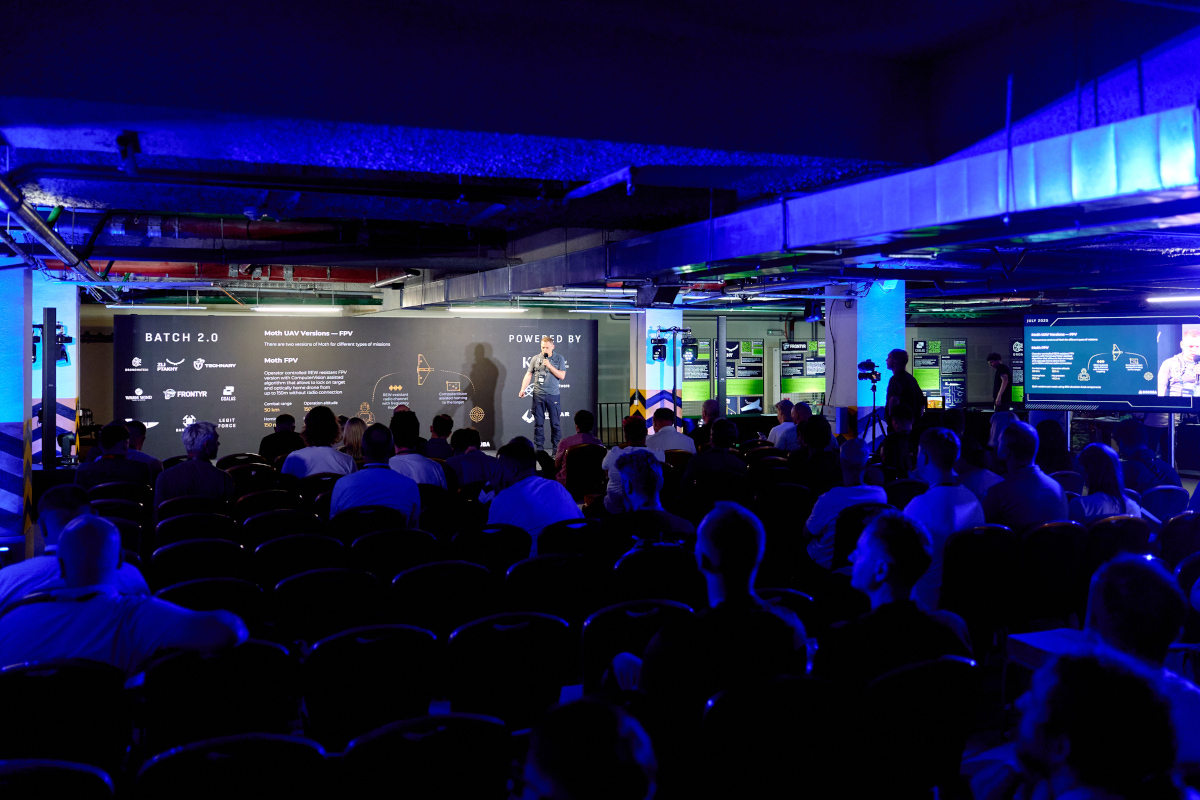
For example, the most recent batch, which launched not long ago, received more than 110 applications. We selected only 10. That is a fairly tough selection process, because at this point we cannot afford to work with just another run-of-the-mill solution, with something that does not stand out from what already exists. We have to think strategically, move to a new level of quality, and focus on the solutions that are genuinely needed by the Armed Forces of Ukraine.
– So how, in practical terms, can a startup get into your accelerator? What requirements does a company have to meet?
– The first step is our social media. Every six months, we hold an open call. We have already completed two batches, the third has just launched, and we plan to launch a fourth in the future. Roughly 80% of applications come in through that channel.
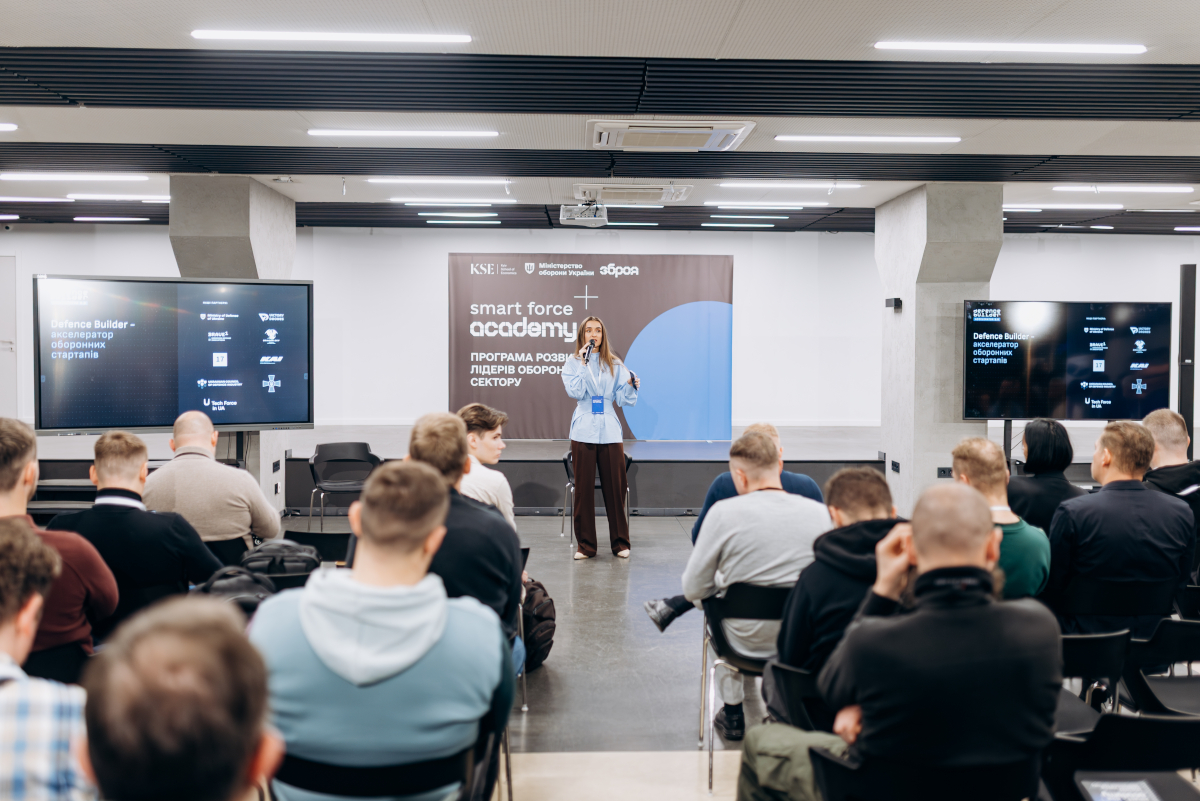
We also have partnerships with Brave1, KSE, which is one of our founders, as well as partnerships with clusters and other industry players.
For example, when Brave1 brings a team to a certain level, they can organically refer it to us once, say, the question becomes one of scaling and, accordingly, investment needed to grow into a serious business.
So the second route is through our network. The third is essentially word of mouth, when teams that have already gone through our program may recommend it when the opportunity arises. That is not as large a share as the first two routes, but it still exists.
As for selection, if we are talking about the current batch, we have significantly changed our approach to recruiting teams. Some time ago, we were more focused on solutions that could, so to speak, put out fires, something urgently needed on the front line. Now we are looking for solutions that will still be relevant in 6 to 12 months.
We speak a great deal with military personnel from the units we cooperate with. We ask about their problems and needs, and about how they see the further development of combat operations, what may become more relevant, and what may lose relevance. We build our own strategy on that basis, including what to focus on.
That is why we end up being able to take only 12–13% of teams from the entire application pool into the program. At the moment, unfortunately, no more than that. We have our own constraints, but we are committed to providing the highest possible level of support.
This is not a standardized program with fixed modules. We offer tailored support and specific areas of cooperation for each team individually. That is also why we cannot spread ourselves too thin.
During selection, we look not only at the solution itself, but also at the team behind it. Some teams, for example, are not ready to take criticism. And criticism will come, including during testing, with tough feedback from the military. It may turn out that a team does not have the resources to rework everything, properly absorb feedback from the Armed Forces of Ukraine, or understand the direction in which it needs to move next.
That is why it is critically important to assess the team behind the solution, whether it understands that the solution will be subjected to a large number of rigorous tests in order to prove its effectiveness and convince the Armed Forces of Ukraine that this is genuinely something they should start using.
– Can you name any successful cases from your work?
– If we speak about the previous batches, we currently have 15 teams in our portfolio overall. Four of them are already deployed on the battlefield and are being used directly by the Armed Forces of Ukraine. Another nine have been tested in cooperation with the Ministry of Defense.
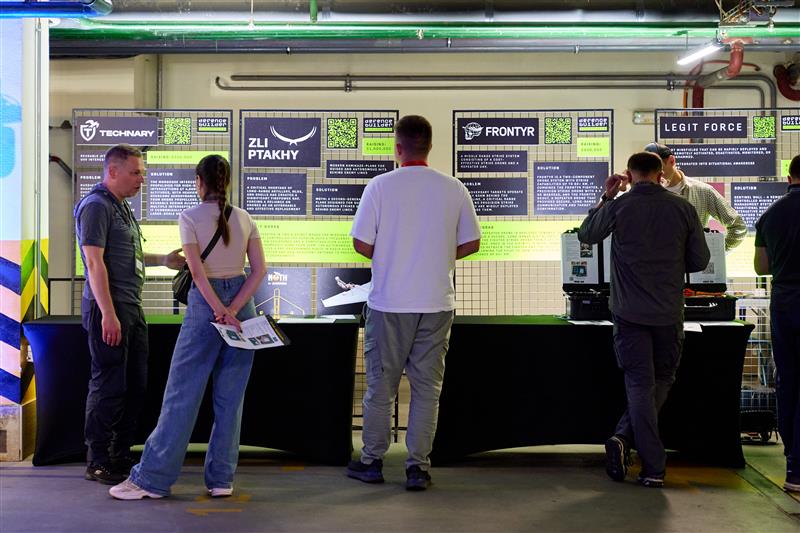
Among our successful cases is, for example, BaBayte. Not long ago, they secured a fairly significant investment from Green Flag Ventures. We also have highly promising teams such as Strug, which works on maritime and ground drones; Zli Ptakhy with its Backfire strike UAV; and DroneMate AI, which is advancing in the components segment.
Those are the most notable cases I can name right now.
Overall, more than 60% of the teams we started working with when they were still at the early stages of development managed either to secure a soft commitment (a non-binding, verbal, or preliminary indication from an investor, partner, or client of willingness to take part in a project or invest funds. It has no legal force - ed.) or to attract investment from investors.
– How attractive is Ukrainian miltech today as an investment sector overall?
– It is becoming increasingly attractive. Last year, investment in Ukrainian miltech reached $129 million, including grants. In previous years, the figures were significantly lower. For example, in 2023, it was $1.1 million.
Our partners, above all foreign ones, are increasingly coming to understand that the future of the defense industry and Europe’s future security are being built here, in Ukraine. If they want to invest in European and global security, they have to invest in these teams, in the companies that are building that security directly right now, while going through combat testing and operating with the fastest innovation cycle in the world.
Current Defense Minister Mykhailo Fedorov recently said that in a technological war, the countries and companies that move through the innovation cycle the fastest will win.
Unfortunately, because of the active war, we have the ability to move through that cycle incredibly quickly and receive direct feedback from the military themselves. We are able to validate our solutions on the battlefield.
That is what attracts investors. They are more willing and do so with greater understanding, to invest in Ukrainian solutions when the Armed Forces of Ukraine have proven and confirmed their effectiveness, and when we, as an accelerator, have shown that the businesses are legally ready for investment. For investors, that is an additional safeguard.
Besides that, we as a country are becoming more mature. The same applies to our companies, which are now paying much more attention to getting everything right from the start: registering their intellectual property properly, managing it properly, thinking about licensing, NATO standards, and how to comply with them. There is too much at stake, and there is no time for games. We have to be ready from the outset, because the window of opportunity we have right now is not permanent.
We do have advantages, but if we fail to make use of them and truly take our place in the miltech industry overall and in miltech investment, that window of opportunity will close. We cannot underestimate European companies, which are also working actively in the field of miltech and defense innovation.
But I have to admit that we are moving in the right direction, and with confidence. And, God willing, next year we will see even higher figures for investment attracted into Ukraine’s defense sector.
– Are there any approximate estimates of how much time this window of opportunity will remain open? I, for example, have heard for six months.
– I have heard six months to a year as well. But given the pace of this war, the pace of technological development, and global events, it is hard to say what will happen in a week, let alone in six months.
I understand why colleagues talk about six months or a year. Looking at the global context, more and more countries are beginning to engage in the process, and more and more countries are beginning to invest in their own defense sectors, as well as in the development and advancement of innovation.
For now, we still have something to offer, and we still have the advantage of access to the battlefield and the ability to validate solutions in direct cooperation with the military. But the situation is escalating. There is the Middle East, and there are constant threats against the Baltic states, so this advantage will not remain ours forever unless we are able to stay ahead not only of European countries, but of many others as well.
As soon as we slow down even a little, as soon as the pace of development of our innovations declines, problems may potentially arise
– What attracts more investment, and from which countries?
– That is an interesting story. Investors are still cautious about putting their money in. More often, they are more willing to invest in software, it is simpler than hardware, easier to understand, and far less risky. That may include artificial intelligence, autonomy, navigation, and similar areas.
If we are talking specifically about hardware, then these are solutions in which they see a need of their own. For example, many investors come to us and say, ‘We are ready to invest in a solution that would help in the field of air defense.’ That may include interceptor drones, EW systems, in other words, things they understand, things that are critically important now and will remain critically important in the future. These are the areas that need investment, so that they are contributing not only to Ukraine’s defense, but to global security.
There are also investors who are ready to invest not in what will work today, but in what could potentially become a serious game changer in one to three years, even in relatively peaceful times. Although it is hard to predict when such times will come.
– Investment is, in principle, always about profit. When people put in money, they want to get something in return. On what terms are investors now investing in miltech?
– When we are talking about investment rather than grants, investors do indeed want to get something in return for their capital. As a rule, this means equity, that is, an ownership stake in the company. Whether a team agrees to that will depend entirely on the team itself.
Teams are becoming more mature on this issue. A somewhat immature approach is when a company that does not yet have any solid valuation is unwilling to give investors equity and instead wants to cooperate on some other terms.
Equity is one of the most common ways for an investor to put money into your company, given the risks involved. They invest now with the understanding that, in the future, when the company’s valuation rises significantly, that percentage stake can be sold on much more favorable terms.
– By the way, do we already have any unicorns in the miltech industry here (a startup company that has reached a market valuation of more than $1 billion - ed.)
– We do not yet have any Ukrainian unicorns, though there is a defense tech company of Ukrainian origin registered in the United Kingdom — UForce. We are still waiting for officially Ukrainian unicorns, and we hope they will appear soon.

– What is the current situation with intellectual property in miltech here?
– Unfortunately, there are enormous problems, a lot of rumors, and a lot left unsaid. Because the regulatory and legal framework is far from ideal, teams often register their intellectual property abroad.
This is not the best path, but I understand that startups with a foreign patent will be more attractive to investors. Investors will be more willing to put money into them, because it serves as a kind of safeguard. In Ukraine, the state is still not fully able to protect the intellectual property rights of citizens and companies.
I must admit that investors are not always ready to invest in Ukrainian LLCs; they are more interested in foreign jurisdictions and incorporated companies. In other words, a foreign company becomes the parent company that fully owns the Ukrainian company operating here.
– You mentioned your cooperation with the state, in particular with Brave1. Please tell us more about that. Does the state help in your work at all, or does it help by staying out of the way?
– Yes, that is a fair observation, by simply not interfering. The nuance is that the concept of accelerators is still not sufficiently understood by everyone, not only at the everyday level, but also at the state level.
We are working actively to prove our value and effectiveness not only to the startups we bring into our acceleration program, but also to the state, for example, to the Ministry of Defense.
This could be a unique opportunity for collaboration. That way, we would receive from the state a vision of what the front line needs in a global context, rather than just from our communication with Ukrainian Armed Forces personnel. We could receive from the state a specific set of technical requirements, let’s call it that, to take certain areas to new levels.
With our capabilities, our access to the Ukrainian startup network, and to European teams and their solutions, we can be useful and accelerate what is genuinely needed.
So, to answer your question briefly, the state does not interfere. To answer a bit more broadly, we would very much like, and we are actively working on this, to build cooperation. Our cooperation with Brave1 is more about operating within the same ecosystem.
– How open is the state to this kind of cooperation?
– We have very high hopes for the new Defense Minister, Mykhailo Fedorov. His vision of how technology should develop, and how we should use our advantages to build a technological miltech sector, resonates deeply with me personally and with our team.
We are also working actively in this area, operating in a way that helps accelerate processes and filter all of this. Our work also consists in bringing everything to its logical conclusion, to the final scaling of the company and of the solutions that soldiers need on the battlefield.
– In your view, where is Ukrainian miltech heading, and what are its prospects?
– The situation in the world is not becoming any less tense. More and more countries understand that they need to invest in their defense sector in order to be able to protect themselves. So I am confident that the relevance and development of miltech are here for the long term.
And if we, as a country, want to be part of this system, to be a leading player in the global defense sphere, we already have to prove that we have our rightful place in it.
Our cooperation with European countries, and the fact that countries in the Middle East are coming to us for expertise, shows that we are operating in a global context. There are many prospects
It would be unwise not to think about one’s own security, especially when looking at what is happening in the world. More and more countries understand this. Perhaps not as quickly as we would expect, but security is increasingly moving to the forefront. I would very much hate for the moment when they come to understand the importance of security issues in practical terms to be another attack or an invasion of some country. I very much want them to work proactively, to prepare for potential combat operations, rather than doing so only if, God forbid, such a situation has already occurred.
We, by the way, constantly emphasize to our partners that they need to work proactively, think about the future, and not sit back hoping it will pass them by. Unfortunately, the situation looks such that it will not pass them by.
– What would you say to young teams, not in terms of age, but in terms of experience, that want to enter the miltech market? What advice can you give them
– To be ready for the fact that this is a very harsh technological marathon. To be ready to adapt constantly, to see your solution criticized, tested, destroyed, and challenged with new proposals. Teams need to be as flexible as possible, move at an incredible pace, and offer the market something new and unique. They also need to be ready for the competition that already exists here.
Accordingly, they should not wear rose-colored glasses and assume that their technology is a breakthrough and a game changer that will take them to an iIPO within a year and that everything will be fine. This is a very difficult field, extremely demanding and very fast in its development. If a team is not ready to adjust, adapt, and remain flexible, problems will arise right from the very beginning.


