



German defense tech company Stark creates maritime drones to counter Russia’s "shadow fleet" in Baltic Sea
Drone Industry
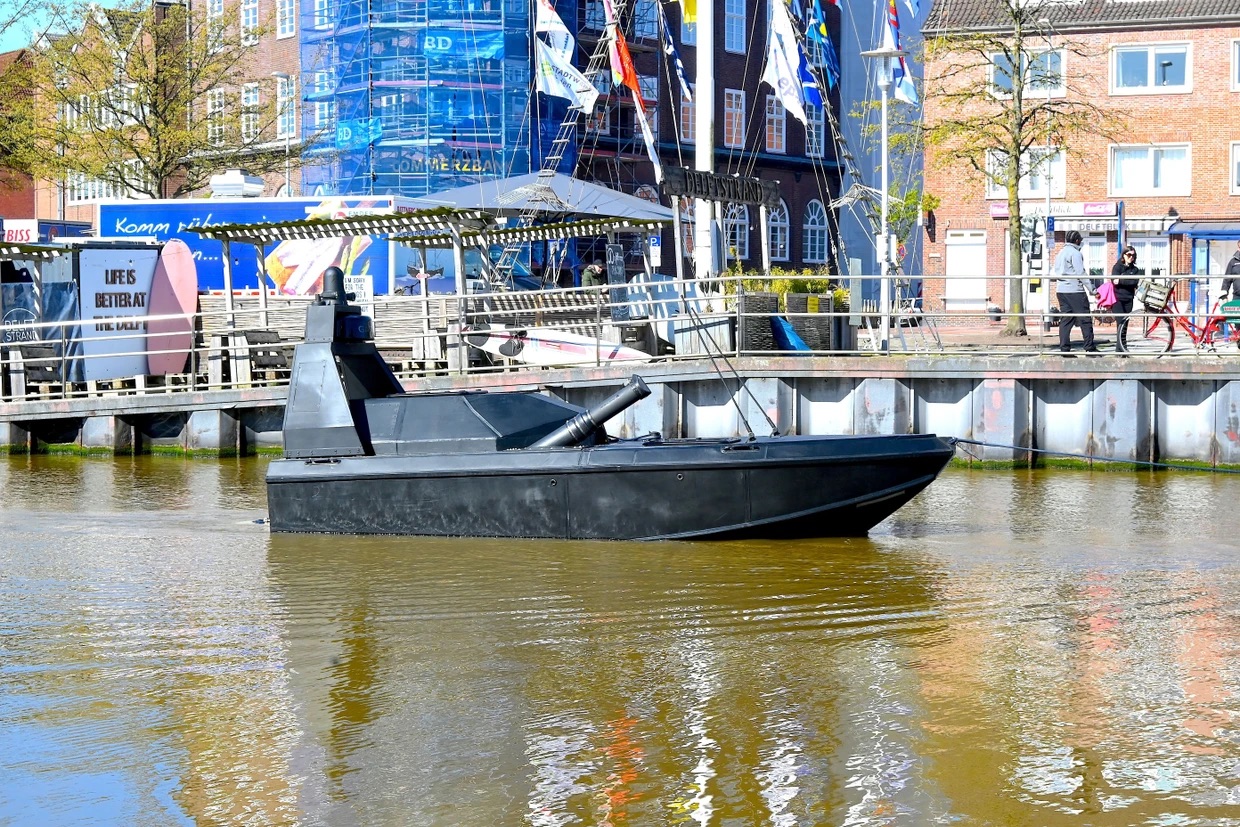
Ukraine, Germany, the Nordic and Baltic countries will cooperate in the field of unmanned surface vessels to strengthen maritime monitoring, counter hybrid threats, and improve the efficiency of shipping control in the Baltic Sea.
Specifically, during the International Naval Defence Conference, which will take place in Kyiv on June 8-9, the parties will discuss integrating the Ukrainian experience of using maritime drones in the Black Sea into the maritime monitoring systems of partner countries, as well as its use to improve the efficiency of detecting suspicious vessels and countering threats. Particularly in the Baltic and Northern European regions.
Against this backdrop, the German company Stark, which opened an R&D center in Ukraine to develop loitering munitions and unmanned systems, presented the Vanta unmanned surface vehicle (USV), the German newspaper Frankfurter Allgemeine Zeitung reports.
The drone can be used to monitor Russia's "shadow fleet" in the Baltic Sea and help authorities gain better control over the maritime situation to enhance regional security and deterrence.
"The Baltic Sea remains one of the key zones of hybrid confrontation, where cases of sanction evasion through the 'shadow fleet' are recorded, as well as incidents with underwater infrastructure and GPS navigation. Ukraine has actually formed a unique practical expertise in using unmanned surface vessels in real combat conditions, and this experience is now being actively studied by European partners in the context of strengthening the security of the Baltic and North European regions," noted Maksym Cherkis, COO of Stark in Ukraine.
The new Vanta 6 unmanned surface vehicle (USV) is an almost six-meter surface craft equipped with artificial intelligence, satellite analysis, and maritime monitoring systems.
According to the company, the system is capable of detecting suspicious vessels even if their transponders are turned off. It analyzes satellite data, cross-references it with maritime traffic signals, and can track targets for extended periods, essentially providing continuous monitoring.
Read more: "Drone without human is nothing": Is Ukrainian arms export possible without Ukrainian expertise?
Another advantage of such systems is that they allow Navy personnel to focus on their primary tasks — national defense and combat operations — rather than wasting resources on the constant monitoring of suspicious vessels. Traditional ships and platforms of the German Navy are too expensive and cumbersome for such tasks, so the use of unmanned surface systems can be significantly more effective for maritime surveillance and control.
Depending on the configuration, the Vanta 6 can also launch smaller drones, expanding its capabilities from surveillance to potential application in combat scenarios.
This is not the first defense contract for the company. In February, Stark, together with Helsing and Rheinmetall, received an order from the German Armed Forces (Bundeswehr) for loitering munitions.
Despite the company being only two years old, Stark is scaling rapidly and is currently in negotiations with German shipbuilding enterprises regarding the localization of Vanta production in Germany.
Stark also pays significant attention to flexible software architecture, emphasizing that its management and coordination system for unmanned vessels can be integrated into both the systems of individual national coast guards and NATO platforms. This allows the use of unmanned surface vehicles (USVs) not only in military operations but also for maritime situational monitoring and critical infrastructure protection.


